A Fading Glory

fading glory

Standards of beauty change from time to time and country to country, but when I was a young man, much younger than I am today, I was considered good-looking for my time and place.

I remember the heads of female employees turning as I walked the length of the office to my destination. On more than one occasion, women driving by whistled and catcalled as I walked on busy city streets. All these things I found very amusing and gratifying on some level.

Because I have been objectified—I have been on the receiving end of unwanted attention, been hit on by both men and women and made to feel very uncomfortable—I understand and sympathize with women when this happens to them. I’m not complaining, just explaining.

Growing up, I never considered myself good-looking; instead, I was self-conscious about my looks. As I grew older and had more success with girls and women, I began to gain confidence. This boost led to success in other areas in my life—man’s greatest adrenaline rush is a beautiful woman. Many doors opened for me because of my good looks. I have always attributed it all to good luck. It is a matter of good luck, I suppose, to be blessed with the beauty gene.

But beauty can be a double-edged sword. Plain women are jealous of beautiful women and don’t trust their men around them. In the same way, men often feel insecure in the presence of a good-looking man.

Recently, a younger man worked at the same dealership with me. Every time I saw him, I felt uncomfortable and didn’t really know why. He was extremely handsome and moved with grace, literally dancing around the dealership. I got jealous every time he attended to an attractive customer or even one of our young female associates. I knew it was foolish to feel this way, as if I was in competition with him, even though I am much older and in a fulfilling relationship. When he quit and moved to Miami, I was very happy to see him go.

There is a downside to beauty. To be consumed by it, to waste away like Narcissus from Greek Mythology, is a mistake. Beauty fades and as I age, I sometimes feel like the invisible man. However, the words of Gabriel Garcí­a Márquez are poignant, “Human beings are not born once and for all on the day their mothers give birth to them, but … life obliges them over and over again to give birth to themselves.” To reincarnate beauty, it must be tempered by grace, compassion, and love for others.


© Benn Bell 2015

Benn blogs at Ghost Dog
He wrote this piece as a rejoinder to my post, Beauty A First Class Ticket.


Photo credit: Pezibear/ http://pixabay.com/en/journal-leaves-brown-road-kahl-636462/


Unauthorized use and/or duplication of this material without express and written permission from this blog’s author and/or owner is strictly prohibited. Excerpts and links may be used, provided that full and clear credit is given to Timi Yeseibo and livelytwist.wordpress.com with appropriate and specific direction to the original content.

The End of a Series

vintage envelope


I grew up in a close-knit family, a middle child, disciplined and socialized within the same context as my siblings. Our mannerisms were similar and we shared friends the way we shared hand-me-downs. However, if you had asked us, “What do you think about . . . ?” our views would have differed.

So after I approached nine guys to write this series,  my fear that I would end up with a monologue—each writer parroting the other, was perfectionist-phobia. They were to distil their opinions (in 300 words or less without preaching), about a phrase, think like a man, end up without one. The phrase might be a tongue-in-cheek response to Steve Harvey’s book on what men really think about love, relationships, intimacy, and commitment.

When I told one writer that his submission was controversial and would draw ire, he said in essence, “What do you want readers to do—smile, turn over on their sides, and fall asleep or frown, stay awake, and ponder what they read?” He reminded me of something I had heard, that those who are least like us, have the most to teach us about ourselves.

Maria Popova says that a great story is not about providing information, though it can certainly inform—a great story invites an expansion of understanding, a self-transcendence. More than that, the story plants the seed and makes it impossible to do anything but grow a new understanding—of the world, of our place in it, of ourselves, of some subtle or monumental aspect of existence.

Because I read with an open mind, I embraced each writer’s invitation to stack his opinion against my experience and preference. My beliefs about why I’m here and what follows death as well as my present cultural reality shaped the points of consonance and dissonance I found. The comments showed me mathematics makes sense:  3+6 and 4+5 and 1+8 and 2+7 all equal nine, but not when it comes to the heart. Tomi captures it best: Perhaps love is our different similarity. We love differently, but we love all the same.

The first time I liked a boy whom I thought liked me back, I told a friend. She had acquired a worldly veneer from eavesdropping on the conversations of her many older siblings. Thus her advice, play hard to get, went unchallenged by me. I must have looked like a toy atop the Eiffel Tower because, with no ladder in sight, the boy’s hands hung limp and he left. I suppose the moral of the story is life is art, more fluid than formulaic, and a variable presents an opportunity or a looming threat. As Tola reminds us, embedded in every story are endless possibilities.

It seems everyone wants love and yet, in the words of C.S. Lewis, to love at all is to be vulnerable[;] love anything and your heart will be wrung and possibly broken. What to do then? Dela wants the predictability of drama. Ife sighs at the two hunters in the jungle. Samuel unveils a game of thieves; Ifeanyi makes it about egos. Tonwa advocates for less brain and more heart and Seun stresses, a human brain, please! Brian hints at the delicate balance of pursuit and protection: We want to be loved for who we are, but we fear the risk that comes with disrobing to be known.


Love slays what we have been that we may be what we were not. – St. Augustine


Relationships are oxygen. The post views, likes, comments, and shares, do not lie. If I had any sense I would start a series (written by women), dance like Cinderella, end up with the Prince!

What about you, what do you think?


©Timi Yeseibo 2015


p.s. Thank you Tomi, Ifeanyi, Ife, Dela, Tola, Samuel, Tonwa, Seun, and Brian!


Unauthorized use and/or duplication of this material without express and written permission from this blog’s author and/or owner is strictly prohibited. Excerpts and links may be used, provided that full and clear credit is given to Timi Yeseibo and livelytwist.wordpress.com with appropriate and specific direction to the original content.
 

Think Like a Man, End up Without One [3]

gender

Game of Thieves

In the matter of love, men are thieves and women, treasure chests to be discovered. The thief braves thickets and thistles, his sharp eyes searching for the chest his heart desires. His ears, tuned to pick the jingle of gold coins, help decide which chests are true measures of the treasures within.

As the hunt begins, many chests rely on their bejeweled covering to attract the most skillful and dogged thief. So they stand immobile, waiting to be saved from true loneliness. These ones stick to the ancient wisdom that thieves judge a treasure chest by its cover.

But the woman who thinks like a thief waits not for the bandit of her dreams to steal her heart. She discovers his desires and then entices him, in small steps, to the place of her heart. When the thief’s eyes hit her trail of gold coins, the fires of his desire will burn bright keeping him in blind sight of the trail.

Time soon unwraps the thief in front of an open chest. Not a heap of gold he finds but a flight of gentle steps littered with more coins and precious stones. His curiosity will burn as forest fires. He will plunge in and the chest—hitherto open as a crocodile’s mouth awaiting prey—will then shut tight. The thief will keep descending unaware that his freedom and maybe loyalty to another has been stolen.

Perhaps he will find an abundance of gold, perhaps a nest of scorpions. No matter the find, the woman-thief finally would have caged the man’s heart in her chest as she had planned from the beginning.

© Samuel Okopi @ SamuelOkopi

If a woman doesn’t chase a man a little, she doesn’t love him.  ― E. W. Howe


Men think. Women think too much!

Let’s just get right down to the critical issue here, thinking. Men think. Women think too much, quote me on that. It’s not a bad thing until a man has had a single thought and moved on, and a woman is still having several thoughts about his single thought, long after.

Take for instance the following scenario. A young man and his girlfriend are enjoying a hearty meal and each other’s company at a fast food restaurant, when a stunning woman walks past. The man may think one of two things: what she’ll look like naked or what she’ll be like in bed. His girlfriend on the other hand may think many things including several variations of what her man was thinking about some seconds ago.

Paranoia could follow her dangerous thought process. His eyes lingered a little too long. He must like her. He said he likes women with assets and hers are bigger. Meanwhile the man has resumed munching his burger. His girlfriend on the other hand, has moved from paranoia to “casual” interrogation—“She’s very attractive isn’t she?” Wise men know this is a trap and the correct answer for peace to reign is, “I only have eyes for you, dear.” But if he loves you, why worry?

When it comes to love, less brain, more heart, or else a woman may just chase that man away. Men dislike wahala jo!

© Tonwa Anthony @ thecrazynigerian

Don’t be afraid to lose him, because if a man truly loves you, he’s not going anywhere.  ― Steve Harvey


A Bad Thing?

Think like a man, end up without one. The question that comes to me is: how do men think? I’m sure we all agree that pop culture doesn’t acknowledge that men even think at all. I mean, you have sayings like, all men are dogs, and memes like, in American football, the helmet was invented almost fifty years after the jock strap. So, why would a woman want to think like a man?

To expect a human being to think in terms of gender or sex is quite limiting. Once, at a friend’s place, I overheard his father telling his six sisters, “Don’t think like women. Think like human beings!” That pretty much sums my opinion on the matter.

I’m a bit uncomfortable with Steve Harvey’s book, Act Like A Lady, Think Like A Man, or at least the title, because it’s misleading. Moreover, the movie didn’t portray women “thinking like men” but women pushing the bar by going the extra mile to understand their men. And I think this is what makes relationships work—understanding the person you’re with.

It’s also better to establish clearly, roles and who-does-what since gender equality is quite the hot button these days. While I have my thoughts on the matter, I strongly believe two captains cannot drive a ship. There has to be one leader. Who says it has to be the man?

So, the quote says, “Think like a man, end up without one.” And I ask, “In today’s world, how is that a bad thing?”

© Seun Odukoya @ SeunOdukoya
Seun is the award-winning author of Saving Dapo


Live as though life was created for you. ― Maya Angelou


A Thin Line

Sometimes we struggle to find the thin line between being vulnerable and gullible.  We want to be loved for who we are, but we fear the risk that comes with disrobing to be known.  This is the board upon which the proverbial game of love is played.

Because women are more emotionally open than men are (generally speaking), they tend to see inwardly, and then project onto their surroundings. The opposite is true for us. Men are simple. We connect with our surroundings visually, and then project inwardly to process it all. This disconnect causes problems when women seek to understand how men think. We may like at first sight, but we love when we see ourselves in you.

Understanding what initially attracts a man is one thing; but knowing what makes a man fall in love is totally different.  For many women, this is where the need for strategy becomes apparent.  As with any effective strategy, one must think like their opponent. But should hearts be used as pawns? I believe that the game of love should always culminate in both players being free to be themselves without fear of rejection. Herein lies the delicate balance of pursuit and protection.

Secure women who possess values epitomize sexiness and class. There is nothing wrong with “thinking” like a man, as long as you properly defend who you are as a woman.

©Brian Evans @ Wisdom’s Quill

Between what is said and not meant and what is meant and not said, most of love is lost. ― Khalil Gibran


Unauthorized use and/or duplication of this material without express and written permission from this blog’s author and/or owner is strictly prohibited. Excerpts and links may be used, provided that full and clear credit is given to Timi Yeseibo and livelytwist.wordpress.com with appropriate and specific direction to the original content.

Think Like a Man, End up Without One [2]

couple


The Guy’s Girl

When Yetunde asked me where to meet up the following day, I didn’t hesitate before suggesting Babs, a sports bar. Calling Babs a ‘sports bar’ was dignifying the seedy, open-air joint in a backstreet in Surulere that sold cheap beer but also screened live football matches. I knew Yetunde wouldn’t have any qualms about hanging out at a beer parlour, surrounded by a crowd of raucous, sweaty, beer-guzzling men. I’d started giving her directions, when she cut in. She knew the place. I wasn’t surprised.

Yetunde was the quintessential guy’s girl. She loved video games, argued about politics and football and drank Guinness Extra Stout. But it was more than that. She understood men in a way that was uncanny. Whenever my girlfriend and I had a bust-up, Yetunde was my go-to-person. Majority of the time, she sided with me. I don’t think it was because we were friends. She would subject me to a grilling; she only wanted to hear the facts but didn’t want any important detail omitted. She would analyze the issues—a painstaking process that usually ended with her concluding that my girlfriend, Funmi was at fault.

Then she would laugh and say, “But you better go and apologize to Funmi. Forget about my analysis o; all that is English. I’m sorry, that’s what women want to hear.”

It was easier to apologize to Funmi after my conversations with Yetunde; that Yetunde agreed with me was enough vindication.

We had to raise our voices to hear each other above the din at Babs, but there was no lull in our conversation over the ninety minutes of the game. I couldn’t remember the last time I laughed so hard. I asked her, half-teasingly, if she now had a boyfriend.

“How can?” she laughed. “If I had a boyfriend, would I be here with you?”

“Come on, be serious. How about that tall, skinny dude I saw you with a couple of times at the cinema?”

“It’s always the same,” Yetunde replied, her voice dropping a notch. “He didn’t want a relationship.” The expression on her face suddenly became serious. She went on, “It doesn’t look like it would ever happen, Akin. I’ve started preparing myself for a lifetime of singleness.”

I faltered, unable to come up with an appropriate remark.

“Why are you looking so concerned?” Yetunde quipped. “Are you my father?”

I doubled over with laughter.

As I drove back home that night, light-headed from the beer and the euphoria of Arsenal’s victory over Chelsea, Yetunde’s remark about bracing up for a lifetime of singleness came back to me. It made no sense why a girl who got along so well with guys, shared our interests, and reasoned the way we did, seemed incapable of being more than just friends with any guy. Would I date her myself, I wondered, as I turned into my street. I chuckled. The thought was ludicrous. It was a question I had never considered, not even fleetingly.

It wasn’t that Yetunde wasn’t attractive. Far from it; boy, she nearly caught me staring at her behind on our way out of Babs that evening! I was also certain it had nothing to do with being friend-zoned or any such nonsense. Then why did the idea of dating Yetunde seem so incongruous? This was a girl I loved to hang out with, a girl who always cracked me up. Why would I not want to be with her?

Then it struck me with sudden clarity that defied the wooziness in my head, as I arrived at the entrance to my house: was it because Yetunde was too much like men that successful romantic relationships with them continued to elude her?

I haven’t been able to answer that question; neither that night nor in the six years that have passed. I am now married and I have two daughters. Yetunde is still single.


© Olutola Bella @ Bellanchi


Photo credit: SnapwireSnaps/ http://pixabay.com/en/couple-laughing-happy-people-598315/


Unauthorized use and/or duplication of this material without express and written permission from this blog’s author and/or owner is strictly prohibited. Excerpts and links may be used, provided that full and clear credit is given to Timi Yeseibo and livelytwist.wordpress.com with appropriate and specific direction to the original content.


Think Like a Man, End up Without One [1]

Think

In The Beginning

The story: Eve ate the forbidden fruit and seduced Adam into a bite, na so yawa gas. The origin of male-female dynamics is rooted in the creation of sin and chaos. If Adam had not eaten the fruit, if Eve had not convinced him to, the world would not be a revolving globe of horrors. The blame game has ensued since, with both sides keeping score like umpires at a game.

The joke: God created the world in seven days and rested. He then formed woman and has not rested since. The difficulties in male-female romantic relations are caused by gender complexities, sensitivities or the lack thereof, and hormonal activities. Mr Lagbaja will probably never cry while watching The Titanic. Ms Jane Doe will probably narrate an epistle of random events if you ask how her day went.

The Conclusion: Paralleling the thought patterns of the opposite sex probably has its advantages, but men exhibit varying levels of machismo and women varying levels of femininity.  Perhaps Love is our different similarity. We love differently, but we love all the same.

Think like man; end up with none, or with one, or two, if you’re into that kind of thing. Think like a woman? Well, you really can’t if you’re a man; you’re not that clever.

© Tomi Olugbemi @ Poetry is Peace


Although the man and his wife were both naked, they were not ashamed. – Genesis 1:25


Think like a Man? Think Again! 

Ladies are different, but most men are the same. When a lady starts thinking like a man, she begins to have a big ego and two (big) egos can be bad for relationships. I have seen many independent, smart, and successful ladies, who want to get married, end up single.

Generally speaking, the ladies who end up with men exude care and use the power of submissiveness to full effect—the ability to massage the ego, while making the mind see reason. They create the impression of vulnerability thereby increasing the protective instincts of a man.

The way a lady makes a man feel, more than anything else, determines if she’ll end up with him. If she respects him and makes him feel comfortable in her presence, he will want to spend the rest of his life with her

If a lady thinks like a man and then acts like him, she may end up without him. Men are designed to seek conquest and when two people seek to conquer, one will be devoured. A lady who lets a man lead the chase without making herself 100% available, will either inspire his consistency, strength of character, and responsible side, bringing him nearer commitment or inspire him to walk away.

© Ifeanyi Ukoha @ Moments with my Mind


 Male egos require constant stroking. Every task is an achievement, every success epic. That is why women cook, but men are chefs: we make cheese on toast, they produce pain de fromage. ― Belle de Jour


My Move, Your Move, Checkmate!

Do we even think when we fall in love? Can we solve the mathematics of our hearts with formulas in our brains? Or is the man supposed to be thinking because he’s expected to make the first move?

Ah! Make the move, here lies the problem: game-play language used to define the parameters of emotions and attraction aka love.

If the man is expected to make the first move, but he’s more interested in winding down the timer, the lady has to force his hand. Then he has to lie and deceive while keeping his eye on the prize—sex, exclusivity, friendship with benefits sans responsibility, etc. Then she has to counter his moves to checkmate him, that is, to get his money, his ring, his commitment, etc. Two hunters in the jungle.

Why don’t we ditch the games, no scheming and no faking? Forget about whether the other person is playing fair. Forget all you’ve been told: men are evil, women are gold-diggers, if you don’t manipulate him, he’ll dump you, yada yada yada.

Focus on being the best version of yourself. Have genuine affection for another and risk trusting them with your emotions. Will you get hurt? Probably. Letting go to love another and trusting them to return your love is not being naïve, it is learning to be human.

The thing about manipulating love like a game is this: nobody wins.

© IfeOluwa Nihinlola @ ifeOluwa’s rambles


We all think that this relationship thing is a game out here. All I’m saying to women is, ‘Okay. If it’s a game, here are the rules that we play by.’ – Steve Harvey


Dramatically Predictable 

There are many men. I have seen enough to know that when women state their preferences, a good number of short, fairly ugly, and poor men are left languishing on the wait list. Very little is said about the thinking of The Chosen and there is good reason. Every next man thinks differently.

Men don’t know how men think. We just shake hands, grunt, and pat our backs. But when men deal with women, usually we expect a game, a chase, a lot more drama. It’s rewarding when the curtains close and you’re both backstage. And even though men wish the drama did not persist sometimes, we like the certainty that we will get drama. I suppose many men want their women to stay dramatically predictable. It is what makes women interesting and keeps men interested.

For the sake of ourselves, let women not think like us, whatever that means, please. Women who try to think like the men in their world are adventurously boring and they will certainly find boring men for themselves.

The thought that a woman who thinks like a man will end up without one is condescending to women and a joke to be fair. No woman needs to think like the next woman, much more a man. What are you doing thinking like a man? Think like you! There is nothing more desirous in a woman than independent thought. Men crave it and nothing will change that. Because in truth, even we don’t know how we think.

© Delalorm Semabia @ African Soulja


A man’s face is his autobiography. A woman’s face is her work of fiction. ― Oscar Wilde


Photo credit: Hans/ http://pixabay.com/en/bottles-imprint-glass-think-yellow-60336/


Unauthorized use and/or duplication of this material without express and written permission from this blog’s author and/or owner is strictly prohibited. Excerpts and links may be used, provided that full and clear credit is given to Timi Yeseibo and livelytwist.wordpress.com with appropriate and specific direction to the original content.



Did We Do Any Learning? [6]

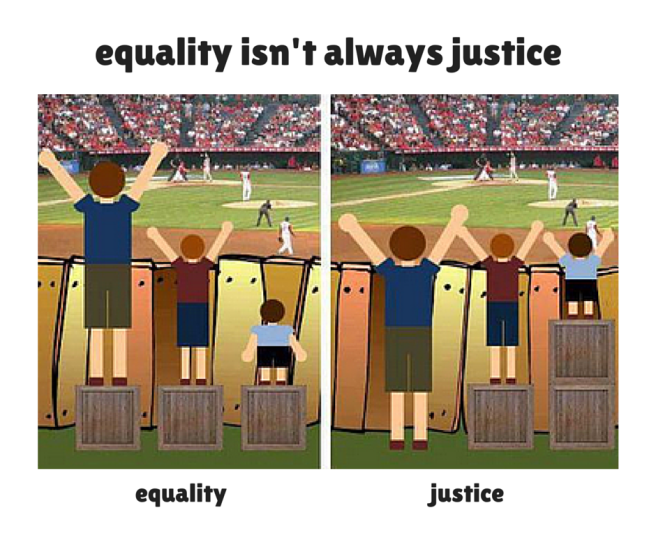
equality v justice

Human rights are not only violated by terrorism, repression or assassination, but also by unfair economic structures that create huge inequalities.
Pope Francis


Life isn’t Always Fair

It is a lesson we have all learned. Sometimes fate turns around and bites us. But I have never seen this inequity so clear and so devastating, as I have over the last three months in Liberia, Sierra Leone, and Guinea.

Ebola.

I was a Peace Corps Volunteer in Liberia from 1965 to 1967, a long time ago.  It was an incredible experience for me, going from the University of California at Berkeley and California’s super-urban Bay Area to the then small upcountry town of Gbarnga, where I met Africa face to face and received so much more from the experience than I was able to contribute.

Afterwards, the terrible civil wars tore Liberia apart in a way that was incomprehensible to those of us who had lived in the country and had come to know her people and culture.

Recently, I began to feel more optimistic about Liberia’s future. There was hope. Liberia had known peace for ten years. Children were back in school. There was laughter in the street.

And then Ebola struck. Once again, Liberia teeters on the edge of chaos. How much more can the country take? Yes there are things we can do, must do, to help. But I can’t help thinking, over and over: isn’t it time that fate gives the people of Liberia, Guinea, and Sierra Leone a break?


Curt Mekemson @ Wandering through Time and Place

Half of the profits from Curt’s recent book, The Bush Devil Ate Sam and Other Tales of a Peace Corps Volunteer in Liberia West Africa, will go to Friends of Liberia, a group of returned Peace Corps volunteers.


Wake Up and Think for Yourself

This year my sixty-seven year old country finally woke up. Millions of Pakistanis learned to think for themselves.

Four months ago, frustrated people stepped out of their homes and stamped their thoughts on the streets under the leadership of Imran Khan. Old men, housewives, students, and children slid open curtains of indifference and made history.

War is when your government tells you who the enemy is. A revolution is when you figure it out yourself. ~Anonymous

This year millions of Pakistanis learned about pain. Pain that transcends boundaries of flesh and geography. Pain that sets things into perspective. Love, family, home, and health. Everything else seems extravagant. You don’t expect to send your children to school and never see them again.1

We saw hope and held on to it tight. Perhaps too tight because it left blisters. We learned about healing as skins of faith quickly formed protective layers on our stubborn wounds. My people are even more stubborn.

This year I learned about victory. A victory that marks an end to our closed minds and blind hearts. I have seen my extraordinary people walk to hell and back. They tell me to keep going. Because that is exactly what they will do. They always do. And this revelation makes me realize our power.

I had a dream about you last night…and in it you said, ‘Chin up; it only gets harder.’ ~ Marshal Ramsay

Think. Question. Challenge.

Because once people begin to think aloud, they are impossible to ignore.


Nida S. @ on the road to inkrichment 

  1. On 16 December 2014, terrorists ran down an Army public school in Peshawar (Pakistan), leaving 132 children and 9 members of the school staff dead in cold blood.


In Search of a Messiah

I have thought about poverty and inequality, and for me, there are no easy answers yet. Years of inequality, poverty, rising unemployment (indices to gauge development according to economist Dudley Seers), and insecurity, have made many Nigerians pant for a benevolent dictator, a fairy godmother with a magic wand to wave all our problems away, while we dance with the prince and midnight never comes.

In the lyrics of Bob Marley, Most people think great god will come from the sky take away ev’rything, and make ev’rybody feel high. I believe in The Messiah, but I don’t want to be guilty of a messiah complex. These days when someone offers me help, I ask why, I ask how, I ask what, I ask where, I ask how much. And, I keep asking until I understand.

The race for the 2015 presidential elections in Nigeria resembles a dem-all-crazy; they say we have to choose the lesser of two devils. Democracy delivers to us what we demand of her. Poverty and inequality like kwashiorkor, can make people swallow nutrition devoid of protein, and then roll over to sleep not realising death is waiting.

I have learnt that on the drive to my destination, it is unwise to hand over the keys of my life and snooze in the passenger seat. Going by what I read on social media it seems many have learnt this too. The challenge is to remind the driver that he is driving our car and so we decide where he goes and when he stops.

Timi @ Livelytwist


Unauthorized use and/or duplication of this material without express and written permission from this blog’s author and/or owner is strictly prohibited. Excerpts and links may be used, provided that full and clear credit is given to Timi Yeseibo and livelytwist.wordpress.com with appropriate and specific direction to the original content.
Did We Do Any Learning? [5]

learning & living

The human story does not always unfold like a mathematical calculation on the principle that two and two make four. Sometimes in life they make five or minus three; and sometimes the blackboard topples down in the middle of the sum and leaves the class in disorder and the pedagogue with a black eye.  
– Winston Churchill –


I Tried to be a Writer

2014 is the year I tried to be a writer and most of the things that happened to me—both good and bad—are centred on this.

Failure or rejection can teach lessons that take a lifetime of success to imbibe. When I was younger, my Dad often said, “Iya o je o, o wipe o gbon; tani tisa re?” (You claim to possess wisdom without enrolling in the school of suffering. Who is your teacher?).  I scoffed at the statement’s cynicism, but now I know better.

So, the correct answer to “How are you?” is not “fine”. It is a long rambling confession to the people we love and trust, opening our hearts and hoping they’ll listen, even if they don’t have answers. There is strength in vulnerability and weakness in machismo. I became versed in the manual on being broke and having to depend on people, not only for money, but also for encouragement and advice.

2014 is the year I left safe behind. I look at the wonderful people I met and the little I’ve achieved. It would have been impossible if I had not tried to be a writer.

Ifemmanuel @ IfeOluwa’s Rambles


Wandering Purposefully

I have created an oxymoron: to wander purposefully. In many intervals of my life, I have often felt lost and out of place like a chicken in a lion’s pride. This year however, I made a non-committal resolution (not a fan of New Year resolutions), to take charge of my life. I thought changing academic paths would bring me peace, but life is a pot of burnt beans.

Compounding my default setting of feeling lost was the feeling that I was losing myself. I started to experience small bouts of anger and bitterness that seldom translated to fisting the wall of my bathroom and ranting expletives in my thoughts. I did however have some great winning moments this year. In those winning moments, I learnt that many people are wandering too, behind a desk job, a pulpit, a graduation gown, etc, and that it was okay to wander.

For the first time in a while, I feel as though I am on the, or perhaps, a right track. Maybe I am not lost after all; maybe I am just wandering, wandering purposefully. This is what I have learnt this year, that I can wander without losing stride or sight.

Not all those who wander are lost. –  J.R.R Tolkien

Tomi Olugbemi @ I Write to Escape


Savouring Memories

If I had to distil my year into one sentence, it would be that seminal Dickens’ opening in A Tale of Two Cities, “It was the best of times, it was the worst of times, it was the age of wisdom, it was the age of foolishness.”

Of my ups and downs, losing H was the lowest of the lows. Looking back, the surprise was not that it happened but that it happened so fast, once the downturn kicked in and things began to unravel. The one lingering regret from that summer of grief remains the tenseness that characterised the final few months.

Being alike meant we were always a few sharp words away from spontaneous combustion, something we managed to avoid for the greater part. The pressure began to tell when she began to sense that the sand in her hourglass was running out, and fast. We had our biggest flare up in a long time.

We made up eventually, thankfully—that would have been far too great a burden to carry for the rest of my life—but the thought that we could have made more memories to savour, is one I haven’t quite shaken off.

Life’s lessons are neither bleeding obvious nor palatable. All we possess for sure are the moments that we share with our friends and loved ones. The challenge is to enjoy and maximise the moments, not putting off the kind word, the lingering touch, or the act of kindness we know they deserve.

AJ @ A Geek’s Life


Unauthorized use and/or duplication of this material without express and written permission from this blog’s author and/or owner is strictly prohibited. Excerpts and links may be used, provided that full and clear credit is given to Timi Yeseibo and livelytwist.wordpress.com with appropriate and specific direction to the original content.
 

Did We Do Any Learning? [3]

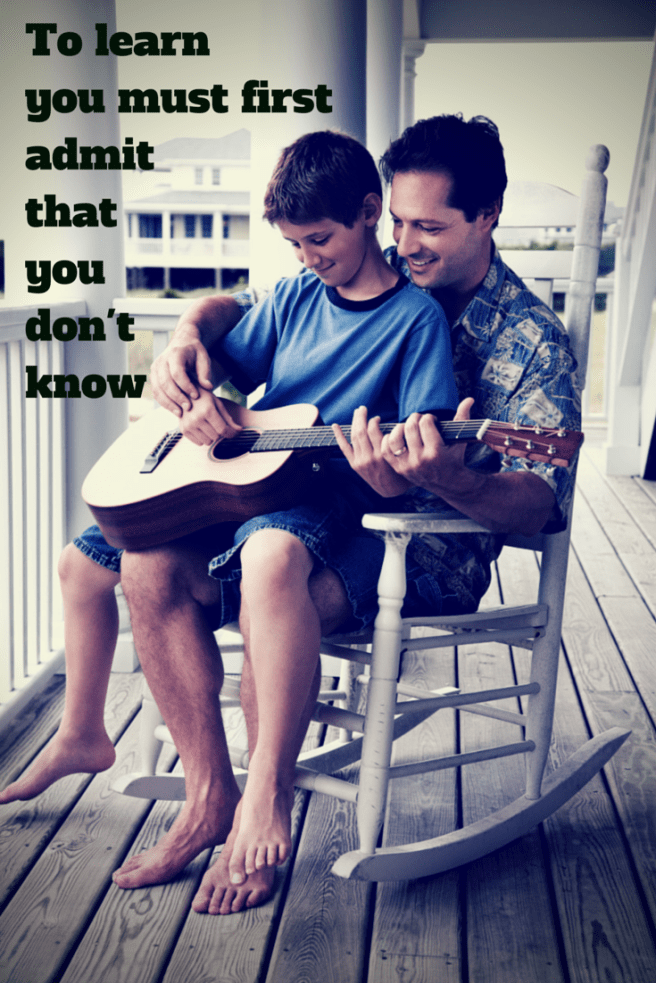
learning

9 Things I’ve Re-Learned This Year

Life lessons aren’t mastered in a single bold stroke.  We learn, we practice, we forget, we remember, we re-learn. Here are a few key notes I re-learned this year:

  1. Like a bottomless well, Ego’s desire for applause, accolades, approval, acknowledgement, acclaim, awards, and recognition is never satiated.
  2. When we stroke Ego, it purrs. When we stop, it snarls.
  3. It’s silly to buy another pair of shoes because we want an Ego boost from others when they see us rocking our new ruby slippers.
  4. People want us to do what they want us to do when they want us to do it. They are affronted when we don’t.
  5. When people ask us to “be honest” . . . they don’t always mean it.
  6. In many ways, we are at the mercy of the tides. Life ebbs and flows.  Joy comes and goes.  Sorrow is hard to avoid.
  7. Even if we’re not convinced that “everything happens for a reason,” taking time to look for “silver linings” helps us deal with passing clouds.
  8. When we aren’t wedded to a set destination, we enjoy the journey (and its inevitable detours), more.
  9. If we are enjoying the journey, we win. No matter where the wind blows us.

Aah . . . that’s better!

Nrhatch @ Spirit Lights The Way 


Diversity and the Art of Writing

Writing has reassured me that the things we feel deeply as individuals are universal—love, rejection, angst, joy, belonging; that it’s okay to admit your vulnerabilities. It might feel scary, but it also makes you authentic. Your foibles, shame, and guilt might be someone else’s quiet truth.

People read novels autobiographically, through the lens of their life’s narrative, and their values and opinions. My heroine might be a role-model for one reader, but another reader might want to slap her. I have little control over how readers see my characters as an author, and this came as a big surprise. Most readers love my male lead, but one reader thought him a tosser (although she did reassure me she’d shag him in a heartbeat, oh dear!). Now I realise I can’t write my characters to keep everyone happy, it’s not possible. That’s okay, life isn’t a popularity contest. Besides, my characters largely write themselves.

Writing has taught me that diversity isn’t some little politically correct box to tick. Diversity abounds, it is the norm. The trick is to be open to differences and to hold back from rushing in to judge.  I attempt this by thinking my characters’ thoughts, walking in their shoes, and imagining their predicaments. Besides, wouldn’t it be boring if we were all the same?

Susan @ Susan Lattwein

Susan’s novel, Arafura – Unfinished Business, is a gritty romance with a bit of sex, dynamite, and hilarity – not always at the same time.


Real Men Carry Purses

Statements of fantasy can be metaphors for real life—you can live backwards and you can still learn at age 403! I once read that even if your body never aged, you’re statistically likely to die from an accident before you hit 600. See, you just learned something! I told you it was possible.

I have previously claimed on this blog that I am 403 years old, but I am far closer to 43. Although I exaggerated my age for humorous effect, one can learn after 40. And, while we can’t literally live backwards, we can become more open and tolerant, which is the opposite of what usually happens when people get older.

So I learned two things this year, both related: to respect women on a higher plane and to break free from my personal gender stereotypes. While I’ve long thought of myself as a feminist ally and viewed women as equals, that didn’t stop my subtle objectification. I was never the creepy dude, but I wasn’t the ally I thought I was, either. The journey toward being a better person is a welcome one.

With encouragement from the women in my life, I finally bought something this year I’ve wanted for ages, a purse. Why can’t a guy have a purse? It elevates the quality of life. I needed to build up my “bravery” first, which shows you how badass women are. They carry purses all the time.

Eric @ ericjohnbaker


Unauthorized use and/or duplication of this material without express and written permission from this blog’s author and/or owner is strictly prohibited. Excerpts and links may be used, provided that full and clear credit is given to Timi Yeseibo and livelytwist.wordpress.com with appropriate and specific direction to the original content.

Did We Do Any Learning? [1]

Learning

Yiikes, I’m a Control Freak!

Accomplished is my word for 2014. But so is Control Freak, as I’ll learn later.

It was a fine morning in June 2013 when I sat, filling out forms in the anaesthesiologist’s office.

“Gosh, you have OCD,” he said, when I handed them back.

Puzzled, I turned to him, “Why do you say that, sir?”

“Well, you’ve filled out every detail on the form. Hmm, the people who work for you must be suffering.”

What? All that from filling out a form properly? No appreciation? Why ask for the information if it was unnecessary? I shrugged but paused, thought lingering.


Fast forward to November 2014.  I’m reading, Eat, Pray, Love, by Elizabeth Gilbert. I’m awed that she, thousands of miles away, can write my heart so perfectly. In the book, ‘Liz is in conversation with her friend, Richard:

“Lemme tell you something, Groceries – you got some serious control issues.

“My rage at this statement consumes me like fire. Control Issues? ME?

“…Listen, you’re a powerful woman, and you’re used to getting what you want out of life,…Life didn’t go your way for once. And nothing pisses off a control freak more than life not goin’ her way.

“You gotta learn how to let go, Groceries. Otherwise, you’re gonna make yourself sick. Never gonna have a good night’s sleep again. You’ll just toss and turn forever, beatin’ on yourself for being such a fiasco in life…How come I screw up all my relationships? Why am I such a failure?”1

I scream in my head. This is me. Has been me forever.  And so I’ve decided that my phrase for 2015 is Letting Go. Because I can’t look forward and back at the same time.

Control Freak. Letting go.


Ozoz @ Kitchen Butterfly
Watch her Journey by Plate, at TEDx Port Harcourt, October 2014.


No Stopping Me

I refuse to listen to the cynical voice sending evil messages to my brain, “You have reached your limit, just give up and maintain what you have.”

It is not possible that I cannot lose any more weight. Short of sewing up my intestines, tongue, and teeth, I have tried everything humanly and spiritually possible to lose weight.

Last Friday, I decided to give my body a treat. Off I went to a nearby gym and spa center. I asked about their services.

“Pedicure, body polish and massage, facials, tummy blast—”

“Eh Tummy blast?” Light bulbs went off in my head. “What does it entail?”

“We have a machine that rolls over the stomach, as well as a kneading wood that helps to blast the fat.”

“Wow! Really?”

“Yes ma,” the lady responded. “But you need to come in for a minimum of six sessions to see tangible results.”


Treatment started in earnest. The machine began its work. Years of unleavened fat would not go down without a fight. The kneading wood was applied to further flatten the pouch. Next, they tied me with cellophane and a long strip of cloth. I made Herve Leger’s bandage dress look like child’s play. Na wa, so this is what it feels like to be an Egyptian mummy?

Fifteen minutes later, I had lost about an inch! They placed me on a three-day fruit diet with lots of water and gave me aloe vera gel drink as part of a detox plan.

Although the aloe vera drink tastes like shit and my husband laments that he and the kids are the real victims of my never-ending weight loss programmes (they cannot go to the toilet after me since air fresheners and diffusers are powerless against this form of domestic terrorism), I am trudging on. Ain’t no stopping me. One down, five to go.


Eriye Onagoruwa is a legal practitioner. She writes satirical pieces for The Guardian.


A Thin Line Between Yes and No

I tend to say yes to almost everything.

I tell myself that this is due to my good nature, after all what’s so bad about trying to avoid the landmine of hurt feelings? I sometimes suspect though, that it is because I hate being told no myself. My reluctance to use the word no usually results in my being burdened and stretched with over commitments and ever-increasing responsibilities. This was a constant thread than ran through the fabric of 2014—a constantly overflowing schedule. The slender margins took a toll and gave rise to frayed nerves and a quick temper.

A person who lives with the stress of an overwhelmed schedule will ache with the sadness of an underwhelmed soul.2

I wish I had known earlier, the freedom that comes with just saying no. Saying no does not close the door on opportunities; rather it creates the opportunity to say a resounding yes to the things that do matter. Saying no is just another way of saying, “Yes!” to the important things. Lysa Terkeurst calls this our Best Yes.3

I am not one for New Year resolutions, but as 2015 peeks from behind the folds of 2014, I hear, margin. I have learnt that I need margin in my life and to achieve this, sometimes, I need to say it loud and say it clear, with a dash of understanding and empathy of course, “No!”


Tamkara @ naijaexpatinholland
Tamkara rocks her clogs expat style in the book, Dutched Up! with 27 other expats who share their perspectives on life in The Netherlands.


  1. Gilbert, Elizabeth, Eat Pray Love (Croydon: CPI Group (UK) Ltd. Books, 2007), 158 – 159.
  2. Goins, Jeff. 025: Saying Yes to the Best Things: How Do You Balance It All? [Podcast]
  3. TerKeurst Lysa, The Best Yes: Making Wise Decisions in the Midst of Endless Demand


Unauthorized use and/or duplication of this material without express and written permission from this blog’s author and/or owner is strictly prohibited. Excerpts and links may be used, provided that full and clear credit is given to Timi Yeseibo and livelytwist.wordpress.com with appropriate and specific direction to the original content.

Gods Were to Blame by Samuel Okopi


Sango by Tobi 'Leftist' Ajiboye

All the lessons of history in four sentences: Whom the gods would destroy, they first make mad with power. The mills of God grind slowly, but they grind exceedingly small. The bee fertilizes the flower it robs. When it is dark enough, you can see the stars. – Charles A. Beard


“Who dares Oyo?”

Sango’s fingers quaked as he rose from his seat. A palace guard had come with news that frightened his household but angered him.

“Who dares my beloved Oyo?” Sango asked again with a louder voice, his face squeezed to a frown, his eyes eager to escape the prison that held them.

Everyone in the palace shifted back.

“I will destroy this oyinbo god!” said Sango, as he raced to the skies.

From the embrace of the lower clouds, Sango saw Poseidon, an oyinbo god so mighty that when he moved, the sea swirled around his body like wrapper shaking in the wind. Poseidon held a trident with which he guided the clouds above the sea into a thunderstorm easily uprooting palm trees outside the city walls. He advanced from the middle of the sea, lashing the waters with his massive frame.

Sango trembled. Where did such a god journey from? What does it desire?

Poseidon roared and the earth shook.

Olorun did not mold Sango with fear!” Sango spat out the words through trembling lips.

The upper clouds swirled faster around Sango’s outstretched double-headed axe. As the master of thunder, the knowledge that another being sought the obedience of heaven’s light and sound enraged him. Fear shrunk into a still prisoner bound by the shackles of his rage.

“White god, listen! You shall burn! The waters shall do nothing to stop your white skin becoming like the terrible blackness of night. You shall disappear as ash to the skies!”

When Poseidon’s eyes caught Sango, he roared all the more in the foreign tongue and mounted the sea horses formed of the tidal waves. Soon, he was by the beach. Poseidon had not crossed the palm forests by a man’s twenty paces when Sango swung his axe and struck him with a stream of lightning.

All of Oyo Kingdom and beyond heard the terrible groan of the oyinbo god as he crashed into the sea. Warriors ran into their huts ahead of their wives. Children bumped into themselves as they pursued their mothers’ loosening wrappers. The scent of death had never been this pungent in Oyo.

In the palace, Sango’s three wives, Osun, Oya, and Oba, huddled in the inner chamber, quivering.

“Olorun, spare us and our Kabiyesi o!” said Osun, whose beauty and excellent cooking kept Sango’s deep love for her aflame through all seasons. Wraps of amala she had prepared for him lay on the floor of the main chamber, their roundness deformed to the jaggedness of mountain ranges. The hot ewedu soup she had placed beside the amala stained the floor like stubborn patches of grass.

Every member of the royal household crouched in hiding, counting their heartbeat and the painful seconds before the oyinbo god’s groan would resound. Instead, the faint sound of Sango chanting praises of his exploits in battle, streamed in from the skies.

The palace guards rose first, following the distant sound, shedding their fear with each footfall. They moved into the courtyard and sighted Sango in the clouds, and then they shouted, singing the great victory songs of old. The palace drummer struck the batá twice, swung around, and then moved his hands faster and faster over the batá. Osun, Oya, and Oba’s legs received strength and their hips swung left, right, left, as they chorused with the guards.


Who amongst beasts and men can stand the fire in Kabiyesi’s eyes?

Will a god beside Olorun do battle with Kabiyesi?

Ah, Kabiyesi, master of thunder!

The god that brightens the earth with his eyes.

The one that chews iron and bathes with fire.

Our lord with eight eyes guiding heaven, eight more ruling earth.

Our king who makes Oyo people snore in a thunderstorm!

Kabiyesi, master of thunder, Olorun made you perfect!


Sango smiled as tributes from the lips of hundreds of thousands dwelling in Oyo kingdom ascended to his ears. He descended towards his people, his brown loincloth swaying in the wind as he danced to the intoxicating beat of the batá.

Midway between earth and sky, the earth began to tremble. Poseidon’s roar arose from the sea and saturated the skies, sucking in the joyful noise of victory swimming in the air. When Sango turned to behold Poseidon, a mighty ball of water hit his frame and flung him towards Egbaland where he crashed on Olumo Rock, the great rock revered all over Egbaland. It shattered at once into boulders that flew out and crushed many houses and people.

From where his swift flight ended, Sango pushed aside the tree trunk straddled across his torso and jumped to his feet.  His mouth was bitter from the memory of his humiliating crash. Seeing Poseidon advancing towards Oyo, even if with a burnt arm, turned Sango into a mad man. Wrath stole his words. Pain summoned his axe. When it came, he stuck it in the air and flashed his iron teeth at the sun.

Thunder knew its true master.

“Olorun! I am the greatest god after you!” Sango said, his eyes aflame as he channelled ten years of thunder towards Poseidon.

***

Poseidon’s ashes travelled as far as Timbuktu. The great walls of Oyo crumbled to dust. Not one living thing survived.

“Oloooooruuuuuuuuuun!” Sango cried to the heavens, the fire in his eyes humbled to tears streaking his cheeks.

“Oloooooruuuuuuuuuun!  Olodumareeeeeeeh! Why did you not tame my anger!”

Sango sank to his knees. Osun’s enchanting smile flashed before him and with it came the memory of the sweet-smelling amala and ewedu she had prepared for him.

“Aaaah!”

Sango bowed his head and wept like a man. For two days his knees remained with the ground and his lips did not part. When he stood to his feet, he walked for seven days never stopping until he vanished into the sea.

No god ever saw Sango again.


© Samuel Okopi 2014

samuelokopi.com


Oyinbo: Pidgin. Usually, a person of Caucasian descent.

Olorun: The supreme god of the Yoruba pantheon in its manifestation as the ruler of the heavens. http://en.wikipedia.org/wiki/Olorun

Kabiyesi: Majesty, Royal Highness. He whose words are beyond questioning.  http://en.wikipedia.org/wiki/Highness 

Batá: A double-headed drum shaped like an hourglass with one cone larger than the other. http://en.wikipedia.org/wiki/Batá_drum


Image Credit

Sango’s Rage by Tobi ‘Leftist’ Ajiboye

Twitter & Instagram: @leftistxx


Unauthorized use and/or duplication of this material without express and written permission from this blog’s author and/or owner is strictly prohibited. Excerpts and links may be used, provided that full and clear credit is given to Timi Yeseibo and livelytwist.wordpress.com with appropriate and specific direction to the original content.