Shifting Gears [2]

Don't complicate your mind.


Eileen’s writings, laced with humour, candour, and common sense, inspired me to examine how what is important to me has changed over the years.

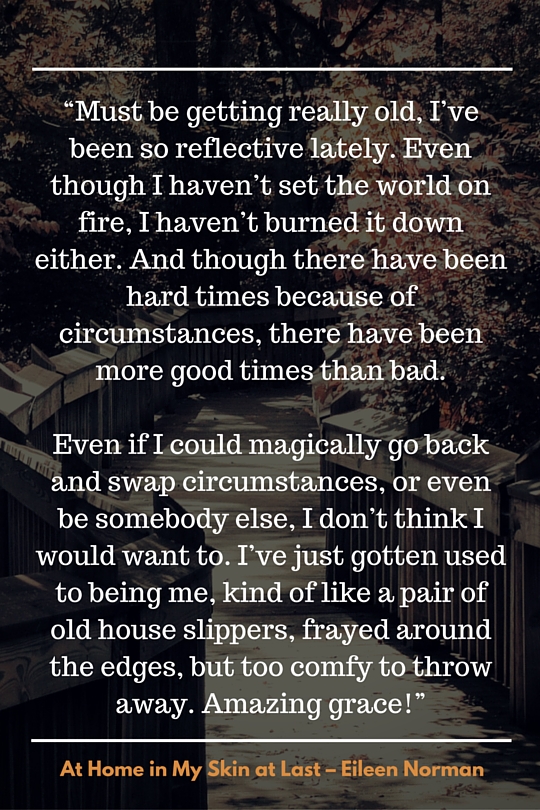
In Gifts of Age, she notes, “On the outside I’m a short, plump, white-haired old lady on a walker. But inside me still live all my younger selves. Dwindling energies and a sense of time passing at warp speed, force me to re-evaluate my priorities. Where do I want to focus my limited resources? On image? On possessions? On my aches and limits? On pleasure as a temporary distraction? On a past that I cannot change? On a future that may never come?

It seems more important now, to focus on recognizing the footprints of God in my daily life, on celebrating God’s presence in the small and ordinary, even in the heartbreak, and to share that awareness however I can.

No matter what our age is; today is the only day we actually have.  We can seize it, rejoice in it, and dance in our hearts.”

She invites us to laugh with her as she shares how growing older has caused her to shift gears. Hear her:

At night, as soon as you get your pillow nest arranged to support aching backs and knees and burrow gratefully into it, doubt enters the room.  Did I lock the doors?  Did I turn off the stove?  Did I switch the wet wash to the dryer? Did I take my pills? Yes, I think I did all that tonight. No, that was last night. Oh hell, I better go check.

Then, because your bladder is your only body part that’s more active with age, there are at least three trips to the john every night. And since your early warning system is now deceased, these are made at warp speed, even on a walker. Panic is a great motivator. There should be an Olympic competition for this. You wake up tired and wonder why.

The disconcerting end to what seemed like a reasonably nice day is realizing that you have gone all over town smiling today without your upper dentures.

When you express worry about some of the disasters being experienced by others your age, your children encourage you to be thankful that’s not you.  And you mentally add the word, yet.

When everyone’s talking about diets, you’re thinking, Sure. Like I’m going to give up my last pleasure in life, so I can look good in my casket.

Read More …

If you enjoyed what you read, please tell Eileen so on her blog.


©Timi Yeseibo 2015

Unauthorized use and/or duplication of this material without express and written permission from this blog’s author and/or owner is strictly prohibited. Excerpts and links may be used, provided that full and clear credit is given to Timi Yeseibo and livelytwist.wordpress.com with appropriate and specific direction to the original content.

Shifting Gears [1]

shifting gears


Human clay finds its moisture in relationships and will evaporate into dust without them  – Beth Moore


When I arrive at Tamali’s house, she holds my arm and turns me from side to side, and then she sighs.

“How do you do it?”

She knows how I do it. Her eyes sunken, her voice nasal, her walk without bounce; she coughs as she leads the way. The aroma of sautéed bell peppers and tomatoes hits me. On the gas hob sits a stainless steel pot. Underneath the glass lid, I spy something white; rice, pasta?

“Food?” she gestures towards the pot.

“No thanks, I’m good.”

She opens the fridge and brings out Amaris’ cake. I recognize it from the photo she sent me on WhatsApp. The Barbie doll, which sat atop is gone as is half of Barbie’s pink-layered flowing gown. She gets busy with her knife.

“Too much,” I protest.

She eyes me, “You don’t have to eat it all at once.”

Her neck is lean and last week was tough for her. So, I take the knife from her and halve the portion she set aside.

Back in the living room, she offers me the stubby bananas that Kwame brought from Uganda.

“Very sweet. Not like the ones from Costa Rica in Albert Heijn.”

“I’m full.” I bend and hug my stomach.

“You never eat! I can’t count how many of them I’ve had,” she spreads her arms and looks at her torso; “I’m always eating!”

She is not always eating. It is her frustration speaking.

“How did I get from there to here?” She points at a framed photo by the TV and then digs out more photos from the shelf next to the TV stand.

This is what you do for a friend with flu. You stop by her house after work with a packet of Day & Night Nurse and explain how to take the capsules. You eat cake when you’d rather not. You pull your chair closer to hers and hunch over hundreds of photos. You listen as she reminisces about her days at Makerere University and her time in London, the jauntiness of her late teens and early twenties—that period before we tell ourselves, I’ve got to get serious and settle down. You see a girl you did not know, who helps you understand the woman you now know. 

She appraises each picture by size, interrupting my flow.

“Oh, look at this one, I was slim here.”
“You think I look good there? No way, I resembled an elephant.”
“This one was taken earlier in the year. See me in the same dress later that year; the dress is bursting at the seams! What did I eat?”

And you mourn with her, the loss of youth. Because flu makes you delirious. It makes you want your mother who is 6000km away; although you left home at twenty and you are now in your early thirties. It chains your legs so you miss the gym, stay at home and raid the fridge, and feel fatter than you are.

A pathological nostalgia has seized her and you cure it with kindly indulgence, not once looking at the clock. 

I recently read an article about why female friendships are fraught with infighting. Sitting here with Tamali, I cannot relate. Have my friendships always been this supportive?

There was that time Ada stayed over and borrowed my jewelry while I was at work, leaving me a note to dispel panic in case I looked for it when I returned. I stayed mad for months and ignored her overtures and peace emissaries. My anger was toxic, contaminating anyone who would listen. One day she braved my rage and showed up at my doorstep.

“Yes?” I filled the door space, arms folded across my chest.

“I’m sorry. It broke. I couldn’t return it until I fixed it.”

I blocked her advance, spreading myself wider.

“For crying out loud Timi, it isn’t even 24-karat gold. It’s costume; that’s why nobody could fix it!”

“Beside the point! You shouldn’t have taken it without asking!”

She edged passed me, pushing me against the doorframe. She dropped the broken piece of jewelry on the dining table on her way to the kitchen.

“Do you have any food?” she asked one hand on the door of the fridge.

I sighed and smiled. You cannot poison food if you are going to eat and share it. That was twenty years ago. Ada and I are still smiling.

My girlfriends and I congregate around food. We eat; we do not eat. Thighs and hips feature in our extended conversations. Size is important and relative. Beneath this shallowness is affection, deep and strong, binding us as tomatoes cleave to meat in stew.

When I was younger, I made war. Now I’m older, I make peace. 


©Timi Yeseibo 2015

Unauthorized use and/or duplication of this material without express and written permission from this blog’s author and/or owner is strictly prohibited. Excerpts and links may be used, provided that full and clear credit is given to Timi Yeseibo and livelytwist.wordpress.com with appropriate and specific direction to the original content.
 

What Do I Look Like?

selfie

The mirror in an uncrowded elevator is an invitation to look at myself, as are the floor-to-ceiling display windows in the mall. Rarely do I say no. Ever notice that when presented with a group photograph, your eyes search for you first?  Is this vanity or normal self-absorption? I have sixty-one selfies on my phone. Perhaps I should not call them selfies. The Oxford Dictionary defines a selfie as a photograph that one has taken of oneself, typically one taken with a smartphone or webcam and shared via social media. Not one of my digital self-portraits is uploaded on my social networks.

My favourite ‘selfies’ are those where I employed the tricks my eighteen-year-old friend taught me to make a selfie not resemble a selfie. All that posing and angling, so I look as though my photo is the view from another’s lens, why?

Apart from a desire to pretend that I did not tilt my head, tuck in my chin, suck in my cheeks, and find the best lighting, before stretching my hand to click, I want to try to replicate an unguarded moment—what others see when I am unaware that they are looking at me, an honest picture of me. But a selfie is manipulation, a digitally enhanced, filtered, and cropped representation of how I want to see myself and how I want others to see me.

I find selfies useful as picture diaries to share privately with friends, but too subjective to tell me what I really look like. Sam Anderson captures this paradox in his New York Times‘ article. He begins by asking: What do you look like?

You are the world’s leading authority on the subject. You have studied your face for many years, with life-or-death intensity, in almost every mirror and tinted car window and unrippled pond you have ever passed. You are the Sir Isaac Newton of your own face: the one true discoverer of its laws of motion, its particular gravity.

You are also, simultaneously, the very least qualified person in the world to know what you look like. You have no idea. You have never actually seen your face — not truly, from the outside, the way other people see it. This is because of a nonnegotiable quirk of the human anatomy: You have to use your own face to look at your face. You are both observer and observed.

Is this why we ask others, “How do I look?”

As a child, my mother was the first yardstick I used to measure my looks by. When people called me little Gina, alluding to our resemblance, I realized I was beautiful. External validation aids self-perception. I have wished on occasion that I could step out of my body and see myself. The next best thing is my reflection in the eyes of those I trust, a realistic picture that transcends the selfies on my phone.


Related: Beauty, A First-Class Ticket
                A Fading Glory


©Timi Yeseibo 2015

Unauthorized use and/or duplication of this material without express and written permission from this blog’s author and/or owner is strictly prohibited. Excerpts and links may be used, provided that full and clear credit is given to Timi Yeseibo and livelytwist.wordpress.com with appropriate and specific direction to the original content.

 

Your Part of the Story

comprehension

In secondary school, my English teacher gave us a block of text to read followed by a series of questions to test our understanding. This exercise was called comprehension. Correct answers were based on the text. To extrapolate from our life experiences and make connections beyond the confines of the text, in order to interpret it, meant certain failure. This standardization of meaning complemented the marking scheme, I suppose, but we don’t approach life this way.

When we listen, we not only hear the words spoken, but also the manner in which they are spoken and all that it encompasses. How these elements affect our emotions, also influences our understanding.

At work, while implementing a strategy that we’d been briefed about, my colleague and I came to a gridlock because we interpreted the briefing differently. When we sought clarification, it turned out neither of us were right. So much for clear communication, which is why at the end of a talk, a speaker says, “Let me recap . . .” or an avid listener practices reflective listening, “If I’ve understood you correctly, you said . . .”

Someone said, “Write it to eliminate ambiguity,” as if inanimate words on a screen do not awaken and grow wings in the minds of those who read. Perhaps in business writing where clarity and conciseness are pivotal, this is true, except when the writing is convoluted to deceive.

But, in October, I wrote fiction. In fiction, we abandon some of the rules of comprehension I learnt in school. I think that a good writer invites us to create our own stories within the bigger narrative that he or she is telling. Writers do this by leaving a trail of white pebbles that readers instinctively follow to figure out what the story is about, when and where it is taking place, and why the characters act the way they do.

Somewhere along the journey, readers abandon the trail for a meandering path to interpretation. The writer takes a secondary seat, having provided the framework for readers to build by making associations based on their experience, belief, imagination, or needs even.

When I began publishing fiction here, I was fussy about readers’ interpretation. Did they get what I was trying to say? The comments showed me that readers don’t always perceive the story the way I do. And now I’m okay with that. For one thing, no one is writing a comprehension exam. Moreover, to see the story through a reader’s eyes is to see the story again.

I will agonize over words for days on end—do my words lead to logical inferences, are they coherent? But once I hit publish, I understand that the piece of writing, the baby I carried, has been delivered to the world. It is no longer mine. Comprehension is the reader’s part of the story.


©Timi Yeseibo 2015


Unauthorized use and/or duplication of this material without express and written permission from this blog’s author and/or owner is strictly prohibited. Excerpts and links may be used, provided that full and clear credit is given to Timi Yeseibo and livelytwist.wordpress.com with appropriate and specific direction to the original content.


Hardwired For Sorry [conclusion]

One

The Power of One

I shook my head as I reviewed Ope’s first draft for the series. Her prose though beautiful did not resonate with me. This piece lacks heart I thought. It did not. The problem was me. I could not conceive that a girl would have insecurities about her height. That others brought them on was beside the point. How could she not see how lucky she is? Someone said that privilege is invisible to those who have it. I am the petite girl with graces, how could I know?

Aware of my bias, I reread Ope’s piece, processing her ideas and connecting them to my experiences.

Tall girls seem to be the norm where I live. I have watched little girls grow up to be gorgeous tall women and none has expressed any reservations about her height. But once when I asked one why she enjoys watching the TV series, Suits, she replied, “Because I look like Gina Torres, and she’s badass!” Was she looking for a role model to validate her six-foot frame? By questioning the premise of her heightend apologies, I see how Ope has become a lighthouse for tall girls and short boys too.

Stories are a way to share our humanity and reading stories is both a conscious and unconscious search for validation.

When Abi submitted her article, she mentioned that every sentence of her rant was factual and she had exceeded the set word count. In fact, every contributor to the series burst through the imposed word count to set their stories free and I, wielding the editor’s scissors, could find little to trim.

Abi’s article stemmed in part from people’s inability to see the pervasive misogyny in her society. Just as I could not connect with Ope’s story at first, they could find no basis for the Chimamanda Ngozi Adichie’s quotes, which Abi shared, tagging them mischievous.

Adichie says that gender is a difficult conversation to have and as Sheryl Sandberg notes, the subject itself presents a paradox, forcing us to acknowledge differences while trying to achieve the goal of being treated same. It seems Abi wanted to make gender visible to men and women.

Some dismissively brand articles like Abi’s feminist. Have you ever been in conversation where a word popped up that made you stop listening and start churning points in your mind to deconstruct what the other person is saying? Anything that reeks of feminism arouses this impulse in some. So, when Abi signed off as a feminist in her bio, I was tempted to remove it.

There are two jars of honey in my cupboard. One label says the honey is from wild flowers and the label on the second jar says the honey is from honeydew. Humans are too complex to categorize into neat labels like honey. This explains why feminism has many definitions and connotations as well as branches—socialist feminism, African feminism, free-the-nipple feminism, and so on.

Those who take this as a sign of confusion should remember all the other philosophies that are similarly ‘confused’: democrat, conservative democrat, republican, liberal republican, catholic, catholic charismatic, Christian, evangelical Christian—are you laughing yet? Wherever human agency exists, there will be divisions, sub-divisions, and further divisions of the sub-divisions. The challenge then is not to merely dismiss ideologies because of labels but to listen in spite of them.

When a woman shares her story, it should cause us to remember our own challenges. At the very least, it should broaden our understanding of our world and our place in it.

After I pitched the idea of the series to Ekpos, she replied, “My own issue is different; people are always saying sorry to me!” Other challenges like physical disability eclipse gender, but only partially. Ekpos relates an incident at the airport where a porter looked at her and exclaimed, “Kai, fine girl like you; wetin happen to ya leg?”

She notes that wit is often the bridge through awkward situations. We need to laugh at ourselves more and get the world to laugh and then see with us. Amy Schumer uses comedy to good effect in her I’m Sorry sketch. According to Schumer, her show has been likened to putting shaved carrots into brownies. Emancipation is a journey, smile you’re on camera!

Ekpos makes the distinction between things she could and could not control. Disability and gender were thrust upon her. The will to overcome these perceived limitations was hers to invoke. The external factors, which make women hardwired for sorry, will not change overnight. But women can take charge of themselves by rejecting the messages they have internalized.

Bel takes this approach in her article. Although she was invited to the table, as were the women in Schumer’s sketch, she tottered at the edge, self-doubt hampering her stride. Many women are echoing songs their parents and grandparents taught them, songs that romanticized a woman’s lowly place in society. They are unconsciously complicit in their disempowerment. Bel noticed that the same self-doubt that tortured her was also present in the minds of some very fine, intelligent women in her company.

By looking inwards with a view to understanding herself, she finally gave herself permission to stand. In her words, “Fortified with this knowledge, I set out to change my story . . . I have begun to tell myself, first, that I am bigger on the inside than I am on the outside.”

Amy Schumer’s sketch isn’t about semantics, in my view. Sorry is still a useful word. However, the characters in the sketch were really using sorry to: diminish their accomplishments so they could be likable, temper their requests for their entitlements with ‘humility’, register their opinion as though it isn’t worth hearing, take nurturing to the nth degree by assuming responsibility for things beyond their scope, and mask impostor’s syndrome. 

If you, man or woman, are concerned about the external and internal factors that predispose women to shrinking themselves, then you need to answer this question: what change or sacrifice do I make to ensure women are unapologetic about taking up space in the world? One thing. Then follow through. Ripples will occur. This is the power of one.

I can’t thank you enough for writing, reading, liking, sharing, and joining the conversation.

timi


©Timi Yeseibo 2015

Unauthorized use and/or duplication of this material without express and written permission from this blog’s author and/or owner is strictly prohibited. Excerpts and links may be used, provided that full and clear credit is given to Timi Yeseibo and livelytwist.wordpress.com with appropriate and specific direction to the original content.

Hardwired For Sorry [5]

apology

My Height-ened Apology

My uncles, aunts, the traders at Iwaya market, and the sales person at Wranglers boutique conspired to spit accusations at me. I burrowed the ground with my eyes and hid my lanky arms behind my back. They made me regard my elongating form with shame.

Ahan Ope, do you want to grow as tall as iroko?” People questioned me without expecting answers.

I wanted to die and on the days that I did not want to die, I wished God would shrink my height—who would marry me? They said I was tall for a girl and at the rate at which I was growing, it would be impossible to find a man taller than I was. Even when I pretended not to care, fury spread its wings on my face and at night, I buried my face in my pillow while crying away the pain.

And so, I learned to apologize. I apologized to the inconvenienced sales person who searched and searched for the right size of shoes for me. I apologized to the world, boys in particular, by slouching a little so that the measure of my stature did not intimidate. I apologized to petite girls, who would never have a problem when it came to marriage, by silencing my brewing envy and playing nice. I apologized to my older siblings by giving up my right to speak in their presence because I was told that I had stolen their right to be taller than me.

Like the women in Amy Schumer’s sketch, I say sorry when I do not need to. After I hit my head on the roof of a campus shuttle bus as I got off, my auto-response to the driver’s remark, “All these tall people eh,” was sorry. It was my defense for distracting the other passengers, by making them concerned about me. It was embarrassment for being five feet ten inches tall. It was martyrdom without the halo.

In the last scene of Schumer’s sketch, the male moderator inadvertently pours hot coffee on the third panelist’s legs. She falls down in pain, screaming, “Sorry!” Exaggerated for comic effect, her legs melt off and in agony, she moves with her splintered legs to the chorus of sorry from sympathizers. Her dramatic exit ends with these words, “I’m sorry, I’m dying, I’ve ruined everything. It’s all my fault.”

The moderator never says sorry. He says, “Oops!”


Until recently, I believed apologizing for my height was the polite thing to do. I have not unlearned this, but I have become more conscious of it and begun to question the premise of my apology.

Why should anyone have to apologize for the genes they received? Do I apologize for my father and mother too? Why should I be ‘conditioned’ for marriage as if it is the highest purpose I could aspire to? And is a woman who is taller than her husband an anomaly really? Really? Does my height mean I am likely to be more domineering than petite women with graces are? Can flat shoes and a small car truly alter my outcomes in life?

The message from my society is subtly clear: make yourself smaller so men can feel bigger, taller, and more powerful. My height is but a metaphor, which affronts obstinate traditional ideas about gender.

stand out where I come from. Perhaps I’m not supposed to fit in; I am to own and celebrate my uniqueness and be a lighthouse for tall girls and ‘short’ boys too.

This hardwiring for sorry cuts across cultures. My apology revolves around my height; what does yours spin around?


Ope Adedeji is a fourth year law student at the University of Lagos. She dreams about bridging the gender equality gap and working with the United Nations. Ope writes occasionally at artsandafrica.com and talesbycecile.wordpress.com.


©Timi Yeseibo 2015

Unauthorized use and/or duplication of this material without express and written permission from this blog’s author and/or owner is strictly prohibited. Excerpts and links may be used, provided that full and clear credit is given to Timi Yeseibo and livelytwist.wordpress.com with appropriate and specific direction to the original content.

Hardwired For Sorry [4]

sorry scream

If I Hear Another Sorry, I Will Scream!

I was confused after listening to the high-achieving female innovators in Amy Schumer’s video string a melody with the word sorry. What did their sorry mean? In my part of the world, sorry is usually used to convey pity and sympathy. It is a word I am intimately familiar with.

I remember being a rambunctious kid, playful and energetic. Then my world flipped and went in a direction my young mind could never have imagined. At age seven, I contracted polio and had to learn to walk again, albeit with a limp. Then, just before my sixteenth birthday, I had a freak accident and sustained a fracture to my left femur.  After a couple of surgeries, I was confined to a pair of crutches. I have used them for twenty-eight years. People say sorry to me all the time even though I’m not in any kind of pain.

Because my physical disability attracted pitiful stares and sorrys, I became obsessed with trying to prove that I wasn’t as helpless and disabled as I looked. I focused my energies on education and worked hard to find a footing where the brilliant students stood. Intellectual development became my foremost life goal: if you can’t walk or run, by all means think.

My worldview changed after I read about Helen Keller’s achievements despite contracting an illness in childhood, which left her blind and mute. I also read about Franklin Roosevelt, who contracted polio at thirty-nine, but went on to become president of the United States and was re-elected three times. I believed America was the only place for my dream of a normal life. I dreamed about studying and possibly living in The States. When I finally had the opportunity to pursue an MBA in America, I was refused a study visa twice.

I was crushed by disappointment but by this time, had become a possibility thinker. I ended up in England, where I received my MBA and DBA degrees. Seven years in England, and I never heard the kind of sorry or endured the stares that made me want to hide back home.

I returned to my country after my studies hoping that because I now had Dr. before my name, sympathy would morph to admiration and sorry would drown in the applause of praise. Not so. People still stared with pitiful eyes and they still tell me sorry.

However, pity that makes me feel inadequate isn’t the only narrative. Once as I stood at Port Harcourt International Airport waiting for my luggage, a porter walked up to assist me. As we made our way out of the airport, he looked at me again and exclaimed, “Kai, fine girl like you; wetin happen to ya leg?” I was speechless for a second. Then I asked him if bad things were the preserve of ugly girls. He laughed out loud, and I joined him. Often wit is the bridge through an awkward situation.

In addition to the old mind-sets I contend with daily, I try not to sound too intelligent on purpose. I even overthink the act of posting my thoughts on social networks. I used to be disability conscious, now I am overly conscious about my intellectual achievements. After striving to be extraordinary and do extraordinarily well in my endeavours, I find myself trying to be ordinary to make everyone around me comfortable.

I have spent a good chunk of my life trying to prove a point and trying to change perceptions. So, maybe a part of me understands why the four leading female innovators in Schumer’s video are chorusing sorry. They seem to be apologising for being women at the top of their game.

We have no control over our gender. I had no control over my physical challenges. I controlled what I could. I overcame the limitations of my disability and developed myself in the ways that mattered most.

I am a woman. I have a physical disability. But then, I also have a doctorate degree. There is nothing to be sorry about. If I hear another sorry, I will scream!


Ekpos Waritimi is a management consultant, researcher, and speaker. She currently lives in Port Harcourt.


©Timi Yeseibo 2015

Unauthorized use and/or duplication of this material without express and written permission from this blog’s author and/or owner is strictly prohibited. Excerpts and links may be used, provided that full and clear credit is given to Timi Yeseibo and livelytwist.wordpress.com with appropriate and specific direction to the original content.


Hardwired For Sorry [3]

Apology

An Apology For Womanhood

I posted quotes by author Chimamanda Ngozi Adichie, on my Facebook Timeline earlier today. All day, the quotes rolled through my mind like a refrain to a sad love song. And as I navigated thick traffic in Abuja, Nigeria’s equivalent of Washington, it hung like a wet blanket alongside my cranky baby’s cries. Hunger and exhaustion made me extra tense. I turned the radio on just in time to hear the anchor dispense advice to a caller who was seeking help for a floundering marriage and periodic punches from her husband.

“You know men have egos. You just have to stoop to conquer. Avoid behaviours that anger him. If he tells you to stop serving dinner late, you too, get home earlier!”

‘Softening,’ he concluded by recommending she watch her tone and find opportune moments to discuss issues with her husband.


We raise girls to cater to the fragile egos of men. 


Seconds later, my car rocked from the impact of a danfo bus running into the passenger-side door where my baby was seated. The driver had been trying to shunt the traffic queue. Rage propelled me out of my car. He sauntered out of his bus muttering, “Na woman sef.”

My fury grew as he unrepentantly argued with me and as he spat, “Hey! Mistake na mistake. I get your type for house! Don’t talk to me anyhow! Na so you dey talk to your husband for house?”

Bystanders advised me to calm down. “Shebi you know he is a man,” one of them counseled.


We teach girls to shrink themselves, to make themselves smaller. 


When we finally made it home, the water heater failed. I needed the electrician, Mr. Kehinde, to repair it. However, I couldn’t call him because he has issues taking instructions from women. So I rang my husband who was 800km away to call the electrician who was 4km away, and tell him to fix the heater.

Later, a friend called me to lament her experience at the police station where she had gone to bail a neighbour. The officer in charge had laughed in her face and told her that because she is a woman, she was not qualified to bail anyone. My friend, a medical doctor, then had to get her driver who has a secondary school-leaving certificate, to post bail. She was bitter and vented for a long time.


Each time they ignore me, I feel invisible. I feel upset. I want to tell them that I am just as human as the man, that I am just as worthy of acknowledgement. These are little things but sometimes it’s the little things that sting the most. 


Earlier in the evening, I listened to my aunt counsel my cousin whose husband is cheating on her and doling money he wouldn’t spend on his family, on his mistress.

“Just keep your home. That’s what I know. You will not be the first woman. Men stray, they return. Just ensure he continues to eat your food and don’t deny him sex. Don’t let silly girls who have not suffered with him snatch him from you.”


We teach females, that in relationships, ‘compromise’ is what women do. We raise girls to see each other as competitors, not for jobs, or for accomplishments — which I think can be a good thing — but for the attention of men. 


And then she turned to me, “I hear you are applying for PhD again. . . come, what are you looking for? You just want to compete with your husband ehn! The poor man does not have a Masters, now you are ready to lord PhD over him abi? Continue! That’s your cousin struggling right there. You don’t have problems; you want to create some for yourself with your own hands. Already, don’t you earn more than him? My dear . . . ”


We say to girls, “You can have ambition, but not too much. You should aim to be successful, but not too successful, otherwise you would threaten the man. 


Just before I turned in for the night, I visited Facebook. Four angry rants filled the comment section under my post. Their lowest common denominator? Women were marginalized in Nigerian society but that narrative has since changed. Citing a few trailblazers, they maintained that today’s women are just as empowered as men are. So quotes like Adichie’s only promote mischief.

I shook my head sadly. I didn’t respond. No. I shut down and kept my angst to myself. As I drifted off, I wondered why my society would showcase exceptions as the norm while women remain second-class citizens in the pecking order. Why, in spite of clear opportunities to change the status quo, do we continue to look the other way? A society that is blind to the lived experience of roughly half its population is a sorry excuse, an apology for woman empowerment.

We’ve got a long way to go baby. But maybe, just maybe, tomorrow will bring us a new song if we open our eyes.


Abiodun Baiyewu is a lawyer, human rights activist, and feminist with a strong interest in medical jurisprudence and reproductive health.

Watch Amy Schumer’s video which inspired the series.


Photo credit: Unsplash/ https://pixabay.com/en/girl-sad-crying-raining-rain-drops-690327/


©Timi Yeseibo 2015

Unauthorized use and/or duplication of this material without express and written permission from this blog’s author and/or owner is strictly prohibited. Excerpts and links may be used, provided that full and clear credit is given to Timi Yeseibo and livelytwist.wordpress.com with appropriate and specific direction to the original content.

Hardwired For Sorry [2]

Permission to Stand


Permission to Stand

I still remember my first board meeting. It was three weeks after my promotion took effect. After only one year in middle management, I had been promoted to executive board level in the publishing company where I worked.

For sure, I had done very well. My promotion was speedy, and, many people agreed, extremely well deserved. In addition, it was the first time in the history of the company that a foreigner (and a woman, at that), had been appointed to the board. My co-directors and their predecessors were all cut from the same cloth: Dutch men in their fifties, same lifestyle, same background, same jokes.

And so I was the proverbial breath of fresh air. Or so the CEO said as I took my seat at the table. I wasn’t quite sure what they were expecting from me. They looked kind enough, they asked my opinion, and they deferred to me on matters within my area of expertise.

Yet, I was largely quiet. For the first few months or so, I said very little. That could of course be due mainly to my introverted nature—scanning the world, observing life and its interactions, and formulating my views before expressing them.

I would never have dared utter a word unless I was sure of my premise, my arguments, and, vitally, my conclusion. I watched in admiration as my co-directors did the opposite. Especially Max, the commercial director. He would begin with a statement, firm, emphatic, sure. He would wind down various alleys of logic and counter logic, never once wavering in his sense of conviction, and then he would end his monologue, having arrived at a conclusion antithetical to the premise with which he had opened.

I would have been mortified had my thought processes been so exposed to the world, but by his manner (born of an assurance that I never before knew existed), I knew he had no such reservations.

However, my introversion was not the only reason for my reserve. In fact, it was a convenient label I put on myself, a comfort blanket which, protected me from the sharp gusts of truth: that, in a world seemingly governed by others, I was unsure of myself, earnestly seeking permission to stand.

I could not fathom why I felt that way. My technical experience and leadership skills had carried me to the place that I now occupied. Having accepted my appointment, I had every right to play my role. Everyone treated me as my new role demanded. Every voice spoke to me with much respect, save for the voice in my head.

I remember now with mirth a business trip I took to New York during those days. As I stood waiting for a taxi at JFK airport, I saw one of our most influential shareholders at the airport. He was carrying his bags and looking for a taxi. I had this crazy impulse to dash up to him and offer to carry his bags. Now I can only thank God for the steadfastness wherewith He glued my feet to the hot tarmac.

It took me a while before I realised my self-doubt was from within. That, somehow, it was bound up with being a woman. I don’t know when I came to that realization. Maybe it was when I discovered that some of the men around me were brimful with confidence but with not much ability. Maybe it was when I saw  junior male employees swaggering around with an arrogance that could be explained not by talent, and certainly not by achievement. Maybe it was when I noticed that the same self-doubt that tortured me was also present in the minds of some very fine, intelligent women in our company.

Fortified with this knowledge, I set out to change my story. No, not the perception of me that others might have had, but rather the story of me that I told myself. However, in order to do that, I had first to look at myself, come to terms with what I saw, and then begin purposefully to change that vision.

And so I did that. I have begun to tell myself, first, that I am bigger on the inside than I am on the outside. It is true that I am slightly built, soft spoken, and often given to quiet introspection. However, these are all remarkable qualities, and they add something special to whatever table I may grace. They are not weaknesses to be excused away. They are strengths, because they bring empathy and perspicacity to those with whom I have to do. I also know that I am bold, principled, and strong.

I was all the while seeking permission to stand. Now I have granted myself that precious right.


Bel Andrew-Amies makes her home in Amsterdam. When she’s not immersed in the world of international business law, she works on her short story collection.

Watch Amy Schumer’s video which inspired the series.


©Timi Yeseibo 2015

Unauthorized use and/or duplication of this material without express and written permission from this blog’s author and/or owner is strictly prohibited. Excerpts and links may be used, provided that full and clear credit is given to Timi Yeseibo and livelytwist.wordpress.com with appropriate and specific direction to the original content.

Hardwired For Sorry [1]

woman sorry

I throw sorry around a lot but many times, I do not mean it as an apology for an infraction. It is my all-purpose verbal salve to lather concern, nurture, and meaningful meaninglessness to friends and strangers alike. But what lurks beneath my sorry?

Diahann Reyes writes in her post, Amy Schumer and The Art of Taking Up Space:

One of the many facets that I appreciate about comedian Amy Schumer’s work is that she shines a light not only on the cultural conditioning that keeps women in restricted place, but also she exposes the misogyny that many of us have internalized from living in a patriarchal society. As some of her sketches intimate—women and girls have been known to do as good a job as anyone of objectifying, suppressing, or disempowering themselves.


In my view, Schumer’s video is exaggerated to jolt us out of complacency and take stock. To appreciate this series, please watch Schumer’s three-minute sketch: I’m Sorry.

I’m serious, watch the video first.


Unshrinking Myself

After sharing the video with a friend, we decided to observe how much we use the word sorry. She called me one evening. Thirteen seconds into our conversation, she said, “Gotcha! You’ve said ‘sorry’ three times already.”

I had begun our conversation by apologizing for not hearing her clearly, “Hello? Sorry, I can’t hear you properly.” Then I reeled off another apology for making her wait while I put on my earphones, “Sorry, let me just use my earphones.” My third apology was for speaking out of turn, “No, sorry, you go first; you were saying?”

We both had a good laugh, especially when she used sorry twice within the next ten seconds.

On the surface there didn’t seem to be anything wrong with our sorrys. Sorry aka pardon, excuse me, kpele, etc, depending on culture and context, is the grease that facilitates polite conversation. It is sympathy, empathy, and everything else in between. However, the video made me wonder if there isn’t an unhealthy self-effacement leaning towards unworthiness in a woman’s verbal and non-verbal sorry. To my mind, the women in the video were shrinking themselves. I am yet to meet a man I admire who does this.

We teach girls to shrink themselves, to make themselves smaller. We say to girls, you can have ambition, but not too much. You should aim to be successful, but not too successful. – Chimamanda Ngozi Adichie


My parents raised me to ignore gender in striving for my goals. There were no limits to where I could go; not even the sky could hold me back. However, they could not cocoon me from the realities of socialization—an aggressive, assertive, and assured woman is a no-no. How many bold moves have been paralyzed by these words, but you’re a woman?

Over the years, some of my mentors have given me different advice on how to “shrink” myself. In a man’s world, it’s expedient to be the neck that turns the head than to be another head, complete with brains, that complements the man’s head. My mentors are successful women in their own right. Who am I to argue? But, I struggle with this concept.

As I learn to assert myself, I’ve been called a strong woman. It was always by women. It was never meant as a compliment. I catch myself shrinking my abilities, achievements, voice, again and again. Habits are hard to unlearn. Still, I have not yet turned pretence into an art form.


©Timi Yeseibo 2015


Photo credit: cocoparisienne/ https://pixabay.com/en/woman-woman-portrait-head-mourning-850330/


Unauthorized use and/or duplication of this material without express and written permission from this blog’s author and/or owner is strictly prohibited. Excerpts and links may be used, provided that full and clear credit is given to Timi Yeseibo and livelytwist.wordpress.com with appropriate and specific direction to the original content.

Beauty, A First-Class Ticket

beauty

I knew I was intelligent before I knew I was beautiful, for I won academic prizes throughout my primary school years from the time I was five up ‘til ten. This external validation, reinforced by the circle of people who shaped me, became my inner truth.

My mother was the first yardstick I used to measure beauty by. When people called me little Gina, alluding to our resemblance, I realized I was beautiful. But what did that mean?

At my girls-only boarding school, we giggled and bit our nails when boys from the nearby school attended our social events. Being beautiful meant that I was asked to dance and not forgotten on the bench. It meant my classmates said I looked like Yinka, a girl two years older, whom everyone called Black Beauty. Much later, it meant that I tweezed my eyebrows and applied mascara like the models in Vogue.

My mother told me hard work and a good education would secure success. She did not tell me beauty could be a first-class ticket. You see, once when I tried to register a business campaign, my efforts stalled under the weight of bureaucracy. Then a friend scolded me, “How can? A beautiful woman like you? Don’t you know what to do?” Appalled, I went back and talked my way through.

But her seed grew. I studied how people, men, responded to me; after all, they saw me before they heard me. I remember being singled out from a long line of tired and impatient passengers at an airport. As I crossed the gate having passed Security, the officer said, “You’re very pretty.”
I would be naïve to assume that any preferential treatment I receive is because of beauty alone. It would be naïve of you to assume that I don’t receive unwanted attention or worse still, endure suspicion or dismissal on account of my looks.

Recently, I watched a YouTube video about the changing face of beauty, with a friend. “I wish I were born in a different century,” she said touching her generous hips and rubbing her round belly. I just happen to live in an era where my features coincide with what some consider attractive. I’ve come to know that beauty is leverage and the temptation to abuse it, real.

To me, my looks are secondary. But here’s what I know. A beautiful woman on a man’s arm makes him feel taller. In a world of selfies, people soon forget how you look because they are consumed with how you make them look.

We don’t see things as they are, we see them as we are. ~ Anais Nin


©Timi Yeseibo 2015

Unauthorized use and/or duplication of this material without express and written permission from this blog’s author and/or owner is strictly prohibited. Excerpts and links may be used, provided that full and clear credit is given to Timi Yeseibo and livelytwist.wordpress.com with appropriate and specific direction to the original content.

Of Resolutions, Past and Present

of resolutions, past & present

Reflections and resolutions now seem so cliché, I struggle to write this post. Rummaging in the attic, I find a box of old clothes. Each item of clothing held a promise for the future that’s been realised. I hold up a pair jeans, faded and torn at the knees, and press my face into a light pink summer dress. I marvel at how much the kids have grown for it depicts how far along I have come. The past may hold treasures, still remembered but the future is bound in hope, in belief and in the knowledge that with life, all things are possible1.

2012 seemed like such a dismal year for me that come 2013, I had only one mantra: be happy and move forward. 2012 had been a tough year for me that I left formulating 2013 New Year resolutions to the brave and mighty. I knew about goal setting and other jargon like accelerate performance and maximise results, having taught others these principles, yet I dared not articulate hope on paper.

Careful not to rumple the blanket of snow around me, I placed my feet in the footprints ahead as I walked home. Although it was early 2013, several doors had already closed in my face, some loud, others quiet; all resounded with foreboding. I told myself, “No matter what happens, move forward.” All men fail, not all men rise. If I didn’t like the tempo of the skipping rope to nowhere (self-doubt held one end and if-onlys the other), I could jump out. Speed wasn’t priority, movement was. Crawl, limp, walk, run, anything, as long as I kept moving forward.

I tried to be happy, but happiness is a moving target. My challenge was to find something upon which to anchor my happiness. Many suitors paraded before me. Things and more things. People and their foibles. Relationships and their contradictions. In living for something bigger than myself, I moored my ship. A legacy is something that will outlive me, so I gave my best always. I started writing again. Once a week. I made my commitment public, you held me accountable.

Since I had subconsciously translated my mantra into goals, I had to track progress. Success has several indices. I failed on many of them until I realised I must define my own. No one in his right mind expected me to be the next Bill Gates, but everyone expected me to finally get the hang of Windows 8 and stop whining.

Although I have surpassed my bar, success has no finish line. After we cross the tape, and the applause dies, euphoria will leave a day too soon. The world throws today’s headline in the garbage bin tomorrow. I have stopped waiting for that thing to happen before I live. I move forward, I forward march.

Here are three things that helped me on my way.

Define your boundaries and internalise them by rehearsing often, for we are not as strong as we think we are. Two words: be principled.

Cut off unhealthy relationships. A clean snip with a sharp blade worked for me. A saw leaves jagged edges and many wounds. Two words: follow champions

Don’t give unsolicited advice and your relationships will have less drama. If asked, discern the real need: affirmation or feedback. Two words: shut up.

2014? I dare to articulate hope. I will give more, need less, laugh again, forget quick, dream big, in other words, take lemons, make life, and then jump for joy!

Do you make New Year resolutions or write your goals, or do you let the wind carry you where it will?


©Timi Yeseibo 2013


1. Quote from KitchenButterfly, “The ‘Forgotten’ Groundnut Pyramids of Nigeria.  http://www.kitchenbutterfly.com/2013/08/08/the-forgotten-groundnut-pyramids-of-nigeria/


Image credits: http://www.pixabay.com

Design: ©Timi Yeseibo 2013


Unauthorized use and/or duplication of this material without express and written permission from this blog’s author and/or owner is strictly prohibited. Excerpts and links may be used, provided that full and clear credit is given to Timi Yeseibo and livelytwist.wordpress.com with appropriate and specific direction to the original content.
On Getting Older

I am getting older and I do not mind. I have embraced my age. I do not want to be a tottering teenager again, watching my father scrutinize my list of provisions and wondering what his response “okay, I’ve seen it,” means.

I am pragmatic. A few years ago, I folded my wedding gown and put it in my bottom box. It seems like a small thing now, but it was not at the time. My dream of slimming down enough to wear my wedding dress after life and children, died that day—I embraced the truth about getting older and weight. I have a sister who can probably still fit into her wedding dress; she distorts my theory. Are we not sisters, from the same mother, no less? Why did she have to have all the slim genes? I digress; this is about getting older! All my highs and lows have made me the woman I am and am becoming. Yes, I embrace my age. It is the greying that I have not fully understood.

When a few years ago I asked my hairdresser for a shampoo to tackle the dandruff that caused the persistent itching in the middle of my hair, she told me that dandruff was not the culprit. “You have so much grey hair there; that’s what causes the itching.” Information overload (amebo); who asked her?

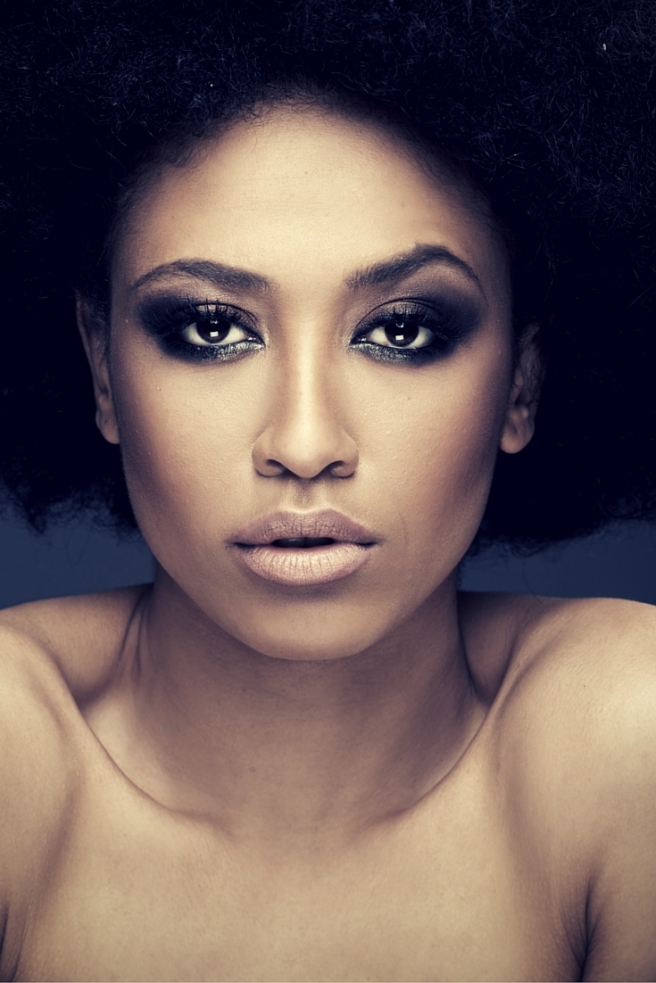
Nevertheless, when I got home, I parted my crown of glory in the middle. And there, standing tall like irokos, streaks of lightning amid my black sky. I pulled a handful, twirling them around my fingers. When and how did they get there? Thankfully, they did not march forward from their hideaway; however, their strategy to gain new territory caught me unawares. Stealthy warriors, overnight, they appeared at the hairline around my temples. Aha, my hairdresser styled my hair with side parting and we won that war. The last time I was in the salon, we struggled to decide which “side” to part the hair. “We will soon have to resort to centre-parting,” she said after grave contemplation.

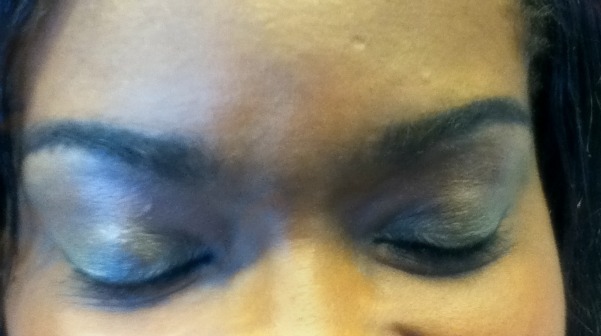
When the first few grey strands appeared on my eyebrows, my tweezers came to the rescue. And so it was that I was plucking a strand or two from my eyebrows the Saturday before Easter, when I saw it. Grey hair had sprung up in places I did not know they would or could grow—in crevices that my mother did not tell me about! But this? Haba! How far? A grey eyelash? You’ve got to be kidding!

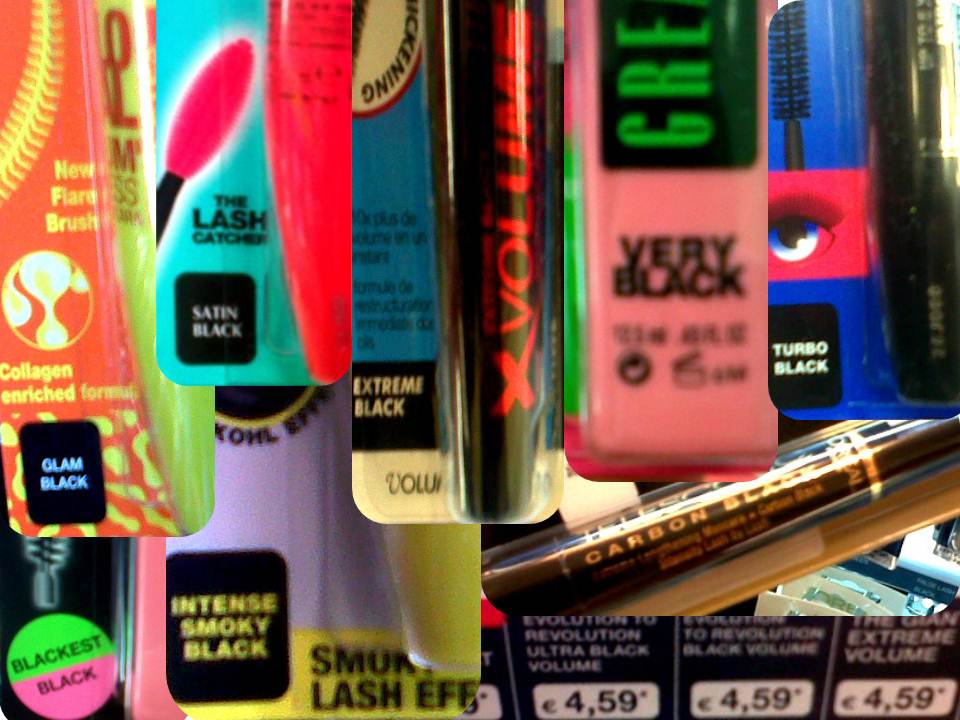
I moved my mirror to catch the natural light from the sun. There it was—not ashamed of standing out in the row of black and as long as its fellow lashes. Is this what it means to get older? Accepting with equanimity the things you can’t control? I went to the shops to find a solution.  I smiled when I saw jet-black mascara. Who knew that black had different shades? I am older, and I will change the things I can, one grey eyelash at a time!

shades of black

©Timi Yeseibo 2013

images ©Timi Yeseibo 2013; photography: Sam Bird & Timi Yeseibo

Unauthorized use and/or duplication of this material without express and written permission from this blog’s author and/or owner is strictly prohibited. Excerpts and links may be used, provided that full and clear credit is given to Timi Yeseibo and livelytwist.wordpress.com with appropriate and specific direction to the original content.

The Body Magic

BM getty images1

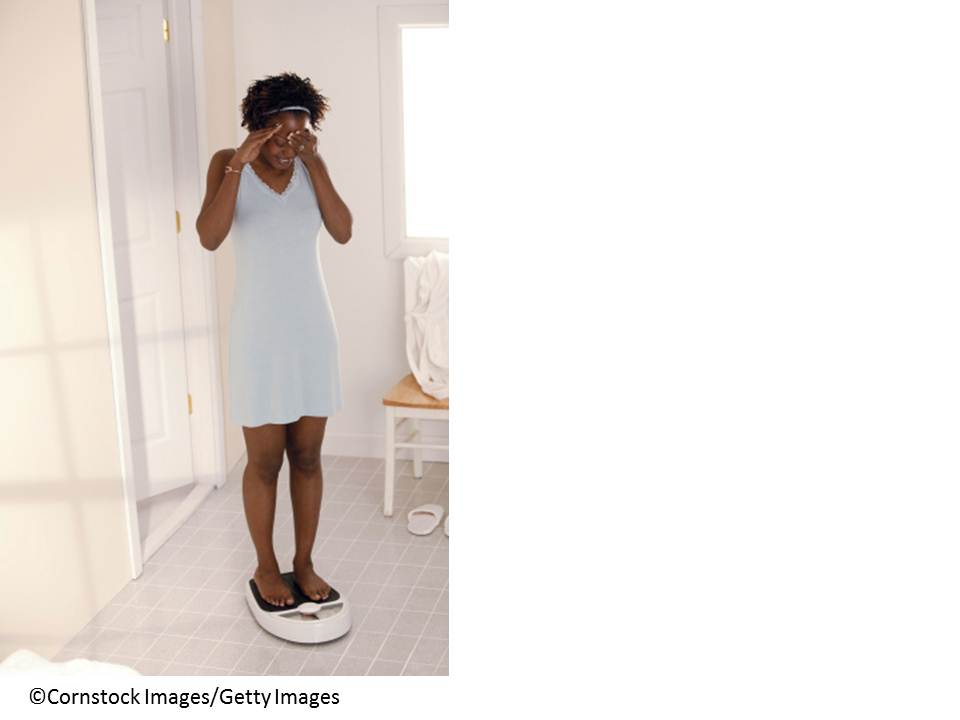
I mounted the scale and fought depression when I read the display. I had not eaten all day, how could I have gained a kilo instead of losing one? I looked at my body in the full-length mirror. I love me, I thought as I sucked in my stomach and lifted my chest. I love me not. I sighed as I exhaled and let everything hang loose. I have struggled with my weight for as long as I can remember; perhaps it is because I am judging my body by the unrealistic pictures in the magazines.

At university, I used to wear a pair of shorts underneath my clothes, to create the illusion of wider hips and a backside worth looking at. My roommates would often threaten to hide them as payback for something I had or had not done. The threat ensured compliance because I could not afford to be seen without my backside. How things have changed. I have not only been freed from the incessant torture of washing those shorts every night in preparation for the next day, but also from the square foam pads I slipped underneath my bra straps before I wore any top including my t-shirts.

Aha, now that I am close to the big four-zero, it is as if my metabolism has ground to a halt. Even a cup of water adds a half kilo to my weight! How did I get here?

Last Christmas, I decided to make up for all the Naija Christmases I missed while living abroad. I stuffed myself as if jollof rice was going out of style. I watched my weight rising on the scale but was confident that by the end of January, I would be back to my old self after a strict exercise and diet regime.

But nothing could shift the bulge I had acquired on my stomach, backside, and hips—I ran on the treadmill, I lifted weights, I speed walked, I started eating twice a day. The fat just raised one eyebrow, barely opened an eyelid, and then went back to sleep! I began a series of non-religious fasts. After the first few times, my body betrayed me. I ran into the kitchen and ate everything in sight, all this before 11 a.m. on an appointed fast day.

It was at this critical point that I heard about the Body Magic—lose two to three dress sizes in ten minutes. Hmmm, and Michelle Obama is my mother’s younger sister! But I was desperate; my clothes were shrinking, so I requested one from my friend. Let’s call her B.

She arrived at my house with her bag of magic. I could not wait to shrink like Alice in Wonderland. After measuring, she determined my size and selected a garment from her bag. It looked too small. B laughed and assured me that it would fit with some help.

I turned the garment upside down and put in my legs then the struggle commenced. We pulled and dragged and pulled and dragged. As the garment inched higher up on my body, my flesh trembled and wobbled as though experiencing a minor earthquake. Then it flapped like a small flag in a gentle breeze. B instructed me to do a curious dance—stand on one tiptoe and then the other in quick succession to redistribute the fat allowing the garment to slide further upwards. I warily complied.

By now, I was sweating as if I was a Christmas goat being led to the slaughter even though two 1.5 HP air conditioners were on full blast. My sweat glands went into overdrive because I was sure that despite the deodorant I used, I reeked of perspiration. Embarrassed, I mumbled a self-conscious apology to B. Sweat, what sweat? B claimed she smelt nothing. I suppose this was a small price to pay in her line of business.

It was over ten minutes and we had not been able to squeeze past my hips and backside. Accomplishing that feat would be akin to reaching the peak of Mt. Everest. I needed a break. From the corner of my eye, I saw B flop into an armchair and massage her wrists. Who said making money was easy.

We resumed a short while later. Pull, drag up, tuck in, dance, and pull again. B continued to help and encourage me.

“Come on, almost there! There you go, good! Now move your body to redistribute the fat. Yes, yes, yes, one, two, three, go…pullllllll!”

At last, we crossed the final frontier. The stubborn mass of fat that had defied every diet and exercise routine known to me bowed to the power of Body Magic.
The most difficult part was over. I pulled the top with ease and slipped my arms through the straps. To hook the clips, B had me lie down. She yanked the left side then the right while instructing me to suck in my stomach, “Suck in some more, alright, that’s better.”

Hook, hook, hook, deftly she clasped the hooks. Putting on the Body Magic involved more skills than I had first thought, a coach and trainee relationship was evolving.

When she finished, I stood and felt as tight as a wound up doll. However, my posture was immediately improved because I was forced to stand straight. I had an hourglass figure with a lifted derriere. I quickly donned on my tight Ankara skirt. It glided past my hips. The most noticeable improvement was my stomach. However, I had not dropped two to three dress sizes.

What was I expecting? Magic? Yes! Wasn’t that why they called it the Body Magic? B read the disappointment on my face and started explaining, but all I could think about was an elephant trying to squeeze into a corset meant for a hippo. I lay down like a zombie and sucked in my stomach while B unhooked me. The rest was easy. As I pulled off the Body Magic, my fatty portions popped free with pops of relief.

These days I am back to the good old-fashioned way—a consistent exercise programme, a healthy diet with lots of water, and no yo-yo dieting. I climbed the scales today—I love me, I love me not. Scenes from the Body Magic ordeal crawled across my mind and I laughed. What won’t I attempt to acquire the perfect figure? On second thoughts, I love me— bulging stomach, fatty hips, rounded buttocks, and all! I am fearfully and wonderfully made.

© Timi Yeseibo 2013

Photo credit: ©Cornstock Images/Getty Images

Photo image is subject to copyright. Downloading, republication, retransmission, reproduction, or other use of the photo image as a stand-alone file is prohibited.

Unauthorized use and/or duplication of this material without express and written permission from this blog’s author and/or owner is strictly prohibited. Excerpts and links may be used, provided that full and clear credit is given to Timi Yeseibo and livelytwist.wordpress.com with appropriate and specific direction to the original content.