Love is Bridging the Gulf

African proverb

My grandmother was a darker smaller version of my mum. Parents do not resemble their children. It is the other way round, but that is how I keep my memory of her alive—in my mother’s strong arms, I see hers, ready to cradle the world. My mother tells me she was the daughter of a prince, who thought it a waste of time for her to acquire formal education and that she ran away from her first marriage due to harsh treatment from her husband.

She was kind. She only spoke her dialect and Pidgin English. I could neither speak nor understand her dialect. Her pidgin was the Warri-Sapele variety, which was difficult for me to understand and I barely spoke pidgin. Her eyes told me she had more to say than the little she did. She must have felt even more frustrated than I did; harbouring experience she could not transfer.

The conversations we managed to have, centred on her concerns that I could not speak her dialect. She would ask worry etched on her face, about what I would do when the war starts. I had heard about the Nigerian Civil War just as I had heard of World War 1 and 2, events in history, far from my reality. In her broken English, she would tell me how soldiers used language to determine if you were on the Nigerian or Biafran side. Those who could not speak their language were at the mercy of the soldiers.

Her stories did not motivate me to learn her dialect. I asked my parents where they had been during the war. “In Lagos,” my mum and dad answered respectively, and I filled in the blanks, “far from the war.” It showed in the priorities my parents chose for my life.

But those who have seen war speak of it with tremor in their voice. Does memory not erase the boom boom of falling bombs or the tikatikatikatika of machine gun rounds?

One time, she came to my university campus. Armed with my name and address she left her home in Sapele to visit me. When the driver who brought her came to call me, I hurried outside not believing. I met her smiling, and I loved her for taking a chance that she would find her eighteen-year old granddaughter in school on a Saturday evening.

“I bring fish for you,” she said, holding out some plastic bags.

Back at my apartment, we unpacked fish, plantain, spices, palm oil, yam, pepper. How could I tell her that I did not cook; did not really know how, especially did not know what to do with smoked fish and palm oil? That the gas cooker in my kitchen sat bemoaning its uselessness. That I nodded and said, “Mmm mmm,” to my mother whenever at the beginning of a new semester she admonished me not to set the kitchen on fire. That I was liable to throw the fish away because it ‘smelled’ and would go bad under my watch.

I thanked her instead. I did not want her to ask me what I would do when war broke out and I could not cook.

We sat in my room. She sipped a soft drink because I had nothing else to offer and because she said, “No, no,” when I wanted to go out and buy food. The silence made me restless and I longed to fill it, but you can only ask, “How your body? Home people? Sapele?” once.

She seemed content to look at me. Maybe I reminded her of her daughter. After a long time in which I started feeling uncomfortable and wished she would go before my friends came along, she broached the subject of language and war.

I let my silence speak for me.

After she lost her vitality, she came to live with us. Sometimes she would talk to no one in particular; it was no longer surprising to find her in her room alone, chatting. My mother made sure she was always within eye view because she could wander off into the sunset, her legs possessing an agility incongruent with the rest of her. By then, I was hardly home and when I was, I retreated to my world of youthful infallibility, busy with things I have no recollection of.

When she died, I felt the general sorrow, which accompanies loss of human life, and the particular sorrow that haunts a child who watches her mother grieve.

I am thinking of my grandmother because as I embark on a new series on motherhood and invite people to tell their stories, I wonder about the blank spaces in her life, which I cannot fill. I realize I did not do enough to bridge the gulf between us; there are languages other than pidgin and her dialect. My active presence is a language I denied her.


In loving memory of Princess Ajoritse-Debi Atsemudiara Etchie.


©Timi Yeseibo 2016


Unauthorized use and/or duplication of this material without express and written permission from this blog’s author and/or owner is strictly prohibited. Excerpts and links may be used, provided that full and clear credit is given to Timi Yeseibo and livelytwist.wordpress.com with appropriate and specific direction to the original content.


Saying Yes to Nigeria [4]

Naija in my Blood

Perhaps nothing reveals the spirit of a city like the attitude of its drivers. Do not even speak of the courtesies you possess until you have driven in rush hour on the streets of Lagos, where every hour is rush hour.

“Foolish man, can’t you see I’m indicating?” she cast a sideways glance at the offender. 200 metres later, with one hand on the steering and the other on her temple, she yelled at another offender, “Are you mad?” A minute later, she placed her hands on her horn repeatedly in bursts, peep, peep, peeeeep, “Stay on your lane!” And at the roundabout, looking less confident, she let out, “If you scratch my car, you will pay o!”

I watched her chest heave and dip, heave and dip, as we rode from Victoria Island to Lekki, while she continued her monologue with drivers who couldn’t hear her because we were cocooned in air-conditioned comfort in her car.

“They can’t even hear you,” I said.

“They can,” she insisted, but changed tactics, making me the subject of dialogue. “Timi, see what that driver is doing? That’s the problem with—”

“You’re going to give yourself a heart attack at this rate; can’t you just drive without the commentary?”

“You don’t understand, wait until you start driving.” She was darting in and out of lanes, “You can’t stay on one lane in this Lagos, you’ll never get anywhere . . .”

Famine brings out our worst instincts and the famine in Lagos is severe—lack of good roads, petrol, patience, politeness, empathy, sanity, alternative transportation like trams, trains, or water transport, diligent traffic wardens, and a responsive government.

Driving in Lagos has not changed. But I have. Or do I still have Naija in my Blood 

Read about my former experience, which is still relevant today here.

© Timi Yeseibo 2016

Unauthorized use and/or duplication of this material without express and written permission from this blog’s author and/or owner is strictly prohibited. Excerpts and links may be used, provided that full and clear credit is given to Timi Yeseibo and livelytwist.wordpress.com with appropriate and specific direction to the original content.

 

Saying Yes to Nigeria [3]

Our National Pastime

In his essay on exile in The Guardian, Ngugi wa Thiong’o writes:

Exile is more than separation: it is longing for home, exaggerating its virtues with every encounter with inconvenience.

I do not think I exaggerated the virtues of ‘home’ but I know people who did; people who began or ended sentences using two words, back home, nostalgia trailing their voice—ah the warmth of the sun back home, the friendliness of people back home, the sense of belonging back home, back home I used to …, and on and on.

I put up with whatever inconvenience being a minority in a foreign country brings, not forgetting that the country from which I came also has issues, in some respects, bigger issues. If the grass is greener on the side where you water it, then I did not want to waste my water. I watered my grass in The Netherlands and watered it some more.

Ngugi wa Thiong’o’s opening paragraph is instructive. He writes, “I never chose exile; it was forced on me.” But the heart plays tricks on even those who became ‘exiles’ by choice. When I arrived home, I discovered that I had managed to exaggerate some virtues and had forgotten about Our National Pastime

Read about it here.

©Timi Yeseibo 2016


Unauthorized use and/or duplication of this material without express and written permission from this blog’s author and/or owner is strictly prohibited. Excerpts and links may be used, provided that full and clear credit is given to Timi Yeseibo and livelytwist.wordpress.com with appropriate and specific direction to the original content.
Saying Yes to Nigeria [2]

Naija Movie Night

In his essay for the New York Times Magazine, A Too Perfect Picture, which examines Steve Curry’s work, Teju Cole concludes that:

Art is always difficult, but it is especially difficult when it comes to telling other people’s stories. And it is ferociously difficult when those others are tangled up in your history and you are tangled up in theirs. What honors those we look at, those whose stories we try to tell, is work that acknowledges their complex sense of their own reality. Good photography, regardless of its style, is always emotionally generous in this way. For this reason, it outlives the moment that occasions it. Weaker photography delivers a quick message — sweetness, pathos, humor — but fails to do more. But more is what we are.

I do not own a camera, only words. I’m sharing this story I wrote years ago even though my experience in 2016 is different because it remains a snap shot of who we are. I hope my lenses are strong. I hope they do more. Read about Naija Movie Night …


©Timi Yeseibo 2016

Unauthorized use and/or duplication of this material without express and written permission from this blog’s author and/or owner is strictly prohibited. Excerpts and links may be used, provided that full and clear credit is given to Timi Yeseibo and livelytwist.wordpress.com with appropriate and specific direction to the original content.


Saying Yes to Nigeria [1]

nigeria

Each time I am sure that, in returning to Lagos, I have inadvertently wandered into a region of hell, something else emerges to give me hope. A reader, an orchestra, the friendship of some powerful swimmers against the tide.
– Teju Cole

Several years ago when I was in Nigeria, I wrote a collection of articles about my experiences since I had returned and received feedback from my editor.

“Please don’t be like all those sabi sabi oyibo Nigerians who come from abroad and tell us what’s wrong with our country; they won’t stay and solve problems only talk talk talk,” she said and handed my manuscript back to me.

“We know what’s wrong with Nigeria, we live it every day. We are looking for escape in comic relief. If you must tell us, satirize it, and make yourself one of us. Like this story here,” she collected the manuscript from me and leafed through it. “This one is good. This one,” she shook her head, “not good.”

I did not agree with her assessment regarding the articles she claimed were not good. They were reflections based on my experiences. Moreover, I couldn’t infuse humour or irony or both in every article, could I? Maybe I could, I am Nigerian after all.

I read Teju Cole’s book, Everyday is For the Thief, years ago. I recall feeling hectored by chapter after chapter about a Nigeria with little redemptive value. My patriotism reared its head. Could he not find many more events, which were ‘normal’ to write about? Of course, I recognized the narrator’s experiences. Some were mine too, but such truths in black and white were painful to swallow. Then I understood what my editor had been trying to tell me.

African writers in the Diaspora have been accused of writing poverty porn— stories of disease-ridden, war-torn, aid-dependent, poverty-rife, corruption-infested, and patriarchal Africa—to sell their books to audiences in the West. While these aren’t the only narratives of Africa, as far as Nigeria goes, some elements are inescapable; even in choice neighbourhoods, evidence of poverty rises to the nose from the open drains that surround electric fences.

Returning from years of living abroad, your brain functions in constant comparison mode, not only of currency and exchange rates but also of culture, infrastructure, organization, and leadership. Stories are everywhere. But, does a writer have an obligation to be an ambassador of hope if he finds none?

Recently, a friend and I were discussing relocating permanently to Nigeria.

Holding his British and Nigerian passport in each hand, he said, “Nigeria, nah.” Placing his British passport on top his Nigerian one, he said, “I can only do Nigeria in measured doses.”

Without shame, I realize that another five years outside Nigeria has almost made me one of those Nigerians. If I were to review, Everyday is For the Thief, today; I would not be too harsh.

Every time I return to Nigeria, it is not with joy; a certain coercion draws me to her. Nevertheless, I leave better for having stayed. My patriotism is sometimes shaky, needing comfort to support its grid. If I returned with resolve to build a better society, the fuel queues and sweltering heat are melting it away. Perhaps time will help me tell a different story.


©Timi Yeseibo 2016


Photo credit: http://www.inecnigeria.org/?page_id=373


The Rise and Rise of Artificial Intelligence

artificial intelligence

John Eldrege said Men want a battle to fight, an adventure to live, and a beauty to rescue. A woman wants to be romanced. She wants to be an essential part of a great adventure. Combine these elements in a dramatic arc on a big screen and you have a blockbuster. Add alien invasion or imminent destruction of planet earth to the mix to gross millions.

I enjoy movies because of their entertainment value and their ability to bring storytelling alive with sound and cinematography. Beyond these, movies unveil trends or make them more mainstream by relaxing our sensibilities. Since I don’t follow technology news, I first saw a touchscreen computer in a movie. Cool, but far-fetched, I thought. Years later, when touchscreens became the rave, I thought, aha!

The super-natural fascinates us. By this, I mean the union of man and something otherworldly think batman, superman, or vampires; as if we are tired of the limitations our human bodies impose on us. Movies have also explored the outcome of our creations like robots, in everyday life. These robots increasingly simulate human behavior (make rational decisions from data and have emotional intelligence), including natural language and voice recognition.

This week, Microsoft introduced Tay, an Artificial Intelligence (AI), chat robot to Twitter. Tay was designed to speak like a teenage girl. Only a day after she went live, Microsoft took Tay offline because she transformed to an evil Hitler-loving, incestual sex-promoting, ‘Bush did 9/11’-proclaiming robot. This was a case of garbage in, garbage out. Tay’s responses are learned by the conversations she has with real humans online – and real humans like to say weird stuff online and enjoy hijacking corporate attempts at PR.

The saga reminded me of a movie Benn recommended last year, Ex Machina, a sci-fi thriller. Ex Machina examines the relationship between Caleb, a programmer and Ava, a female humanoid robot. Nathan, Caleb’s boss, wants Caleb to test Ava’s superior AI; her ability to persuade him she is human. The adventure thrills Caleb; he falls for the beautiful and vulnerable Ava and battles to rescue her from slavery to Nathan.

The movie and its ending made for good conversation. Friends and I discussed robotics in general and ethical considerations in the development and use of AI, especially sex robots.

When someone mentioned the resistance to the Industrial Revolution, I shared how a multinational firm in Nigeria faced resistance from its staff when it decided to automate its operations years ago. The staff went berserk. They eyed members of the IT team and labelled them, ‘the people who are coming for our jobs.’

Referring to the sex scene between Nathan and another female humanoid in Ex Machina, a girl in the group said, “I hope they’re not coming for our jobs.”

We laughed. Then were quiet.

Robots are an invention subject to the whims of their human creators. How far is too far? Movies seem to ask: can we fall in love with robots? We want machines to make life easy for us not replace us. We want to be an essential part of a great adventure, not excluded from it.

Finally, I found my voice and said, “I hope not.”


©Timi Yeseibo 2016


Unauthorized use and/or duplication of this material without express and written permission from this blog’s author and/or owner is strictly prohibited. Excerpts and links may be used, provided that full and clear credit is given to Timi Yeseibo and livelytwist.wordpress.com with appropriate and specific direction to the original content.


Mass Media in the Internet Age

social-media-550767_640

People who “proudly” state that they aren’t on Facebook, Twitter, LinkedIn, Instagram, Snapchat, or any social media platform, baffle me. I told someone statistics show that one in five couples meet online and she retorted that Facebook was the leading cause of divorce today, so she and her husband had deleted their accounts. I explained that people have been unfaithful since time began and the marketplace had simply changed. If Facebook were a country, it would be the largest country in the world by population, but she shook her head.

When it comes to social media, I maintain that the rules of engagement are still being written and should continue to be written. A gun in the hands of a soldier inspires confidence that our country is being protected. The same gun in the hands of a teenager walking down the street, inspires fear. I was social media shy once, then I started blogging. I now embrace social media and by extension the internet.

In the fifteenth century, Johannes Gutenberg invented a printing press system that aided the rapid mechanization of bookmaking and led to mass production of books. The implications for mass media were astounding.

According to Wikipedia, “the relatively unrestricted circulation of information and (revolutionary) ideas transcended borders, captured the masses in the Reformation and threatened the power of political and religious authorities; the sharp increase in literacy broke the monopoly of the literate elite on education and learning and bolstered the emerging middle class. Across Europe, the increasing cultural self-awareness of its peoples led to the rise of proto-nationalism …”

Sound familiar? Yes! The Arab Spring, various hashtag advocacies e.g. #bringbackourgirls, viral videos, the Occupy movement, etc.

Some say the advent of the internet and prevalence of social media is similar to Gutenberg’s work, which democratized knowledge and laid the material basis for the modern knowledge-based economy. The internet is rightly called the information super highway.

We’re living in exciting times for anyone, yes, anyone who has something to say. Social media provides an accessible platform to disseminate information and make possible bilateral intimacy, where audiences can engage with producers of content.

Not everyone is delighted with this development or taking advantage of it. A video producer grudgingly pointed out that the cutthroat business of producing videos has been made harder by social media because people and companies can upload videos made with their cell phones on YouTube. The same could be said for writers who compete with free content online. However, when trends shift, smart people look for new opportunities or create them.

I’m increasingly convinced that someday in the distant future, paper books, CDs, and DVDs will become antiques, displayed in museums and purchased in vintage stores, with articles in Wikipedia written about the history of them. These articles will be read, listened to, or watched on devices that support online content, think tablets and the Apple watch. Don’t believe me? Maybe it won’t happen in my life time, but history is on my side.


©Timi Yeseibo 2016

Unauthorized use and/or duplication of this material without express and written permission from this blog’s author and/or owner is strictly prohibited. Excerpts and links may be used, provided that full and clear credit is given to Timi Yeseibo and livelytwist.wordpress.com with appropriate and specific direction to the original content.


Blogging 109 … Word Travel: combating prejudice 

travel

Mark Twain’s quote from his book, The Innocents Abroad, rings true.

Travel is fatal to prejudice, bigotry, and narrow-mindedness, and many of our people need it sorely on these accounts. Broad, wholesome, charitable views of men and things cannot be acquired by vegetating in one little corner of the earth all one’s lifetime.

My travels overseas have shown me how little people know about Nigeria and the African continent and revealed my prejudice and penchant for stereotypes. If you never travel and watch only one TV channel, you may conclude that Europe is awash with refugees, America with gun violence, the Middle East with terrorism, and Africa with war, poverty, and disease.

But hopping on a plane, train, or bus and going miles and miles away from home can be expensive. However, we’re not limited by budget if we can read. Literacy and internet access provide cheaper alternatives to confront narrow-mindedness.

Like most of my friends, I remember travelling to faraway places as a girl through the books I read. The writers stimulated our senses as we journeyed with them, so we were familiar not only with the sights, sounds, and smells of places, but also with their peoples and culture. We lived in Mallory Towers and were Famous Five detectives.

What we enjoyed was a kind of unilateral intimacy. But now, the internet has not only made content readily available, but also fostered greater connection. In his book, Platform, Get Noticed in a Noisy World, Michael Hyatt says that social media has taken connection to a whole new level. It makes possible bilateral intimacy—engagement. This means our virtual travel experiences are richer since we can confront a writer’s bias as well as ours in conversation. We can also give feedback and receive more insight from the contributions of others.

To me, one of the coolest things about blogging is the opportunity to travel—to journey along with readers to their worlds in the comments they leave behind. Every time I write, even on a subject I’m an authority on, I learn from the myriad perspectives readers bring. Sometimes I pour my jumbled thoughts down just waiting for readers’ comments to make sense of my thoughts.

It’s difficult to approach most topics with an ‘empty’ mind because our minds are usually already ‘full’. But if we’re willing to engage, we’ll see that we don’t have to agree with another viewpoint, sometimes all that’s needed is, “Oh, I see where you’re coming from; I’ve never walked that road before.”

Blogging has made travel—broad, wholesome, charitable (and uncharitable), views of men and things, possible for me.


©Timi Yeseibo 2016


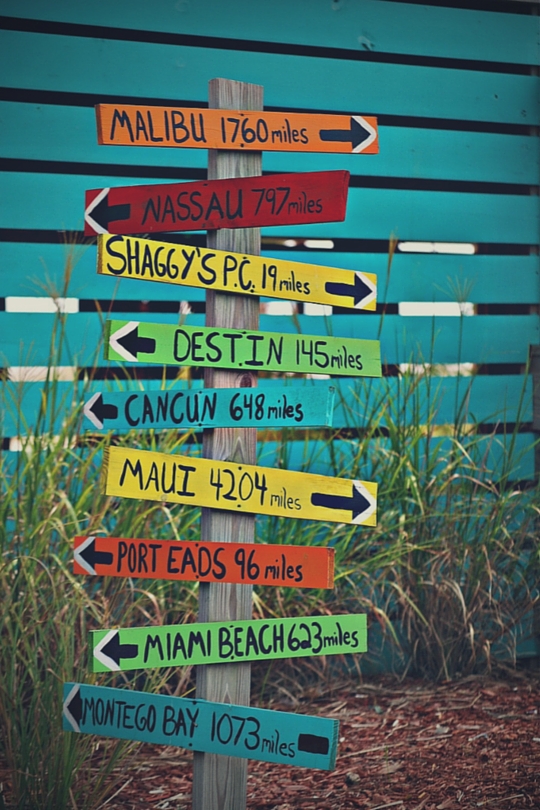
Photo credit: https://pixabay.com/en/sign-places-travel-information-429419/


Unauthorized use and/or duplication of this material without express and written permission from this blog’s author and/or owner is strictly prohibited. Excerpts and links may be used, provided that full and clear credit is given to Timi Yeseibo and livelytwist.wordpress.com with appropriate and specific direction to the original content.

Drawing the Line

relationships

I once had a client, a man with lofty ideas and limited resources, whose business was pertinent to the success of mine.

In those days, a Lagos bus conductor who did not have adequate change for his customers, would ‘join’ two or three passengers together by giving one of them the total value of their change.

At their stop, he would explain to them, in between soliciting new passengers and calling out the names of the bus stops ahead, that he did not have enough change. Then he would give one passenger a single Naira note, which represented all of their change, as the bus driver rode away. We understood that as far as change went, our fate was sealed with that passenger and we had to find a way to split the change.

I have walked away from this arrangement—the huddling, the debate, the shadowing the ‘lead’ passenger as he perambulates in search of change, so we would not be duped twice—without my change because time was more important to me than it was to the others.

I felt as though my client was the passenger with our change but this time, the stakes were too high for me to up and leave.

I shared my worries with a friend.

“Get close to his wife. She will make things easier for you,” Ronke said.

I knew what she meant and I recoiled at her words. My client’s wife was a woman with a smile for everyone. Petite and pretty, she remained mum if she happened to be around as her husband and I discussed business, but I was aware that her intelligent eyes took in everything. It seemed cavalier, predatory even, to befriend this angel for the sole purpose of using her to influence her husband as we did not seem to have anything in common.

I endured my client’s belligerence and failed promises, promises he made after I made presentations and shared proposals. At my wit’s end, one night I sat in Ronke’s car for hours and itemized the problems I faced. She suggested, yet again that I make friends with his wife.

Soon after, a chance meeting with my client’s wife occurred. After pleasantries, she lowered her voice although we were alone and told me about a similar project they were undertaking with another publisher. In her words, the wahala nor get end. Sensing an opening, I took the ball she’d passed to me, but I did not run to the goal post. I dribbled until all obstacles were cleared and then passed her the ball to take a clean shot to goal.

“Ah ah men!” she exclaimed, “They don’t understand. Leave it to me. Here,” she handed me her business card, “if you have any issues, give me a call.”

I collected her card without looking at it.

“I’m serious,” she said, stopping me with her intelligent eyes. “Timi, if you have any problems, call me.”

I never had to call her. My client gave me my change and then some.

I’ve wondered about this incident and what I call my moral high horse. I guess because I have been used as a stepping stone in business, I did not want to bathe someone else with gifts and attention and then slam the door not minding if her fingers were trapped in the hinges or not.

But isn’t that what we all do? When we were younger, my siblings and I chose the favourite child, the one whose requests were hardly turned down, as an emissary to our parents. I sometimes attend social events with colleagues, when I’d much rather stay at home in my pajamas, to influence outcomes in the office. Relationships grease the wheels of business and human interaction is fueled more by trust than logic. We trust referrals from those we know.

My client’s wife and I never became chummy. We didn’t share enough common ground and we could not commit the time needed to explore what little commonalities we might have had. I see her once a long while and respond to her smile, the one she has for everyone, without guilt, but with warmth. And I sleep easy at night.


©Timi Yeseibo 2016

Unauthorized use and/or duplication of this material without express and written permission from this blog’s author and/or owner is strictly prohibited. Excerpts and links may be used, provided that full and clear credit is given to Timi Yeseibo and livelytwist.wordpress.com with appropriate and specific direction to the original content.


No New Stories

no new stories

I attended a creative writing seminar where our lecturer was an award-winning writer, who felt it was his duty to knock fantasy out of our minds and help us rearrange our aspirations.

“Don’t think you’re going to be the next Shakespeare and write a never-written-before novel. There are no new stories,” he said.

His forehead was wide and shiny and his hairline indicated that baldness waited in his future. He swept through the class with his big eyes letting his words sink in.

Did he imagine that we could not even match his own mild success? I completed my writing exercises on time using the formula he gave us: a story has a beginning, a middle, and an ending. I didn’t care for original ideas. I was involved in a steamy romance with creative non-fiction, the only genre I thought I would ever write. I wrote about my real experiences or that of others, injecting lively words into sentences to transport readers to my world.

When I delved into the world of fiction, I looked for original ideas. Once I found them, I scribbled and scribbled until I perfected my story. After I shared my story with friends, one of them said, “Oh, your story is based on that Nollywood movie . . .” Another said, “You copied so-and-so famous writer’s story.”

But, I hadn’t watched that Nollywood movie and I hadn’t read the famous writer’s book. I had just thought about a story and written my thoughts down! It was then that the lecturer’s words came back to bite me and I bought into the idea that I don’t have any new story to tell.

My imagination is a collection of all I’ve seen, heard, touched, smelt, and tasted, synthesized and served as a ‘new’ dish. So, the more I engage my senses the more my brain has to synthesize and serve as imagination. Then it takes skill to arrange my imagination in a format that others can and want to understand.  Enter language or words.

I began to understand why aspiring writers are advised to read and write a lot—to broaden imagination and acquire skill.

When I get good ideas for a story, I don’t google key words to see who else has written about it. I just know for sure that someone else has done so already. However, unless their name is Timi Yeseibo, they have not written it in my voice or through the nuance of my experiences, which help me filter life.

This difference makes me unafraid to write about Romeo and Juliet because in the century in which I live, they would meet via Tinder and their death would be featured on Instagram. The themes of love, faithfulness, betrayal, and death remain timeless and universal. My children after me will also write the same story flavoured by the sights, smells, sounds, tastes, and feelings of their time.


©Timi Yeseibo 2016

Unauthorized use and/or duplication of this material without express and written permission from this blog’s author and/or owner is strictly prohibited. Excerpts and links may be used, provided that full and clear credit is given to Timi Yeseibo and livelytwist.wordpress.com with appropriate and specific direction to the original content.


Leave Trash For LAWMA

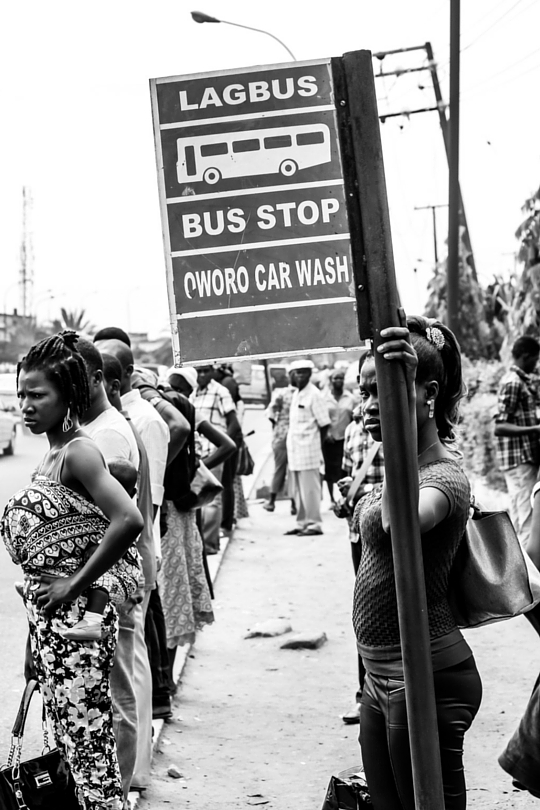
“Stop, stop,” I urged the Uber driver.

He obliged and I came out of the cab with my phone to take a photo of the signpost. 

refuse disposal

“Why did they put up the sign,” I asked the driver, shaking my head as I returned to the car and put on my seat belt. “Do you think people will obey?”

“The first problem,” he said, “is that the people that it’s supposed for can’t even read it. When they see it, they will think it’s about 419.”

I nodded recalling the caveat emptor signs commonly seen on buildings and plots of land: This Property is Not For Sale; Beware of 419.

But, I was not sure if he had correctly estimated the literacy level in Lagos, Nigeria, because I was using the people in my circle, who can all read and write, as a gauge for the rest of society.

“Hmmm do you think it is fair for God to dirty their lives if they can’t read the sign?” I chuckled at the image in my mind of an angry God with smoking nostrils, waiting to rain trash on dissidents.

“I don’t know why they have to bring God into this matter. This thing is simple.” He went on to describe the current system of refuse collection initiated by the local government authorities.

“See,” he slowed down and pointed to a refuse heap, “they can throw their rubbish here . . . but only those who have paid, those that have cards.”

I have written about voluntary compliance before, marveling that Nigerians need the brutal arms of uniformed men to coerce compliance out of us like malu congo, yama yama congo—a derogatory chant that I cried out as a girl. It was aimed at cows being driven with a stick by a herdsman intent on the cows doing his bidding.

But as the driver and I exchanged ideas about efficient systems of refuse disposal and the role of government and religion, I observed that humans in general, were wild at heart, bucking at authority and searching for short cuts. That if law and order seemed to prevail in the western world, it wasn’t so much the result of “civilization”, but the result of sophisticated systems of policing—a speed camera mounted on a busy street ensured compliance without invoking the wrath of God.

I asked the driver what he thought people who aren’t able to pay the fee for refuse collection should do with their garbage.

“I don’t know o. Na wa! Only God can save this country!”

He had come full circle and now embraced a premise he had earlier rejected, why bring God into this matter? He (and I), had done more thinking about a social problem than we normally would have and that was not a bad start.

He brought me back to the present by interrupting my thoughts with a double entendre.

Madam, abeg leave trash for LAWMA!”


©Timi Yeseibo 2016


LAWMA- Lagos State Waste Management Authority.

Abeg leave trash for LAWMA– ordinarily, in this context, Pidgin English for: please allow Lagos State Waste Management Authority do their job.

(Abeg) leave trash for LAWMA– a hashtag on Twitter, the result of feuding between two Nigerian music producers. It has morphed into a slang that means (among other things), please talk about something else.


©Timi Yeseibo 2016


Unauthorized use and/or duplication of this material without express and written permission from this blog’s author and/or owner is strictly prohibited. Excerpts and links may be used, provided that full and clear credit is given to Timi Yeseibo and livelytwist.wordpress.com with appropriate and specific direction to the original content.

In The Spirit of Love

In the spirit of love, I’m sharing one of my older posts, a crowd favourite, which elicits a smile or laugh from me whenever I reread. I hope you’ll enjoy it (again), as much as I do.

I am Not Looking For Love, I am Going to Work

It began yesterday at the government office, which was saturated with immigrants whose anxious stares alternated between the digital display boards and their tickets, a square piece of paper with a number printed on it. At the sound of the beep, everyone looked at their ticket, and then the display boards. Some sighed. Some continued talking. Others continued sleeping. One person rose to meet an official walled in by glass on the other side of the counter.

My wait was shortened by an acquaintance with whom I chatted until our conversation lulled to a comfortable stop.

“Excuse me, it seems you are from Nigeria.” A tall man sitting a few spaces away from my acquaintance smiled at her.

“No, I am not.”

“Ah, but I thought—”

“I am from Democratic Republic of Congo.”

With her thick Igbo accent, she delivered her last words with a finality that inspired no argument from the man. He fanned himself, and then pretended to read his letter from the belastingdienst.

Because I am slow to change the expression on my face, she saw it. The disbelief. The wonder. The perplexity.

“Don’t mind the idiot. If not for dis yeye tax people, where e for come see me? See as e dey talk as if e be my mate. E nor see im type?” she whispered for my benefit and his.

I nodded like her co-conspirator, as though I had been dissing guys for the last ten years. What else could I do?

Continue here …


Flight to Lagos

luggage

A KLM flight to Nigeria begins at the baggage weighing scale at Departure Hall 2. Several passengers drop their luggage on the scale, take note of the weight, nod, and walk away with sure steps. She is surprised that some passengers even weigh their hand luggage.

“What for?” she wonders aloud.

She lugs her first suitcase on the scale. A frown appears. She lugs the second and her frown deepens.

The night before, she had weighed herself, then carried each suitcase and reweighed herself. Then she had repacked and reweighed, repeating this process a few more times, until each suitcase weighed just under 23kg. She had expected a difference between the weight of the suitcases at home and at the airport. But 33kg and 29kg?

She would whistle if she knew how. Instead, she moves her suitcases to the repacking section at the corner and then whips out a folded Ghana bag from her cream handbag. She shakes it lose with one big motion so that the Ghana bag quickly assumes its rectangular shape. She hisses as she kneels on the floor and makes deft work of 16kg, filling up the Ghana bag.

In all her time at Schiphol Airport, she had only ever seen Africans ‘sweating’ at the repacking corner. The problem of course was that expectations—shoes, bags, clothing, and electronics, for family and extended family—carried a lot of weight.

After paying 200 Euros to check in an extra bag, she clears security and passport control before heading for Gate F. At the departure lounge, conversation rises and falls in English, Pidgin, Bini, Yoruba, and Igbo. She could have been at the International Airport in Lagos. Here, she finds comrades with two pieces of cabin luggage, a regular one and another bag which should not qualify as an accessory. In addition, they each have a true accessory, a handbag, a briefcase, a backpack, or something similar.

The cabin crew greet passengers as they stream into the aircraft. No one jostles for room in the overhead baggage compartments. An easy cooperation reigns among passengers as cries of, “don’t worry, there’s space here,” ring out.

Many passengers are already seated and adjusting themselves for the flight, when Mr. and Mrs. X show up. An air hostess reads their boarding passes.

“20E, this way madam, on the left. 16A, sir on the right.”

Mr. and Mrs. X walk down the aisle, stow their hand luggage, and take their places in 20E and 20F. Not long after, the passenger who had been sitting in 20F returns from the toilet.

“Madam, my seat please.”

A small quarrel ensues and an air hostess comes to arbitrate. When she confirms that Mr. X should sit at 16A, chaos occurs.

“You want to separate me from my husband? It is not possible. How can you separate me from my husband?”

“Madam, but your boarding pass—”

“Did you not hear? You cannot separate me from my husband!”

Mr. X coughs, the only sound to escape his lips. The air hostess persuades Mrs. X to vacate the seat. Mr. X accompanies Mrs. X as she follows the air hostess’ lead, dragging their cabin luggage behind him.

Atink you see this people o? They want to separate me from my husband!”

It is a battle the air hostess should win. The boarding pass says so. But her face is red, every blond hair brushed into place. Her blue suit is devoid of creases, and her voice is no match for Mrs. X’s rising decibel.

The wrangle is drawing some interest, but no mediators. Perhaps it is more expedient to use the time before take-off for selfies and goodbyes. Yes, most passengers are lost in their cell phones and tablets.

The air hostess consults with her colleagues and then they whisper to a few passengers. Before long, they escort Mr. and Mrs. X to a row of seats where they can sit side by side.

Mrs. X declares her victory for all to hear. “Ehen, what God has joined together, let no man put asunder. Ah ah.”

Take off to Lagos begins after this display of survival of the loudest.

She remembers the extra 16kg and 200 Euros and shakes her head. She should have shouted, “You cannot separate me from my luggage!”


©Timi Yeseibo 2016

Unauthorized use and/or duplication of this material without express and written permission from this blog’s author and/or owner is strictly prohibited. Excerpts and links may be used, provided that full and clear credit is given to Timi Yeseibo and livelytwist.wordpress.com with appropriate and specific direction to the original content.

A Tale of Two Cities

a tale of 2 cities

I was born in the USA and for as long as I can remember I’ve always felt like an alien who didn’t quite fit in. This is partly to blame, I suppose, on the fact that I was raised in a military family and was constantly pulling up roots and moving every year or so, while growing up. As an adult, I kept up this pattern. I’ve lived in or near some of the largest cities in the U.S.—Houston, Philadelphia, and the New York City area.

I feel comfortable in large cities because they afford me the anonymity that I, an alien, crave. No one looks at you “funny” and as long as you don’t hold a stare for too long, you are left alone.

I recently visited London and Paris. I had long dreamed of visiting these places as they have lived in my imagination for years from reading books. Using the subway systems of Philadelphia and New York City, primed me for the London Underground and the Parisian Metro system.

On one of my many excursions around London, I descended the steps into the underground, and encountered a smiling, red-faced uniformed attendant.

“Hello!” I said.

“Hello!” he returned.

I inquired about the best route to get to my destination.

“Take the Circle Line to Baker Street, transfer to the Jubilee Line. Get off at Southwark and it is only a short walk to the Globe.”

“Thank you!”

“Cheers!”

This was typical of my experience in the London Underground— easy to navigate with friendly attendants and patrons who were willing to answer questions.

When I arrived Paris, I approached a Parisian Metro booth and spoke to one of the attendants.

Bonjour, parlez-vous anglais?”

Un peu.”

Although I did not speak the language, I was able to communicate well enough to find my way using a few words and hand gestures. Perhaps the incongruity of being in a strange land made my existence in Paris somehow congruent. I felt at home at last.

On one of my last days in the city, I sat outside the Café de Flore on Boulevard Saint Germaine, enjoying a glass of red wine. A Frenchman, who took the table next to mine, lit up a cigar, and then glanced in my direction to ask if the cigar smoke offended me.

“Oh, no,” I said, “I understand that people who sit outside often smoke and I am not offended.”

He nodded and smiled. He puffed on his cigar a couple of times and we began chatting, he in perfect English. We talked for a long time about a wide range of events including the recent terrorist attacks. I mentioned the increased security around the metro. He shared that he had just spoken to his daughter who lives in the neighbourhood where the attacks occurred and she felt safe using the Metro System.

“Yes,” he cautioned, “but the police and soldiers cannot be everywhere. You have to be vigilant. In effect, we have to be responsible for our own security.”

While sitting outside, we watched many police vehicles drive by with sirens blaring.

“Something’s going on,” he said. “If a car were to pull up in front of us right now and gunmen alighted and started shooting, what could we do about it? Nothing!”

He was right of course. So I concluded that the French are a little fatalistic about such things.

C’est la vie?

I travelled to London and Paris by myself because I needed time to think about my life and my absurd existence. With only myself for company, I walked the cobblestone streets of Montmartre and the rain-swept pavement of Trafalgar Square in London The encounters I had helped me believe in the possibility of happiness and hope for humanity. A big smile and a hello or bonjour broke down the normal barriers humans erect, especially in urban areas.

You can be anonymous, but by using the universal language of a smile followed by a greeting, you can touch and be touched by the human heart.


A smile is a curve that sets everything straight.
– Phyllis Diller


©Benn Bell 2016 @ Ghost Dog


Unauthorized use and/or duplication of this material without express and written permission from this blog’s author and/or owner is strictly prohibited. Excerpts and links may be used, provided that full and clear credit is given to Timi Yeseibo and livelytwist.wordpress.com with appropriate and specific direction to the original content.

I Hope Someone Calls Them Beloved


oworonsoki by Logor

There is something about Lagos, about this human chaos, about entering danfos and crawling into kekes and jumping on okadas and pushing against bodies reeking of sweat while dancing between pungent puddles that makes me wish I could read minds.

Not all lives interest me. Some people are just derivatives of other people, stock personalities coming out of the human conveyor belt, uninteresting in the way I imagine I must be. But a few stand out: fascinating humans who compel me to observe, like the three girls who piled into the bus at Obalende and sat behind me on Saturday.

They wore clothing that strained against their youth. One sat and two lapped themselves. One pleaded with another in Yoruba, telling her she was sorry.

“Let us go to Alhaji’s place,” she said.

The friend replied, “You can go, I’m not going.”

She pleaded again, “I am sorry.”

They repeated this sequence as more people hauled their bodies into the bus. I took a bite of Gala and a swig of Lucozade Boost.

“I said I’m sorry,” she began again.

The third friend was silent throughout this exchange.

The reluctant friend finally gave in, “Okay, we can go.”

Who is Alhaji? Why is the need to visit him this strong a few minutes past 6pm? It bothers me that there is a whole swathe of human experience and emotions I do not have access to. It bothers me that this bothers me.

As we sped along Third Mainland Bridge, the girl who had been pleading so she could visit Alhaji received a call and spoke to a guy who, from what I could gather, was expecting her.

“I’m at home now,” she told him.

She spoke in heavily accented English with some hesitation, which shows the speaker has the basic vocabulary for fluent communication in English, but is actively translating from Yoruba in her mind.

At Oworonsoki, the trio started a Yoruba Christian song, the kind that choristers in long robes chant enthusiastically to the rhythm of gangan. There was so much cheer in the girls’ voices, and they giggled intermittently as we moved on to Oshodi. There, I alighted from the bus and took the overhead bridge. I looked down and saw the three girls walk towards Ilupeju.

I hope one day to have the courage to ask these people for their stories. I want their stories told with care and empathy, in a way that will make me see them, as they are, not just as the world labels them. I hope, somewhere at the end of their journey, there is someone waiting for them who calls them Imzadi* in a way that is not predatory.

____________

*In Star Trek: The Next Generation, Will Riker, Deanna Troi’s love interest, calls her Imzadi, which translates roughly, in the Betazed language as Beloved. It is what she called him the first time they met.

Alhaji: a Muslim (man) who has been to Mecca on pilgrimage; often the title connotes that the bearer is wealthy.


©Ife Nihinlola 2015 @ IfeOluwa’s Rambles
Ife is an avid observer of life in metropolitan Lagos, which he translates into rich ruminations on his blog. Read the unabridged version here.

Photo credit: Owonronsoki by Logor Olumuyiwa


Unauthorized use and/or duplication of this material without express and written permission from this blog’s author and/or owner is strictly prohibited. Excerpts and links may be used, provided that full and clear credit is given to Timi Yeseibo and livelytwist.wordpress.com with appropriate and specific direction to the original content.


Along Came Fences

fences

We lived in a compound of three flats and a boys’ quarter in Ago Okota, Lagos. Ours was a fenced compound, sort of in the middle of nowhere, last on the street and separated from other buildings by an expansive gulf of undeveloped plots of land overgrown with weeds.

A single mother and her three kids lived in the boys’ quarter. Her first son was my age-mate and friend. When I think back to those formative years, I remember the resolute cooperation of two nine-year-old boys who decided to make a bench from abandoned formwork lying about an uncompleted building close by.

For days, we slaved to make a three-legged bench that a parent bought for N10. My friend and I always watched with pride as our siblings and parents sat on the bench in the evenings. We made another, which I marketed to a relative, selling it for N5. I walked for half a kilometre with the bench on my head to deliver it. While making those benches, a rusted nail pierced through my left foot. My mom took me to a nearby clinic to have me treated. The bill was N200.

When we moved to Kaduna, only two houses on our street were fenced—ours and another one down the lane. Our gate was the opaque border bounded by four high walls decorated at the top with broken bottles.

Despite my love for accessing that side of solitude that engages with written words, the part of me forever enslaved to fantasy fed fat on cartoons and I hungered to bring the adventures scripted in them to life. So, during my teenage years, the call of the streets drew me past our gate, to a circus of street hockey, boris, hunting traps, bangers, suwe , and games of catcher with many other children. As dusk fell, I would reluctantly retreat from the big compound that was our street to the confines of the opaque gate.

In the space of two decades, every house on my street has grown a fence. The ‘big compound’ has shrunk away from the backyards, front yards, and trees, which were common property supporting the imaginative expressions of every kid. The evening bustle of legs and screams have vanished. Moreover, kids have now been tamed by big and small screens that keep nagging them, demanding every bit of their attention.

My village is different. Even today, there are no fences. Solitude is alien and greetings and communal assistance are prized. People do not distance themselves from the identity and stories of others who live around the corner.

Fenced houses and gated communities are the norm in cities. We insulate ourselves to feel secure. However, I maintain the premise of one of my favourite lecturers who is a past president of the Nigerian Institute of Architects: the best form of security is communal and that happens when there is a sense that anyone could be watching a thief from a nearby window.


© Samuel Okopi 2016
samuelokopi.com


Unauthorized use and/or duplication of this material without express and written permission from this blog’s author and/or owner is strictly prohibited. Excerpts and links may be used, provided that full and clear credit is given to Timi Yeseibo and livelytwist.wordpress.com with appropriate and specific direction to the original content.

The Center of My Universe

hosiery

I looked up to find her staring at my leg. Her smile revealed crowfeet, which made her thick dark eyebrows seem relaxed, although in fact, they did not move. I glanced at my leg and smiled in return.

Earlier that afternoon, the zip on my boot snagged my tights. When I stood, my dress rushed down to my knees and swallowed the tear, which was determined to run anyhow. After searching for clear nail varnish around the office, I finally found red nail polish with which to halt the run.

When I sat down in the train, my dress rode inches higher exposing the long gash on my tights. Three red dots, bright as blood, marked the spots where the nail polish had tried in vain to heal the tear. I was tired and my vanity had expired so I adjusted my bag to hide the split. My bag must have slipped because I woke up from my nap to find my torn tights in her line of sight.

I wanted to ask her, haven’t you ever done the same thing too? A smile can be an invitation to talk, but even with eye contact, urban solitude—that unwritten code, which prescribes polite distance in communal spaces—prevailed. Her gaze remained on my tights.

We were four seated in our corner, two sets of seats facing each other with enough distance to keep knees from brushing. Still, feet touched whenever legs were stretched, even a little, resulting in both stretcher and stretchee mumbling, “Oh sorry,” before retreating into urban solitude.

The people crammed in the aisle, shuffled grumpily at each station where more passengers entered the train than exited. A few weeks ago, the Metro ran a story about frustrated passengers who felt cheated because they had to stand their entire journey. The NS had explained that werk aan het spoor meant fewer trains with shorter carriages. I thought it was unfair that passengers suffered discomfort while the NS took the public for a ride and cashed in on full fares.

Complaint can start conversation, but even those standing dulled their inconvenience behind earphones and displayed their perseverance by texting or reading on their handheld devices as the train lurched and swayed, speeding from city to city.

The woman next to me had timed the previous passenger’s exit to perfection and so became the lucky winner of a vacant seat. She was watching a movie on her phone and her eyes didn’t wander from the screen once. Sitting directly opposite me was a girl whose head bobbed at intervals as though she was listening to music but she was sleeping. The white wires of her earphones peeked out from her black hijab. The woman adjacent her, who kept looking at my tights, wore shiny grey tights and black high heels.

This woman broke into a delicate laugh all of a sudden. Could hosiery induce such delight? A faint whimper diverted my attention. I followed the sound and peered down. A red leather collar; how could I have missed it? She had not been smiling at me. All this time, it was the puppy in the raffia tote, which the woman next to me straddled.

Sometimes the best reminders come in small packages—I am not the center of the universe, only mine.

They say before you assume anything, try this crazy method called asking. But I could not have asked her, could I?


Don’t acknowledge fellow passengers or sustain eye contact beyond two seconds. Please respect urban solitude. – unknown


©Timi Yeseibo 2016

Unauthorized use and/or duplication of this material without express and written permission from this blog’s author and/or owner is strictly prohibited. Excerpts and links may be used, provided that full and clear credit is given to Timi Yeseibo and livelytwist.wordpress.com with appropriate and specific direction to the original content.


Measuring Time

time

Over the years, I have heard people say, I don’t do New Year resolutions, as if resolutions are an unfashionable item of clothing. Me? I have no grouse with New Year resolutions; they are not like mosquitoes singing in my ear that I need to slap away.

You know that Angus and Phil cartoon where the two dogs are having a conversation? The one where Angus asks, “What exactly is a New Year’s resolution?” and Phil replies, “It’s a ‘To Do’ list for the first week of January,”? It has me in stitches every New Year when I see it on my newsfeed on Facebook. What is it about New Year resolutions and un-stickability? Are we so spineless? Perhaps we resolve to do better without looking at why we failed the year before.

I have come to believe the saying that men fail because of broken focus. I do not think of my goals at the start of the year as resolutions. These goals, which span spirituality, character, vocation, and health, are work-in-progress, whose expiry date can spill over from a previous year because sometimes distractions pose as good intentions and obliterate my focus. Focus requires clear targets. Sustaining focus becomes easy when I strip down what I want to achieve to bullet points and then marry them to small chunks of time. Then, I can be a vigilante one day at a time

Mostly, I wake up without an alarm and not long after, I reach for time—a watch, phone, or clock. Even on days that I can do as I please and do not need to look at the clock; I still catch myself glancing out the window gauging time by the slant of the sun, degree of cloud cover, or pace of life on the streets, to make meaning of our world. In a sense, all of us are measuring time. But if we take casual cognizance of time, the days and weeks would blend into one another. It would be like defying gravity and just floating in space, fascinating at first and pointless in the end. 

A friend reminded me that in 2015, he counted the days. When he said it, I imagined him standing in front of a huge calendar, striking out the days written in black ink, with red crayon. I saw how fast he flipped the calendar from month to month, achieving little. He said that in contrast, in 2016, he would make the days count. I like his rhetoric. For me, this means before I lay my head on my pillow at night, I would have taken at least one step in the direction of my goals. Then 365 days later, I will measure time and come up full.

Whether we call our aspirations resolutions or goals, how we spend our days becomes how we spend our lives.


©Timi Yeseibo 2016

Unauthorized use and/or duplication of this material without express and written permission from this blog’s author and/or owner is strictly prohibited. Excerpts and links may be used, provided that full and clear credit is given to Timi Yeseibo and livelytwist.wordpress.com with appropriate and specific direction to the original content.