The One-Night Stand Conversation

conversations


Emma introduced us, but fate made us exchange phone numbers. Although I liked you and felt drawn to you—tenderness accompanied my memories of you—I did not expect to hear from you soon. When my phone rang at 10:33 p.m. and I saw your name, warmth tickled my face into a smile. To my “hello,” you responded with sobs and to “what is it?” with, “I’m leaving him.”

I knew who him was.

Two weeks prior to your call, you and I chatted that evening, as we stood near the balcony sliding doors. Bunched-up voile curtains escaped their brass holders, lilting whenever the breeze beckoned. Behind us, opinions on politics and football clamoured for superiority. If I had to pick a winner, it would have been the music, a persistent fusion of hip-hop and jazz. Fear of losing our voices propelled us outside.

It was as if we knew time was short. We dispensed with pleasantries and raced to your heart. The story you told had many holes and so I averted my eyes so you would not need to avoid mine. Did you know that I had once been fragile too?

When him came to check on you, you replaced your shadow with sunshine. You introduced us, listing my credentials first, and I saw what his approval meant to you. Him was impressed, just as you had hoped, and then he whisked you away to the music we feared.

I knew who him was.

That day, your sobs unleashed mine. But, I put ice in my voice and said sensible things like, are you alone? What about the kids? Don’t make decisions while emotions are high. Should I come over? I had my hair in huge rollers under a net and two white spots on my face marked my struggle with acne.

You did not want me to come over. Instead, we sampled the height, depth, and breadth of your anxieties until 1 a.m., when exhausted from reasoning, you let me go. But not before agreeing to check in later in the day.

I did not sleep. I turned your problems over in my mind. I prayed. All day long, I waited. I debated whether to reach out. I sent a couple of texts. I called. You didn’t respond. Later never came, not that day or the next or the next month.


I am watching you and him in the supermarket. He leans so you can whisper in his ear. His eyes light up and you both laugh at your secret. I choose this moment to bump into you and him, and I wear my surprise well. The three of us make small talk but you overcompensate for lull with details. Your voice is on display, bouncing off the shelves and rolling down the aisle. When him leaves us girls to catch up, awkwardness settles over us and silences you.

“How are you?” I ask.

“Everything is fine, very fine, and you?”

I believe you because you radiate sunshine. I wait for your explanation so I can stop editing your manuscript in my head, no in my heart. I have been reading it since that night. Question marks and ellipsis muddle its chapters.

Nothing.

Him bursts in and whisks you to even greater sunshine and I am left with the music I fear, strains of bewildered happiness.

Perhaps I was to escort you around your shadow and no further. Did I assume a role that wasn’t mine? Was shame the unintended consequence of our sudden intimacy? Or did you need to find your way yourself? No matter, every book deserves an ending, and you cheated me of my slice of the sun.

I should not have left things unsaid.


©Timi Yeseibo 2015


Photo credit: longleanna/ http://pixabay.com/en/talking-phone-mobile-telephone-560318/


Unauthorized use and/or duplication of this material without express and written permission from this blog’s author and/or owner is strictly prohibited. Excerpts and links may be used, provided that full and clear credit is given to Timi Yeseibo and livelytwist.wordpress.com with appropriate and specific direction to the original content.

Beauty, A First-Class Ticket

beauty

I knew I was intelligent before I knew I was beautiful, for I won academic prizes throughout my primary school years from the time I was five up ‘til ten. This external validation, reinforced by the circle of people who shaped me, became my inner truth.

My mother was the first yardstick I used to measure beauty by. When people called me little Gina, alluding to our resemblance, I realized I was beautiful. But what did that mean?

At my girls-only boarding school, we giggled and bit our nails when boys from the nearby school attended our social events. Being beautiful meant that I was asked to dance and not forgotten on the bench. It meant my classmates said I looked like Yinka, a girl two years older, whom everyone called Black Beauty. Much later, it meant that I tweezed my eyebrows and applied mascara like the models in Vogue.

My mother told me hard work and a good education would secure success. She did not tell me beauty could be a first-class ticket. You see, once when I tried to register a business campaign, my efforts stalled under the weight of bureaucracy. Then a friend scolded me, “How can? A beautiful woman like you? Don’t you know what to do?” Appalled, I went back and talked my way through.

But her seed grew. I studied how people, men, responded to me; after all, they saw me before they heard me. I remember being singled out from a long line of tired and impatient passengers at an airport. As I crossed the gate having passed Security, the officer said, “You’re very pretty.”
I would be naïve to assume that any preferential treatment I receive is because of beauty alone. It would be naïve of you to assume that I don’t receive unwanted attention or worse still, endure suspicion or dismissal on account of my looks.

Recently, I watched a YouTube video about the changing face of beauty, with a friend. “I wish I were born in a different century,” she said touching her generous hips and rubbing her round belly. I just happen to live in an era where my features coincide with what some consider attractive. I’ve come to know that beauty is leverage and the temptation to abuse it, real.

To me, my looks are secondary. But here’s what I know. A beautiful woman on a man’s arm makes him feel taller. In a world of selfies, people soon forget how you look because they are consumed with how you make them look.

We don’t see things as they are, we see them as we are. ~ Anais Nin


©Timi Yeseibo 2015

Unauthorized use and/or duplication of this material without express and written permission from this blog’s author and/or owner is strictly prohibited. Excerpts and links may be used, provided that full and clear credit is given to Timi Yeseibo and livelytwist.wordpress.com with appropriate and specific direction to the original content.
Unknown's avatarA Holistic Journey

I knew I was intelligent before I knew I was beautiful, for I won academic prizes throughout my primary school years from the time I was five up ‘til ten. This external validation, reinforced by the circle of people who shaped me, became my inner truth.

My mother was the first yardstick I used to measure beauty by. When people called me little Gina, alluding to our resemblance, I realized I was beautiful. But what did that mean?

At my girls-only boarding school, we giggled and bit our nails when boys from the nearby school attended our social events. Being beautiful meant that I was asked to dance and not forgotten on the bench. It meant my classmates said I looked like Yinka, a girl two years older, whom everyone called Black Beauty. Much later, it meant that I tweezed my eyebrows and applied mascara like the models in Vogue.

View original post 294 more words

The Hook

The Hook


“The first time . . .”

“Ahn-ahn, it’s enough, you’ve said it before.”

“Geez! The first time they invite us to their house—”

“Stop exaggerating, these things happen—”

“What were you even thinking?”

“How was I to know—”

“Ssssh! Ssssh . . . ssssh! Someone’s coming . . .”

“I think they’ve gone can I—”

“Ssssh!”

“Can I talk now?”

“Lower your voice, I think they’re still around. . . ”

“Why don’t we just ask them for help?”

“Are you crazy? I just wish I had something bigger . . . like a stick to push it down . . .”

“Should I go downstairs and look?”

“And leave me here by myself?”

“It’s not like I’m adding value—”

“You should have thought of that before dropping the bomb. Why didn’t you try to break your—”

“It’s not my fault! We’ve been here for twenty minutes, nothing is working. Maybe they have a handyman—”

“Do you know how much that would cost? At this time of the night? I just need something—”

“I still think we should ask for help.”

“Hmmmm . . .”

“But what’s the big deal about asking for help?”

“Move back! Move back! The water is rising! Is there a mop or rag?”

“I don’t know . . . no, I can’t see any—”

“Phew! Thank God! The water is receding . . .”

“I told you not to flush again. These American toilets are funny—”

“The tissue settles at the bottom . . . something is blocking . . . it can’t move . . . How can something so big come out from someone so small?”

“I’ll just pretend you didn’t say that.”

“Pretend all you want, that won’t make your shit disappear!”

“Peju, let’s just ask for help.”

“Can you imagine me going to say, ‘I’m sorry, my wife blocked the toilet, please can you call the plumber?’?”

“Yes, I can. Everyone uses the toilet!”

“Everyone doesn’t block it!”

“If you’re not comfortable with your friends, why did you accept their invitation to stay—”

“I have an idea . . . pass me the hanger.”

“Stubborn man.”

“What did you say?”

“Their bathroom is lovely. I love the way the ivory tiles and oak—”

“Please pass—”

“This one?”

“No, the wire one.”

“Here.”

“Thanks.”

“What are you doing?”

“Ssssh someone’s coming. Turn on the shower—”

“Why?”

“So they’ll think we’re taking a shower! Just do it!”

“We can’t stay here forever.”

“Turn it off. I think this idea will work. See as I’m sweating because of you!”

“Sorry, let me use a magazine to fan you, your highness! What are you doing?”

“I’m bending the hanger into a hook then I’ll use it to fish the tissue out. Pass the bin.”

“Here.”

“Goddamn! How much tissue did you use?”

“You’ve started again!”

“Damn! If we stretch them into sheets I’m sure we’ll make two rolls.”

Na you sabi. Please be careful—you almost dropped it on my feet!”

“Yes ma. Madam Bomber.”

“Night soil man!”

“I think I’ve got it all out. Flush—”

“Are you sure?”

“Yes . . . yes, yes!”

“Finally!”

“Please we’re only staying two nights. Hold yourself. Can you try not to shite until we leave?”

“You’re not serious!”

“First night at their house . . .  I’ve suffered! You and this your small yansh. Small but mighty!”

“Your mouth is sharp now abi? From now on, Small-but-mighty is closed for business!”

“Ahn-ahn, can’t you take a joke again . . .”

“Do not touch me with your shit hand!”

“Come, come, coooome, abeg stop forming jare, I’ve seen the size of your shit!”


©Timi Yeseibo 2015


Unauthorized use and/or duplication of this material without express and written permission from this blog’s author and/or owner is strictly prohibited. Excerpts and links may be used, provided that full and clear credit is given to Timi Yeseibo and livelytwist.wordpress.com with appropriate and specific direction to the original content.
The End of a Series

vintage envelope


I grew up in a close-knit family, a middle child, disciplined and socialized within the same context as my siblings. Our mannerisms were similar and we shared friends the way we shared hand-me-downs. However, if you had asked us, “What do you think about . . . ?” our views would have differed.

So after I approached nine guys to write this series,  my fear that I would end up with a monologue—each writer parroting the other, was perfectionist-phobia. They were to distil their opinions (in 300 words or less without preaching), about a phrase, think like a man, end up without one. The phrase might be a tongue-in-cheek response to Steve Harvey’s book on what men really think about love, relationships, intimacy, and commitment.

When I told one writer that his submission was controversial and would draw ire, he said in essence, “What do you want readers to do—smile, turn over on their sides, and fall asleep or frown, stay awake, and ponder what they read?” He reminded me of something I had heard, that those who are least like us, have the most to teach us about ourselves.

Maria Popova says that a great story is not about providing information, though it can certainly inform—a great story invites an expansion of understanding, a self-transcendence. More than that, the story plants the seed and makes it impossible to do anything but grow a new understanding—of the world, of our place in it, of ourselves, of some subtle or monumental aspect of existence.

Because I read with an open mind, I embraced each writer’s invitation to stack his opinion against my experience and preference. My beliefs about why I’m here and what follows death as well as my present cultural reality shaped the points of consonance and dissonance I found. The comments showed me mathematics makes sense:  3+6 and 4+5 and 1+8 and 2+7 all equal nine, but not when it comes to the heart. Tomi captures it best: Perhaps love is our different similarity. We love differently, but we love all the same.

The first time I liked a boy whom I thought liked me back, I told a friend. She had acquired a worldly veneer from eavesdropping on the conversations of her many older siblings. Thus her advice, play hard to get, went unchallenged by me. I must have looked like a toy atop the Eiffel Tower because, with no ladder in sight, the boy’s hands hung limp and he left. I suppose the moral of the story is life is art, more fluid than formulaic, and a variable presents an opportunity or a looming threat. As Tola reminds us, embedded in every story are endless possibilities.

It seems everyone wants love and yet, in the words of C.S. Lewis, to love at all is to be vulnerable[;] love anything and your heart will be wrung and possibly broken. What to do then? Dela wants the predictability of drama. Ife sighs at the two hunters in the jungle. Samuel unveils a game of thieves; Ifeanyi makes it about egos. Tonwa advocates for less brain and more heart and Seun stresses, a human brain, please! Brian hints at the delicate balance of pursuit and protection: We want to be loved for who we are, but we fear the risk that comes with disrobing to be known.


Love slays what we have been that we may be what we were not. – St. Augustine


Relationships are oxygen. The post views, likes, comments, and shares, do not lie. If I had any sense I would start a series (written by women), dance like Cinderella, end up with the Prince!

What about you, what do you think?


©Timi Yeseibo 2015


p.s. Thank you Tomi, Ifeanyi, Ife, Dela, Tola, Samuel, Tonwa, Seun, and Brian!


Unauthorized use and/or duplication of this material without express and written permission from this blog’s author and/or owner is strictly prohibited. Excerpts and links may be used, provided that full and clear credit is given to Timi Yeseibo and livelytwist.wordpress.com with appropriate and specific direction to the original content.

 

Think Like a Man, End up Without One [3]

gender

Game of Thieves

In the matter of love, men are thieves and women, treasure chests to be discovered. The thief braves thickets and thistles, his sharp eyes searching for the chest his heart desires. His ears, tuned to pick the jingle of gold coins, help decide which chests are true measures of the treasures within.

As the hunt begins, many chests rely on their bejeweled covering to attract the most skillful and dogged thief. So they stand immobile, waiting to be saved from true loneliness. These ones stick to the ancient wisdom that thieves judge a treasure chest by its cover.

But the woman who thinks like a thief waits not for the bandit of her dreams to steal her heart. She discovers his desires and then entices him, in small steps, to the place of her heart. When the thief’s eyes hit her trail of gold coins, the fires of his desire will burn bright keeping him in blind sight of the trail.

Time soon unwraps the thief in front of an open chest. Not a heap of gold he finds but a flight of gentle steps littered with more coins and precious stones. His curiosity will burn as forest fires. He will plunge in and the chest—hitherto open as a crocodile’s mouth awaiting prey—will then shut tight. The thief will keep descending unaware that his freedom and maybe loyalty to another has been stolen.

Perhaps he will find an abundance of gold, perhaps a nest of scorpions. No matter the find, the woman-thief finally would have caged the man’s heart in her chest as she had planned from the beginning.

© Samuel Okopi @ SamuelOkopi

If a woman doesn’t chase a man a little, she doesn’t love him.  ― E. W. Howe


Men think. Women think too much!

Let’s just get right down to the critical issue here, thinking. Men think. Women think too much, quote me on that. It’s not a bad thing until a man has had a single thought and moved on, and a woman is still having several thoughts about his single thought, long after.

Take for instance the following scenario. A young man and his girlfriend are enjoying a hearty meal and each other’s company at a fast food restaurant, when a stunning woman walks past. The man may think one of two things: what she’ll look like naked or what she’ll be like in bed. His girlfriend on the other hand may think many things including several variations of what her man was thinking about some seconds ago.

Paranoia could follow her dangerous thought process. His eyes lingered a little too long. He must like her. He said he likes women with assets and hers are bigger. Meanwhile the man has resumed munching his burger. His girlfriend on the other hand, has moved from paranoia to “casual” interrogation—“She’s very attractive isn’t she?” Wise men know this is a trap and the correct answer for peace to reign is, “I only have eyes for you, dear.” But if he loves you, why worry?

When it comes to love, less brain, more heart, or else a woman may just chase that man away. Men dislike wahala jo!

© Tonwa Anthony @ thecrazynigerian

Don’t be afraid to lose him, because if a man truly loves you, he’s not going anywhere.  ― Steve Harvey


A Bad Thing?

Think like a man, end up without one. The question that comes to me is: how do men think? I’m sure we all agree that pop culture doesn’t acknowledge that men even think at all. I mean, you have sayings like, all men are dogs, and memes like, in American football, the helmet was invented almost fifty years after the jock strap. So, why would a woman want to think like a man?

To expect a human being to think in terms of gender or sex is quite limiting. Once, at a friend’s place, I overheard his father telling his six sisters, “Don’t think like women. Think like human beings!” That pretty much sums my opinion on the matter.

I’m a bit uncomfortable with Steve Harvey’s book, Act Like A Lady, Think Like A Man, or at least the title, because it’s misleading. Moreover, the movie didn’t portray women “thinking like men” but women pushing the bar by going the extra mile to understand their men. And I think this is what makes relationships work—understanding the person you’re with.

It’s also better to establish clearly, roles and who-does-what since gender equality is quite the hot button these days. While I have my thoughts on the matter, I strongly believe two captains cannot drive a ship. There has to be one leader. Who says it has to be the man?

So, the quote says, “Think like a man, end up without one.” And I ask, “In today’s world, how is that a bad thing?”

© Seun Odukoya @ SeunOdukoya
Seun is the award-winning author of Saving Dapo


Live as though life was created for you. ― Maya Angelou


A Thin Line

Sometimes we struggle to find the thin line between being vulnerable and gullible.  We want to be loved for who we are, but we fear the risk that comes with disrobing to be known.  This is the board upon which the proverbial game of love is played.

Because women are more emotionally open than men are (generally speaking), they tend to see inwardly, and then project onto their surroundings. The opposite is true for us. Men are simple. We connect with our surroundings visually, and then project inwardly to process it all. This disconnect causes problems when women seek to understand how men think. We may like at first sight, but we love when we see ourselves in you.

Understanding what initially attracts a man is one thing; but knowing what makes a man fall in love is totally different.  For many women, this is where the need for strategy becomes apparent.  As with any effective strategy, one must think like their opponent. But should hearts be used as pawns? I believe that the game of love should always culminate in both players being free to be themselves without fear of rejection. Herein lies the delicate balance of pursuit and protection.

Secure women who possess values epitomize sexiness and class. There is nothing wrong with “thinking” like a man, as long as you properly defend who you are as a woman.

©Brian Evans @ Wisdom’s Quill

Between what is said and not meant and what is meant and not said, most of love is lost. ― Khalil Gibran


Unauthorized use and/or duplication of this material without express and written permission from this blog’s author and/or owner is strictly prohibited. Excerpts and links may be used, provided that full and clear credit is given to Timi Yeseibo and livelytwist.wordpress.com with appropriate and specific direction to the original content.

Think Like a Man, End up Without One [2]

couple


The Guy’s Girl

When Yetunde asked me where to meet up the following day, I didn’t hesitate before suggesting Babs, a sports bar. Calling Babs a ‘sports bar’ was dignifying the seedy, open-air joint in a backstreet in Surulere that sold cheap beer but also screened live football matches. I knew Yetunde wouldn’t have any qualms about hanging out at a beer parlour, surrounded by a crowd of raucous, sweaty, beer-guzzling men. I’d started giving her directions, when she cut in. She knew the place. I wasn’t surprised.

Yetunde was the quintessential guy’s girl. She loved video games, argued about politics and football and drank Guinness Extra Stout. But it was more than that. She understood men in a way that was uncanny. Whenever my girlfriend and I had a bust-up, Yetunde was my go-to-person. Majority of the time, she sided with me. I don’t think it was because we were friends. She would subject me to a grilling; she only wanted to hear the facts but didn’t want any important detail omitted. She would analyze the issues—a painstaking process that usually ended with her concluding that my girlfriend, Funmi was at fault.

Then she would laugh and say, “But you better go and apologize to Funmi. Forget about my analysis o; all that is English. I’m sorry, that’s what women want to hear.”

It was easier to apologize to Funmi after my conversations with Yetunde; that Yetunde agreed with me was enough vindication.

We had to raise our voices to hear each other above the din at Babs, but there was no lull in our conversation over the ninety minutes of the game. I couldn’t remember the last time I laughed so hard. I asked her, half-teasingly, if she now had a boyfriend.

“How can?” she laughed. “If I had a boyfriend, would I be here with you?”

“Come on, be serious. How about that tall, skinny dude I saw you with a couple of times at the cinema?”

“It’s always the same,” Yetunde replied, her voice dropping a notch. “He didn’t want a relationship.” The expression on her face suddenly became serious. She went on, “It doesn’t look like it would ever happen, Akin. I’ve started preparing myself for a lifetime of singleness.”

I faltered, unable to come up with an appropriate remark.

“Why are you looking so concerned?” Yetunde quipped. “Are you my father?”

I doubled over with laughter.

As I drove back home that night, light-headed from the beer and the euphoria of Arsenal’s victory over Chelsea, Yetunde’s remark about bracing up for a lifetime of singleness came back to me. It made no sense why a girl who got along so well with guys, shared our interests, and reasoned the way we did, seemed incapable of being more than just friends with any guy. Would I date her myself, I wondered, as I turned into my street. I chuckled. The thought was ludicrous. It was a question I had never considered, not even fleetingly.

It wasn’t that Yetunde wasn’t attractive. Far from it; boy, she nearly caught me staring at her behind on our way out of Babs that evening! I was also certain it had nothing to do with being friend-zoned or any such nonsense. Then why did the idea of dating Yetunde seem so incongruous? This was a girl I loved to hang out with, a girl who always cracked me up. Why would I not want to be with her?

Then it struck me with sudden clarity that defied the wooziness in my head, as I arrived at the entrance to my house: was it because Yetunde was too much like men that successful romantic relationships with them continued to elude her?

I haven’t been able to answer that question; neither that night nor in the six years that have passed. I am now married and I have two daughters. Yetunde is still single.


© Olutola Bella @ Bellanchi


Photo credit: SnapwireSnaps/ http://pixabay.com/en/couple-laughing-happy-people-598315/


Unauthorized use and/or duplication of this material without express and written permission from this blog’s author and/or owner is strictly prohibited. Excerpts and links may be used, provided that full and clear credit is given to Timi Yeseibo and livelytwist.wordpress.com with appropriate and specific direction to the original content.



Think Like a Man, End up Without One [1]

Think

In The Beginning

The story: Eve ate the forbidden fruit and seduced Adam into a bite, na so yawa gas. The origin of male-female dynamics is rooted in the creation of sin and chaos. If Adam had not eaten the fruit, if Eve had not convinced him to, the world would not be a revolving globe of horrors. The blame game has ensued since, with both sides keeping score like umpires at a game.

The joke: God created the world in seven days and rested. He then formed woman and has not rested since. The difficulties in male-female romantic relations are caused by gender complexities, sensitivities or the lack thereof, and hormonal activities. Mr Lagbaja will probably never cry while watching The Titanic. Ms Jane Doe will probably narrate an epistle of random events if you ask how her day went.

The Conclusion: Paralleling the thought patterns of the opposite sex probably has its advantages, but men exhibit varying levels of machismo and women varying levels of femininity.  Perhaps Love is our different similarity. We love differently, but we love all the same.

Think like man; end up with none, or with one, or two, if you’re into that kind of thing. Think like a woman? Well, you really can’t if you’re a man; you’re not that clever.

© Tomi Olugbemi @ Poetry is Peace


Although the man and his wife were both naked, they were not ashamed. – Genesis 1:25


Think like a Man? Think Again! 

Ladies are different, but most men are the same. When a lady starts thinking like a man, she begins to have a big ego and two (big) egos can be bad for relationships. I have seen many independent, smart, and successful ladies, who want to get married, end up single.

Generally speaking, the ladies who end up with men exude care and use the power of submissiveness to full effect—the ability to massage the ego, while making the mind see reason. They create the impression of vulnerability thereby increasing the protective instincts of a man.

The way a lady makes a man feel, more than anything else, determines if she’ll end up with him. If she respects him and makes him feel comfortable in her presence, he will want to spend the rest of his life with her

If a lady thinks like a man and then acts like him, she may end up without him. Men are designed to seek conquest and when two people seek to conquer, one will be devoured. A lady who lets a man lead the chase without making herself 100% available, will either inspire his consistency, strength of character, and responsible side, bringing him nearer commitment or inspire him to walk away.

© Ifeanyi Ukoha @ Moments with my Mind


 Male egos require constant stroking. Every task is an achievement, every success epic. That is why women cook, but men are chefs: we make cheese on toast, they produce pain de fromage. ― Belle de Jour


My Move, Your Move, Checkmate!

Do we even think when we fall in love? Can we solve the mathematics of our hearts with formulas in our brains? Or is the man supposed to be thinking because he’s expected to make the first move?

Ah! Make the move, here lies the problem: game-play language used to define the parameters of emotions and attraction aka love.

If the man is expected to make the first move, but he’s more interested in winding down the timer, the lady has to force his hand. Then he has to lie and deceive while keeping his eye on the prize—sex, exclusivity, friendship with benefits sans responsibility, etc. Then she has to counter his moves to checkmate him, that is, to get his money, his ring, his commitment, etc. Two hunters in the jungle.

Why don’t we ditch the games, no scheming and no faking? Forget about whether the other person is playing fair. Forget all you’ve been told: men are evil, women are gold-diggers, if you don’t manipulate him, he’ll dump you, yada yada yada.

Focus on being the best version of yourself. Have genuine affection for another and risk trusting them with your emotions. Will you get hurt? Probably. Letting go to love another and trusting them to return your love is not being naïve, it is learning to be human.

The thing about manipulating love like a game is this: nobody wins.

© IfeOluwa Nihinlola @ ifeOluwa’s rambles


We all think that this relationship thing is a game out here. All I’m saying to women is, ‘Okay. If it’s a game, here are the rules that we play by.’ – Steve Harvey


Dramatically Predictable 

There are many men. I have seen enough to know that when women state their preferences, a good number of short, fairly ugly, and poor men are left languishing on the wait list. Very little is said about the thinking of The Chosen and there is good reason. Every next man thinks differently.

Men don’t know how men think. We just shake hands, grunt, and pat our backs. But when men deal with women, usually we expect a game, a chase, a lot more drama. It’s rewarding when the curtains close and you’re both backstage. And even though men wish the drama did not persist sometimes, we like the certainty that we will get drama. I suppose many men want their women to stay dramatically predictable. It is what makes women interesting and keeps men interested.

For the sake of ourselves, let women not think like us, whatever that means, please. Women who try to think like the men in their world are adventurously boring and they will certainly find boring men for themselves.

The thought that a woman who thinks like a man will end up without one is condescending to women and a joke to be fair. No woman needs to think like the next woman, much more a man. What are you doing thinking like a man? Think like you! There is nothing more desirous in a woman than independent thought. Men crave it and nothing will change that. Because in truth, even we don’t know how we think.

© Delalorm Semabia @ African Soulja


A man’s face is his autobiography. A woman’s face is her work of fiction. ― Oscar Wilde


Photo credit: Hans/ http://pixabay.com/en/bottles-imprint-glass-think-yellow-60336/


Unauthorized use and/or duplication of this material without express and written permission from this blog’s author and/or owner is strictly prohibited. Excerpts and links may be used, provided that full and clear credit is given to Timi Yeseibo and livelytwist.wordpress.com with appropriate and specific direction to the original content.


Martians and Earthlings

That the book, Act Like a Lady, Think Like a Man, sold over two million copies1 lends credence to something I read: women spend more time thinking about what men think than men spend thinking. If you’re rolling your eyes, I’ll rephrase. That the book, Act Like a Lady, Think Like a Man, sold over two million copies lends credence to something we already know: men are from Mars, women are from Earth.

When a friend brought the poster2 that inspired the one below to my attention, “Hilarious!” was my response. But, I wondered what motivated the author to coin the words? Was it true? Was it a joke? Was it a barb aimed at Steve Harvey enthusiasts?


think like a man


I asked several brave men who saw the poster to let their thoughts roam and pen flow. I hope you’ll join the conversation beginning Sunday. Perhaps, if you keep an open mind, you might learn or disagree with a thing or two. Or you’ll share your laughter with a friend or three.

If you missed The Hunter Games, now might be a good time to catch up.


Take lemons, make life, & jump for joy!

timi


  1. Steve Harvey’s book rose to number one on The New York Times Bestseller list after its release in 2009. A feature movie, a sequel to the movie, and an expanded version of the book has since been released.
  2. The original poster: https://www.facebook.com/photo.php?fbid=10154257033455431&set=a.10151940356485431.878240.602760430&type=1&theater


Unauthorized use and/or duplication of this material without express and written permission from this blog’s author and/or owner is strictly prohibited. Excerpts and links may be used, provided that full and clear credit is given to Timi Yeseibo and livelytwist.wordpress.com with appropriate and specific direction to the original content.

An Open Mind . . . Really?

open mind

This thing about having an open mind, sha . . .


So, my friend is twenty. When I visit her blog, I find only photos.

“Oh, I don’t really write stuff, I just post photos of people who inspire me.”

Lupita, Serena, Flo-Jo. I understand. She has a British passport, her parents are of African descent, and she grew up in The Netherlands. Her toned calves and arms speak of her devotion to track and field events.

She points, “I like this photo of Lupita, makes me feel that my arms aren’t too muscular.”

I understand. A long time ago, I used to clip photos of Naomi Campbell.


Many people I know surround themselves with images, words, and people who validate them and the choices they make. In a world of conflicting ideologies, without an anchor, one could find themselves on a raft in the middle of the ocean. It is harder to make progress while rowing in uncertainty.

I live with quotes, poems, photos, books, videos, and people who feed and reinforce what I believe. This invisible baggage, I carry with me wherever I go. Through this prism, I navigate my world and often it pits me against those who think differently, if I let it, if they let it.


In most of our human relationships, we spend much of our time reassuring one another that our costumes of identity are on straight.  – Ram Dass


It is natural to run towards information that makes me feel warm and fuzzy inside, so I can do a fist pump, “Yeah, I was right!” Certainly, it is difficult for me to shell twenty Euros on a book by an author who trashes what I hold sacred, but you’ll find me online reading his viewpoint free of charge, like someone with an “open mind”.

Reading opposing viewpoints gives me a broader view of the world. It challenges me to question what I believe and in that process, exposes what I really believe. It stretches my thinking so I can deconstruct the author’s argument one by one and thereby hold on to mine.

Is there such a thing as reading with an open mind? Perhaps for those on a raft in the middle of the ocean and not for those on a ship anchored in the harbour.


The human brain knows many tricks that allow it to consider evidence, weigh facts and still reach precisely the conclusion it favors1.


©Timi Yeseibo 2015


  1. Gilbert, Daniel. “I’m O.K., You’re Biased” Published: April 16, 2006 www.nytimes.com/2006/04/16/opinion/16gilbert.html?pagewanted=print


Unauthorized use and/or duplication of this material without express and written permission from this blog’s author and/or owner is strictly prohibited. Excerpts and links may be used, provided that full and clear credit is given to Timi Yeseibo and livelytwist.wordpress.com with appropriate and specific direction to the original content.


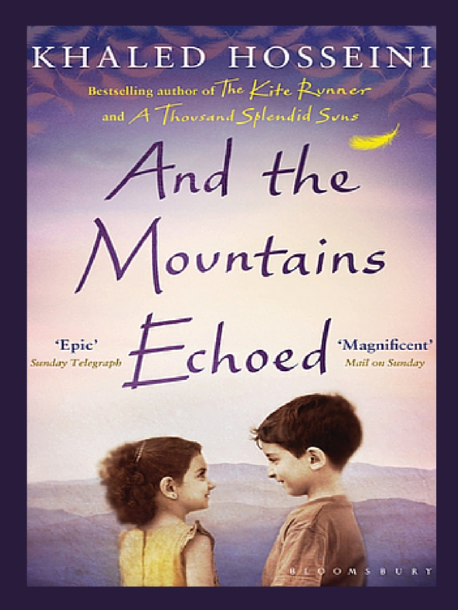
And The Mountains Echoed


and the mountains echoed


Out beyond ideas
of wrongdoing and rightdoing,
there is a field.
I’ll meet you there.

Khaled Hosseini’s book, And the Mountains Echoed, opens with this poem by Jelaluddin Rumi. When I finish reading, I think I know what informed his choice. But what do we really know about each other?

Two sisters, Masooma and Parwana, are sitting on a branch high up an oak tree, their feet dangling. Parwana has always lived in the shadow of Masooma’s exceptional beauty. Life is like that, we are not gifted equally. Beauty is an enormous, unmerited gift given randomly, stupidly1. Parwana is in love with a boy who is in love with Masooma. Life is like that, the heart often wants what it cannot have. Love isn’t always requited in the measure it is given.

When Parwana discovers that, the boy she secretly loves plans to marry Masooma, she shakes the branch and Masooma slips off it. In those seconds of clarity we all have after we set an impulsive destructive course in motion, Parwana tries to save Masooma. Too late. Masooma loses the use of her legs and becomes an invalid. Parwana’s penance is to care dutifully for her sister in rural Afghanistan in the forties. It is gruelling work. Her devotion is one long unspoken apology.

Betrayals play out in different forms in the book. There are tsunamis of cause and effect sweeping through generations. Hosseini, in my view, shows us what is in the human heart. He shows us that . . . human behaviour is messy and unpredictable and unconcerned with convenient symmetries2. I find myself suspending judgment each time. When I read these words, something clicks.

I have lived a long time, . . . and one thing I have come to see is that one is well served by a degree of both humility and charity when judging the inner workings of another person’s heart3.

In each scenario, I ask myself what I would have done. Without the pressure of the moment and with the benefit of hindsight, I weigh my options and choose noble actions. This game I play, read and reflect; it is easy. My life has not been a journey of reasonable actions. I understand every character’s dilemma. I understand their choices even when I don’t approve of them.

Eventually Masooma decides to give Parwana a gift, freedom. She decides to die in the desolate endless expanse of sand and mountains, abandoned on the ground under the darkened sky, cold, and drugged out on a potent mixture from the hookah, with Parwana’s help.

I ponder the nature of Masooma’s gift—freedom, at what cost to Parwana’s conscience? Although she presents it as self-sacrifice, I wonder if it is not self-serving. But such is Parwana’s devotion that she leads Masooma to her death. Of course, the man who Parwana loves, who was in love with Masooma, (but married someone else), is now looking for a wife, having been recently widowed. Can unspoken wishes twist the hand of fate or are we master chess players?

After Parwana reluctantly leaves Masooma to die, trudging back home, she hears something, maybe the wind calling, “Don’t leave me, sister. Come back.”

I tell myself I would go back. Parwana does not. She reasons that nobody will know, just as no one knew about the branch of the oak tree. She has lived with secrets all her life.

For nearly 500 pages, Hosseini shows us the subtexts of our hearts, the subplots that drive our actions, like an onion, he peels layer after layer exposing, in my opinion, our capacity for self-deception. Even with a moral compass, anyone can make black white. The characters are achingly familiar to me.

And the Mountains Echoed, is not about Parwana and Masooma alone. If I have made it seem so, I have done a disservice to Hosseini’s masterful story telling. It is about Saboor, Abdullah, Pari, Nabi, Suleiman, Nila, Idris, Timur, Roshi, Markos, Thalia, and many others, including you and me, a collage of stories linked by strong and weak threads. They have had their time. We have ours now. When the mountains echo, I hope we heed its silent meaning.

Out beyond ideas
of wrongdoing and rightdoing,
there is a field.
I’ll meet you there.

Does such a place even exist?


©Timi Yeseibo 2015


  1. Hosseini, Khaled, And The Mountains Echoed, (London: Bloomsbury, 2013), 378.
  2. Ibid., 378.
  3. Ibid., 124.


Unauthorized use and/or duplication of this material without express and written permission from this blog’s author and/or owner is strictly prohibited. Excerpts and links may be used, provided that full and clear credit is given to Timi Yeseibo and livelytwist.wordpress.com with appropriate and specific direction to the original content.
 

Happy New Momentum

Momentum

Momentum:

  • the strength or force that allows something to continue or to grow stronger or faster as time passes
  • The impetus gained by a moving object
  • The impetus and driving force gained by the development of a process or course of events


1.

About 300 metres to the junction, the traffic light changes to green so I do not need to stop. I cruise past the cars queued on the right lane, which are rousing from varied states of slumber. I do not remove my foot from the gas pedal on my way home, save once. My confidence grows at each succeeding intersection; red does not faze me. It is that kind of day; every light turns green as if anticipating my approach. “It’s a sign,” I say to myself, “So this is what momentum looks like?”


2.

Traffic on Tuesday is unexpected. That cars on the slow lane crawl faster than cars on the speed lane bemuses me. I am undecided as to where I should be. I fix my lipstick and smack my lips using my sun visor mirror. The man in the car on my right smiles at me. I smile back and ease my Toyota in front of his Nissan. Life can be as easy as changing lanes. At every crossroad in my life, someone on the ‘fast’ lane has allowed me cut in ahead of him. Riding on their momentum, I arrived at my destination faster than I otherwise would have. Later, I look at the rear-view mirror and my eyes collide with a strange pair. It is as if the man who made room for me was never there.


3.

When I receive a notification from WordPress that my stats are booming, I am surprised. On Saturday, even I rarely visit my blog because it is a distraction from the business of writing. Facebook is the culprit sending viewers my way. It happened that an acquaintance stumbled on a story on my blog and shared it with her friend who is a person of influence. He enjoyed the story and shared the link on his Timeline. Then his crowd came to see. In The Tipping Point, Malcolm Gladwell writes that we are actually powerfully influenced by our surroundings, our immediate context, and the personalities of those around us1. We rely on them [connectors] to give us access to opportunities and worlds to which we don’t belong2. Your friends, after all, occupy the same world that you do3. The number of views rise like the tide over the course of the evening. I reflect that the only thing I did was agonize over every single word of a short story for five nights before publishing it on a Sunday, weeks ago.


4.

In the mythology of various cultures, man supplicates assistance from deities who guarantee success or reverse fortunes, from Zeus to Thor to Sango. If one subscribes to the Biblical narrative, one encounters a prophet, Elijah, running behind a king riding on a chariot. The king should arrive long before Elijah does for man is no match for horses. However, Elijah receives a boost in momentum from his God. He runs faster than the king’s chariot, a sight that may have made it to YouTube and gone viral, if it were today. Technological advances make reliance on deity a primitive concept for some. Man and the machines he has made have created momentum that carries him beyond the moon and back. But what is momentum for you? Wherever you anchor your belief, I wish you what I wish myself: that you consolidate the gains from the previous year and ride a new wave. Happy new momentum.


©Timi Yeseibo 2014


  1. Gladwell, Malcom, The Tipping Point, How Little Things Can Make A Big Difference, (London: Abacus/Time Warner Books, 2001), 259.
  2. Ibid., 54.
  3. Ibid., 54.


Photo credit: Acatana/ http://pixabay.com/en/highway-night-traffic-spotlight-409126/


Unauthorized use and/or duplication of this material without express and written permission from this blog’s author and/or owner is strictly prohibited. Excerpts and links may be used, provided that full and clear credit is given to Timi Yeseibo and livelytwist.wordpress.com with appropriate and specific direction to the original content.
 

Collaboration: You and Me

collaboration

Collaboration. Holistic Wayfarer showed me how it’s done by inviting me to write a blog post alongside her and Nida S., another writer. An African proverb says if you want to go quickly, go alone, if you want to go far, go together. I went farther this year, because you journeyed with me.

I overcame fear of rejection and what-ifs to approach you, virtual stranger, virtual friend. I told you that I admire your writing and I would be honoured if you shared your perspective on a series I’m doing. And when that didn’t work, I pursued you—busy you, you that hadn’t written in a while, you that was between jobs, cities, homes. Determined not to say your no for you, I ‘harassed’ you until you said, “Yes, Timi!”

From each writer, I collected kernels of truth, after you wooed and wowed me with your words. Someone noted that humility is the common thread that runs through the Learning Series. Indeed, to learn, you must first admit that you don’t know.

The Learning Series was not the only collaboration I did this year. We wrote about age, the love languages of Nigerians, and love for country. The writers took my ideas and ran as far as Australia, danced above and below the Equator, and soared to Canada; yes farther than I could go. The result? A clash of hues softened by the spaces where we glimpsed your heart.

I opine that to write an effective personal piece, vulnerability must become like meat and potatoes. The writers delivered that quality, the ability to be open and yet closed, to be known and yet not known, to lie next to someone and yet not touch. Perhaps I reread your pieces and the comments that followed, to decipher your face in the dark that I might recognize you by light. These collaborations were shared over 150 times on social media, the power of your network not mine. You took me further.

In putting your stories and mine together, my joy at editing surpassed my joy at writing. I questioned if my writing was not merely a platform to pull other writers together to present the world with an anthology, all the stories of humanity in one place. I played with this notion until I met a ‘secret’ reader at an event. The usual pleasantries segued to the question of what I do.

“What do you blog about?”

I sized him up. Nigerian. Early thirties. “Let me show you.” I navigated to, Running in the Airport. “See,” I said, letting him read from my phone, “This kind of stuff.”

“Oh, I’ve read that before, hilarious! Someone sent it to me. So you’re the one who wrote that, he asked, looking at me. “You look . . .”

“Different,” I offered, aware that the photo on my blog was taken about three years ago.

“More beautiful in person.”

The charmer. If I were doing a sweepstake on my blog, I would skew the results so he would win.

“And you sound so . . .  so . . .”

“Ordinary?” I offered again.

“Yes,” he replied, shaking his head. “After reading all that big grammar you write . . .”

Right there, his laughter clambering over mine, I began to write a blog post in my head.

Our laughter reminded me that my collaboration with readers either through the comments or in real life has also taken me further than I dreamed possible. Writing gives me visibility. It is wonderful to meet and know people beyond the page.

Happiness is transient for me, until I celebrate every phase of my journey. It is true what they say; the grass is greener on the side where it is watered. In 2014, my blog was a beautiful place to be because of you.


If I have seen further it is by standing on the shoulders of giants.
 Isaac Newton


©Timi Yeseibo 2014

Unauthorized use and/or duplication of this material without express and written permission from this blog’s author and/or owner is strictly prohibited. Excerpts and links may be used, provided that full and clear credit is given to Timi Yeseibo and livelytwist.wordpress.com with appropriate and specific direction to the original content.


Did We Do Any Learning? [6]

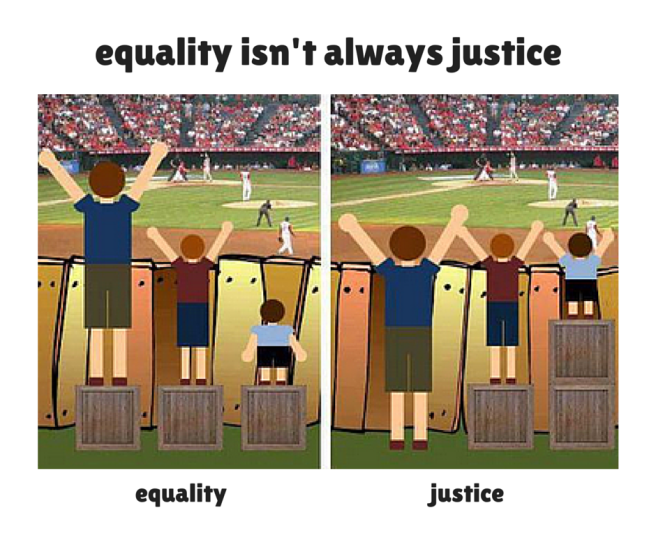
equality v justice

Human rights are not only violated by terrorism, repression or assassination, but also by unfair economic structures that create huge inequalities.
Pope Francis


Life isn’t Always Fair

It is a lesson we have all learned. Sometimes fate turns around and bites us. But I have never seen this inequity so clear and so devastating, as I have over the last three months in Liberia, Sierra Leone, and Guinea.

Ebola.

I was a Peace Corps Volunteer in Liberia from 1965 to 1967, a long time ago.  It was an incredible experience for me, going from the University of California at Berkeley and California’s super-urban Bay Area to the then small upcountry town of Gbarnga, where I met Africa face to face and received so much more from the experience than I was able to contribute.

Afterwards, the terrible civil wars tore Liberia apart in a way that was incomprehensible to those of us who had lived in the country and had come to know her people and culture.

Recently, I began to feel more optimistic about Liberia’s future. There was hope. Liberia had known peace for ten years. Children were back in school. There was laughter in the street.

And then Ebola struck. Once again, Liberia teeters on the edge of chaos. How much more can the country take? Yes there are things we can do, must do, to help. But I can’t help thinking, over and over: isn’t it time that fate gives the people of Liberia, Guinea, and Sierra Leone a break?


Curt Mekemson @ Wandering through Time and Place

Half of the profits from Curt’s recent book, The Bush Devil Ate Sam and Other Tales of a Peace Corps Volunteer in Liberia West Africa, will go to Friends of Liberia, a group of returned Peace Corps volunteers.


Wake Up and Think for Yourself

This year my sixty-seven year old country finally woke up. Millions of Pakistanis learned to think for themselves.

Four months ago, frustrated people stepped out of their homes and stamped their thoughts on the streets under the leadership of Imran Khan. Old men, housewives, students, and children slid open curtains of indifference and made history.

War is when your government tells you who the enemy is. A revolution is when you figure it out yourself. ~Anonymous

This year millions of Pakistanis learned about pain. Pain that transcends boundaries of flesh and geography. Pain that sets things into perspective. Love, family, home, and health. Everything else seems extravagant. You don’t expect to send your children to school and never see them again.1

We saw hope and held on to it tight. Perhaps too tight because it left blisters. We learned about healing as skins of faith quickly formed protective layers on our stubborn wounds. My people are even more stubborn.

This year I learned about victory. A victory that marks an end to our closed minds and blind hearts. I have seen my extraordinary people walk to hell and back. They tell me to keep going. Because that is exactly what they will do. They always do. And this revelation makes me realize our power.

I had a dream about you last night…and in it you said, ‘Chin up; it only gets harder.’ ~ Marshal Ramsay

Think. Question. Challenge.

Because once people begin to think aloud, they are impossible to ignore.


Nida S. @ on the road to inkrichment 

  1. On 16 December 2014, terrorists ran down an Army public school in Peshawar (Pakistan), leaving 132 children and 9 members of the school staff dead in cold blood.


In Search of a Messiah

I have thought about poverty and inequality, and for me, there are no easy answers yet. Years of inequality, poverty, rising unemployment (indices to gauge development according to economist Dudley Seers), and insecurity, have made many Nigerians pant for a benevolent dictator, a fairy godmother with a magic wand to wave all our problems away, while we dance with the prince and midnight never comes.

In the lyrics of Bob Marley, Most people think great god will come from the sky take away ev’rything, and make ev’rybody feel high. I believe in The Messiah, but I don’t want to be guilty of a messiah complex. These days when someone offers me help, I ask why, I ask how, I ask what, I ask where, I ask how much. And, I keep asking until I understand.

The race for the 2015 presidential elections in Nigeria resembles a dem-all-crazy; they say we have to choose the lesser of two devils. Democracy delivers to us what we demand of her. Poverty and inequality like kwashiorkor, can make people swallow nutrition devoid of protein, and then roll over to sleep not realising death is waiting.

I have learnt that on the drive to my destination, it is unwise to hand over the keys of my life and snooze in the passenger seat. Going by what I read on social media it seems many have learnt this too. The challenge is to remind the driver that he is driving our car and so we decide where he goes and when he stops.

Timi @ Livelytwist


Unauthorized use and/or duplication of this material without express and written permission from this blog’s author and/or owner is strictly prohibited. Excerpts and links may be used, provided that full and clear credit is given to Timi Yeseibo and livelytwist.wordpress.com with appropriate and specific direction to the original content.
Did We Do Any Learning? [3]

learning

9 Things I’ve Re-Learned This Year

Life lessons aren’t mastered in a single bold stroke.  We learn, we practice, we forget, we remember, we re-learn. Here are a few key notes I re-learned this year:

  1. Like a bottomless well, Ego’s desire for applause, accolades, approval, acknowledgement, acclaim, awards, and recognition is never satiated.
  2. When we stroke Ego, it purrs. When we stop, it snarls.
  3. It’s silly to buy another pair of shoes because we want an Ego boost from others when they see us rocking our new ruby slippers.
  4. People want us to do what they want us to do when they want us to do it. They are affronted when we don’t.
  5. When people ask us to “be honest” . . . they don’t always mean it.
  6. In many ways, we are at the mercy of the tides. Life ebbs and flows.  Joy comes and goes.  Sorrow is hard to avoid.
  7. Even if we’re not convinced that “everything happens for a reason,” taking time to look for “silver linings” helps us deal with passing clouds.
  8. When we aren’t wedded to a set destination, we enjoy the journey (and its inevitable detours), more.
  9. If we are enjoying the journey, we win. No matter where the wind blows us.

Aah . . . that’s better!

Nrhatch @ Spirit Lights The Way 


Diversity and the Art of Writing

Writing has reassured me that the things we feel deeply as individuals are universal—love, rejection, angst, joy, belonging; that it’s okay to admit your vulnerabilities. It might feel scary, but it also makes you authentic. Your foibles, shame, and guilt might be someone else’s quiet truth.

People read novels autobiographically, through the lens of their life’s narrative, and their values and opinions. My heroine might be a role-model for one reader, but another reader might want to slap her. I have little control over how readers see my characters as an author, and this came as a big surprise. Most readers love my male lead, but one reader thought him a tosser (although she did reassure me she’d shag him in a heartbeat, oh dear!). Now I realise I can’t write my characters to keep everyone happy, it’s not possible. That’s okay, life isn’t a popularity contest. Besides, my characters largely write themselves.

Writing has taught me that diversity isn’t some little politically correct box to tick. Diversity abounds, it is the norm. The trick is to be open to differences and to hold back from rushing in to judge.  I attempt this by thinking my characters’ thoughts, walking in their shoes, and imagining their predicaments. Besides, wouldn’t it be boring if we were all the same?

Susan @ Susan Lattwein

Susan’s novel, Arafura – Unfinished Business, is a gritty romance with a bit of sex, dynamite, and hilarity – not always at the same time.


Real Men Carry Purses

Statements of fantasy can be metaphors for real life—you can live backwards and you can still learn at age 403! I once read that even if your body never aged, you’re statistically likely to die from an accident before you hit 600. See, you just learned something! I told you it was possible.

I have previously claimed on this blog that I am 403 years old, but I am far closer to 43. Although I exaggerated my age for humorous effect, one can learn after 40. And, while we can’t literally live backwards, we can become more open and tolerant, which is the opposite of what usually happens when people get older.

So I learned two things this year, both related: to respect women on a higher plane and to break free from my personal gender stereotypes. While I’ve long thought of myself as a feminist ally and viewed women as equals, that didn’t stop my subtle objectification. I was never the creepy dude, but I wasn’t the ally I thought I was, either. The journey toward being a better person is a welcome one.

With encouragement from the women in my life, I finally bought something this year I’ve wanted for ages, a purse. Why can’t a guy have a purse? It elevates the quality of life. I needed to build up my “bravery” first, which shows you how badass women are. They carry purses all the time.

Eric @ ericjohnbaker


Unauthorized use and/or duplication of this material without express and written permission from this blog’s author and/or owner is strictly prohibited. Excerpts and links may be used, provided that full and clear credit is given to Timi Yeseibo and livelytwist.wordpress.com with appropriate and specific direction to the original content.

Did We Do Any Learning? [2]

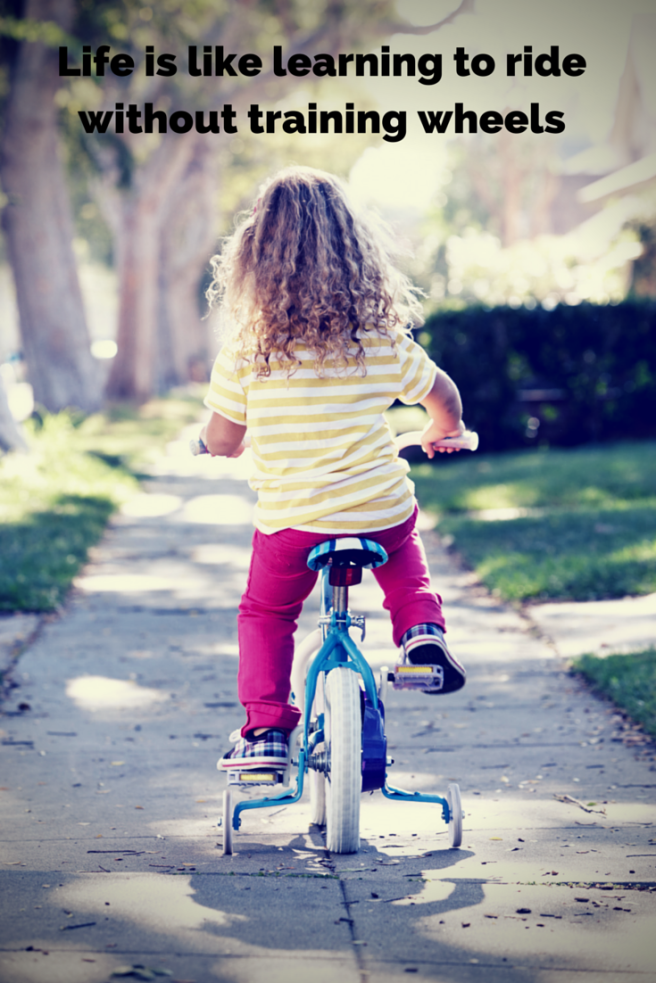
training bike

Keep on Moving, Don’t Stop!

I’ve grown. If according to John Foster Dulles, the measure of success is not whether you have a tough problem to deal with, but whether it is the same problem you had last year, then I’ve grown and become successful. A few years ago, I created a problem for myself that cost me in currency that did not exist. That blow, that loss, that disappointment, that self-loathing, stole one year of my life. I hid under the bedcovers in January and did not emerge until December.

This year, I created a dissimilar problem. The blow, the loss, the disappointment, the self-loathing, was the same, but it did not steal one year of my life. I drew a circle of blame with one big dot in the centre, representing me, the first step in securing redemption and embracing grace. Then I forgave myself and doubled my productivity.

Since yellow is the colour of sunrays, Soul 2 Soul’s Keep on Moving, became my refrain. My mistakes helped me locate myself on the ladder of my development, several rungs below where I’d hoped to be. But wading through the putrid mess, I found as John Maxwell says, keys that I can use to unlock the next door of opportunity.

Fall, rise, keep rising, keep on moving, don’t stop!


©Timi Yeseibo 2014


Unauthorized use and/or duplication of this material without express and written permission from this blog’s author and/or owner is strictly prohibited. Excerpts and links may be used, provided that full and clear credit is given to Timi Yeseibo and livelytwist.wordpress.com with appropriate and specific direction to the original content.
Did We Do Any Learning? [1]

Learning

Yiikes, I’m a Control Freak!

Accomplished is my word for 2014. But so is Control Freak, as I’ll learn later.

It was a fine morning in June 2013 when I sat, filling out forms in the anaesthesiologist’s office.

“Gosh, you have OCD,” he said, when I handed them back.

Puzzled, I turned to him, “Why do you say that, sir?”

“Well, you’ve filled out every detail on the form. Hmm, the people who work for you must be suffering.”

What? All that from filling out a form properly? No appreciation? Why ask for the information if it was unnecessary? I shrugged but paused, thought lingering.


Fast forward to November 2014.  I’m reading, Eat, Pray, Love, by Elizabeth Gilbert. I’m awed that she, thousands of miles away, can write my heart so perfectly. In the book, ‘Liz is in conversation with her friend, Richard:

“Lemme tell you something, Groceries – you got some serious control issues.

“My rage at this statement consumes me like fire. Control Issues? ME?

“…Listen, you’re a powerful woman, and you’re used to getting what you want out of life,…Life didn’t go your way for once. And nothing pisses off a control freak more than life not goin’ her way.

“You gotta learn how to let go, Groceries. Otherwise, you’re gonna make yourself sick. Never gonna have a good night’s sleep again. You’ll just toss and turn forever, beatin’ on yourself for being such a fiasco in life…How come I screw up all my relationships? Why am I such a failure?”1

I scream in my head. This is me. Has been me forever.  And so I’ve decided that my phrase for 2015 is Letting Go. Because I can’t look forward and back at the same time.

Control Freak. Letting go.


Ozoz @ Kitchen Butterfly
Watch her Journey by Plate, at TEDx Port Harcourt, October 2014.


No Stopping Me

I refuse to listen to the cynical voice sending evil messages to my brain, “You have reached your limit, just give up and maintain what you have.”

It is not possible that I cannot lose any more weight. Short of sewing up my intestines, tongue, and teeth, I have tried everything humanly and spiritually possible to lose weight.

Last Friday, I decided to give my body a treat. Off I went to a nearby gym and spa center. I asked about their services.

“Pedicure, body polish and massage, facials, tummy blast—”

“Eh Tummy blast?” Light bulbs went off in my head. “What does it entail?”

“We have a machine that rolls over the stomach, as well as a kneading wood that helps to blast the fat.”

“Wow! Really?”

“Yes ma,” the lady responded. “But you need to come in for a minimum of six sessions to see tangible results.”


Treatment started in earnest. The machine began its work. Years of unleavened fat would not go down without a fight. The kneading wood was applied to further flatten the pouch. Next, they tied me with cellophane and a long strip of cloth. I made Herve Leger’s bandage dress look like child’s play. Na wa, so this is what it feels like to be an Egyptian mummy?

Fifteen minutes later, I had lost about an inch! They placed me on a three-day fruit diet with lots of water and gave me aloe vera gel drink as part of a detox plan.

Although the aloe vera drink tastes like shit and my husband laments that he and the kids are the real victims of my never-ending weight loss programmes (they cannot go to the toilet after me since air fresheners and diffusers are powerless against this form of domestic terrorism), I am trudging on. Ain’t no stopping me. One down, five to go.


Eriye Onagoruwa is a legal practitioner. She writes satirical pieces for The Guardian.


A Thin Line Between Yes and No

I tend to say yes to almost everything.

I tell myself that this is due to my good nature, after all what’s so bad about trying to avoid the landmine of hurt feelings? I sometimes suspect though, that it is because I hate being told no myself. My reluctance to use the word no usually results in my being burdened and stretched with over commitments and ever-increasing responsibilities. This was a constant thread than ran through the fabric of 2014—a constantly overflowing schedule. The slender margins took a toll and gave rise to frayed nerves and a quick temper.

A person who lives with the stress of an overwhelmed schedule will ache with the sadness of an underwhelmed soul.2

I wish I had known earlier, the freedom that comes with just saying no. Saying no does not close the door on opportunities; rather it creates the opportunity to say a resounding yes to the things that do matter. Saying no is just another way of saying, “Yes!” to the important things. Lysa Terkeurst calls this our Best Yes.3

I am not one for New Year resolutions, but as 2015 peeks from behind the folds of 2014, I hear, margin. I have learnt that I need margin in my life and to achieve this, sometimes, I need to say it loud and say it clear, with a dash of understanding and empathy of course, “No!”


Tamkara @ naijaexpatinholland
Tamkara rocks her clogs expat style in the book, Dutched Up! with 27 other expats who share their perspectives on life in The Netherlands.


  1. Gilbert, Elizabeth, Eat Pray Love (Croydon: CPI Group (UK) Ltd. Books, 2007), 158 – 159.
  2. Goins, Jeff. 025: Saying Yes to the Best Things: How Do You Balance It All? [Podcast]
  3. TerKeurst Lysa, The Best Yes: Making Wise Decisions in the Midst of Endless Demand


Unauthorized use and/or duplication of this material without express and written permission from this blog’s author and/or owner is strictly prohibited. Excerpts and links may be used, provided that full and clear credit is given to Timi Yeseibo and livelytwist.wordpress.com with appropriate and specific direction to the original content.

Beyond Bob Geldof’s Ebola Christmas

charity

The debate and backlash that surrounded Bob Geldof’s resurrection of Band Aid’s 1984-charity single, Do They Know It’s Christmas, to raise funds for Ebola held my attention for many days. While some questioned the rich celebrities’ motives, others were appalled by the patronizing lyrics, which they claimed cast West Africans as people who cannot solve their problems and so were always in need of foreign aid. In between were a thousand other pros and cons. I capture selected sentiments (edited), below:


They need all the money they can get. What have the people complaining done?

My parents gave money when I was two. Now I’m thirty-two, I have to give money—hang on, my daughter is two. Is this a generational thing?

Well at least they’re changing the lyrics.

How about new lyrics: cure the world, yes they know it’s Christmas time, doesn’t quite have the same ring to it, does it?

It’s called Band Aid not Deep Surgery for crying out loud!


Liberia, Sierra Leone, and Guinea, the countries facing the wrath of Ebola, cannot afford to turn up their noses at financial assistance from Band Aid 30. I suppose it is left to the rest of us to speak up for them. And we did.

By now Bob Geldof knows:

  • Rhetorical questions like, do they know it’s Christmas time at all? will be answered on Twitter and Facebook, with viral effect, as long as he keeps asking.
  • Hyperbole, that literary device sometimes used to coax emotive response, has been withdrawn from his poetic license—where the only water flowing is the bitter sting of tears; where nothing ever grows; and now, where a kiss of love can kill you and there’s death in every tear.
  • Irony, well tonight thank God it’s them instead of you, has never been more tongue in cheek.
  • Synecdoche, a figure of speech in which a part is made to represent the whole or vice versa, is the preserve of Africans for Africa.
  • White savior complex means that in the absence of a black Jesus, Africans might accept a mixed race one, the scion of a black father and a white mother or vice versa.
  • The danger of a single story will haunt him, although thirty years later, Africans are yet to acquire their own Cable News Network, African Broadcasting Corporation, or Al j’Africa to tell their multiple stories.


But I suspect Bob Geldof also knows:

  • Visibility creates heightened awareness. Celebrities generate greater visibility for causes than the United Nations does1.
  • When it comes to charitable giving, people act from the heart not from the head. Facts and charts are boring.
  • Emotion is the language of donation, images of children and women, the defenseless, make viewers emotionally invested2. Images of a prosperous Africa will zip purses close.
  • Words can evoke powerful empathetic responses because they transport us into other people’s world. Hence, no peace and joy this Christmas in West Africa – the only hope they’ll have is being alive.
  • He is a musician who knows how to compose popular songs that will sell.
  • He wants to help on his terms not yours.
  • Generosity is most potent at Christmas.


So, can we take a pause from shouting ourselves hoarse on social media and dismount our righteous soapboxes please? Give us your aid on our terms, sounds chivalrous, carries the ring of revolution even, but isn’t it as naïve now as it was then? Does he who pays the piper not dictate the tune?

Band Aid 30’s charity single, Do They Know It’s Christmas? in aid of the Ebola crisis, has become the fastest-selling single of 2014, selling over 200,000 copies since its release about a week ago3.  Who is buying the ‘demeaning’ song that Fuse ODG, British-Ghanaian rapper, refused to be a part of because he is, “sick of the whole concept of Africa – a resource-rich continent with unbridled potential – always being seen as diseased, infested and poverty-stricken.”4?

It would seem no amount of revising would have made the ‘new’ song acceptable to those condemning it. Only a song by Africans for Africans stands a chance of not being condescending. The Africa Stop Ebola, single, an African initiative that includes well-known musicians such as Tiken Jah Fakoly, Amadou & Mariam, Salif Keita, and Oumou Sangare, was recorded before the release of Band Aid 30’s charity single. It is currently at number seventy-eight on the iTunes download charts. Band Aid 30 is at number one5. Telling isn’t it?

Perhaps frustration arises from fighting something intangible—Geldof still raises millions with his ‘questionable’ lyrics and the African countries in question readily collect financial aid from the sale of lyrics that ‘demean’ them. Remember when the local radio stations in Nigeria played Band Aid’s song over and over and we sang, danced, and clapped (omg, omg! horror of horrors!) to the catchy chorus, feed the world . . . ? Right, that was thirty years ago. But, will the stations play the new version?

The long-term solution for underdeveloped African countries is not charity. There should be more to aid than handing over millions of Pounds6. Okay. But is that Geldof’s job? Really? Should only Bob Geldof be put on trial? Or maybe he should be hung for exploiting human nature.

A man can’t ride your back unless it is bent7. There are many ways to straighten our backs. Using Bob Geldof as target practice is one of them. I get it. Can we now concentrate on other ways of straightening our backs so that Geldof wouldn’t dare resurrect Band Aid 40 in ten years’ time, because not only would our outcry have sensitized public opinion, we would also have perfected African solutions to ‘Afro-global’ problems.

A new generation of Africans wants to tell new African stories. They know that media isn’t 100% objective. It exists to serve the interest of the owners, which include profit and propaganda. Maybe we don’t have to be so defensive about the old stories; they are part of our stories too, no? Those stories will evolve as those societies truly do and the burden of change lies with us.


©Timi Yeseibo 2014


  1. Geldof decided to remake the single after the United Nations contacted him, saying help was urgently needed to prevent the disease from spreading beyond West Africa. http://www.reuters.com/article/2014/11/17/us-health-ebola-geldof-idUSKCN0IZ0GY20141117 
  1. Oxfam, the international aid agency, reports in 2012, that three out of five people polled said they were or had become desensitised to images depicting issues such as hunger, drought and disease. http://www.oxfam.org.uk/media-centre/press-releases/2012/12/show-africas-potential-not-just-its-problems-says-oxfam
  1. http://www.theguardian.com/music/2014/nov/18/band-aid-30-becomes-fastest-selling-single-of-2014 
  1. Anyone who has experienced Africa in a positive way is a citizen of the New Africa and needs to play their part in challenging perceptions– and if I can make chart-topping music that celebrates Africa then surely Band Aid and its extensive network can do the same. – Fuse ODG  http://www.theguardian.com/commentisfree/2014/nov/19/turn-down-band-aid-bob-geldof-africa-fuse-odg  
  1. http://www.theguardian.com/world/2014/nov/20/-sp-africa-stop-ebola-band-aid-alternative 
  1. My quote. For further reading: I don’t know of any country in the world where a bunch of foreigners came and developed the country. I know about countries that developed on trade and innovation and business. – Herman Chinery-Hesse. http://www.povertycure.org/issues/foreign-aid/
  1. Quote by Martin Luther King Jr., “Whenever men and women straighten their backs up, they are going somewhere, because a man can’t ride your back unless it is bent.”


Image Credit:

Map of Africa:  http://all-free-download.com/free-vector/vector-clip-art/africa_clip_art_19737.html


Unauthorized use and/or duplication of this material without express and written permission from this blog’s author and/or owner is strictly prohibited. Excerpts and links may be used, provided that full and clear credit is given to Timi Yeseibo and livelytwist.wordpress.com with appropriate and specific direction to the original content.


Let’s Just Agree to Disagree

And there it was again at the end of a well-written piece by an African-American about how his trip to Africa changed his worldview; the insults and tacky comments. I did not agree with what in my opinion were romanticized notions of Africa, and I intended to say so. I scanned the piece for points of agreement to acknowledge, so I could begin commenting. However, the vitriol in the comment section from those who agreed and disagreed, whether with the post or the ensuing comments, put me off. It would not be easy to defend myself from people like sixpackpower and beautifulbetsy. Moreover, my gravatar is a photo of me my boss would recognize and my name is Timi Yeseibo.

Is anonymity on the web like mob action? Normal people abandoning good sense to loot, rape, devalue, to the beat of crazy songs sung by thousands high on hysteria like LSD? Does an IP-address unshackle responsibility from freedom?


dignity&anonymity

Beyond anonymity as gasoline for cyberthuggery, in a world of six billion people how can we all agree? Someone said, if only everyone were like me. I say no. Biko, do not populate the world with more people like me—do you know how boring I am? Our differences are not to be feared, but harnessed. You stretch my thinking and make me re-examine what I believe. In the end, we may find common ground, or you remain on the right and I on the left, all with respect. Can we just learn how to agree to disagree? Must web discussions on politics, sports, entertainment, religion, in other words, life, bring out the devil in us?

Sadly, some websites promote these kinds of verbal boxing matches and just as in ancient Rome, people troop in for a good fight, to watch gladiators at work. At its worst bystanders careen into the ring and die.

Our challenge is to find the compassion for others that we want them to have for us. That is emotional correctness. – Sally Kohn1

A few days ago, I read an engaging post advocating several candidates for political office in the 2015 Nigerian elections. To broaden my knowledge, I sought out opinions in the comment section. Two brilliant minds with opposing views held my attention. As the comment thread lengthened, their commentary lost substance and devolved into name calling as if their intellect had come to a full stop. When commenter one accused commenter two of shouting in capitals, commenter two defended himself by pointing out that his magnanimity was on behalf of the visually challenged.


turn off caps

I laughed until I belly-fulled, then navigated to a less popular political website, where comments are permanently closed, as if to say, “Read, finish, carry your trouble and go!”


comment moderation

Hieroglyphic symbols may have sufficed eons ago, but since the web is predominantly text-based, our ability to decipher tone, mood, and body language is limited. Emoticons only go so far.

After trading points for a while, a friend and I deadlocked on the value of prayer. He said, “Let’s just agree to disagree.” I nodded although I thought a couple more points would push him to my side and a consensus. His hands, folded across his chest, told a different story.  If he had written, let’s agree to disagree, in the comment section and put a smiley at the end, would I have stopped?


Let's agree to disagree


Having a quick wit and a repertoire of words at my disposal meant as my mother used to say, before you talk one, Timi has talked three, oya, go and study law, that is, winning arguments mattered more than winning hearts. Here’s something I’m learning that has lost me several arguments, but gained me friends or acquaintances and kept the discussion open longer: let the other person save face. Argue passionately for what you believe to be right—strip your “opponent” of logic, but leave his dignity intact. The converse is true, save your own face, don’t comment, even when you are right—walk away with dignity.

Despite our best efforts, we may be misunderstood because people read and process through filters. It helps to first suspend judgement and then seek to understand.

Finally, if you must insult me, if my post or comment inspires your disdain then confound me with your intelligence, charm me with savoir faire. At least do it with style.


@frankdefreak


©Timi Yeseibo 2014


1. “Sally Kohn: Let’s try emotional correctness” YouTube video, 4:25, posted by “TedTalks,” on Dec 4, 2013. https://www.youtube.com/watch?v=NCJTV5KaJJc


Photo credit: © Francis Otuogbai on Twitter: @frankdfreak (used with permission)

Unauthorized use and/or duplication of this material without express and written permission from this blog’s author and/or owner is strictly prohibited. Excerpts and links may be used, provided that full and clear credit is given to Timi Yeseibo and livelytwist.wordpress.com with appropriate and specific direction to the original content.