Saying Yes to Nigeria [2]

Naija Movie Night

In his essay for the New York Times Magazine, A Too Perfect Picture, which examines Steve Curry’s work, Teju Cole concludes that:

Art is always difficult, but it is especially difficult when it comes to telling other people’s stories. And it is ferociously difficult when those others are tangled up in your history and you are tangled up in theirs. What honors those we look at, those whose stories we try to tell, is work that acknowledges their complex sense of their own reality. Good photography, regardless of its style, is always emotionally generous in this way. For this reason, it outlives the moment that occasions it. Weaker photography delivers a quick message — sweetness, pathos, humor — but fails to do more. But more is what we are.

I do not own a camera, only words. I’m sharing this story I wrote years ago even though my experience in 2016 is different because it remains a snap shot of who we are. I hope my lenses are strong. I hope they do more. Read about Naija Movie Night …


©Timi Yeseibo 2016

Unauthorized use and/or duplication of this material without express and written permission from this blog’s author and/or owner is strictly prohibited. Excerpts and links may be used, provided that full and clear credit is given to Timi Yeseibo and livelytwist.wordpress.com with appropriate and specific direction to the original content.


Saying Yes to Nigeria [1]

nigeria

Each time I am sure that, in returning to Lagos, I have inadvertently wandered into a region of hell, something else emerges to give me hope. A reader, an orchestra, the friendship of some powerful swimmers against the tide.
– Teju Cole

Several years ago when I was in Nigeria, I wrote a collection of articles about my experiences since I had returned and received feedback from my editor.

“Please don’t be like all those sabi sabi oyibo Nigerians who come from abroad and tell us what’s wrong with our country; they won’t stay and solve problems only talk talk talk,” she said and handed my manuscript back to me.

“We know what’s wrong with Nigeria, we live it every day. We are looking for escape in comic relief. If you must tell us, satirize it, and make yourself one of us. Like this story here,” she collected the manuscript from me and leafed through it. “This one is good. This one,” she shook her head, “not good.”

I did not agree with her assessment regarding the articles she claimed were not good. They were reflections based on my experiences. Moreover, I couldn’t infuse humour or irony or both in every article, could I? Maybe I could, I am Nigerian after all.

I read Teju Cole’s book, Everyday is For the Thief, years ago. I recall feeling hectored by chapter after chapter about a Nigeria with little redemptive value. My patriotism reared its head. Could he not find many more events, which were ‘normal’ to write about? Of course, I recognized the narrator’s experiences. Some were mine too, but such truths in black and white were painful to swallow. Then I understood what my editor had been trying to tell me.

African writers in the Diaspora have been accused of writing poverty porn— stories of disease-ridden, war-torn, aid-dependent, poverty-rife, corruption-infested, and patriarchal Africa—to sell their books to audiences in the West. While these aren’t the only narratives of Africa, as far as Nigeria goes, some elements are inescapable; even in choice neighbourhoods, evidence of poverty rises to the nose from the open drains that surround electric fences.

Returning from years of living abroad, your brain functions in constant comparison mode, not only of currency and exchange rates but also of culture, infrastructure, organization, and leadership. Stories are everywhere. But, does a writer have an obligation to be an ambassador of hope if he finds none?

Recently, a friend and I were discussing relocating permanently to Nigeria.

Holding his British and Nigerian passport in each hand, he said, “Nigeria, nah.” Placing his British passport on top his Nigerian one, he said, “I can only do Nigeria in measured doses.”

Without shame, I realize that another five years outside Nigeria has almost made me one of those Nigerians. If I were to review, Everyday is For the Thief, today; I would not be too harsh.

Every time I return to Nigeria, it is not with joy; a certain coercion draws me to her. Nevertheless, I leave better for having stayed. My patriotism is sometimes shaky, needing comfort to support its grid. If I returned with resolve to build a better society, the fuel queues and sweltering heat are melting it away. Perhaps time will help me tell a different story.


©Timi Yeseibo 2016


Photo credit: http://www.inecnigeria.org/?page_id=373


The Rise and Rise of Artificial Intelligence

artificial intelligence

John Eldrege said Men want a battle to fight, an adventure to live, and a beauty to rescue. A woman wants to be romanced. She wants to be an essential part of a great adventure. Combine these elements in a dramatic arc on a big screen and you have a blockbuster. Add alien invasion or imminent destruction of planet earth to the mix to gross millions.

I enjoy movies because of their entertainment value and their ability to bring storytelling alive with sound and cinematography. Beyond these, movies unveil trends or make them more mainstream by relaxing our sensibilities. Since I don’t follow technology news, I first saw a touchscreen computer in a movie. Cool, but far-fetched, I thought. Years later, when touchscreens became the rave, I thought, aha!

The super-natural fascinates us. By this, I mean the union of man and something otherworldly think batman, superman, or vampires; as if we are tired of the limitations our human bodies impose on us. Movies have also explored the outcome of our creations like robots, in everyday life. These robots increasingly simulate human behavior (make rational decisions from data and have emotional intelligence), including natural language and voice recognition.

This week, Microsoft introduced Tay, an Artificial Intelligence (AI), chat robot to Twitter. Tay was designed to speak like a teenage girl. Only a day after she went live, Microsoft took Tay offline because she transformed to an evil Hitler-loving, incestual sex-promoting, ‘Bush did 9/11’-proclaiming robot. This was a case of garbage in, garbage out. Tay’s responses are learned by the conversations she has with real humans online – and real humans like to say weird stuff online and enjoy hijacking corporate attempts at PR.

The saga reminded me of a movie Benn recommended last year, Ex Machina, a sci-fi thriller. Ex Machina examines the relationship between Caleb, a programmer and Ava, a female humanoid robot. Nathan, Caleb’s boss, wants Caleb to test Ava’s superior AI; her ability to persuade him she is human. The adventure thrills Caleb; he falls for the beautiful and vulnerable Ava and battles to rescue her from slavery to Nathan.

The movie and its ending made for good conversation. Friends and I discussed robotics in general and ethical considerations in the development and use of AI, especially sex robots.

When someone mentioned the resistance to the Industrial Revolution, I shared how a multinational firm in Nigeria faced resistance from its staff when it decided to automate its operations years ago. The staff went berserk. They eyed members of the IT team and labelled them, ‘the people who are coming for our jobs.’

Referring to the sex scene between Nathan and another female humanoid in Ex Machina, a girl in the group said, “I hope they’re not coming for our jobs.”

We laughed. Then were quiet.

Robots are an invention subject to the whims of their human creators. How far is too far? Movies seem to ask: can we fall in love with robots? We want machines to make life easy for us not replace us. We want to be an essential part of a great adventure, not excluded from it.

Finally, I found my voice and said, “I hope not.”


©Timi Yeseibo 2016


Unauthorized use and/or duplication of this material without express and written permission from this blog’s author and/or owner is strictly prohibited. Excerpts and links may be used, provided that full and clear credit is given to Timi Yeseibo and livelytwist.wordpress.com with appropriate and specific direction to the original content.


Leave Trash For LAWMA

“Stop, stop,” I urged the Uber driver.

He obliged and I came out of the cab with my phone to take a photo of the signpost. 

refuse disposal

“Why did they put up the sign,” I asked the driver, shaking my head as I returned to the car and put on my seat belt. “Do you think people will obey?”

“The first problem,” he said, “is that the people that it’s supposed for can’t even read it. When they see it, they will think it’s about 419.”

I nodded recalling the caveat emptor signs commonly seen on buildings and plots of land: This Property is Not For Sale; Beware of 419.

But, I was not sure if he had correctly estimated the literacy level in Lagos, Nigeria, because I was using the people in my circle, who can all read and write, as a gauge for the rest of society.

“Hmmm do you think it is fair for God to dirty their lives if they can’t read the sign?” I chuckled at the image in my mind of an angry God with smoking nostrils, waiting to rain trash on dissidents.

“I don’t know why they have to bring God into this matter. This thing is simple.” He went on to describe the current system of refuse collection initiated by the local government authorities.

“See,” he slowed down and pointed to a refuse heap, “they can throw their rubbish here . . . but only those who have paid, those that have cards.”

I have written about voluntary compliance before, marveling that Nigerians need the brutal arms of uniformed men to coerce compliance out of us like malu congo, yama yama congo—a derogatory chant that I cried out as a girl. It was aimed at cows being driven with a stick by a herdsman intent on the cows doing his bidding.

But as the driver and I exchanged ideas about efficient systems of refuse disposal and the role of government and religion, I observed that humans in general, were wild at heart, bucking at authority and searching for short cuts. That if law and order seemed to prevail in the western world, it wasn’t so much the result of “civilization”, but the result of sophisticated systems of policing—a speed camera mounted on a busy street ensured compliance without invoking the wrath of God.

I asked the driver what he thought people who aren’t able to pay the fee for refuse collection should do with their garbage.

“I don’t know o. Na wa! Only God can save this country!”

He had come full circle and now embraced a premise he had earlier rejected, why bring God into this matter? He (and I), had done more thinking about a social problem than we normally would have and that was not a bad start.

He brought me back to the present by interrupting my thoughts with a double entendre.

Madam, abeg leave trash for LAWMA!”


©Timi Yeseibo 2016


LAWMA- Lagos State Waste Management Authority.

Abeg leave trash for LAWMA– ordinarily, in this context, Pidgin English for: please allow Lagos State Waste Management Authority do their job.

(Abeg) leave trash for LAWMA– a hashtag on Twitter, the result of feuding between two Nigerian music producers. It has morphed into a slang that means (among other things), please talk about something else.


©Timi Yeseibo 2016


Unauthorized use and/or duplication of this material without express and written permission from this blog’s author and/or owner is strictly prohibited. Excerpts and links may be used, provided that full and clear credit is given to Timi Yeseibo and livelytwist.wordpress.com with appropriate and specific direction to the original content.

In The Spirit of Love

In the spirit of love, I’m sharing one of my older posts, a crowd favourite, which elicits a smile or laugh from me whenever I reread. I hope you’ll enjoy it (again), as much as I do.

I am Not Looking For Love, I am Going to Work

It began yesterday at the government office, which was saturated with immigrants whose anxious stares alternated between the digital display boards and their tickets, a square piece of paper with a number printed on it. At the sound of the beep, everyone looked at their ticket, and then the display boards. Some sighed. Some continued talking. Others continued sleeping. One person rose to meet an official walled in by glass on the other side of the counter.

My wait was shortened by an acquaintance with whom I chatted until our conversation lulled to a comfortable stop.

“Excuse me, it seems you are from Nigeria.” A tall man sitting a few spaces away from my acquaintance smiled at her.

“No, I am not.”

“Ah, but I thought—”

“I am from Democratic Republic of Congo.”

With her thick Igbo accent, she delivered her last words with a finality that inspired no argument from the man. He fanned himself, and then pretended to read his letter from the belastingdienst.

Because I am slow to change the expression on my face, she saw it. The disbelief. The wonder. The perplexity.

“Don’t mind the idiot. If not for dis yeye tax people, where e for come see me? See as e dey talk as if e be my mate. E nor see im type?” she whispered for my benefit and his.

I nodded like her co-conspirator, as though I had been dissing guys for the last ten years. What else could I do?

Continue here …


Flight to Lagos

luggage

A KLM flight to Nigeria begins at the baggage weighing scale at Departure Hall 2. Several passengers drop their luggage on the scale, take note of the weight, nod, and walk away with sure steps. She is surprised that some passengers even weigh their hand luggage.

“What for?” she wonders aloud.

She lugs her first suitcase on the scale. A frown appears. She lugs the second and her frown deepens.

The night before, she had weighed herself, then carried each suitcase and reweighed herself. Then she had repacked and reweighed, repeating this process a few more times, until each suitcase weighed just under 23kg. She had expected a difference between the weight of the suitcases at home and at the airport. But 33kg and 29kg?

She would whistle if she knew how. Instead, she moves her suitcases to the repacking section at the corner and then whips out a folded Ghana bag from her cream handbag. She shakes it lose with one big motion so that the Ghana bag quickly assumes its rectangular shape. She hisses as she kneels on the floor and makes deft work of 16kg, filling up the Ghana bag.

In all her time at Schiphol Airport, she had only ever seen Africans ‘sweating’ at the repacking corner. The problem of course was that expectations—shoes, bags, clothing, and electronics, for family and extended family—carried a lot of weight.

After paying 200 Euros to check in an extra bag, she clears security and passport control before heading for Gate F. At the departure lounge, conversation rises and falls in English, Pidgin, Bini, Yoruba, and Igbo. She could have been at the International Airport in Lagos. Here, she finds comrades with two pieces of cabin luggage, a regular one and another bag which should not qualify as an accessory. In addition, they each have a true accessory, a handbag, a briefcase, a backpack, or something similar.

The cabin crew greet passengers as they stream into the aircraft. No one jostles for room in the overhead baggage compartments. An easy cooperation reigns among passengers as cries of, “don’t worry, there’s space here,” ring out.

Many passengers are already seated and adjusting themselves for the flight, when Mr. and Mrs. X show up. An air hostess reads their boarding passes.

“20E, this way madam, on the left. 16A, sir on the right.”

Mr. and Mrs. X walk down the aisle, stow their hand luggage, and take their places in 20E and 20F. Not long after, the passenger who had been sitting in 20F returns from the toilet.

“Madam, my seat please.”

A small quarrel ensues and an air hostess comes to arbitrate. When she confirms that Mr. X should sit at 16A, chaos occurs.

“You want to separate me from my husband? It is not possible. How can you separate me from my husband?”

“Madam, but your boarding pass—”

“Did you not hear? You cannot separate me from my husband!”

Mr. X coughs, the only sound to escape his lips. The air hostess persuades Mrs. X to vacate the seat. Mr. X accompanies Mrs. X as she follows the air hostess’ lead, dragging their cabin luggage behind him.

Atink you see this people o? They want to separate me from my husband!”

It is a battle the air hostess should win. The boarding pass says so. But her face is red, every blond hair brushed into place. Her blue suit is devoid of creases, and her voice is no match for Mrs. X’s rising decibel.

The wrangle is drawing some interest, but no mediators. Perhaps it is more expedient to use the time before take-off for selfies and goodbyes. Yes, most passengers are lost in their cell phones and tablets.

The air hostess consults with her colleagues and then they whisper to a few passengers. Before long, they escort Mr. and Mrs. X to a row of seats where they can sit side by side.

Mrs. X declares her victory for all to hear. “Ehen, what God has joined together, let no man put asunder. Ah ah.”

Take off to Lagos begins after this display of survival of the loudest.

She remembers the extra 16kg and 200 Euros and shakes her head. She should have shouted, “You cannot separate me from my luggage!”


©Timi Yeseibo 2016

Unauthorized use and/or duplication of this material without express and written permission from this blog’s author and/or owner is strictly prohibited. Excerpts and links may be used, provided that full and clear credit is given to Timi Yeseibo and livelytwist.wordpress.com with appropriate and specific direction to the original content.

A Tale of Two Cities

a tale of 2 cities

I was born in the USA and for as long as I can remember I’ve always felt like an alien who didn’t quite fit in. This is partly to blame, I suppose, on the fact that I was raised in a military family and was constantly pulling up roots and moving every year or so, while growing up. As an adult, I kept up this pattern. I’ve lived in or near some of the largest cities in the U.S.—Houston, Philadelphia, and the New York City area.

I feel comfortable in large cities because they afford me the anonymity that I, an alien, crave. No one looks at you “funny” and as long as you don’t hold a stare for too long, you are left alone.

I recently visited London and Paris. I had long dreamed of visiting these places as they have lived in my imagination for years from reading books. Using the subway systems of Philadelphia and New York City, primed me for the London Underground and the Parisian Metro system.

On one of my many excursions around London, I descended the steps into the underground, and encountered a smiling, red-faced uniformed attendant.

“Hello!” I said.

“Hello!” he returned.

I inquired about the best route to get to my destination.

“Take the Circle Line to Baker Street, transfer to the Jubilee Line. Get off at Southwark and it is only a short walk to the Globe.”

“Thank you!”

“Cheers!”

This was typical of my experience in the London Underground— easy to navigate with friendly attendants and patrons who were willing to answer questions.

When I arrived Paris, I approached a Parisian Metro booth and spoke to one of the attendants.

Bonjour, parlez-vous anglais?”

Un peu.”

Although I did not speak the language, I was able to communicate well enough to find my way using a few words and hand gestures. Perhaps the incongruity of being in a strange land made my existence in Paris somehow congruent. I felt at home at last.

On one of my last days in the city, I sat outside the Café de Flore on Boulevard Saint Germaine, enjoying a glass of red wine. A Frenchman, who took the table next to mine, lit up a cigar, and then glanced in my direction to ask if the cigar smoke offended me.

“Oh, no,” I said, “I understand that people who sit outside often smoke and I am not offended.”

He nodded and smiled. He puffed on his cigar a couple of times and we began chatting, he in perfect English. We talked for a long time about a wide range of events including the recent terrorist attacks. I mentioned the increased security around the metro. He shared that he had just spoken to his daughter who lives in the neighbourhood where the attacks occurred and she felt safe using the Metro System.

“Yes,” he cautioned, “but the police and soldiers cannot be everywhere. You have to be vigilant. In effect, we have to be responsible for our own security.”

While sitting outside, we watched many police vehicles drive by with sirens blaring.

“Something’s going on,” he said. “If a car were to pull up in front of us right now and gunmen alighted and started shooting, what could we do about it? Nothing!”

He was right of course. So I concluded that the French are a little fatalistic about such things.

C’est la vie?

I travelled to London and Paris by myself because I needed time to think about my life and my absurd existence. With only myself for company, I walked the cobblestone streets of Montmartre and the rain-swept pavement of Trafalgar Square in London The encounters I had helped me believe in the possibility of happiness and hope for humanity. A big smile and a hello or bonjour broke down the normal barriers humans erect, especially in urban areas.

You can be anonymous, but by using the universal language of a smile followed by a greeting, you can touch and be touched by the human heart.


A smile is a curve that sets everything straight.
– Phyllis Diller


©Benn Bell 2016 @ Ghost Dog


Unauthorized use and/or duplication of this material without express and written permission from this blog’s author and/or owner is strictly prohibited. Excerpts and links may be used, provided that full and clear credit is given to Timi Yeseibo and livelytwist.wordpress.com with appropriate and specific direction to the original content.

I Hope Someone Calls Them Beloved


oworonsoki by Logor

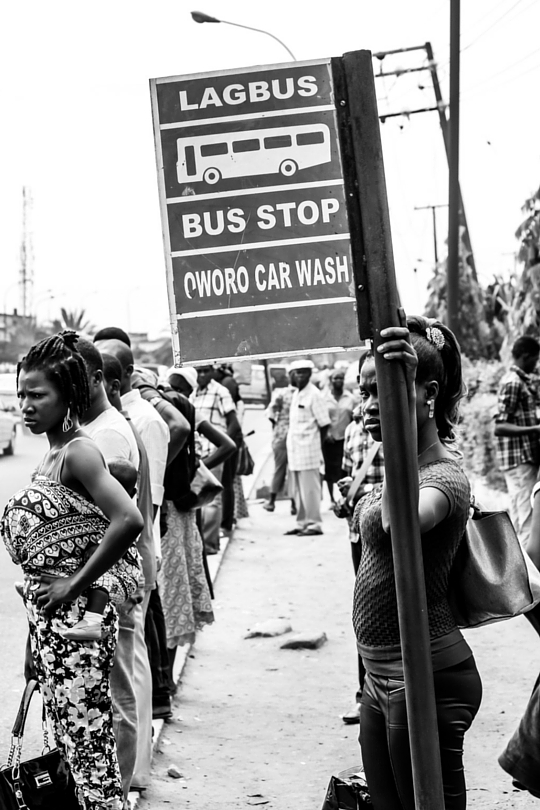
There is something about Lagos, about this human chaos, about entering danfos and crawling into kekes and jumping on okadas and pushing against bodies reeking of sweat while dancing between pungent puddles that makes me wish I could read minds.

Not all lives interest me. Some people are just derivatives of other people, stock personalities coming out of the human conveyor belt, uninteresting in the way I imagine I must be. But a few stand out: fascinating humans who compel me to observe, like the three girls who piled into the bus at Obalende and sat behind me on Saturday.

They wore clothing that strained against their youth. One sat and two lapped themselves. One pleaded with another in Yoruba, telling her she was sorry.

“Let us go to Alhaji’s place,” she said.

The friend replied, “You can go, I’m not going.”

She pleaded again, “I am sorry.”

They repeated this sequence as more people hauled their bodies into the bus. I took a bite of Gala and a swig of Lucozade Boost.

“I said I’m sorry,” she began again.

The third friend was silent throughout this exchange.

The reluctant friend finally gave in, “Okay, we can go.”

Who is Alhaji? Why is the need to visit him this strong a few minutes past 6pm? It bothers me that there is a whole swathe of human experience and emotions I do not have access to. It bothers me that this bothers me.

As we sped along Third Mainland Bridge, the girl who had been pleading so she could visit Alhaji received a call and spoke to a guy who, from what I could gather, was expecting her.

“I’m at home now,” she told him.

She spoke in heavily accented English with some hesitation, which shows the speaker has the basic vocabulary for fluent communication in English, but is actively translating from Yoruba in her mind.

At Oworonsoki, the trio started a Yoruba Christian song, the kind that choristers in long robes chant enthusiastically to the rhythm of gangan. There was so much cheer in the girls’ voices, and they giggled intermittently as we moved on to Oshodi. There, I alighted from the bus and took the overhead bridge. I looked down and saw the three girls walk towards Ilupeju.

I hope one day to have the courage to ask these people for their stories. I want their stories told with care and empathy, in a way that will make me see them, as they are, not just as the world labels them. I hope, somewhere at the end of their journey, there is someone waiting for them who calls them Imzadi* in a way that is not predatory.

____________

*In Star Trek: The Next Generation, Will Riker, Deanna Troi’s love interest, calls her Imzadi, which translates roughly, in the Betazed language as Beloved. It is what she called him the first time they met.

Alhaji: a Muslim (man) who has been to Mecca on pilgrimage; often the title connotes that the bearer is wealthy.


©Ife Nihinlola 2015 @ IfeOluwa’s Rambles
Ife is an avid observer of life in metropolitan Lagos, which he translates into rich ruminations on his blog. Read the unabridged version here.

Photo credit: Owonronsoki by Logor Olumuyiwa


Unauthorized use and/or duplication of this material without express and written permission from this blog’s author and/or owner is strictly prohibited. Excerpts and links may be used, provided that full and clear credit is given to Timi Yeseibo and livelytwist.wordpress.com with appropriate and specific direction to the original content.


Along Came Fences

fences

We lived in a compound of three flats and a boys’ quarter in Ago Okota, Lagos. Ours was a fenced compound, sort of in the middle of nowhere, last on the street and separated from other buildings by an expansive gulf of undeveloped plots of land overgrown with weeds.

A single mother and her three kids lived in the boys’ quarter. Her first son was my age-mate and friend. When I think back to those formative years, I remember the resolute cooperation of two nine-year-old boys who decided to make a bench from abandoned formwork lying about an uncompleted building close by.

For days, we slaved to make a three-legged bench that a parent bought for N10. My friend and I always watched with pride as our siblings and parents sat on the bench in the evenings. We made another, which I marketed to a relative, selling it for N5. I walked for half a kilometre with the bench on my head to deliver it. While making those benches, a rusted nail pierced through my left foot. My mom took me to a nearby clinic to have me treated. The bill was N200.

When we moved to Kaduna, only two houses on our street were fenced—ours and another one down the lane. Our gate was the opaque border bounded by four high walls decorated at the top with broken bottles.

Despite my love for accessing that side of solitude that engages with written words, the part of me forever enslaved to fantasy fed fat on cartoons and I hungered to bring the adventures scripted in them to life. So, during my teenage years, the call of the streets drew me past our gate, to a circus of street hockey, boris, hunting traps, bangers, suwe , and games of catcher with many other children. As dusk fell, I would reluctantly retreat from the big compound that was our street to the confines of the opaque gate.

In the space of two decades, every house on my street has grown a fence. The ‘big compound’ has shrunk away from the backyards, front yards, and trees, which were common property supporting the imaginative expressions of every kid. The evening bustle of legs and screams have vanished. Moreover, kids have now been tamed by big and small screens that keep nagging them, demanding every bit of their attention.

My village is different. Even today, there are no fences. Solitude is alien and greetings and communal assistance are prized. People do not distance themselves from the identity and stories of others who live around the corner.

Fenced houses and gated communities are the norm in cities. We insulate ourselves to feel secure. However, I maintain the premise of one of my favourite lecturers who is a past president of the Nigerian Institute of Architects: the best form of security is communal and that happens when there is a sense that anyone could be watching a thief from a nearby window.


© Samuel Okopi 2016
samuelokopi.com


Unauthorized use and/or duplication of this material without express and written permission from this blog’s author and/or owner is strictly prohibited. Excerpts and links may be used, provided that full and clear credit is given to Timi Yeseibo and livelytwist.wordpress.com with appropriate and specific direction to the original content.

The Center of My Universe

hosiery

I looked up to find her staring at my leg. Her smile revealed crowfeet, which made her thick dark eyebrows seem relaxed, although in fact, they did not move. I glanced at my leg and smiled in return.

Earlier that afternoon, the zip on my boot snagged my tights. When I stood, my dress rushed down to my knees and swallowed the tear, which was determined to run anyhow. After searching for clear nail varnish around the office, I finally found red nail polish with which to halt the run.

When I sat down in the train, my dress rode inches higher exposing the long gash on my tights. Three red dots, bright as blood, marked the spots where the nail polish had tried in vain to heal the tear. I was tired and my vanity had expired so I adjusted my bag to hide the split. My bag must have slipped because I woke up from my nap to find my torn tights in her line of sight.

I wanted to ask her, haven’t you ever done the same thing too? A smile can be an invitation to talk, but even with eye contact, urban solitude—that unwritten code, which prescribes polite distance in communal spaces—prevailed. Her gaze remained on my tights.

We were four seated in our corner, two sets of seats facing each other with enough distance to keep knees from brushing. Still, feet touched whenever legs were stretched, even a little, resulting in both stretcher and stretchee mumbling, “Oh sorry,” before retreating into urban solitude.

The people crammed in the aisle, shuffled grumpily at each station where more passengers entered the train than exited. A few weeks ago, the Metro ran a story about frustrated passengers who felt cheated because they had to stand their entire journey. The NS had explained that werk aan het spoor meant fewer trains with shorter carriages. I thought it was unfair that passengers suffered discomfort while the NS took the public for a ride and cashed in on full fares.

Complaint can start conversation, but even those standing dulled their inconvenience behind earphones and displayed their perseverance by texting or reading on their handheld devices as the train lurched and swayed, speeding from city to city.

The woman next to me had timed the previous passenger’s exit to perfection and so became the lucky winner of a vacant seat. She was watching a movie on her phone and her eyes didn’t wander from the screen once. Sitting directly opposite me was a girl whose head bobbed at intervals as though she was listening to music but she was sleeping. The white wires of her earphones peeked out from her black hijab. The woman adjacent her, who kept looking at my tights, wore shiny grey tights and black high heels.

This woman broke into a delicate laugh all of a sudden. Could hosiery induce such delight? A faint whimper diverted my attention. I followed the sound and peered down. A red leather collar; how could I have missed it? She had not been smiling at me. All this time, it was the puppy in the raffia tote, which the woman next to me straddled.

Sometimes the best reminders come in small packages—I am not the center of the universe, only mine.

They say before you assume anything, try this crazy method called asking. But I could not have asked her, could I?


Don’t acknowledge fellow passengers or sustain eye contact beyond two seconds. Please respect urban solitude. – unknown


©Timi Yeseibo 2016

Unauthorized use and/or duplication of this material without express and written permission from this blog’s author and/or owner is strictly prohibited. Excerpts and links may be used, provided that full and clear credit is given to Timi Yeseibo and livelytwist.wordpress.com with appropriate and specific direction to the original content.


Shifting Gears [6]

Marilyn Monroe

A Leggy Affair

As a teenager, I imbibed ideas about acceptable body shapes from the people around me. So, I believed that a girl’s legs were beautiful only if they were straight like bamboo stems from the knees to the ankles, with no protruding muscles aka yams interrupting the flow.

Well, I inherited my father’s footballer legs, so during my years at university and for years afterwards, I hid my legs underneath trousers and maxis to escape mockery. My insecurity over what I deemed a flaw was like a thing around my neck, choking self-approval out of me.

Like a child force-fed by her determined grandmother, I spent my twenties swallowing popular beauty ideals of the society where I lived. They became the yardstick for measuring myself. I felt inadequate whenever I spotted a pair of bamboo legs. I considered the owner a lucky winner of the anatomy lottery because to me, having straight legs made one outstanding, special even.

In retrospect, that was laughable because straight legs do not shield their owners from life’s troubles. It is not as though those with straight legs can flash their exclusive Bamboo Club gold membership card and Life would say, “Aww, perfect pins, move along then, no troubles for you today. Next!”

Bamboo legs conferred no special advantages that I could see.

Still, at my old gym, when someone complimented my well-defined calves, I had to stop myself from peering at my legs, with lips turned downwards and eyebrows arched, as if to ask, “Me?”

I don’t know how I finally adjusted my beliefs regarding what is acceptable or not acceptable as far as my body is concerned. I suppose that as I approached my thirties, I began to ponder the whys of life even more stubbornly. Moreover, I realized that my legs would never change their shape; in fact, they would become even more muscled due to my new-found love for exercise.

My epiphany hit me like a clap of thunder. I woke up one day and suddenly every leg-concealing piece of clothing seemed revolting. Out went the trousers and maxis, and in came the short girly dresses and skirts that I’d always looked at longingly but felt I shouldn’t wear.

Recently, the instructor at my new gym praised my toned leg muscles; he wished he could devote more time to Leg Day as he assumed I did. I stifled a cheeky chuckle and in my head I sang, baby I was born this way.

Does clarity come with age? Or is this delicious comfort I have found in my own skin, this assuredness, my way of sticking my middle finger at my overdependence on external validation? Perhaps, I now understand that my quest for courage to set my personal ideals begins with embracing the things I am powerless to change.

These days, when I walk into the gym I spend a few minutes at the mirror-panelled walls, looking at my legs and smiling. I’ve come to love my legs especially the yams, which lend character to them. Not unlike the multiple perspectives that the angled mirrors provide, I can see either flaws or two healthy limbs to walk and dance with. Gratefully, I choose the latter.

I have one life to live and only this body with which to live it. The warmth of the sun and fresh air brushing my legs is wonderful; the prospect of a Marilyn Monroe dress-flying-in-the-wind moment is even more wonderful.

© ’Nedu Ahanonu, 2015
’Nedu blogs @ Nedoux.com


Unauthorized use and/or duplication of this material without express and written permission from this blog’s author and/or owner is strictly prohibited. Excerpts and links may be used, provided that full and clear credit is given to Timi Yeseibo and livelytwist.wordpress.com with appropriate and specific direction to the original content.

What Do I Look Like?

selfie

The mirror in an uncrowded elevator is an invitation to look at myself, as are the floor-to-ceiling display windows in the mall. Rarely do I say no. Ever notice that when presented with a group photograph, your eyes search for you first?  Is this vanity or normal self-absorption? I have sixty-one selfies on my phone. Perhaps I should not call them selfies. The Oxford Dictionary defines a selfie as a photograph that one has taken of oneself, typically one taken with a smartphone or webcam and shared via social media. Not one of my digital self-portraits is uploaded on my social networks.

My favourite ‘selfies’ are those where I employed the tricks my eighteen-year-old friend taught me to make a selfie not resemble a selfie. All that posing and angling, so I look as though my photo is the view from another’s lens, why?

Apart from a desire to pretend that I did not tilt my head, tuck in my chin, suck in my cheeks, and find the best lighting, before stretching my hand to click, I want to try to replicate an unguarded moment—what others see when I am unaware that they are looking at me, an honest picture of me. But a selfie is manipulation, a digitally enhanced, filtered, and cropped representation of how I want to see myself and how I want others to see me.

I find selfies useful as picture diaries to share privately with friends, but too subjective to tell me what I really look like. Sam Anderson captures this paradox in his New York Times‘ article. He begins by asking: What do you look like?

You are the world’s leading authority on the subject. You have studied your face for many years, with life-or-death intensity, in almost every mirror and tinted car window and unrippled pond you have ever passed. You are the Sir Isaac Newton of your own face: the one true discoverer of its laws of motion, its particular gravity.

You are also, simultaneously, the very least qualified person in the world to know what you look like. You have no idea. You have never actually seen your face — not truly, from the outside, the way other people see it. This is because of a nonnegotiable quirk of the human anatomy: You have to use your own face to look at your face. You are both observer and observed.

Is this why we ask others, “How do I look?”

As a child, my mother was the first yardstick I used to measure my looks by. When people called me little Gina, alluding to our resemblance, I realized I was beautiful. External validation aids self-perception. I have wished on occasion that I could step out of my body and see myself. The next best thing is my reflection in the eyes of those I trust, a realistic picture that transcends the selfies on my phone.


Related: Beauty, A First-Class Ticket
                A Fading Glory


©Timi Yeseibo 2015

Unauthorized use and/or duplication of this material without express and written permission from this blog’s author and/or owner is strictly prohibited. Excerpts and links may be used, provided that full and clear credit is given to Timi Yeseibo and livelytwist.wordpress.com with appropriate and specific direction to the original content.


Bluetooth Lottery

Bluetrooth Lottery

As the intercity train from Schiphol arrives at Leiden Central, we shuffle and readjust positions until we are standing on either side of the train doors. The twin doors heave and open with a sigh, letting rush-hour passengers out via the narrow aisle we’ve created. Once the last passenger gets off, we dash for the two cabins on the right. Each passenger holds the swinging glass cabin door for the next to catch as though passing the baton in a relay race, a perfunctory smile or nod in place.

I always sit in the upper deck. After I settle into my seat, my phone beeps. Martijn wants to share a song via Bluetooth. I crane forward and backward, rising from my chair, to catch a view of Martijn. Most people in the thirty-two-seater cabin have their eyes glued to the Metro newspaper, a tablet, or a smart phone. A few chat while one sips coffee from a paper cup. Our eyes meet and he smiles first.

This tall man with close-cut hair wearing blue jeans and brown lace-up shoes is a regular who waits for the train in outlier territory, at the end of Platform 4, way past the Kiosk shop. His glasses add seriousness to his good looks and he always has earplugs on. So, Martijn is his name.

I pair my phone with his and accept the song. Roy Orbison’s Oh Pretty Woman, fills my ears. I contain my laughter, cupping my lips with my hands and sneak another peek at Martijn. He is busy with his phone.

At Den Haag, passengers crowd the stairs leading down the doors. We sway left and right, holding the banister or resting on walls, as the train changes tracks to rest on Platform 8. On the platform and in the main hall, passengers move like a colony of soldier ants defending capitalism. I walk with unhurried steps to give Martijn a chance, but his long strides overtake mine as he rushes to chip out with his card.

On Tuesday, I check my phone several times and my disappointment mounts as we approach Den Haag. Since Martijn is sitting on the left side of the train like me, it is fruitless desperation to peep through the aisle. When we disembark, his long strides overtake mine just like yesterday.

On Wednesday, I arrive Platform 4 early, but he does not. He slips into the train seconds before the doors close and walks past our cabin to the next because it is full. I sigh and continue looking out the window. My phone startles me. Martijn has sent me 3 Doors Down’s, Here Without You. I smile and wonder about the range of Bluetooth technology before losing myself in the lyrics.


“Which song today?” my coworkers ask after I arrive at the office.

It is our game. Martijn has been serenading me for six days. The day I wore my red coat, they guessed, Chris de Burgh’s Lady in Red. My burgeoning romance story doesn’t impress all.

“Aren’t you afraid of viruses and him stealing your information?”

“If you have the latest Android update, you’re safe,” another colleague counters.

We google the answer and I continue accepting songs from Martijn.


Martijn’s ritual is unchanged. He gives a perfunctory nod at the cabin door if I am behind him and hurries away after we disembark.


“This is maddening!” a coworker declares.

“What kind of clown doesn’t speak to a girl?” another shakes his head.

“A shy one; a Dutch guy,” I reply.


One evening, after I get off the train on my return journey, someone calls my name, “Angela.”

I turn, “Do I know you?”

“I’m Martijn.”

I leave his hand hanging as my mind struggles to do the math. I feel as if all but the last number of my lottery ticket has been called and when the last number is announced, it is a two instead of my three.

“Martijn?”

“Yes.” He smiles, revealing gap teeth. He is a couple of inches taller than I am, a blur on our section of the platform.

“It w . . . was you?” Disappointment makes my voice husky.

“May I buy you coffee?” He points to the Kiosk shop.

It is the least I can do. “Sure,” I say still subtracting, adding, and rewinding the lottery winner announcement.

We sit on a bench outside the shop, letting the paper cups warm our hands and watching people chip out or in. The sum doesn’t make sense.

“But . . . how did you know my name . . . my phone?”

“I checked for discoverable devices, took a stab in the dark, and watched you plug your headphones.”

He laughs. His chest and belly join his face. I do not.

“Life is funny,” he begins.

Yes, and here I am sitting with the real Martijn. I almost won the lottery!

“We spend so much time chasing what’s ahead, when we could just look back.”

I don’t have time for pop psychology. I take a sip of my coffee and calculate the number of sips it will take to finish. Lottery is a game of chance, a thrill-seeker’s fantasy.

“Like you,” he gestures with his cup, “You’re reaching for someone; meanwhile, he’s probably reaching for someone else—”

“Pardon?”

“Tall, handsome guy on the train . . .”

My cheeks burn. I dislike his tone and express it with mine. “Your point being?”

“Turn around and take a chance on who’s pursuing you instead of pursuing elusive happiness.” His eyes dance like flames.

Does he think life is like Lotto? Maybe it is. A search for, which lottery numbers come up the most, fetches 50 million results under one minute.

I sigh. “You shouldn’t send stuff to strangers.”

“But you liked my songs—”

“I was curious . . .” I look at my boots. “You invaded my privacy.”

“No, you let me in; you accepted my songs.”

I watch the sky exchange hues, blue for pale orange and then reddish-orange. Streetlights come on and trains whizz past. On the train platforms, crowds thin out. The probability of picking a single correct number in Lotto depends on how many balls have already been chosen.

“Angela? Angela . . . here’s a free tip, turn off your Bluetooth and people will leave you alone!” He gets up and throws his coffee in the bin. “Ready?”

I look ahead until I hear his footfalls fade.

In the morning, I turn off my Bluetooth and then turn it on just before I enter the train. People play the lottery in the irrational hope of winning something. Nothing suspends logic and inspires hope and dreams like the love lottery.

I look around, but Martijn is not in my cabin. I want to go to the next cabin to check, but I’m afraid of losing my seat.

The first time my phone beeps, it’s an email notification. The second time, it’s a WhatsApp message. The third time, Martijn wants to share a song via Bluetooth. I wonder about the range of Bluetooth technology as strains of Lionel Richie’s, Hello is it me you’re looking for, fill my ears.


©Timi Yeseibo 2015


Unauthorized use and/or duplication of this material without express and written permission from this blog’s author and/or owner is strictly prohibited. Excerpts and links may be used, provided that full and clear credit is given to Timi Yeseibo and livelytwist.wordpress.com with appropriate and specific direction to the original content.


Oh Dolly

OH DOLLY


My affinity for conspiracy theories ballooned and adopted a sophisticated veneer when I first moved here. In 2012, I sold my lucrative practice and waited for the Mayan apocalypse and the downfall of Facebook and the internet to no avail. Reading the Conspiracy Times halted my dejection. Through the mag, I joined a classified mission.

After three years of training, it was time to recruit others. I asked Tyrone to help me set up a Facebook account. He arrived one October day, wearing a navy hoodie with UNLV emblazoned on it.

“Was it easy making your way here?” I asked as I led him to the study.

“Why do you live in this wasteland, surrounded by solar panels? He sighed, “This is beyond frugal, man.”

“UFO sightings, global warming. It is going downhill faster than we expect—”

“Bullshit!”

The teak bookshelf in the corner housed the latest statistics, which proved my point. But I needed my Facebook account more than I need to be right.

“A coat of paint never hurt anyone.” He grumbled and pulled his seat closer to the table. “Choose a password; think alphanumeric.”

“Done.”

“Time to connect to people you know. Friend me.”

“What?”

He showed me how to send a friend request.

“Okay. Let’s hook you up with old friends—”

“But I haven’t kept in touch—”

“That’s what Facebook’s for.”

I searched for friends and sent requests. I was excited when my requests were accepted and I messaged some buddies from long ago.

We took a break on the porch, eating sandwiches and swigging from cans of root beer. I asked him about the layoffs in his company since the merger.

He shrugged. “A man’s got to do what a man’s got to do.” He sprang from the bannister and the porch creaked. “What’s that,” he pointed.

“Satellite dish; they track Martian invasions—”

He shook his head. “Let’s go inside and connect you with some babes!”

I cleared our paper plates. He had created an uneven circular map on the bread slices leaving the bread crusts bereft. Earthlings were so wasteful.

Back in the study, he asked, “Names please?” and cracked his knuckles.

I looked away. “Just show me other things I can do.”

He whistled. “You don’t? . . . For your sake, I hope there are babes in your Mars.”

How could I explain transmutation? The world wasn’t ready for us yet. I hoped to build a small community on Facebook. I pointed to the screen.

“Oh that, look . . . find people you know. . . You can have up to 3000 or 5000 friends, I’m not sure—”

“I don’t want many friends.”

“This is Facebook. You don’t know what you want. Just add all the good-looking people . . .”

I examined each photo and then checked out the Timeline.

“You are too slow. A snail would have reached Utah and back!”

He took over from me and began to add friends at random. His definition of good-looking was at variance with mine. I winced.

“Wait a sec . . .” I placed my hands over his to stop the mouse.

“What?”

“That’s Dolapo!”

“Who’s she?”

“She . . . she . . .”

His impatience ruled. “Okay, I’ve added her.” And he continued adding. My mind journeyed back. What if?

He patted my back as he left, “You’re all set now. Facebook can be quite addictive. Maybe it’s what a hermit needs. ”

I thanked him and as soon as he drove off, I raced to Dolapo. Nothing on her Timeline indicated that she was married. She was still very pretty. But what was with her name, Yvonne Smith?

I kept checking to see if she’d accepted my friend request, reminding myself that I had joined Facebook to seek out fellow believers. The truth was, I had walked into Dolapo’s magnetic field and become her prisoner. She rewarded my two-week devotion by confirming my friend request. I wrote a message and deleted it.

I went to bed, but threw the covers after four hours of false sleep attempts.  She was online. My heart strained against its cage as I typed.

Hi

Hi there!

Dolapo? Is that Dolapo?

I am the artist formerly known as Dolapo. I’m called Yvonne now.

Are you related to Prince… who discovered the extraterrestrial bases on the moon?

???

Are you?

My performance gives me visibility and I accept many people as friends. No one has called me D for years. How are we connected?

Can’t you see my name?

I can, but it doesn’t ring any bells . . .

You’ve forgotten me so soon?

Pls I meet many people in my line of work…

Can’t you see my profile picture?


I waited. She had seen my message, but failed to reply. So, I went to bed and dreamt about asteroids colliding with the earth. A group of us from the classified mission worked with friendly aliens to rescue people. I scooped Dolapo in my arms and carried her to safety. She kissed me and called me her hero. 

The next day, I kept checking to see if she was online. The minute she was, I messaged her.

 Hi

Hi there? Dolapo?

It’s me David. Have I mistaken you for someone else? Is this not Dolapo? Dolapo Smith? Tani’s sister?


Her silence stung. I carried hope like deflated balloons. I still had not sought out other believers on Facebook. Two full days passed before her response came.

Hi David, please remind me again how we’re connected

My emotions unsettled me. Love was corrosive, reversing the effects of transmutation. But how could I let this opportunity pass? My hands trembled as I typed.

UI … set of ‘89


When she responded minutes later, I was still sitting in my study panting like a dog.

Ah, that was over 20 years ago. Please provide some context.

What more context do you want? Haven’t you seen my profile picture?

Is that how you looked 20 years ago?

Give me your number, let me call and tease you …


She didn’t respond. My joke had fallen flat. I was wondering how to remedy the situation, when I saw notification for a new message. I clicked greedily. She had sent a photo.
internet meme
Who did she think she was? A mere Earthling! 

Dolapo, I used to visit you in your hostel on campus. And during the holidays, I would buy suya and bring to your house in Ibadan.

David, thanks but I don’t remember.

What do you mean, you don’t remember? A man who came to your room every day and to your house many times? So all this while, I wasn’t even existing for you?

David, have a nice life, I’m out.

Look Dolapo or Yvonne or artist, a man can’t be after a girl for twenty-six years. Enough is enough. You too have a nice life!


I deactivated my Facebook account and picked up the latest copy of Conspiracy Times. The cover stole my attention: Uncovered D-Day 2016. I scanned the article, a familiar excitement racing through my veins. I pulled the receptor from the bookshelf and set it on the table. Then I tinkered with the transmitter. It took a while, but I found the frequency.

I ran outside and stood in the force field created by the satellite dishes. The dot of light in the black sky grew bigger. The grass swayed and plants shook. My legs quivered as the flying saucer hovered above. The blood moon prediction was a hoax, but 2016 was sure. Despite NASA’s denials, the pole shift had started.

I smiled, closed my eyes, and waited for the pull. That will show Mark Zuckerberg and Google and Dolapo. Yes!

The phosphorescent beam penetrated my being. I held my breath for as long as I could. My reflection in the giant eye of the alien who steered the saucer, shocked me. The outline of my human heart appeared first and then throbbed like a living thing. The verdict came through the speakers of the spacecraft. 

Abort Mission. All Systems Abort Mission.
Love Spell. Transmutation Unaccomplished.

The saucer rose and receded, twinkling in the night sky. I fell on the ground and cried, “Oh Dolly!”


©Timi Yeseibo 2015

Unauthorized use and/or duplication of this material without express and written permission from this blog’s author and/or owner is strictly prohibited. Excerpts and links may be used, provided that full and clear credit is given to Timi Yeseibo and livelytwist.wordpress.com with appropriate and specific direction to the original content.


Twice Played

twice played


I thought he was a nutter. But it was either him or the girl spooning rice from a white paper bag with wagamama embossed in black. The smell of fried rice caused the contents of my stomach to heave. I turned away from her and walked towards him.

He was leaning back, one shoulder edging the window. Two fingers formed a V beside his head, while his other hand went to work in rapid movements. He set his face this way and that.

“May I?” I looked at the rucksack on the seat.

His eyes met mine and blood rushed to his face. He mumbled something and gathered his rucksack.

I sat down and resisted the urge to judge. People take selfies all the time. Outside the window, the fields and rivers rushed by. I stretched my legs and closed my eyes.

“Cou . . . could you do me a favour?” he rubbed my arm.

I swallowed my irritation and produced a sitting-next-to-another-homo sapiens-in-the-train smile.

“Please can you take a selfie . . . with me?”

“What?”

“A selfie together . . . I . . . I just want to make me girlfriend jealous . . .”

Behind his glasses, his eyelashes were long and straight, reminding me of the fake lashes Sharon wore. Dark curly hair and full lips, a geek like the one I had once loved.

“Will you, please?”

“Eh . . . How old is your girlfriend?”

“I’m twenty-four and she’s your age, twenty-one.” He held out his phone and leaned towards me.

I leaned away. He looked twenty and I had guessed his girlfriend was eighteen. I am twenty-seven. Numbers mean nothing. I remembered twenty-one and pleasure stroked something inside me. That geek from long ago. I leaned in.

“But, why do you want to make her jealous?”

He put his head on my shoulder. Before I could blink, click.

“Ssssh!” A silver-haired woman sitting across us put one finger to her lips and gestured to the silence icon on the window. Her frown finished her sentence.

We muffled our laughter like teenagers reveling in our youthful secret. His right hand snaked along my shoulders, drawing me closer. I started to protest, but the woman looked up from her book and glowered at me. So I stuck out my tongue at her and mouthed, “Twenty-one forever.” His left hand worked faster—click, click, click.

As we disembarked, he said, “Thank you so much.”

“For the optics, right? Good luck!”

He smiled. I waved.

Two days later when I saw his friend request, I hesitated. Then confirmed. He messaged me immediately.

hi

hi…

it’s me

i know

how do u know?

ur photo? duh?  🙂

oh  🙂

how did you find me?

ur name on ur train card

oh hmmm. K. was she jealous?

ummm

?

change ur rship status

y?

so she’ll believe

believe what?

brb …

I tapped my foot, perused my news feed, liking this and that, willing the message icon to turn red. After forty minutes, I sighed and liked one more cat photo before going to bed. The next morning, I had 107 notifications; likes and comments on a photo I was tagged in. My heart raced as I clicked on the post. The caption: my girlfriend likes it hot. I screamed. Just then, one new message.

hi  🙂

WTF is wrong with you? Take down d photo now!!!!

y? u don’t like coffee?

that’s beside the point!

everyone likes starbucks.

I.Am.Not.Your.Girlfriend.

brb …

I called in sick and seethed through a day of brb-conversations; dead ends that made me curse. I fielded unhelpful comments in response to the disclaimer I put up on my Timeline. The Support Team recommended untagging myself, since the photos did not violate their community rules. Meanwhile, they would investigate. Every spare minute, I lived on his page. Five hundred and twenty-seven comments. Who the hell was this geek!

Sharon believed in shaping destinies. “Good things don’t come to people who wait. Sh*t does,” she said.

She asked around and found this guy from Serbia. People whispered that his large hands, which now tended roses, had done things during the war. We met him in the alley where the back doors of restaurant kitchens opened and rubbish bins stood in rows of twos, three figures bathed in darkness. When I handed him the cash, he didn’t count it.

“Just teach him a lesson . . . no more.” I looked up, but not at his eyes.

He didn’t reply.

That night, I slept sitting up in bed with my laptop on my thighs. By the next morning, the post had disappeared. I returned to work.

Two days later, my boss called me to her office. Two men in black suits sat at the small conference table. They introduced themselves before escorting me to the police station.

The man from Serbia was already there. He crossed his arms and wore a scowl. My tormentor stood a few feet away, a gash on his forehead and one eye swollen shut. I glanced away. The detectives offered me a seat.

“Wait here,” the taller one said.

I wondered if I would wake up to my life and tell Sharon about my dream, but someone tapped my shoulder. I shrieked and jumped. She was five feet two with slanted eyes under a black fringe bob. Twenty-two maybe, but numbers mean nothing.

“I, Anita,” she stretched her hand.

I paused and then took it. Could it get any worse?

She pointed with her chin to the man from Serbia. “You not his type. Why you do it?”

Who was she? Leather jacket, skinnys, knee-high boots—

“I writing a book. My life f**ked up now. Photo on internet and Instagram. Tell your story. We make book; sell to publisher. America publisher? Quick money. Or Kindle.” She shrugged. “Which you like?”

Wait; hang on, internet, Instagram? “Your photo is where?”

“Yours hot. More likes. Men like blonds.”

Images of my head photoshopped on a body with huge breasts and captioned, Date Girls from Russia, floated in my mind. No way!

She stretched her phone towards me and I grabbed it. Compared to this, the photo of me drinking coffee on geek’s lap was timid. I was lying in a bathtub. Red rose petals tried to make me decent, barely. I shook my head. The account belonged to one Don Serbia. Hang on, the profile picture. His f**king profile picture! I looked at the man from Serbia, rage seizing my heart.

“This one pretty. You see more?” She retrieved her phone and began scanning.

I backed her and called Sharon. Sharon listened and then said, “Don’t panic. I know of a guy from Armenia—”

“Very funny! Is he on Pinterest?”

I closed my eyes so my tears didn’t fall. My promotion was due in two weeks—the first person under thirty to make senior manager.

Slanted eyes tugged my sleeve. “Why you do it? Evly publisher want know . . . what’s your story?”

The detective returned and motioned to me. I stood and swept my hair to the side. She looked at my wool-blend coat and fingered the Armani label as though she had found gold.

“I wait for you. You smart; speak English like native. We make good team—coffee and cream. America publisher, yes?”


©Timi Yeseibo 2015

Unauthorized use and/or duplication of this material without express and written permission from this blog’s author and/or owner is strictly prohibited. Excerpts and links may be used, provided that full and clear credit is given to Timi Yeseibo and livelytwist.wordpress.com with appropriate and specific direction to the original content.

Hardwired For Sorry [conclusion]

One

The Power of One

I shook my head as I reviewed Ope’s first draft for the series. Her prose though beautiful did not resonate with me. This piece lacks heart I thought. It did not. The problem was me. I could not conceive that a girl would have insecurities about her height. That others brought them on was beside the point. How could she not see how lucky she is? Someone said that privilege is invisible to those who have it. I am the petite girl with graces, how could I know?

Aware of my bias, I reread Ope’s piece, processing her ideas and connecting them to my experiences.

Tall girls seem to be the norm where I live. I have watched little girls grow up to be gorgeous tall women and none has expressed any reservations about her height. But once when I asked one why she enjoys watching the TV series, Suits, she replied, “Because I look like Gina Torres, and she’s badass!” Was she looking for a role model to validate her six-foot frame? By questioning the premise of her heightend apologies, I see how Ope has become a lighthouse for tall girls and short boys too.

Stories are a way to share our humanity and reading stories is both a conscious and unconscious search for validation.

When Abi submitted her article, she mentioned that every sentence of her rant was factual and she had exceeded the set word count. In fact, every contributor to the series burst through the imposed word count to set their stories free and I, wielding the editor’s scissors, could find little to trim.

Abi’s article stemmed in part from people’s inability to see the pervasive misogyny in her society. Just as I could not connect with Ope’s story at first, they could find no basis for the Chimamanda Ngozi Adichie’s quotes, which Abi shared, tagging them mischievous.

Adichie says that gender is a difficult conversation to have and as Sheryl Sandberg notes, the subject itself presents a paradox, forcing us to acknowledge differences while trying to achieve the goal of being treated same. It seems Abi wanted to make gender visible to men and women.

Some dismissively brand articles like Abi’s feminist. Have you ever been in conversation where a word popped up that made you stop listening and start churning points in your mind to deconstruct what the other person is saying? Anything that reeks of feminism arouses this impulse in some. So, when Abi signed off as a feminist in her bio, I was tempted to remove it.

There are two jars of honey in my cupboard. One label says the honey is from wild flowers and the label on the second jar says the honey is from honeydew. Humans are too complex to categorize into neat labels like honey. This explains why feminism has many definitions and connotations as well as branches—socialist feminism, African feminism, free-the-nipple feminism, and so on.

Those who take this as a sign of confusion should remember all the other philosophies that are similarly ‘confused’: democrat, conservative democrat, republican, liberal republican, catholic, catholic charismatic, Christian, evangelical Christian—are you laughing yet? Wherever human agency exists, there will be divisions, sub-divisions, and further divisions of the sub-divisions. The challenge then is not to merely dismiss ideologies because of labels but to listen in spite of them.

When a woman shares her story, it should cause us to remember our own challenges. At the very least, it should broaden our understanding of our world and our place in it.

After I pitched the idea of the series to Ekpos, she replied, “My own issue is different; people are always saying sorry to me!” Other challenges like physical disability eclipse gender, but only partially. Ekpos relates an incident at the airport where a porter looked at her and exclaimed, “Kai, fine girl like you; wetin happen to ya leg?”

She notes that wit is often the bridge through awkward situations. We need to laugh at ourselves more and get the world to laugh and then see with us. Amy Schumer uses comedy to good effect in her I’m Sorry sketch. According to Schumer, her show has been likened to putting shaved carrots into brownies. Emancipation is a journey, smile you’re on camera!

Ekpos makes the distinction between things she could and could not control. Disability and gender were thrust upon her. The will to overcome these perceived limitations was hers to invoke. The external factors, which make women hardwired for sorry, will not change overnight. But women can take charge of themselves by rejecting the messages they have internalized.

Bel takes this approach in her article. Although she was invited to the table, as were the women in Schumer’s sketch, she tottered at the edge, self-doubt hampering her stride. Many women are echoing songs their parents and grandparents taught them, songs that romanticized a woman’s lowly place in society. They are unconsciously complicit in their disempowerment. Bel noticed that the same self-doubt that tortured her was also present in the minds of some very fine, intelligent women in her company.

By looking inwards with a view to understanding herself, she finally gave herself permission to stand. In her words, “Fortified with this knowledge, I set out to change my story . . . I have begun to tell myself, first, that I am bigger on the inside than I am on the outside.”

Amy Schumer’s sketch isn’t about semantics, in my view. Sorry is still a useful word. However, the characters in the sketch were really using sorry to: diminish their accomplishments so they could be likable, temper their requests for their entitlements with ‘humility’, register their opinion as though it isn’t worth hearing, take nurturing to the nth degree by assuming responsibility for things beyond their scope, and mask impostor’s syndrome. 

If you, man or woman, are concerned about the external and internal factors that predispose women to shrinking themselves, then you need to answer this question: what change or sacrifice do I make to ensure women are unapologetic about taking up space in the world? One thing. Then follow through. Ripples will occur. This is the power of one.

I can’t thank you enough for writing, reading, liking, sharing, and joining the conversation.

timi


©Timi Yeseibo 2015

Unauthorized use and/or duplication of this material without express and written permission from this blog’s author and/or owner is strictly prohibited. Excerpts and links may be used, provided that full and clear credit is given to Timi Yeseibo and livelytwist.wordpress.com with appropriate and specific direction to the original content.

Hardwired For Sorry [5]

apology

My Height-ened Apology

My uncles, aunts, the traders at Iwaya market, and the sales person at Wranglers boutique conspired to spit accusations at me. I burrowed the ground with my eyes and hid my lanky arms behind my back. They made me regard my elongating form with shame.

Ahan Ope, do you want to grow as tall as iroko?” People questioned me without expecting answers.

I wanted to die and on the days that I did not want to die, I wished God would shrink my height—who would marry me? They said I was tall for a girl and at the rate at which I was growing, it would be impossible to find a man taller than I was. Even when I pretended not to care, fury spread its wings on my face and at night, I buried my face in my pillow while crying away the pain.

And so, I learned to apologize. I apologized to the inconvenienced sales person who searched and searched for the right size of shoes for me. I apologized to the world, boys in particular, by slouching a little so that the measure of my stature did not intimidate. I apologized to petite girls, who would never have a problem when it came to marriage, by silencing my brewing envy and playing nice. I apologized to my older siblings by giving up my right to speak in their presence because I was told that I had stolen their right to be taller than me.

Like the women in Amy Schumer’s sketch, I say sorry when I do not need to. After I hit my head on the roof of a campus shuttle bus as I got off, my auto-response to the driver’s remark, “All these tall people eh,” was sorry. It was my defense for distracting the other passengers, by making them concerned about me. It was embarrassment for being five feet ten inches tall. It was martyrdom without the halo.

In the last scene of Schumer’s sketch, the male moderator inadvertently pours hot coffee on the third panelist’s legs. She falls down in pain, screaming, “Sorry!” Exaggerated for comic effect, her legs melt off and in agony, she moves with her splintered legs to the chorus of sorry from sympathizers. Her dramatic exit ends with these words, “I’m sorry, I’m dying, I’ve ruined everything. It’s all my fault.”

The moderator never says sorry. He says, “Oops!”


Until recently, I believed apologizing for my height was the polite thing to do. I have not unlearned this, but I have become more conscious of it and begun to question the premise of my apology.

Why should anyone have to apologize for the genes they received? Do I apologize for my father and mother too? Why should I be ‘conditioned’ for marriage as if it is the highest purpose I could aspire to? And is a woman who is taller than her husband an anomaly really? Really? Does my height mean I am likely to be more domineering than petite women with graces are? Can flat shoes and a small car truly alter my outcomes in life?

The message from my society is subtly clear: make yourself smaller so men can feel bigger, taller, and more powerful. My height is but a metaphor, which affronts obstinate traditional ideas about gender.

stand out where I come from. Perhaps I’m not supposed to fit in; I am to own and celebrate my uniqueness and be a lighthouse for tall girls and ‘short’ boys too.

This hardwiring for sorry cuts across cultures. My apology revolves around my height; what does yours spin around?


Ope Adedeji is a fourth year law student at the University of Lagos. She dreams about bridging the gender equality gap and working with the United Nations. Ope writes occasionally at artsandafrica.com and talesbycecile.wordpress.com.


©Timi Yeseibo 2015

Unauthorized use and/or duplication of this material without express and written permission from this blog’s author and/or owner is strictly prohibited. Excerpts and links may be used, provided that full and clear credit is given to Timi Yeseibo and livelytwist.wordpress.com with appropriate and specific direction to the original content.

Hardwired For Sorry [4]

sorry scream

If I Hear Another Sorry, I Will Scream!

I was confused after listening to the high-achieving female innovators in Amy Schumer’s video string a melody with the word sorry. What did their sorry mean? In my part of the world, sorry is usually used to convey pity and sympathy. It is a word I am intimately familiar with.

I remember being a rambunctious kid, playful and energetic. Then my world flipped and went in a direction my young mind could never have imagined. At age seven, I contracted polio and had to learn to walk again, albeit with a limp. Then, just before my sixteenth birthday, I had a freak accident and sustained a fracture to my left femur.  After a couple of surgeries, I was confined to a pair of crutches. I have used them for twenty-eight years. People say sorry to me all the time even though I’m not in any kind of pain.

Because my physical disability attracted pitiful stares and sorrys, I became obsessed with trying to prove that I wasn’t as helpless and disabled as I looked. I focused my energies on education and worked hard to find a footing where the brilliant students stood. Intellectual development became my foremost life goal: if you can’t walk or run, by all means think.

My worldview changed after I read about Helen Keller’s achievements despite contracting an illness in childhood, which left her blind and mute. I also read about Franklin Roosevelt, who contracted polio at thirty-nine, but went on to become president of the United States and was re-elected three times. I believed America was the only place for my dream of a normal life. I dreamed about studying and possibly living in The States. When I finally had the opportunity to pursue an MBA in America, I was refused a study visa twice.

I was crushed by disappointment but by this time, had become a possibility thinker. I ended up in England, where I received my MBA and DBA degrees. Seven years in England, and I never heard the kind of sorry or endured the stares that made me want to hide back home.

I returned to my country after my studies hoping that because I now had Dr. before my name, sympathy would morph to admiration and sorry would drown in the applause of praise. Not so. People still stared with pitiful eyes and they still tell me sorry.

However, pity that makes me feel inadequate isn’t the only narrative. Once as I stood at Port Harcourt International Airport waiting for my luggage, a porter walked up to assist me. As we made our way out of the airport, he looked at me again and exclaimed, “Kai, fine girl like you; wetin happen to ya leg?” I was speechless for a second. Then I asked him if bad things were the preserve of ugly girls. He laughed out loud, and I joined him. Often wit is the bridge through an awkward situation.

In addition to the old mind-sets I contend with daily, I try not to sound too intelligent on purpose. I even overthink the act of posting my thoughts on social networks. I used to be disability conscious, now I am overly conscious about my intellectual achievements. After striving to be extraordinary and do extraordinarily well in my endeavours, I find myself trying to be ordinary to make everyone around me comfortable.

I have spent a good chunk of my life trying to prove a point and trying to change perceptions. So, maybe a part of me understands why the four leading female innovators in Schumer’s video are chorusing sorry. They seem to be apologising for being women at the top of their game.

We have no control over our gender. I had no control over my physical challenges. I controlled what I could. I overcame the limitations of my disability and developed myself in the ways that mattered most.

I am a woman. I have a physical disability. But then, I also have a doctorate degree. There is nothing to be sorry about. If I hear another sorry, I will scream!


Ekpos Waritimi is a management consultant, researcher, and speaker. She currently lives in Port Harcourt.


©Timi Yeseibo 2015

Unauthorized use and/or duplication of this material without express and written permission from this blog’s author and/or owner is strictly prohibited. Excerpts and links may be used, provided that full and clear credit is given to Timi Yeseibo and livelytwist.wordpress.com with appropriate and specific direction to the original content.