Hardwired For Sorry [3]

Apology

An Apology For Womanhood

I posted quotes by author Chimamanda Ngozi Adichie, on my Facebook Timeline earlier today. All day, the quotes rolled through my mind like a refrain to a sad love song. And as I navigated thick traffic in Abuja, Nigeria’s equivalent of Washington, it hung like a wet blanket alongside my cranky baby’s cries. Hunger and exhaustion made me extra tense. I turned the radio on just in time to hear the anchor dispense advice to a caller who was seeking help for a floundering marriage and periodic punches from her husband.

“You know men have egos. You just have to stoop to conquer. Avoid behaviours that anger him. If he tells you to stop serving dinner late, you too, get home earlier!”

‘Softening,’ he concluded by recommending she watch her tone and find opportune moments to discuss issues with her husband.


We raise girls to cater to the fragile egos of men. 


Seconds later, my car rocked from the impact of a danfo bus running into the passenger-side door where my baby was seated. The driver had been trying to shunt the traffic queue. Rage propelled me out of my car. He sauntered out of his bus muttering, “Na woman sef.”

My fury grew as he unrepentantly argued with me and as he spat, “Hey! Mistake na mistake. I get your type for house! Don’t talk to me anyhow! Na so you dey talk to your husband for house?”

Bystanders advised me to calm down. “Shebi you know he is a man,” one of them counseled.


We teach girls to shrink themselves, to make themselves smaller. 


When we finally made it home, the water heater failed. I needed the electrician, Mr. Kehinde, to repair it. However, I couldn’t call him because he has issues taking instructions from women. So I rang my husband who was 800km away to call the electrician who was 4km away, and tell him to fix the heater.

Later, a friend called me to lament her experience at the police station where she had gone to bail a neighbour. The officer in charge had laughed in her face and told her that because she is a woman, she was not qualified to bail anyone. My friend, a medical doctor, then had to get her driver who has a secondary school-leaving certificate, to post bail. She was bitter and vented for a long time.


Each time they ignore me, I feel invisible. I feel upset. I want to tell them that I am just as human as the man, that I am just as worthy of acknowledgement. These are little things but sometimes it’s the little things that sting the most. 


Earlier in the evening, I listened to my aunt counsel my cousin whose husband is cheating on her and doling money he wouldn’t spend on his family, on his mistress.

“Just keep your home. That’s what I know. You will not be the first woman. Men stray, they return. Just ensure he continues to eat your food and don’t deny him sex. Don’t let silly girls who have not suffered with him snatch him from you.”


We teach females, that in relationships, ‘compromise’ is what women do. We raise girls to see each other as competitors, not for jobs, or for accomplishments — which I think can be a good thing — but for the attention of men. 


And then she turned to me, “I hear you are applying for PhD again. . . come, what are you looking for? You just want to compete with your husband ehn! The poor man does not have a Masters, now you are ready to lord PhD over him abi? Continue! That’s your cousin struggling right there. You don’t have problems; you want to create some for yourself with your own hands. Already, don’t you earn more than him? My dear . . . ”


We say to girls, “You can have ambition, but not too much. You should aim to be successful, but not too successful, otherwise you would threaten the man. 


Just before I turned in for the night, I visited Facebook. Four angry rants filled the comment section under my post. Their lowest common denominator? Women were marginalized in Nigerian society but that narrative has since changed. Citing a few trailblazers, they maintained that today’s women are just as empowered as men are. So quotes like Adichie’s only promote mischief.

I shook my head sadly. I didn’t respond. No. I shut down and kept my angst to myself. As I drifted off, I wondered why my society would showcase exceptions as the norm while women remain second-class citizens in the pecking order. Why, in spite of clear opportunities to change the status quo, do we continue to look the other way? A society that is blind to the lived experience of roughly half its population is a sorry excuse, an apology for woman empowerment.

We’ve got a long way to go baby. But maybe, just maybe, tomorrow will bring us a new song if we open our eyes.


Abiodun Baiyewu is a lawyer, human rights activist, and feminist with a strong interest in medical jurisprudence and reproductive health.

Watch Amy Schumer’s video which inspired the series.


Photo credit: Unsplash/ https://pixabay.com/en/girl-sad-crying-raining-rain-drops-690327/


©Timi Yeseibo 2015

Unauthorized use and/or duplication of this material without express and written permission from this blog’s author and/or owner is strictly prohibited. Excerpts and links may be used, provided that full and clear credit is given to Timi Yeseibo and livelytwist.wordpress.com with appropriate and specific direction to the original content.


Hardwired For Sorry [2]

Permission to Stand


Permission to Stand

I still remember my first board meeting. It was three weeks after my promotion took effect. After only one year in middle management, I had been promoted to executive board level in the publishing company where I worked.

For sure, I had done very well. My promotion was speedy, and, many people agreed, extremely well deserved. In addition, it was the first time in the history of the company that a foreigner (and a woman, at that), had been appointed to the board. My co-directors and their predecessors were all cut from the same cloth: Dutch men in their fifties, same lifestyle, same background, same jokes.

And so I was the proverbial breath of fresh air. Or so the CEO said as I took my seat at the table. I wasn’t quite sure what they were expecting from me. They looked kind enough, they asked my opinion, and they deferred to me on matters within my area of expertise.

Yet, I was largely quiet. For the first few months or so, I said very little. That could of course be due mainly to my introverted nature—scanning the world, observing life and its interactions, and formulating my views before expressing them.

I would never have dared utter a word unless I was sure of my premise, my arguments, and, vitally, my conclusion. I watched in admiration as my co-directors did the opposite. Especially Max, the commercial director. He would begin with a statement, firm, emphatic, sure. He would wind down various alleys of logic and counter logic, never once wavering in his sense of conviction, and then he would end his monologue, having arrived at a conclusion antithetical to the premise with which he had opened.

I would have been mortified had my thought processes been so exposed to the world, but by his manner (born of an assurance that I never before knew existed), I knew he had no such reservations.

However, my introversion was not the only reason for my reserve. In fact, it was a convenient label I put on myself, a comfort blanket which, protected me from the sharp gusts of truth: that, in a world seemingly governed by others, I was unsure of myself, earnestly seeking permission to stand.

I could not fathom why I felt that way. My technical experience and leadership skills had carried me to the place that I now occupied. Having accepted my appointment, I had every right to play my role. Everyone treated me as my new role demanded. Every voice spoke to me with much respect, save for the voice in my head.

I remember now with mirth a business trip I took to New York during those days. As I stood waiting for a taxi at JFK airport, I saw one of our most influential shareholders at the airport. He was carrying his bags and looking for a taxi. I had this crazy impulse to dash up to him and offer to carry his bags. Now I can only thank God for the steadfastness wherewith He glued my feet to the hot tarmac.

It took me a while before I realised my self-doubt was from within. That, somehow, it was bound up with being a woman. I don’t know when I came to that realization. Maybe it was when I discovered that some of the men around me were brimful with confidence but with not much ability. Maybe it was when I saw  junior male employees swaggering around with an arrogance that could be explained not by talent, and certainly not by achievement. Maybe it was when I noticed that the same self-doubt that tortured me was also present in the minds of some very fine, intelligent women in our company.

Fortified with this knowledge, I set out to change my story. No, not the perception of me that others might have had, but rather the story of me that I told myself. However, in order to do that, I had first to look at myself, come to terms with what I saw, and then begin purposefully to change that vision.

And so I did that. I have begun to tell myself, first, that I am bigger on the inside than I am on the outside. It is true that I am slightly built, soft spoken, and often given to quiet introspection. However, these are all remarkable qualities, and they add something special to whatever table I may grace. They are not weaknesses to be excused away. They are strengths, because they bring empathy and perspicacity to those with whom I have to do. I also know that I am bold, principled, and strong.

I was all the while seeking permission to stand. Now I have granted myself that precious right.


Bel Andrew-Amies makes her home in Amsterdam. When she’s not immersed in the world of international business law, she works on her short story collection.

Watch Amy Schumer’s video which inspired the series.


©Timi Yeseibo 2015

Unauthorized use and/or duplication of this material without express and written permission from this blog’s author and/or owner is strictly prohibited. Excerpts and links may be used, provided that full and clear credit is given to Timi Yeseibo and livelytwist.wordpress.com with appropriate and specific direction to the original content.

Hardwired For Sorry [1]

woman sorry

I throw sorry around a lot but many times, I do not mean it as an apology for an infraction. It is my all-purpose verbal salve to lather concern, nurture, and meaningful meaninglessness to friends and strangers alike. But what lurks beneath my sorry?

Diahann Reyes writes in her post, Amy Schumer and The Art of Taking Up Space:

One of the many facets that I appreciate about comedian Amy Schumer’s work is that she shines a light not only on the cultural conditioning that keeps women in restricted place, but also she exposes the misogyny that many of us have internalized from living in a patriarchal society. As some of her sketches intimate—women and girls have been known to do as good a job as anyone of objectifying, suppressing, or disempowering themselves.


In my view, Schumer’s video is exaggerated to jolt us out of complacency and take stock. To appreciate this series, please watch Schumer’s three-minute sketch: I’m Sorry.

I’m serious, watch the video first.


Unshrinking Myself

After sharing the video with a friend, we decided to observe how much we use the word sorry. She called me one evening. Thirteen seconds into our conversation, she said, “Gotcha! You’ve said ‘sorry’ three times already.”

I had begun our conversation by apologizing for not hearing her clearly, “Hello? Sorry, I can’t hear you properly.” Then I reeled off another apology for making her wait while I put on my earphones, “Sorry, let me just use my earphones.” My third apology was for speaking out of turn, “No, sorry, you go first; you were saying?”

We both had a good laugh, especially when she used sorry twice within the next ten seconds.

On the surface there didn’t seem to be anything wrong with our sorrys. Sorry aka pardon, excuse me, kpele, etc, depending on culture and context, is the grease that facilitates polite conversation. It is sympathy, empathy, and everything else in between. However, the video made me wonder if there isn’t an unhealthy self-effacement leaning towards unworthiness in a woman’s verbal and non-verbal sorry. To my mind, the women in the video were shrinking themselves. I am yet to meet a man I admire who does this.

We teach girls to shrink themselves, to make themselves smaller. We say to girls, you can have ambition, but not too much. You should aim to be successful, but not too successful. – Chimamanda Ngozi Adichie


My parents raised me to ignore gender in striving for my goals. There were no limits to where I could go; not even the sky could hold me back. However, they could not cocoon me from the realities of socialization—an aggressive, assertive, and assured woman is a no-no. How many bold moves have been paralyzed by these words, but you’re a woman?

Over the years, some of my mentors have given me different advice on how to “shrink” myself. In a man’s world, it’s expedient to be the neck that turns the head than to be another head, complete with brains, that complements the man’s head. My mentors are successful women in their own right. Who am I to argue? But, I struggle with this concept.

As I learn to assert myself, I’ve been called a strong woman. It was always by women. It was never meant as a compliment. I catch myself shrinking my abilities, achievements, voice, again and again. Habits are hard to unlearn. Still, I have not yet turned pretence into an art form.


©Timi Yeseibo 2015


Photo credit: cocoparisienne/ https://pixabay.com/en/woman-woman-portrait-head-mourning-850330/


Unauthorized use and/or duplication of this material without express and written permission from this blog’s author and/or owner is strictly prohibited. Excerpts and links may be used, provided that full and clear credit is given to Timi Yeseibo and livelytwist.wordpress.com with appropriate and specific direction to the original content.

We The People

People


Imagine a school playground thirty years ago. A girl in a white blouse tucked into a maroon skirt, shares an opinion with four others dressed like her. One of them starts to make fun of her accent, mimicking her speech. The others laugh and join in. The girl soon realizes that raising her voice to defend herself prolongs the caricature. She stomps off to a corner. When they walk down the corridor to class, she lingers a few paces behind. Her classmates are still giggling and acting as they enter the classroom. They incite the whole class to uproarious laughter.

Fast-forward to today. Same incident, only that one kid would have recorded it with her smart phone and then shared it on social media. This time, as the girl walks down the corridor, there’s more laughter and pointing as students look down at their phones and up at her. She would eventually watch the video and her sympathisers would assure her it isn’t that bad. Compelled by curiosity, she would read comment after comment and die a second death.

Humans are the common denominator in both stories. In a previous post, I suggested that maybe technology is neutral; it just amplifies who we already are. There are humans behind the inanimate internet. Give a fool money and you magnify his ability to do foolish things, but money isn’t the real problem. The internet can provide a breeding ground for our worst impulses to flourish.

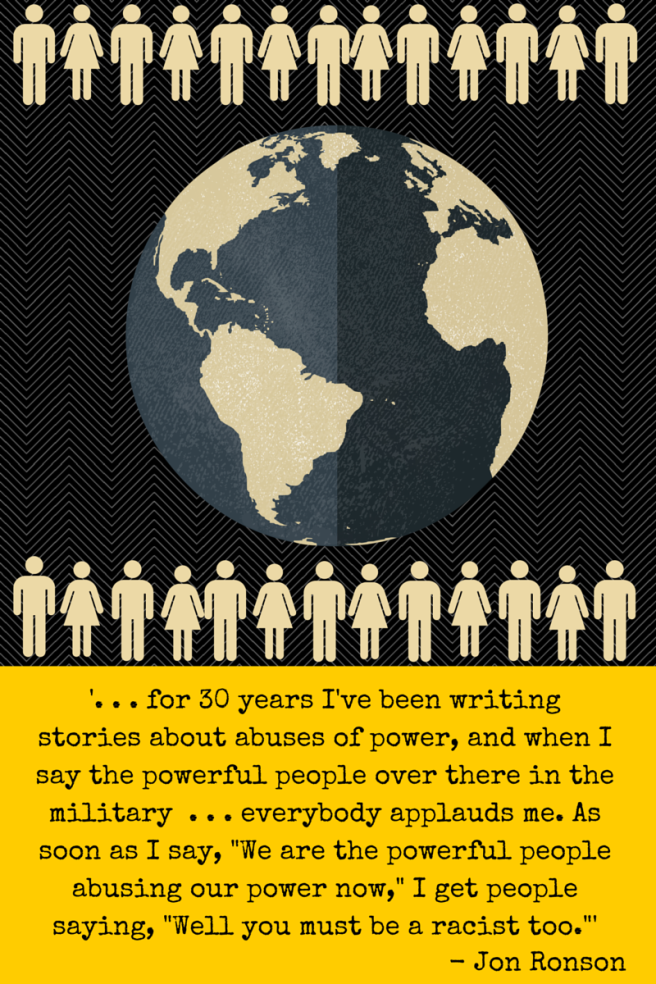
In his 2015 TED Talk, Jon Ronson begins by pointing out, “In the early days of Twitter . . . voiceless people realized that they had a voice, and it was powerful and eloquent.” He then tells how people used their power to effect change, saying, “This was like the democratization of justice. Hierarchies were being leveled out. We were going to do things better.”

However, the major part of his talk centres on our own misuse of privilege, the opposite of democracy. He traces how one ill-advised tweet by Justine Sacco, a former New York PR officer with 170 Twitter followers, incited a Twitter storm that not only made her the worldwide number one trending topic on Twitter, but also cost her, her job. His talk is titled, How One Tweet Can Ruin Your Life.  

Sacco’s story isn’t new to me. But, Ronson’s story telling made me uncomfortably aware of how gleefully we applaud another’s fall. According to Ronson, our desire to be seen to be compassionate is what led us to commit this profoundly un-compassionate act. Although I did not participate in the Sacco mob action, there was no moral pump fisting from me. I could picture myself in another time and setting, in a white blouse and maroon skirt.

Social media is now and the future. It is the platform where I share my thoughts with the world and interact with a wide circle of friends and acquaintances. Because the rules of engagement continue to evolve, talks like Jon Ronson’s hold my interest. Kudos to those raising their voices against social media shaming and calling for better internet policing. But who is going to police the place where it all begins, that is, the human heart?

I share details about Ronson’s talk and other innocuous social media faux pas with a friend. She says, “You see, that’s why I’m not on Twitter and hardly do Facebook.” I nod but after she leaves, I think about how Ronson concludes his talk, “The great thing about social media was how it gave a voice to voiceless people, but we’re now creating a surveillance society, where the smartest way to survive is to go back to being voiceless.”

Surely, abandoning social media isn’t the answer?


©Timi Yeseibo 2015

Jon Ronson’s TED talk is shy of 18 minutes. If you’re reading this, you do social media and listening to it is worth your time.


Unauthorized use and/or duplication of this material without express and written permission from this blog’s author and/or owner is strictly prohibited. Excerpts and links may be used, provided that full and clear credit is given to Timi Yeseibo and livelytwist.wordpress.com with appropriate and specific direction to the original content.
Rethinking Motherhood

Rethinking Motherhood

I

She volunteered at an orphanage in Lagos, driven by her need for a baby. It was symbiotic; the babies also needed a mother. She changed diapers, fed, and held them. She sang quietly to them, tears welling up in her eyes as it receded from theirs. The way they hungered for her touch and cocked their heads to make eye contact with her legitimized her hunger for a child. Her time with them pacified but did not satisfy her hunger. She wanted her own child.

As a single woman in her thirties, legal adoption isn’t an option for her. According to the Family Law code in Lagos State, women below forty-five years don’t meet the criteria for adoption. The law is not her only constraint: culture frowns on single motherhood and her religion is negatively silent about it.

She gave up volunteering after a few visits because a couple adopted the child of her heart.  Although she knew they would do well by the girl, she was heartbroken and reported ill at work the next Monday. She spent the day wetting her pillows, stung by the loneliness that comes with being single and the childlessness that compounds it.

She is not alone. There is a growing demography of single women in their forties and fifties who may never marry or may be past their reproductive years before they get a chance at motherhood.  Should marriage or a steady male presence always be the precursor to motherhood without exception?

The absence of marriage does not take away the longing for motherhood. Ask the forty-five-year-old woman who never married and woke up to the onset of menopause or the thirty-eight year old who found out she has endometriosis.  Ask your friend who was married for fifteen years and lost her husband three weeks to their IVF procedure. Ask your grand-aunt who is divorced from a childless marriage and never remarried.

While adoption laws tend to restrict eligibility for single women, assisted reproductive options are more open towards them. For instance, a woman in her thirties can elect to have a child through ICSI or IVF. But often she won’t. Culture and religion make this taboo for her. Should they?

If we dare think beyond what we have always known, even within the confines of religion and culture, we may find space in our hearts for the unconventional mother.

Ideally, children need a mother and father figure to strengthen their socialization, but our world is far from ideal. We wouldn’t think of taking away a widow’s children because they would grow up without a father figure. We applaud the man who raises his child alone because his wife left him. We recognize that their children brighten their worlds.

Why then do we think less of a mature single woman who chooses to be a mother on her terms? Will motherhood through assisted reproductive options make single women lesser mothers or does it challenge our thinking about motherhood and families?

Step back and look a little closer.

Perhaps if these women were to choose between marriage and motherhood, motherhood would trump.

Abiodun Baiyewu is a lawyer and a human rights activist with a strong interest in medical jurisprudence and reproductive health. She is married and the mother of rambunctious toddler.


II

From childhood, many girls are programmed for nurture and they role-play motherhood with their dolls and toys. Their maternal instinct heightens as they grow older and wish to have families. Having children is a dream realized which brings them happiness. Anguished longing therefore afflicts the woman whose dream hasn’t come true as the end of her best reproductive years come into view.

But, is the purpose of having children to quiet the legitimate cry of a woman’s womb? Is it to assuage the loneliness that accompanies being a single woman? Then married or single women who have children would have ceased to grapple with loneliness and be living in contentment utopia by now.

In ‘rethinking motherhood’, two words raise concerns: longing and choice. Longing as a precursor to choice can be a shaky foundation. Longing is usually sustained by focus. If focus changes, what then? If we exercise our choice to satiate every longing, where would that leave us? Which yardstick do we validate or invalidate longing by?

Longing ebbs and flows. Longing that gathers momentum and threatens to overflow its banks one day, is the calm river that grants many boats safe passage the next. Like you, I have longed for something or someone until I thought my heart would burst. And like you, I have learnt to live and thrive with longing unmet.

Some have called ours, the ME generation. My life; my choice, are four words, which can be reduced to one: selfie, because the underlying assumption is that I am the only one in the picture. But choice reverberates like ripples. Our decisions have consequences we may not perceive because the time differential between choice and outcome prevents us from connecting the dots.

For example, can we rethink motherhood without rethinking fatherhood? What about the forty-year-old man who wants to adopt a twelve-year-old girl because he could not find a woman to marry and build a family with? Or the older man who wants a surrogate womb to carry his own child? Does maternal instinct trump paternal instinct? Society is evolving and choice experiments, driven by longing are giving birth to what was once considered unconventional families around the world.

Law, culture, and religion have been put forward as impediments to being a single mother by choice in the Nigerian context. Nigerian culture, steeped in patriarchy and communal living, seems to be antithetical to what at first glance appears like an independent and individualistic lifestyle for a woman.

Religion may pose the question: what is the optimal order for family regardless of the conditions that exist in an imperfect world like sickness, spousal death, or abandoned children? It may argue that it is one thing to accommodate a less than ideal situation; it is another to create one deliberately through choice.

In democratic societies, the law of the land is the will of the majority. In a sense, democratic institutions are custodians of choice. Democracy necessitates an educated citizenry for informed choice. This means asking even more questions and researching answers.

Should we rethink motherhood?

Timi@ Livelytwist
© Timi Yeseibo 2015


Photo Credit: gilprata/ http://pixabay.com/en/baby-shoe-maternity-girl-child-666355/


Unauthorized use and/or duplication of this material without express and written permission from this blog’s author and/or owner is strictly prohibited. Excerpts and links may be used, provided that full and clear credit is given to Timi Yeseibo and livelytwist.wordpress.com with appropriate and specific direction to the original content.
The Price of Shame

hour glass

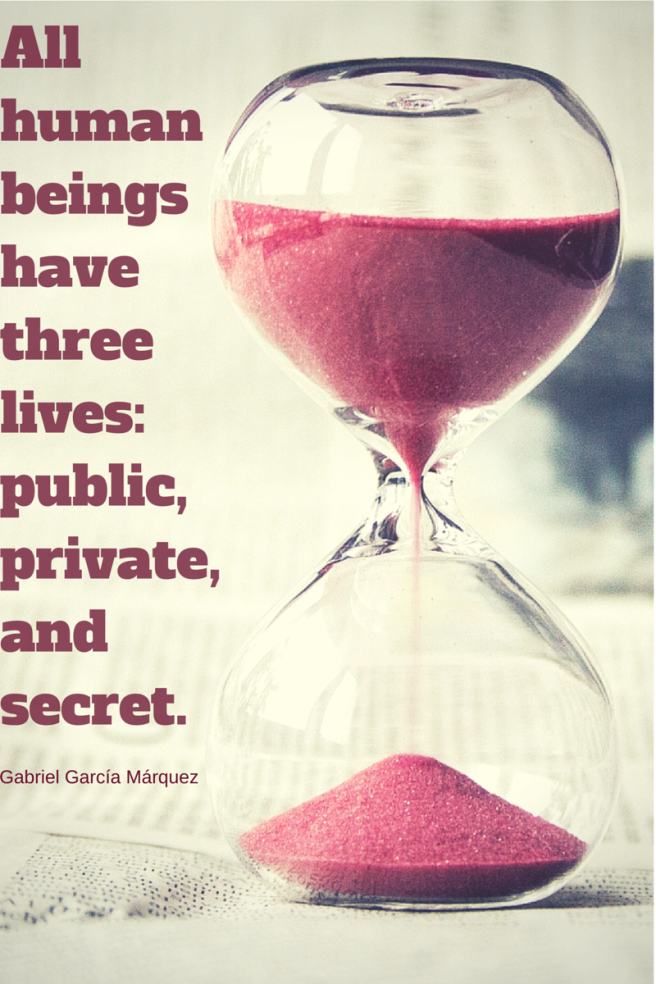
The price of shame is seventeen years. Seventeen years is the interval between when Monica Lewinsky’s affair with former US president Bill Clinton became public and when she received a standing ovation at the end of her TED talk. The period following the disclosure was a time of intense disgrace for all parties involved, Mr and Mrs Clinton and Miss Lewinsky.

The media rehashed the stories to the point that the name Clinton is perhaps indelibly linked to Lewinsky and vice versa. Hilary Clinton’s political career, Bill Clinton’s public speaking and humanitarian work, and now Monica Lewinsky’s advocacy for victims of online humiliation and harassment, notwithstanding.

Seventeen is the number of years it took for Lewinsky to mount a public podium and declare, “it’s time . . . to stop living a life of opprobrium; and time to take back my narrative.” And so far, over 2.5 million people have viewed her talk.

Why did the TED audience rise and clap at the end of her talk? One reason may be her opening question, which hit home: “Can I see a show of hands of anyone here who didn’t make a mistake or do something they regretted at twenty-two?”

I am reminded of a meeting I attended where the preacher, speaking on the importance of a wholesome thought life, asked how many people would like the contents of the thinking they had done the previous day to be displayed on a billboard in Times Square. Every hand remained down, including that of the preacher.

She admits that she deeply regrets what happened. Whether the affair was for love, in love, through love, or about love, affix any preposition to love, and we still say wrong, wrong, wrong. However, by throwing stones at her, the ensuing spectacle of derision that has continued, with radioactive endurance, for a decade and a half, have we become like the people who brought only the woman caught in adultery to Jesus?

As I watched Bill Clinton reinvent himself over the years and become to my mind, charismatic Bill, the notion that it is a man’s world concretized. Yes, I can only imagine the PR machine behind such a powerful figure. But we live in a male-dominated culture, a patriarchy, where men are hailed for sexual adventures and women are shamed.

The positive press Lewinsky has recently received indicates that perhaps after seventeen years, we have become magnanimous—okay Monica; you may go and sin no more. But being human, suspicious, and armed with conspiracy theories, we point two fingers to our eyes and then at her: We. Are. Watching. You.

Talking openly about shame, especially the modern cyber variety, how it can cripple, destroy, and lead to suicide is good. Broadening the conversation to include honour killings that assuage family shame is welcome. We do well to adopt a more empathetic response to public shaming.

And yet humiliation, a synonym for shame, in small doses, can be a wake-up call. A few years ago, I finally scored an interview that I’d been angling for. It couldn’t have been scheduled at a worse time. Exhausted from travelling, I slept with my notes (which I was reviewing for the first time), on my chest Sunday night. In the flurry of Monday morning, I had no time to revise and little time to get to the venue.

I hoped to bluff my way through. I could not. I read the impatience in the interviewer’s hands as he flicked through my résumé while listening to me. I perceived his thoughts, rubbish; I cannot believe she came highly recommended. From that moment on, the ability to think on my feet deserted me. Shame made me forget things I knew.

The memory of that humiliation goads me to over prepare for interviews. I have other memories, secrets, too painful to share, which still stain my cheeks red. My shame has filled my compassion vaults, so now I have compassion to spare for others.

Although you and I haven’t endured public humiliation, we are acquainted with shame and its incapacitating effect. There exists the looming danger of a single story if we remain paralyzed. Not of shame, but of regret being our single story.

I think that to change any narrative from shame to glory, we must do time. No, not seventeen years, but a season away from the ‘limelight,’ burrowing underground to learn lessons from humiliation. In time, we may re-emerge with fresh purpose and tell inspiring new stories.


©Timi Yeseibo 2015


Photo credit: Nile/pixabay.com/en/hourglass-time-hours-sand-clock-620397


Unauthorized use and/or duplication of this material without express and written permission from this blog’s author and/or owner is strictly prohibited. Excerpts and links may be used, provided that full and clear credit is given to Timi Yeseibo and livelytwist.wordpress.com with appropriate and specific direction to the original content.
 

A Fading Glory

fading glory

Standards of beauty change from time to time and country to country, but when I was a young man, much younger than I am today, I was considered good-looking for my time and place.

I remember the heads of female employees turning as I walked the length of the office to my destination. On more than one occasion, women driving by whistled and catcalled as I walked on busy city streets. All these things I found very amusing and gratifying on some level.

Because I have been objectified—I have been on the receiving end of unwanted attention, been hit on by both men and women and made to feel very uncomfortable—I understand and sympathize with women when this happens to them. I’m not complaining, just explaining.

Growing up, I never considered myself good-looking; instead, I was self-conscious about my looks. As I grew older and had more success with girls and women, I began to gain confidence. This boost led to success in other areas in my life—man’s greatest adrenaline rush is a beautiful woman. Many doors opened for me because of my good looks. I have always attributed it all to good luck. It is a matter of good luck, I suppose, to be blessed with the beauty gene.

But beauty can be a double-edged sword. Plain women are jealous of beautiful women and don’t trust their men around them. In the same way, men often feel insecure in the presence of a good-looking man.

Recently, a younger man worked at the same dealership with me. Every time I saw him, I felt uncomfortable and didn’t really know why. He was extremely handsome and moved with grace, literally dancing around the dealership. I got jealous every time he attended to an attractive customer or even one of our young female associates. I knew it was foolish to feel this way, as if I was in competition with him, even though I am much older and in a fulfilling relationship. When he quit and moved to Miami, I was very happy to see him go.

There is a downside to beauty. To be consumed by it, to waste away like Narcissus from Greek Mythology, is a mistake. Beauty fades and as I age, I sometimes feel like the invisible man. However, the words of Gabriel Garcí­a Márquez are poignant, “Human beings are not born once and for all on the day their mothers give birth to them, but … life obliges them over and over again to give birth to themselves.” To reincarnate beauty, it must be tempered by grace, compassion, and love for others.


© Benn Bell 2015

Benn blogs at Ghost Dog
He wrote this piece as a rejoinder to my post, Beauty A First Class Ticket.


Photo credit: Pezibear/ http://pixabay.com/en/journal-leaves-brown-road-kahl-636462/


Unauthorized use and/or duplication of this material without express and written permission from this blog’s author and/or owner is strictly prohibited. Excerpts and links may be used, provided that full and clear credit is given to Timi Yeseibo and livelytwist.wordpress.com with appropriate and specific direction to the original content.

Beauty, A First-Class Ticket

beauty

I knew I was intelligent before I knew I was beautiful, for I won academic prizes throughout my primary school years from the time I was five up ‘til ten. This external validation, reinforced by the circle of people who shaped me, became my inner truth.

My mother was the first yardstick I used to measure beauty by. When people called me little Gina, alluding to our resemblance, I realized I was beautiful. But what did that mean?

At my girls-only boarding school, we giggled and bit our nails when boys from the nearby school attended our social events. Being beautiful meant that I was asked to dance and not forgotten on the bench. It meant my classmates said I looked like Yinka, a girl two years older, whom everyone called Black Beauty. Much later, it meant that I tweezed my eyebrows and applied mascara like the models in Vogue.

My mother told me hard work and a good education would secure success. She did not tell me beauty could be a first-class ticket. You see, once when I tried to register a business campaign, my efforts stalled under the weight of bureaucracy. Then a friend scolded me, “How can? A beautiful woman like you? Don’t you know what to do?” Appalled, I went back and talked my way through.

But her seed grew. I studied how people, men, responded to me; after all, they saw me before they heard me. I remember being singled out from a long line of tired and impatient passengers at an airport. As I crossed the gate having passed Security, the officer said, “You’re very pretty.”
I would be naïve to assume that any preferential treatment I receive is because of beauty alone. It would be naïve of you to assume that I don’t receive unwanted attention or worse still, endure suspicion or dismissal on account of my looks.

Recently, I watched a YouTube video about the changing face of beauty, with a friend. “I wish I were born in a different century,” she said touching her generous hips and rubbing her round belly. I just happen to live in an era where my features coincide with what some consider attractive. I’ve come to know that beauty is leverage and the temptation to abuse it, real.

To me, my looks are secondary. But here’s what I know. A beautiful woman on a man’s arm makes him feel taller. In a world of selfies, people soon forget how you look because they are consumed with how you make them look.

We don’t see things as they are, we see them as we are. ~ Anais Nin


©Timi Yeseibo 2015

Unauthorized use and/or duplication of this material without express and written permission from this blog’s author and/or owner is strictly prohibited. Excerpts and links may be used, provided that full and clear credit is given to Timi Yeseibo and livelytwist.wordpress.com with appropriate and specific direction to the original content.

Unknown's avatarA Holistic Journey

I knew I was intelligent before I knew I was beautiful, for I won academic prizes throughout my primary school years from the time I was five up ‘til ten. This external validation, reinforced by the circle of people who shaped me, became my inner truth.

My mother was the first yardstick I used to measure beauty by. When people called me little Gina, alluding to our resemblance, I realized I was beautiful. But what did that mean?

At my girls-only boarding school, we giggled and bit our nails when boys from the nearby school attended our social events. Being beautiful meant that I was asked to dance and not forgotten on the bench. It meant my classmates said I looked like Yinka, a girl two years older, whom everyone called Black Beauty. Much later, it meant that I tweezed my eyebrows and applied mascara like the models in Vogue.

View original post 294 more words

The Hook

The Hook


“The first time . . .”

“Ahn-ahn, it’s enough, you’ve said it before.”

“Geez! The first time they invite us to their house—”

“Stop exaggerating, these things happen—”

“What were you even thinking?”

“How was I to know—”

“Ssssh! Ssssh . . . ssssh! Someone’s coming . . .”

“I think they’ve gone can I—”

“Ssssh!”

“Can I talk now?”

“Lower your voice, I think they’re still around. . . ”

“Why don’t we just ask them for help?”

“Are you crazy? I just wish I had something bigger . . . like a stick to push it down . . .”

“Should I go downstairs and look?”

“And leave me here by myself?”

“It’s not like I’m adding value—”

“You should have thought of that before dropping the bomb. Why didn’t you try to break your—”

“It’s not my fault! We’ve been here for twenty minutes, nothing is working. Maybe they have a handyman—”

“Do you know how much that would cost? At this time of the night? I just need something—”

“I still think we should ask for help.”

“Hmmmm . . .”

“But what’s the big deal about asking for help?”

“Move back! Move back! The water is rising! Is there a mop or rag?”

“I don’t know . . . no, I can’t see any—”

“Phew! Thank God! The water is receding . . .”

“I told you not to flush again. These American toilets are funny—”

“The tissue settles at the bottom . . . something is blocking . . . it can’t move . . . How can something so big come out from someone so small?”

“I’ll just pretend you didn’t say that.”

“Pretend all you want, that won’t make your shit disappear!”

“Peju, let’s just ask for help.”

“Can you imagine me going to say, ‘I’m sorry, my wife blocked the toilet, please can you call the plumber?’?”

“Yes, I can. Everyone uses the toilet!”

“Everyone doesn’t block it!”

“If you’re not comfortable with your friends, why did you accept their invitation to stay—”

“I have an idea . . . pass me the hanger.”

“Stubborn man.”

“What did you say?”

“Their bathroom is lovely. I love the way the ivory tiles and oak—”

“Please pass—”

“This one?”

“No, the wire one.”

“Here.”

“Thanks.”

“What are you doing?”

“Ssssh someone’s coming. Turn on the shower—”

“Why?”

“So they’ll think we’re taking a shower! Just do it!”

“We can’t stay here forever.”

“Turn it off. I think this idea will work. See as I’m sweating because of you!”

“Sorry, let me use a magazine to fan you, your highness! What are you doing?”

“I’m bending the hanger into a hook then I’ll use it to fish the tissue out. Pass the bin.”

“Here.”

“Goddamn! How much tissue did you use?”

“You’ve started again!”

“Damn! If we stretch them into sheets I’m sure we’ll make two rolls.”

Na you sabi. Please be careful—you almost dropped it on my feet!”

“Yes ma. Madam Bomber.”

“Night soil man!”

“I think I’ve got it all out. Flush—”

“Are you sure?”

“Yes . . . yes, yes!”

“Finally!”

“Please we’re only staying two nights. Hold yourself. Can you try not to shite until we leave?”

“You’re not serious!”

“First night at their house . . .  I’ve suffered! You and this your small yansh. Small but mighty!”

“Your mouth is sharp now abi? From now on, Small-but-mighty is closed for business!”

“Ahn-ahn, can’t you take a joke again . . .”

“Do not touch me with your shit hand!”

“Come, come, coooome, abeg stop forming jare, I’ve seen the size of your shit!”


©Timi Yeseibo 2015


Unauthorized use and/or duplication of this material without express and written permission from this blog’s author and/or owner is strictly prohibited. Excerpts and links may be used, provided that full and clear credit is given to Timi Yeseibo and livelytwist.wordpress.com with appropriate and specific direction to the original content.

The End of a Series

vintage envelope


I grew up in a close-knit family, a middle child, disciplined and socialized within the same context as my siblings. Our mannerisms were similar and we shared friends the way we shared hand-me-downs. However, if you had asked us, “What do you think about . . . ?” our views would have differed.

So after I approached nine guys to write this series,  my fear that I would end up with a monologue—each writer parroting the other, was perfectionist-phobia. They were to distil their opinions (in 300 words or less without preaching), about a phrase, think like a man, end up without one. The phrase might be a tongue-in-cheek response to Steve Harvey’s book on what men really think about love, relationships, intimacy, and commitment.

When I told one writer that his submission was controversial and would draw ire, he said in essence, “What do you want readers to do—smile, turn over on their sides, and fall asleep or frown, stay awake, and ponder what they read?” He reminded me of something I had heard, that those who are least like us, have the most to teach us about ourselves.

Maria Popova says that a great story is not about providing information, though it can certainly inform—a great story invites an expansion of understanding, a self-transcendence. More than that, the story plants the seed and makes it impossible to do anything but grow a new understanding—of the world, of our place in it, of ourselves, of some subtle or monumental aspect of existence.

Because I read with an open mind, I embraced each writer’s invitation to stack his opinion against my experience and preference. My beliefs about why I’m here and what follows death as well as my present cultural reality shaped the points of consonance and dissonance I found. The comments showed me mathematics makes sense:  3+6 and 4+5 and 1+8 and 2+7 all equal nine, but not when it comes to the heart. Tomi captures it best: Perhaps love is our different similarity. We love differently, but we love all the same.

The first time I liked a boy whom I thought liked me back, I told a friend. She had acquired a worldly veneer from eavesdropping on the conversations of her many older siblings. Thus her advice, play hard to get, went unchallenged by me. I must have looked like a toy atop the Eiffel Tower because, with no ladder in sight, the boy’s hands hung limp and he left. I suppose the moral of the story is life is art, more fluid than formulaic, and a variable presents an opportunity or a looming threat. As Tola reminds us, embedded in every story are endless possibilities.

It seems everyone wants love and yet, in the words of C.S. Lewis, to love at all is to be vulnerable[;] love anything and your heart will be wrung and possibly broken. What to do then? Dela wants the predictability of drama. Ife sighs at the two hunters in the jungle. Samuel unveils a game of thieves; Ifeanyi makes it about egos. Tonwa advocates for less brain and more heart and Seun stresses, a human brain, please! Brian hints at the delicate balance of pursuit and protection: We want to be loved for who we are, but we fear the risk that comes with disrobing to be known.


Love slays what we have been that we may be what we were not. – St. Augustine


Relationships are oxygen. The post views, likes, comments, and shares, do not lie. If I had any sense I would start a series (written by women), dance like Cinderella, end up with the Prince!

What about you, what do you think?


©Timi Yeseibo 2015


p.s. Thank you Tomi, Ifeanyi, Ife, Dela, Tola, Samuel, Tonwa, Seun, and Brian!


Unauthorized use and/or duplication of this material without express and written permission from this blog’s author and/or owner is strictly prohibited. Excerpts and links may be used, provided that full and clear credit is given to Timi Yeseibo and livelytwist.wordpress.com with appropriate and specific direction to the original content.
 

Think Like a Man, End up Without One [3]

gender

Game of Thieves

In the matter of love, men are thieves and women, treasure chests to be discovered. The thief braves thickets and thistles, his sharp eyes searching for the chest his heart desires. His ears, tuned to pick the jingle of gold coins, help decide which chests are true measures of the treasures within.

As the hunt begins, many chests rely on their bejeweled covering to attract the most skillful and dogged thief. So they stand immobile, waiting to be saved from true loneliness. These ones stick to the ancient wisdom that thieves judge a treasure chest by its cover.

But the woman who thinks like a thief waits not for the bandit of her dreams to steal her heart. She discovers his desires and then entices him, in small steps, to the place of her heart. When the thief’s eyes hit her trail of gold coins, the fires of his desire will burn bright keeping him in blind sight of the trail.

Time soon unwraps the thief in front of an open chest. Not a heap of gold he finds but a flight of gentle steps littered with more coins and precious stones. His curiosity will burn as forest fires. He will plunge in and the chest—hitherto open as a crocodile’s mouth awaiting prey—will then shut tight. The thief will keep descending unaware that his freedom and maybe loyalty to another has been stolen.

Perhaps he will find an abundance of gold, perhaps a nest of scorpions. No matter the find, the woman-thief finally would have caged the man’s heart in her chest as she had planned from the beginning.

© Samuel Okopi @ SamuelOkopi

If a woman doesn’t chase a man a little, she doesn’t love him.  ― E. W. Howe


Men think. Women think too much!

Let’s just get right down to the critical issue here, thinking. Men think. Women think too much, quote me on that. It’s not a bad thing until a man has had a single thought and moved on, and a woman is still having several thoughts about his single thought, long after.

Take for instance the following scenario. A young man and his girlfriend are enjoying a hearty meal and each other’s company at a fast food restaurant, when a stunning woman walks past. The man may think one of two things: what she’ll look like naked or what she’ll be like in bed. His girlfriend on the other hand may think many things including several variations of what her man was thinking about some seconds ago.

Paranoia could follow her dangerous thought process. His eyes lingered a little too long. He must like her. He said he likes women with assets and hers are bigger. Meanwhile the man has resumed munching his burger. His girlfriend on the other hand, has moved from paranoia to “casual” interrogation—“She’s very attractive isn’t she?” Wise men know this is a trap and the correct answer for peace to reign is, “I only have eyes for you, dear.” But if he loves you, why worry?

When it comes to love, less brain, more heart, or else a woman may just chase that man away. Men dislike wahala jo!

© Tonwa Anthony @ thecrazynigerian

Don’t be afraid to lose him, because if a man truly loves you, he’s not going anywhere.  ― Steve Harvey


A Bad Thing?

Think like a man, end up without one. The question that comes to me is: how do men think? I’m sure we all agree that pop culture doesn’t acknowledge that men even think at all. I mean, you have sayings like, all men are dogs, and memes like, in American football, the helmet was invented almost fifty years after the jock strap. So, why would a woman want to think like a man?

To expect a human being to think in terms of gender or sex is quite limiting. Once, at a friend’s place, I overheard his father telling his six sisters, “Don’t think like women. Think like human beings!” That pretty much sums my opinion on the matter.

I’m a bit uncomfortable with Steve Harvey’s book, Act Like A Lady, Think Like A Man, or at least the title, because it’s misleading. Moreover, the movie didn’t portray women “thinking like men” but women pushing the bar by going the extra mile to understand their men. And I think this is what makes relationships work—understanding the person you’re with.

It’s also better to establish clearly, roles and who-does-what since gender equality is quite the hot button these days. While I have my thoughts on the matter, I strongly believe two captains cannot drive a ship. There has to be one leader. Who says it has to be the man?

So, the quote says, “Think like a man, end up without one.” And I ask, “In today’s world, how is that a bad thing?”

© Seun Odukoya @ SeunOdukoya
Seun is the award-winning author of Saving Dapo


Live as though life was created for you. ― Maya Angelou


A Thin Line

Sometimes we struggle to find the thin line between being vulnerable and gullible.  We want to be loved for who we are, but we fear the risk that comes with disrobing to be known.  This is the board upon which the proverbial game of love is played.

Because women are more emotionally open than men are (generally speaking), they tend to see inwardly, and then project onto their surroundings. The opposite is true for us. Men are simple. We connect with our surroundings visually, and then project inwardly to process it all. This disconnect causes problems when women seek to understand how men think. We may like at first sight, but we love when we see ourselves in you.

Understanding what initially attracts a man is one thing; but knowing what makes a man fall in love is totally different.  For many women, this is where the need for strategy becomes apparent.  As with any effective strategy, one must think like their opponent. But should hearts be used as pawns? I believe that the game of love should always culminate in both players being free to be themselves without fear of rejection. Herein lies the delicate balance of pursuit and protection.

Secure women who possess values epitomize sexiness and class. There is nothing wrong with “thinking” like a man, as long as you properly defend who you are as a woman.

©Brian Evans @ Wisdom’s Quill

Between what is said and not meant and what is meant and not said, most of love is lost. ― Khalil Gibran


Unauthorized use and/or duplication of this material without express and written permission from this blog’s author and/or owner is strictly prohibited. Excerpts and links may be used, provided that full and clear credit is given to Timi Yeseibo and livelytwist.wordpress.com with appropriate and specific direction to the original content.
Think Like a Man, End up Without One [2]

couple


The Guy’s Girl

When Yetunde asked me where to meet up the following day, I didn’t hesitate before suggesting Babs, a sports bar. Calling Babs a ‘sports bar’ was dignifying the seedy, open-air joint in a backstreet in Surulere that sold cheap beer but also screened live football matches. I knew Yetunde wouldn’t have any qualms about hanging out at a beer parlour, surrounded by a crowd of raucous, sweaty, beer-guzzling men. I’d started giving her directions, when she cut in. She knew the place. I wasn’t surprised.

Yetunde was the quintessential guy’s girl. She loved video games, argued about politics and football and drank Guinness Extra Stout. But it was more than that. She understood men in a way that was uncanny. Whenever my girlfriend and I had a bust-up, Yetunde was my go-to-person. Majority of the time, she sided with me. I don’t think it was because we were friends. She would subject me to a grilling; she only wanted to hear the facts but didn’t want any important detail omitted. She would analyze the issues—a painstaking process that usually ended with her concluding that my girlfriend, Funmi was at fault.

Then she would laugh and say, “But you better go and apologize to Funmi. Forget about my analysis o; all that is English. I’m sorry, that’s what women want to hear.”

It was easier to apologize to Funmi after my conversations with Yetunde; that Yetunde agreed with me was enough vindication.

We had to raise our voices to hear each other above the din at Babs, but there was no lull in our conversation over the ninety minutes of the game. I couldn’t remember the last time I laughed so hard. I asked her, half-teasingly, if she now had a boyfriend.

“How can?” she laughed. “If I had a boyfriend, would I be here with you?”

“Come on, be serious. How about that tall, skinny dude I saw you with a couple of times at the cinema?”

“It’s always the same,” Yetunde replied, her voice dropping a notch. “He didn’t want a relationship.” The expression on her face suddenly became serious. She went on, “It doesn’t look like it would ever happen, Akin. I’ve started preparing myself for a lifetime of singleness.”

I faltered, unable to come up with an appropriate remark.

“Why are you looking so concerned?” Yetunde quipped. “Are you my father?”

I doubled over with laughter.

As I drove back home that night, light-headed from the beer and the euphoria of Arsenal’s victory over Chelsea, Yetunde’s remark about bracing up for a lifetime of singleness came back to me. It made no sense why a girl who got along so well with guys, shared our interests, and reasoned the way we did, seemed incapable of being more than just friends with any guy. Would I date her myself, I wondered, as I turned into my street. I chuckled. The thought was ludicrous. It was a question I had never considered, not even fleetingly.

It wasn’t that Yetunde wasn’t attractive. Far from it; boy, she nearly caught me staring at her behind on our way out of Babs that evening! I was also certain it had nothing to do with being friend-zoned or any such nonsense. Then why did the idea of dating Yetunde seem so incongruous? This was a girl I loved to hang out with, a girl who always cracked me up. Why would I not want to be with her?

Then it struck me with sudden clarity that defied the wooziness in my head, as I arrived at the entrance to my house: was it because Yetunde was too much like men that successful romantic relationships with them continued to elude her?

I haven’t been able to answer that question; neither that night nor in the six years that have passed. I am now married and I have two daughters. Yetunde is still single.


© Olutola Bella @ Bellanchi


Photo credit: SnapwireSnaps/ http://pixabay.com/en/couple-laughing-happy-people-598315/


Unauthorized use and/or duplication of this material without express and written permission from this blog’s author and/or owner is strictly prohibited. Excerpts and links may be used, provided that full and clear credit is given to Timi Yeseibo and livelytwist.wordpress.com with appropriate and specific direction to the original content.


Think Like a Man, End up Without One [1]

Think

In The Beginning

The story: Eve ate the forbidden fruit and seduced Adam into a bite, na so yawa gas. The origin of male-female dynamics is rooted in the creation of sin and chaos. If Adam had not eaten the fruit, if Eve had not convinced him to, the world would not be a revolving globe of horrors. The blame game has ensued since, with both sides keeping score like umpires at a game.

The joke: God created the world in seven days and rested. He then formed woman and has not rested since. The difficulties in male-female romantic relations are caused by gender complexities, sensitivities or the lack thereof, and hormonal activities. Mr Lagbaja will probably never cry while watching The Titanic. Ms Jane Doe will probably narrate an epistle of random events if you ask how her day went.

The Conclusion: Paralleling the thought patterns of the opposite sex probably has its advantages, but men exhibit varying levels of machismo and women varying levels of femininity.  Perhaps Love is our different similarity. We love differently, but we love all the same.

Think like man; end up with none, or with one, or two, if you’re into that kind of thing. Think like a woman? Well, you really can’t if you’re a man; you’re not that clever.

© Tomi Olugbemi @ Poetry is Peace


Although the man and his wife were both naked, they were not ashamed. – Genesis 1:25


Think like a Man? Think Again! 

Ladies are different, but most men are the same. When a lady starts thinking like a man, she begins to have a big ego and two (big) egos can be bad for relationships. I have seen many independent, smart, and successful ladies, who want to get married, end up single.

Generally speaking, the ladies who end up with men exude care and use the power of submissiveness to full effect—the ability to massage the ego, while making the mind see reason. They create the impression of vulnerability thereby increasing the protective instincts of a man.

The way a lady makes a man feel, more than anything else, determines if she’ll end up with him. If she respects him and makes him feel comfortable in her presence, he will want to spend the rest of his life with her

If a lady thinks like a man and then acts like him, she may end up without him. Men are designed to seek conquest and when two people seek to conquer, one will be devoured. A lady who lets a man lead the chase without making herself 100% available, will either inspire his consistency, strength of character, and responsible side, bringing him nearer commitment or inspire him to walk away.

© Ifeanyi Ukoha @ Moments with my Mind


 Male egos require constant stroking. Every task is an achievement, every success epic. That is why women cook, but men are chefs: we make cheese on toast, they produce pain de fromage. ― Belle de Jour


My Move, Your Move, Checkmate!

Do we even think when we fall in love? Can we solve the mathematics of our hearts with formulas in our brains? Or is the man supposed to be thinking because he’s expected to make the first move?

Ah! Make the move, here lies the problem: game-play language used to define the parameters of emotions and attraction aka love.

If the man is expected to make the first move, but he’s more interested in winding down the timer, the lady has to force his hand. Then he has to lie and deceive while keeping his eye on the prize—sex, exclusivity, friendship with benefits sans responsibility, etc. Then she has to counter his moves to checkmate him, that is, to get his money, his ring, his commitment, etc. Two hunters in the jungle.

Why don’t we ditch the games, no scheming and no faking? Forget about whether the other person is playing fair. Forget all you’ve been told: men are evil, women are gold-diggers, if you don’t manipulate him, he’ll dump you, yada yada yada.

Focus on being the best version of yourself. Have genuine affection for another and risk trusting them with your emotions. Will you get hurt? Probably. Letting go to love another and trusting them to return your love is not being naïve, it is learning to be human.

The thing about manipulating love like a game is this: nobody wins.

© IfeOluwa Nihinlola @ ifeOluwa’s rambles


We all think that this relationship thing is a game out here. All I’m saying to women is, ‘Okay. If it’s a game, here are the rules that we play by.’ – Steve Harvey


Dramatically Predictable 

There are many men. I have seen enough to know that when women state their preferences, a good number of short, fairly ugly, and poor men are left languishing on the wait list. Very little is said about the thinking of The Chosen and there is good reason. Every next man thinks differently.

Men don’t know how men think. We just shake hands, grunt, and pat our backs. But when men deal with women, usually we expect a game, a chase, a lot more drama. It’s rewarding when the curtains close and you’re both backstage. And even though men wish the drama did not persist sometimes, we like the certainty that we will get drama. I suppose many men want their women to stay dramatically predictable. It is what makes women interesting and keeps men interested.

For the sake of ourselves, let women not think like us, whatever that means, please. Women who try to think like the men in their world are adventurously boring and they will certainly find boring men for themselves.

The thought that a woman who thinks like a man will end up without one is condescending to women and a joke to be fair. No woman needs to think like the next woman, much more a man. What are you doing thinking like a man? Think like you! There is nothing more desirous in a woman than independent thought. Men crave it and nothing will change that. Because in truth, even we don’t know how we think.

© Delalorm Semabia @ African Soulja


A man’s face is his autobiography. A woman’s face is her work of fiction. ― Oscar Wilde


Photo credit: Hans/ http://pixabay.com/en/bottles-imprint-glass-think-yellow-60336/


Unauthorized use and/or duplication of this material without express and written permission from this blog’s author and/or owner is strictly prohibited. Excerpts and links may be used, provided that full and clear credit is given to Timi Yeseibo and livelytwist.wordpress.com with appropriate and specific direction to the original content.


Martians and Earthlings

That the book, Act Like a Lady, Think Like a Man, sold over two million copies1 lends credence to something I read: women spend more time thinking about what men think than men spend thinking. If you’re rolling your eyes, I’ll rephrase. That the book, Act Like a Lady, Think Like a Man, sold over two million copies lends credence to something we already know: men are from Mars, women are from Earth.

When a friend brought the poster2 that inspired the one below to my attention, “Hilarious!” was my response. But, I wondered what motivated the author to coin the words? Was it true? Was it a joke? Was it a barb aimed at Steve Harvey enthusiasts?


think like a man


I asked several brave men who saw the poster to let their thoughts roam and pen flow. I hope you’ll join the conversation beginning Sunday. Perhaps, if you keep an open mind, you might learn or disagree with a thing or two. Or you’ll share your laughter with a friend or three.

If you missed The Hunter Games, now might be a good time to catch up.


Take lemons, make life, & jump for joy!

timi


  1. Steve Harvey’s book rose to number one on The New York Times Bestseller list after its release in 2009. A feature movie, a sequel to the movie, and an expanded version of the book has since been released.
  2. The original poster: https://www.facebook.com/photo.php?fbid=10154257033455431&set=a.10151940356485431.878240.602760430&type=1&theater


Unauthorized use and/or duplication of this material without express and written permission from this blog’s author and/or owner is strictly prohibited. Excerpts and links may be used, provided that full and clear credit is given to Timi Yeseibo and livelytwist.wordpress.com with appropriate and specific direction to the original content.

Hard pressed on every side

To understand Nigeria, you must appreciate how religion colours every aspect of our lives and infiltrates nearly every conversation. There is a god of Nigeria, he is the carrot and the stick, and the final bs, that’s bus stop, by the way.

“Like soap that glides through wet hands, we use religion to evade the grasp of accountability time after time. From Aso Rock to Ajegunle, religion is courted, invoked, and brandished as if it is a determinant of GDP and as if, according to Karl Marx, it is the opium of the people!”

Tolu Talabi aka Naijarookie, doesn’t get enough credit for making me laugh. I hope you’ll laugh as well, and if you’re like me, untangle the many levels of ‘spirituality’ unfolding in his tale. Enjoy!


Originally posted on Nigerian Newcomer

Most of the businesses in Nigeria have an office gofer. Someone who can run errands for the staff, pick up food, clean a spill, make a cup of tea. Usually this person has an official designation, they might be the security guard or the cleaner. But when they aren’t opening gates, they hang around and wait to be summoned.

The person who does this at my office is a girl called Esther who is always taking days off to write exams. She would say, “I won’t be around next week, I’m travelling to Ibadan to do WAEC.” Or “I have JAMB on Saturday, I have to attend lesson.” You’ll see her sitting in the corner reading Literature-in-English past questions, or squinting at an Accounting textbook. One day it was a Chemistry practicals textbook, I had to ask.

She laughed, “Haha, all these subjects? It’s not for me, I’m doing the exam for other people.”

View original 628 more words.


Related Posts on Lively Twist:

By God’s Grace

Your Enemies Shall Never Succeed

Mommie Dearest

Others:

The Business of Worship by Jide Odukoya: It is hard to reflect objectively on the proliferation of Churches in Nigeria. View original photo commentary with 192 more words.

Gods Were to Blame by Samuel Okopi


Sango by Tobi 'Leftist' Ajiboye

All the lessons of history in four sentences: Whom the gods would destroy, they first make mad with power. The mills of God grind slowly, but they grind exceedingly small. The bee fertilizes the flower it robs. When it is dark enough, you can see the stars. – Charles A. Beard


“Who dares Oyo?”

Sango’s fingers quaked as he rose from his seat. A palace guard had come with news that frightened his household but angered him.

“Who dares my beloved Oyo?” Sango asked again with a louder voice, his face squeezed to a frown, his eyes eager to escape the prison that held them.

Everyone in the palace shifted back.

“I will destroy this oyinbo god!” said Sango, as he raced to the skies.

From the embrace of the lower clouds, Sango saw Poseidon, an oyinbo god so mighty that when he moved, the sea swirled around his body like wrapper shaking in the wind. Poseidon held a trident with which he guided the clouds above the sea into a thunderstorm easily uprooting palm trees outside the city walls. He advanced from the middle of the sea, lashing the waters with his massive frame.

Sango trembled. Where did such a god journey from? What does it desire?

Poseidon roared and the earth shook.

Olorun did not mold Sango with fear!” Sango spat out the words through trembling lips.

The upper clouds swirled faster around Sango’s outstretched double-headed axe. As the master of thunder, the knowledge that another being sought the obedience of heaven’s light and sound enraged him. Fear shrunk into a still prisoner bound by the shackles of his rage.

“White god, listen! You shall burn! The waters shall do nothing to stop your white skin becoming like the terrible blackness of night. You shall disappear as ash to the skies!”

When Poseidon’s eyes caught Sango, he roared all the more in the foreign tongue and mounted the sea horses formed of the tidal waves. Soon, he was by the beach. Poseidon had not crossed the palm forests by a man’s twenty paces when Sango swung his axe and struck him with a stream of lightning.

All of Oyo Kingdom and beyond heard the terrible groan of the oyinbo god as he crashed into the sea. Warriors ran into their huts ahead of their wives. Children bumped into themselves as they pursued their mothers’ loosening wrappers. The scent of death had never been this pungent in Oyo.

In the palace, Sango’s three wives, Osun, Oya, and Oba, huddled in the inner chamber, quivering.

“Olorun, spare us and our Kabiyesi o!” said Osun, whose beauty and excellent cooking kept Sango’s deep love for her aflame through all seasons. Wraps of amala she had prepared for him lay on the floor of the main chamber, their roundness deformed to the jaggedness of mountain ranges. The hot ewedu soup she had placed beside the amala stained the floor like stubborn patches of grass.

Every member of the royal household crouched in hiding, counting their heartbeat and the painful seconds before the oyinbo god’s groan would resound. Instead, the faint sound of Sango chanting praises of his exploits in battle, streamed in from the skies.

The palace guards rose first, following the distant sound, shedding their fear with each footfall. They moved into the courtyard and sighted Sango in the clouds, and then they shouted, singing the great victory songs of old. The palace drummer struck the batá twice, swung around, and then moved his hands faster and faster over the batá. Osun, Oya, and Oba’s legs received strength and their hips swung left, right, left, as they chorused with the guards.


Who amongst beasts and men can stand the fire in Kabiyesi’s eyes?

Will a god beside Olorun do battle with Kabiyesi?

Ah, Kabiyesi, master of thunder!

The god that brightens the earth with his eyes.

The one that chews iron and bathes with fire.

Our lord with eight eyes guiding heaven, eight more ruling earth.

Our king who makes Oyo people snore in a thunderstorm!

Kabiyesi, master of thunder, Olorun made you perfect!


Sango smiled as tributes from the lips of hundreds of thousands dwelling in Oyo kingdom ascended to his ears. He descended towards his people, his brown loincloth swaying in the wind as he danced to the intoxicating beat of the batá.

Midway between earth and sky, the earth began to tremble. Poseidon’s roar arose from the sea and saturated the skies, sucking in the joyful noise of victory swimming in the air. When Sango turned to behold Poseidon, a mighty ball of water hit his frame and flung him towards Egbaland where he crashed on Olumo Rock, the great rock revered all over Egbaland. It shattered at once into boulders that flew out and crushed many houses and people.

From where his swift flight ended, Sango pushed aside the tree trunk straddled across his torso and jumped to his feet.  His mouth was bitter from the memory of his humiliating crash. Seeing Poseidon advancing towards Oyo, even if with a burnt arm, turned Sango into a mad man. Wrath stole his words. Pain summoned his axe. When it came, he stuck it in the air and flashed his iron teeth at the sun.

Thunder knew its true master.

“Olorun! I am the greatest god after you!” Sango said, his eyes aflame as he channelled ten years of thunder towards Poseidon.

***

Poseidon’s ashes travelled as far as Timbuktu. The great walls of Oyo crumbled to dust. Not one living thing survived.

“Oloooooruuuuuuuuuun!” Sango cried to the heavens, the fire in his eyes humbled to tears streaking his cheeks.

“Oloooooruuuuuuuuuun!  Olodumareeeeeeeh! Why did you not tame my anger!”

Sango sank to his knees. Osun’s enchanting smile flashed before him and with it came the memory of the sweet-smelling amala and ewedu she had prepared for him.

“Aaaah!”

Sango bowed his head and wept like a man. For two days his knees remained with the ground and his lips did not part. When he stood to his feet, he walked for seven days never stopping until he vanished into the sea.

No god ever saw Sango again.


© Samuel Okopi 2014

samuelokopi.com


Oyinbo: Pidgin. Usually, a person of Caucasian descent.

Olorun: The supreme god of the Yoruba pantheon in its manifestation as the ruler of the heavens. http://en.wikipedia.org/wiki/Olorun

Kabiyesi: Majesty, Royal Highness. He whose words are beyond questioning.  http://en.wikipedia.org/wiki/Highness 

Batá: A double-headed drum shaped like an hourglass with one cone larger than the other. http://en.wikipedia.org/wiki/Batá_drum


Image Credit

Sango’s Rage by Tobi ‘Leftist’ Ajiboye

Twitter & Instagram: @leftistxx


Unauthorized use and/or duplication of this material without express and written permission from this blog’s author and/or owner is strictly prohibited. Excerpts and links may be used, provided that full and clear credit is given to Timi Yeseibo and livelytwist.wordpress.com with appropriate and specific direction to the original content.

Demystifying Age: So How Young are You?

Age

“Age has no reality except in the physical world. The essence of a human being is resistant to the passage of time. Our inner lives are eternal, which is to say that our spirits remain as youthful and vigorous as when we were in full bloom.”       – Gabriel Garcí­a Márquez –

I once knew a boy from the village who did not know when he was born. Since he had never attended school, he began primary school when he moved to Port Harcourt. That he was bigger than his classmates did not inspire their respect or fear. They teased and provoked him until he abandoned school. I was in secondary school then.

The years rolled by and his voice deepened. The years rolled by and I completed my university education. I planned my life using age as milestone markers. I wonder now, how he planned his; where did his ruler start and how did he measure off millimetres and centimetres on the graph of his aspirations?

Age is just a number, maybe, but with it, we appraise where you are and where you should be. Your age cannot reveal your heart, bury your enthusiasm, or stop your dream unless you let it.

Conversations about age have dominated my circle recently. Five writers whose ages span from early twenties to mid-fifties have joined the conversation. One theme runs through the narratives: age matters, but you must define why for yourself.

When it comes to age, perhaps women have a lot more to say . . .

The Other “F” Word

Three years ago, I turned forty. I flipped out even though I knew that the negative ideas about women hitting middle age are misogynistic and wrong. At parties, any time the topic of age came up, I’d leave the room to get a drink so I wouldn’t have to cop to my age. After my ex-boyfriend told me that guys on Match dot com were writing me off because I had “40” in my age box, I thought about lying and saying I was “32” instead. I felt as if my age was my expiration date and I’d become a carton of spoiled milk.

Six months into forty, I realized I had a choice to make. I could keep chastising myself for getting older, or I could stop buying into the messed up ideas around aging that I’d internalized. Considering I’d spent most of my thirties waking up to who I really am and what I really want, I certainly didn’t want to fall asleep again under another sexist spell cast by the patriarchy.

At forty-one, I kicked my sugar habit and became the healthiest I’ve ever been. I started writing my first book. I stopped saying yes when I wanted to say no. I began listening to my instincts more and less to what other people think. I also stopped worrying about men who weren’t interested in me and started to pay attention to the men I found interesting. At forty-two, I met the person I want to grow old with. And even though I don’t look twenty-three anymore, or even thirty-three, I love the way I look today at forty-three.

So far, my forties are proving to be—to use another F-word—(pretty damn) fabulous!

Diahann Reyes @ storiesfromthebelly.com  Read full article

No Longer Just a Number

For as long as I can remember, age has always been just a number for me. I shared my age comfortably when I introduced myself, and I never hesitated to give out the real number when asked by those who seemed oblivious of or who disregarded the cardinal rule.

In the past two weeks, however, age has become the measure of my womanhood and the number of chimes ringing from my biological clock. After completing my undergraduate studies in Morocco, I hopped on a plane home. In typical Gambian fashion, I received hearty congratulatory messages and varying expressions of pride from family, friends, and acquaintances, swiftly followed by prayers for a good job, bigger accomplishments, and most importantly, a great husband.

It is the natural order of things here. An undergraduate degree is enough for the woman who had chosen to go beyond high school instead of settling down to start a family. They say, “Time is not on your side.” They say, “You might not be able to bring home a husband when you are ready, because all the men would have been taken.” To their prayers, I mumble, “Amen,” and return to weighing my job options.

I find myself drawn to institutions where I feel my youth will not devalue my qualifications and capabilities. I dress to look ‘older’ for meetings and interviews, so my teenage features will not influence my potential employers’ decisions.

Consequently, I have become more conscious of my age. Twenty-four is no longer just a number. It is a detail that one might only encounter on my résumé.

Jama @ linguerebi.wordpress.com

Open Secrets

So is your age a deep secret? Mine isn’t. I celebrated my birthday this year in a blog post, The Lightness of Becoming 55. Since then, I’ve come to realize the post was about embracing my mortality; at eighty-five, my father is dying of cancer. Still, it’s a strange feeling . . . fifty-five. I have a few grey strands that I just gave up plucking! Seriously, fifty-five means I have earned life experience that no one can take away from me.

But, second thoughts creep in: what if people at work discover my age on my blog? What if they start sabotaging me? The reality is that no one cares as much as I do and I would be worrying too much. Besides, over time, that blog post will fade into obscurity as newer posts emerge. As long as I keep exploring my world and I’m open to learning about others, each year of life becomes a gift.

If a much older woman is unwilling to disclose her age, it seems to me that she is afraid of her mortality. Hey, life happens and the years appear suddenly like a breadcrumb trail behind you! More Hollywood actresses are disclosing their ages. This is a good trend or is it just the paparazzi trying to sell news?

Fifty-five equals two high-five hands clapping in jubilation and spontaneity. I’m finding my place in life with my own hands and sharing it with others. To do this, I listen to the best positive timbre of my voice. As I age, that voice becomes more poignant but rich.

Jean @ cyclewriteblog.wordpress.com

None of Your Beeswax!

How old are you? When did the question become as invasive as a stranger asking, “What size is your bra?” I first heard that you don’t ask a lady her age, in Nigeria and then, I imbibed it. Yet in The Netherlands, the receptionist at the Gemeente asks, “Wat is uw geboortedatum?” with the clinical detachment of a gynaecologist examining my cervix, and I respond, no pomp, no pageantry.

One day, I looked at my neighbour’s BMW X5, and wondered what he earned. I did not ask him when he stopped for a chit-chat as he walked his dogs because it was none of my business. I calculated the value of his house, googled what a man in his position would earn, took into consideration that his wife is the daughter of a former diplomat, and that they owned a boat. I knew enough.

How old am I? I sing Davido’s Aye, with my twelve-year-old niece and tell friends in their twenties, “Been there, done that, got the t-shirt thrice, and moved on!” I discuss my blog posts pre-publication with my buddy who is forty-five and debate the existence of God with a sixty-five-year-old atheist. I am as young or as old as I want to be.

But, when I try on those leather-look skinnies in Zara, and turn to the side, then look at my behind, I shake my head as the attendant asks, “Will you be taking this?” I am not as young as the clothes would like me to be.

So, how old am I? None of your beeswax!

Timi @ Livelytwist

Old at 18; Young at 90

I stare into the eyes of my beloved who is in his mid-thirties and wonder if he is in love with me or with the idea of my youth. I have the look of innocence or so I’ve been told. At the restaurant, a waiter asks for my ID to ensure she isn’t serving a minor drinks. I watch the confusion on her face; it surprises me every time. Gisting about celebrity gossip with my friends in their twenties tires me. Listening to the wisdom of my elders intrigues me.  I am an old soul in a young body.

Do we discover life and determine our futures when we are young? Maybe. Is age a barometer for our maturity level? No way! Is age a number that convinces our friends and us that we belong to their crowd? Well, yes. Does beauty have an inverse relationship with age? Yes. No. Maybe.

I consider age a means to tell the time as we journey in life, a clock that divides our stories into seconds, minutes, hours, days, weeks, months, and years. Age is only a temporary number invented by human beings. You are as youthful as your mind allows or as old as the elder who gives you advice. I will gladly tell you my age if you just ask it of me.

“Some people are old at 18 and some are young at 90. Time is a concept that humans created.” – Yoko Ono

Michelle @ www.facebook.com/ladieleblanc

Not Old Enough

Because I’d recently completed an Art Appreciation class, the church elders believed I had a sophisticated eye for colours and patterns and invited me to the building committee meeting.

“We want to redesign the church building,” the senior pastor started.

“Thank God for our youngest worker here,” quipped the deacon who sat next to the pastor. “We need your expertise,” she smiled at me.

“Since God is holy and white means pure, we shall paint the walls white,” the senior pastor said.

“I agree with you sir. God is also a man of war. We can paint the pillars red to illustrate His fearfulness,” another deacon suggested.

“Wow! The Holy Spirit is at work here. How about we paint the ceilings blue?” the man sitting across from me left his question suspended in the air.

I closed my eyes and thought of rainbows and striped candies.

“What if we outsource this project and have this discussion with a designer present?” I offered.

“Abimbola, what do you mean?” the senior pastor frowned at me.

“Your ideas are lacking in terms of design, responsiveness, color psychology, and so on. Since the logo determines how a brand is remembered, it has to be in harmony with—”

“Look here, how old do you think you are? Since you are privileged to sit in this meeting, you should act your age!” the deacon who had smiled at me hissed.

So I held my peace. The project was doomed, but I kept the knowledge to my young self.

Maggielola @ worshipandswag.com

©Timi Yeseibo 2014

Image credits:  www.fordesigner.com/maps/15533-0.htm

Unauthorized use and/or duplication of this material without express and written permission from this blog’s author and/or owner is strictly prohibited. Excerpts and links may be used, provided that full and clear credit is given to Timi Yeseibo and livelytwist.wordpress.com with appropriate and specific direction to the original content.

The Hunter Games

Huntress

Once upon a time in faraway Heindenlily, Princess Amera decided that she would go to the Wise One to help her find love.

She pulled the reins so her horse could gallop faster as she left the palace gates behind. Sandwiched between her bodyguards, she felt as if palace life had shielded her. And from what? Foolish princes like Prince Olmeri of Findolgun who’d stuttered when he came for her hand until he all but swallowed his tongue, and the king’s physician had to revive him. Still blue in the face, he’d tried to stutter an apology, but she shushed him by putting her index finger to his lips. What utter nonsense! She would find love on her terms.

When her guards dismounted to cut low-lying branches, paving a way in the forest, she saw how long their shadows were. She had not noticed the sun receding behind the hills of Allaymin. She shivered and drew her cape tighter. In front, the oak trunks leaned in as if to touch them and then, as if to squash them. Meeting her bodyguards’ stares, she masked her fear with her smile. She marvelled that women had lain passive as though waiting for pollen from bumblebees, for years and years. The wind was variable too. Nectar had lost its edge, and the driver’s seat was vacant.

“Fair princess!”

Her bodyguards bumped into one another and struggled to quieten their horses. Princess Amera gasped as the trail widened to reveal a moss-covered hut. The Wise One beckoned to her from the entrance. The rumours were true. His white beard swept the ground like the dust brushes her chamber maidens used to attack cobwebs.

Inside the hut, babies’ skulls lined the walls. He pulled one, dropped something inside it, and offered it to her. Her hands trembled as she collected the skull. The thing inside smelt like cow dung and tasted like honey, so she did not chew.

“So you are tired of waiting for him?”

He did not wait for her answer.

“Choice is a rudder without hindsight. A thing to be desired and yet a thing to be feared,” his voice boomed, and the walls became mirrors.

She smiled when she saw perfection.

“That one,” she pointed.

“The moon will cross Orynimmel Kingdom tonight and tomorrow. You will have one chance.”

He leaned forward, and his beard nicked a bit of the flame from the huge candle on the centre of the table. A quick glow and then fading embers, as the light died in his shaggy bush. He pulled a bow and arrow from under the table and handed it to her.

“Shoot with all your might, and he will be yours.”

“B . . . but . . . what if he doesn’t want me?”

“Isn’t that why you are going after him? To show him what he wants? Sssh, sleep now, in the morning it will all make sense.”

The next morning, she washed her face with the washcloth Wise One gave her. She looked in the stream. He was right. She was even more beautiful. When she turned to hand over the washcloth, the hut had disappeared. Her bodyguards stood at attention as they waited for her.

“Yee haw!” she cried and mounted her horse.

As they journeyed, the oak trunks leaned backwards, making space, so they could ride in an A-formation. Daylight pushed through the mist shrouding the hills of Allaymin. She saw him first as they rounded a bend. The sun’s rays filtering through the long necks of oak trees, circled him like a spotlight. Her horse neighed testing her indecision. Why was he alone?

“Fair princess,” he bowed.

“Prince Zonaltera of Luxamdola.”

She dismounted, clutching her bow and arrow in her right hand.

“Going hunting?”

He smiled at her and then turned to his horses, grooming their manes.

She sat on the grass. Dewy anemones and bluebells teased her ankles. She waited and waited until the sun rose to the middle of the sky.

You will have one chance . . .

“Do you like me?”

“Yes,” turning to face her, he said, “what’s not to like?”

“Then,” she cocked her head, “why have you not asked for my hand?”

“I don’t know. I . . . I have been distracted.”

“I see . . . grooming your horses . . .”

She stood, raised her bow and arrow, and aimed at his heart. He ducked and then ran deeper into the forest. Her hair danced in the wind as she pursued. Darting and ducking, brown trunks and green leaves embraced them in a fuzzy camouflage. The ground sucked their footfalls as squirrels and weasels skipped away.

“Stop!”

She spun around and around ears on alert. A creeping vine curled around his left sleeve, pinning him to the spot. He placed his free hand on his knee as he sucked in air, turning red. Overhead, jackdaws abandoned their nest holes and flew away, unamused by the lovers’ game.

“Please,” he said, twisting this way and that, “if you chase me, you will catch me.”

A thrill she had not known before made her skin tingle and her pupils dilate; she tasted power.

“I’m tired of hunting. The prey you want gets away too many times.”

He pulled his hand free, ripping his sleeve and sending tiny leaves in the air.

“Perhaps you lack skill.”

“Sometimes the prey runs too fast and then too slow, confusing your aim. Hunting can be exhausting!”

He sunk to the ground, massaging his arm.

“Wimp!” she scoffed. “I know what I want.”

She raised her bow.

“Wait, wait! How will you know I really want you, if you trap me?”

“Do you want me?”

“Yes . . . but give me a chance to—”

She raised her bow and released the arrow into his heart. Then she left him there for the magic to do its work. One month later, they were married. Her happiness was a rainbow that all came to behold and point at. Ten months after, he began to shrink. Smaller and smaller, smaller than a stump in the ground.

“What is happening?”

Her tears could no longer hide behind her eyes, which were twin mirrors through which he saw not only himself but also how she saw him. He longed to lick her tears, but she no longer ached for him, letting his name escape from her lips, softly, softly, softly. He began to cry too.

“Evolution?”

“I tried to warn you.”

“If we were born a thousand years from today, it would no longer matter who hunted and who got caught. If we could time travel . . .  I mean, what kind of woman loses a slipper at midnight and doesn’t go back to find it before one idiot consigns it to the lost-and-found dump?”

She carried her frog and placed him on the golden pouch on her nightstand. She missed the strength of his arms.

In the distance, the stars twinkled over the hills of Allaymin. The moon would cross Orynimmel Kingdom tomorrow night and next. She still had the bow and arrow.

You will have one chance.

Time had snatched her rainbow, but nirvana was still within reach.

“Good night my love.”

“Croak, croak, croak,” he replied.


©Timi Yeseibo 2014


Image credits: http://www.disney.co.uk/brave/downloads/?d=downloads-merida


Unauthorized use and/or duplication of this material without express and written permission from this blog’s author and/or owner is strictly prohibited. Excerpts and links may be used, provided that full and clear credit is given to Timi Yeseibo and livelytwist.wordpress.com with appropriate and specific direction to the original content.