
A Space Too Little Explored [1] When I’m Gone

When I'm gone

Every man is trying to either live up to his father’s expectations or make up for his father’s mistakes.

When I’m Gone

My father was not what my kids refer to as the African dad. By that, I mean he knocked before entering the room I shared with my older brother when we were growing up and he never opened any letters addressed to my siblings or me. He took us out to play football regularly. My father said please before he sent us on errands and thank you when we returned. He called me, young man and all of this made me feel respected.

He was a disciplinarian who stuck to his words. While playing football in the living room one day, I broke a glass frame. He calmly said, “You will not be going with us on the trip tomorrow,” referring to the family trip to Yankari Game Reserve, Bagauda Lake, and Tiga Dam, which I had looked forward to for weeks. Because of his summary judgements, which we could not appeal, we jokingly called him commander-in-chief-with-immediate-effect.

The memories of his many when I’m gone sayings eclipse all others. One time, my mother said, “You keep going on about, when I’m gone, when I’m gone, are you very keen to die?” But so focused was he that he did not relent. He replied, “You all will remember everything I said when I’m gone.” There it was again, another when I’m gone saying! He was right. As I prepared to leave my previous job, a colleague told me, “I will miss you, but I will miss the stories about your dad even more.” I was surprised, as I could not recall saying that much about my dad.

I realize now that my father was not obsessed with death; he cared deeply about his legacy. Like a good leader, he was raising successors to advance what he believed in. At every opportunity, he passed on the baton of leadership.

I do not recall my dad ever calling in sick; he worked hard all the time. I am the same way. Although I have always had jobs I enjoy and never experience Monday morning blues, I wonder if I am just being me or if I inherited his work ethic. Is work my way of saying watch me daddy, I’m being just like you?

I am running my section of the relay race. Sometimes doubts crowd my lane. My father always seemed to know what to do or say in a situation. Am I being a well of wisdom my children can drink from? Am I still holding the baton or have I let it slip as I race through life? I hope my children see me the way I saw my dad. I desire to pass the baton to them too.

Reacting to my pragmatism about life especially material things, my wife once said, “You are just like your dad.” She compared me to a father-in-law she had never met. Like my colleague, she had seen him come alive in the stories I had unconsciously woven into the fabric of my life. It remains the best (unintended) compliment I have ever received.

William Shakespeare said, “All the world’s a stage, and all the men and women merely players: they have their exits and their entrances; and one man in his time plays many parts, his acts being seven ages.” My father has never left my stage. He has been there all along.

Before he passed on, dad gave us the words he wanted inscribed on his headstone: Here lies M O O, who in his own life, tried to serve humanity and make a part of the world a better place. I pray my family says the same about me, when I’m gone.

Ayo Ogunsanlu makes his home in Essex, UK with his wife and three kids. He enjoys microbiology, running, and housework. On Facebook, he describes himself as a faithful and loyal friend.


©Timi Yeseibo 2016

Unauthorized use and/or duplication of this material without express and written permission from this blog’s author and/or owner is strictly prohibited. Excerpts and links may be used, provided that full and clear credit is given to Timi Yeseibo and livelytwist.wordpress.com with appropriate and specific direction to the original content.

Three Years On

three

The first time I met Lanre, I told him about my blog. He says it must be my passion, the subject of my blog snakes into every conversation. He wonders, as others do, why I do not monetize my blog. I sigh. As if money is everything; as if money isn’t everything.

I asked a friend to write an article for my blog. His article although well-written lacked that something I look for before I publish a post, but he did not think so, he being an accomplished writer. We reasoned back and forth, threatening our friendship, as when friends mistakenly become lovers, solid lines become indistinct; the ease of communication replaced by silent awkwardness.

It should have been easy to reject a submission that did not meet my criteria except that doing so felt like losing a friend. In the end, I chose my blog and after weeks of reaching out won a version of my friend back. The subject of writing for my blog is taboo. We do not speak of it. Maybe one day we will.

If I did not monetize my blog, I at least learnt what it means to be human. This is what it means to write a blog every Sunday for three years—you become aware of your strengths and limitations; how far you will go for what you believe in.

Three years ago, Maurice, Mayura, and I waited at Holendrecht Station for the metro, cold air whipping through our hair and slapping our coats while trains sped by. I recited a list of possible blog names. When Mayura said Livelytwist reminded her of lemons, my sign-off was born: Take lemons, make life! I can recount incidents like this for every stage of the life of my blog; the people whose input helped me along the way.

Friends sometimes ask about the number of stories I’ve written ostensibly to check if I have a collection large enough for a book. Some days I want to write a book. Some days I do not. Three years on, the relationships, I have forged because of my writing matter more. Each article I’ve published has a behind-the-scenes story—where I was, my state of mind at the time, and who helped make it happen.

I have evolved since my tentative beginning in April 2013. The stories I did not write the way I had wanted to tell me so. You see, when you keep friends up until 1 a.m., seeking their opinions, it seems unfair to discard their recommendations at 2 a.m., when you realize your story no longer resembles you.

I’ve been tempted to revisit the stories, you know, to remove this, and to add that, to make them fully my own. But I leave them as they are, wincing every time I read through, as reminders of a time when although I knew what I wanted I did not have sufficient courage to articulate and execute. I leave the stories on my blog to remind me how people-pleasing distorts what I sound like.

Writing consistently for three years has made me a better writer; I am more skillful with my pen. But skills do not keep you warm, people do. At the heart of every story on this blog is a person or group of people who believed in me. None more so than you who read this blog Sunday after Sunday; you who I fight for with my pen, jeopardizing friendships. If I make it to a fourth year, it will be because of you.

Thank you!

© Timi Yeseibo 2016


Unauthorized use and/or duplication of this material without express and written permission from this blog’s author and/or owner is strictly prohibited. Excerpts and links may be used, provided that full and clear credit is given to Timi Yeseibo and livelytwist.wordpress.com with appropriate and specific direction to the original content.


Choosing Motherhood [1] Learning to Dance

Dance

Learning to Dance

I got married at twenty-one. Our first son was born a year later when I was in my second year at the University of Nigeria, studying radiological science. My Parents tried to make me see reasons to wait before starting a family, but the day I stopped breastfeeding my son, I became pregnant with my second son. My husband, Ben, at twenty-nine had lost his job before our first son was born and was still unemployed by the time our second son was born.

My Parents harboured us, providing emotional and financial assistance. Ben was studying for an MBA, while I combined schooling with business, selling anything to support my growing family.

One day on campus, I cried in frustration from exhaustion. I practised exclusive breast-feeding so I breastfed all night while studying. Then I slept for less than five hours and drove to the university every morning. A lecturer tried to talk me into moving to campus and leaving my boys in the care of my parents and their nannies. I declined. I told him being a mother came first. Motherhood had chosen me because every family planning method I tried had failed.

I had few friends because I was the only married girl among my peers. They left me alone to work out my new challenges. I was not socially aware. I never partied and didn’t have fashion sense. Ben and I couldn’t afford to go out like other unmarried couples. I was devoted to my family and I wanted to prove to my parents and everyone else that I knew what I was doing.

By my final year, I was looking forward to moving out of my parent’s home. My dream came true when I landed a job in Lagos using my mum’s connections. Ben and the boys joined me shortly. After a while, I fell sick. To my dismay, I found out that I was pregnant for the third time. I was twenty-six.

I was depressed. We still faced financial pressures and I resented this intrusion to my dreams. I scheduled an abortion although it was against my values. On the day of my abortion, a doctor who is also a family friend disclosed my plan to my mum and she called to discourage me. I cancelled the procedure.

After my only daughter was born, my husband found his bearing. He got a job that enabled us move to our own house in Lagos. I also started a cleaning company that became very successful in no time. While we prospered in career and business, our marriage suffered.

From the beginning, Ben only wanted one child and he had not even wanted a child so early in our marriage. He came from a large family while my family was small and I had always looked forward to having many children. Four years after our daughter was born, we had another son. This put more pressure on our strained marriage. When we moved to South Africa, Ben eventually left me and the children.

It takes a village to raise a child. I could not have navigated my motherhood journey without support from family and friends. Looking back, I see that although I have always wanted to be a mother, I did not plan to be one. Children are precious gifts from God and deserve a home with parents who have lovingly considered the ramifications of their presence. Given another chance, I would choose motherhood in a heartbeat, but would wait until I finish school before starting a family.

My children are now 22, 20, 17, and 13. There is no time for regret only gratitude to God as I watch them mature into adulthood. I tell them that there is time for everything under the sun. We need to give ourselves time to grow and allow school to pass through us instead of just passing through school before settling down.

Motherhood cannot be distilled to a formula. It is a privilege to be embraced and it requires determination and wisdom. I grew up with my children, teaching them respect, compassion, responsibility, and love. They in turn gave me lessons in patience and hope. I am learning about fashion and music from them, practicing the latest dance steps and cool moves with them. We laugh together like siblings, when I go off beat.


Ada Obi-Okafor makes her home in South Africa. She’s a licensed radiographer who enjoys soccer, movies, a good book, and a clean house.


© Timi Yeseibo, 2016

Unauthorized use and/or duplication of this material without express and written permission from this blog’s author and/or owner is strictly prohibited. Excerpts and links may be used, provided that full and clear credit is given to Timi Yeseibo and livelytwist.wordpress.com with appropriate and specific direction to the original content.
Love is Bridging the Gulf

African proverb

My grandmother was a darker smaller version of my mum. Parents do not resemble their children. It is the other way round, but that is how I keep my memory of her alive—in my mother’s strong arms, I see hers, ready to cradle the world. My mother tells me she was the daughter of a prince, who thought it a waste of time for her to acquire formal education and that she ran away from her first marriage due to harsh treatment from her husband.

She was kind. She only spoke her dialect and Pidgin English. I could neither speak nor understand her dialect. Her pidgin was the Warri-Sapele variety, which was difficult for me to understand and I barely spoke pidgin. Her eyes told me she had more to say than the little she did. She must have felt even more frustrated than I did; harbouring experience she could not transfer.

The conversations we managed to have, centred on her concerns that I could not speak her dialect. She would ask worry etched on her face, about what I would do when the war starts. I had heard about the Nigerian Civil War just as I had heard of World War 1 and 2, events in history, far from my reality. In her broken English, she would tell me how soldiers used language to determine if you were on the Nigerian or Biafran side. Those who could not speak their language were at the mercy of the soldiers.

Her stories did not motivate me to learn her dialect. I asked my parents where they had been during the war. “In Lagos,” my mum and dad answered respectively, and I filled in the blanks, “far from the war.” It showed in the priorities my parents chose for my life.

But those who have seen war speak of it with tremor in their voice. Does memory not erase the boom boom of falling bombs or the tikatikatikatika of machine gun rounds?

One time, she came to my university campus. Armed with my name and address she left her home in Sapele to visit me. When the driver who brought her came to call me, I hurried outside not believing. I met her smiling, and I loved her for taking a chance that she would find her eighteen-year old granddaughter in school on a Saturday evening.

“I bring fish for you,” she said, holding out some plastic bags.

Back at my apartment, we unpacked fish, plantain, spices, palm oil, yam, pepper. How could I tell her that I did not cook; did not really know how, especially did not know what to do with smoked fish and palm oil? That the gas cooker in my kitchen sat bemoaning its uselessness. That I nodded and said, “Mmm mmm,” to my mother whenever at the beginning of a new semester she admonished me not to set the kitchen on fire. That I was liable to throw the fish away because it ‘smelled’ and would go bad under my watch.

I thanked her instead. I did not want her to ask me what I would do when war broke out and I could not cook.

We sat in my room. She sipped a soft drink because I had nothing else to offer and because she said, “No, no,” when I wanted to go out and buy food. The silence made me restless and I longed to fill it, but you can only ask, “How your body? Home people? Sapele?” once.

She seemed content to look at me. Maybe I reminded her of her daughter. After a long time in which I started feeling uncomfortable and wished she would go before my friends came along, she broached the subject of language and war.

I let my silence speak for me.

After she lost her vitality, she came to live with us. Sometimes she would talk to no one in particular; it was no longer surprising to find her in her room alone, chatting. My mother made sure she was always within eye view because she could wander off into the sunset, her legs possessing an agility incongruent with the rest of her. By then, I was hardly home and when I was, I retreated to my world of youthful infallibility, busy with things I have no recollection of.

When she died, I felt the general sorrow, which accompanies loss of human life, and the particular sorrow that haunts a child who watches her mother grieve.

I am thinking of my grandmother because as I embark on a new series on motherhood and invite people to tell their stories, I wonder about the blank spaces in her life, which I cannot fill. I realize I did not do enough to bridge the gulf between us; there are languages other than pidgin and her dialect. My active presence is a language I denied her.


In loving memory of Princess Ajoritse-Debi Atsemudiara Etchie.


©Timi Yeseibo 2016


Unauthorized use and/or duplication of this material without express and written permission from this blog’s author and/or owner is strictly prohibited. Excerpts and links may be used, provided that full and clear credit is given to Timi Yeseibo and livelytwist.wordpress.com with appropriate and specific direction to the original content.
Blogging 109 … Word Travel: combating prejudice 

travel

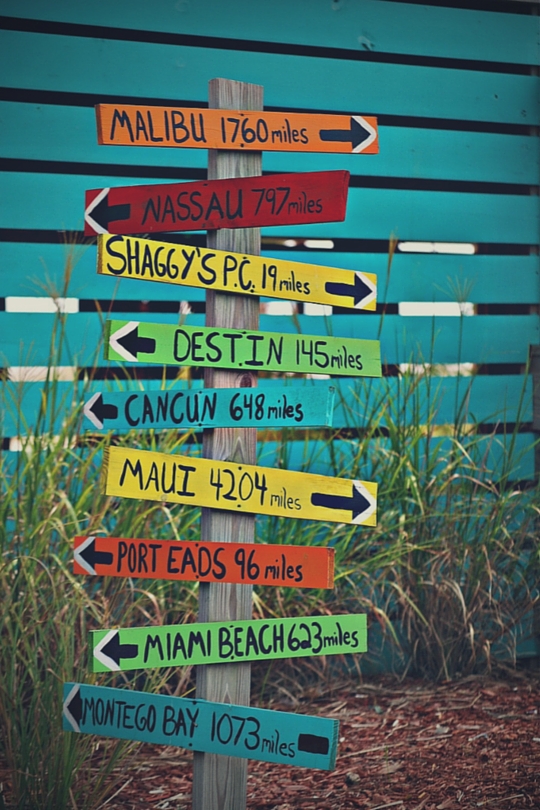
Mark Twain’s quote from his book, The Innocents Abroad, rings true.

Travel is fatal to prejudice, bigotry, and narrow-mindedness, and many of our people need it sorely on these accounts. Broad, wholesome, charitable views of men and things cannot be acquired by vegetating in one little corner of the earth all one’s lifetime.

My travels overseas have shown me how little people know about Nigeria and the African continent and revealed my prejudice and penchant for stereotypes. If you never travel and watch only one TV channel, you may conclude that Europe is awash with refugees, America with gun violence, the Middle East with terrorism, and Africa with war, poverty, and disease.

But hopping on a plane, train, or bus and going miles and miles away from home can be expensive. However, we’re not limited by budget if we can read. Literacy and internet access provide cheaper alternatives to confront narrow-mindedness.

Like most of my friends, I remember travelling to faraway places as a girl through the books I read. The writers stimulated our senses as we journeyed with them, so we were familiar not only with the sights, sounds, and smells of places, but also with their peoples and culture. We lived in Mallory Towers and were Famous Five detectives.

What we enjoyed was a kind of unilateral intimacy. But now, the internet has not only made content readily available, but also fostered greater connection. In his book, Platform, Get Noticed in a Noisy World, Michael Hyatt says that social media has taken connection to a whole new level. It makes possible bilateral intimacy—engagement. This means our virtual travel experiences are richer since we can confront a writer’s bias as well as ours in conversation. We can also give feedback and receive more insight from the contributions of others.

To me, one of the coolest things about blogging is the opportunity to travel—to journey along with readers to their worlds in the comments they leave behind. Every time I write, even on a subject I’m an authority on, I learn from the myriad perspectives readers bring. Sometimes I pour my jumbled thoughts down just waiting for readers’ comments to make sense of my thoughts.

It’s difficult to approach most topics with an ‘empty’ mind because our minds are usually already ‘full’. But if we’re willing to engage, we’ll see that we don’t have to agree with another viewpoint, sometimes all that’s needed is, “Oh, I see where you’re coming from; I’ve never walked that road before.”

Blogging has made travel—broad, wholesome, charitable (and uncharitable), views of men and things, possible for me.


©Timi Yeseibo 2016


Photo credit: https://pixabay.com/en/sign-places-travel-information-429419/


Unauthorized use and/or duplication of this material without express and written permission from this blog’s author and/or owner is strictly prohibited. Excerpts and links may be used, provided that full and clear credit is given to Timi Yeseibo and livelytwist.wordpress.com with appropriate and specific direction to the original content.

Drawing the Line

relationships

I once had a client, a man with lofty ideas and limited resources, whose business was pertinent to the success of mine.

In those days, a Lagos bus conductor who did not have adequate change for his customers, would ‘join’ two or three passengers together by giving one of them the total value of their change.

At their stop, he would explain to them, in between soliciting new passengers and calling out the names of the bus stops ahead, that he did not have enough change. Then he would give one passenger a single Naira note, which represented all of their change, as the bus driver rode away. We understood that as far as change went, our fate was sealed with that passenger and we had to find a way to split the change.

I have walked away from this arrangement—the huddling, the debate, the shadowing the ‘lead’ passenger as he perambulates in search of change, so we would not be duped twice—without my change because time was more important to me than it was to the others.

I felt as though my client was the passenger with our change but this time, the stakes were too high for me to up and leave.

I shared my worries with a friend.

“Get close to his wife. She will make things easier for you,” Ronke said.

I knew what she meant and I recoiled at her words. My client’s wife was a woman with a smile for everyone. Petite and pretty, she remained mum if she happened to be around as her husband and I discussed business, but I was aware that her intelligent eyes took in everything. It seemed cavalier, predatory even, to befriend this angel for the sole purpose of using her to influence her husband as we did not seem to have anything in common.

I endured my client’s belligerence and failed promises, promises he made after I made presentations and shared proposals. At my wit’s end, one night I sat in Ronke’s car for hours and itemized the problems I faced. She suggested, yet again that I make friends with his wife.

Soon after, a chance meeting with my client’s wife occurred. After pleasantries, she lowered her voice although we were alone and told me about a similar project they were undertaking with another publisher. In her words, the wahala nor get end. Sensing an opening, I took the ball she’d passed to me, but I did not run to the goal post. I dribbled until all obstacles were cleared and then passed her the ball to take a clean shot to goal.

“Ah ah men!” she exclaimed, “They don’t understand. Leave it to me. Here,” she handed me her business card, “if you have any issues, give me a call.”

I collected her card without looking at it.

“I’m serious,” she said, stopping me with her intelligent eyes. “Timi, if you have any problems, call me.”

I never had to call her. My client gave me my change and then some.

I’ve wondered about this incident and what I call my moral high horse. I guess because I have been used as a stepping stone in business, I did not want to bathe someone else with gifts and attention and then slam the door not minding if her fingers were trapped in the hinges or not.

But isn’t that what we all do? When we were younger, my siblings and I chose the favourite child, the one whose requests were hardly turned down, as an emissary to our parents. I sometimes attend social events with colleagues, when I’d much rather stay at home in my pajamas, to influence outcomes in the office. Relationships grease the wheels of business and human interaction is fueled more by trust than logic. We trust referrals from those we know.

My client’s wife and I never became chummy. We didn’t share enough common ground and we could not commit the time needed to explore what little commonalities we might have had. I see her once a long while and respond to her smile, the one she has for everyone, without guilt, but with warmth. And I sleep easy at night.


©Timi Yeseibo 2016

Unauthorized use and/or duplication of this material without express and written permission from this blog’s author and/or owner is strictly prohibited. Excerpts and links may be used, provided that full and clear credit is given to Timi Yeseibo and livelytwist.wordpress.com with appropriate and specific direction to the original content.


No New Stories

no new stories

I attended a creative writing seminar where our lecturer was an award-winning writer, who felt it was his duty to knock fantasy out of our minds and help us rearrange our aspirations.

“Don’t think you’re going to be the next Shakespeare and write a never-written-before novel. There are no new stories,” he said.

His forehead was wide and shiny and his hairline indicated that baldness waited in his future. He swept through the class with his big eyes letting his words sink in.

Did he imagine that we could not even match his own mild success? I completed my writing exercises on time using the formula he gave us: a story has a beginning, a middle, and an ending. I didn’t care for original ideas. I was involved in a steamy romance with creative non-fiction, the only genre I thought I would ever write. I wrote about my real experiences or that of others, injecting lively words into sentences to transport readers to my world.

When I delved into the world of fiction, I looked for original ideas. Once I found them, I scribbled and scribbled until I perfected my story. After I shared my story with friends, one of them said, “Oh, your story is based on that Nollywood movie . . .” Another said, “You copied so-and-so famous writer’s story.”

But, I hadn’t watched that Nollywood movie and I hadn’t read the famous writer’s book. I had just thought about a story and written my thoughts down! It was then that the lecturer’s words came back to bite me and I bought into the idea that I don’t have any new story to tell.

My imagination is a collection of all I’ve seen, heard, touched, smelt, and tasted, synthesized and served as a ‘new’ dish. So, the more I engage my senses the more my brain has to synthesize and serve as imagination. Then it takes skill to arrange my imagination in a format that others can and want to understand.  Enter language or words.

I began to understand why aspiring writers are advised to read and write a lot—to broaden imagination and acquire skill.

When I get good ideas for a story, I don’t google key words to see who else has written about it. I just know for sure that someone else has done so already. However, unless their name is Timi Yeseibo, they have not written it in my voice or through the nuance of my experiences, which help me filter life.

This difference makes me unafraid to write about Romeo and Juliet because in the century in which I live, they would meet via Tinder and their death would be featured on Instagram. The themes of love, faithfulness, betrayal, and death remain timeless and universal. My children after me will also write the same story flavoured by the sights, smells, sounds, tastes, and feelings of their time.


©Timi Yeseibo 2016

Unauthorized use and/or duplication of this material without express and written permission from this blog’s author and/or owner is strictly prohibited. Excerpts and links may be used, provided that full and clear credit is given to Timi Yeseibo and livelytwist.wordpress.com with appropriate and specific direction to the original content.


A Tale of Two Cities

a tale of 2 cities

I was born in the USA and for as long as I can remember I’ve always felt like an alien who didn’t quite fit in. This is partly to blame, I suppose, on the fact that I was raised in a military family and was constantly pulling up roots and moving every year or so, while growing up. As an adult, I kept up this pattern. I’ve lived in or near some of the largest cities in the U.S.—Houston, Philadelphia, and the New York City area.

I feel comfortable in large cities because they afford me the anonymity that I, an alien, crave. No one looks at you “funny” and as long as you don’t hold a stare for too long, you are left alone.

I recently visited London and Paris. I had long dreamed of visiting these places as they have lived in my imagination for years from reading books. Using the subway systems of Philadelphia and New York City, primed me for the London Underground and the Parisian Metro system.

On one of my many excursions around London, I descended the steps into the underground, and encountered a smiling, red-faced uniformed attendant.

“Hello!” I said.

“Hello!” he returned.

I inquired about the best route to get to my destination.

“Take the Circle Line to Baker Street, transfer to the Jubilee Line. Get off at Southwark and it is only a short walk to the Globe.”

“Thank you!”

“Cheers!”

This was typical of my experience in the London Underground— easy to navigate with friendly attendants and patrons who were willing to answer questions.

When I arrived Paris, I approached a Parisian Metro booth and spoke to one of the attendants.

Bonjour, parlez-vous anglais?”

Un peu.”

Although I did not speak the language, I was able to communicate well enough to find my way using a few words and hand gestures. Perhaps the incongruity of being in a strange land made my existence in Paris somehow congruent. I felt at home at last.

On one of my last days in the city, I sat outside the Café de Flore on Boulevard Saint Germaine, enjoying a glass of red wine. A Frenchman, who took the table next to mine, lit up a cigar, and then glanced in my direction to ask if the cigar smoke offended me.

“Oh, no,” I said, “I understand that people who sit outside often smoke and I am not offended.”

He nodded and smiled. He puffed on his cigar a couple of times and we began chatting, he in perfect English. We talked for a long time about a wide range of events including the recent terrorist attacks. I mentioned the increased security around the metro. He shared that he had just spoken to his daughter who lives in the neighbourhood where the attacks occurred and she felt safe using the Metro System.

“Yes,” he cautioned, “but the police and soldiers cannot be everywhere. You have to be vigilant. In effect, we have to be responsible for our own security.”

While sitting outside, we watched many police vehicles drive by with sirens blaring.

“Something’s going on,” he said. “If a car were to pull up in front of us right now and gunmen alighted and started shooting, what could we do about it? Nothing!”

He was right of course. So I concluded that the French are a little fatalistic about such things.

C’est la vie?

I travelled to London and Paris by myself because I needed time to think about my life and my absurd existence. With only myself for company, I walked the cobblestone streets of Montmartre and the rain-swept pavement of Trafalgar Square in London The encounters I had helped me believe in the possibility of happiness and hope for humanity. A big smile and a hello or bonjour broke down the normal barriers humans erect, especially in urban areas.

You can be anonymous, but by using the universal language of a smile followed by a greeting, you can touch and be touched by the human heart.


A smile is a curve that sets everything straight.
– Phyllis Diller


©Benn Bell 2016 @ Ghost Dog


Unauthorized use and/or duplication of this material without express and written permission from this blog’s author and/or owner is strictly prohibited. Excerpts and links may be used, provided that full and clear credit is given to Timi Yeseibo and livelytwist.wordpress.com with appropriate and specific direction to the original content.

I Hope Someone Calls Them Beloved


oworonsoki by Logor

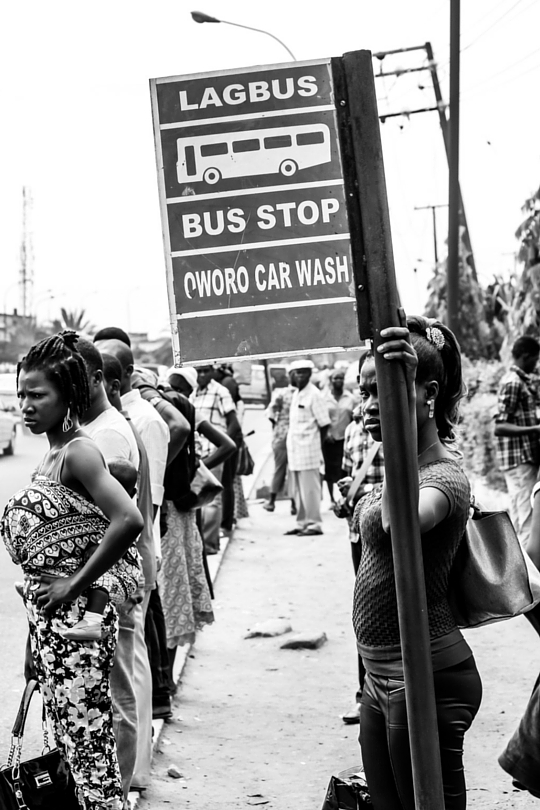
There is something about Lagos, about this human chaos, about entering danfos and crawling into kekes and jumping on okadas and pushing against bodies reeking of sweat while dancing between pungent puddles that makes me wish I could read minds.

Not all lives interest me. Some people are just derivatives of other people, stock personalities coming out of the human conveyor belt, uninteresting in the way I imagine I must be. But a few stand out: fascinating humans who compel me to observe, like the three girls who piled into the bus at Obalende and sat behind me on Saturday.

They wore clothing that strained against their youth. One sat and two lapped themselves. One pleaded with another in Yoruba, telling her she was sorry.

“Let us go to Alhaji’s place,” she said.

The friend replied, “You can go, I’m not going.”

She pleaded again, “I am sorry.”

They repeated this sequence as more people hauled their bodies into the bus. I took a bite of Gala and a swig of Lucozade Boost.

“I said I’m sorry,” she began again.

The third friend was silent throughout this exchange.

The reluctant friend finally gave in, “Okay, we can go.”

Who is Alhaji? Why is the need to visit him this strong a few minutes past 6pm? It bothers me that there is a whole swathe of human experience and emotions I do not have access to. It bothers me that this bothers me.

As we sped along Third Mainland Bridge, the girl who had been pleading so she could visit Alhaji received a call and spoke to a guy who, from what I could gather, was expecting her.

“I’m at home now,” she told him.

She spoke in heavily accented English with some hesitation, which shows the speaker has the basic vocabulary for fluent communication in English, but is actively translating from Yoruba in her mind.

At Oworonsoki, the trio started a Yoruba Christian song, the kind that choristers in long robes chant enthusiastically to the rhythm of gangan. There was so much cheer in the girls’ voices, and they giggled intermittently as we moved on to Oshodi. There, I alighted from the bus and took the overhead bridge. I looked down and saw the three girls walk towards Ilupeju.

I hope one day to have the courage to ask these people for their stories. I want their stories told with care and empathy, in a way that will make me see them, as they are, not just as the world labels them. I hope, somewhere at the end of their journey, there is someone waiting for them who calls them Imzadi* in a way that is not predatory.

____________

*In Star Trek: The Next Generation, Will Riker, Deanna Troi’s love interest, calls her Imzadi, which translates roughly, in the Betazed language as Beloved. It is what she called him the first time they met.

Alhaji: a Muslim (man) who has been to Mecca on pilgrimage; often the title connotes that the bearer is wealthy.


©Ife Nihinlola 2015 @ IfeOluwa’s Rambles
Ife is an avid observer of life in metropolitan Lagos, which he translates into rich ruminations on his blog. Read the unabridged version here.

Photo credit: Owonronsoki by Logor Olumuyiwa


Unauthorized use and/or duplication of this material without express and written permission from this blog’s author and/or owner is strictly prohibited. Excerpts and links may be used, provided that full and clear credit is given to Timi Yeseibo and livelytwist.wordpress.com with appropriate and specific direction to the original content.


Along Came Fences

fences

We lived in a compound of three flats and a boys’ quarter in Ago Okota, Lagos. Ours was a fenced compound, sort of in the middle of nowhere, last on the street and separated from other buildings by an expansive gulf of undeveloped plots of land overgrown with weeds.

A single mother and her three kids lived in the boys’ quarter. Her first son was my age-mate and friend. When I think back to those formative years, I remember the resolute cooperation of two nine-year-old boys who decided to make a bench from abandoned formwork lying about an uncompleted building close by.

For days, we slaved to make a three-legged bench that a parent bought for N10. My friend and I always watched with pride as our siblings and parents sat on the bench in the evenings. We made another, which I marketed to a relative, selling it for N5. I walked for half a kilometre with the bench on my head to deliver it. While making those benches, a rusted nail pierced through my left foot. My mom took me to a nearby clinic to have me treated. The bill was N200.

When we moved to Kaduna, only two houses on our street were fenced—ours and another one down the lane. Our gate was the opaque border bounded by four high walls decorated at the top with broken bottles.

Despite my love for accessing that side of solitude that engages with written words, the part of me forever enslaved to fantasy fed fat on cartoons and I hungered to bring the adventures scripted in them to life. So, during my teenage years, the call of the streets drew me past our gate, to a circus of street hockey, boris, hunting traps, bangers, suwe , and games of catcher with many other children. As dusk fell, I would reluctantly retreat from the big compound that was our street to the confines of the opaque gate.

In the space of two decades, every house on my street has grown a fence. The ‘big compound’ has shrunk away from the backyards, front yards, and trees, which were common property supporting the imaginative expressions of every kid. The evening bustle of legs and screams have vanished. Moreover, kids have now been tamed by big and small screens that keep nagging them, demanding every bit of their attention.

My village is different. Even today, there are no fences. Solitude is alien and greetings and communal assistance are prized. People do not distance themselves from the identity and stories of others who live around the corner.

Fenced houses and gated communities are the norm in cities. We insulate ourselves to feel secure. However, I maintain the premise of one of my favourite lecturers who is a past president of the Nigerian Institute of Architects: the best form of security is communal and that happens when there is a sense that anyone could be watching a thief from a nearby window.


© Samuel Okopi 2016
samuelokopi.com


Unauthorized use and/or duplication of this material without express and written permission from this blog’s author and/or owner is strictly prohibited. Excerpts and links may be used, provided that full and clear credit is given to Timi Yeseibo and livelytwist.wordpress.com with appropriate and specific direction to the original content.

The Center of My Universe

hosiery

I looked up to find her staring at my leg. Her smile revealed crowfeet, which made her thick dark eyebrows seem relaxed, although in fact, they did not move. I glanced at my leg and smiled in return.

Earlier that afternoon, the zip on my boot snagged my tights. When I stood, my dress rushed down to my knees and swallowed the tear, which was determined to run anyhow. After searching for clear nail varnish around the office, I finally found red nail polish with which to halt the run.

When I sat down in the train, my dress rode inches higher exposing the long gash on my tights. Three red dots, bright as blood, marked the spots where the nail polish had tried in vain to heal the tear. I was tired and my vanity had expired so I adjusted my bag to hide the split. My bag must have slipped because I woke up from my nap to find my torn tights in her line of sight.

I wanted to ask her, haven’t you ever done the same thing too? A smile can be an invitation to talk, but even with eye contact, urban solitude—that unwritten code, which prescribes polite distance in communal spaces—prevailed. Her gaze remained on my tights.

We were four seated in our corner, two sets of seats facing each other with enough distance to keep knees from brushing. Still, feet touched whenever legs were stretched, even a little, resulting in both stretcher and stretchee mumbling, “Oh sorry,” before retreating into urban solitude.

The people crammed in the aisle, shuffled grumpily at each station where more passengers entered the train than exited. A few weeks ago, the Metro ran a story about frustrated passengers who felt cheated because they had to stand their entire journey. The NS had explained that werk aan het spoor meant fewer trains with shorter carriages. I thought it was unfair that passengers suffered discomfort while the NS took the public for a ride and cashed in on full fares.

Complaint can start conversation, but even those standing dulled their inconvenience behind earphones and displayed their perseverance by texting or reading on their handheld devices as the train lurched and swayed, speeding from city to city.

The woman next to me had timed the previous passenger’s exit to perfection and so became the lucky winner of a vacant seat. She was watching a movie on her phone and her eyes didn’t wander from the screen once. Sitting directly opposite me was a girl whose head bobbed at intervals as though she was listening to music but she was sleeping. The white wires of her earphones peeked out from her black hijab. The woman adjacent her, who kept looking at my tights, wore shiny grey tights and black high heels.

This woman broke into a delicate laugh all of a sudden. Could hosiery induce such delight? A faint whimper diverted my attention. I followed the sound and peered down. A red leather collar; how could I have missed it? She had not been smiling at me. All this time, it was the puppy in the raffia tote, which the woman next to me straddled.

Sometimes the best reminders come in small packages—I am not the center of the universe, only mine.

They say before you assume anything, try this crazy method called asking. But I could not have asked her, could I?


Don’t acknowledge fellow passengers or sustain eye contact beyond two seconds. Please respect urban solitude. – unknown


©Timi Yeseibo 2016

Unauthorized use and/or duplication of this material without express and written permission from this blog’s author and/or owner is strictly prohibited. Excerpts and links may be used, provided that full and clear credit is given to Timi Yeseibo and livelytwist.wordpress.com with appropriate and specific direction to the original content.


Measuring Time

time

Over the years, I have heard people say, I don’t do New Year resolutions, as if resolutions are an unfashionable item of clothing. Me? I have no grouse with New Year resolutions; they are not like mosquitoes singing in my ear that I need to slap away.

You know that Angus and Phil cartoon where the two dogs are having a conversation? The one where Angus asks, “What exactly is a New Year’s resolution?” and Phil replies, “It’s a ‘To Do’ list for the first week of January,”? It has me in stitches every New Year when I see it on my newsfeed on Facebook. What is it about New Year resolutions and un-stickability? Are we so spineless? Perhaps we resolve to do better without looking at why we failed the year before.

I have come to believe the saying that men fail because of broken focus. I do not think of my goals at the start of the year as resolutions. These goals, which span spirituality, character, vocation, and health, are work-in-progress, whose expiry date can spill over from a previous year because sometimes distractions pose as good intentions and obliterate my focus. Focus requires clear targets. Sustaining focus becomes easy when I strip down what I want to achieve to bullet points and then marry them to small chunks of time. Then, I can be a vigilante one day at a time

Mostly, I wake up without an alarm and not long after, I reach for time—a watch, phone, or clock. Even on days that I can do as I please and do not need to look at the clock; I still catch myself glancing out the window gauging time by the slant of the sun, degree of cloud cover, or pace of life on the streets, to make meaning of our world. In a sense, all of us are measuring time. But if we take casual cognizance of time, the days and weeks would blend into one another. It would be like defying gravity and just floating in space, fascinating at first and pointless in the end. 

A friend reminded me that in 2015, he counted the days. When he said it, I imagined him standing in front of a huge calendar, striking out the days written in black ink, with red crayon. I saw how fast he flipped the calendar from month to month, achieving little. He said that in contrast, in 2016, he would make the days count. I like his rhetoric. For me, this means before I lay my head on my pillow at night, I would have taken at least one step in the direction of my goals. Then 365 days later, I will measure time and come up full.

Whether we call our aspirations resolutions or goals, how we spend our days becomes how we spend our lives.


©Timi Yeseibo 2016

Unauthorized use and/or duplication of this material without express and written permission from this blog’s author and/or owner is strictly prohibited. Excerpts and links may be used, provided that full and clear credit is given to Timi Yeseibo and livelytwist.wordpress.com with appropriate and specific direction to the original content.


A Writer at Last?

writer

We arrive at my parent’s house to meet a party in full swing. I am surprised. We hug uncles and aunts we have not seen in ages, while the girls who assist my parents with running the house cart the food and drinks my sister, with foresight, had insisted we bring along.

“I’ve been waiting for you people,” my mother beams, “some people haven’t eaten.”

How did she know we would show up with food and drinks on her birthday? Had she not said, “No, I don’t want a party; I just want my family around me and my pastors to pray for me”?

I should have known. Family for my mum means at least 100 people.

“Are you the daughter from America? UK?”

“Yes,” I reply, discounting the value of correcting them, these people who comment on how I have grown and how when I was small like this—they gesture with their hands close to the ground—they had changed my nappy or carried me or brought me presents.

And so I let myself be passed from bosom to bosom and chest to chest, squeezing back lightly sometimes, pulling back determinedly sometimes. I lose myself in the maze of people whose stories intersect with mine on account of my mother.

When people cannot eat and drink anymore and chatter dithers like a misplaced comma, my aunt says to my sister, “You need to give the vote of thanks.” A Nigerian party without a speech is an anomaly. My sister replies, “Please meet Timi, she’s the writer in the family; she knows how to speak grammar.”

My aunt approaches me and I protest, “I am not a writer,” so, my sister gives the vote of thanks instead.

I have pondered this exchange for some years now. Why did I refuse to be called a writer?

I think I felt as though I had not earned the title. Because writing comes relatively easy to me and I had a real job, writing felt like a serious hobby. However, the more I wrote, the more I saw how much like my mother I was, insisting I did not want something when in fact, I did.

I had confused being an author with being a writer. Since I had not yet authored a book, how could I introduce myself as a writer and answer the question that inevitably follows; so what books have you written? Or maybe I was afraid; if I did not succeed at writing, no one could accuse me of failing at being something I never claimed I was.

A while back, I found a definition for writer that arrests my reluctance to accept the title: a writer is someone who writes. This description frees me to allow those like my sister who want to call out and celebrate my gift, to do so.

If I have come closer to embracing the title writer, it is in no small measure because of you; you, who read, comment, like, and share my words. Our Sunday-Sunday interdependence has grounded me.

Thank you.

timi


The writer must believe that what he is doing is the most important thing in the world. And he must hold to this illusion even when he knows it is not true. – John Steinbeck


Pretending to be a writer is easy… but genuinely being a writer is difficult, because you have to write something that will convince both yourself and readers. – Kim Young-ha


Shifting Gears [7]

Making Good Art

eyelash
After I shared the picture above with a friend, she asked, “How much does your mascara cost?”

I replied, “17.50.”

Then she said, “In that case, you can cry as long as you want.”

We both laughed because I needed to laugh.

I cried this year, silent tears and loud tears, in the privacy of my bedroom.

And I nearly gave up, although I had begun the year high on momentum.

In his 2012 keynote address at Philadelphia’s University of the Arts, author, Neil Gaiman, dispensed advice on a career in the arts. His advice transcends art and spills into life.


Life is sometimes hard. Things go wrong, in life and in love and in business and in friendship and in health and in all the other ways that life can go wrong. And when things get tough, this is what you should do.

Make good art.

I’m serious. Husband runs off with a politician? Make good art. Leg crushed and then eaten by mutated boa constrictor? Make good art. IRS on your trail? Make good art. Cat exploded? Make good art . . . Probably things will work out somehow, and eventually time will take the sting away, but that doesn’t matter. Do what only you do best. Make good art.


I cried in January, February, and March. My tears fell from April through September, like the rainy season in Nigeria, a deluge that began without warning. I determined to have an early dry season beginning in October. To ease my weariness, I planned to write short stories, flights of fantasy about love and technology. It worked. October looked promising until the mid-way point.

One Thursday, after a wailing session, I stopped deriving childlike pleasure from tasting the saltiness of tears and runny snot and reminded myself, I had a story to write. I shot an earnest plea to Heaven and brought out the notes I made as a friend recounted her experience on the train. Then I zoned out everything and entered the place where stories come to me.

Before I published Bluetooth Lottery, I gave it to a friend to read. I watched him chuckle while he read and stopped holding my breath. This story, I thought, might resonate with readers. My blog posts that create the most emotional resonance, going by likes and comments, are posts I wrote from places of desperate despair or posts about the tattoos in my soul.


The moment that you feel that, just possibly, you’re walking down the street naked, exposing too much of your heart and your mind and what exists on the inside, showing too much of yourself. That’s the moment you may be starting to get it right.


Are Gaiman’s words about making your art to be taken literally?

I heard someone say that when you speak from your head, you talk to people’s heads, but when you speak from your heart, you talk to people’s hearts. After a writer shared a heartbreaking ordeal with me, I asked her if she was going to write about it.

“No,” she shrugged, “but you know how these things work, right? Our experiences seep into our writing and wet the page.”

I nodded.

Tears became my friend this year and I did not resent her intrusion into small spaces. I realized firstly that the demons that troubled me were not new. They were conquered foes, old fears in shiny wrapping paper. Secondly, to borrow from the title of Binyavanga Wainaina’s memoir, one day I will write about this place, this field of tears. I will gather my tears and then I will sit and make good art.


As they pass through the Valley of Baca, they make it a spring; the early rain also covers it with pools.
– Psalm 84:6


©Timi Yeseibo 2015
Unauthorized use and/or duplication of this material without express and written permission from this blog’s author and/or owner is strictly prohibited. Excerpts and links may be used, provided that full and clear credit is given to Timi Yeseibo and livelytwist.wordpress.com with appropriate and specific direction to the original content.

Shifting Gears [6]

Marilyn Monroe

A Leggy Affair

As a teenager, I imbibed ideas about acceptable body shapes from the people around me. So, I believed that a girl’s legs were beautiful only if they were straight like bamboo stems from the knees to the ankles, with no protruding muscles aka yams interrupting the flow.

Well, I inherited my father’s footballer legs, so during my years at university and for years afterwards, I hid my legs underneath trousers and maxis to escape mockery. My insecurity over what I deemed a flaw was like a thing around my neck, choking self-approval out of me.

Like a child force-fed by her determined grandmother, I spent my twenties swallowing popular beauty ideals of the society where I lived. They became the yardstick for measuring myself. I felt inadequate whenever I spotted a pair of bamboo legs. I considered the owner a lucky winner of the anatomy lottery because to me, having straight legs made one outstanding, special even.

In retrospect, that was laughable because straight legs do not shield their owners from life’s troubles. It is not as though those with straight legs can flash their exclusive Bamboo Club gold membership card and Life would say, “Aww, perfect pins, move along then, no troubles for you today. Next!”

Bamboo legs conferred no special advantages that I could see.

Still, at my old gym, when someone complimented my well-defined calves, I had to stop myself from peering at my legs, with lips turned downwards and eyebrows arched, as if to ask, “Me?”

I don’t know how I finally adjusted my beliefs regarding what is acceptable or not acceptable as far as my body is concerned. I suppose that as I approached my thirties, I began to ponder the whys of life even more stubbornly. Moreover, I realized that my legs would never change their shape; in fact, they would become even more muscled due to my new-found love for exercise.

My epiphany hit me like a clap of thunder. I woke up one day and suddenly every leg-concealing piece of clothing seemed revolting. Out went the trousers and maxis, and in came the short girly dresses and skirts that I’d always looked at longingly but felt I shouldn’t wear.

Recently, the instructor at my new gym praised my toned leg muscles; he wished he could devote more time to Leg Day as he assumed I did. I stifled a cheeky chuckle and in my head I sang, baby I was born this way.

Does clarity come with age? Or is this delicious comfort I have found in my own skin, this assuredness, my way of sticking my middle finger at my overdependence on external validation? Perhaps, I now understand that my quest for courage to set my personal ideals begins with embracing the things I am powerless to change.

These days, when I walk into the gym I spend a few minutes at the mirror-panelled walls, looking at my legs and smiling. I’ve come to love my legs especially the yams, which lend character to them. Not unlike the multiple perspectives that the angled mirrors provide, I can see either flaws or two healthy limbs to walk and dance with. Gratefully, I choose the latter.

I have one life to live and only this body with which to live it. The warmth of the sun and fresh air brushing my legs is wonderful; the prospect of a Marilyn Monroe dress-flying-in-the-wind moment is even more wonderful.

© ’Nedu Ahanonu, 2015
’Nedu blogs @ Nedoux.com


Unauthorized use and/or duplication of this material without express and written permission from this blog’s author and/or owner is strictly prohibited. Excerpts and links may be used, provided that full and clear credit is given to Timi Yeseibo and livelytwist.wordpress.com with appropriate and specific direction to the original content.

Shifting Gears [5]

adrift

Adrift

For the most productive parts of my year, Marilynne Robinson’s words were my Mantra: “Frankly, you get to a certain point in your life where you can do unusual things with your mind. So then, I think, do them.”

What Marilynne doesn’t explain is that doing stems from being; that our being is tied, irrevocably, to our interactions, our relationships; that in reinvention, we shed our pasts and people in them to emerge into new forms of ourselves. There is something visceral, violent even, in leaving friends to gain new frontiers.

In August, I was added to a WhatsApp group of my secondary school classmates. My first comment was a rant. Someone asked why I was speaking as though I did not attend the same school like everyone else. Even I am a stranger to the boy they used to know.

It was easy to severe secondary-school ties. I used to be good at that. The secret is to avoid nostalgia, excise memories, and dull the mind with new experiences. I did this without guilt. I often say I am content in solitude and enjoy being an island, but when I entered university, I made new friends who showed me friendships are not just bridges that can be burnt at will and reconstructed. They are anchors that prevent me from drifting.

Trying to describe the loss of friendship, Murakami wrote of the titular character in Colorless Tsukuru Tazaki and His Years of Pilgrimage:

“The pain he felt was, if anything, more intense, and weighed down on him even more greatly because of distance. Alienation and loneliness became a cable that stretched hundreds of miles long pulled to the breaking point by a gigantic winch. And through that taut line, day and night, he received indecipherable messages. Like a gale blowing between trees, those messages varied in strength as they reached him in fragments, stinging his ears.”

Towards the end of the year, my life began to imitate art; Tsukuru’s story came alive with vivid intensity. In striving to be the kind of person who can do the things I now think my mind is capable of, I was drifting away from my friends.

Last month, I spoke to one of my best friends. I asked her about work.

“You are so out of date,” she said with laughter in her voice.

We spent hours trying to fill the yawning void between us, trying to get back to the way things were (the way they should be?).

Time is the tie of friendship, affection its strut, and these I do not possess in infinite quantities.  Having severed, at will, friendships in secondary school and anchored myself to friends in university, I’m learning as a young adult that it is okay to drift away from some friends without angst or guilt.  To build new bridges some of the old ones have to be dismantled.

I walk through the phantom space where bridges used to be, hoping there is enough muscle memory to take me past the awkwardness of encountering old friends; you know, matching faces to places and names to dreams. Nonetheless, I am grateful for friends—past, present, future—who anchor me to reality and to whom I owe bountiful debts of love.

© IfeOluwa Nihinlola, 2015

Ife blogs @ ifenihinlola


Unauthorized use and/or duplication of this material without express and written permission from this blog’s author and/or owner is strictly prohibited. Excerpts and links may be used, provided that full and clear credit is given to Timi Yeseibo and livelytwist.wordpress.com with appropriate and specific direction to the original content.

Shifting Gears [4]

unashamed

Unashamed

I was born under the twin towers of shame and pride.

My mother prided herself on rising up from the dilapidated shack on the Hudson River across from New York. Her rise from second-hand clothing and no running water was her badge of honor. My father hid with shame, the quiet emotional poverty of a childhood spent reacting to the mercurial moods of an alcoholic parent. He never thought he was quite good enough to take us to nice restaurants.

Before the age of three family members died one after the other and though I don’t remember any of them, the awareness of death and separation plagued my young mind. Inherited pride led me to believe I was captain of my ship, yet with shame, I noted how rudderless and shaky my travelling vessel was. All the while I asked myself was there any point. Death loomed.

Before I wrote my first novel, I drifted uninspired and crippled with doubt into many ports always with an eye on the storms that might lead to shipwreck. The novel grounded me. I thought I wanted to play the hipster author smug and ironic, but my characters had hearts and souls. How could they take grace, love, and redemption seriously? How could they believe in an un-hip God? They refused to be cool.

Fifteen years passed. The grounding was an illusion. I was still on a boat but no longer at the helm. Conversion stories abound on the internet. Mine happened searching scripture to put hypocritical words in my characters’ mouths.

Recently I realized I still live under the towers. My characters (and I suspect God), try leading me, but I tend to cry shipwreck and jump into the sea or hide deep in the hull of life.

A few weeks ago, a fellow blogger invited me to give answers to a Q&A series about reading habits. My shelves sag with history, literature, and how-to books (maybe I keep some to impress people), and for most of the questions I kept my head above water until I was asked which single book I would recommend to another.

I hesitated . . . for days. I considered lying. I had a hidden crutch, a new-found yet semi-secret belief in what some considered an offensive savior. When I hit the send button with my answered questions, I had a sinking feeling I’d lost all standing with this faraway internet acquaintance. I recommended the Bible. I suddenly realized how easy it was for Peter to deny Christ.

My hipster novelist thing shattered. I’d often sold my book as a story about a morphine addict because I wanted faraway people to think it was edgy—but I lied to get “likes.” The real story is about a family on a difficult journey, as we all are. In the end, they figure out who’s at the helm. There’s no shame in that any longer for me.

© Adrienne Morris, 2015

Adrienne blogs @ Middlemay Books


Unauthorized use and/or duplication of this material without express and written permission from this blog’s author and/or owner is strictly prohibited. Excerpts and links may be used, provided that full and clear credit is given to Timi Yeseibo and livelytwist.wordpress.com with appropriate and specific direction to the original content.

Shifting Gears [3]

gear shift

Not The Comic Book Hero

As a young man, I had no understanding of stiffness after exercise. I had no idea of the pain that came with the arthritic joints of unsteady elderly folk.  This would never happen to me.

In the 1940s, I happily skinned my knees in South London streets devoid of motor cars. During the ‘50s, I was introduced to cricket and rugby, two sports I continued regularly to play until, aged forty-five, I moved to Newark on Trent and considered it a little late to join new clubs.

From thirty-five to forty-five, I undertook weight-training three times a week. Throughout my forties, I ran 25,000 miles on roads, including participating in eighteen marathons. Having covered nine miles to work with a knapsack on my back, I showered in my workplace, and then breakfasted in a nearby cafe. On the day I ran fifteen miles before completing a rugby training session, I felt smugly comfortable with the epithet ‘Superman’, bestowed somewhat facetiously, I’m sure, by a group of Social Work students.

I shrugged off sporting injuries, notably tying a broken finger to its neighbour with a bootlace before completing a match. That joint has never bent since, rendering picking up coins rather difficult.

As I entered my sixth decade, a recalcitrant calf muscle forced me to concede that my daily mileage would need to be walked, not run.

During a game of touch rugby at the end of Sam’s December 2007 stag day in the Margaret River wineries, a seventeen-stone friend of the prospective groom, forgetting the rules, tackled me to the ground. I leaped to my feet and tackled him back at the first opportunity. The father of the bride halted the game soon afterwards, saying that ‘someone’ would get hurt.

The best way to overcome the wall—the point in a marathon at which your body tells you that it cannot go on—is said to be to run through the pain until it subsides. When, towards the end of 2008, my left hip developed severe discomfort, I applied that belief. Sometimes I couldn’t sit down afterwards.

About three months after receiving a prosthetic joint in October 2009, I was back to an average of two hours a day of undulating perambulation.

When we began reclaiming our neglected garden in April last year, both Jackie and I spent about six hours a day throughout the summer engaged in heavy tree work, removing stumps, and shifting substantial rocks and concrete.

Abruptly, this March, I shuddered to a halt. My right knee was in such pain that when I visited the GP, I was offered a wheelchair, which I declined.  After some improvement, I can walk an occasional two miles and my gardening is somewhat restricted.  Were I to be tackled today, I would need helping to my feet.

Exercise is now required to reduce stiffness. It has happened to me.  I am not the comic book hero.

That is what I have learned in 2015.

© Derrick Knight, 2015.

Derrick blogs at derrickjknight.com


Unauthorized use and/or duplication of this material without express and written permission from this blog’s author and/or owner is strictly prohibited. Excerpts and links may be used, provided that full and clear credit is given to Timi Yeseibo and livelytwist.wordpress.com with appropriate and specific direction to the original content.