Heat

Heat

He stared at it for a long time. But when he looked up at the huge round clock, incongruous analogue, mocking the digital revolution below, only seven minutes had elapsed.

Now that the man had finished reading the label on it and his son had stopped pushing his face, chin first towards it, his daughter refused to go. The girl stood in front of it, revelling in the way it made her t-shirt crease and lean into her chest, her short sleeves shaking and sharing her delight.

“Mieke! Kom op!”

She ignored her father and spoke into it. The sound of her voice breaking and quivering cajoled her brother to let go of his father’s hand and join shoulders with his sister. Their voices trembled together, gibberish to others but holding meaning for them both.

And he remembered what it felt like to have someone whose voice rose and fell in cadence with his.  He should not have let her go.

“Dani!” their father called, securing the box in a tighter embrace before turning and walking away.

He measured the angle formed by tracing the son’s head up to the father’s and down to the daughter’s. An obtuse angle, the geometry of his life. He must have looked at their backs for too long, because when he turned around to move closer to it, two girls were already there. Their legs, as yet, insufficiently kissed by the sun, stretched long from the edge of their bum shorts to their ankles. They wore black flip-flops decorated with neon flowers, which would glow in the dark.

The first girl raised her arms and let her mid-riff enjoy it and although it teased her crop top, it could not lift the blouse higher. The second girl used one hand to plunge her neckline so that it could find more places to affect. They giggled. Then they were gone, as quickly as his youth, hobbling as they shared the weight of the box.

The whirring noise coming from it reminded him why he had come.

Pardon. Meneer?”

The boy who addressed him wore a red shirt with a name pin on the front pocket. The boy was leading a man with an open collar and rolled-up sleeves to it. He wanted to say he was not done yet, but moved aside instead.

He watched the boy, nineteen perhaps, summer job maybe, gesturing with his hands as he explained what it could do. The man nodded and rubbed his neck. He imagined that this man wearing a striped shirt sat in an office from nine until five, getting up for coffee every hour, and sending emails every other hour. The man’s torso had made peace with that kind of life.

The man must have asked how much and then asked for a discount because the boy told him 50 Euros. The boy said it was the last one but since it had been on display, the man could have it for 45. The man shook his head as if he could bargain on a day like today. The boy suddenly seemed older as he explained capitalism to the man.

“Tomorrow, we will get more stock and sell them for 70 Euros and people will still buy. We could have sold this one, but we needed a demo.”

He saw an opportunity he had not known existed and fingered the money in his pocket. But the man nodded and pushed his glasses up his nose. Then the boy bent down and got to work.

He watched the boy break it in parts and steady the blades before pushing its head into a rectangular carton. He folded the cord in 4 cm strips, securing it with a string. Then the boy hoisted the box and walked to the counter where the man was taking out his credit card.

He swallowed his anger like saliva that gathers in one’s mouth from inactivity. He recalled his last night with her. She had asked him what his plans were, if he was going to drift forever. Her parting words, the patient dog never eats the fattest bone; can’t you be crazy for once, galvanized him to action now.

He dashed to the counter and snatched the box. He made for the door, pushing languid bodies with the box. The alarm sounded but the heat had humbled the security guard in a navy blazer who possessed neither baton nor gun.

Only when he reached his apartment door did he stop looking back. Inside, the open windows yawned and wished for something to do. Sweat gathered around his neck then slithered to his chest. He opened the box and put the parts together, steadying the blades as he had seen the boy with the red shirt do.

Finished, he admired his work and waited for it. After two minutes, he rechecked the parts and fumbled with the cord. He searched the box, moving his hand from side to side. He let out a deep sigh and banged the wall. Then he dropped on his bed and cursed the heat while his sweat seeped into the hot sheet.

The infrared sensor on its sleek black panel glowed and turned to an eye that grew and grew. Then the boy with the red shirt emerged from the eye. The boy shrugged and gestured with the remote in his hand, “It is the heat; it makes people crazy.”

He blinked and looked away, fear creating tremors in his heart. When he dared to look again, the glow and the boy were gone. He groaned. Was there no more room for analogue in a digital world?

Tomorrow he would return to the shop wearing a baseball cap. Tonight he would wrestle the heat. He picked her wedding invitation from the bed and began to move his hand from side to side, rewarding himself with hot air. He imagined the card was made from steel and black plastic, like the fan on display in the shop.


©Timi Yeseibo 2015


Unauthorized use and/or duplication of this material without express and written permission from this blog’s author and/or owner is strictly prohibited. Excerpts and links may be used, provided that full and clear credit is given to Timi Yeseibo and livelytwist.wordpress.com with appropriate and specific direction to the original content.

Forging Connections through the Internet

connection

A friend shares a story about a CSI-style drug bust sans gunfire in her apartment building. When the police question her about her neighbours who are involved in the crime, they are surprised that she knows so little about them. I am not. Once, I saw a man fitting a key into the lock of a front door two houses from mine. He waved as I walked past and I nodded in response. I hadn’t seen him before. Maybe he is a neighbour. Maybe he is a thief. This is city life.

It is against this backdrop that I wonder if the internet and social media and the technology behind them are responsible for the distance and disconnect among people living in the same physical space. Before cell phones, Facebook, and Twitter, we insulated ourselves from each other with newspapers and earplugs on the bus or train. Maybe technology is neutral; it just amplifies who we already are.

In his 2011 TEDx Talk, Simon Sinek argues that nothing replaces human contact. He says, “. . . technology is absolutely fantastic for the exchange of information and the exchange of ideas. Technology is absolutely wonderful for speeding transactions. It’s wonderful for resourcing and finding people, but it is terrible for creating human connections. You cannot form trust through the internet.”

Since that talk, human interaction via the internet has been steadily rising as evidenced by increase in social media use. When I emailed people whom I had only ‘met’ on the internet and asked them to each write a 300-word piece on some aspect of motherhood for my blog, I was asking them to trust me with their stories. How could they be sure I would treat their stories with integrity? How could I be sure that they would deliver the stories they said they would?

For me, transactional trust began by examining their digital footprint—Facebook, Twitter, LinkedIn, or blog profiles, and the writing on their blogs. I suspect the converse is true for them too and that having mutual digital friends played a part. Working together to polish stories necessitated questions about word choice and sentence structure, which fostered meaningful connection. It was humbling to hear their backstories.

In the end, you read the finished story, and all our worlds became smaller because story mirrors life and life mirrors story. Every story on your phone or tablet or laptop was an invitation to trust and an opportunity to forge connection.

Writing can create empathy and establish credibility. If trust is a function of the part of the brain that has no capacity for language, causing people to look at empirical evidence and still say, “Something doesn’t feel right,” then some kind of digital intuition is vital to navigate the future because we are using technology to form human connection after all.

I agree that nothing replaces human contact; nothing should. However, until I meet you in person, I hope technology continues to connect us through words.

I cannot thank you enough for knitting your heart with ours as we shared what motherhood has meant to us this past six weeks.


©Timi Yeseibo 2015


p.s. Thank you Ozoz, Afi, Eileen, Elaine, Taye, Yvonne, Joxy, Brina, Unathi, and Tamkara!


Photo Credit: Kaboompics/ http://pixabay.com/en/technology-laptop-keyboard-computer-791029/


Unauthorized use and/or duplication of this material without express and written permission from this blog’s author and/or owner is strictly prohibited. Excerpts and links may be used, provided that full and clear credit is given to Timi Yeseibo and livelytwist.wordpress.com with appropriate and specific direction to the original content.


Stats, Search Engine Terms & You

livelytwist stats


WordPress spared me the trouble of spreadsheets, charts, and graphs by providing Livelytwist’s annual report for 2014. Here are some highlights to mark Livelytwist’s second anniversary.

The concert hall at the Sydney Opera House holds 2,700 people. This blog was viewed about 26,000 times in 2014. If it were a concert at Sydney Opera House, it would take about 10 sold-out performances for that many people to see it.

In 2013, Livelytwist was viewed about 13,000 times. By 2014, this doubled. The growth in number of views reminds me of a chorus sung in some Nigerian Pentecostal circles, everything na double double! What’s in a number? I publish articles once a week about subjects that don’t involve Kim Kardashian—the numbers tell me people still care about what I say.

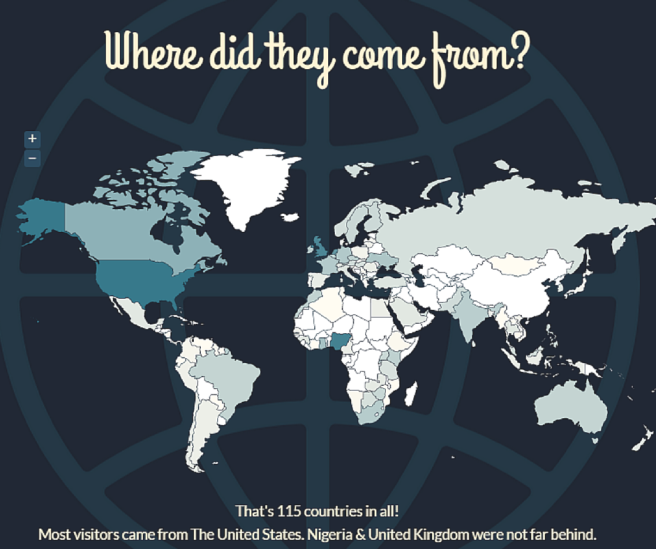
At least one person in every continent, in 105 countries, viewed Livelytwist in 2013. Come 2014, Livelytwist travelled farther, touching down in ten more countries. Although we complain about the internet, it remains the universal passport, which defies visa restrictions. It is how I met you. Most visitors came from the United States. Nigeria and United Kingdom were not far behind, and The Netherlands and Canada made a strong showing as well.


These posts received the most views in 2014.

1. The Love Languages of Nigerians [posted July 2014]

2. The Body Magic [posted April 2013]

3. Open Letter to Akpos [posted May 2013]

4. I am Not Looking For Love, I am Going to Work [posted August 2013]

5. A Father’s Love [posted June 2013]


According to WordPress,

Some of your most popular posts were written before 2014. Your writing has staying power! Consider writing about those topics again.

To me staying power is distilling current events in a way that transcends the present so an article remains relevant, year after year. Search engine robots also drove traffic to these posts judging by the most popular search words. Search engine terms are words and phrases people enter into various search engines like Google, Yahoo, and Bing that land them on Livelytwist.

A random sampling of the search terms shows my indebtedness to the creators of Akpos, a male character around whom many Nigerian jokes revolve, and to Ardyss for their corset, Body Magic. And yes, to romance and love. Below, I make my case.


A self-deprecating post about my struggle with weight and the Body Magic may be what bring these die-hard seekers to Livelytwist.

Search Engine Terms                                                             

magic chant for a round butt

  • When you find it let me know so I can retire early!

how to wear a body magic despite the pain to hide belle fat

  • Lol, vanity involves pain; just do it.

anything similar to body magic but cheaper

  • E.x.e.r.c.i.s.e maybe?

i hav flesh coming out from under my arms after wearing a body magic?

  • What did you expect? To drop 2 or 3 dress sizes?


A tongue-in-cheek stab at the ubiquitous Akpos, means that Akpos, and all things Akpos, are the search terms that bring the most traffic to my blog.

Search Engine Terms                                                             

akpose comedy – na we dey here 

  • What can I say? Akpos wins year after year.

what will i do so that i can be receiving  akpos joke every day as text message on my phone

  • So, someone actually typed this into Google?

i have a dream by akpos

  • That one day _ _ _ _  (fill in the blanks)

naija jokes that will thumble the girls and  make them shout

  • Girls beware!

Naija loaded akpos comedy

  • There in four words, the problem with Nigeria!                                                                                                                                                      


Every time I write about love, my stats go boom boom boom! But, what’s love got to do with these search engine terms?

Search Engine Terms                                                             

social network to find girls phone number or pin that are ready for marraige in nigeria 2014

  • This is not a dating site.

i am looking for love

  • I repeat, this is not a …

i want to friendship nigerian in mumbai

  • This is not a 419 site!

when will a female want a male to stop stroking

  • No comments. My lawyers are already writing Google.                                     #DefamationOfCharacter

when a woman acts up it means you pull her hair and show her whos boss

  • Osanobua! I haven’t even watched, not to talk of reviewed Fifty shades of Grey. I reject it!

i am tired of her in nigerian language

  • I apologise on behalf of all good Nigerian men.

timi yeseibo married

  • Get a life, read The  Economist!


Thankfully, these search engine terms reveal what the others may or may not: Livelytwist actually offers something intellectual.

Search Engine Terms                                                             

third world cultural profiles

  • Sociology majors welcome here.

what are the relationship between satire and social transformation

  • Satire can act as an agent of social transformation. Next question?

let there be peace in the land of my birth ( nigeria). Essay 

  • Indeed peace is a necessary ingredient for growth.

can an enemy be killed by splashing holy water on its picture


And these search engine terms remind me of why I do what I do…

Search Engine Terms                                                             What I Think

am bored..keep me lively pls

  • Came to the right place, read on.

latest blog by timi yeisibo-lively twist

  • Aw, sweet. People want to read Livelytwist!

livelytwist timi

  • So glad you found me!


A report tells one side of the story. I would love to hear your side. So what brought you here? Search engine? Facebook? Twitter? WordPress Reader? Other? And if you blog or have a website, what search engine terms drive traffic to your blog?


© Timi Yeseibo 2015


Unauthorized use and/or duplication of this material without express and written permission from this blog’s author and/or owner is strictly prohibited. Excerpts and links may be used, provided that full and clear credit is given to Timi Yeseibo and livelytwist.wordpress.com with appropriate and specific direction to the original content.

Two Years On

Two

My blog is one way by which I measure time. April marks two years since I began blogging. The earth spins on its axis as it revolves round the sun. The moon pulls the oceans and lets them go. If I did not write, the earth, sun, and moon, would not have stopped for me and I cannot imagine what else could have filled my days so.

Self-discipline is the hallmark of my journey. It is the ability to make yourself do what must be done.

When I’m in the zone, I could write forever. Ideas ooze from me and words tumble out faster than I can type them—I abandon current thought and scroll down the page to type perfect sentences and beautiful dialogue, falling from heaven like gold dust.

Many times, I’m out of sorts. Experiences burn me and disappointment visits nearly every day. My head hurts and my emotions are pink like cut salmon. I sing, tired oh so tired, and I’m too tired to compose a new song. I question which direction to take my blog or if I should quit. And most of all, I don’t feel like writing. Not writer’s block, but an insidious lethargy, which is akin to living with a low-grade fever.

I’m not unique in this regard. This is how we sometimes feel about our jobs and responsibilities. When did the things we love become a prison that we long to escape? But we show up at our jobs and dance on the stage of our lives anyway.


One Friday evening I’m moaning about how I don’t feel like writing.

My friend nods in understanding, “No, you don’t have to, it’s your blog. Not like anyone is paying you to. I’m sure people would understand.”

She is right. However, I can’t miss a Sunday post. Maybe it’s because growing up, my mum pushed me to outdo myself. Or it’s the result of my school principal repeating at assembly, “What is worth doing is worth doing well.”

“Yeah, but I have to,” I say.


So, that night, I discipline myself to write about an incident involving a friend and then launch into a broader conversation about what we value as a society. Disciplining myself to write means that I turn down many invitations, adjust my sleeping habits, watch less soaps, and read more stuff.

I muster all my skills and still feel as though the article could be better. Bloodshot eyes and new streaks of grey; five hours later, I know I have nothing more to give.

Eventually the article resonates with readers as reflected in the comments and shares.  In a sense, this is the reward of diligence—pushing past inner and outer turmoil and insisting on excellence from myself. The discipline of writing weekly provides momentum for those times when I’m flat. Still, I shake my head. I know this, and in fact all I’ve achieved, isn’t my doing. A wise man said:

The race is not to the swift or the battle to the strong,
nor does food come to the wise or wealth to the brilliant
or favour to the learned;
but time and chance happen to them all.

If this is my time, then my blog has been my chance. And self-discipline would mean nothing if I didn’t have readers like you encouraging me week after week.

Thank you!


© Timi Yeseibo 2015


Photo credit: http://pixabay.com/en/digits-pay-123-1-2-3-series-705666/


Unauthorized use and/or duplication of this material without express and written permission from this blog’s author and/or owner is strictly prohibited. Excerpts and links may be used, provided that full and clear credit is given to Timi Yeseibo and livelytwist.wordpress.com with appropriate and specific direction to the original content.

WordPress 108: Liking, Following or Not

following

So here’s the deal. I upload my 600-word article on my WordPress dashboard, use the proofreader to make last-minute corrections, and then publish. Fifty seconds later, my phone beeps; so-and-so liked your post. I’m a slow reader, but even if you’re a pro at speed-reading, you could not have read my blog post that fast. Haba!

The ‘numbers’ game, no longer holds the same fascination for me as it did two years ago when I started blogging, and yet, I’m in awe of the numbers. The number of people who engage my posts by liking, commenting, sharing, or leaving a message via my contact form is one way I measure the effectiveness of what I do—entertain, inform, inspire, or provoke thought.

I cannot ignore the numbers. When someone stumbles on my blog, he may not know what to read. If the Top Posts & Pages widget on the sidebar does not woo him, the number of likes and comments may resolve his indecision. In that sense then, a fake like is better than no like.

One evening between 8:42 and 8:44, my phone throbbed with the force of too many notifications. After the climax, so-and-so had liked nearly fifty of my blog posts. I was not flattered. It is like a man telling me how intelligent I am while staring at my chest; it just doesn’t add up.

Okay, I understand that sometimes a like on WordPress is like a poke on Facebook. It’s another way to say hello or get your attention—oh boy; that was one long poke! It is an invitation to come out and play, which I honour by visiting the Liker’s blog, as time permits. It is not an indication that so-and-so has read and digested your writing. Hmmm, very well then.

In the digital space attention is a

But there’s a nagging ring of deceit to this thing, this game of like tag. So far, I have been unwilling to like a blog post that I did not read or appreciate, as if my like has a price tag, as if anyone would know. If quality feedback is important to a blogger, then this promiscuous liking distorts perception; it certainly feeds ego.

In a way, social media is about numbers, number of likes, comments, follows, and shares, because no one wants to have a conversation by himself.  The problem with the like button on some social media sites is that the conversation with others may be illusory.

This post would have been unnecessary but for an encounter on WordPress, involving likes and follows. After reading a blog post I enjoyed, I liked it. In response, the blogger who only recently followed me informed me that a like without a corresponding follow was an insult. See me see wahala. Are we now back to high school?

Following a blogger on WordPress means that new posts from the blogger will appear in my Reader or I will receive an email notification when they publish a post. It seems dishonest to have my Reader flooded with hundreds of posts, which I will not read, but like. To me, a follow is a commitment to read your posts.

I am commitment shy. In a world awash with information, but limited time, you and I cannot read every blog post. If yours is a niche blog about DIY, for example, it would be spurious for me to follow your blog because I don’t like DIY and don’t want to get better at it.

Perhaps I will throw this textbook idealism out the window to monetize my blog or market any book I may write in future. Time will tell.  First-world problems, heh?

Be relevant

Still, the highest compliment I could pay you isn’t necessarily to follow you, but to read and engage your writing. It is the highest compliment you could pay me too.


©Timi Yeseibo 2015


Unauthorized use and/or duplication of this material without express and written permission from this blog’s author and/or owner is strictly prohibited. Excerpts and links may be used, provided that full and clear credit is given to Timi Yeseibo and livelytwist.wordpress.com with appropriate and specific direction to the original content.

Setting Forth at Dawn

L I G H T H O U S E


The first appearance of light in the sky before sunrise is called dawn. The forecast says sunny day; the clouds are undecided. One passenger is standing in the middle of the bus that rides past me and the rows of empty seats around him make alone seem like loneliness. The air is crisp and breathing is bliss, interrupted occasionally by the draft from the black garbage bags left on the pavement the night before. It will be at least two hours before the garbage trucks arrive. The thumpthump of my footfalls and swishswish of my sports jacket provide comfort and company. Although every joint protests and reminds me of how old I am, I jog because spring is here.

Like writing, jogging requires discipline and perseverance for results to show. If I work hard now, my dresses will flatter me in summer. After reading one of my blog posts, someone commented that writers lead very interesting lives. Hmmm, if they are anything like me, they do not, not by a long shot, not by most people’s standards anyway. Wise writers know: I am not, in and of myself, interesting to a reader. If I want to seem interesting, work has to be done in order to make myself interesting.

Four hundred metres into my jog, my body submits to my will and my mind takes over. I dissect my life, paring flesh from bone, rolling things over this way and that. Then, I tell myself the truth, crying, laughing, hoping, praying. I run through an article in my head, dotting the i’s and crossing the t’s. Satisfied, I think about what to write today, tomorrow, next week, next year and with whom I may write it. In the newness of day, untainted by doubt, every idea seems plausible, even past mistakes, redeemable.

Ideas are running over me thick and fast. I don’t jog with pen and paper, phone, or voice recorder because the temptation to stop and write would be unbearable. I have learnt to park beautiful sentences in my brain and trust that memory would reward my fidelity. Moreover, to pause would force me to rationalize and logic would provoke miscarriage or stillbirth. It’s been said that all readers come to fiction as willing accomplices to your lies.  It is easy for me to tell lies before the sun comes out.

As I turn around the corner, a new Indian restaurant reminds me of curries and naan bread, and my stomach rumbles. “Too early,” I mumble. Further down boats dot the harbour like swans. In summer, sailors will wave from boat decks and people lounging on rattan chairs in waterfront restaurants will raise beer glasses in return. Ahead a dozen men with buckets, rods, lines, and hooks, queue to board a boat sporting the signs sport vissen and rond vaarten. Such is the allure of the sea at dawn.

In the end, I quit two kilometres short of my goal, but it doesn’t matter. I jog to not only make the numbers on the scale decrease, but also for these moments of lucidity where I dethrone my giants before I face them.

Before the sun rouses
Ideas play hopscotch in my head
Flushing sleep from my eyes

What do you do or where do you go to find clarity? Are you a morning person or an owl?


©Timi Yeseibo 2015


Photo credit: Unsplash/ http://pixabay.com/en/pier-dock-quay-ocean-sea-calm-336717/


Unauthorized use and/or duplication of this material without express and written permission from this blog’s author and/or owner is strictly prohibited. Excerpts and links may be used, provided that full and clear credit is given to Timi Yeseibo and livelytwist.wordpress.com with appropriate and specific direction to the original content.



The Promise of Spring

acting

The wind brushes my hair into a side part and I curl my fingers around my thumb. My hands dig deep in my pockets, pulling the fabric down, as far as they will go. My neck is warm, my feet are warm, the rest of me shivers. Every winter is the same; I ask myself, why am I still here.

A seven-minute walk separates the station from Chizanes. The harried strides of rush hour has given way to languid walks. I linger by the oldest statue in the city, the first mayor on a horse. Inscribed on the marble plaque is my answer: the promise of spring. The wind, kinder now, carries distant laughter past me. It is the sound of a man and woman in love. Even the stars twinkle in appreciation.

Inside Chizanes, after my eyes adjust to the dimmed lighting, he is easy to spot. He waves and rises to greet me, leaning forward. I hesitate then stretch my right hand to dissipate his confusion. He takes it.

“Thank you for meeting me. How are you?”

“Fine,” my falsetto is on, “how are you?”

“Good. Good to see you! You look good!”

“You too.”

We order drinks. I ask about his family. He asks about mine. We waste time on the menu, searching for our rhythm—this, no that; are you sure? I heard it’s good. What of the chef’s specialty? No, you decide.

He signals for the waiter.

He asks about my job. I tell him I left. He doesn’t pursue an explanation. We talk about the weather. I cannot believe that the passion we shared has fizzled to this: the temperature is expected to go below zero on Wednesday.

He clears his throat and begins. “The reason I left—”

“Fish?” The waiter looks at me, then at him. He places three more dishes on the table, naming them with flair. “Is everything okay?” He asks with a half nod.

We both nod.

“Enjoy your meal.”

We dish food on our plates. Raise bowls and pass them, careful not to touch. We eat like famished travellers.

“As I was saying I left because . . .”

He covers his eyes with his hands. I stop chewing.

“What can I say? I’m just a coward . . .”

“What?”

“I said, ‘I’m a coward.’ I . . . I—”

“Three years of my life and you tell me you’re a coward?”

“Sssh, sssh, lower your voice,” he whispers, reaching for my hand.

I snatch my hand and look around. More interested stares. Chizanes packs about thirty people in a circular arrangement. The walls are windows, which stretch and nearly kiss the high ceiling, an illusion of space. Our table is sandwiched in the centre.

“He left me three years ago,” my chair scrapes the ground protesting the sudden movement, “and now he says he’s a coward?” Standing, my voice booms and blankets all conversation. “Can you believe that?”

Quiet like the embarrassed silence after the president farts noisily.

I catch the man in a navy shirt before he averts his gaze like the others. “Sir, can you believe that? He’s a coward?” His girl whispers something to him and he examines his plate as if there’s gold in the soup.

“Ma’am, we’re gonna have to ask you to calm down and sit down.”

The man addressing me sounds important, like the manager.

“No, I won’t sit down with this coward!” I stand on my chair goaded by impulse.

“Ma’am . . .”

“Three years.” I try harder, “Three years people!”

“Ma’am we’re gonna have to ask you to leave.”

I get down slowly. Now they are watching. Cowards, all of them. Maybe someone is recording for YouTube.

“May I escort you? Sir . . .?”

“It’s okay, I’ll handle things from here,” my coward’s smile convinces the manager. He leaves us to organize our shame and repackage our dignity.

“Are you just going to let them walk me out?”

“Sssh, sssh. Let’s just go before they call security.”

Outside, he holds my bag while I don my gloves.

“Now that the world knows how you feel,” he gestures at the people watching from inside, “Have a nice life!”

He hands my bag over and walks away.

I run after him. “Don’t leave me!”

Out of view from Chizanes, he stops. “That used to be my line.” He lifts my chin and lets my tears wet his gloves. “Award-winning actress,” he whispers. “You were supposed to storm out. Wh . .  . what if—”

“Coward. You need to get a job, we can’t keep doing this.”

“In the spring when the quarries reopen, things will be better. This is great practice until we can afford acting classes. Wasn’t the food good though?”

Three years of doubts dissolve in laughter. The wind is harsher now, unforgiving, breaking tiny branches off stoic trees, sending twigs sailing across the sidewalk and freezing my tears. I nestle my head on his chest. Nothing is sure. Last year only a few quarries reopened. When his arms circle my waist, I close my eyes and count, December, January, February; three months until spring.

“Do you want dessert?”

“Do you have any money?”

“No, but I know another place where we can act . . .”


©Timi Yeseibo 2015


Author’s Note

The Promise of Spring is about anything you fancy. Me? I wanted to depict some challenges immigrants face in a country unlike the one they left.

The frequent references to the wind portrays how immigrants experience climate change and how the weather now becomes an important aspect of life in their adopted country. The story opens with a question immigrants may ask when disillusionment (winter represents foreign culture and systems as much as it does weather) sets in. Hope (spring) sees them through from year to year.

The author delves into the ingenious ways immigrants survive (some illegal), and plays with the idea that although immigrants are in plain sight they live on the fringes of society (in the restaurant, although she stands on the chair, she is ignored by other diners).

Acting is the ‘job’ of choice in the story because immigrants live at least two lives—a ‘glamourous’ one for friends and family in their native country, and a ‘grim’ one for their hosts.

The story ends with the suggestion that there is another place where they can act. This is a reference to the immigrants’ mindset about moving from region to region or country to country when perhaps immigration policies tighten or economic realities no longer favour them. Returning to their native country is not an option.

Why add love and romance? Because love is oxygen. And because I have done some foolish things for love. Haven’t you?

timi


Unauthorized use and/or duplication of this material without express and written permission from this blog’s author and/or owner is strictly prohibited. Excerpts and links may be used, provided that full and clear credit is given to Timi Yeseibo and livelytwist.wordpress.com with appropriate and specific direction to the original content.


And The Mountains Echoed


and the mountains echoed


Out beyond ideas
of wrongdoing and rightdoing,
there is a field.
I’ll meet you there.

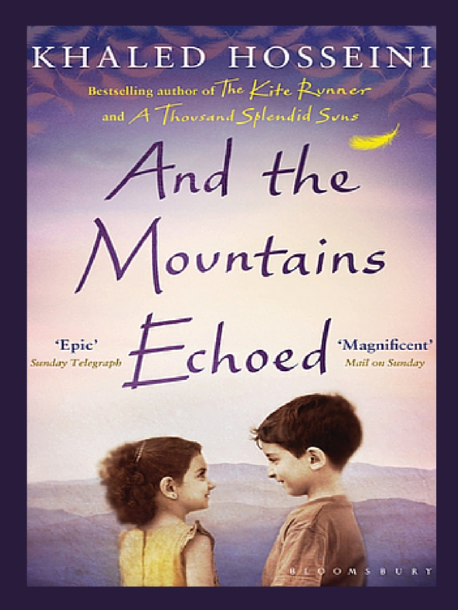
Khaled Hosseini’s book, And the Mountains Echoed, opens with this poem by Jelaluddin Rumi. When I finish reading, I think I know what informed his choice. But what do we really know about each other?

Two sisters, Masooma and Parwana, are sitting on a branch high up an oak tree, their feet dangling. Parwana has always lived in the shadow of Masooma’s exceptional beauty. Life is like that, we are not gifted equally. Beauty is an enormous, unmerited gift given randomly, stupidly1. Parwana is in love with a boy who is in love with Masooma. Life is like that, the heart often wants what it cannot have. Love isn’t always requited in the measure it is given.

When Parwana discovers that, the boy she secretly loves plans to marry Masooma, she shakes the branch and Masooma slips off it. In those seconds of clarity we all have after we set an impulsive destructive course in motion, Parwana tries to save Masooma. Too late. Masooma loses the use of her legs and becomes an invalid. Parwana’s penance is to care dutifully for her sister in rural Afghanistan in the forties. It is gruelling work. Her devotion is one long unspoken apology.

Betrayals play out in different forms in the book. There are tsunamis of cause and effect sweeping through generations. Hosseini, in my view, shows us what is in the human heart. He shows us that . . . human behaviour is messy and unpredictable and unconcerned with convenient symmetries2. I find myself suspending judgment each time. When I read these words, something clicks.

I have lived a long time, . . . and one thing I have come to see is that one is well served by a degree of both humility and charity when judging the inner workings of another person’s heart3.

In each scenario, I ask myself what I would have done. Without the pressure of the moment and with the benefit of hindsight, I weigh my options and choose noble actions. This game I play, read and reflect; it is easy. My life has not been a journey of reasonable actions. I understand every character’s dilemma. I understand their choices even when I don’t approve of them.

Eventually Masooma decides to give Parwana a gift, freedom. She decides to die in the desolate endless expanse of sand and mountains, abandoned on the ground under the darkened sky, cold, and drugged out on a potent mixture from the hookah, with Parwana’s help.

I ponder the nature of Masooma’s gift—freedom, at what cost to Parwana’s conscience? Although she presents it as self-sacrifice, I wonder if it is not self-serving. But such is Parwana’s devotion that she leads Masooma to her death. Of course, the man who Parwana loves, who was in love with Masooma, (but married someone else), is now looking for a wife, having been recently widowed. Can unspoken wishes twist the hand of fate or are we master chess players?

After Parwana reluctantly leaves Masooma to die, trudging back home, she hears something, maybe the wind calling, “Don’t leave me, sister. Come back.”

I tell myself I would go back. Parwana does not. She reasons that nobody will know, just as no one knew about the branch of the oak tree. She has lived with secrets all her life.

For nearly 500 pages, Hosseini shows us the subtexts of our hearts, the subplots that drive our actions, like an onion, he peels layer after layer exposing, in my opinion, our capacity for self-deception. Even with a moral compass, anyone can make black white. The characters are achingly familiar to me.

And the Mountains Echoed, is not about Parwana and Masooma alone. If I have made it seem so, I have done a disservice to Hosseini’s masterful story telling. It is about Saboor, Abdullah, Pari, Nabi, Suleiman, Nila, Idris, Timur, Roshi, Markos, Thalia, and many others, including you and me, a collage of stories linked by strong and weak threads. They have had their time. We have ours now. When the mountains echo, I hope we heed its silent meaning.

Out beyond ideas
of wrongdoing and rightdoing,
there is a field.
I’ll meet you there.

Does such a place even exist?


©Timi Yeseibo 2015


  1. Hosseini, Khaled, And The Mountains Echoed, (London: Bloomsbury, 2013), 378.
  2. Ibid., 378.
  3. Ibid., 124.


Unauthorized use and/or duplication of this material without express and written permission from this blog’s author and/or owner is strictly prohibited. Excerpts and links may be used, provided that full and clear credit is given to Timi Yeseibo and livelytwist.wordpress.com with appropriate and specific direction to the original content.


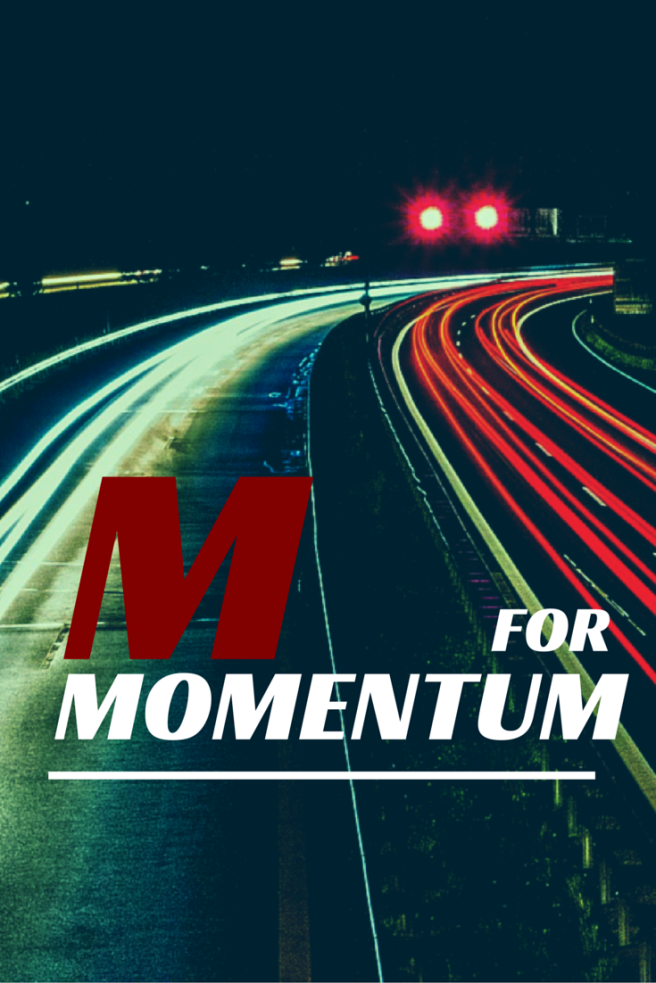
Happy New Momentum

Momentum

Momentum:

  • the strength or force that allows something to continue or to grow stronger or faster as time passes
  • The impetus gained by a moving object
  • The impetus and driving force gained by the development of a process or course of events


1.

About 300 metres to the junction, the traffic light changes to green so I do not need to stop. I cruise past the cars queued on the right lane, which are rousing from varied states of slumber. I do not remove my foot from the gas pedal on my way home, save once. My confidence grows at each succeeding intersection; red does not faze me. It is that kind of day; every light turns green as if anticipating my approach. “It’s a sign,” I say to myself, “So this is what momentum looks like?”


2.

Traffic on Tuesday is unexpected. That cars on the slow lane crawl faster than cars on the speed lane bemuses me. I am undecided as to where I should be. I fix my lipstick and smack my lips using my sun visor mirror. The man in the car on my right smiles at me. I smile back and ease my Toyota in front of his Nissan. Life can be as easy as changing lanes. At every crossroad in my life, someone on the ‘fast’ lane has allowed me cut in ahead of him. Riding on their momentum, I arrived at my destination faster than I otherwise would have. Later, I look at the rear-view mirror and my eyes collide with a strange pair. It is as if the man who made room for me was never there.


3.

When I receive a notification from WordPress that my stats are booming, I am surprised. On Saturday, even I rarely visit my blog because it is a distraction from the business of writing. Facebook is the culprit sending viewers my way. It happened that an acquaintance stumbled on a story on my blog and shared it with her friend who is a person of influence. He enjoyed the story and shared the link on his Timeline. Then his crowd came to see. In The Tipping Point, Malcolm Gladwell writes that we are actually powerfully influenced by our surroundings, our immediate context, and the personalities of those around us1. We rely on them [connectors] to give us access to opportunities and worlds to which we don’t belong2. Your friends, after all, occupy the same world that you do3. The number of views rise like the tide over the course of the evening. I reflect that the only thing I did was agonize over every single word of a short story for five nights before publishing it on a Sunday, weeks ago.


4.

In the mythology of various cultures, man supplicates assistance from deities who guarantee success or reverse fortunes, from Zeus to Thor to Sango. If one subscribes to the Biblical narrative, one encounters a prophet, Elijah, running behind a king riding on a chariot. The king should arrive long before Elijah does for man is no match for horses. However, Elijah receives a boost in momentum from his God. He runs faster than the king’s chariot, a sight that may have made it to YouTube and gone viral, if it were today. Technological advances make reliance on deity a primitive concept for some. Man and the machines he has made have created momentum that carries him beyond the moon and back. But what is momentum for you? Wherever you anchor your belief, I wish you what I wish myself: that you consolidate the gains from the previous year and ride a new wave. Happy new momentum.


©Timi Yeseibo 2014


  1. Gladwell, Malcom, The Tipping Point, How Little Things Can Make A Big Difference, (London: Abacus/Time Warner Books, 2001), 259.
  2. Ibid., 54.
  3. Ibid., 54.


Photo credit: Acatana/ http://pixabay.com/en/highway-night-traffic-spotlight-409126/


Unauthorized use and/or duplication of this material without express and written permission from this blog’s author and/or owner is strictly prohibited. Excerpts and links may be used, provided that full and clear credit is given to Timi Yeseibo and livelytwist.wordpress.com with appropriate and specific direction to the original content.
 

Collaboration: You and Me

collaboration

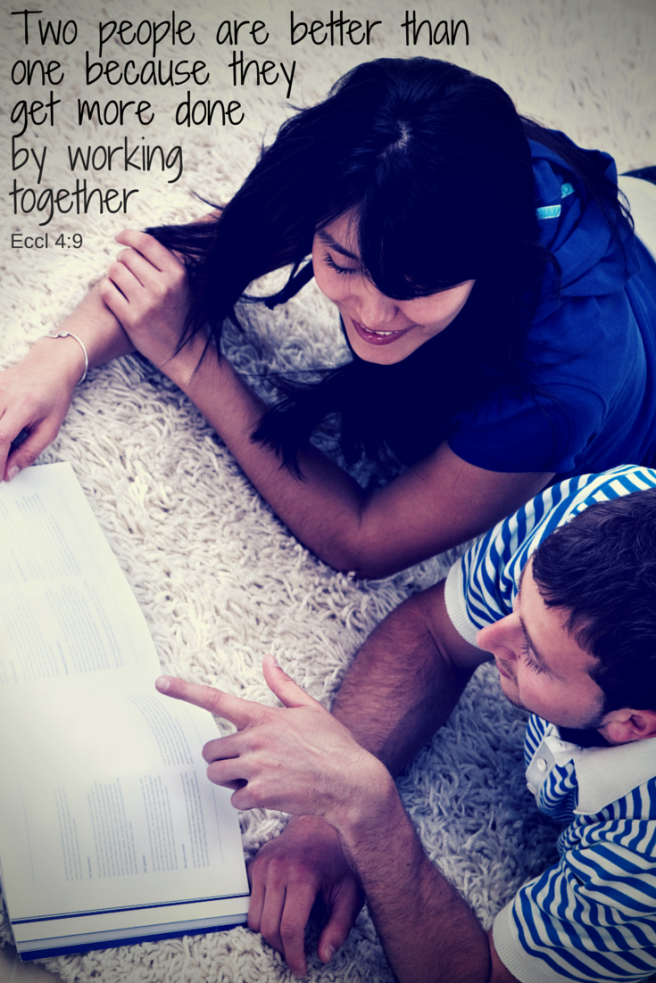
Collaboration. Holistic Wayfarer showed me how it’s done by inviting me to write a blog post alongside her and Nida S., another writer. An African proverb says if you want to go quickly, go alone, if you want to go far, go together. I went farther this year, because you journeyed with me.

I overcame fear of rejection and what-ifs to approach you, virtual stranger, virtual friend. I told you that I admire your writing and I would be honoured if you shared your perspective on a series I’m doing. And when that didn’t work, I pursued you—busy you, you that hadn’t written in a while, you that was between jobs, cities, homes. Determined not to say your no for you, I ‘harassed’ you until you said, “Yes, Timi!”

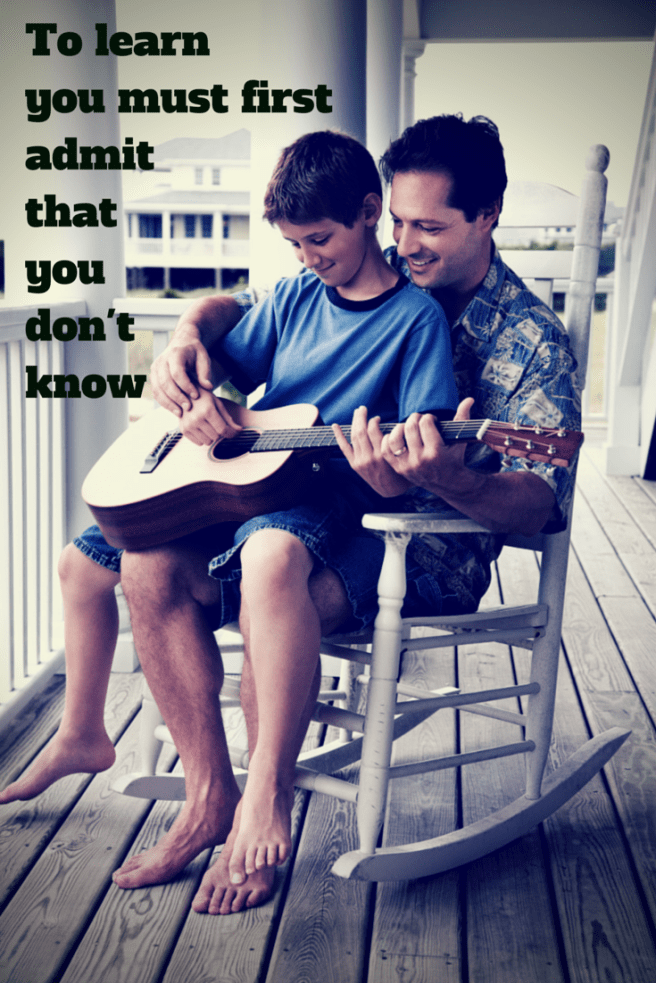
From each writer, I collected kernels of truth, after you wooed and wowed me with your words. Someone noted that humility is the common thread that runs through the Learning Series. Indeed, to learn, you must first admit that you don’t know.

The Learning Series was not the only collaboration I did this year. We wrote about age, the love languages of Nigerians, and love for country. The writers took my ideas and ran as far as Australia, danced above and below the Equator, and soared to Canada; yes farther than I could go. The result? A clash of hues softened by the spaces where we glimpsed your heart.

I opine that to write an effective personal piece, vulnerability must become like meat and potatoes. The writers delivered that quality, the ability to be open and yet closed, to be known and yet not known, to lie next to someone and yet not touch. Perhaps I reread your pieces and the comments that followed, to decipher your face in the dark that I might recognize you by light. These collaborations were shared over 150 times on social media, the power of your network not mine. You took me further.

In putting your stories and mine together, my joy at editing surpassed my joy at writing. I questioned if my writing was not merely a platform to pull other writers together to present the world with an anthology, all the stories of humanity in one place. I played with this notion until I met a ‘secret’ reader at an event. The usual pleasantries segued to the question of what I do.

“What do you blog about?”

I sized him up. Nigerian. Early thirties. “Let me show you.” I navigated to, Running in the Airport. “See,” I said, letting him read from my phone, “This kind of stuff.”

“Oh, I’ve read that before, hilarious! Someone sent it to me. So you’re the one who wrote that, he asked, looking at me. “You look . . .”

“Different,” I offered, aware that the photo on my blog was taken about three years ago.

“More beautiful in person.”

The charmer. If I were doing a sweepstake on my blog, I would skew the results so he would win.

“And you sound so . . .  so . . .”

“Ordinary?” I offered again.

“Yes,” he replied, shaking his head. “After reading all that big grammar you write . . .”

Right there, his laughter clambering over mine, I began to write a blog post in my head.

Our laughter reminded me that my collaboration with readers either through the comments or in real life has also taken me further than I dreamed possible. Writing gives me visibility. It is wonderful to meet and know people beyond the page.

Happiness is transient for me, until I celebrate every phase of my journey. It is true what they say; the grass is greener on the side where it is watered. In 2014, my blog was a beautiful place to be because of you.


If I have seen further it is by standing on the shoulders of giants.
 Isaac Newton


©Timi Yeseibo 2014

Unauthorized use and/or duplication of this material without express and written permission from this blog’s author and/or owner is strictly prohibited. Excerpts and links may be used, provided that full and clear credit is given to Timi Yeseibo and livelytwist.wordpress.com with appropriate and specific direction to the original content.


Did We Do Any Learning? [5]

learning & living

The human story does not always unfold like a mathematical calculation on the principle that two and two make four. Sometimes in life they make five or minus three; and sometimes the blackboard topples down in the middle of the sum and leaves the class in disorder and the pedagogue with a black eye.  
– Winston Churchill –


I Tried to be a Writer

2014 is the year I tried to be a writer and most of the things that happened to me—both good and bad—are centred on this.

Failure or rejection can teach lessons that take a lifetime of success to imbibe. When I was younger, my Dad often said, “Iya o je o, o wipe o gbon; tani tisa re?” (You claim to possess wisdom without enrolling in the school of suffering. Who is your teacher?).  I scoffed at the statement’s cynicism, but now I know better.

So, the correct answer to “How are you?” is not “fine”. It is a long rambling confession to the people we love and trust, opening our hearts and hoping they’ll listen, even if they don’t have answers. There is strength in vulnerability and weakness in machismo. I became versed in the manual on being broke and having to depend on people, not only for money, but also for encouragement and advice.

2014 is the year I left safe behind. I look at the wonderful people I met and the little I’ve achieved. It would have been impossible if I had not tried to be a writer.

Ifemmanuel @ IfeOluwa’s Rambles


Wandering Purposefully

I have created an oxymoron: to wander purposefully. In many intervals of my life, I have often felt lost and out of place like a chicken in a lion’s pride. This year however, I made a non-committal resolution (not a fan of New Year resolutions), to take charge of my life. I thought changing academic paths would bring me peace, but life is a pot of burnt beans.

Compounding my default setting of feeling lost was the feeling that I was losing myself. I started to experience small bouts of anger and bitterness that seldom translated to fisting the wall of my bathroom and ranting expletives in my thoughts. I did however have some great winning moments this year. In those winning moments, I learnt that many people are wandering too, behind a desk job, a pulpit, a graduation gown, etc, and that it was okay to wander.

For the first time in a while, I feel as though I am on the, or perhaps, a right track. Maybe I am not lost after all; maybe I am just wandering, wandering purposefully. This is what I have learnt this year, that I can wander without losing stride or sight.

Not all those who wander are lost. –  J.R.R Tolkien

Tomi Olugbemi @ I Write to Escape


Savouring Memories

If I had to distil my year into one sentence, it would be that seminal Dickens’ opening in A Tale of Two Cities, “It was the best of times, it was the worst of times, it was the age of wisdom, it was the age of foolishness.”

Of my ups and downs, losing H was the lowest of the lows. Looking back, the surprise was not that it happened but that it happened so fast, once the downturn kicked in and things began to unravel. The one lingering regret from that summer of grief remains the tenseness that characterised the final few months.

Being alike meant we were always a few sharp words away from spontaneous combustion, something we managed to avoid for the greater part. The pressure began to tell when she began to sense that the sand in her hourglass was running out, and fast. We had our biggest flare up in a long time.

We made up eventually, thankfully—that would have been far too great a burden to carry for the rest of my life—but the thought that we could have made more memories to savour, is one I haven’t quite shaken off.

Life’s lessons are neither bleeding obvious nor palatable. All we possess for sure are the moments that we share with our friends and loved ones. The challenge is to enjoy and maximise the moments, not putting off the kind word, the lingering touch, or the act of kindness we know they deserve.

AJ @ A Geek’s Life


Unauthorized use and/or duplication of this material without express and written permission from this blog’s author and/or owner is strictly prohibited. Excerpts and links may be used, provided that full and clear credit is given to Timi Yeseibo and livelytwist.wordpress.com with appropriate and specific direction to the original content.
 

Did We Do Any Learning? [3]

learning

9 Things I’ve Re-Learned This Year

Life lessons aren’t mastered in a single bold stroke.  We learn, we practice, we forget, we remember, we re-learn. Here are a few key notes I re-learned this year:

  1. Like a bottomless well, Ego’s desire for applause, accolades, approval, acknowledgement, acclaim, awards, and recognition is never satiated.
  2. When we stroke Ego, it purrs. When we stop, it snarls.
  3. It’s silly to buy another pair of shoes because we want an Ego boost from others when they see us rocking our new ruby slippers.
  4. People want us to do what they want us to do when they want us to do it. They are affronted when we don’t.
  5. When people ask us to “be honest” . . . they don’t always mean it.
  6. In many ways, we are at the mercy of the tides. Life ebbs and flows.  Joy comes and goes.  Sorrow is hard to avoid.
  7. Even if we’re not convinced that “everything happens for a reason,” taking time to look for “silver linings” helps us deal with passing clouds.
  8. When we aren’t wedded to a set destination, we enjoy the journey (and its inevitable detours), more.
  9. If we are enjoying the journey, we win. No matter where the wind blows us.

Aah . . . that’s better!

Nrhatch @ Spirit Lights The Way 


Diversity and the Art of Writing

Writing has reassured me that the things we feel deeply as individuals are universal—love, rejection, angst, joy, belonging; that it’s okay to admit your vulnerabilities. It might feel scary, but it also makes you authentic. Your foibles, shame, and guilt might be someone else’s quiet truth.

People read novels autobiographically, through the lens of their life’s narrative, and their values and opinions. My heroine might be a role-model for one reader, but another reader might want to slap her. I have little control over how readers see my characters as an author, and this came as a big surprise. Most readers love my male lead, but one reader thought him a tosser (although she did reassure me she’d shag him in a heartbeat, oh dear!). Now I realise I can’t write my characters to keep everyone happy, it’s not possible. That’s okay, life isn’t a popularity contest. Besides, my characters largely write themselves.

Writing has taught me that diversity isn’t some little politically correct box to tick. Diversity abounds, it is the norm. The trick is to be open to differences and to hold back from rushing in to judge.  I attempt this by thinking my characters’ thoughts, walking in their shoes, and imagining their predicaments. Besides, wouldn’t it be boring if we were all the same?

Susan @ Susan Lattwein

Susan’s novel, Arafura – Unfinished Business, is a gritty romance with a bit of sex, dynamite, and hilarity – not always at the same time.


Real Men Carry Purses

Statements of fantasy can be metaphors for real life—you can live backwards and you can still learn at age 403! I once read that even if your body never aged, you’re statistically likely to die from an accident before you hit 600. See, you just learned something! I told you it was possible.

I have previously claimed on this blog that I am 403 years old, but I am far closer to 43. Although I exaggerated my age for humorous effect, one can learn after 40. And, while we can’t literally live backwards, we can become more open and tolerant, which is the opposite of what usually happens when people get older.

So I learned two things this year, both related: to respect women on a higher plane and to break free from my personal gender stereotypes. While I’ve long thought of myself as a feminist ally and viewed women as equals, that didn’t stop my subtle objectification. I was never the creepy dude, but I wasn’t the ally I thought I was, either. The journey toward being a better person is a welcome one.

With encouragement from the women in my life, I finally bought something this year I’ve wanted for ages, a purse. Why can’t a guy have a purse? It elevates the quality of life. I needed to build up my “bravery” first, which shows you how badass women are. They carry purses all the time.

Eric @ ericjohnbaker


Unauthorized use and/or duplication of this material without express and written permission from this blog’s author and/or owner is strictly prohibited. Excerpts and links may be used, provided that full and clear credit is given to Timi Yeseibo and livelytwist.wordpress.com with appropriate and specific direction to the original content.
Let’s Just Agree to Disagree

And there it was again at the end of a well-written piece by an African-American about how his trip to Africa changed his worldview; the insults and tacky comments. I did not agree with what in my opinion were romanticized notions of Africa, and I intended to say so. I scanned the piece for points of agreement to acknowledge, so I could begin commenting. However, the vitriol in the comment section from those who agreed and disagreed, whether with the post or the ensuing comments, put me off. It would not be easy to defend myself from people like sixpackpower and beautifulbetsy. Moreover, my gravatar is a photo of me my boss would recognize and my name is Timi Yeseibo.

Is anonymity on the web like mob action? Normal people abandoning good sense to loot, rape, devalue, to the beat of crazy songs sung by thousands high on hysteria like LSD? Does an IP-address unshackle responsibility from freedom?


dignity&anonymity

Beyond anonymity as gasoline for cyberthuggery, in a world of six billion people how can we all agree? Someone said, if only everyone were like me. I say no. Biko, do not populate the world with more people like me—do you know how boring I am? Our differences are not to be feared, but harnessed. You stretch my thinking and make me re-examine what I believe. In the end, we may find common ground, or you remain on the right and I on the left, all with respect. Can we just learn how to agree to disagree? Must web discussions on politics, sports, entertainment, religion, in other words, life, bring out the devil in us?

Sadly, some websites promote these kinds of verbal boxing matches and just as in ancient Rome, people troop in for a good fight, to watch gladiators at work. At its worst bystanders careen into the ring and die.

Our challenge is to find the compassion for others that we want them to have for us. That is emotional correctness. – Sally Kohn1

A few days ago, I read an engaging post advocating several candidates for political office in the 2015 Nigerian elections. To broaden my knowledge, I sought out opinions in the comment section. Two brilliant minds with opposing views held my attention. As the comment thread lengthened, their commentary lost substance and devolved into name calling as if their intellect had come to a full stop. When commenter one accused commenter two of shouting in capitals, commenter two defended himself by pointing out that his magnanimity was on behalf of the visually challenged.


turn off caps

I laughed until I belly-fulled, then navigated to a less popular political website, where comments are permanently closed, as if to say, “Read, finish, carry your trouble and go!”


comment moderation

Hieroglyphic symbols may have sufficed eons ago, but since the web is predominantly text-based, our ability to decipher tone, mood, and body language is limited. Emoticons only go so far.

After trading points for a while, a friend and I deadlocked on the value of prayer. He said, “Let’s just agree to disagree.” I nodded although I thought a couple more points would push him to my side and a consensus. His hands, folded across his chest, told a different story.  If he had written, let’s agree to disagree, in the comment section and put a smiley at the end, would I have stopped?


Let's agree to disagree


Having a quick wit and a repertoire of words at my disposal meant as my mother used to say, before you talk one, Timi has talked three, oya, go and study law, that is, winning arguments mattered more than winning hearts. Here’s something I’m learning that has lost me several arguments, but gained me friends or acquaintances and kept the discussion open longer: let the other person save face. Argue passionately for what you believe to be right—strip your “opponent” of logic, but leave his dignity intact. The converse is true, save your own face, don’t comment, even when you are right—walk away with dignity.

Despite our best efforts, we may be misunderstood because people read and process through filters. It helps to first suspend judgement and then seek to understand.

Finally, if you must insult me, if my post or comment inspires your disdain then confound me with your intelligence, charm me with savoir faire. At least do it with style.


@frankdefreak


©Timi Yeseibo 2014


1. “Sally Kohn: Let’s try emotional correctness” YouTube video, 4:25, posted by “TedTalks,” on Dec 4, 2013. https://www.youtube.com/watch?v=NCJTV5KaJJc


Photo credit: © Francis Otuogbai on Twitter: @frankdfreak (used with permission)

Unauthorized use and/or duplication of this material without express and written permission from this blog’s author and/or owner is strictly prohibited. Excerpts and links may be used, provided that full and clear credit is given to Timi Yeseibo and livelytwist.wordpress.com with appropriate and specific direction to the original content.


Wat De Brouhaha?

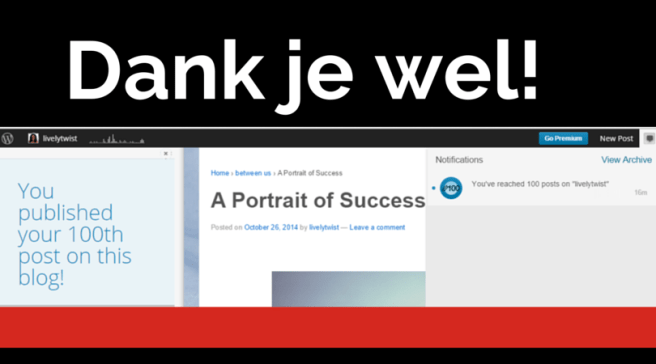
100th post


After I finished writing, A Portrait of Success, I opted for the WordPress proofreader to scan my post before publishing. It underlined brouhaha in blue because it is a cliché. I didn’t know that, maybe I should have. How else would I have known about such a word if not from reading it a thousand times on the web? Brouhaha, even saying it sounds like a joke.

Okay, because I’m a junior at Grammar Police, because I laugh and laugh and laugh at the (autocorrect) spelling mistakes of friends, a cliché cannot be found on my blog ever! A passive sentence yes, a cliché, nooo!

I ran to my trusty friend, Google, and typed, synonyms for brouhaha1, while trying not to laugh. Here’s what I found and my comments.

babel

So, the Tower of Babel still haunts us  . . .

coil

Reminds me of snakes and snakes don’t brouhaha.

commotion

I go to YouTube and listen to Madonna, I’ve got the moves baby, you’ve got the motion, if we got together we’ll be causing a commotion. After reliving my youth, I decide I’m too adult for this synonym. Next please!

conturbation

No way! Even if it’s the last synonym on earth. Tufiakwa! It sounds like – – – – – – – – – – – -.

flutteration

I see. I see butterflies in flutteration. Come on, get real! Even MS Word flags this one and gives me flirtation, floatation, and literation as options.

hubbub

Has an “amazing” 165 synonyms including bobbery, charivari, feery-fary, and shivaree. I think I can write a poem!

jumpiness

Reminds me of sokugo2 in Cyprian Ekwensi’s Burning Grass. Nah, nah, not a good match.

kerfuffle

I think they made this one up. Someone shuffled into the office and to meet the quota, the editor wrote kerfuffle!

moil

Means to work hard. Just had to share, who knows when you might need to moil to write a post. Of course it’s archaic, but some of you are in your mid-eighties!

nerviness

Laughing gas will do that to you!

ruckus

Could have used this, but isn’t it a cliché as well?

tumultuation

Sounds like something they say from the pulpit in church.

turbidity

Water swirling round and round and round and round and round and round and round and round. Are you dizzy yet?

twitter

I read that for every action, there’s an equal and opposite reaction, plus a social media overreaction. What the brouhaha! Figures doesn’t it?

zealousness

The reason Sunday after Sunday I’m still here. Um, I’ll save this one in my brain, thanks!


My 100th post, how time flies! I couldn’t have made it without you, and that is no joke. Thank you for flying with me.


Take lemons, make life & jump for joy!


timi


©Timi Yeseibo 2014


1. Synonyms courtesy of Thesaurasize: http://thesaurasize.com/brouhaha

2. Sokugo: a wandering disease that causes one to undertake a restless journey at its onset. Described by Cyprain Ekwensi in his book, Burning Bush.


Unauthorized use and/or duplication of this material without express and written permission from this blog’s author and/or owner is strictly prohibited. Excerpts and links may be used, provided that full and clear credit is given to Timi Yeseibo and livelytwist.wordpress.com with appropriate and specific direction to the original content.

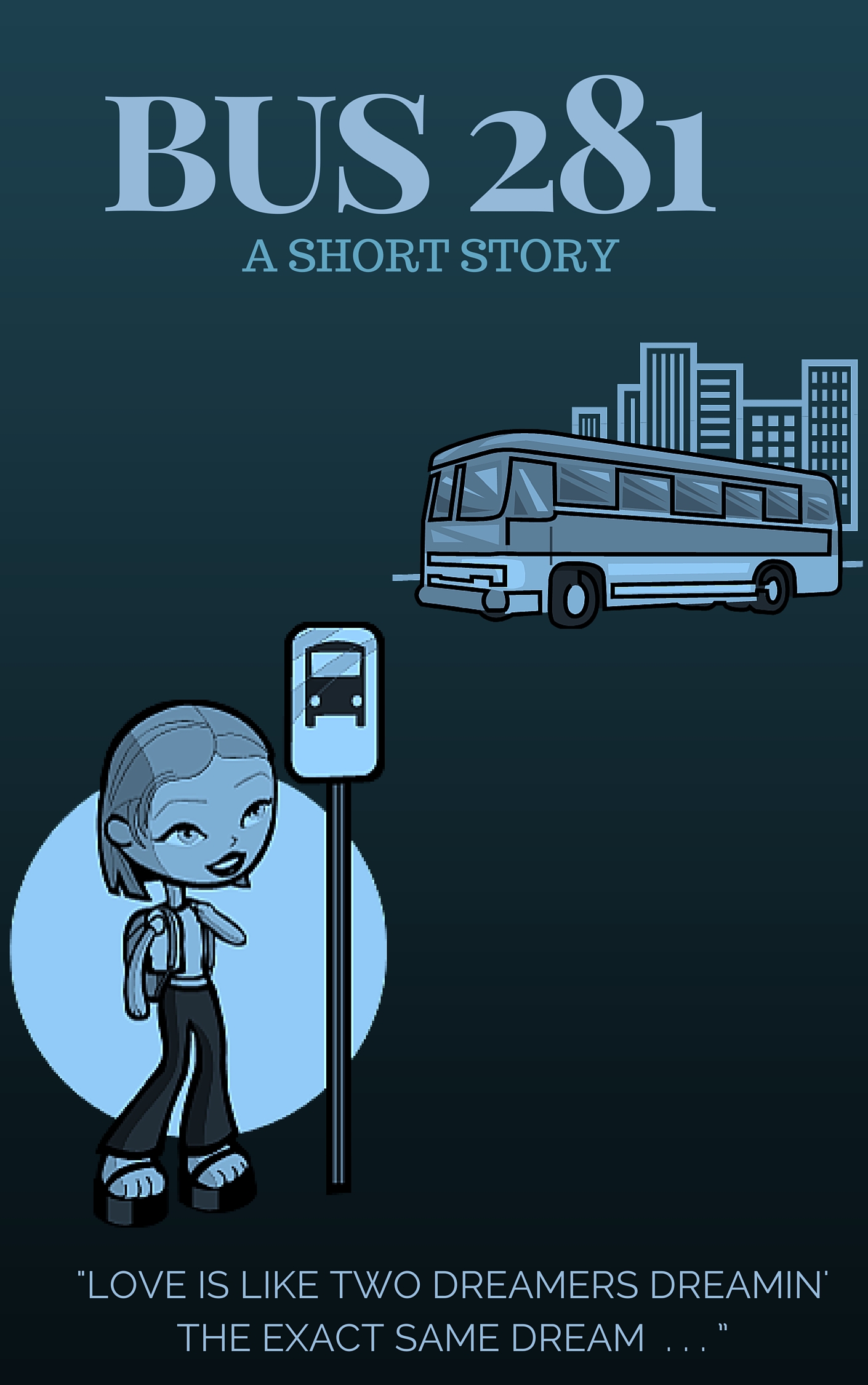
Bus 281

Bus 281

The bus driver did not look at me when I entered the bus. I spared him a glance as he sped away from the bus stop and grabbed a red pole to steady myself before I flopped into my seat.

“Sorry,” I apologized to the man on the window seat when I regained my balance and saw what my lipstick had done to his sleeve.

He shrugged and smiled.

Whenever we approached a bus stop, we lurched forward as the driver braked, and we fell backwards as he accelerated again. No one got on the bus.

At the intersection between Park and Jacob Street, a grey Toyota on the opposite lane anxious to beat the red light, navigated a left turn. But it was caught in the middle of the road, in the path of our angry bus. The bus driver brought the bus within scratching distance of the Toyota. The Toyota driver inched further left. The bus growled and heaved. I felt the faltering bravery of the Toyota driver. Chatter climbed a few decibels.

Vroom, vroom, vroom! The bus driver’s impatience bellowed from the engine.

“Go! Go! Go!” the passengers cheered and clapped, with necks extended.

The lights turned green, and the Toyota rolled into Jacob Street just as the bus charged forward. I fell back in my seat and began to breathe again.

Five hundred metres before my stop, I pressed the button. The buzz pierced the chatter and the display flashed, STOP, in the monitor overhead. Moments later, I stood and held a red pole to brace myself, but the driver rode past the bus stop.

The passenger sitting beside me called out, “Chauffeur!”

More passengers called, “Chauffeur!” and then chanted, “Chauffeur! Chauffeur! Chauffeur!” stamping their feet to match the two syllables in the word.

Eventually the driver swerved towards the kerb. Passengers rose and shambled to the door like zombies. The driver lowered the belly of the bus, and the door puffed before opening. Twilight had bowed to a moonless night, and we were in the middle of nowhere.

“The world is full of crazy people. Get out while you can,” called the driver.

My feet developed roots, and I watched all the passengers except the man I sat beside, file out of the bus. They wore pale blue tops and trousers. He nudged me, and we got off together.

The passengers in pale blue led the way. Their voices floated and filled the night. In the absence of buildings and street lamps, the tree branches were monsters looking on. Reprieve from the darkness came from a dim signpost where the passengers melted into the shadows. I read the sign, National Psychiatric Hospital, and we quickened our pace. His presence by my side, kept me from running. The next bus stop was still ahead.

The bus stop, a pole with a twisted metal sign, offered no protection from the night. I checked my phone. The battery was dead.

“Mine too,” he shrugged.

Darkness stretched time like fitted sheets that are too small. I stifled the urge to pee. The wind whistled through the leaves.

“Did you hear?”

“What?” I replied.

“I thought I heard my name,” he turned in a semi-circle.

“Me t . . . t . . .  too.”

We huddled closer. Then he started singing, “Love is like two dreamers dreamin the exact same dream . . .”

“Nightmoves, Michael Franks,” I mumbled.

“Marry me,” he whispered.

The leaves answered the wind, “Whooosh!” and fell to the ground.

But the wind whistled back in hot pursuit gathering leaves in its arms and spinning them round and round. Some leaves broke free and circled our feet. Something in the pit of my stomach churned.

The music begins and the titles fade in, starrin’ you and me. The hero is struggling to say that his lady is far away in her prison of wishes . . . ,” he continued singing.

Headlights appeared in the distance. I moved as far out to the edge of the road as I dared and waved.

“Marry me!” his voice was urgent.

The thing in my stomach grew. My chest rose and threatened to pop the buttons of my blouse. I darted to the middle of the road and waved my hands with all my might.

Two yellow eyes flashed twice, cutting through the darkness. The sound of the engine grew louder. I ran to the side just as the bus screeched to a stop, lowered her belly, and the doors swung open. I clambered in and willed the driver to read my eyes.

“Close the door!” I screamed.

“Aha, the world is full of crazy people, get in while you can,” he smiled and sped away.

I turned and watched the passenger singing and dancing as his pale blue form retreated into the darkness, then flopped into my seat. I closed my eyes and opened them when I started breathing through my nose again, grateful for street lamps. By now, the bus was ambling over the cobblestones of the deserted shopping district. I saw our reflection on the floor-to-ceiling windows and squinted to read the inscription on the side of the bus, Bus 281: Property of The National Psychiatric Hospital.

“Honey, just marry the idiot already. One of these days he’s gonna tire of the game and find someone else,” the bus driver caught my eye in the rearview mirror and winked.

I looked at his shirt, pale blue. I looked down at my blouse, pale blue. I fainted.


©Timi Yeseibo 2014

——–

Michael Franks, Nightmoves, from the album, The Art of Tea.

Image credit: illustrations from Microsoft


Unauthorized use and/or duplication of this material without express and written permission from this blog’s author and/or owner is strictly prohibited. Excerpts and links may be used, provided that full and clear credit is given to Timi Yeseibo and livelytwist.wordpress.com with appropriate and specific direction to the original content.

Picture Your Story

picture your story

Ever noticed how newspapers use photographs of public figures? If Obama scores a big one, we get smiling Obama, maybe with a fist pump. When the roof caves in, we get tight-lipped, greying, worry lines Obama. All underneath screaming headlines. If the paper has integrity, we are not disappointed with the text that follows, our minds having been conditioned for it. They say we see with our eyes and we see with our minds.

And yet after I left primary school, my books, whether novels or textbooks, were devoid of images except for academic (boring), charts, graphs, drawings, and photos illustrating the concept being taught, as if to say, now that you’ve mastered comprehension, you don’t need visual aids or we want you to concentrate, no mucking around!

The web changed everything. Of course, it had to since everyone became a (potential) content provider. The downside of information overload is digital ADD. Mixing text with pictures and videos means we might win the scramble for eight seconds of surfing attention. However, beyond this, I integrate photos with text because it breaks monotony and can say what words cannot, helping to build emotional connections. Moreover, we decipher meaning from images, adding to the reading experience.

A picture may be worth a thousand words, but it might not tell the whole story. Perhaps that’s why on the web, text continues to dominate information exchange and videos, which combine visuals and words, are on the rise.

Visual art and writing don’t exist on an aesthetic hierarchy that positions one above the other, because each is capable of things the other can’t do at all. Sometimes one picture is equal to 30 pages of discourse, just as there are things images are completely incapable of communicating. – William S. Burroughs –

After writing an article, I hunt for images that complement it. During my search, I encounter photos that have nothing to do with the text, which haunt me and inspire me to manufacture a story, like this one.

Boy by Greyerbaby

The right story hasn’t come along for this image yet, but I can’t wait any longer. Let’s find the story together. You don’t need to be a writer, just human. Tell what the photo evokes in you. There is no right or wrong, because we see the sun at different times. Day for me may be night for you. You can write your headline (title) in sentence caps and/or a few lines of the story. Indulge me, please? I’ll start.


The Boy Who Stole Tomorrow

Truth did not have consequences when we were young, so we exchanged it freely as though playing Ping-Pong. Some days you won. Other days I won. We did not keep score but maintained equilibrium until she came. Then, you made me lose more than I should have.

————–

P.s. Like seriously? Of course there’s no prize, I’m not Oprah! Alright then, just comment on how multimedia content enhances online interaction. See? Told ya! The story option is easier 😉


©Timi Yeseibo 2014


Photo credit: Photo credit: ©Lisa Runnels/www.pixabay.com (used with permission)

http://pixabay.com/en/boy-walking-teddy-bear-child-walk-447701/


Unauthorized use and/or duplication of this material without express and written permission from this blog’s author and/or owner is strictly prohibited. Excerpts and links may be used, provided that full and clear credit is given to Timi Yeseibo and livelytwist.wordpress.com with appropriate and specific direction to the original content.

Once Upon a Time

have a story to tell

We carry stories with us. As a child, my nanny told me that if I looked at the mirror at night, I would see ghosts. Then she shared ghost stories, which cemented fear in my heart. I would spend the next several years sleep walking into the bathroom at night with my right hand averting my face, my eyes, from ghosts floating on the mirror. The myth shattered at eighteen. But, every night since then, I pause at the mirror before I sleep. Stories can intervene in myriad ways.

Storytelling has been enjoying a public renaissance; it’s a buzzword that makes me smile. Consultants are teaching CEOs how to embed business data and technical information in a good story to keep audiences from yawning. Ha, I know what my next job should be!


abcs storytelling


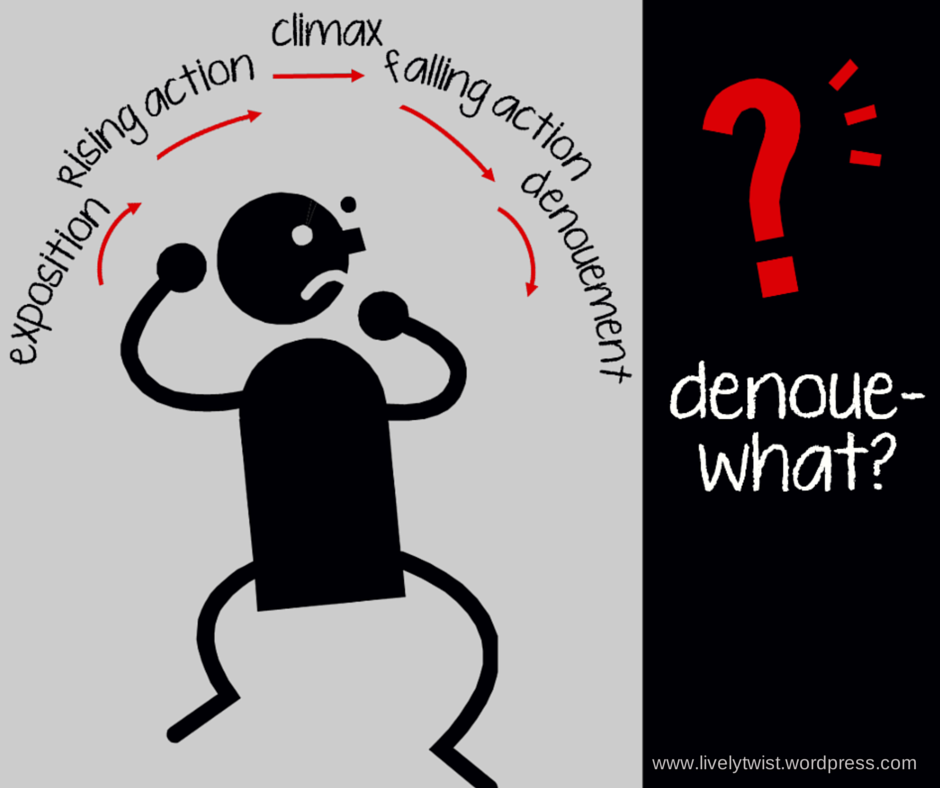
So what have we discovered about storytelling that my great great great great grandmother didn’t know? That when we read, listen to, or watch the right stories our brains light up with cortisol, which focuses our attention, and oxytocin, which causes us to care and connect. That the right stories follow Gustav Freytag’s analysis of dramatic structure, aka, the dramatic arc.1


dramatic arc


Speaking on UCF’s On the Issues, author Chris Abani said, “Everything we need to know about ourselves is already contained in literature. Most of us writers today, we’re sort of clever plagiarists. If you think about[sic] in many ways, all of the holy books from the Bhagavad Gita to the Bible, have covered all the stories that need to be told.”2 It would seem there are no new plots just deviations from the originals.

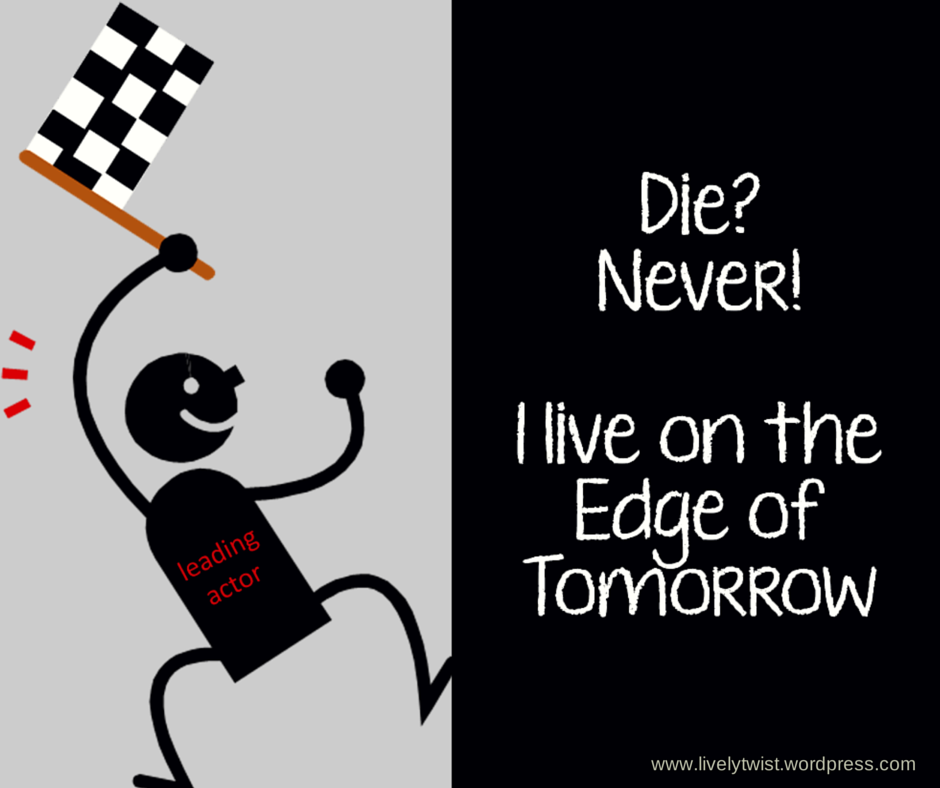
Why then, since we know the science and art of storytelling, do we lean forward in our seats, with one hand frozen in the popcorn carton and lips parted in an O, the shape left by the straw we abandoned? Why do our hearts race as if Tom Cruise has ever died in a movie? Because a story is an unwritten promise by the storyteller that he’ll take you there and make you care, in the end.


leading actor never dies


If story mirrors life and life mirrors story, then our lives play out this way as well, scene after scene, chapter by chapter: a beginning, which comprises exposition and rising action, a middle where conflicts peak, and an ending with falling action and dénouement. Each story that captivates us leaves us wondering and longing and hoping that the end will be good, so we can interpret the omens of our lives favourably.

History is a compilation yesterday’s stories. The best stories from the past make me desire transcendence since my life is a search for my own story. If I find it, my storytelling becomes the vehicle to transport you into my world so you can experiment with the possibility that your world can shift to accommodate mine. Someone said that the test of a great story is what people remember about you when you stop talking. If you want me to learn something quickly, wrap it in a story.

——–

P.s. What do you remember? No, don’t reread, for crying aloud, this is not an exam just an experiment without compensation! Please comment on what you remember. Or never mind . . .


©Timi Yeseibo 2014


  1. Zak, Paul J. How Stories Change the Brain. The Greater Good Science Center at the University of California, Berkeley. http://greatergood.berkeley.edu/article/item/how_stories_change_brain, (accessed October 5, 2014).


  1. “On The Issue – Author Chris Abani,” YouTube video, 6:05, posted by “UCF,” January 27, 2009. http://www.youtube.com/watch?v=9Eg4XmK4k6A


Unauthorized use and/or duplication of this material without express and written permission from this blog’s author and/or owner is strictly prohibited. Excerpts and links may be used, provided that full and clear credit is given to Timi Yeseibo and livelytwist.wordpress.com with appropriate and specific direction to the original content.

What Should I Write About?

EB WHITE QUOTE

This question never leaves me. Suspended in my subconscious, I answer it every moment, every day. The events of my life and yours, past, present, and a future I envision, are being stored somewhere in my brain cells. To write, I start with a title, which provides direction. Developing the story resembles opening a wardrobe and sifting through clothes, pulling one and then another from the rack, admiring, discarding, until you find the perfect outfit for the occasion. Most times, my wardrobe is full, so full that choice is the problem.

Another problem arises from the opinion of others. How many times have you asked someone, what do you think I should wear, and they picked an outfit that was just so not you? Or asked the question that makes the people we love dance around the truth—how do I look?

But, input from external sources also comes without me soliciting for it.

“I definitely think you should write about it,” Toyin said quietly.

“Mmhmmm.”

“This is an issue that touches the heart of the nation. Can you just imagine . . .”

She was right. Newspapers and social media channels brimmed with the controversy over section 29 of the Nigerian Constitution and legitimising child marriage. I had skimmed a few articles but had neither researched the issue nor signed the child-not-bride petition. Like her, I was upset, unlike her, I had not yet reached boiling point. A couple more friends called. I felt the steam from their whistling kettles, so I caved in. Between midnight and 2 a.m., I wrote an opinion piece centred on an imaginary conversation with my daughter in 2025. It had many holes that I could not fill.

That Friday, I stumbled on an elegant piece written by a lawyer. Wading through the tide of emotion, he separated fact from fiction and proposed platforms to channel the wave of mass hysteria. Hearsay and conspiracy theories belong in fiction novels, and so, I was relieved that Sunday was still faraway. I would have sent my article to the recycle bin, but for a few sentences I felt I could use in a future post.

I have not let people convince me to use my “voice” to “talk” for them since then. Although I read political articles, I rarely write about politics because I don’t have the resources to carry out investigative journalism that would result in balanced pieces.

When a man is in doubt about this or that in his writing, it will often guide him if he asks himself how it will tell a hundred years hence.                              – Samuel Butler –

My blog gives me freedom to wear anything I like from my wardrobe. Four criteria guide my choice, inform, entertain, inspire, and provoke thought. Oh, and try to keep it short!

Someone accused me of misleading readers since the tag line of my blog, because life happens to all of us and sometimes we get a second chance, isn’t reflected in the posts I publish. Perhaps he is right, and only I see the redemptive theme woven in my stories or maybe, you see what you want to see depending on the strength of your lenses.

So, what should I write about? Anything that catches my fancy, which I think will add value to you. Including this piece, which on the surface isn’t about redemption, but if you reflect on it, a large chunk focuses on wrestling my voice from peer pressure and speaking a language I understand. Second chances? Maybe, maybe not.

Every creator painfully experiences the chasm between his inner vision and its ultimate expression. The chasm is never completely bridged. We all have the conviction, perhaps illusory, that we have much more to say than appears on the paper.  – Isaac Bashevis Singer –


©Timi Yeseibo 2014


Unauthorized use and/or duplication of this material without express and written permission from this blog’s author and/or owner is strictly prohibited. Excerpts and links may be used, provided that full and clear credit is given to Timi Yeseibo and livelytwist.wordpress.com with appropriate and specific direction to the original content.