The Promise of Spring

acting

The wind brushes my hair into a side part and I curl my fingers around my thumb. My hands dig deep in my pockets, pulling the fabric down, as far as they will go. My neck is warm, my feet are warm, the rest of me shivers. Every winter is the same; I ask myself, why am I still here.

A seven-minute walk separates the station from Chizanes. The harried strides of rush hour has given way to languid walks. I linger by the oldest statue in the city, the first mayor on a horse. Inscribed on the marble plaque is my answer: the promise of spring. The wind, kinder now, carries distant laughter past me. It is the sound of a man and woman in love. Even the stars twinkle in appreciation.

Inside Chizanes, after my eyes adjust to the dimmed lighting, he is easy to spot. He waves and rises to greet me, leaning forward. I hesitate then stretch my right hand to dissipate his confusion. He takes it.

“Thank you for meeting me. How are you?”

“Fine,” my falsetto is on, “how are you?”

“Good. Good to see you! You look good!”

“You too.”

We order drinks. I ask about his family. He asks about mine. We waste time on the menu, searching for our rhythm—this, no that; are you sure? I heard it’s good. What of the chef’s specialty? No, you decide.

He signals for the waiter.

He asks about my job. I tell him I left. He doesn’t pursue an explanation. We talk about the weather. I cannot believe that the passion we shared has fizzled to this: the temperature is expected to go below zero on Wednesday.

He clears his throat and begins. “The reason I left—”

“Fish?” The waiter looks at me, then at him. He places three more dishes on the table, naming them with flair. “Is everything okay?” He asks with a half nod.

We both nod.

“Enjoy your meal.”

We dish food on our plates. Raise bowls and pass them, careful not to touch. We eat like famished travellers.

“As I was saying I left because . . .”

He covers his eyes with his hands. I stop chewing.

“What can I say? I’m just a coward . . .”

“What?”

“I said, ‘I’m a coward.’ I . . . I—”

“Three years of my life and you tell me you’re a coward?”

“Sssh, sssh, lower your voice,” he whispers, reaching for my hand.

I snatch my hand and look around. More interested stares. Chizanes packs about thirty people in a circular arrangement. The walls are windows, which stretch and nearly kiss the high ceiling, an illusion of space. Our table is sandwiched in the centre.

“He left me three years ago,” my chair scrapes the ground protesting the sudden movement, “and now he says he’s a coward?” Standing, my voice booms and blankets all conversation. “Can you believe that?”

Quiet like the embarrassed silence after the president farts noisily.

I catch the man in a navy shirt before he averts his gaze like the others. “Sir, can you believe that? He’s a coward?” His girl whispers something to him and he examines his plate as if there’s gold in the soup.

“Ma’am, we’re gonna have to ask you to calm down and sit down.”

The man addressing me sounds important, like the manager.

“No, I won’t sit down with this coward!” I stand on my chair goaded by impulse.

“Ma’am . . .”

“Three years.” I try harder, “Three years people!”

“Ma’am we’re gonna have to ask you to leave.”

I get down slowly. Now they are watching. Cowards, all of them. Maybe someone is recording for YouTube.

“May I escort you? Sir . . .?”

“It’s okay, I’ll handle things from here,” my coward’s smile convinces the manager. He leaves us to organize our shame and repackage our dignity.

“Are you just going to let them walk me out?”

“Sssh, sssh. Let’s just go before they call security.”

Outside, he holds my bag while I don my gloves.

“Now that the world knows how you feel,” he gestures at the people watching from inside, “Have a nice life!”

He hands my bag over and walks away.

I run after him. “Don’t leave me!”

Out of view from Chizanes, he stops. “That used to be my line.” He lifts my chin and lets my tears wet his gloves. “Award-winning actress,” he whispers. “You were supposed to storm out. Wh . .  . what if—”

“Coward. You need to get a job, we can’t keep doing this.”

“In the spring when the quarries reopen, things will be better. This is great practice until we can afford acting classes. Wasn’t the food good though?”

Three years of doubts dissolve in laughter. The wind is harsher now, unforgiving, breaking tiny branches off stoic trees, sending twigs sailing across the sidewalk and freezing my tears. I nestle my head on his chest. Nothing is sure. Last year only a few quarries reopened. When his arms circle my waist, I close my eyes and count, December, January, February; three months until spring.

“Do you want dessert?”

“Do you have any money?”

“No, but I know another place where we can act . . .”


©Timi Yeseibo 2015


Author’s Note

The Promise of Spring is about anything you fancy. Me? I wanted to depict some challenges immigrants face in a country unlike the one they left.

The frequent references to the wind portrays how immigrants experience climate change and how the weather now becomes an important aspect of life in their adopted country. The story opens with a question immigrants may ask when disillusionment (winter represents foreign culture and systems as much as it does weather) sets in. Hope (spring) sees them through from year to year.

The author delves into the ingenious ways immigrants survive (some illegal), and plays with the idea that although immigrants are in plain sight they live on the fringes of society (in the restaurant, although she stands on the chair, she is ignored by other diners).

Acting is the ‘job’ of choice in the story because immigrants live at least two lives—a ‘glamourous’ one for friends and family in their native country, and a ‘grim’ one for their hosts.

The story ends with the suggestion that there is another place where they can act. This is a reference to the immigrants’ mindset about moving from region to region or country to country when perhaps immigration policies tighten or economic realities no longer favour them. Returning to their native country is not an option.

Why add love and romance? Because love is oxygen. And because I have done some foolish things for love. Haven’t you?

timi


Unauthorized use and/or duplication of this material without express and written permission from this blog’s author and/or owner is strictly prohibited. Excerpts and links may be used, provided that full and clear credit is given to Timi Yeseibo and livelytwist.wordpress.com with appropriate and specific direction to the original content.


Let’s Just Agree to Disagree

And there it was again at the end of a well-written piece by an African-American about how his trip to Africa changed his worldview; the insults and tacky comments. I did not agree with what in my opinion were romanticized notions of Africa, and I intended to say so. I scanned the piece for points of agreement to acknowledge, so I could begin commenting. However, the vitriol in the comment section from those who agreed and disagreed, whether with the post or the ensuing comments, put me off. It would not be easy to defend myself from people like sixpackpower and beautifulbetsy. Moreover, my gravatar is a photo of me my boss would recognize and my name is Timi Yeseibo.

Is anonymity on the web like mob action? Normal people abandoning good sense to loot, rape, devalue, to the beat of crazy songs sung by thousands high on hysteria like LSD? Does an IP-address unshackle responsibility from freedom?


dignity&anonymity

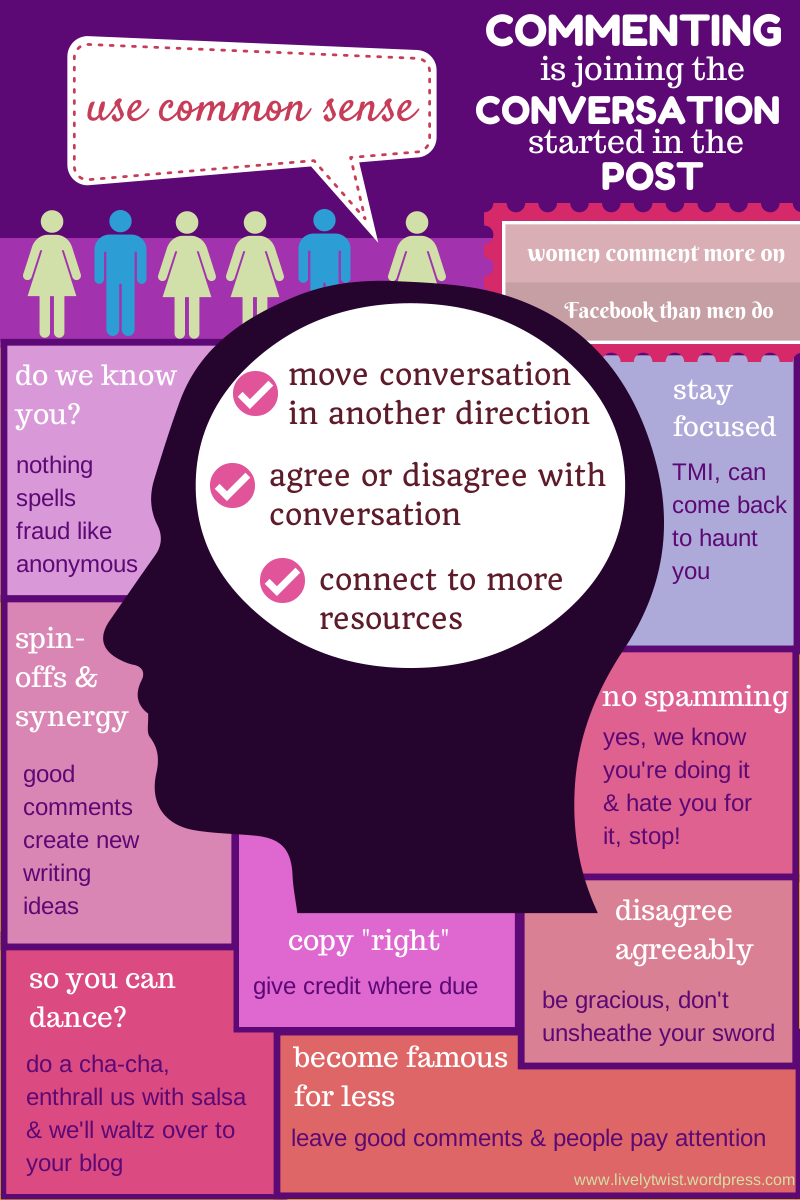
Beyond anonymity as gasoline for cyberthuggery, in a world of six billion people how can we all agree? Someone said, if only everyone were like me. I say no. Biko, do not populate the world with more people like me—do you know how boring I am? Our differences are not to be feared, but harnessed. You stretch my thinking and make me re-examine what I believe. In the end, we may find common ground, or you remain on the right and I on the left, all with respect. Can we just learn how to agree to disagree? Must web discussions on politics, sports, entertainment, religion, in other words, life, bring out the devil in us?

Sadly, some websites promote these kinds of verbal boxing matches and just as in ancient Rome, people troop in for a good fight, to watch gladiators at work. At its worst bystanders careen into the ring and die.

Our challenge is to find the compassion for others that we want them to have for us. That is emotional correctness. – Sally Kohn1

A few days ago, I read an engaging post advocating several candidates for political office in the 2015 Nigerian elections. To broaden my knowledge, I sought out opinions in the comment section. Two brilliant minds with opposing views held my attention. As the comment thread lengthened, their commentary lost substance and devolved into name calling as if their intellect had come to a full stop. When commenter one accused commenter two of shouting in capitals, commenter two defended himself by pointing out that his magnanimity was on behalf of the visually challenged.


turn off caps

I laughed until I belly-fulled, then navigated to a less popular political website, where comments are permanently closed, as if to say, “Read, finish, carry your trouble and go!”


comment moderation

Hieroglyphic symbols may have sufficed eons ago, but since the web is predominantly text-based, our ability to decipher tone, mood, and body language is limited. Emoticons only go so far.

After trading points for a while, a friend and I deadlocked on the value of prayer. He said, “Let’s just agree to disagree.” I nodded although I thought a couple more points would push him to my side and a consensus. His hands, folded across his chest, told a different story.  If he had written, let’s agree to disagree, in the comment section and put a smiley at the end, would I have stopped?


Let's agree to disagree


Having a quick wit and a repertoire of words at my disposal meant as my mother used to say, before you talk one, Timi has talked three, oya, go and study law, that is, winning arguments mattered more than winning hearts. Here’s something I’m learning that has lost me several arguments, but gained me friends or acquaintances and kept the discussion open longer: let the other person save face. Argue passionately for what you believe to be right—strip your “opponent” of logic, but leave his dignity intact. The converse is true, save your own face, don’t comment, even when you are right—walk away with dignity.

Despite our best efforts, we may be misunderstood because people read and process through filters. It helps to first suspend judgement and then seek to understand.

Finally, if you must insult me, if my post or comment inspires your disdain then confound me with your intelligence, charm me with savoir faire. At least do it with style.


@frankdefreak


©Timi Yeseibo 2014


1. “Sally Kohn: Let’s try emotional correctness” YouTube video, 4:25, posted by “TedTalks,” on Dec 4, 2013. https://www.youtube.com/watch?v=NCJTV5KaJJc


Photo credit: © Francis Otuogbai on Twitter: @frankdfreak (used with permission)

Unauthorized use and/or duplication of this material without express and written permission from this blog’s author and/or owner is strictly prohibited. Excerpts and links may be used, provided that full and clear credit is given to Timi Yeseibo and livelytwist.wordpress.com with appropriate and specific direction to the original content.


Hard pressed on every side

To understand Nigeria, you must appreciate how religion colours every aspect of our lives and infiltrates nearly every conversation. There is a god of Nigeria, he is the carrot and the stick, and the final bs, that’s bus stop, by the way.

“Like soap that glides through wet hands, we use religion to evade the grasp of accountability time after time. From Aso Rock to Ajegunle, religion is courted, invoked, and brandished as if it is a determinant of GDP and as if, according to Karl Marx, it is the opium of the people!”

Tolu Talabi aka Naijarookie, doesn’t get enough credit for making me laugh. I hope you’ll laugh as well, and if you’re like me, untangle the many levels of ‘spirituality’ unfolding in his tale. Enjoy!


Originally posted on Nigerian Newcomer

Most of the businesses in Nigeria have an office gofer. Someone who can run errands for the staff, pick up food, clean a spill, make a cup of tea. Usually this person has an official designation, they might be the security guard or the cleaner. But when they aren’t opening gates, they hang around and wait to be summoned.

The person who does this at my office is a girl called Esther who is always taking days off to write exams. She would say, “I won’t be around next week, I’m travelling to Ibadan to do WAEC.” Or “I have JAMB on Saturday, I have to attend lesson.” You’ll see her sitting in the corner reading Literature-in-English past questions, or squinting at an Accounting textbook. One day it was a Chemistry practicals textbook, I had to ask.

She laughed, “Haha, all these subjects? It’s not for me, I’m doing the exam for other people.”

View original 628 more words.


Related Posts on Lively Twist:

By God’s Grace

Your Enemies Shall Never Succeed

Mommie Dearest

Others:

The Business of Worship by Jide Odukoya: It is hard to reflect objectively on the proliferation of Churches in Nigeria. View original photo commentary with 192 more words.

Wat De Brouhaha?

100th post


After I finished writing, A Portrait of Success, I opted for the WordPress proofreader to scan my post before publishing. It underlined brouhaha in blue because it is a cliché. I didn’t know that, maybe I should have. How else would I have known about such a word if not from reading it a thousand times on the web? Brouhaha, even saying it sounds like a joke.

Okay, because I’m a junior at Grammar Police, because I laugh and laugh and laugh at the (autocorrect) spelling mistakes of friends, a cliché cannot be found on my blog ever! A passive sentence yes, a cliché, nooo!

I ran to my trusty friend, Google, and typed, synonyms for brouhaha1, while trying not to laugh. Here’s what I found and my comments.

babel

So, the Tower of Babel still haunts us  . . .

coil

Reminds me of snakes and snakes don’t brouhaha.

commotion

I go to YouTube and listen to Madonna, I’ve got the moves baby, you’ve got the motion, if we got together we’ll be causing a commotion. After reliving my youth, I decide I’m too adult for this synonym. Next please!

conturbation

No way! Even if it’s the last synonym on earth. Tufiakwa! It sounds like – – – – – – – – – – – -.

flutteration

I see. I see butterflies in flutteration. Come on, get real! Even MS Word flags this one and gives me flirtation, floatation, and literation as options.

hubbub

Has an “amazing” 165 synonyms including bobbery, charivari, feery-fary, and shivaree. I think I can write a poem!

jumpiness

Reminds me of sokugo2 in Cyprian Ekwensi’s Burning Grass. Nah, nah, not a good match.

kerfuffle

I think they made this one up. Someone shuffled into the office and to meet the quota, the editor wrote kerfuffle!

moil

Means to work hard. Just had to share, who knows when you might need to moil to write a post. Of course it’s archaic, but some of you are in your mid-eighties!

nerviness

Laughing gas will do that to you!

ruckus

Could have used this, but isn’t it a cliché as well?

tumultuation

Sounds like something they say from the pulpit in church.

turbidity

Water swirling round and round and round and round and round and round and round and round. Are you dizzy yet?

twitter

I read that for every action, there’s an equal and opposite reaction, plus a social media overreaction. What the brouhaha! Figures doesn’t it?

zealousness

The reason Sunday after Sunday I’m still here. Um, I’ll save this one in my brain, thanks!


My 100th post, how time flies! I couldn’t have made it without you, and that is no joke. Thank you for flying with me.


Take lemons, make life & jump for joy!


timi


©Timi Yeseibo 2014


1. Synonyms courtesy of Thesaurasize: http://thesaurasize.com/brouhaha

2. Sokugo: a wandering disease that causes one to undertake a restless journey at its onset. Described by Cyprain Ekwensi in his book, Burning Bush.


Unauthorized use and/or duplication of this material without express and written permission from this blog’s author and/or owner is strictly prohibited. Excerpts and links may be used, provided that full and clear credit is given to Timi Yeseibo and livelytwist.wordpress.com with appropriate and specific direction to the original content.

Bus 281

Bus 281

The bus driver did not look at me when I entered the bus. I spared him a glance as he sped away from the bus stop and grabbed a red pole to steady myself before I flopped into my seat.

“Sorry,” I apologized to the man on the window seat when I regained my balance and saw what my lipstick had done to his sleeve.

He shrugged and smiled.

Whenever we approached a bus stop, we lurched forward as the driver braked, and we fell backwards as he accelerated again. No one got on the bus.

At the intersection between Park and Jacob Street, a grey Toyota on the opposite lane anxious to beat the red light, navigated a left turn. But it was caught in the middle of the road, in the path of our angry bus. The bus driver brought the bus within scratching distance of the Toyota. The Toyota driver inched further left. The bus growled and heaved. I felt the faltering bravery of the Toyota driver. Chatter climbed a few decibels.

Vroom, vroom, vroom! The bus driver’s impatience bellowed from the engine.

“Go! Go! Go!” the passengers cheered and clapped, with necks extended.

The lights turned green, and the Toyota rolled into Jacob Street just as the bus charged forward. I fell back in my seat and began to breathe again.

Five hundred metres before my stop, I pressed the button. The buzz pierced the chatter and the display flashed, STOP, in the monitor overhead. Moments later, I stood and held a red pole to brace myself, but the driver rode past the bus stop.

The passenger sitting beside me called out, “Chauffeur!”

More passengers called, “Chauffeur!” and then chanted, “Chauffeur! Chauffeur! Chauffeur!” stamping their feet to match the two syllables in the word.

Eventually the driver swerved towards the kerb. Passengers rose and shambled to the door like zombies. The driver lowered the belly of the bus, and the door puffed before opening. Twilight had bowed to a moonless night, and we were in the middle of nowhere.

“The world is full of crazy people. Get out while you can,” called the driver.

My feet developed roots, and I watched all the passengers except the man I sat beside, file out of the bus. They wore pale blue tops and trousers. He nudged me, and we got off together.

The passengers in pale blue led the way. Their voices floated and filled the night. In the absence of buildings and street lamps, the tree branches were monsters looking on. Reprieve from the darkness came from a dim signpost where the passengers melted into the shadows. I read the sign, National Psychiatric Hospital, and we quickened our pace. His presence by my side, kept me from running. The next bus stop was still ahead.

The bus stop, a pole with a twisted metal sign, offered no protection from the night. I checked my phone. The battery was dead.

“Mine too,” he shrugged.

Darkness stretched time like fitted sheets that are too small. I stifled the urge to pee. The wind whistled through the leaves.

“Did you hear?”

“What?” I replied.

“I thought I heard my name,” he turned in a semi-circle.

“Me t . . . t . . .  too.”

We huddled closer. Then he started singing, “Love is like two dreamers dreamin the exact same dream . . .”

“Nightmoves, Michael Franks,” I mumbled.

“Marry me,” he whispered.

The leaves answered the wind, “Whooosh!” and fell to the ground.

But the wind whistled back in hot pursuit gathering leaves in its arms and spinning them round and round. Some leaves broke free and circled our feet. Something in the pit of my stomach churned.

The music begins and the titles fade in, starrin’ you and me. The hero is struggling to say that his lady is far away in her prison of wishes . . . ,” he continued singing.

Headlights appeared in the distance. I moved as far out to the edge of the road as I dared and waved.

“Marry me!” his voice was urgent.

The thing in my stomach grew. My chest rose and threatened to pop the buttons of my blouse. I darted to the middle of the road and waved my hands with all my might.

Two yellow eyes flashed twice, cutting through the darkness. The sound of the engine grew louder. I ran to the side just as the bus screeched to a stop, lowered her belly, and the doors swung open. I clambered in and willed the driver to read my eyes.

“Close the door!” I screamed.

“Aha, the world is full of crazy people, get in while you can,” he smiled and sped away.

I turned and watched the passenger singing and dancing as his pale blue form retreated into the darkness, then flopped into my seat. I closed my eyes and opened them when I started breathing through my nose again, grateful for street lamps. By now, the bus was ambling over the cobblestones of the deserted shopping district. I saw our reflection on the floor-to-ceiling windows and squinted to read the inscription on the side of the bus, Bus 281: Property of The National Psychiatric Hospital.

“Honey, just marry the idiot already. One of these days he’s gonna tire of the game and find someone else,” the bus driver caught my eye in the rearview mirror and winked.

I looked at his shirt, pale blue. I looked down at my blouse, pale blue. I fainted.


©Timi Yeseibo 2014

——–

Michael Franks, Nightmoves, from the album, The Art of Tea.

Image credit: illustrations from Microsoft


Unauthorized use and/or duplication of this material without express and written permission from this blog’s author and/or owner is strictly prohibited. Excerpts and links may be used, provided that full and clear credit is given to Timi Yeseibo and livelytwist.wordpress.com with appropriate and specific direction to the original content.

Once Upon a Time

have a story to tell

We carry stories with us. As a child, my nanny told me that if I looked at the mirror at night, I would see ghosts. Then she shared ghost stories, which cemented fear in my heart. I would spend the next several years sleep walking into the bathroom at night with my right hand averting my face, my eyes, from ghosts floating on the mirror. The myth shattered at eighteen. But, every night since then, I pause at the mirror before I sleep. Stories can intervene in myriad ways.

Storytelling has been enjoying a public renaissance; it’s a buzzword that makes me smile. Consultants are teaching CEOs how to embed business data and technical information in a good story to keep audiences from yawning. Ha, I know what my next job should be!


abcs storytelling


So what have we discovered about storytelling that my great great great great grandmother didn’t know? That when we read, listen to, or watch the right stories our brains light up with cortisol, which focuses our attention, and oxytocin, which causes us to care and connect. That the right stories follow Gustav Freytag’s analysis of dramatic structure, aka, the dramatic arc.1


dramatic arc


Speaking on UCF’s On the Issues, author Chris Abani said, “Everything we need to know about ourselves is already contained in literature. Most of us writers today, we’re sort of clever plagiarists. If you think about[sic] in many ways, all of the holy books from the Bhagavad Gita to the Bible, have covered all the stories that need to be told.”2 It would seem there are no new plots just deviations from the originals.

Why then, since we know the science and art of storytelling, do we lean forward in our seats, with one hand frozen in the popcorn carton and lips parted in an O, the shape left by the straw we abandoned? Why do our hearts race as if Tom Cruise has ever died in a movie? Because a story is an unwritten promise by the storyteller that he’ll take you there and make you care, in the end.


leading actor never dies


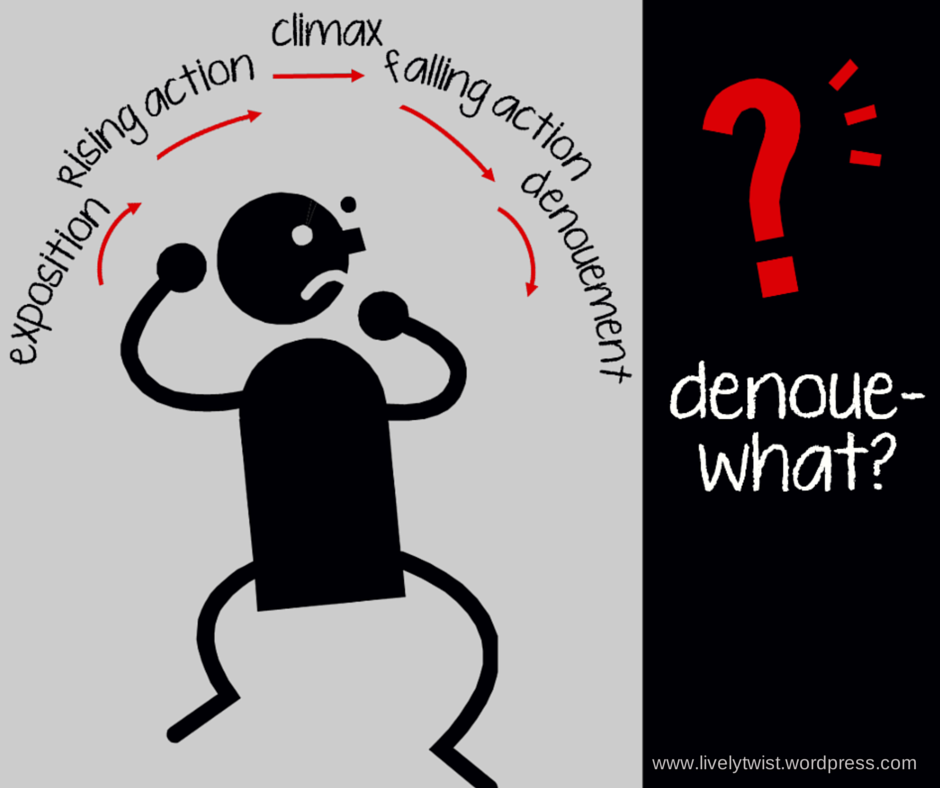
If story mirrors life and life mirrors story, then our lives play out this way as well, scene after scene, chapter by chapter: a beginning, which comprises exposition and rising action, a middle where conflicts peak, and an ending with falling action and dénouement. Each story that captivates us leaves us wondering and longing and hoping that the end will be good, so we can interpret the omens of our lives favourably.

History is a compilation yesterday’s stories. The best stories from the past make me desire transcendence since my life is a search for my own story. If I find it, my storytelling becomes the vehicle to transport you into my world so you can experiment with the possibility that your world can shift to accommodate mine. Someone said that the test of a great story is what people remember about you when you stop talking. If you want me to learn something quickly, wrap it in a story.

——–

P.s. What do you remember? No, don’t reread, for crying aloud, this is not an exam just an experiment without compensation! Please comment on what you remember. Or never mind . . .


©Timi Yeseibo 2014


  1. Zak, Paul J. How Stories Change the Brain. The Greater Good Science Center at the University of California, Berkeley. http://greatergood.berkeley.edu/article/item/how_stories_change_brain, (accessed October 5, 2014).


  1. “On The Issue – Author Chris Abani,” YouTube video, 6:05, posted by “UCF,” January 27, 2009. http://www.youtube.com/watch?v=9Eg4XmK4k6A


Unauthorized use and/or duplication of this material without express and written permission from this blog’s author and/or owner is strictly prohibited. Excerpts and links may be used, provided that full and clear credit is given to Timi Yeseibo and livelytwist.wordpress.com with appropriate and specific direction to the original content.

Love for Country and Other Drugs

Love 4 Country & Other Drugs

Because of Nigeria, I’ve been accused of false optimism, “How can you hope for change when we keep doing the same things?” I’ve also been accused of Elitist Patriotic Syndrome, a type of patriotism that conveniently lives abroad and so doesn’t wash its hands in the muddy river of change. But how do you bury love for country? Where are its roots that I may pluck it?

Looking ahead to Nigeria’s Independence Day, three writers and I wonder if hope can be reinvented.

Education is Training the Mind to Think

Desmond Tutu, in one of his stories said, “When the missionaries came to Africa they had the Bible and we had the land. They said, ‘Let us pray.’ We closed our eyes. When we opened them we had the Bible and they had the land.” I wonder why we prayed with both eyes closed. And who helped the white man steal the slaves that crouched in the belly of the whale on the way to the plantations in America? Tell me who? The white man has gone and Africans stagger, drunk from the rich red of millions that flowed in Rwanda, Sierra Leone, Liberia, and Nigeria.

I am glad the white man came to Nigeria and brought education with him1. One day, a friend visited a motherless baby’s home to inform the administrators that he was committed to educating two kids as far as they wanted to go. Starved of funds, they greeted the news with glee and asked him to pick the two kids. As he looked at the kids, his heart ached because choosing one meant rejecting another, but his pocket was simply not wide enough. The administrators chose for him, they chose their brightest two. Two plus two equals eight. Four plus four equals thirty-two.

I have dreamt of the past. Show me the future that I may live the present.

Education can teach us to read and write, appraise and solve, question and answer, and chew and spit. It is why I want to write prose with the eloquence of Chimamanda Adichie and the humanity of Chimeka Garricks, that another generation can read stories of hope and redemption, and pray with both eyes open.

The secret of freedom lies in educating people, whereas the secret of tyranny is in keeping them ignorant. – Maximilien Robespierre –

Timi Yeseibo @ Livelytwist

  1. “History rediscovered – Emeka Keazor at TEDxEuston” YouTube video, posted by “TEDx Talks,” on February 21, 2014. https://www.youtube.com/watch?v=ZN3hCjbA_dw 


Humans of Nigeria

It was Christmas Eve, and we expected the roads to be free. We drove past Iyana Ipaja roundabout and entered one of those traffic jams that force you to turn off the AC, roll down the windows, and watch pedestrians cover distances you won’t in hours.

Suddenly the traffic began to melt as engines sprung to life. A tall man in combat trousers was swinging his arms and giving directions to relieved drivers. Sweat glued his muscles to his khaki t-shirt and outlined them. He had a broad smile on his face—an antithesis of Nigerian work culture.

On our roads, police officers pounce on naïve drivers who miss one-way road signs or waylay bus drivers for fifty Naira notes. The police are not alone. The prevailing mindset is that no matter how hard we try, we have nothing to gain from our jobs. We work without a sense of ownership, purpose, or dignity. Oga ta, oga o ta, owo alaaru o pe1. Na lie! Our work is a reflection of who we are, and the only place success comes before work is in the dictionary.

The exceptions are the Humans of Nigeria, like the soldier who volunteered as an impromptu traffic warden and the doctor whose diligence prevented a national Ebola tragedy. They worked with verve and took charge. Like pebbles thrown in water, the ripple effect transcended their original goals. The government may never give them national awards, but they are the reason Nigeria is not a complete hell.

IfeOluwa Nihinlola @ ifenihinlola.wordpress.com

  1. Oga ta, oga o ta, owo alaaru o pe: (Yoruba) whether the boss makes profit or not, the labourer’s wage will be intact.


A History of Industry

After World War II devastated Japan, the island country underwent a rapid industrialization that surprised the world. The Japanese Miracle happened because strong leadership inspired a diligent citizenry, the threat of scant natural resources notwithstanding.

Did something else influence this phenomenal comeback?

I discovered that the world’s oldest company is a Japanese construction company founded over 1400 years ago. Japan rules the list of world’s oldest companies, a sustainable culture of industry perpetuated in the soul of a nation for centuries.

A careful consumption of Nigerian history reveals a similar culture of industry. Gigantic groundnut pyramids once drew tourists and business tycoons from all over the world to northern Nigeria. These pyramids were the brainchild of Alhassan Dantata who became West Africa’s richest man. Generations later, his great-grandchild is one of the richest black men on the planet.

Stretching further back in time, beginning from around 800 A.D., powerful rulers of Benin Kingdom in southern Nigeria, successively oversaw the construction of what became the world’s longest earthworks; city walls that reached an astonishing 16,000 kilometres.

Nigeria can bring about her own miracle if we unify the legacies of industry spawned by our various cultures under strong and visionary leadership at all levels.  Moreover, we cannot forget that unlike Japan, we have an unbelievable wealth of resources waiting anxiously for a call to service. Will you give the call?

Samuel Okopi @  samuelokopi.com


The List

Four years ago, I moved back to Nigeria with many preconceptions that prevented me from being as happy as I could have been. I know now that I know nothing about Nigeria, but I also know that I know more than I did before and I will know more tomorrow. Everything I’ve learned is in this list, which I will patent as, Simple Rules for Visiting or Returning Nigerians, and Maybe Locals too.

1) No one wants to hear you complain

If you have a sob story after a month’s stay, how many sad stories do you think people who live here have? Twenty, fifty, uncountable?

2) You don’t have the magic solution

People who begin their sentences with, “You know what the problem with this country is . . . ,” make me roll my eyes. No I don’t know, eminent genius, tell me what the problem is!

3) You can’t be tired of this country

Nigeria has problems. You proved that by leaving. Don’t throw your hands up at every challenge you face. Remember when your mother embarrassed you in public and you thought, oh God, I need new parents? How did that work out for you?

Here like elsewhere in the world, your task is not complicated: be a decent person and be decent to other people, whether in molue or presidential motorcade. Good leaders come from caring people, and I now know I belong at the starting line.

If you find the list above disagreeable, you can opt for the Babalawo1 Price List (medicine man’s potions):

BUSINESSMAN  PACKAGE                              ₦60,000

Super Business boom

No double cross*

Success job contract

No more promise and fail

*Stops people from double-crossing you. Does not prevent you from double-crossing.


LANDLORD PACKAGE                                    ₦50,000

Command tone / Do as I say (tablet, grind into water or dissolve in mouth)

Win court case

Reveal enemy+

Silent Rich

+Only reveals enemy, does not destroy them. For complete, also buy Destroy enemy from A LA Carte menu. Can combine.


ROMANCE PACKAGE                                    ₦35,000

Love only me (potion)

Go all night

Easy to satisfy**

Avoid divorce***

**Do not combine with No more promise and fail.

List continues here

Tolu Talabi @ naijarookie.wordpress.com

  1. Babalawo: (Yourba) an Ifa priest, who ascertains the future of his clients via divination. Loosely used to refer to native doctors.


©Timi Yeseibo 2014


Unauthorized use and/or duplication of this material without express and written permission from this blog’s author and/or owner is strictly prohibited. Excerpts and links may be used, provided that full and clear credit is given to Timi Yeseibo and livelytwist.wordpress.com with appropriate and specific direction to the original content.
The Last Flight

the last flight

Days after Malaysian flight MH17 exploded in Ukraine, I board a KLM flight at Schiphol. I read during the long meander on the runway and snooze after take-off. I awake to the sound of a flight attendant asking, “What would you like to drink?” My mouth is dry. I spy my options; coffee, tea, or fruit juice, before he turns my way. When he does, his eyes widen, “Ma’am you’re reading that,” he gestures at my book, “here . . .  in this airplane?”

“Yes.”

“In this plane?”

“Um . . . yes?”

The Last Flight?”

I cringe, as I comprehend the irony. While he serves me tea without milk, I explain that it is a book about the civil war in Nigeria, which took place a long time ago.

“Would you like a sweet or salty snack?”

“Sweet please.”

He rolls his service cart up the aisle. Three rows up, I overhear him say to his colleague, “Zij leest het boek, The Last Flight, in dit vliegtuig!”

He motions with his chin. I tuck the book in the seat pocket. The chair cannot swallow me although I shrink my shoulders and slide lower in my seat.

Seat belts clack, clack, clack, and feet shuffle as soon as the plane taxies to a stop. At the door, he and the captain greet passengers goodbye. A huge Manfield bag, my laptop, and a suitcase that I struggled to fit in the overhead luggage compartment, I am Nigerian after all, are not agents of my discomfiture. I recite in my mind, how I will tell him that I do not have a death wish, that the book was a coincidence in poor taste, maybe joke about it. My fellow travellers’ impatience is contained by the queue in the narrow aisle. Will they forgive my small talk? Blond hair and blue eyes is already looking past me to the passenger behind. Does what a stranger think of me matter? I test the steps with my six-inch wedge. I wobble and steady myself. No more drama, I pray.

On my return trip, although I have not finished reading, The Last Flight, I read a Neil Gaiman novel. I crane in all directions searching for blond hair and blue eyes, as if his approval is penance that secures my redemption. He is not on this flight. I read Neil Gaiman’s title again, The Ocean at the End of the Lane. I notice how a ‘P’ could have changed things and think about how one decision can alter events. Nevertheless, I still hide the book in the seat pocket just in case I am missing another irony.


P.s. remembering those who lost someone in a plane crash: Our dead are never dead to us, until we have forgotten them. – George Eliot –


©Timi Yeseibo 2014


Unauthorized use and/or duplication of this material without express and written permission from this blog’s author and/or owner is strictly prohibited. Excerpts and links may be used, provided that full and clear credit is given to Timi Yeseibo and livelytwist.wordpress.com with appropriate and specific direction to the original content.

Blogging, a Lot Like Running

blogging like running


My running journey provides metaphors for life. At that time of day when my neighbours court sleep and win an hour or two, the wind serves crisp air as I begin jogging. I contemplate my life’s compass until I land on lighter matters like the kinds of personal bloggers I’ve come across and how they resemble the runners who share the four-kilometre boulevard with me.

Hit and Runn-ers

These bloggers resemble that runner whose gear I like but couldn’t find at the mall. I wonder if Nike customised it for her, but swallow my Maggi-size envy before it burgeons. I swear that in a previous life, she was a rare gazelle. Hit and run bloggers excel at their craft, but they only tease us with their brilliance once in a long while, lighting our skies with their fireworks. Where will their gift take them? Some roads don’t take you anywhere and maybe, that’s okay because nowhere is a place where you can start again.

Aveng-ers

Their blogs exist to avenge their enemies. They remind me of the runner whose painful breathing heralds his presence. Punishing his thighs for a crime they did not commit, he nods and grunts as he overtakes me. One kilometre later, I find him sitting on a bench shouting, “Sh*t this, sh*t that, sh*t, sh*t, sh*t!” while tying his shoelaces. Determination and ugly are not synonyms. Avenger bloggers name names, places, times, and events, as they roast people on their spit over and over. They blog as frequently as they are offended.

Observ-ers

An about page and maybe one post make up the contents of their blogs. They hop from blog to blog reading, liking, and commenting. They are like the fishmongers who yell, “Kom op! Hup hup hup!” as I turn the bend, spent, and ready to head home. These perpetual encouragers put a smile on my face and help me gain a second wind. Observer bloggers cheer other bloggers all the way to the finish line.


bloggers I admire


Reblogg–ers

They are first cousins of Observ-er. An about page and maybe one blog post they actually wrote is the extent of their originality. They have found their niche just like that blond woman in her fifties who walks her three dogs every morning. She waves to every jogger and has the same kind word for those of us slow enough to hear, “Goede morgen! Succes!” Rummaging for content on blogosphere is a reblogg-er’s high. Redistributing wealth they do not possess is an elixir. Their blogs are exotic mosaics of content from essays on Marilyn Monroe to breaking news on CNN. Rebloggers would flatter other bloggers if only not every post on their blogs was a reblog.

Promis-ers

Promis-ers begin the year with the New Year resolution, I swear to blog consistently this year, so help me God! They bring to mind the fast and furious joggers who make the word high-speed redundant. In January, they published eighteen posts, serving essays, satires, how-tos, poems, and short stories. By February, they joined Mr fast and furious on the park bench gulping air and thinking, na who send me work? When Promis-ers woo us next New Year, we will embrace them, yet no one is deceived. Why work so hard to lose credibility?

Slow and Steady-ers

They are neither cheetahs nor tortoises, but pace themselves for longevity. They run like joggers whose even breathing ensure they complete six kilometres in just over an hour. Slow and steady-ers write posts that are boring, exciting, poor, average, or excellent, but their publishing schedule is predictable. They may not win the race, but they will live to run it another day because they understand their clock and resist the pressure to reset.


Because we’re doing life together, these patterns transcend blogging. So, you don’t have to tell me which category you fall in, tell me about other categories I missed.


©Timi Yeseibo 2014


Photo credit: Francois Peeters / Foter / Creative Commons Attribution-NoDerivs 2.0 Generic (CC BY-ND 2.0)

Unauthorized use and/or duplication of this material without express and written permission from this blog’s author and/or owner is strictly prohibited. Excerpts and links may be used, provided that full and clear credit is given to Timi Yeseibo and livelytwist.wordpress.com with appropriate and specific direction to the original content.

The Love Languages of Nigerians

Love Language Nigeria

Language encompasses every nuance of a people’s communication. Slangs that are spin-offs from the intrigues in our sociopolitical arena are the thermostat of a nation. Whether elitist or egalitarian, these ‘idioms’ drape our language like rich velvet. In examining language and tracing its use, we understand a people’s aspiration and disillusionment and unveil the evolution of culture.


 Religion: God forbid!

 “Mummy, I have a headache.”

“God forbid!”


“Uncle Lagbaja, I am tired.”

“God forbid; it is not your portion!”


“Aunty Chioma, I can’t finish this jollof-rice.”

“God forbid, you can do all things through Christ who strengthens you!”


“Sir, is your car covered by insurance?”

“I am covered by the bloooood of Jesus!”


“Madam, your number is not on the promotion list.”

“God forbid! All my enemies fall down and die!”


Welcome to Nigeria, religion is our mother tongue, and someone from the village is always ‘doing’ someone. Constant bedwetting, failure, and prolonged spinsterhood cannot be customary to the human condition; a spiritual force must be responsible.

“Holy Ghost faayaa!” the crowd screamed.

No, we were not taking the kingdom by force, or maybe we were. Nigeria was in a penalty shoot-out against The Netherlands. So, we held hands, and stomped, and shouted, and foamed at the mouth, and shook as though shocked by electricity, while our lips trembled from the force with which word-bullets escaped them. In other words, we prayed as if there were no Christians in The Netherlands. The gods of Okocha and Kanu Nwankwo were on our side. Nigeria won and progressed to the semi-finals of the FIFA World Youth Championship of 2005. Go to a match-viewing centre in Lagos; the Christian, Muslim, and Ifa worshipper, spiritually root for Nigeria in love-like unison.

During the finals, the gods left us and we lost. I no longer pray for Nigeria during football matches.

Dear Nigerian, Paracetamol and rest are good for headaches too.  Preparation and hard work win football matches too. God bless my enemies, is a prayer too. Did this incense your religious sensibilities? Good. Dia riz God o!

Tomi Olugbemi @ poetryispeace.wordpress.com


Food: No put sand for my garri o!

When a Nigerian man heads straight home from work, you can be sure his wife observes the saying that the way to a man’s heart is through his belly. When he races through the doors without goodbyes to colleagues; when he zigs and zags through heavy traffic, undoing his tie and buttons as he leaps up to his front door—understand this: the delicious meal he is leaping towards, not only penetrates his heart but also damages the knots that hold his mind together.

And woe betide that woman who forgets that eating by the hand and sweat of a wife is an inalienable right of the Nigerian husband. If she would rather save her sweat for managing construction sites or for running her mouth loudly in court or for writing reports in cosy offices, then, a wise woman who learnt AMALA (African Man’s Absolute Loyalty Approach), on the strength of EGUSI (Executive Grant for Ultimate Seduction Internship), from Calabar campus, shall snatch the man from her.

This ‘wise’ woman’s sweat will make the man lick and suck each one of his fingers. He will smack his lips. Forgetting the wife who refused to be his minion, he will enter a mutual journey of sweats with the wise woman, until he snores into the night with narcissistic satisfaction.

Samuel Okopi  @ samuelokopi.com


Time: What time is it? It’s Nigerian Time.

In 1966, the inimitable Peter Pan Enahoro, in his classic book, How to be a Nigerian, observed ruefully, “You invite a Nigerian to dinner for 8 p.m. and he has not turned up at 9 p.m. Do not give up and begin to eat. He is sure to turn up at 9:30 p.m. the next day.” Today not much has changed for the Nigerian.

Time in Nigeria is not fixed. It is a loose-limbed variable subject to the mood of the people. Watches and clocks are ornamental rather than functional. Time is fluid, adaptable, and ballpark.

If Nigerian time were an animal, it would be lazy, somnolent, and unhurried. If Nigerian time were money, the Dollars from crude oil exports would become toilet paper.

Organisers bill events to start at a stated hour prompt but, don’t take the word, prompt, at face value; it is as redundant as the phrase, free gift. You would be better off taking it to mean several hours after the advertised time. This laid-back attitude is often mistaken for a lack of drive. On the contrary, Nigerians are some of the most ambitious people in the world.

Enahoro writes, “In many parts of the world, life is a mortal combat between man and ruthless Father Clock with Father Clock leading by a neck. The implacable resolve of man to battle to the bitter end with time does not attract the Nigerian.” Enahoro is a visionary.

Nkem Ivara @ thewordsmythe.wordpress.com


Music: Ti ko, ti ko-ko!

Deejays at Nigerian nightclubs have since phased out party-starter hits like, This is how we do it, by Montell Jordan, in favour of club bangers from the kings of  Nigerian airwaves, Davido, D-banj, Wizkid, Phyno, Don Jazzy, Kaycee, Iyanya, Timaya, May-D, P-Squared, and . . . , the list gets longer by the minute. Nigeria’s Generation Next pledge allegiance to and comply with the instructions of their music icons. Hence, if Iyanya says all he wants is, your waist, you’d better surrender it! If Kaycee says, pull ova, get ready to be handcuffed for not twerking correctly!

Our music permeates every facet of our lives. Whether Skelewu-ing at weddings, Limpopo-ing at roadshows, and Ginger-ing at owambes, the beat and rhythm inspire listeners to do the head-bob, echo the chorus, twist their waists  with mouths half-open as if bad news slapped them, squat, and wobble their thighs as though they’re trying to stifle day-old pee, while marinating in sweat.

Come on, ti ko ti ko-ko, all my ladies, chop my money, I want to be your maga, shakey bumbum!

Nigerian pidgin-pop, a brand where artists infuse pidgin into every track to gain mass appeal and to avoid being seen as stuck-up returnees trying to impress those who have zero chance of travelling in the foreseeable future, has gone global. Remember when former US secretary of state, Colin Powell, danced the yahooze with Olu Maintain on stage? Ladies and gentlemen, the revolution is underway, no need to reinvent the ‘beat’ and ‘lyrics’ of success.

Shey you want to dance? Oya scatter the ground! Ti ko ti ko-ko, ti ko ti ko-ko!

Tonwa Anthony @ thecrazynigerian.com


Football: You no sabi ball jare!

Football is the most unifying factor in Nigeria, but only when the national team plays. Switch over to European club football where allegiances hold sway, and we are a bitterly divided nation that borrows from other cultures and then overcooks it. This explains why many Lagosians are more passionate about Chelsea FC than locals from the Greater London area are. When it comes to football, Nigerian women have no qualms indulging their men. Only a brave woman schedules a romantic dinner for Saturday evening with her diehard Gunner husband, knowing that Arsenal’s match that afternoon could go either way.

Every Nigerian is a football pundit, whether they’ve ever kicked a ball or not, and coaching the Super Eagles is the most difficult job on earth. How do you face 170 million people, many of whom are convinced you do not know what you are doing?  Ask Stephen Keshi!

Indeed, football is a leveler in Nigerian society. Citizens may not have ready access to good roads, electricity, or healthcare, but viewing centres, where people watch live football on giant screens for a fee, have democratized access to football like never before. The result? A thriving ‘National Conference’ during football season on Facebook and Twitter, in offices, beer parlours, sport bars, and on the streets. When football is the subject of conversation, only a fool concedes to another’s view. Football arguments inevitably end when one party walks away with a dismissive, “You no sabi ball jare! or with the parties trading blows.

Olutola Bella @ bellanchi.wordpress.com  


Politics: Na wa for our government o!

In Nigeria, politics is the lifeblood of our non-sexual interactions. I suppose it is the result of extensive upheavals in our government for the majority of our existence, first as colonies of the British Empire and then as an independent nation. We have never enjoyed sufficient stability to render us apolitical. When strangers meet at pubs in England, the weather serves as the icebreaker. In Nigeria, we say, “Na wa for our government o!” You could be sitting alone at the bar and if you say it loudly enough, two or three people within earshot will drift over to engage you.

Our political language is fairly militarised, which is unsurprising given our history. Thus, we rarely reciprocate, we retaliate, and politicians blame their detractors for everything from floods to news reports accurately portraying the government in bad light. They call enemies of the state either cowardly or dastardly, while vowing, not to leave any stone unturned in the search for bombers and kidnappers.  Visitors to Nigeria, do not be alarmed when you discover that all our stones are flaccid and their stomachs point to the sky!

And in the wake of scandals, suspects are said to be fingered and these suspects in turn, flay their accusers. Meanwhile, every new half-baked policy is a panacea or palliative for the masses. The noun, masses, is never unadorned but qualified with the adjectives suffering, poor, or general. An absolutely delightful lexicon!

Rotimi Fawole @ texthelaw.com


Hustle: No condition is permanent

Repatriates and visitors to Nigeria are often blinded to the power to our industry because they are preoccupied with the failings of the nation-state. But adorning panoramic lenses makes for a compelling view of the coping mechanism within the collective psyche. The average Nigerian attempts to carry on life with poise despite his shredded dignity and applies resourcefulness and resilience, in other words, hustle, to produce an outcome that secures either a self-centered or an altruistic end.

Electrical power failures or NEPA has taken light, is a nuisance that grinds homes and businesses to a halt. The solution: generators, solar panels, rechargeable lanterns, and inverters. The common man hustles to buy one of these instead of hustling to see the day when power supply is normalized.  He, as well as businessmen with briefcases full of scam, know that, no condition is permanent.

The jeeps of the rich scoff at potholes on poorly constructed roads and allow them carry on with life at a frenetic pace. The common man defies the cumbersome traffic caused by treacherous roads by biking on okada.  He, as well as the activist that lambasts the government on social media, understand that no condition is permanent.

Nigerians work hard at whatever their hands find to do whether moral or amoral and adapt readily thereby stifling any clamour for change. We know that we are next in line for a miracle, our very own share of the national cake, and our hustle shall not be truncated!

Timi Yeseibo @ Livelytwist


TalkLikeaNigerian


©Timi Yeseibo 2014


Image credits:

©Timi Yeseibo 2014

Unauthorized use and/or duplication of this material without express and written permission from this blog’s author and/or owner is strictly prohibited. Excerpts and links may be used, provided that full and clear credit is given to Timi Yeseibo and livelytwist.wordpress.com with appropriate and specific direction to the original content.
The Battle of Testosterone

Battle

At the Reunion, I see Emeka for the first time in twenty-five years. We jam shoulders and pat each other’s backs.

“Man, you’re not doing badly,” Emeka playfully jabs the flab on my belly.

“Emeka na you biko! Nna men, you wear forty-six well!”

His clean shave reminds me that my beard is speckled grey.

“I do my best. Lola and the girls nko?”

“They are well.”

You still don’t have a boy right?” His chair scrapes the floor as he moves it to sit.

I take a long sip of my Gulder.

“No boy?” He leans forward in his chair.

I take another long sip of my Gulder. “Not yet.”

Emeka whistles. “Are you guys still trying?”

We exchanged emails about twelve years ago. I’d expressed frustration about not having a male child to carry on my name. Twelve years ago! What gives him the right to poknose now?

Emeka fiddles with his BlackBerry. I stare at nothing as I tap my feet to the beat of Fresh by Kool and the Gang. We have both done well in our careers, why is a male child an additional index of success? Emeka shows me photos of his wife, two sons, and daughter.

“My last son is ten.” He says it as if he won gold at the Olympics.

I shrink in my seat and hum, conversation is going round people talking ‘bout the girl

“So, how do you keep in shape? You look really good.”

I look at his muscles rippling beneath his fitted t-shirt. I signal to the waiter for another bottle of Gulder.

Emeka pats my arm, “Lola is really taking care of you. She’s goo—”

“I run seven kilometres every weekend.” I brush lint off my shirt as if that’s the reason I’m annoyed. What’s the difference between three and half and seven?

“Really? Why don’t we run together this weekend?”

Four bottles of Gulder makes me say yes and give him the route in Victoria Island where I run.

I arrive early on Saturday and start my warm-up exercises. Emeka parks his Range Rover Sport under an ebelebo tree and promises the boys washing cars some money to look after his car.

Nna, ke kwanu? Good day for running,” he says looking at the sky.

I mumble and nod.

He looks like Usain Bolt and starts like him. I think this showmanship unnecessary but keep my thoughts to myself.

After about 700 metres, Emeka picks up speed. “Come on!”

I match his pace.

“I know someone.”

“What?”

“Someone who can help with your problem.”

“I beg your pardon?”

“No need for all this oyibo, na me Mekus, your man.”

Gini?”

“There’s this guy in Oworo. He has a powder—”

“Emeka, what in god’s name are you talking about?”

“To increase the Y chromosome na.”

When I was younger, my mother told me to be careful when I got angry because my yellow skin became red around my ears. “Remaining small and they will catch fire,” she would warn.

The fire spreads from my ears to my chest, and then down to my legs. I pick up speed.

“Man, slow down! Na so?”

The fire burning my legs gets hotter, but Emeka sails past me like a gazelle while his laughter stays behind to mock me. I feel more heat on my feet. Grunting, I overtake Emeka and try to maintain my pace. We pass the three-kilometre mark.

Emeka draws level. “I’m only trying to help because I care.”

He gives me a slap on the back that makes me lose balance. I steady myself and look ahead. Emeka resembles Leonardo Dicaprio in Catch Me if You Can.

“Sh*t!” I spit and the wind blows my saliva back on my face. The fire in my chest is hotter than the one in my legs. My mouth feels dry. I tuck in my head and draw from my reserves. Emeka’s yellow singlet is the prize.

Each time I near my goal, Emeka antelopes away.

Oga small small o!”

I ignore the meiguard carrying jerry cans in his wheelbarrow. My honour is at stake. My legs begin to give first. I stretch my hand to catch Emeka. I touch something soft.

“L . . . Lola?”

“Sssh . . .”

“How?”

“Ssssh . . .”

“I was only trying to help. There is no shame in this matter.” Emeka’s voice seems distant.

“He has always been stubborn,” Lola says shaking her head.

I struggle to sit up.

She laughs and places her hand on my head, “Lie down.”

She motions to someone. The meiguard looks down at me and smiles. Kola nut has stained his teeth like blood. I remember Dracula. He lifts his gourd. Someone tugs at the waistband of my tracksuit bottoms.

“Where am I?” my voice is weak.

“Oworo,” Lola whispers, “Stop fighting, let him apply the powder.”

“No o o o!”


“Wake up, wake up! Lower your voice. You’ll wake the children. You’re dreaming.”

The glow from Lola’s bedside lamp shows how rumpled our sheets are. I wipe my clammy forehead as I make out our beige curtains and mahogany chest of drawers in the corner. My heart pounds as I reach down to feel it. Her hand is there. I slap it away.

I sense her confusion as she reaches again and says, “What?”

“Traitor,” I mutter, grab my phone, and jump out of bed.

I check on the girls. The even rhythm of their breathing greets my ears. I go to my study and search for the reunion email. I type a few words and hit reply. I lean back on my chair; lift up my waistband, peek, and then pack. I close my eyes and vow never to attend a reunion until I die.

©Timi Yeseibo 2014


Unauthorized use and/or duplication of this material without express and written permission from this blog’s author and/or owner is strictly prohibited. Excerpts and links may be used, provided that full and clear credit is given to Timi Yeseibo and livelytwist.wordpress.com with appropriate and specific direction to the original content.
 

In Defense of Satire

“[I]n whatever department of human expression, wherever there is objective truth there is satire.” Wyndham Lewis in Rude Assignment


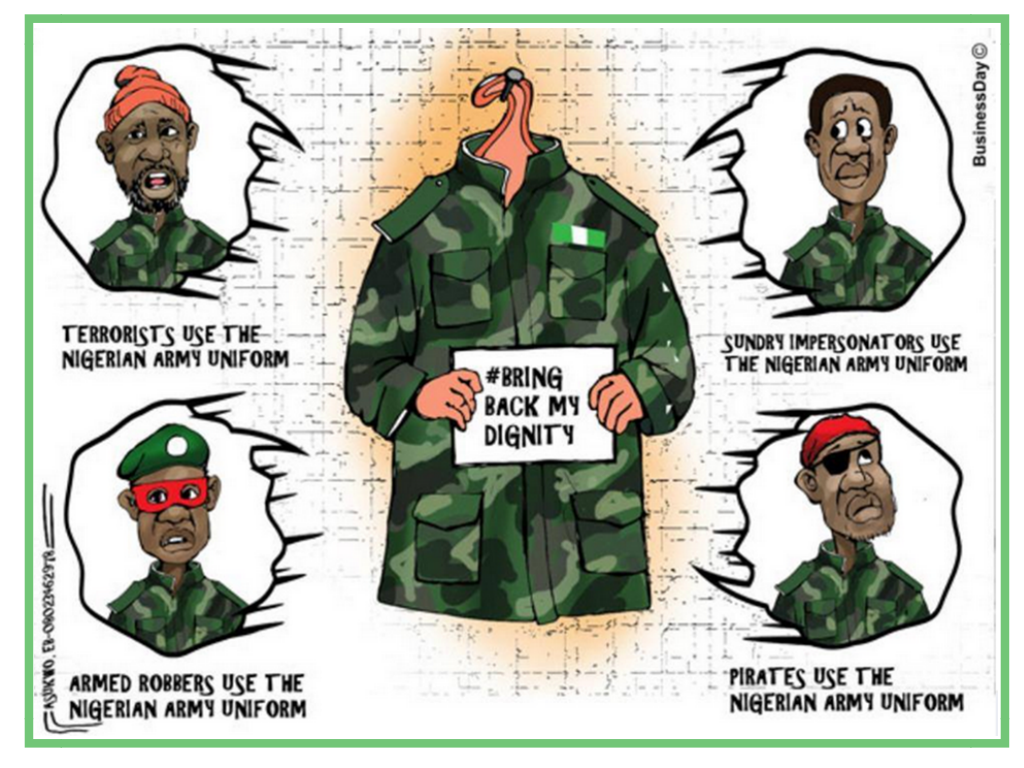
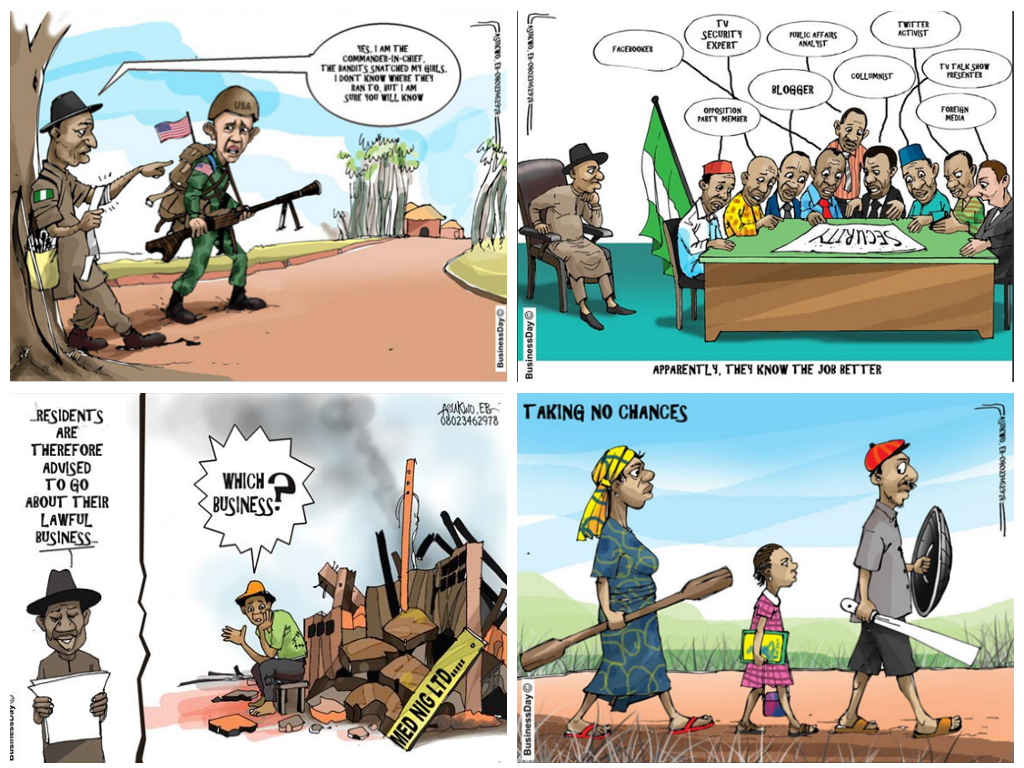
satire cartoons

To write this post, I read about the origin of satire, about Aristophanes (c. 446 BC – c. 386 BC ), a Greek comic playwright, and the Roman poet Horace (65 BC – 8 BC), whose works inspire and form the model for writing modern-day satire. But sha, na dem sabi, I know that I know that I know that satire originated in Nigerian culture. How do I know?

After I ran across a road without a zebra crossing or traffic lights or a pedestrian bridge, just missing that crazy driver who sped out of nowhere, a woman selling oranges by the roadside exclaimed, “You dey craze? You wan kill persin?” so I turned around to look at the yeye driver who’d almost cut my young life short, and then realised she was talking to me.

She could have blasted the government for not providing infrastructure. She could have cursed the driver for failing to observe common-sense speed limit. The irony was that she chose me as the subject of her satire. She exaggerated my role as a potential killer, exposed me to ridicule with her loud gesticulations, and criticized my lack of judgement. And the humour? Well, here I am writing this piece and laughing retroactively, twenty years too late.

You can describe the human condition with white chalk on a blackboard, spacing your letters evenly and clearly, but people may yawn and rub their eyes after a while. You can show how the problems of the world are at once “un”trivialized and brought into sharp focus by employing irony, exaggeration, and/or humour, and people may stay up late to watch the show. This is satire and provoking change, if only in a shift in thinking, is the endgame.

Satire’s overtness, sometimes camouflaged by its subtlety and silent sophistication, is blended into much of what we watch and read, but is often overlooked because we appreciate these works for their entertainment value only. Perhaps the authors want to make people laugh before they make them think.

The #BringBackOurGirls campaign focuses on the serious business of finding and freeing the over 200 girls kidnapped from a Nigerian secondary school in Chibok. While we are still lighting candles for them, questions surrounding the culpability of Goodluck Jonathan’s administration, the legality of the first lady’s “tribunal” and the state of security in Nigeria, especially in the light of recent bomb attacks, continue to make rounds on social media.

It is the cartoons and videos, not the essays, expressing the general mood of the country that have captured my attention the most. I see these works as satires. Some of the media that zoom in on the Nigerian first lady’s perceived gaffes, have come under attack, because satire can be misunderstood when we view these works for their ridicule value alone. Perhaps the authors want to shock people first and then make them think.


“Satire is a mirror where beholders generally discover everybody’s face but their own.” Jonathan Swift

satire in cartoons

Politics and satire live on the same street. However, I cannot imagine that President Obama, or any other president pouts and refuses breakfast because of a political cartoon splashed on the front page of a newspaper. This is not to say that satire cannot be a demeaning and horrifying personal attack, the pendulum can swing to any extreme, but I’m referring to satire, which has as its greater purpose constructive social criticism to further dialogue and/or action.


Uneasy the head that bears the crown

politics 101


As a child, I had frequent bouts of malaria. At my mother’s insistence, not only did I have to wait until the smell of sheltox faded into the walls of my room, but I also had to sleep under a white mosquito net. Once every few months I would stand in front of her under the dim inquisition lights of our verandah, hands outstretched as she placed three tablets of Camoquin in my palm one after the other.

“Swallow it quickly with your Fanta,” she would goad.

I was never fast enough. After taking a sip of Fanta, the Camoquin would begin to melt in the fizzy oasis that was my mouth. I would shut my eyes tight as I swallowed the mixture. After I swallowed the third tablet, the half-empty bottle of Fanta was my reward. I rushed the orange liquid, willing it to eliminate every trace of the bitter Camoquin. After this ritual, my body would stave off malaria for a few months.

This in my view is satire at its best; mix the bitter with the sweet to move society to a better place. When this era is over and the dust settles, the videos, the cartoons, and slangs coined, will be reminders that truth was once too hard to swallow.


©Timi Yeseibo 2014


Cartoon credits:

Mike Asukwo

Mike Asukwo on Facebook: https://www.facebook.com/asukwo

Mike Asokwo on Twitter: @Asukwoeb


Khaki no be Leather http://t.co/MAWGvUpCeq

Business as Usual http://t.co/90N6BMfUqu

We, the Experts http://t.co/PeuA19Zsmg

The Eagle has landed https://www.facebook.com/photo.php?fbid=10203949665842578&set=pcb.10203949674762801&type=1&theater

JTF-Joint Task Family https://www.facebook.com/photo.php?fbid=10204006243536985&set=pcb.10204006243736990&type=1&theater


Unauthorized use and/or duplication of this material without express and written permission from this blog’s author and/or owner is strictly prohibited. Excerpts and links may be used, provided that full and clear credit is given to Timi Yeseibo and livelytwist.wordpress.com with appropriate and specific direction to the original content.

Broken Spell

Broken Spell

When my eyes first met you, my heart asked, “Is he taken?”1 I followed your form as you picked a bottle, read the label, and then returned it to the shelf. You stood in the corner with the display lights softening your features; I knew you were the answer to my loneliness, the catharsis for my emptiness.

Before my head could formulate an answer from empirical data, we were walking along The Seine hands touching occasionally as we drew closer to insulate ourselves from other lovers meandering on the way.

Je t’aime. I love you in French. You say it first because you are not afraid. I repeat after you because now I am sure that one plus one equals one and that I have not dieted in vain. My wedding dress is an hourglass while your tuxedo is white and your groomsmen wear black. The tears on my face have only little to do with the pinch from my stilettos and more to do with my realization that heart, happiness, and home, begin with h.

Dark. Because on our wedding night, the stars do not shine. It does not matter as our love lights the way. The vanilla-scented candles I poached from Efe’s wedding gifts, which I was supposed to guard, make our shadows long and lean, as they became one. I sleep in your arms drowning in your scent and dream of vanilla ice cream. It is your breath, not fluttering butterflies, on my stomach that makes my eyes open as the sun rises to greet our love. Small wonder that we plan for maternity leave so soon after our honeymoon.

Four. The number of children we will have. Two boys and two girls. One of each gender on either arm, yours and mine. But in this economy, where purchasing power can be as uncertain as Russian roulette, two will have to do. His hands will be firm and kind, her hands will be dexterous and warm; our children will mirror the best of us.

A decade or two. We will wait before returning to The Seine. With the Eiffel Tower kissing the sky and glowing in the river below, you will whisper, “Je táime,” and water our love so thirsty branches will bud and grow anew.

When my eyes first met you, my heart asked, “Is he taken?” You cocked your head my way for one second. Blood rushed to different parts of my anatomy. I took my sit behind the counter and looked everywhere but at you. I asked the woman in blue if she would like my help.

I sensed your presence as you filled the space in front of me.

“Miss,” you looked at my chest, my face bubbled like tomatoes in stew as our eyes met and held, “Abe- yi- wa?” you looked down at my name tag again, “Abieyuwa?” Your eyes danced first and then your lips followed so I saw how perfect your teeth are.

I nodded like a yo-yo, my head bobbing up and down. Yes, yes, yes, take me as I am!

“My wife asked me to―”

“Oh shit! Damn!” How could I not have seen the wedding band?

“What? W-h- w-h-a-t?” You looked like a little boy who had lost his toy, stammering as his mother asked where.

“Ngozi, Ngozi! Ngozi!” I gave her the look, “please help this customer. It’s time for my break.”

I went outside and stood in the sun. I let the light breeze flush you from my mind.


©Timi Yeseibo 2014

***

This post is the consequence of reading too many Mills & Boon romance novels when I should have been solving algebra in secondary school. Seriously, I started thinking about relationships after laughing at Naijarookie’s depiction of the way men and women think. But when I read the opening verse of Jazilah Ali’s poem, Broken Spell, I knew I had to add my two cents.


  1. Broken Spell – Verses About Walking Away From False Love by Jazilah Ali

http://www.lyricaltreasure.com/broken-spell-walking-away-love-poem/


All people illustrations and vectors by Microsoft

Design: ©Timi Yeseibo 2014


Unauthorized use and/or duplication of this material without express and written permission from this blog’s author and/or owner is strictly prohibited. Excerpts and links may be used, provided that full and clear credit is given to Timi Yeseibo and livelytwist.wordpress.com with appropriate and specific direction to the original content.

Mutual ExChange

I laughed while reading this post, which without trying too hard, examines the nuances in the way men and women process ideas and think about relationships. I hope you will too.

naija rookie's avatarNigerian Newcomer

We are driving back from the movies. This is our third time together.
The talk is usually sparse, peppered with jokes, and ending with an ‘I had fun, we should do it again’. So we do it again.
Today the air feels different. The movie, a long drama ending with the sad unexpected death of the main character, has triggered something because we shared that experience.

About fifteen minutes into the drive, she cracks open. She says:
“You know what I am scared of? I am afraid of making the wrong decision especially when it comes to relationships. I see couples, some are happy and some are not. And I wonder, how do you know when to fight for something and when to give up on it?”

She takes a deep breath and continues:
“Even the simpler decision, whether to open up to someone or be friends with them, each…

View original post 397 more words

Mommie Dearest

mommie dearest

Her eyes opened. Six o’ clock. Panic clouded her brain. She should have already started her round on Ajeleke Street where the drone of generators and echo of the muezzin’s call, did not compete with her megaphone. Into that serene place, Mommie’s voice had boomed nearly every morning for the past two years. She was not careful as she bounded from bed.

In the sitting room, Ejiro, Ufuoma, and Yoma sat with arms crossed over their chests. Their stare reminded Mommie that her head-tie sat on her head at a lop-sided angle threatening to fall. In the corner, Lucky stood like a wallflower not daring to meet her eyes. She smelt sabotage. No one offered her a chair to ease her discomfort. She steadied her head-tie with both hands.

Miguo Daddy,” she addressed Ejiro, her husband.


Miguo Mommie,” they all chorused.


“This has got to stop. It must stop today!” Ejiro spoke first.


“Mommie, we are tired of you embarrassing us with your microphone!” Ufuoma spoke second. She did not observe protocol; Yoma was older than she was.


“We are not saying you cannot preach,” Yoma relaxed his hands as he spoke, “but surely there must be a better way.”


“Hmmm, I see.” She folded her arms over her chest, spreading her legs.


The men knew when to retreat, but Ufuoma continued.


“Mommie, you are the wife of the honorable chief judge. We live in Effurun GRA. You drive a V-boot. You are supposed to be a society lady. Carrying a loudspeaker and preaching on the streets makes you a common, common—”


“Common what? Say it, I am waiting.”


Yoma looked at his mum who was now standing at akimbo and then at Ufuoma whose chest was rising and falling rapidly, “What she means is—”


“I know what she means! My ungrateful family! Ejiroghene when you wanted a promotion, you asked me to pray to the God that you are now ashamed of. Now that you have arrived, my serving God is an embarrassment enh?”


Ejiro pushed his glasses higher up on his nose. He regretted allowing the children persuade him to confront their mother.


Turning to face her only son, she spat out her venom. “Ogheneyoma who prayed and got you out of trouble time and time again? Who prayed until you finally got that Shell job?”


“You did.” Yoma sighed and stretched, he’d never liked waking early. He wished he had not come home for the holidays.


“Mommie, stop it. Stop it!” Ufuoma had had enough. “This isn’t about us!”


“Ufuoma, you, you? You of all people. Where do I even begin? Should I start with that useless boy Richard your—”


“Look, look, this is all getting out of hand. Mommie what we want to say is that we admire your fine Christian character, you are truly a virtuous woman; none would dare disagree. Your aggressive proselytizing with that thing,” Daddy gestured at the megaphone lying at Lucky’s feet, “only serves as a noise pollutant at a time when people are stealing the last vestiges of sleep. This militant evangelistic style coupled with your emotion-laden sales pitch is rather old. We are just saying that it’s time for new tactics.”


He stood and placed his hand on her shoulder, “Mommie, bikó.” Taking her right hand in his, he softened his voice, “You cannot browbeat people into accepting our faith since it is a work of grace, and grace is never more clearly demonstrated than in our actions. As Francis of Assisi said, ‘Preach the gospel all the time, and if necessary, use words.’”


“Ssssss! I thought you were going to say something constructive!” Mommie pulled her hand away and glared at him, “Ejiro, I don’t know which Bible you read that it has become our faith. The kingdom of heaven suffers violence, and the violent taketh it by force. The day that Muslims stop calling for prayer, Hare Krishnas stop dancing on the street, Jehovah’s Witnesses stop knocking on doors, and Cele start wearing shoes to church, that is the day I will stop preaching!”


She marched over to Lucky.

Miguo Mommie,” he curtsied.

Vre-ndo Lucky. Doh my pickin. Is everything set?”

“Yes Mommie.”

Let’s go!”


Lucky handed her the megaphone and followed behind.


“Repent for the kingdom of God is at hand!” Mommie’s voice rang out startling Lucky as he turned the lock and lifted the latch to open the gate. She looked at him with a half-smile, “Charity must always begin at home.”


Once outside the gate, Mommie began to lecture Lucky. “We must forgive our critics. The Bible says that a man’s enemies will come from his own household . . .”


Lucky turned and followed her eyes. Surprise registered in his. Richard was escorting a girl to the junction that led to the bus stop.


“Ufuoma! Ufu-oma o! Come see your boyfriend dey carry gonorrhea!” Aiming her megaphone in Richard’s direction, Mommie cried even louder, “Repent! If you die today, will you make heaven? Turn from your wicked ways!”


©Timi Yeseibo 2014


p.s. Happy Mother’s Day to you. After many false starts, I wrote this caricature, which isn’t about us, because the places I had to go to write the post I wanted seemed too far; the emotions, too raw, bleeding as they did only yesterday.

***


Unauthorized use and/or duplication of this material without express and written permission from this blog’s author and/or owner is strictly prohibited. Excerpts and links may be used, provided that full and clear credit is given to Timi Yeseibo and livelytwist.wordpress.com with appropriate and specific direction to the original content.


Image credit: curtain vector: zcool.com.cn

font: Christopher Hand by El Stinger: http://www.dafont.com/christopherhand.font

font: Acid Label by Billy Argel: http://www.dafont.com/acid-label.font


design: ©Timi Yeseibo 2014

Any Comments? No, I think I’ll Pass.

no comments

Dear Non-Commenter,

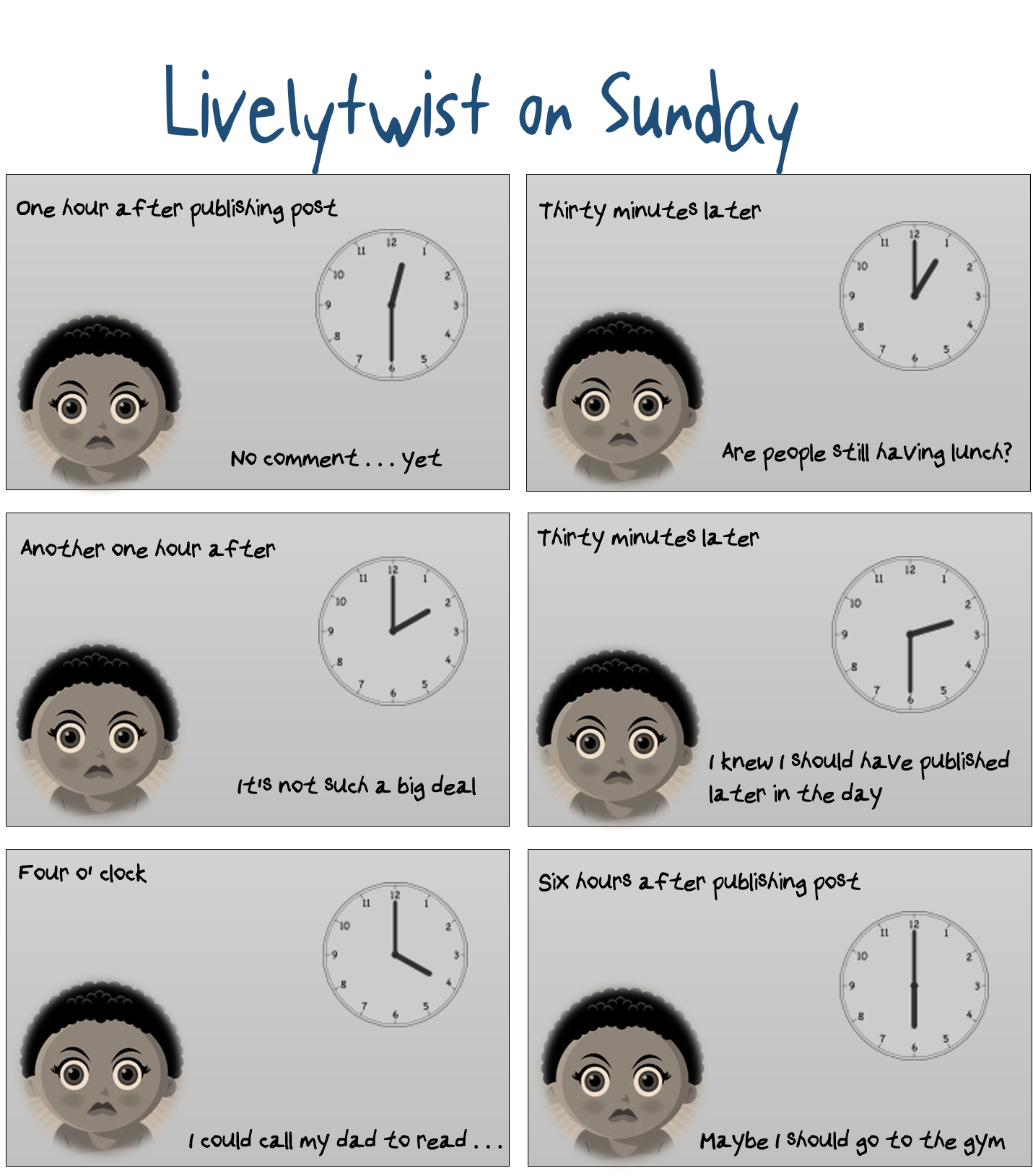
Today, the spotlight is on you! As I reflect on my blogging journey, I realise that engagement is a big part of the fun for me. Why have you decided to blow out my candles before the MC counts to three?

Following my informal survey, I’ve compiled a list of reasons why you don’t comment and given my tongue-in-cheek arguments against them. Find your excuse and tell me if your arguments are louder than mine are.

Reluctant Barry

You claim that you want to see what others are saying and where the conversation is going before you add your voice. In other words, you don’t want to be the first to comment. You surprise me. Are you incapable of independent thought? Monday to Friday, you make decisions like an entrepreneur without a board. Is it only when you come to Livelytwist that you cease being a pioneer?

Scared Molly

They told you the internet is a dangerous place and now you take everything you read with a pinch of salt. You worry that future employers are googling your name. You worry that when you become a presidential aspirant, a comment you left on Livelytwist can and will be used against you. Hmmm, what do we know for sure? Y2K didn’t happen and aliens are yet to take over our world. Unconvinced? Leave your comments with a grain of salt; call yourself Panteka Monleka, who cares?

Forgetful Harry

You were planning to, but you forgot. Committing things to your memory is like fetching water with a basket. No time like the present. Stop this minute and go to the comment box. Write about the sea or the prevalence of memory loss in Homo sapiens living in the Twitter Generation. You know what; don’t sweat it before you forget again. Just write, nice post, and know you have done your good deed for the week.

Ungrammatical Sally

My “grammar” intimidates you. You don’t want to sound like a fool. Really? Did I set an English exam for you? Do you not have spell check? Is it not true that since you began reading Livelytwist, your writing has improved? You’ve stolen a metaphor here and a paragraph there, basked in accolades, and didn’t mention my name. Meanwhile, you shared The Measure of a Man, with that boy who showed you pepper and when he didn’t say sorry, you read Happy New Love and rekindled hope. Yet, not a comment, not even one comment.

blog comment infographic

Invisible Cheerleader

Timi, you go girl! Oh yes, I can soar on the wings of your private messages and clinch the Nobel Prize for literature! You say although you do not comment, you’re supporting me from behind. Ah, I can manage my behind myself. Please move to the front. For your sake, I posed questions at the end of posts to foster engagement. You ignored the hint and sent me yet another BBM: Timi you go girl! Get ‘em tiger! Where did you find a smiley clothed in animal skin? Never mind that, just leave a comment please.

Livelytwist Unofficial Ambassador

“Lol, this was so funny, I’m in stitches. Y’all need to read this!!!” If you’d left this comment on my blog, this post would’ve been redundant. Instead, it was what you wrote as you shared my post on Facebook and Twitter, while counting the minutes until the end of the second service at your church. I am grateful that two people heeded your call. Did you know one of them left a comment? You’ve almost earned your badge. 140 characters or less gets a pass mark in my book. I’m waiting . . .

Tongue-tied Mary

You don’t know what to say. I get it, the post doesn’t move you. What of last week’s post and the week before that? Like seriously sixty-plus posts and you don’t have an opinion? In school, you must have been like that child who always whined when the teacher posed a question to him, “They’ve already said what I was going to say.” I allow that here. Simply reply someone’s comment and write, “True talk. You just took the words from my mouth!”

Naija Pally

You have promised to comment by God’s grace. Your one argument trumps my thousands. No network. Enough said. Scores, Livelytwist: zero, Naija Pally: one.


Non-commenter, I could go on, but hearing from you is more important.


Regards,

Livelytwist


P.s. faithful commenters are also invited to weigh in 🙂


©Timi Yeseibo 2014


Read about social media habits: men versus women

http://socialmediatoday.com/valerie-mellema/2231276/do-men-use-facebook-differently-women

http://newsfeed.time.com/2014/02/19/how-men-and-women-use-social-media-differently-in-one-graphic/


Photo credits:

Image credits: all people illustrations, animes, avatars, and vectors by Microsoft

Design & infographics: ©Timi Yeseibo 2014


Unauthorized use and/or duplication of this material without express and written permission from this blog’s author and/or owner is strictly prohibited. Excerpts and links may be used, provided that full and clear credit is given to Timi Yeseibo and livelytwist.wordpress.com with appropriate and specific direction to the original content.


Your Enemies Shall Never Succeed

Your enemies shall never succeed

“It’s a lie! Your enemies will never succeed!”

“So after the prayer meeting . . .”

“Yes?”

“I took the holy water to the office.”

Eh hen?”

“I didn’t take all. I poured some into La Casera bottle—”

“You washed it first—”

“No o! Is that bad?”

“Hmmm, it would have been better to sanctify it, but well, it is well.”

“So, I got to work very early, before people started coming . . .”

Eh hen?”

“I entered my oga’s office and I started sprinkling the holy water. Then his secretary came in—”

“Bloooood of Jesus! She saw you?”

“No. I quickly hid the bottle behind my back.”

“Good . . . good.”

“She asked me if I was looking for the leadership presentation printouts.”

“I said, ‘Yes.’ She told me to check the cabinet and left.”

“Thank God!”

“I continued sprinkling the holy water, on the desk, under the desk, on the chair, on the computer. I even sprinkled some on the pictures of his wife and children. When I finished, I started marching round the desk, then the secretary popped her head through the door—”

“Your enemies shall not succeed!”

“Amen!”

Eh hen, what did she want?”

“She asked me if I had found it. I said, ‘Not yet—’”

“And then?”

“She said she would help me.”

“The water?”

“She asked me what it was. I said, ‘Nothing. Just drinking water—’”

“Your enemies will never succeed!”

“She asked me why I’ve been pouring it around the office.”

“Jesus! Jeeesus! . . . What did you say?”

“I said I wasn’t pouring it. She said I was lying that she had been watching me on the CCTV”

“CCTV ke?”

“Yes!”

“So what did you do?”

“We started arguing.”

“Your enemies shall never ever succeed! Eh hen?”

“Then I got angry and stormed out—”

“The holy water?”

“I . . . I . . . I left it there . . .”

“Sh*t!”

“Anyway, when I stepped out of the office, I saw people gathered round her computer.”

“Who? The secretary?”

“Yes! Someone was saying, ‘Rewind, rewind . . . ’”

“What were they watching?”

Leave mata. I wanted to pass quietly. But she shouted, ‘Stop him!’ Then everybody looked up and started laughing.”

“Don’t worry; it is not the end of the world—”

“That’s what I thought. Until the security grabbed me—”

“What?”

“I tried to struggle—”

“Jesus!”

“The other one tackled me to the floor. Then my oga—”

“Your boss? Where did he come from?”

“I don’t know. He told me not to struggle. That I should respect myself and pack my things and leave.”

“Just like that?”

“Just like that. As I was packing, the security guards stood by me. They kept saying, ‘Oya hurry up!’”

“All hope is not lost. God works in mysterious ways. It is well.”

“As I was going to the lift, my oga was following me. He shouted, ‘Wait!’ So I turned.”

“Hmmm, what did he want again?”

“He said, ‘You are not the first and you will not be the last. My enemies shall never succeed!’ Then he pushed the holy water into my hands!”

“It’s a lie! Jesus!”

“What? What? . . . What is it?”

“Your enemies . . .  Osanobua! Your enemies, they have succeeded!”


©Timi Yeseibo 2014


Unauthorized use and/or duplication of this material without express and written permission from this blog’s author and/or owner is strictly prohibited. Excerpts and links may be used, provided that full and clear credit is given to Timi Yeseibo and livelytwist.wordpress.com with appropriate and specific direction to the original content.


Image credit: curtain vector: zcool.com.cn

font: Christopher Hand by El Stinger: http://www.dafont.com/christopherhand.font

font: Acid Label by Billy Argel: http://www.dafont.com/acid-label.font

design: ©Timi Yeseibo 2014

Cellphomania

mobile phone

I have three mobile phones, so what? Of course, I have all my papers. How could I live and work in The Hague otherwise?

These phones, ah, in Nigeria, they felt neither heavy nor out of place when I laid them on the table in a restaurant, side by side, as if to compare their sizes.

Things have changed since I left Nigeria, they tell me. But I can only tell you what I know. That when my conversation with a friend ended because of network wahala, he called back on another network, blaming the earlier bad connection on heavy rainfall. That when I lived in Nigeria, rain was one reason I had three phones.

So that if rain melted one provider’s “wireless” wires, I could turn to another who might not be that unlucky. So that if lightning set one provider’s telecom mast ablaze, I could turn to others who could get their fire extinguishers ready on time. So that if Sango, thundered against South Africa’s MTN, I could turn to Glo, owned by a son of the soil, who might have been spared.

Network problems are rare here. These three phones? It’s a Naija thing. I am yet to meet any Nigerian at home or abroad who has less than two phones.

My first phone is my “official” phone. Friends call me on this number, as well as my boss, the tax office, the gas company, the police, telemarketers, and King Willem-Alexander. This phone from network operators like Vodafone, KPN, and T-Mobile, suffers one major limitation, which my second phone overcomes.

Because I call family and friends in Nigeria and the African continent from my second phone, the SIM card must come from Lyca, Lebara, Vectone, or Delight, providers that offer discount call rates to Africa. Any smart phone that accommodates Viber, WhatsApp, and the almighty BBM, will do because every Nigerian chats on BBM. Moreover, in Nigeria, exchanging BlackBerry PINs follows introductions and handshakes. Your blue eyes are widening; don’t you know what hyperbole is?

My third phone is the cheapest brand in the market. It’s only purpose is to rescue me. Imagine, if you can, that one day, you are in the Open Market, buying oxtail, shaki, cow leg, and real beef, from of all people, that Dutchman who eats vlees  that you cannot eat, but has a stall where Africans troop.

This inability to acculturate, to do something as simple as buying and eating meat from Albert Heijn after twelve years in The Netherlands is your undoing for you bump into your distant cousin in this little corner of Africa.

He calls you by your Nigerian name, daring you to ignore him. You both register your surprise and long-time-no-sees. You dribble the chit-chat past where you live to you will call him. His protest drowns out the sound of the Moroccan fruit vendor calling, “Bananen, vijf voor maar een euro!” How can he expect you to call him when you are his senior—did you not come to Europe before him? His oyibo neva reach dat level, abegi! He will call you.

You give him your third phone number. The number your mother gives to your secondary school friends because she does not require your permission to do so. The phone that you switch on when you need to make obligatory calls to relatives who think you pick gold off European streets for a living.

My dear, the phones on the table are mine and mine alone. I am not a 419, na so life be. If you still don’t understand, I will explain in the morning. Switch off the light and snuggle close to me, I like to hold you when we sleep.

©Timi Yeseibo 2014

Wahala: (Nigerian Pidgin; perhaps of Hausa origin) Trouble or problem.

Sango: Yoruba god of thunder and lightning.

Vlees: (Dutch) Meat. Many African immigrants shun the “flat” meat in supermarkets, preferring the meat sold in Halal shops or the Open Market (oxtail, shaki, cow leg, etc.).

Albert Heijn: Dutch supermarket chain

His oyibo neva reach dat level, abegi: (Nigerian Pidgin) translates roughly to, living abroad has not made him forget his Nigerian roots or culture.

Open Market: Officially De Haagse Markt. It lies between Transvaal and Schilderswijk, districts populated mainly by Moroccan, Turkish, Antillean, Surinamese, and African immigrants. The market reflects the neighbourhood’s diversity.

Na so life be: (Nigerian Pidgin) translates roughly to, that’s just the way it is.

Photo credit: The Reboot / Foter.com / CC BY-NC

Original image URL: http://www.flickr.com/photos/70292973@N07/7197724426/

Title: Mobile Phone Hanging from a Tree

Unauthorized use and/or duplication of this material without express and written permission from this blog’s author and/or owner is strictly prohibited. Excerpts and links may be used, provided that full and clear credit is given to Timi Yeseibo and livelytwist.wordpress.com with appropriate and specific direction to the original content.