
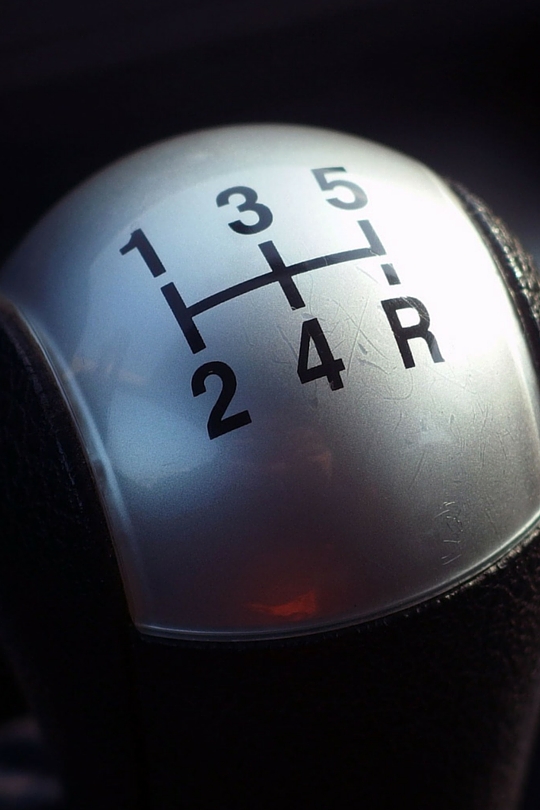
Shifting Gears [5]

adrift

Adrift

For the most productive parts of my year, Marilynne Robinson’s words were my Mantra: “Frankly, you get to a certain point in your life where you can do unusual things with your mind. So then, I think, do them.”

What Marilynne doesn’t explain is that doing stems from being; that our being is tied, irrevocably, to our interactions, our relationships; that in reinvention, we shed our pasts and people in them to emerge into new forms of ourselves. There is something visceral, violent even, in leaving friends to gain new frontiers.

In August, I was added to a WhatsApp group of my secondary school classmates. My first comment was a rant. Someone asked why I was speaking as though I did not attend the same school like everyone else. Even I am a stranger to the boy they used to know.

It was easy to severe secondary-school ties. I used to be good at that. The secret is to avoid nostalgia, excise memories, and dull the mind with new experiences. I did this without guilt. I often say I am content in solitude and enjoy being an island, but when I entered university, I made new friends who showed me friendships are not just bridges that can be burnt at will and reconstructed. They are anchors that prevent me from drifting.

Trying to describe the loss of friendship, Murakami wrote of the titular character in Colorless Tsukuru Tazaki and His Years of Pilgrimage:

“The pain he felt was, if anything, more intense, and weighed down on him even more greatly because of distance. Alienation and loneliness became a cable that stretched hundreds of miles long pulled to the breaking point by a gigantic winch. And through that taut line, day and night, he received indecipherable messages. Like a gale blowing between trees, those messages varied in strength as they reached him in fragments, stinging his ears.”

Towards the end of the year, my life began to imitate art; Tsukuru’s story came alive with vivid intensity. In striving to be the kind of person who can do the things I now think my mind is capable of, I was drifting away from my friends.

Last month, I spoke to one of my best friends. I asked her about work.

“You are so out of date,” she said with laughter in her voice.

We spent hours trying to fill the yawning void between us, trying to get back to the way things were (the way they should be?).

Time is the tie of friendship, affection its strut, and these I do not possess in infinite quantities.  Having severed, at will, friendships in secondary school and anchored myself to friends in university, I’m learning as a young adult that it is okay to drift away from some friends without angst or guilt.  To build new bridges some of the old ones have to be dismantled.

I walk through the phantom space where bridges used to be, hoping there is enough muscle memory to take me past the awkwardness of encountering old friends; you know, matching faces to places and names to dreams. Nonetheless, I am grateful for friends—past, present, future—who anchor me to reality and to whom I owe bountiful debts of love.

© IfeOluwa Nihinlola, 2015

Ife blogs @ ifenihinlola


Unauthorized use and/or duplication of this material without express and written permission from this blog’s author and/or owner is strictly prohibited. Excerpts and links may be used, provided that full and clear credit is given to Timi Yeseibo and livelytwist.wordpress.com with appropriate and specific direction to the original content.

Shifting Gears [4]

unashamed

Unashamed

I was born under the twin towers of shame and pride.

My mother prided herself on rising up from the dilapidated shack on the Hudson River across from New York. Her rise from second-hand clothing and no running water was her badge of honor. My father hid with shame, the quiet emotional poverty of a childhood spent reacting to the mercurial moods of an alcoholic parent. He never thought he was quite good enough to take us to nice restaurants.

Before the age of three family members died one after the other and though I don’t remember any of them, the awareness of death and separation plagued my young mind. Inherited pride led me to believe I was captain of my ship, yet with shame, I noted how rudderless and shaky my travelling vessel was. All the while I asked myself was there any point. Death loomed.

Before I wrote my first novel, I drifted uninspired and crippled with doubt into many ports always with an eye on the storms that might lead to shipwreck. The novel grounded me. I thought I wanted to play the hipster author smug and ironic, but my characters had hearts and souls. How could they take grace, love, and redemption seriously? How could they believe in an un-hip God? They refused to be cool.

Fifteen years passed. The grounding was an illusion. I was still on a boat but no longer at the helm. Conversion stories abound on the internet. Mine happened searching scripture to put hypocritical words in my characters’ mouths.

Recently I realized I still live under the towers. My characters (and I suspect God), try leading me, but I tend to cry shipwreck and jump into the sea or hide deep in the hull of life.

A few weeks ago, a fellow blogger invited me to give answers to a Q&A series about reading habits. My shelves sag with history, literature, and how-to books (maybe I keep some to impress people), and for most of the questions I kept my head above water until I was asked which single book I would recommend to another.

I hesitated . . . for days. I considered lying. I had a hidden crutch, a new-found yet semi-secret belief in what some considered an offensive savior. When I hit the send button with my answered questions, I had a sinking feeling I’d lost all standing with this faraway internet acquaintance. I recommended the Bible. I suddenly realized how easy it was for Peter to deny Christ.

My hipster novelist thing shattered. I’d often sold my book as a story about a morphine addict because I wanted faraway people to think it was edgy—but I lied to get “likes.” The real story is about a family on a difficult journey, as we all are. In the end, they figure out who’s at the helm. There’s no shame in that any longer for me.

© Adrienne Morris, 2015

Adrienne blogs @ Middlemay Books


Unauthorized use and/or duplication of this material without express and written permission from this blog’s author and/or owner is strictly prohibited. Excerpts and links may be used, provided that full and clear credit is given to Timi Yeseibo and livelytwist.wordpress.com with appropriate and specific direction to the original content.
Shifting Gears [3]

gear shift

Not The Comic Book Hero

As a young man, I had no understanding of stiffness after exercise. I had no idea of the pain that came with the arthritic joints of unsteady elderly folk.  This would never happen to me.

In the 1940s, I happily skinned my knees in South London streets devoid of motor cars. During the ‘50s, I was introduced to cricket and rugby, two sports I continued regularly to play until, aged forty-five, I moved to Newark on Trent and considered it a little late to join new clubs.

From thirty-five to forty-five, I undertook weight-training three times a week. Throughout my forties, I ran 25,000 miles on roads, including participating in eighteen marathons. Having covered nine miles to work with a knapsack on my back, I showered in my workplace, and then breakfasted in a nearby cafe. On the day I ran fifteen miles before completing a rugby training session, I felt smugly comfortable with the epithet ‘Superman’, bestowed somewhat facetiously, I’m sure, by a group of Social Work students.

I shrugged off sporting injuries, notably tying a broken finger to its neighbour with a bootlace before completing a match. That joint has never bent since, rendering picking up coins rather difficult.

As I entered my sixth decade, a recalcitrant calf muscle forced me to concede that my daily mileage would need to be walked, not run.

During a game of touch rugby at the end of Sam’s December 2007 stag day in the Margaret River wineries, a seventeen-stone friend of the prospective groom, forgetting the rules, tackled me to the ground. I leaped to my feet and tackled him back at the first opportunity. The father of the bride halted the game soon afterwards, saying that ‘someone’ would get hurt.

The best way to overcome the wall—the point in a marathon at which your body tells you that it cannot go on—is said to be to run through the pain until it subsides. When, towards the end of 2008, my left hip developed severe discomfort, I applied that belief. Sometimes I couldn’t sit down afterwards.

About three months after receiving a prosthetic joint in October 2009, I was back to an average of two hours a day of undulating perambulation.

When we began reclaiming our neglected garden in April last year, both Jackie and I spent about six hours a day throughout the summer engaged in heavy tree work, removing stumps, and shifting substantial rocks and concrete.

Abruptly, this March, I shuddered to a halt. My right knee was in such pain that when I visited the GP, I was offered a wheelchair, which I declined.  After some improvement, I can walk an occasional two miles and my gardening is somewhat restricted.  Were I to be tackled today, I would need helping to my feet.

Exercise is now required to reduce stiffness. It has happened to me.  I am not the comic book hero.

That is what I have learned in 2015.

© Derrick Knight, 2015.

Derrick blogs at derrickjknight.com


Unauthorized use and/or duplication of this material without express and written permission from this blog’s author and/or owner is strictly prohibited. Excerpts and links may be used, provided that full and clear credit is given to Timi Yeseibo and livelytwist.wordpress.com with appropriate and specific direction to the original content.


Shifting Gears [1]

shifting gears


Human clay finds its moisture in relationships and will evaporate into dust without them  – Beth Moore


When I arrive at Tamali’s house, she holds my arm and turns me from side to side, and then she sighs.

“How do you do it?”

She knows how I do it. Her eyes sunken, her voice nasal, her walk without bounce; she coughs as she leads the way. The aroma of sautéed bell peppers and tomatoes hits me. On the gas hob sits a stainless steel pot. Underneath the glass lid, I spy something white; rice, pasta?

“Food?” she gestures towards the pot.

“No thanks, I’m good.”

She opens the fridge and brings out Amaris’ cake. I recognize it from the photo she sent me on WhatsApp. The Barbie doll, which sat atop is gone as is half of Barbie’s pink-layered flowing gown. She gets busy with her knife.

“Too much,” I protest.

She eyes me, “You don’t have to eat it all at once.”

Her neck is lean and last week was tough for her. So, I take the knife from her and halve the portion she set aside.

Back in the living room, she offers me the stubby bananas that Kwame brought from Uganda.

“Very sweet. Not like the ones from Costa Rica in Albert Heijn.”

“I’m full.” I bend and hug my stomach.

“You never eat! I can’t count how many of them I’ve had,” she spreads her arms and looks at her torso; “I’m always eating!”

She is not always eating. It is her frustration speaking.

“How did I get from there to here?” She points at a framed photo by the TV and then digs out more photos from the shelf next to the TV stand.

This is what you do for a friend with flu. You stop by her house after work with a packet of Day & Night Nurse and explain how to take the capsules. You eat cake when you’d rather not. You pull your chair closer to hers and hunch over hundreds of photos. You listen as she reminisces about her days at Makerere University and her time in London, the jauntiness of her late teens and early twenties—that period before we tell ourselves, I’ve got to get serious and settle down. You see a girl you did not know, who helps you understand the woman you now know. 

She appraises each picture by size, interrupting my flow.

“Oh, look at this one, I was slim here.”
“You think I look good there? No way, I resembled an elephant.”
“This one was taken earlier in the year. See me in the same dress later that year; the dress is bursting at the seams! What did I eat?”

And you mourn with her, the loss of youth. Because flu makes you delirious. It makes you want your mother who is 6000km away; although you left home at twenty and you are now in your early thirties. It chains your legs so you miss the gym, stay at home and raid the fridge, and feel fatter than you are.

A pathological nostalgia has seized her and you cure it with kindly indulgence, not once looking at the clock. 

I recently read an article about why female friendships are fraught with infighting. Sitting here with Tamali, I cannot relate. Have my friendships always been this supportive?

There was that time Ada stayed over and borrowed my jewelry while I was at work, leaving me a note to dispel panic in case I looked for it when I returned. I stayed mad for months and ignored her overtures and peace emissaries. My anger was toxic, contaminating anyone who would listen. One day she braved my rage and showed up at my doorstep.

“Yes?” I filled the door space, arms folded across my chest.

“I’m sorry. It broke. I couldn’t return it until I fixed it.”

I blocked her advance, spreading myself wider.

“For crying out loud Timi, it isn’t even 24-karat gold. It’s costume; that’s why nobody could fix it!”

“Beside the point! You shouldn’t have taken it without asking!”

She edged passed me, pushing me against the doorframe. She dropped the broken piece of jewelry on the dining table on her way to the kitchen.

“Do you have any food?” she asked one hand on the door of the fridge.

I sighed and smiled. You cannot poison food if you are going to eat and share it. That was twenty years ago. Ada and I are still smiling.

My girlfriends and I congregate around food. We eat; we do not eat. Thighs and hips feature in our extended conversations. Size is important and relative. Beneath this shallowness is affection, deep and strong, binding us as tomatoes cleave to meat in stew.

When I was younger, I made war. Now I’m older, I make peace. 


©Timi Yeseibo 2015

Unauthorized use and/or duplication of this material without express and written permission from this blog’s author and/or owner is strictly prohibited. Excerpts and links may be used, provided that full and clear credit is given to Timi Yeseibo and livelytwist.wordpress.com with appropriate and specific direction to the original content.

 

Your Part of the Story

comprehension

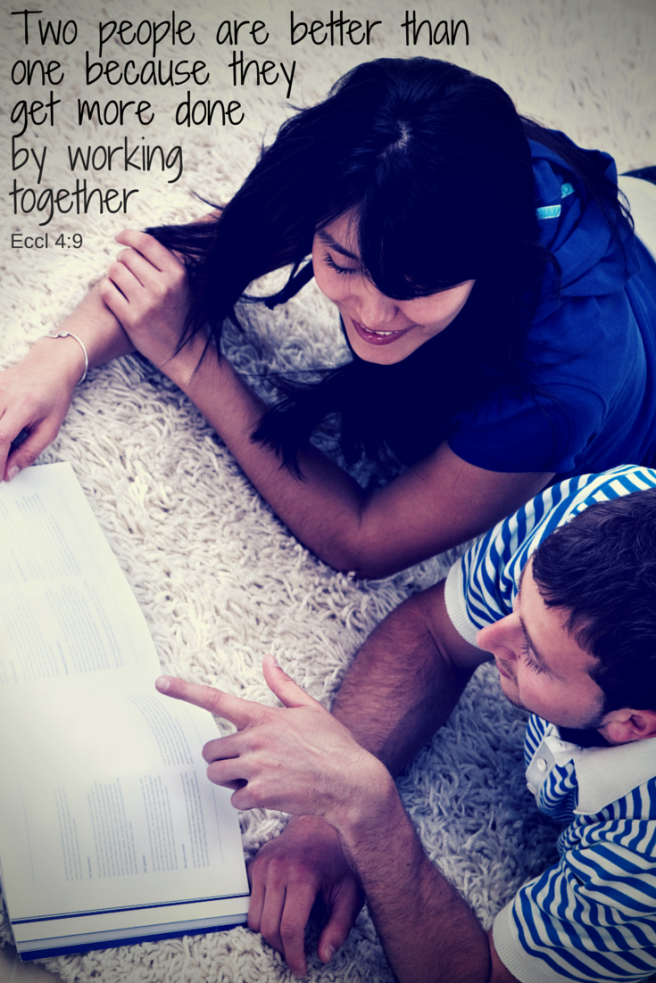
In secondary school, my English teacher gave us a block of text to read followed by a series of questions to test our understanding. This exercise was called comprehension. Correct answers were based on the text. To extrapolate from our life experiences and make connections beyond the confines of the text, in order to interpret it, meant certain failure. This standardization of meaning complemented the marking scheme, I suppose, but we don’t approach life this way.

When we listen, we not only hear the words spoken, but also the manner in which they are spoken and all that it encompasses. How these elements affect our emotions, also influences our understanding.

At work, while implementing a strategy that we’d been briefed about, my colleague and I came to a gridlock because we interpreted the briefing differently. When we sought clarification, it turned out neither of us were right. So much for clear communication, which is why at the end of a talk, a speaker says, “Let me recap . . .” or an avid listener practices reflective listening, “If I’ve understood you correctly, you said . . .”

Someone said, “Write it to eliminate ambiguity,” as if inanimate words on a screen do not awaken and grow wings in the minds of those who read. Perhaps in business writing where clarity and conciseness are pivotal, this is true, except when the writing is convoluted to deceive.

But, in October, I wrote fiction. In fiction, we abandon some of the rules of comprehension I learnt in school. I think that a good writer invites us to create our own stories within the bigger narrative that he or she is telling. Writers do this by leaving a trail of white pebbles that readers instinctively follow to figure out what the story is about, when and where it is taking place, and why the characters act the way they do.

Somewhere along the journey, readers abandon the trail for a meandering path to interpretation. The writer takes a secondary seat, having provided the framework for readers to build by making associations based on their experience, belief, imagination, or needs even.

When I began publishing fiction here, I was fussy about readers’ interpretation. Did they get what I was trying to say? The comments showed me that readers don’t always perceive the story the way I do. And now I’m okay with that. For one thing, no one is writing a comprehension exam. Moreover, to see the story through a reader’s eyes is to see the story again.

I will agonize over words for days on end—do my words lead to logical inferences, are they coherent? But once I hit publish, I understand that the piece of writing, the baby I carried, has been delivered to the world. It is no longer mine. Comprehension is the reader’s part of the story.


©Timi Yeseibo 2015


Unauthorized use and/or duplication of this material without express and written permission from this blog’s author and/or owner is strictly prohibited. Excerpts and links may be used, provided that full and clear credit is given to Timi Yeseibo and livelytwist.wordpress.com with appropriate and specific direction to the original content.
 

Portraits of Motherhood [5]

motherhood


Kinky and Coily

Twice a term my daughter and I go through the drill—at the start of the term and just before the half-term break ends. She sits on a stool and we unravel unwilling braids. They tangle at every turn resulting in tugs and pulls. She scrunches her brows and lets out a yelp.

“Mummmyyyy! Not so hard! It really really hurts.”

I sigh and relax my hands taking some pressure off. We finally loosen the braids and then wash, condition, oil, and plait her hair in fat clumps, ready for the new braids or cornrows she will sport.

She touches her hair and asks, “My hair is long enough, why can’t I leave it to just flow down . . . all the way down to my back?”

“You know why.” I respond gently.

“Why?”

“Your hair is kinky and coily. If you leave it to air-dry without a plait, it will coil and shrink into an afro-ey puff that will tangle and be difficult to comb.”

As her brown eyes look into mine, I continue, “This is your hair, it is my hair too. It’s the beautiful and versatile hair that God gave us, and we will rock it and love it and share it with the world.”

About four years ago, I decided to wear my hair in its natural state instead of straightening it with relaxers because I wanted my afro to reflect who I am. I made the decision for my seven-year-old daughter also.

As she grows older, I want her to be proud of her hair and to experiment with different styles, textures, and colours and discover what works for her. So, I tell her about my days of perms, red hair, and many hair extensions. She laughs.

“What about you? Would you like a perm . . . so your hair can fall to your back and it doesn’t hurt so much to comb?”

“No.”

“Are you sure?”

She nods and I sigh in relief.

I like that she owns her hair and approves of my choice for her. When she is older, whatever she does with her hair is fine as far as she understands that externals do not define her.

Tamkara Adun@ naijaexpatinholland
Tamkara rocks her clogs expat style in the book, Dutched Up! with 27 other expats who share their perspectives on life in The Netherlands.


The Art of Pee

We were at the mall, and my daughter needed to pee. I took her to the public toilet, which was reasonably decent. I’d read that the risk of picking up germs from sitting on public toilet seats was low. I’d read that there are more bacteria on office keyboards than on public toilet seats. That dodgy information resides somewhere in my intellect, meanwhile, my heart moves me to act differently.

I lifted the toilet seat cover and tried to get her to squat. She pointed at the seat. I gave her a brief lecture on the dangers of actually sitting.

“Mummy, I can’t do it.”

“What do you mean you can’t?”

“I can’t.”

“Just bend . . .  like this . . .”

I squatted over the toilet to ensure a healthy distance between my thighs and the edge of the bowl, feeling and I suppose looking undignified, while my daughter watched and doubled over with laughter.

“Your turn!”

“Mmmmm—”

“What?”

“I don’t want to pee anymore.”

“You what!”

“I can hold it.”

I took a deep breath. When I opened the door, I was relieved to find that no one had been eavesdropping on our mother-daughter rite of passage.

Just as we were about to leave the mall, my daughter had the burning urge to pee again. Immediately, two damp circles stained the armpits of my blouse. To my chagrin, our training session ended with an empty bladder, a wet mother and a wet daughter.

At home, I tried to teach her the art of peeing in public toilets with marginal success. My instruction to pee before an outing was laced with undercurrents of meaning that her father and brother could not understand. For insurance, I carried paper toilet seat covers and antibacterial wipes. I learnt to defuse world war four by letting her innocent suggestion, “Why don’t you just clean the seat?” prevail. 

When I was a child, I played house and fed my children okro soup made by crushing hibiscus leaves and petals in an empty derica tin. I wanted to be a mom. Judging from appearances, my daughter also wants to be a mom. She bathes and dresses her dolls with patience that she does not reserve for herself. She dishes plastic eggs, bacon, and bread made in her Fisher Price deluxe kitchen, for them. Oh, the joys of motherhood await her!

Timi @livelytwist
© Timi Yeseibo 2015


Unauthorized use and/or duplication of this material without express and written permission from this blog’s author and/or owner is strictly prohibited. Excerpts and links may be used, provided that full and clear credit is given to Timi Yeseibo and livelytwist.wordpress.com with appropriate and specific direction to the original content.
Collaboration: You and Me

collaboration

Collaboration. Holistic Wayfarer showed me how it’s done by inviting me to write a blog post alongside her and Nida S., another writer. An African proverb says if you want to go quickly, go alone, if you want to go far, go together. I went farther this year, because you journeyed with me.

I overcame fear of rejection and what-ifs to approach you, virtual stranger, virtual friend. I told you that I admire your writing and I would be honoured if you shared your perspective on a series I’m doing. And when that didn’t work, I pursued you—busy you, you that hadn’t written in a while, you that was between jobs, cities, homes. Determined not to say your no for you, I ‘harassed’ you until you said, “Yes, Timi!”

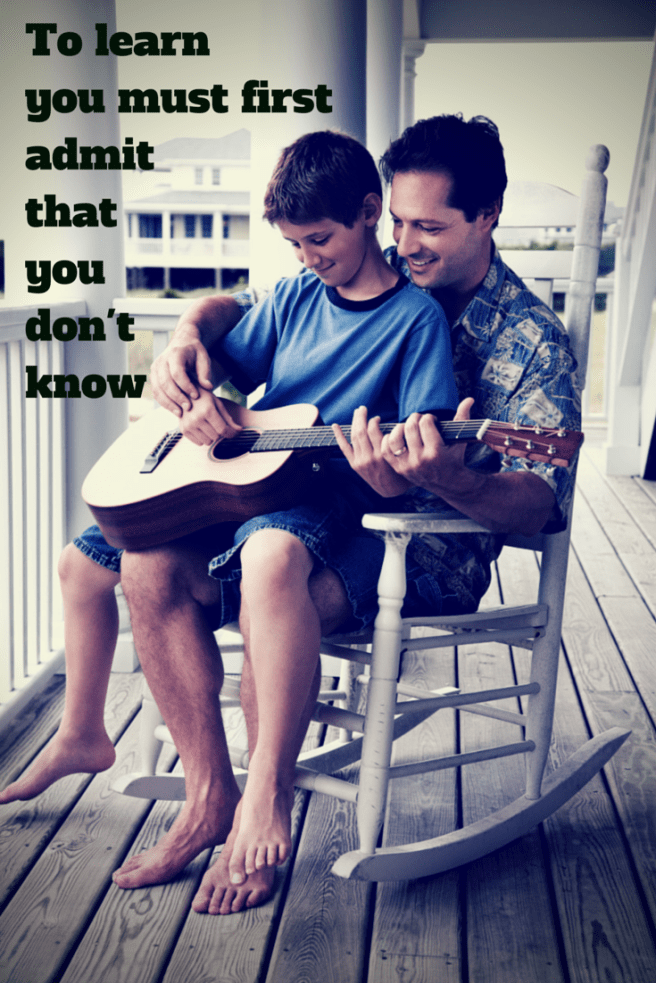
From each writer, I collected kernels of truth, after you wooed and wowed me with your words. Someone noted that humility is the common thread that runs through the Learning Series. Indeed, to learn, you must first admit that you don’t know.

The Learning Series was not the only collaboration I did this year. We wrote about age, the love languages of Nigerians, and love for country. The writers took my ideas and ran as far as Australia, danced above and below the Equator, and soared to Canada; yes farther than I could go. The result? A clash of hues softened by the spaces where we glimpsed your heart.

I opine that to write an effective personal piece, vulnerability must become like meat and potatoes. The writers delivered that quality, the ability to be open and yet closed, to be known and yet not known, to lie next to someone and yet not touch. Perhaps I reread your pieces and the comments that followed, to decipher your face in the dark that I might recognize you by light. These collaborations were shared over 150 times on social media, the power of your network not mine. You took me further.

In putting your stories and mine together, my joy at editing surpassed my joy at writing. I questioned if my writing was not merely a platform to pull other writers together to present the world with an anthology, all the stories of humanity in one place. I played with this notion until I met a ‘secret’ reader at an event. The usual pleasantries segued to the question of what I do.

“What do you blog about?”

I sized him up. Nigerian. Early thirties. “Let me show you.” I navigated to, Running in the Airport. “See,” I said, letting him read from my phone, “This kind of stuff.”

“Oh, I’ve read that before, hilarious! Someone sent it to me. So you’re the one who wrote that, he asked, looking at me. “You look . . .”

“Different,” I offered, aware that the photo on my blog was taken about three years ago.

“More beautiful in person.”

The charmer. If I were doing a sweepstake on my blog, I would skew the results so he would win.

“And you sound so . . .  so . . .”

“Ordinary?” I offered again.

“Yes,” he replied, shaking his head. “After reading all that big grammar you write . . .”

Right there, his laughter clambering over mine, I began to write a blog post in my head.

Our laughter reminded me that my collaboration with readers either through the comments or in real life has also taken me further than I dreamed possible. Writing gives me visibility. It is wonderful to meet and know people beyond the page.

Happiness is transient for me, until I celebrate every phase of my journey. It is true what they say; the grass is greener on the side where it is watered. In 2014, my blog was a beautiful place to be because of you.


If I have seen further it is by standing on the shoulders of giants.
 Isaac Newton


©Timi Yeseibo 2014

Unauthorized use and/or duplication of this material without express and written permission from this blog’s author and/or owner is strictly prohibited. Excerpts and links may be used, provided that full and clear credit is given to Timi Yeseibo and livelytwist.wordpress.com with appropriate and specific direction to the original content.


Did We Do Any Learning? [5]

learning & living

The human story does not always unfold like a mathematical calculation on the principle that two and two make four. Sometimes in life they make five or minus three; and sometimes the blackboard topples down in the middle of the sum and leaves the class in disorder and the pedagogue with a black eye.  
– Winston Churchill –


I Tried to be a Writer

2014 is the year I tried to be a writer and most of the things that happened to me—both good and bad—are centred on this.

Failure or rejection can teach lessons that take a lifetime of success to imbibe. When I was younger, my Dad often said, “Iya o je o, o wipe o gbon; tani tisa re?” (You claim to possess wisdom without enrolling in the school of suffering. Who is your teacher?).  I scoffed at the statement’s cynicism, but now I know better.

So, the correct answer to “How are you?” is not “fine”. It is a long rambling confession to the people we love and trust, opening our hearts and hoping they’ll listen, even if they don’t have answers. There is strength in vulnerability and weakness in machismo. I became versed in the manual on being broke and having to depend on people, not only for money, but also for encouragement and advice.

2014 is the year I left safe behind. I look at the wonderful people I met and the little I’ve achieved. It would have been impossible if I had not tried to be a writer.

Ifemmanuel @ IfeOluwa’s Rambles


Wandering Purposefully

I have created an oxymoron: to wander purposefully. In many intervals of my life, I have often felt lost and out of place like a chicken in a lion’s pride. This year however, I made a non-committal resolution (not a fan of New Year resolutions), to take charge of my life. I thought changing academic paths would bring me peace, but life is a pot of burnt beans.

Compounding my default setting of feeling lost was the feeling that I was losing myself. I started to experience small bouts of anger and bitterness that seldom translated to fisting the wall of my bathroom and ranting expletives in my thoughts. I did however have some great winning moments this year. In those winning moments, I learnt that many people are wandering too, behind a desk job, a pulpit, a graduation gown, etc, and that it was okay to wander.

For the first time in a while, I feel as though I am on the, or perhaps, a right track. Maybe I am not lost after all; maybe I am just wandering, wandering purposefully. This is what I have learnt this year, that I can wander without losing stride or sight.

Not all those who wander are lost. –  J.R.R Tolkien

Tomi Olugbemi @ I Write to Escape


Savouring Memories

If I had to distil my year into one sentence, it would be that seminal Dickens’ opening in A Tale of Two Cities, “It was the best of times, it was the worst of times, it was the age of wisdom, it was the age of foolishness.”

Of my ups and downs, losing H was the lowest of the lows. Looking back, the surprise was not that it happened but that it happened so fast, once the downturn kicked in and things began to unravel. The one lingering regret from that summer of grief remains the tenseness that characterised the final few months.

Being alike meant we were always a few sharp words away from spontaneous combustion, something we managed to avoid for the greater part. The pressure began to tell when she began to sense that the sand in her hourglass was running out, and fast. We had our biggest flare up in a long time.

We made up eventually, thankfully—that would have been far too great a burden to carry for the rest of my life—but the thought that we could have made more memories to savour, is one I haven’t quite shaken off.

Life’s lessons are neither bleeding obvious nor palatable. All we possess for sure are the moments that we share with our friends and loved ones. The challenge is to enjoy and maximise the moments, not putting off the kind word, the lingering touch, or the act of kindness we know they deserve.

AJ @ A Geek’s Life


Unauthorized use and/or duplication of this material without express and written permission from this blog’s author and/or owner is strictly prohibited. Excerpts and links may be used, provided that full and clear credit is given to Timi Yeseibo and livelytwist.wordpress.com with appropriate and specific direction to the original content.


Did We Do Any Learning? [4]


know thyself


A Small Sacrifice to Make

I love December. Although I miss the sunlight of the longer summer days, I try to embrace the darkness of winter, because it forces me to re-focus; focus on me, my life, my house, my work, my family, and my friends. I see this month as an end and a beginning, a time to evaluate the past year and to think about the future.

This year has been very emotional with some considerable lows and some exhilarating highs. I fell for the wrong guy and was faced with the task of mending the pieces of my broken heart.

The most important thing I have learned this year is twofold. I saw a quote, I can’t remember where, but thankfully, it stuck in my head and in my heart: “Be strong enough to let go and be patient enough to wait for what you truly deserve.”

Repeating this mantra over and over gave me strength to make choices and say goodbyes that aided my wellbeing. It helped and is still helping me feel and truly believe I deserve the kind of stuff for which patience is a small sacrifice to make.


Gertie Janine Fransens makes her home in Amstelveen. When not working or enjoying books, movies, and music at home, she likes to go out, have a drink, get to know new people, and dance like nobody’s watching.


Table for One

The wind whipped my hair as I walked along the alleys of the Centrum. I smoothened my hair before I pushed the door open.

Poised, I said, “I have a reservation for two . . .”

“This way please.”

Twenty uncomfortable minutes followed.

The text came in after I sat: runin late b dere in 5.

When the third waiter asked if I wanted to order; if someone was joining me, I answered, “Yes, they’re coming!” and reminded myself to take the edge off my voice.

I refused to lose myself in Khalid Hosseini’s, And the Mountains Echoed. I refused to “smoke” my 21st century “cigarette,” that is, play with my smart phone. I sat, elbows off the table, admiring the oriental décor in the cozy setting. I played the which-couples-are-dating-married-fighting-game; and then watched the long and short hands of the clock.

Because I didn’t fill the void, (to prove what exactly?), I felt as though every eye was on me, every conversation was about me; my aloneness fingered with naan bread, forked and knifed with lamb tikka masala, and spooned with kulfi.

I had heard about a restaurant in Amsterdam, EENMAAL, billed as the first one-person restaurant in the world, and an attractive place for temporary disconnection. I had scoffed at the idea. Wouldn’t people rather eat alone in a normal restaurant? As I sat by myself, trying to be brave, I ate my words.

I write alone.

I create alone.

I think alone.

I can shop alone.

I can travel alone.

I can go to the cinema alone.

It catches me by surprise; I cannot eat dinner alone in a restaurant.

I am not as self-assured and independent as I thought I was. And, it’s okay.


Timi @ livelytwist


Unauthorized use and/or duplication of this material without express and written permission from this blog’s author and/or owner is strictly prohibited. Excerpts and links may be used, provided that full and clear credit is given to Timi Yeseibo and livelytwist.wordpress.com with appropriate and specific direction to the original content.


Did We Do Any Learning? [3]

learning

9 Things I’ve Re-Learned This Year

Life lessons aren’t mastered in a single bold stroke.  We learn, we practice, we forget, we remember, we re-learn. Here are a few key notes I re-learned this year:

  1. Like a bottomless well, Ego’s desire for applause, accolades, approval, acknowledgement, acclaim, awards, and recognition is never satiated.
  2. When we stroke Ego, it purrs. When we stop, it snarls.
  3. It’s silly to buy another pair of shoes because we want an Ego boost from others when they see us rocking our new ruby slippers.
  4. People want us to do what they want us to do when they want us to do it. They are affronted when we don’t.
  5. When people ask us to “be honest” . . . they don’t always mean it.
  6. In many ways, we are at the mercy of the tides. Life ebbs and flows.  Joy comes and goes.  Sorrow is hard to avoid.
  7. Even if we’re not convinced that “everything happens for a reason,” taking time to look for “silver linings” helps us deal with passing clouds.
  8. When we aren’t wedded to a set destination, we enjoy the journey (and its inevitable detours), more.
  9. If we are enjoying the journey, we win. No matter where the wind blows us.

Aah . . . that’s better!

Nrhatch @ Spirit Lights The Way 


Diversity and the Art of Writing

Writing has reassured me that the things we feel deeply as individuals are universal—love, rejection, angst, joy, belonging; that it’s okay to admit your vulnerabilities. It might feel scary, but it also makes you authentic. Your foibles, shame, and guilt might be someone else’s quiet truth.

People read novels autobiographically, through the lens of their life’s narrative, and their values and opinions. My heroine might be a role-model for one reader, but another reader might want to slap her. I have little control over how readers see my characters as an author, and this came as a big surprise. Most readers love my male lead, but one reader thought him a tosser (although she did reassure me she’d shag him in a heartbeat, oh dear!). Now I realise I can’t write my characters to keep everyone happy, it’s not possible. That’s okay, life isn’t a popularity contest. Besides, my characters largely write themselves.

Writing has taught me that diversity isn’t some little politically correct box to tick. Diversity abounds, it is the norm. The trick is to be open to differences and to hold back from rushing in to judge.  I attempt this by thinking my characters’ thoughts, walking in their shoes, and imagining their predicaments. Besides, wouldn’t it be boring if we were all the same?

Susan @ Susan Lattwein

Susan’s novel, Arafura – Unfinished Business, is a gritty romance with a bit of sex, dynamite, and hilarity – not always at the same time.


Real Men Carry Purses

Statements of fantasy can be metaphors for real life—you can live backwards and you can still learn at age 403! I once read that even if your body never aged, you’re statistically likely to die from an accident before you hit 600. See, you just learned something! I told you it was possible.

I have previously claimed on this blog that I am 403 years old, but I am far closer to 43. Although I exaggerated my age for humorous effect, one can learn after 40. And, while we can’t literally live backwards, we can become more open and tolerant, which is the opposite of what usually happens when people get older.

So I learned two things this year, both related: to respect women on a higher plane and to break free from my personal gender stereotypes. While I’ve long thought of myself as a feminist ally and viewed women as equals, that didn’t stop my subtle objectification. I was never the creepy dude, but I wasn’t the ally I thought I was, either. The journey toward being a better person is a welcome one.

With encouragement from the women in my life, I finally bought something this year I’ve wanted for ages, a purse. Why can’t a guy have a purse? It elevates the quality of life. I needed to build up my “bravery” first, which shows you how badass women are. They carry purses all the time.

Eric @ ericjohnbaker


Unauthorized use and/or duplication of this material without express and written permission from this blog’s author and/or owner is strictly prohibited. Excerpts and links may be used, provided that full and clear credit is given to Timi Yeseibo and livelytwist.wordpress.com with appropriate and specific direction to the original content.

Did We Do Any Learning? [2]

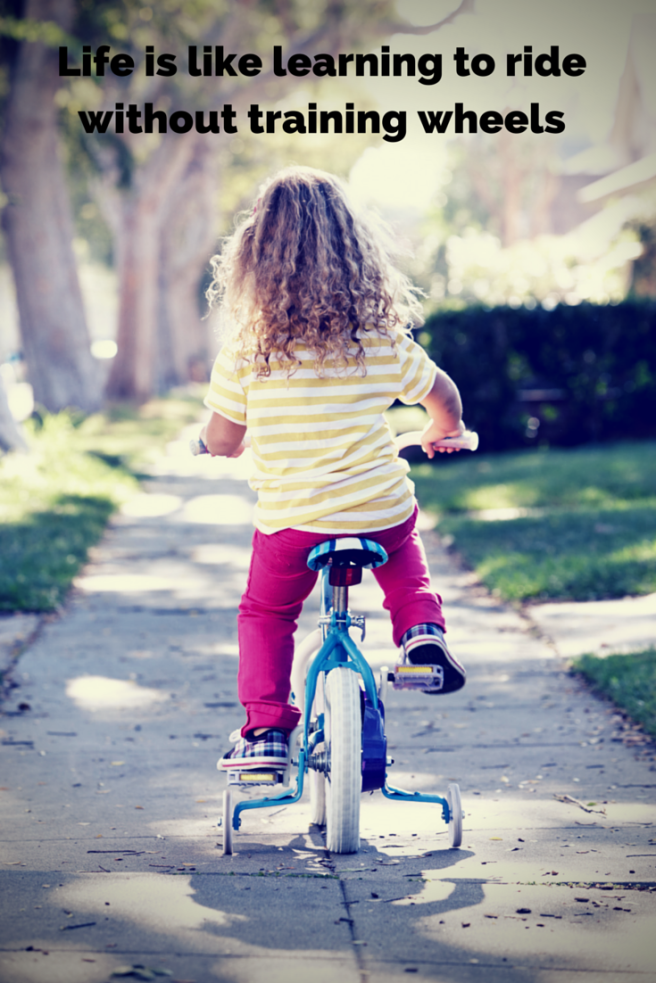
training bike

Keep on Moving, Don’t Stop!

I’ve grown. If according to John Foster Dulles, the measure of success is not whether you have a tough problem to deal with, but whether it is the same problem you had last year, then I’ve grown and become successful. A few years ago, I created a problem for myself that cost me in currency that did not exist. That blow, that loss, that disappointment, that self-loathing, stole one year of my life. I hid under the bedcovers in January and did not emerge until December.

This year, I created a dissimilar problem. The blow, the loss, the disappointment, the self-loathing, was the same, but it did not steal one year of my life. I drew a circle of blame with one big dot in the centre, representing me, the first step in securing redemption and embracing grace. Then I forgave myself and doubled my productivity.

Since yellow is the colour of sunrays, Soul 2 Soul’s Keep on Moving, became my refrain. My mistakes helped me locate myself on the ladder of my development, several rungs below where I’d hoped to be. But wading through the putrid mess, I found as John Maxwell says, keys that I can use to unlock the next door of opportunity.

Fall, rise, keep rising, keep on moving, don’t stop!


©Timi Yeseibo 2014


Unauthorized use and/or duplication of this material without express and written permission from this blog’s author and/or owner is strictly prohibited. Excerpts and links may be used, provided that full and clear credit is given to Timi Yeseibo and livelytwist.wordpress.com with appropriate and specific direction to the original content.

Did We Do Any Learning? [1]

Learning

Yiikes, I’m a Control Freak!

Accomplished is my word for 2014. But so is Control Freak, as I’ll learn later.

It was a fine morning in June 2013 when I sat, filling out forms in the anaesthesiologist’s office.

“Gosh, you have OCD,” he said, when I handed them back.

Puzzled, I turned to him, “Why do you say that, sir?”

“Well, you’ve filled out every detail on the form. Hmm, the people who work for you must be suffering.”

What? All that from filling out a form properly? No appreciation? Why ask for the information if it was unnecessary? I shrugged but paused, thought lingering.


Fast forward to November 2014.  I’m reading, Eat, Pray, Love, by Elizabeth Gilbert. I’m awed that she, thousands of miles away, can write my heart so perfectly. In the book, ‘Liz is in conversation with her friend, Richard:

“Lemme tell you something, Groceries – you got some serious control issues.

“My rage at this statement consumes me like fire. Control Issues? ME?

“…Listen, you’re a powerful woman, and you’re used to getting what you want out of life,…Life didn’t go your way for once. And nothing pisses off a control freak more than life not goin’ her way.

“You gotta learn how to let go, Groceries. Otherwise, you’re gonna make yourself sick. Never gonna have a good night’s sleep again. You’ll just toss and turn forever, beatin’ on yourself for being such a fiasco in life…How come I screw up all my relationships? Why am I such a failure?”1

I scream in my head. This is me. Has been me forever.  And so I’ve decided that my phrase for 2015 is Letting Go. Because I can’t look forward and back at the same time.

Control Freak. Letting go.


Ozoz @ Kitchen Butterfly
Watch her Journey by Plate, at TEDx Port Harcourt, October 2014.


No Stopping Me

I refuse to listen to the cynical voice sending evil messages to my brain, “You have reached your limit, just give up and maintain what you have.”

It is not possible that I cannot lose any more weight. Short of sewing up my intestines, tongue, and teeth, I have tried everything humanly and spiritually possible to lose weight.

Last Friday, I decided to give my body a treat. Off I went to a nearby gym and spa center. I asked about their services.

“Pedicure, body polish and massage, facials, tummy blast—”

“Eh Tummy blast?” Light bulbs went off in my head. “What does it entail?”

“We have a machine that rolls over the stomach, as well as a kneading wood that helps to blast the fat.”

“Wow! Really?”

“Yes ma,” the lady responded. “But you need to come in for a minimum of six sessions to see tangible results.”


Treatment started in earnest. The machine began its work. Years of unleavened fat would not go down without a fight. The kneading wood was applied to further flatten the pouch. Next, they tied me with cellophane and a long strip of cloth. I made Herve Leger’s bandage dress look like child’s play. Na wa, so this is what it feels like to be an Egyptian mummy?

Fifteen minutes later, I had lost about an inch! They placed me on a three-day fruit diet with lots of water and gave me aloe vera gel drink as part of a detox plan.

Although the aloe vera drink tastes like shit and my husband laments that he and the kids are the real victims of my never-ending weight loss programmes (they cannot go to the toilet after me since air fresheners and diffusers are powerless against this form of domestic terrorism), I am trudging on. Ain’t no stopping me. One down, five to go.


Eriye Onagoruwa is a legal practitioner. She writes satirical pieces for The Guardian.


A Thin Line Between Yes and No

I tend to say yes to almost everything.

I tell myself that this is due to my good nature, after all what’s so bad about trying to avoid the landmine of hurt feelings? I sometimes suspect though, that it is because I hate being told no myself. My reluctance to use the word no usually results in my being burdened and stretched with over commitments and ever-increasing responsibilities. This was a constant thread than ran through the fabric of 2014—a constantly overflowing schedule. The slender margins took a toll and gave rise to frayed nerves and a quick temper.

A person who lives with the stress of an overwhelmed schedule will ache with the sadness of an underwhelmed soul.2

I wish I had known earlier, the freedom that comes with just saying no. Saying no does not close the door on opportunities; rather it creates the opportunity to say a resounding yes to the things that do matter. Saying no is just another way of saying, “Yes!” to the important things. Lysa Terkeurst calls this our Best Yes.3

I am not one for New Year resolutions, but as 2015 peeks from behind the folds of 2014, I hear, margin. I have learnt that I need margin in my life and to achieve this, sometimes, I need to say it loud and say it clear, with a dash of understanding and empathy of course, “No!”


Tamkara @ naijaexpatinholland
Tamkara rocks her clogs expat style in the book, Dutched Up! with 27 other expats who share their perspectives on life in The Netherlands.


  1. Gilbert, Elizabeth, Eat Pray Love (Croydon: CPI Group (UK) Ltd. Books, 2007), 158 – 159.
  2. Goins, Jeff. 025: Saying Yes to the Best Things: How Do You Balance It All? [Podcast]
  3. TerKeurst Lysa, The Best Yes: Making Wise Decisions in the Midst of Endless Demand


Unauthorized use and/or duplication of this material without express and written permission from this blog’s author and/or owner is strictly prohibited. Excerpts and links may be used, provided that full and clear credit is given to Timi Yeseibo and livelytwist.wordpress.com with appropriate and specific direction to the original content.

Of Resolutions, Past and Present

of resolutions, past & present

Reflections and resolutions now seem so cliché, I struggle to write this post. Rummaging in the attic, I find a box of old clothes. Each item of clothing held a promise for the future that’s been realised. I hold up a pair jeans, faded and torn at the knees, and press my face into a light pink summer dress. I marvel at how much the kids have grown for it depicts how far along I have come. The past may hold treasures, still remembered but the future is bound in hope, in belief and in the knowledge that with life, all things are possible1.

2012 seemed like such a dismal year for me that come 2013, I had only one mantra: be happy and move forward. 2012 had been a tough year for me that I left formulating 2013 New Year resolutions to the brave and mighty. I knew about goal setting and other jargon like accelerate performance and maximise results, having taught others these principles, yet I dared not articulate hope on paper.

Careful not to rumple the blanket of snow around me, I placed my feet in the footprints ahead as I walked home. Although it was early 2013, several doors had already closed in my face, some loud, others quiet; all resounded with foreboding. I told myself, “No matter what happens, move forward.” All men fail, not all men rise. If I didn’t like the tempo of the skipping rope to nowhere (self-doubt held one end and if-onlys the other), I could jump out. Speed wasn’t priority, movement was. Crawl, limp, walk, run, anything, as long as I kept moving forward.

I tried to be happy, but happiness is a moving target. My challenge was to find something upon which to anchor my happiness. Many suitors paraded before me. Things and more things. People and their foibles. Relationships and their contradictions. In living for something bigger than myself, I moored my ship. A legacy is something that will outlive me, so I gave my best always. I started writing again. Once a week. I made my commitment public, you held me accountable.

Since I had subconsciously translated my mantra into goals, I had to track progress. Success has several indices. I failed on many of them until I realised I must define my own. No one in his right mind expected me to be the next Bill Gates, but everyone expected me to finally get the hang of Windows 8 and stop whining.

Although I have surpassed my bar, success has no finish line. After we cross the tape, and the applause dies, euphoria will leave a day too soon. The world throws today’s headline in the garbage bin tomorrow. I have stopped waiting for that thing to happen before I live. I move forward, I forward march.

Here are three things that helped me on my way.

Define your boundaries and internalise them by rehearsing often, for we are not as strong as we think we are. Two words: be principled.

Cut off unhealthy relationships. A clean snip with a sharp blade worked for me. A saw leaves jagged edges and many wounds. Two words: follow champions

Don’t give unsolicited advice and your relationships will have less drama. If asked, discern the real need: affirmation or feedback. Two words: shut up.

2014? I dare to articulate hope. I will give more, need less, laugh again, forget quick, dream big, in other words, take lemons, make life, and then jump for joy!

Do you make New Year resolutions or write your goals, or do you let the wind carry you where it will?


©Timi Yeseibo 2013


1. Quote from KitchenButterfly, “The ‘Forgotten’ Groundnut Pyramids of Nigeria.  http://www.kitchenbutterfly.com/2013/08/08/the-forgotten-groundnut-pyramids-of-nigeria/


Image credits: http://www.pixabay.com

Design: ©Timi Yeseibo 2013


Unauthorized use and/or duplication of this material without express and written permission from this blog’s author and/or owner is strictly prohibited. Excerpts and links may be used, provided that full and clear credit is given to Timi Yeseibo and livelytwist.wordpress.com with appropriate and specific direction to the original content.