Happy New Momentum

Momentum

Momentum:

  • the strength or force that allows something to continue or to grow stronger or faster as time passes
  • The impetus gained by a moving object
  • The impetus and driving force gained by the development of a process or course of events


1.

About 300 metres to the junction, the traffic light changes to green so I do not need to stop. I cruise past the cars queued on the right lane, which are rousing from varied states of slumber. I do not remove my foot from the gas pedal on my way home, save once. My confidence grows at each succeeding intersection; red does not faze me. It is that kind of day; every light turns green as if anticipating my approach. “It’s a sign,” I say to myself, “So this is what momentum looks like?”


2.

Traffic on Tuesday is unexpected. That cars on the slow lane crawl faster than cars on the speed lane bemuses me. I am undecided as to where I should be. I fix my lipstick and smack my lips using my sun visor mirror. The man in the car on my right smiles at me. I smile back and ease my Toyota in front of his Nissan. Life can be as easy as changing lanes. At every crossroad in my life, someone on the ‘fast’ lane has allowed me cut in ahead of him. Riding on their momentum, I arrived at my destination faster than I otherwise would have. Later, I look at the rear-view mirror and my eyes collide with a strange pair. It is as if the man who made room for me was never there.


3.

When I receive a notification from WordPress that my stats are booming, I am surprised. On Saturday, even I rarely visit my blog because it is a distraction from the business of writing. Facebook is the culprit sending viewers my way. It happened that an acquaintance stumbled on a story on my blog and shared it with her friend who is a person of influence. He enjoyed the story and shared the link on his Timeline. Then his crowd came to see. In The Tipping Point, Malcolm Gladwell writes that we are actually powerfully influenced by our surroundings, our immediate context, and the personalities of those around us1. We rely on them [connectors] to give us access to opportunities and worlds to which we don’t belong2. Your friends, after all, occupy the same world that you do3. The number of views rise like the tide over the course of the evening. I reflect that the only thing I did was agonize over every single word of a short story for five nights before publishing it on a Sunday, weeks ago.


4.

In the mythology of various cultures, man supplicates assistance from deities who guarantee success or reverse fortunes, from Zeus to Thor to Sango. If one subscribes to the Biblical narrative, one encounters a prophet, Elijah, running behind a king riding on a chariot. The king should arrive long before Elijah does for man is no match for horses. However, Elijah receives a boost in momentum from his God. He runs faster than the king’s chariot, a sight that may have made it to YouTube and gone viral, if it were today. Technological advances make reliance on deity a primitive concept for some. Man and the machines he has made have created momentum that carries him beyond the moon and back. But what is momentum for you? Wherever you anchor your belief, I wish you what I wish myself: that you consolidate the gains from the previous year and ride a new wave. Happy new momentum.


©Timi Yeseibo 2014


  1. Gladwell, Malcom, The Tipping Point, How Little Things Can Make A Big Difference, (London: Abacus/Time Warner Books, 2001), 259.
  2. Ibid., 54.
  3. Ibid., 54.


Photo credit: Acatana/ http://pixabay.com/en/highway-night-traffic-spotlight-409126/


Unauthorized use and/or duplication of this material without express and written permission from this blog’s author and/or owner is strictly prohibited. Excerpts and links may be used, provided that full and clear credit is given to Timi Yeseibo and livelytwist.wordpress.com with appropriate and specific direction to the original content.

 

Collaboration: You and Me

collaboration

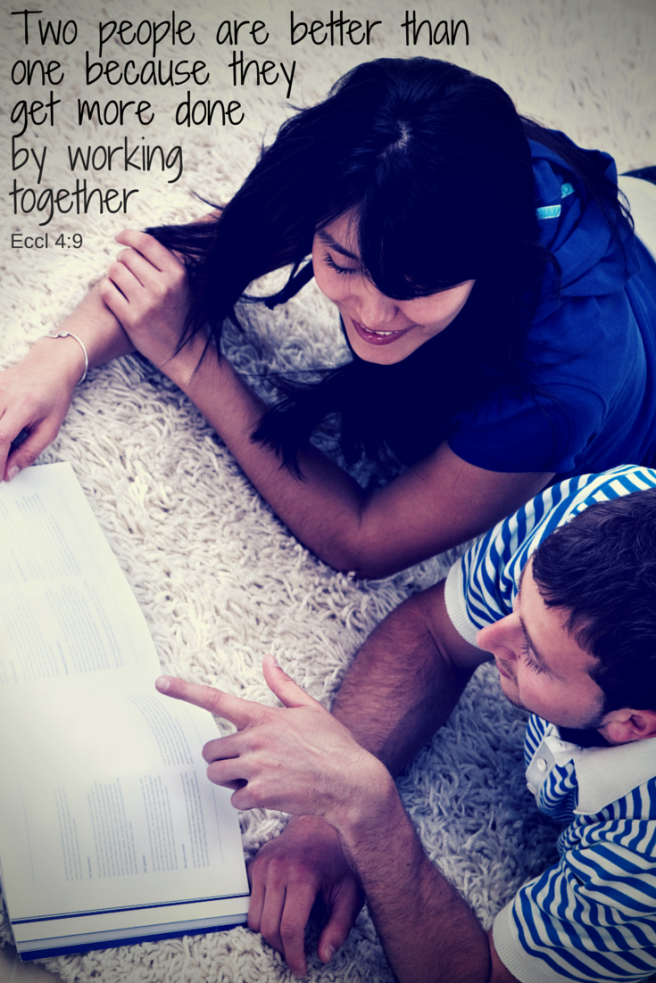
Collaboration. Holistic Wayfarer showed me how it’s done by inviting me to write a blog post alongside her and Nida S., another writer. An African proverb says if you want to go quickly, go alone, if you want to go far, go together. I went farther this year, because you journeyed with me.

I overcame fear of rejection and what-ifs to approach you, virtual stranger, virtual friend. I told you that I admire your writing and I would be honoured if you shared your perspective on a series I’m doing. And when that didn’t work, I pursued you—busy you, you that hadn’t written in a while, you that was between jobs, cities, homes. Determined not to say your no for you, I ‘harassed’ you until you said, “Yes, Timi!”

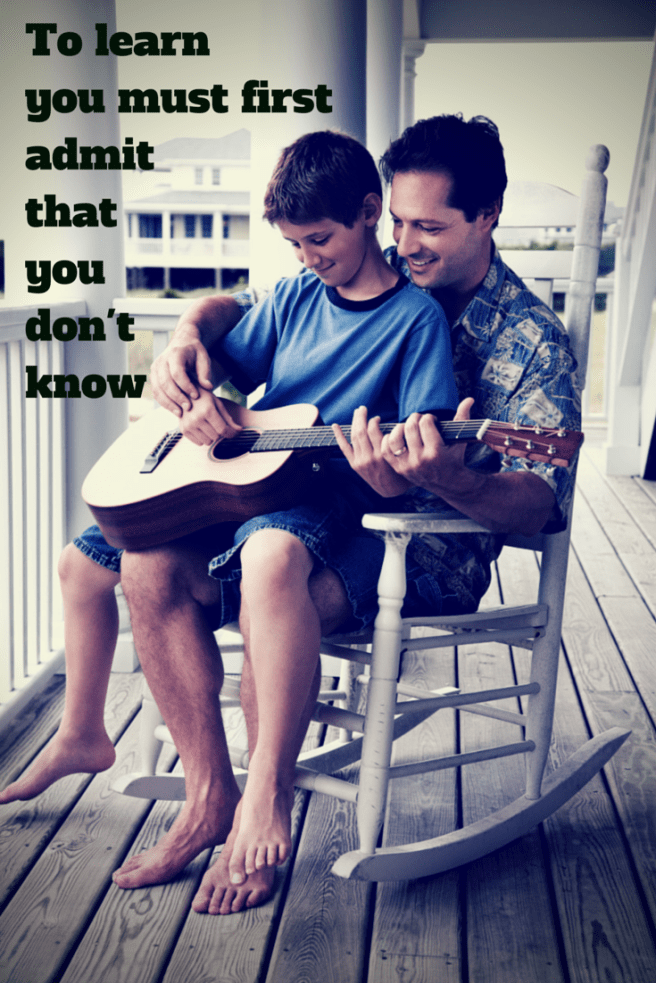
From each writer, I collected kernels of truth, after you wooed and wowed me with your words. Someone noted that humility is the common thread that runs through the Learning Series. Indeed, to learn, you must first admit that you don’t know.

The Learning Series was not the only collaboration I did this year. We wrote about age, the love languages of Nigerians, and love for country. The writers took my ideas and ran as far as Australia, danced above and below the Equator, and soared to Canada; yes farther than I could go. The result? A clash of hues softened by the spaces where we glimpsed your heart.

I opine that to write an effective personal piece, vulnerability must become like meat and potatoes. The writers delivered that quality, the ability to be open and yet closed, to be known and yet not known, to lie next to someone and yet not touch. Perhaps I reread your pieces and the comments that followed, to decipher your face in the dark that I might recognize you by light. These collaborations were shared over 150 times on social media, the power of your network not mine. You took me further.

In putting your stories and mine together, my joy at editing surpassed my joy at writing. I questioned if my writing was not merely a platform to pull other writers together to present the world with an anthology, all the stories of humanity in one place. I played with this notion until I met a ‘secret’ reader at an event. The usual pleasantries segued to the question of what I do.

“What do you blog about?”

I sized him up. Nigerian. Early thirties. “Let me show you.” I navigated to, Running in the Airport. “See,” I said, letting him read from my phone, “This kind of stuff.”

“Oh, I’ve read that before, hilarious! Someone sent it to me. So you’re the one who wrote that, he asked, looking at me. “You look . . .”

“Different,” I offered, aware that the photo on my blog was taken about three years ago.

“More beautiful in person.”

The charmer. If I were doing a sweepstake on my blog, I would skew the results so he would win.

“And you sound so . . .  so . . .”

“Ordinary?” I offered again.

“Yes,” he replied, shaking his head. “After reading all that big grammar you write . . .”

Right there, his laughter clambering over mine, I began to write a blog post in my head.

Our laughter reminded me that my collaboration with readers either through the comments or in real life has also taken me further than I dreamed possible. Writing gives me visibility. It is wonderful to meet and know people beyond the page.

Happiness is transient for me, until I celebrate every phase of my journey. It is true what they say; the grass is greener on the side where it is watered. In 2014, my blog was a beautiful place to be because of you.


If I have seen further it is by standing on the shoulders of giants.
 Isaac Newton


©Timi Yeseibo 2014

Unauthorized use and/or duplication of this material without express and written permission from this blog’s author and/or owner is strictly prohibited. Excerpts and links may be used, provided that full and clear credit is given to Timi Yeseibo and livelytwist.wordpress.com with appropriate and specific direction to the original content.


Did We Do Any Learning? [6]

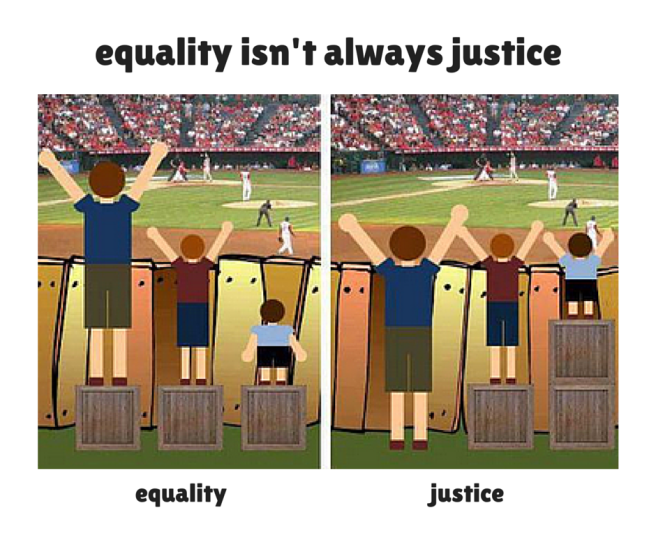
equality v justice

Human rights are not only violated by terrorism, repression or assassination, but also by unfair economic structures that create huge inequalities.
Pope Francis


Life isn’t Always Fair

It is a lesson we have all learned. Sometimes fate turns around and bites us. But I have never seen this inequity so clear and so devastating, as I have over the last three months in Liberia, Sierra Leone, and Guinea.

Ebola.

I was a Peace Corps Volunteer in Liberia from 1965 to 1967, a long time ago.  It was an incredible experience for me, going from the University of California at Berkeley and California’s super-urban Bay Area to the then small upcountry town of Gbarnga, where I met Africa face to face and received so much more from the experience than I was able to contribute.

Afterwards, the terrible civil wars tore Liberia apart in a way that was incomprehensible to those of us who had lived in the country and had come to know her people and culture.

Recently, I began to feel more optimistic about Liberia’s future. There was hope. Liberia had known peace for ten years. Children were back in school. There was laughter in the street.

And then Ebola struck. Once again, Liberia teeters on the edge of chaos. How much more can the country take? Yes there are things we can do, must do, to help. But I can’t help thinking, over and over: isn’t it time that fate gives the people of Liberia, Guinea, and Sierra Leone a break?


Curt Mekemson @ Wandering through Time and Place

Half of the profits from Curt’s recent book, The Bush Devil Ate Sam and Other Tales of a Peace Corps Volunteer in Liberia West Africa, will go to Friends of Liberia, a group of returned Peace Corps volunteers.


Wake Up and Think for Yourself

This year my sixty-seven year old country finally woke up. Millions of Pakistanis learned to think for themselves.

Four months ago, frustrated people stepped out of their homes and stamped their thoughts on the streets under the leadership of Imran Khan. Old men, housewives, students, and children slid open curtains of indifference and made history.

War is when your government tells you who the enemy is. A revolution is when you figure it out yourself. ~Anonymous

This year millions of Pakistanis learned about pain. Pain that transcends boundaries of flesh and geography. Pain that sets things into perspective. Love, family, home, and health. Everything else seems extravagant. You don’t expect to send your children to school and never see them again.1

We saw hope and held on to it tight. Perhaps too tight because it left blisters. We learned about healing as skins of faith quickly formed protective layers on our stubborn wounds. My people are even more stubborn.

This year I learned about victory. A victory that marks an end to our closed minds and blind hearts. I have seen my extraordinary people walk to hell and back. They tell me to keep going. Because that is exactly what they will do. They always do. And this revelation makes me realize our power.

I had a dream about you last night…and in it you said, ‘Chin up; it only gets harder.’ ~ Marshal Ramsay

Think. Question. Challenge.

Because once people begin to think aloud, they are impossible to ignore.


Nida S. @ on the road to inkrichment 

  1. On 16 December 2014, terrorists ran down an Army public school in Peshawar (Pakistan), leaving 132 children and 9 members of the school staff dead in cold blood.


In Search of a Messiah

I have thought about poverty and inequality, and for me, there are no easy answers yet. Years of inequality, poverty, rising unemployment (indices to gauge development according to economist Dudley Seers), and insecurity, have made many Nigerians pant for a benevolent dictator, a fairy godmother with a magic wand to wave all our problems away, while we dance with the prince and midnight never comes.

In the lyrics of Bob Marley, Most people think great god will come from the sky take away ev’rything, and make ev’rybody feel high. I believe in The Messiah, but I don’t want to be guilty of a messiah complex. These days when someone offers me help, I ask why, I ask how, I ask what, I ask where, I ask how much. And, I keep asking until I understand.

The race for the 2015 presidential elections in Nigeria resembles a dem-all-crazy; they say we have to choose the lesser of two devils. Democracy delivers to us what we demand of her. Poverty and inequality like kwashiorkor, can make people swallow nutrition devoid of protein, and then roll over to sleep not realising death is waiting.

I have learnt that on the drive to my destination, it is unwise to hand over the keys of my life and snooze in the passenger seat. Going by what I read on social media it seems many have learnt this too. The challenge is to remind the driver that he is driving our car and so we decide where he goes and when he stops.

Timi @ Livelytwist


Unauthorized use and/or duplication of this material without express and written permission from this blog’s author and/or owner is strictly prohibited. Excerpts and links may be used, provided that full and clear credit is given to Timi Yeseibo and livelytwist.wordpress.com with appropriate and specific direction to the original content.
Did We Do Any Learning? [5]

learning & living

The human story does not always unfold like a mathematical calculation on the principle that two and two make four. Sometimes in life they make five or minus three; and sometimes the blackboard topples down in the middle of the sum and leaves the class in disorder and the pedagogue with a black eye.  
– Winston Churchill –


I Tried to be a Writer

2014 is the year I tried to be a writer and most of the things that happened to me—both good and bad—are centred on this.

Failure or rejection can teach lessons that take a lifetime of success to imbibe. When I was younger, my Dad often said, “Iya o je o, o wipe o gbon; tani tisa re?” (You claim to possess wisdom without enrolling in the school of suffering. Who is your teacher?).  I scoffed at the statement’s cynicism, but now I know better.

So, the correct answer to “How are you?” is not “fine”. It is a long rambling confession to the people we love and trust, opening our hearts and hoping they’ll listen, even if they don’t have answers. There is strength in vulnerability and weakness in machismo. I became versed in the manual on being broke and having to depend on people, not only for money, but also for encouragement and advice.

2014 is the year I left safe behind. I look at the wonderful people I met and the little I’ve achieved. It would have been impossible if I had not tried to be a writer.

Ifemmanuel @ IfeOluwa’s Rambles


Wandering Purposefully

I have created an oxymoron: to wander purposefully. In many intervals of my life, I have often felt lost and out of place like a chicken in a lion’s pride. This year however, I made a non-committal resolution (not a fan of New Year resolutions), to take charge of my life. I thought changing academic paths would bring me peace, but life is a pot of burnt beans.

Compounding my default setting of feeling lost was the feeling that I was losing myself. I started to experience small bouts of anger and bitterness that seldom translated to fisting the wall of my bathroom and ranting expletives in my thoughts. I did however have some great winning moments this year. In those winning moments, I learnt that many people are wandering too, behind a desk job, a pulpit, a graduation gown, etc, and that it was okay to wander.

For the first time in a while, I feel as though I am on the, or perhaps, a right track. Maybe I am not lost after all; maybe I am just wandering, wandering purposefully. This is what I have learnt this year, that I can wander without losing stride or sight.

Not all those who wander are lost. –  J.R.R Tolkien

Tomi Olugbemi @ I Write to Escape


Savouring Memories

If I had to distil my year into one sentence, it would be that seminal Dickens’ opening in A Tale of Two Cities, “It was the best of times, it was the worst of times, it was the age of wisdom, it was the age of foolishness.”

Of my ups and downs, losing H was the lowest of the lows. Looking back, the surprise was not that it happened but that it happened so fast, once the downturn kicked in and things began to unravel. The one lingering regret from that summer of grief remains the tenseness that characterised the final few months.

Being alike meant we were always a few sharp words away from spontaneous combustion, something we managed to avoid for the greater part. The pressure began to tell when she began to sense that the sand in her hourglass was running out, and fast. We had our biggest flare up in a long time.

We made up eventually, thankfully—that would have been far too great a burden to carry for the rest of my life—but the thought that we could have made more memories to savour, is one I haven’t quite shaken off.

Life’s lessons are neither bleeding obvious nor palatable. All we possess for sure are the moments that we share with our friends and loved ones. The challenge is to enjoy and maximise the moments, not putting off the kind word, the lingering touch, or the act of kindness we know they deserve.

AJ @ A Geek’s Life


Unauthorized use and/or duplication of this material without express and written permission from this blog’s author and/or owner is strictly prohibited. Excerpts and links may be used, provided that full and clear credit is given to Timi Yeseibo and livelytwist.wordpress.com with appropriate and specific direction to the original content.
 

Did We Do Any Learning? [3]

learning

9 Things I’ve Re-Learned This Year

Life lessons aren’t mastered in a single bold stroke.  We learn, we practice, we forget, we remember, we re-learn. Here are a few key notes I re-learned this year:

  1. Like a bottomless well, Ego’s desire for applause, accolades, approval, acknowledgement, acclaim, awards, and recognition is never satiated.
  2. When we stroke Ego, it purrs. When we stop, it snarls.
  3. It’s silly to buy another pair of shoes because we want an Ego boost from others when they see us rocking our new ruby slippers.
  4. People want us to do what they want us to do when they want us to do it. They are affronted when we don’t.
  5. When people ask us to “be honest” . . . they don’t always mean it.
  6. In many ways, we are at the mercy of the tides. Life ebbs and flows.  Joy comes and goes.  Sorrow is hard to avoid.
  7. Even if we’re not convinced that “everything happens for a reason,” taking time to look for “silver linings” helps us deal with passing clouds.
  8. When we aren’t wedded to a set destination, we enjoy the journey (and its inevitable detours), more.
  9. If we are enjoying the journey, we win. No matter where the wind blows us.

Aah . . . that’s better!

Nrhatch @ Spirit Lights The Way 


Diversity and the Art of Writing

Writing has reassured me that the things we feel deeply as individuals are universal—love, rejection, angst, joy, belonging; that it’s okay to admit your vulnerabilities. It might feel scary, but it also makes you authentic. Your foibles, shame, and guilt might be someone else’s quiet truth.

People read novels autobiographically, through the lens of their life’s narrative, and their values and opinions. My heroine might be a role-model for one reader, but another reader might want to slap her. I have little control over how readers see my characters as an author, and this came as a big surprise. Most readers love my male lead, but one reader thought him a tosser (although she did reassure me she’d shag him in a heartbeat, oh dear!). Now I realise I can’t write my characters to keep everyone happy, it’s not possible. That’s okay, life isn’t a popularity contest. Besides, my characters largely write themselves.

Writing has taught me that diversity isn’t some little politically correct box to tick. Diversity abounds, it is the norm. The trick is to be open to differences and to hold back from rushing in to judge.  I attempt this by thinking my characters’ thoughts, walking in their shoes, and imagining their predicaments. Besides, wouldn’t it be boring if we were all the same?

Susan @ Susan Lattwein

Susan’s novel, Arafura – Unfinished Business, is a gritty romance with a bit of sex, dynamite, and hilarity – not always at the same time.


Real Men Carry Purses

Statements of fantasy can be metaphors for real life—you can live backwards and you can still learn at age 403! I once read that even if your body never aged, you’re statistically likely to die from an accident before you hit 600. See, you just learned something! I told you it was possible.

I have previously claimed on this blog that I am 403 years old, but I am far closer to 43. Although I exaggerated my age for humorous effect, one can learn after 40. And, while we can’t literally live backwards, we can become more open and tolerant, which is the opposite of what usually happens when people get older.

So I learned two things this year, both related: to respect women on a higher plane and to break free from my personal gender stereotypes. While I’ve long thought of myself as a feminist ally and viewed women as equals, that didn’t stop my subtle objectification. I was never the creepy dude, but I wasn’t the ally I thought I was, either. The journey toward being a better person is a welcome one.

With encouragement from the women in my life, I finally bought something this year I’ve wanted for ages, a purse. Why can’t a guy have a purse? It elevates the quality of life. I needed to build up my “bravery” first, which shows you how badass women are. They carry purses all the time.

Eric @ ericjohnbaker


Unauthorized use and/or duplication of this material without express and written permission from this blog’s author and/or owner is strictly prohibited. Excerpts and links may be used, provided that full and clear credit is given to Timi Yeseibo and livelytwist.wordpress.com with appropriate and specific direction to the original content.

Did We Do Any Learning? [2]

training bike

Keep on Moving, Don’t Stop!

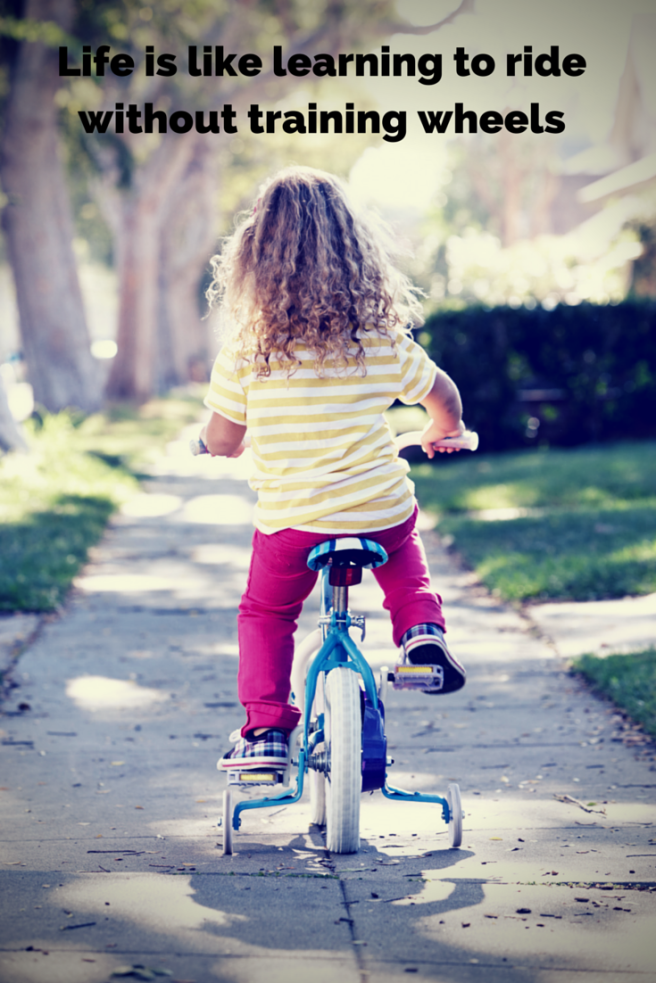
I’ve grown. If according to John Foster Dulles, the measure of success is not whether you have a tough problem to deal with, but whether it is the same problem you had last year, then I’ve grown and become successful. A few years ago, I created a problem for myself that cost me in currency that did not exist. That blow, that loss, that disappointment, that self-loathing, stole one year of my life. I hid under the bedcovers in January and did not emerge until December.

This year, I created a dissimilar problem. The blow, the loss, the disappointment, the self-loathing, was the same, but it did not steal one year of my life. I drew a circle of blame with one big dot in the centre, representing me, the first step in securing redemption and embracing grace. Then I forgave myself and doubled my productivity.

Since yellow is the colour of sunrays, Soul 2 Soul’s Keep on Moving, became my refrain. My mistakes helped me locate myself on the ladder of my development, several rungs below where I’d hoped to be. But wading through the putrid mess, I found as John Maxwell says, keys that I can use to unlock the next door of opportunity.

Fall, rise, keep rising, keep on moving, don’t stop!


©Timi Yeseibo 2014


Unauthorized use and/or duplication of this material without express and written permission from this blog’s author and/or owner is strictly prohibited. Excerpts and links may be used, provided that full and clear credit is given to Timi Yeseibo and livelytwist.wordpress.com with appropriate and specific direction to the original content.
Did We Do Any Learning? [1]

Learning

Yiikes, I’m a Control Freak!

Accomplished is my word for 2014. But so is Control Freak, as I’ll learn later.

It was a fine morning in June 2013 when I sat, filling out forms in the anaesthesiologist’s office.

“Gosh, you have OCD,” he said, when I handed them back.

Puzzled, I turned to him, “Why do you say that, sir?”

“Well, you’ve filled out every detail on the form. Hmm, the people who work for you must be suffering.”

What? All that from filling out a form properly? No appreciation? Why ask for the information if it was unnecessary? I shrugged but paused, thought lingering.


Fast forward to November 2014.  I’m reading, Eat, Pray, Love, by Elizabeth Gilbert. I’m awed that she, thousands of miles away, can write my heart so perfectly. In the book, ‘Liz is in conversation with her friend, Richard:

“Lemme tell you something, Groceries – you got some serious control issues.

“My rage at this statement consumes me like fire. Control Issues? ME?

“…Listen, you’re a powerful woman, and you’re used to getting what you want out of life,…Life didn’t go your way for once. And nothing pisses off a control freak more than life not goin’ her way.

“You gotta learn how to let go, Groceries. Otherwise, you’re gonna make yourself sick. Never gonna have a good night’s sleep again. You’ll just toss and turn forever, beatin’ on yourself for being such a fiasco in life…How come I screw up all my relationships? Why am I such a failure?”1

I scream in my head. This is me. Has been me forever.  And so I’ve decided that my phrase for 2015 is Letting Go. Because I can’t look forward and back at the same time.

Control Freak. Letting go.


Ozoz @ Kitchen Butterfly
Watch her Journey by Plate, at TEDx Port Harcourt, October 2014.


No Stopping Me

I refuse to listen to the cynical voice sending evil messages to my brain, “You have reached your limit, just give up and maintain what you have.”

It is not possible that I cannot lose any more weight. Short of sewing up my intestines, tongue, and teeth, I have tried everything humanly and spiritually possible to lose weight.

Last Friday, I decided to give my body a treat. Off I went to a nearby gym and spa center. I asked about their services.

“Pedicure, body polish and massage, facials, tummy blast—”

“Eh Tummy blast?” Light bulbs went off in my head. “What does it entail?”

“We have a machine that rolls over the stomach, as well as a kneading wood that helps to blast the fat.”

“Wow! Really?”

“Yes ma,” the lady responded. “But you need to come in for a minimum of six sessions to see tangible results.”


Treatment started in earnest. The machine began its work. Years of unleavened fat would not go down without a fight. The kneading wood was applied to further flatten the pouch. Next, they tied me with cellophane and a long strip of cloth. I made Herve Leger’s bandage dress look like child’s play. Na wa, so this is what it feels like to be an Egyptian mummy?

Fifteen minutes later, I had lost about an inch! They placed me on a three-day fruit diet with lots of water and gave me aloe vera gel drink as part of a detox plan.

Although the aloe vera drink tastes like shit and my husband laments that he and the kids are the real victims of my never-ending weight loss programmes (they cannot go to the toilet after me since air fresheners and diffusers are powerless against this form of domestic terrorism), I am trudging on. Ain’t no stopping me. One down, five to go.


Eriye Onagoruwa is a legal practitioner. She writes satirical pieces for The Guardian.


A Thin Line Between Yes and No

I tend to say yes to almost everything.

I tell myself that this is due to my good nature, after all what’s so bad about trying to avoid the landmine of hurt feelings? I sometimes suspect though, that it is because I hate being told no myself. My reluctance to use the word no usually results in my being burdened and stretched with over commitments and ever-increasing responsibilities. This was a constant thread than ran through the fabric of 2014—a constantly overflowing schedule. The slender margins took a toll and gave rise to frayed nerves and a quick temper.

A person who lives with the stress of an overwhelmed schedule will ache with the sadness of an underwhelmed soul.2

I wish I had known earlier, the freedom that comes with just saying no. Saying no does not close the door on opportunities; rather it creates the opportunity to say a resounding yes to the things that do matter. Saying no is just another way of saying, “Yes!” to the important things. Lysa Terkeurst calls this our Best Yes.3

I am not one for New Year resolutions, but as 2015 peeks from behind the folds of 2014, I hear, margin. I have learnt that I need margin in my life and to achieve this, sometimes, I need to say it loud and say it clear, with a dash of understanding and empathy of course, “No!”


Tamkara @ naijaexpatinholland
Tamkara rocks her clogs expat style in the book, Dutched Up! with 27 other expats who share their perspectives on life in The Netherlands.


  1. Gilbert, Elizabeth, Eat Pray Love (Croydon: CPI Group (UK) Ltd. Books, 2007), 158 – 159.
  2. Goins, Jeff. 025: Saying Yes to the Best Things: How Do You Balance It All? [Podcast]
  3. TerKeurst Lysa, The Best Yes: Making Wise Decisions in the Midst of Endless Demand


Unauthorized use and/or duplication of this material without express and written permission from this blog’s author and/or owner is strictly prohibited. Excerpts and links may be used, provided that full and clear credit is given to Timi Yeseibo and livelytwist.wordpress.com with appropriate and specific direction to the original content.

Beyond Bob Geldof’s Ebola Christmas

charity

The debate and backlash that surrounded Bob Geldof’s resurrection of Band Aid’s 1984-charity single, Do They Know It’s Christmas, to raise funds for Ebola held my attention for many days. While some questioned the rich celebrities’ motives, others were appalled by the patronizing lyrics, which they claimed cast West Africans as people who cannot solve their problems and so were always in need of foreign aid. In between were a thousand other pros and cons. I capture selected sentiments (edited), below:


They need all the money they can get. What have the people complaining done?

My parents gave money when I was two. Now I’m thirty-two, I have to give money—hang on, my daughter is two. Is this a generational thing?

Well at least they’re changing the lyrics.

How about new lyrics: cure the world, yes they know it’s Christmas time, doesn’t quite have the same ring to it, does it?

It’s called Band Aid not Deep Surgery for crying out loud!


Liberia, Sierra Leone, and Guinea, the countries facing the wrath of Ebola, cannot afford to turn up their noses at financial assistance from Band Aid 30. I suppose it is left to the rest of us to speak up for them. And we did.

By now Bob Geldof knows:

  • Rhetorical questions like, do they know it’s Christmas time at all? will be answered on Twitter and Facebook, with viral effect, as long as he keeps asking.
  • Hyperbole, that literary device sometimes used to coax emotive response, has been withdrawn from his poetic license—where the only water flowing is the bitter sting of tears; where nothing ever grows; and now, where a kiss of love can kill you and there’s death in every tear.
  • Irony, well tonight thank God it’s them instead of you, has never been more tongue in cheek.
  • Synecdoche, a figure of speech in which a part is made to represent the whole or vice versa, is the preserve of Africans for Africa.
  • White savior complex means that in the absence of a black Jesus, Africans might accept a mixed race one, the scion of a black father and a white mother or vice versa.
  • The danger of a single story will haunt him, although thirty years later, Africans are yet to acquire their own Cable News Network, African Broadcasting Corporation, or Al j’Africa to tell their multiple stories.


But I suspect Bob Geldof also knows:

  • Visibility creates heightened awareness. Celebrities generate greater visibility for causes than the United Nations does1.
  • When it comes to charitable giving, people act from the heart not from the head. Facts and charts are boring.
  • Emotion is the language of donation, images of children and women, the defenseless, make viewers emotionally invested2. Images of a prosperous Africa will zip purses close.
  • Words can evoke powerful empathetic responses because they transport us into other people’s world. Hence, no peace and joy this Christmas in West Africa – the only hope they’ll have is being alive.
  • He is a musician who knows how to compose popular songs that will sell.
  • He wants to help on his terms not yours.
  • Generosity is most potent at Christmas.


So, can we take a pause from shouting ourselves hoarse on social media and dismount our righteous soapboxes please? Give us your aid on our terms, sounds chivalrous, carries the ring of revolution even, but isn’t it as naïve now as it was then? Does he who pays the piper not dictate the tune?

Band Aid 30’s charity single, Do They Know It’s Christmas? in aid of the Ebola crisis, has become the fastest-selling single of 2014, selling over 200,000 copies since its release about a week ago3.  Who is buying the ‘demeaning’ song that Fuse ODG, British-Ghanaian rapper, refused to be a part of because he is, “sick of the whole concept of Africa – a resource-rich continent with unbridled potential – always being seen as diseased, infested and poverty-stricken.”4?

It would seem no amount of revising would have made the ‘new’ song acceptable to those condemning it. Only a song by Africans for Africans stands a chance of not being condescending. The Africa Stop Ebola, single, an African initiative that includes well-known musicians such as Tiken Jah Fakoly, Amadou & Mariam, Salif Keita, and Oumou Sangare, was recorded before the release of Band Aid 30’s charity single. It is currently at number seventy-eight on the iTunes download charts. Band Aid 30 is at number one5. Telling isn’t it?

Perhaps frustration arises from fighting something intangible—Geldof still raises millions with his ‘questionable’ lyrics and the African countries in question readily collect financial aid from the sale of lyrics that ‘demean’ them. Remember when the local radio stations in Nigeria played Band Aid’s song over and over and we sang, danced, and clapped (omg, omg! horror of horrors!) to the catchy chorus, feed the world . . . ? Right, that was thirty years ago. But, will the stations play the new version?

The long-term solution for underdeveloped African countries is not charity. There should be more to aid than handing over millions of Pounds6. Okay. But is that Geldof’s job? Really? Should only Bob Geldof be put on trial? Or maybe he should be hung for exploiting human nature.

A man can’t ride your back unless it is bent7. There are many ways to straighten our backs. Using Bob Geldof as target practice is one of them. I get it. Can we now concentrate on other ways of straightening our backs so that Geldof wouldn’t dare resurrect Band Aid 40 in ten years’ time, because not only would our outcry have sensitized public opinion, we would also have perfected African solutions to ‘Afro-global’ problems.

A new generation of Africans wants to tell new African stories. They know that media isn’t 100% objective. It exists to serve the interest of the owners, which include profit and propaganda. Maybe we don’t have to be so defensive about the old stories; they are part of our stories too, no? Those stories will evolve as those societies truly do and the burden of change lies with us.


©Timi Yeseibo 2014


  1. Geldof decided to remake the single after the United Nations contacted him, saying help was urgently needed to prevent the disease from spreading beyond West Africa. http://www.reuters.com/article/2014/11/17/us-health-ebola-geldof-idUSKCN0IZ0GY20141117 
  1. Oxfam, the international aid agency, reports in 2012, that three out of five people polled said they were or had become desensitised to images depicting issues such as hunger, drought and disease. http://www.oxfam.org.uk/media-centre/press-releases/2012/12/show-africas-potential-not-just-its-problems-says-oxfam
  1. http://www.theguardian.com/music/2014/nov/18/band-aid-30-becomes-fastest-selling-single-of-2014 
  1. Anyone who has experienced Africa in a positive way is a citizen of the New Africa and needs to play their part in challenging perceptions– and if I can make chart-topping music that celebrates Africa then surely Band Aid and its extensive network can do the same. – Fuse ODG  http://www.theguardian.com/commentisfree/2014/nov/19/turn-down-band-aid-bob-geldof-africa-fuse-odg  
  1. http://www.theguardian.com/world/2014/nov/20/-sp-africa-stop-ebola-band-aid-alternative 
  1. My quote. For further reading: I don’t know of any country in the world where a bunch of foreigners came and developed the country. I know about countries that developed on trade and innovation and business. – Herman Chinery-Hesse. http://www.povertycure.org/issues/foreign-aid/
  1. Quote by Martin Luther King Jr., “Whenever men and women straighten their backs up, they are going somewhere, because a man can’t ride your back unless it is bent.”


Image Credit:

Map of Africa:  http://all-free-download.com/free-vector/vector-clip-art/africa_clip_art_19737.html


Unauthorized use and/or duplication of this material without express and written permission from this blog’s author and/or owner is strictly prohibited. Excerpts and links may be used, provided that full and clear credit is given to Timi Yeseibo and livelytwist.wordpress.com with appropriate and specific direction to the original content.


Let’s Just Agree to Disagree

And there it was again at the end of a well-written piece by an African-American about how his trip to Africa changed his worldview; the insults and tacky comments. I did not agree with what in my opinion were romanticized notions of Africa, and I intended to say so. I scanned the piece for points of agreement to acknowledge, so I could begin commenting. However, the vitriol in the comment section from those who agreed and disagreed, whether with the post or the ensuing comments, put me off. It would not be easy to defend myself from people like sixpackpower and beautifulbetsy. Moreover, my gravatar is a photo of me my boss would recognize and my name is Timi Yeseibo.

Is anonymity on the web like mob action? Normal people abandoning good sense to loot, rape, devalue, to the beat of crazy songs sung by thousands high on hysteria like LSD? Does an IP-address unshackle responsibility from freedom?


dignity&anonymity

Beyond anonymity as gasoline for cyberthuggery, in a world of six billion people how can we all agree? Someone said, if only everyone were like me. I say no. Biko, do not populate the world with more people like me—do you know how boring I am? Our differences are not to be feared, but harnessed. You stretch my thinking and make me re-examine what I believe. In the end, we may find common ground, or you remain on the right and I on the left, all with respect. Can we just learn how to agree to disagree? Must web discussions on politics, sports, entertainment, religion, in other words, life, bring out the devil in us?

Sadly, some websites promote these kinds of verbal boxing matches and just as in ancient Rome, people troop in for a good fight, to watch gladiators at work. At its worst bystanders careen into the ring and die.

Our challenge is to find the compassion for others that we want them to have for us. That is emotional correctness. – Sally Kohn1

A few days ago, I read an engaging post advocating several candidates for political office in the 2015 Nigerian elections. To broaden my knowledge, I sought out opinions in the comment section. Two brilliant minds with opposing views held my attention. As the comment thread lengthened, their commentary lost substance and devolved into name calling as if their intellect had come to a full stop. When commenter one accused commenter two of shouting in capitals, commenter two defended himself by pointing out that his magnanimity was on behalf of the visually challenged.


turn off caps

I laughed until I belly-fulled, then navigated to a less popular political website, where comments are permanently closed, as if to say, “Read, finish, carry your trouble and go!”


comment moderation

Hieroglyphic symbols may have sufficed eons ago, but since the web is predominantly text-based, our ability to decipher tone, mood, and body language is limited. Emoticons only go so far.

After trading points for a while, a friend and I deadlocked on the value of prayer. He said, “Let’s just agree to disagree.” I nodded although I thought a couple more points would push him to my side and a consensus. His hands, folded across his chest, told a different story.  If he had written, let’s agree to disagree, in the comment section and put a smiley at the end, would I have stopped?


Let's agree to disagree


Having a quick wit and a repertoire of words at my disposal meant as my mother used to say, before you talk one, Timi has talked three, oya, go and study law, that is, winning arguments mattered more than winning hearts. Here’s something I’m learning that has lost me several arguments, but gained me friends or acquaintances and kept the discussion open longer: let the other person save face. Argue passionately for what you believe to be right—strip your “opponent” of logic, but leave his dignity intact. The converse is true, save your own face, don’t comment, even when you are right—walk away with dignity.

Despite our best efforts, we may be misunderstood because people read and process through filters. It helps to first suspend judgement and then seek to understand.

Finally, if you must insult me, if my post or comment inspires your disdain then confound me with your intelligence, charm me with savoir faire. At least do it with style.


@frankdefreak


©Timi Yeseibo 2014


1. “Sally Kohn: Let’s try emotional correctness” YouTube video, 4:25, posted by “TedTalks,” on Dec 4, 2013. https://www.youtube.com/watch?v=NCJTV5KaJJc


Photo credit: © Francis Otuogbai on Twitter: @frankdfreak (used with permission)

Unauthorized use and/or duplication of this material without express and written permission from this blog’s author and/or owner is strictly prohibited. Excerpts and links may be used, provided that full and clear credit is given to Timi Yeseibo and livelytwist.wordpress.com with appropriate and specific direction to the original content.


Wat De Brouhaha?

100th post


After I finished writing, A Portrait of Success, I opted for the WordPress proofreader to scan my post before publishing. It underlined brouhaha in blue because it is a cliché. I didn’t know that, maybe I should have. How else would I have known about such a word if not from reading it a thousand times on the web? Brouhaha, even saying it sounds like a joke.

Okay, because I’m a junior at Grammar Police, because I laugh and laugh and laugh at the (autocorrect) spelling mistakes of friends, a cliché cannot be found on my blog ever! A passive sentence yes, a cliché, nooo!

I ran to my trusty friend, Google, and typed, synonyms for brouhaha1, while trying not to laugh. Here’s what I found and my comments.

babel

So, the Tower of Babel still haunts us  . . .

coil

Reminds me of snakes and snakes don’t brouhaha.

commotion

I go to YouTube and listen to Madonna, I’ve got the moves baby, you’ve got the motion, if we got together we’ll be causing a commotion. After reliving my youth, I decide I’m too adult for this synonym. Next please!

conturbation

No way! Even if it’s the last synonym on earth. Tufiakwa! It sounds like – – – – – – – – – – – -.

flutteration

I see. I see butterflies in flutteration. Come on, get real! Even MS Word flags this one and gives me flirtation, floatation, and literation as options.

hubbub

Has an “amazing” 165 synonyms including bobbery, charivari, feery-fary, and shivaree. I think I can write a poem!

jumpiness

Reminds me of sokugo2 in Cyprian Ekwensi’s Burning Grass. Nah, nah, not a good match.

kerfuffle

I think they made this one up. Someone shuffled into the office and to meet the quota, the editor wrote kerfuffle!

moil

Means to work hard. Just had to share, who knows when you might need to moil to write a post. Of course it’s archaic, but some of you are in your mid-eighties!

nerviness

Laughing gas will do that to you!

ruckus

Could have used this, but isn’t it a cliché as well?

tumultuation

Sounds like something they say from the pulpit in church.

turbidity

Water swirling round and round and round and round and round and round and round and round. Are you dizzy yet?

twitter

I read that for every action, there’s an equal and opposite reaction, plus a social media overreaction. What the brouhaha! Figures doesn’t it?

zealousness

The reason Sunday after Sunday I’m still here. Um, I’ll save this one in my brain, thanks!


My 100th post, how time flies! I couldn’t have made it without you, and that is no joke. Thank you for flying with me.


Take lemons, make life & jump for joy!


timi


©Timi Yeseibo 2014


1. Synonyms courtesy of Thesaurasize: http://thesaurasize.com/brouhaha

2. Sokugo: a wandering disease that causes one to undertake a restless journey at its onset. Described by Cyprain Ekwensi in his book, Burning Bush.


Unauthorized use and/or duplication of this material without express and written permission from this blog’s author and/or owner is strictly prohibited. Excerpts and links may be used, provided that full and clear credit is given to Timi Yeseibo and livelytwist.wordpress.com with appropriate and specific direction to the original content.

A Portrait of Success


abstract thought

Open, by Andre Agassi, has been lying on my makeshift mantelpiece bookshelf for over three years. Although I’d monitored the brouhaha that followed its release, the “convenient openness” of Agassi revealing that he’d lied to the Association of Tennis Professionals, ATP, about a failed drug test in which he tested positive for crystal meth, I bought the book because of the good reviews. Thereafter, life happened to me and it ended up in my to-be-read-one-day-I-hope pile.

After I stopped jogging because of a foot injury, I did not think that resuming and gaining momentum would test my resolve. Every day, my body lies to me, but experience tells me the truth—you’ve done this before, and you can do it again. Maybe that’s why the autobiography of a retired star tennis player calls my name.

I start reading in the evening and slip in my bookmark at midnight because my alarm is set for five. Later, I eat lunch with a fork in one hand and the book in the other. Someone asks what it’s about. “Passion, failure, triumph, love, identity,” and as an afterthought I add, “it’s about a former tennis player.” I find, as the New York Post’s praise for Open states, it is, “Much more than a drug confession—Agassi weaves a fascinating tale of professional tennis and personal adversity. . . . His tale shows that success is measured both on and off court.”

The book alerts me to the problems of young success and for one moment, I am wary of success, (the endless practice, to what end?), although I have been chasing it all my life. Neil Gaiman said, “The problems of failure are hard. The problems of success can be harder, because nobody warns you about them.1” Perhaps this is how Agassi felt after winning Wimbledon. He writes, “I feel, in fact, as if I’ve been let in on a dirty little secret: winning changes nothing.2

I could roll my eyes at Agassi and say, “Oh yeah? Hand over all your Grand Slam cheques please!” However, I think about everything I’ve ever wanted, worked hard for, and received or everything I’ve ever wanted that came easy for that matter. How long did the euphoria last? Some say success, is not a destination, but a moving target.

And so, I keep turning pages. I am an umpire in Agassi’s undulating journey, urging him to find his way, as if to reassure me that I too can find my way. Some stories are not ours alone. It is the reason we should not stop telling.

Agassi meets a restaurant manager, Frankie, who makes an impression on him. He arranges a nest egg to help Frankie lighten the burden of educating his kids. Agassi writes, “Helping Frankie provides more satisfaction and makes me feel more connected and alive and myself than anything that happens in 1996. I tell myself: Remember this. Hold on to this. This is the only perfection there is, the perfection of helping others. This is the only thing we can do that has any lasting value or meaning. This is why we’re here. To make each other feel safe.”

Oprah Winfrey, Bill and Melinda Gates, and many others, have committed huge sums to their private foundations and other charities. Why? Tax planning benefits and positive branding? Maybe. Maybe not. But, Tutankhamun and other Pharaohs may have reached the afterlife, and looked around in surprise because their treasures still lay in the pyramids of ancient Egypt, waiting for thieves to loot. The moral of the story? Spend your money on earth!

A common thread weaves through the interviews I’ve read of successful people in their twilight years. While success has conferred many advantages and brought satisfaction, greater fulfilment has come from investing in others.

As I return Open to the bookshelf, I am convinced of what I already instinctively know—this kind of success is not to be feared, it is to be understood.


©Timi Yeseibo 2014

  1. Neil Gaiman: Keynote Address 2012, The University of the Arts in Philadelphia. http://www.uarts.edu/neil-gaiman-keynote-address-2012
  2. Agassi, Andre, Open, An Autobiography (New York: Vintage Books, 2009), 167.
  3. Ibid., 230.

Image Credit: Ty Carlson @CreationSwap: http://www.creationswap.com/media/1553

Unauthorized use and/or duplication of this material without express and written permission from this blog’s author and/or owner is strictly prohibited. Excerpts and links may be used, provided that full and clear credit is given to Timi Yeseibo and livelytwist.wordpress.com with appropriate and specific direction to the original content.

Once Upon a Time

have a story to tell

We carry stories with us. As a child, my nanny told me that if I looked at the mirror at night, I would see ghosts. Then she shared ghost stories, which cemented fear in my heart. I would spend the next several years sleep walking into the bathroom at night with my right hand averting my face, my eyes, from ghosts floating on the mirror. The myth shattered at eighteen. But, every night since then, I pause at the mirror before I sleep. Stories can intervene in myriad ways.

Storytelling has been enjoying a public renaissance; it’s a buzzword that makes me smile. Consultants are teaching CEOs how to embed business data and technical information in a good story to keep audiences from yawning. Ha, I know what my next job should be!


abcs storytelling


So what have we discovered about storytelling that my great great great great grandmother didn’t know? That when we read, listen to, or watch the right stories our brains light up with cortisol, which focuses our attention, and oxytocin, which causes us to care and connect. That the right stories follow Gustav Freytag’s analysis of dramatic structure, aka, the dramatic arc.1


dramatic arc


Speaking on UCF’s On the Issues, author Chris Abani said, “Everything we need to know about ourselves is already contained in literature. Most of us writers today, we’re sort of clever plagiarists. If you think about[sic] in many ways, all of the holy books from the Bhagavad Gita to the Bible, have covered all the stories that need to be told.”2 It would seem there are no new plots just deviations from the originals.

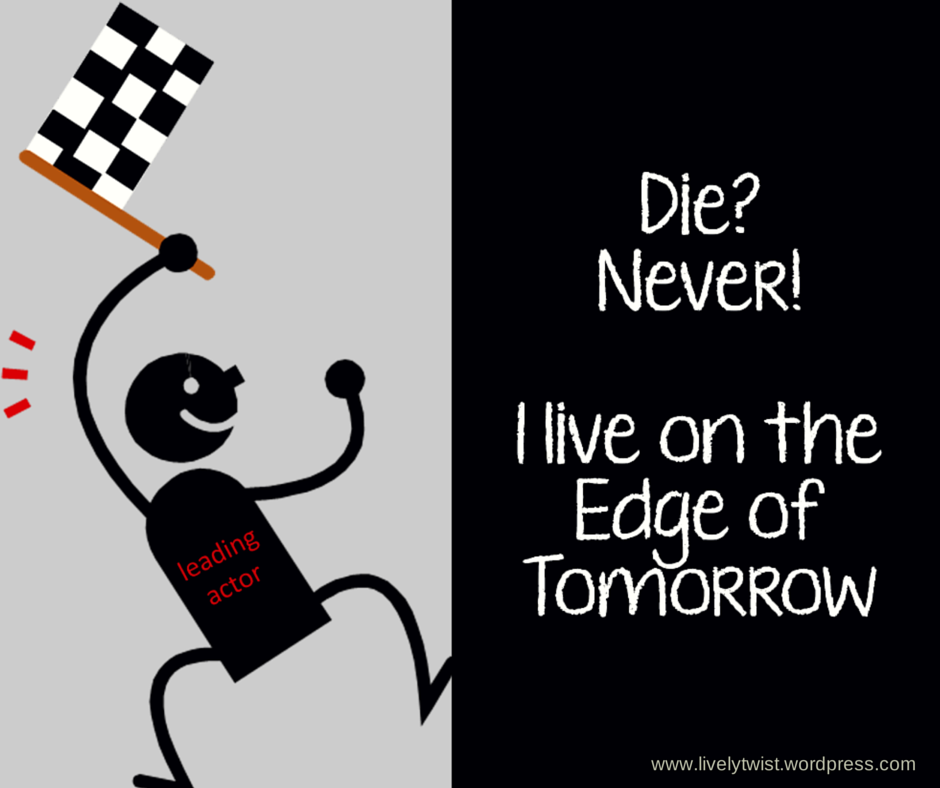
Why then, since we know the science and art of storytelling, do we lean forward in our seats, with one hand frozen in the popcorn carton and lips parted in an O, the shape left by the straw we abandoned? Why do our hearts race as if Tom Cruise has ever died in a movie? Because a story is an unwritten promise by the storyteller that he’ll take you there and make you care, in the end.


leading actor never dies


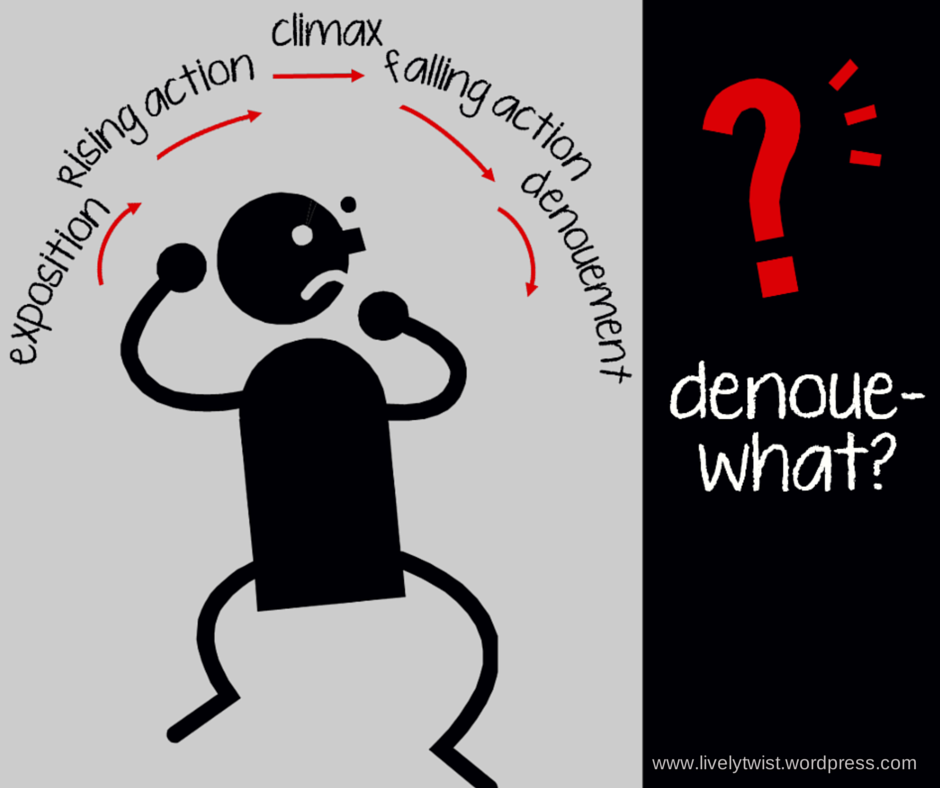
If story mirrors life and life mirrors story, then our lives play out this way as well, scene after scene, chapter by chapter: a beginning, which comprises exposition and rising action, a middle where conflicts peak, and an ending with falling action and dénouement. Each story that captivates us leaves us wondering and longing and hoping that the end will be good, so we can interpret the omens of our lives favourably.

History is a compilation yesterday’s stories. The best stories from the past make me desire transcendence since my life is a search for my own story. If I find it, my storytelling becomes the vehicle to transport you into my world so you can experiment with the possibility that your world can shift to accommodate mine. Someone said that the test of a great story is what people remember about you when you stop talking. If you want me to learn something quickly, wrap it in a story.

——–

P.s. What do you remember? No, don’t reread, for crying aloud, this is not an exam just an experiment without compensation! Please comment on what you remember. Or never mind . . .


©Timi Yeseibo 2014


  1. Zak, Paul J. How Stories Change the Brain. The Greater Good Science Center at the University of California, Berkeley. http://greatergood.berkeley.edu/article/item/how_stories_change_brain, (accessed October 5, 2014).


  1. “On The Issue – Author Chris Abani,” YouTube video, 6:05, posted by “UCF,” January 27, 2009. http://www.youtube.com/watch?v=9Eg4XmK4k6A


Unauthorized use and/or duplication of this material without express and written permission from this blog’s author and/or owner is strictly prohibited. Excerpts and links may be used, provided that full and clear credit is given to Timi Yeseibo and livelytwist.wordpress.com with appropriate and specific direction to the original content.

Love for Country and Other Drugs

Love 4 Country & Other Drugs

Because of Nigeria, I’ve been accused of false optimism, “How can you hope for change when we keep doing the same things?” I’ve also been accused of Elitist Patriotic Syndrome, a type of patriotism that conveniently lives abroad and so doesn’t wash its hands in the muddy river of change. But how do you bury love for country? Where are its roots that I may pluck it?

Looking ahead to Nigeria’s Independence Day, three writers and I wonder if hope can be reinvented.

Education is Training the Mind to Think

Desmond Tutu, in one of his stories said, “When the missionaries came to Africa they had the Bible and we had the land. They said, ‘Let us pray.’ We closed our eyes. When we opened them we had the Bible and they had the land.” I wonder why we prayed with both eyes closed. And who helped the white man steal the slaves that crouched in the belly of the whale on the way to the plantations in America? Tell me who? The white man has gone and Africans stagger, drunk from the rich red of millions that flowed in Rwanda, Sierra Leone, Liberia, and Nigeria.

I am glad the white man came to Nigeria and brought education with him1. One day, a friend visited a motherless baby’s home to inform the administrators that he was committed to educating two kids as far as they wanted to go. Starved of funds, they greeted the news with glee and asked him to pick the two kids. As he looked at the kids, his heart ached because choosing one meant rejecting another, but his pocket was simply not wide enough. The administrators chose for him, they chose their brightest two. Two plus two equals eight. Four plus four equals thirty-two.

I have dreamt of the past. Show me the future that I may live the present.

Education can teach us to read and write, appraise and solve, question and answer, and chew and spit. It is why I want to write prose with the eloquence of Chimamanda Adichie and the humanity of Chimeka Garricks, that another generation can read stories of hope and redemption, and pray with both eyes open.

The secret of freedom lies in educating people, whereas the secret of tyranny is in keeping them ignorant. – Maximilien Robespierre –

Timi Yeseibo @ Livelytwist

  1. “History rediscovered – Emeka Keazor at TEDxEuston” YouTube video, posted by “TEDx Talks,” on February 21, 2014. https://www.youtube.com/watch?v=ZN3hCjbA_dw 


Humans of Nigeria

It was Christmas Eve, and we expected the roads to be free. We drove past Iyana Ipaja roundabout and entered one of those traffic jams that force you to turn off the AC, roll down the windows, and watch pedestrians cover distances you won’t in hours.

Suddenly the traffic began to melt as engines sprung to life. A tall man in combat trousers was swinging his arms and giving directions to relieved drivers. Sweat glued his muscles to his khaki t-shirt and outlined them. He had a broad smile on his face—an antithesis of Nigerian work culture.

On our roads, police officers pounce on naïve drivers who miss one-way road signs or waylay bus drivers for fifty Naira notes. The police are not alone. The prevailing mindset is that no matter how hard we try, we have nothing to gain from our jobs. We work without a sense of ownership, purpose, or dignity. Oga ta, oga o ta, owo alaaru o pe1. Na lie! Our work is a reflection of who we are, and the only place success comes before work is in the dictionary.

The exceptions are the Humans of Nigeria, like the soldier who volunteered as an impromptu traffic warden and the doctor whose diligence prevented a national Ebola tragedy. They worked with verve and took charge. Like pebbles thrown in water, the ripple effect transcended their original goals. The government may never give them national awards, but they are the reason Nigeria is not a complete hell.

IfeOluwa Nihinlola @ ifenihinlola.wordpress.com

  1. Oga ta, oga o ta, owo alaaru o pe: (Yoruba) whether the boss makes profit or not, the labourer’s wage will be intact.


A History of Industry

After World War II devastated Japan, the island country underwent a rapid industrialization that surprised the world. The Japanese Miracle happened because strong leadership inspired a diligent citizenry, the threat of scant natural resources notwithstanding.

Did something else influence this phenomenal comeback?

I discovered that the world’s oldest company is a Japanese construction company founded over 1400 years ago. Japan rules the list of world’s oldest companies, a sustainable culture of industry perpetuated in the soul of a nation for centuries.

A careful consumption of Nigerian history reveals a similar culture of industry. Gigantic groundnut pyramids once drew tourists and business tycoons from all over the world to northern Nigeria. These pyramids were the brainchild of Alhassan Dantata who became West Africa’s richest man. Generations later, his great-grandchild is one of the richest black men on the planet.

Stretching further back in time, beginning from around 800 A.D., powerful rulers of Benin Kingdom in southern Nigeria, successively oversaw the construction of what became the world’s longest earthworks; city walls that reached an astonishing 16,000 kilometres.

Nigeria can bring about her own miracle if we unify the legacies of industry spawned by our various cultures under strong and visionary leadership at all levels.  Moreover, we cannot forget that unlike Japan, we have an unbelievable wealth of resources waiting anxiously for a call to service. Will you give the call?

Samuel Okopi @  samuelokopi.com


The List

Four years ago, I moved back to Nigeria with many preconceptions that prevented me from being as happy as I could have been. I know now that I know nothing about Nigeria, but I also know that I know more than I did before and I will know more tomorrow. Everything I’ve learned is in this list, which I will patent as, Simple Rules for Visiting or Returning Nigerians, and Maybe Locals too.

1) No one wants to hear you complain

If you have a sob story after a month’s stay, how many sad stories do you think people who live here have? Twenty, fifty, uncountable?

2) You don’t have the magic solution

People who begin their sentences with, “You know what the problem with this country is . . . ,” make me roll my eyes. No I don’t know, eminent genius, tell me what the problem is!

3) You can’t be tired of this country

Nigeria has problems. You proved that by leaving. Don’t throw your hands up at every challenge you face. Remember when your mother embarrassed you in public and you thought, oh God, I need new parents? How did that work out for you?

Here like elsewhere in the world, your task is not complicated: be a decent person and be decent to other people, whether in molue or presidential motorcade. Good leaders come from caring people, and I now know I belong at the starting line.

If you find the list above disagreeable, you can opt for the Babalawo1 Price List (medicine man’s potions):

BUSINESSMAN  PACKAGE                              ₦60,000

Super Business boom

No double cross*

Success job contract

No more promise and fail

*Stops people from double-crossing you. Does not prevent you from double-crossing.


LANDLORD PACKAGE                                    ₦50,000

Command tone / Do as I say (tablet, grind into water or dissolve in mouth)

Win court case

Reveal enemy+

Silent Rich

+Only reveals enemy, does not destroy them. For complete, also buy Destroy enemy from A LA Carte menu. Can combine.


ROMANCE PACKAGE                                    ₦35,000

Love only me (potion)

Go all night

Easy to satisfy**

Avoid divorce***

**Do not combine with No more promise and fail.

List continues here

Tolu Talabi @ naijarookie.wordpress.com

  1. Babalawo: (Yourba) an Ifa priest, who ascertains the future of his clients via divination. Loosely used to refer to native doctors.


©Timi Yeseibo 2014


Unauthorized use and/or duplication of this material without express and written permission from this blog’s author and/or owner is strictly prohibited. Excerpts and links may be used, provided that full and clear credit is given to Timi Yeseibo and livelytwist.wordpress.com with appropriate and specific direction to the original content.

What Should I Write About?

EB WHITE QUOTE

This question never leaves me. Suspended in my subconscious, I answer it every moment, every day. The events of my life and yours, past, present, and a future I envision, are being stored somewhere in my brain cells. To write, I start with a title, which provides direction. Developing the story resembles opening a wardrobe and sifting through clothes, pulling one and then another from the rack, admiring, discarding, until you find the perfect outfit for the occasion. Most times, my wardrobe is full, so full that choice is the problem.

Another problem arises from the opinion of others. How many times have you asked someone, what do you think I should wear, and they picked an outfit that was just so not you? Or asked the question that makes the people we love dance around the truth—how do I look?

But, input from external sources also comes without me soliciting for it.

“I definitely think you should write about it,” Toyin said quietly.

“Mmhmmm.”

“This is an issue that touches the heart of the nation. Can you just imagine . . .”

She was right. Newspapers and social media channels brimmed with the controversy over section 29 of the Nigerian Constitution and legitimising child marriage. I had skimmed a few articles but had neither researched the issue nor signed the child-not-bride petition. Like her, I was upset, unlike her, I had not yet reached boiling point. A couple more friends called. I felt the steam from their whistling kettles, so I caved in. Between midnight and 2 a.m., I wrote an opinion piece centred on an imaginary conversation with my daughter in 2025. It had many holes that I could not fill.

That Friday, I stumbled on an elegant piece written by a lawyer. Wading through the tide of emotion, he separated fact from fiction and proposed platforms to channel the wave of mass hysteria. Hearsay and conspiracy theories belong in fiction novels, and so, I was relieved that Sunday was still faraway. I would have sent my article to the recycle bin, but for a few sentences I felt I could use in a future post.

I have not let people convince me to use my “voice” to “talk” for them since then. Although I read political articles, I rarely write about politics because I don’t have the resources to carry out investigative journalism that would result in balanced pieces.

When a man is in doubt about this or that in his writing, it will often guide him if he asks himself how it will tell a hundred years hence.                              – Samuel Butler –

My blog gives me freedom to wear anything I like from my wardrobe. Four criteria guide my choice, inform, entertain, inspire, and provoke thought. Oh, and try to keep it short!

Someone accused me of misleading readers since the tag line of my blog, because life happens to all of us and sometimes we get a second chance, isn’t reflected in the posts I publish. Perhaps he is right, and only I see the redemptive theme woven in my stories or maybe, you see what you want to see depending on the strength of your lenses.

So, what should I write about? Anything that catches my fancy, which I think will add value to you. Including this piece, which on the surface isn’t about redemption, but if you reflect on it, a large chunk focuses on wrestling my voice from peer pressure and speaking a language I understand. Second chances? Maybe, maybe not.

Every creator painfully experiences the chasm between his inner vision and its ultimate expression. The chasm is never completely bridged. We all have the conviction, perhaps illusory, that we have much more to say than appears on the paper.  – Isaac Bashevis Singer –


©Timi Yeseibo 2014


Unauthorized use and/or duplication of this material without express and written permission from this blog’s author and/or owner is strictly prohibited. Excerpts and links may be used, provided that full and clear credit is given to Timi Yeseibo and livelytwist.wordpress.com with appropriate and specific direction to the original content.
Interpreting Silence, Mine and Maybe Yours

Malala

. . . and I began to see that the pen and the words that come from it can be much more powerful than machine guns, tanks or helicopters. We were learning how to struggle. And we were learning how powerful we are when we speak.1

I was at a meeting. The preacher declared, “If you haven’t found what is worth dying for, then you haven’t started living!” In my mind, I said, “But I am living and I enjoy my life although, I don’t know what I would die for.” The preacher reeled off convictions on which he would stake his life. I thought, that’s good for you, my children are still small, my marriage too young.

In my university, when students would gather to protest against government policies, I always left the campus and went to stay at my aunt’s, as I did not fancy being tear-gassed, arrested, or beaten or raped if the protest degenerated to a free-for-all.

Their protests annoyed my middle-class sensibilities. Shielded by my parents, I had never felt the sting of socio-economic or political policies. The more daring the protest, the more likely, that my university would be shut down, so that, instead of graduating at twenty, I would graduate at twenty plus x, x being anything from one to five years. This concerned me because I had mapped my life’s trajectory without the possibility of detours.

And so, Malala Yousafzai’s autobiography interested me, as all biographical material does, but more so because she is a teenager. She’s described as the educational campaigner from Swat Valley, Pakistan, who came to public attention by writing for BBC Urdu about life under the Taliban. News about her work had floated in and out of my attention in years past, but as I settled to read her book, I shook my head, what was she thinking?

The man was wearing a peaked cap and looked like a college student. He swung himself onto the tailboard at the back and leaned in right over us.

Who is Malala? He demanded?”

No one said anything, but several of the girls looked at me. I was the only girl with my face not covered.

That’s when he lifted up a black pistol. I later learned it was a Colt 45. Some of the girls screamed.2

Malala’s story, in my view, traces the journey of her convictions, how they were shaped, how they crystallized, and how she learnt to live and expect to die for them. Her father is central to her story. She interprets her world through his eyes. But I get the sense as I read that even if Malala were translated into another set of circumstances, mine as a youngster, for example, she would still shake the world. Named after the Pashtun heroine, Malalai of Maiwand, when she was born, she popped out kicking and screaming.

Malala gives us a history lesson on her beloved Pakistan and Talibanization. It is a story I recognize: Nigeria before and after British colonization; Nigeria in the age of Boko Haram. Politics never sleeps. Poverty and illiteracy make indoctrination and intimidation potent. But Kalashnikovs and RPGs make the rich and educated flee too.

Her photo on the book cover hides fear and courage, a tension that she draws her readers to share with her family in Taliban-controlled Swat Valley and beyond.

Are you scared now?” I asked my father.

At night our fear is strong, Jani,” he told me, “but in the morning, in the light, we find our courage again.”3

She writes that her father hated the fact that most people would not speak up. She knew he was right. He kept a poem by Martin Niemoller in his pocket.

First they came for the communists,                                                                              

and I did not speak out because I was not a communist.                                           

Then they came for the socialists,                                                                                    

and I did not speak out because I wasn’t a socialist.                                                 

Then they came for the trade unionists,                                                                        

and I did not speak out because I wasn’t a trade unionist.                                        

Then they came for the Jews,                                                                                               

and I did not speak out because I wasn’t a Jew.                                                        

Then they came for the Catholics,                                                                                    

and I did not speak out because I wasn’t a Catholic.                                                 

Then they came for me,                                                                                                     

and there was no one left to speak for me.

I live in a land where my concerns range from 30% income tax deductions to choosing between Gouda and Maasdammer cheese. Comfort is a familiar place and I do not apologize for it. Privilege comes with responsibility and many are not silent. But I must break my silence and scream with more than sympathy, with my words, my money, my time, and my votes, because Malala proves that one voice can be heard. At a cost, at a cost . . .


©Timi Yeseibo 2014


1. Yousafzai, Malala with Lamb, Christina, I Am Malala (London: Orion Books, 2014), 131.

2. Ibid., 6.

3. Ibid., 115.


Unauthorized use and/or duplication of this material without express and written permission from this blog’s author and/or owner is strictly prohibited. Excerpts and links may be used, provided that full and clear credit is given to Timi Yeseibo and livelytwist.wordpress.com with appropriate and specific direction to the original content.


Demystifying Age: So How Young are You?

Age

“Age has no reality except in the physical world. The essence of a human being is resistant to the passage of time. Our inner lives are eternal, which is to say that our spirits remain as youthful and vigorous as when we were in full bloom.”       – Gabriel Garcí­a Márquez –

I once knew a boy from the village who did not know when he was born. Since he had never attended school, he began primary school when he moved to Port Harcourt. That he was bigger than his classmates did not inspire their respect or fear. They teased and provoked him until he abandoned school. I was in secondary school then.

The years rolled by and his voice deepened. The years rolled by and I completed my university education. I planned my life using age as milestone markers. I wonder now, how he planned his; where did his ruler start and how did he measure off millimetres and centimetres on the graph of his aspirations?

Age is just a number, maybe, but with it, we appraise where you are and where you should be. Your age cannot reveal your heart, bury your enthusiasm, or stop your dream unless you let it.

Conversations about age have dominated my circle recently. Five writers whose ages span from early twenties to mid-fifties have joined the conversation. One theme runs through the narratives: age matters, but you must define why for yourself.

When it comes to age, perhaps women have a lot more to say . . .

The Other “F” Word

Three years ago, I turned forty. I flipped out even though I knew that the negative ideas about women hitting middle age are misogynistic and wrong. At parties, any time the topic of age came up, I’d leave the room to get a drink so I wouldn’t have to cop to my age. After my ex-boyfriend told me that guys on Match dot com were writing me off because I had “40” in my age box, I thought about lying and saying I was “32” instead. I felt as if my age was my expiration date and I’d become a carton of spoiled milk.

Six months into forty, I realized I had a choice to make. I could keep chastising myself for getting older, or I could stop buying into the messed up ideas around aging that I’d internalized. Considering I’d spent most of my thirties waking up to who I really am and what I really want, I certainly didn’t want to fall asleep again under another sexist spell cast by the patriarchy.

At forty-one, I kicked my sugar habit and became the healthiest I’ve ever been. I started writing my first book. I stopped saying yes when I wanted to say no. I began listening to my instincts more and less to what other people think. I also stopped worrying about men who weren’t interested in me and started to pay attention to the men I found interesting. At forty-two, I met the person I want to grow old with. And even though I don’t look twenty-three anymore, or even thirty-three, I love the way I look today at forty-three.

So far, my forties are proving to be—to use another F-word—(pretty damn) fabulous!

Diahann Reyes @ storiesfromthebelly.com  Read full article

No Longer Just a Number

For as long as I can remember, age has always been just a number for me. I shared my age comfortably when I introduced myself, and I never hesitated to give out the real number when asked by those who seemed oblivious of or who disregarded the cardinal rule.

In the past two weeks, however, age has become the measure of my womanhood and the number of chimes ringing from my biological clock. After completing my undergraduate studies in Morocco, I hopped on a plane home. In typical Gambian fashion, I received hearty congratulatory messages and varying expressions of pride from family, friends, and acquaintances, swiftly followed by prayers for a good job, bigger accomplishments, and most importantly, a great husband.

It is the natural order of things here. An undergraduate degree is enough for the woman who had chosen to go beyond high school instead of settling down to start a family. They say, “Time is not on your side.” They say, “You might not be able to bring home a husband when you are ready, because all the men would have been taken.” To their prayers, I mumble, “Amen,” and return to weighing my job options.

I find myself drawn to institutions where I feel my youth will not devalue my qualifications and capabilities. I dress to look ‘older’ for meetings and interviews, so my teenage features will not influence my potential employers’ decisions.

Consequently, I have become more conscious of my age. Twenty-four is no longer just a number. It is a detail that one might only encounter on my résumé.

Jama @ linguerebi.wordpress.com

Open Secrets

So is your age a deep secret? Mine isn’t. I celebrated my birthday this year in a blog post, The Lightness of Becoming 55. Since then, I’ve come to realize the post was about embracing my mortality; at eighty-five, my father is dying of cancer. Still, it’s a strange feeling . . . fifty-five. I have a few grey strands that I just gave up plucking! Seriously, fifty-five means I have earned life experience that no one can take away from me.

But, second thoughts creep in: what if people at work discover my age on my blog? What if they start sabotaging me? The reality is that no one cares as much as I do and I would be worrying too much. Besides, over time, that blog post will fade into obscurity as newer posts emerge. As long as I keep exploring my world and I’m open to learning about others, each year of life becomes a gift.

If a much older woman is unwilling to disclose her age, it seems to me that she is afraid of her mortality. Hey, life happens and the years appear suddenly like a breadcrumb trail behind you! More Hollywood actresses are disclosing their ages. This is a good trend or is it just the paparazzi trying to sell news?

Fifty-five equals two high-five hands clapping in jubilation and spontaneity. I’m finding my place in life with my own hands and sharing it with others. To do this, I listen to the best positive timbre of my voice. As I age, that voice becomes more poignant but rich.

Jean @ cyclewriteblog.wordpress.com

None of Your Beeswax!

How old are you? When did the question become as invasive as a stranger asking, “What size is your bra?” I first heard that you don’t ask a lady her age, in Nigeria and then, I imbibed it. Yet in The Netherlands, the receptionist at the Gemeente asks, “Wat is uw geboortedatum?” with the clinical detachment of a gynaecologist examining my cervix, and I respond, no pomp, no pageantry.

One day, I looked at my neighbour’s BMW X5, and wondered what he earned. I did not ask him when he stopped for a chit-chat as he walked his dogs because it was none of my business. I calculated the value of his house, googled what a man in his position would earn, took into consideration that his wife is the daughter of a former diplomat, and that they owned a boat. I knew enough.

How old am I? I sing Davido’s Aye, with my twelve-year-old niece and tell friends in their twenties, “Been there, done that, got the t-shirt thrice, and moved on!” I discuss my blog posts pre-publication with my buddy who is forty-five and debate the existence of God with a sixty-five-year-old atheist. I am as young or as old as I want to be.

But, when I try on those leather-look skinnies in Zara, and turn to the side, then look at my behind, I shake my head as the attendant asks, “Will you be taking this?” I am not as young as the clothes would like me to be.

So, how old am I? None of your beeswax!

Timi @ Livelytwist

Old at 18; Young at 90

I stare into the eyes of my beloved who is in his mid-thirties and wonder if he is in love with me or with the idea of my youth. I have the look of innocence or so I’ve been told. At the restaurant, a waiter asks for my ID to ensure she isn’t serving a minor drinks. I watch the confusion on her face; it surprises me every time. Gisting about celebrity gossip with my friends in their twenties tires me. Listening to the wisdom of my elders intrigues me.  I am an old soul in a young body.

Do we discover life and determine our futures when we are young? Maybe. Is age a barometer for our maturity level? No way! Is age a number that convinces our friends and us that we belong to their crowd? Well, yes. Does beauty have an inverse relationship with age? Yes. No. Maybe.

I consider age a means to tell the time as we journey in life, a clock that divides our stories into seconds, minutes, hours, days, weeks, months, and years. Age is only a temporary number invented by human beings. You are as youthful as your mind allows or as old as the elder who gives you advice. I will gladly tell you my age if you just ask it of me.

“Some people are old at 18 and some are young at 90. Time is a concept that humans created.” – Yoko Ono

Michelle @ www.facebook.com/ladieleblanc

Not Old Enough

Because I’d recently completed an Art Appreciation class, the church elders believed I had a sophisticated eye for colours and patterns and invited me to the building committee meeting.

“We want to redesign the church building,” the senior pastor started.

“Thank God for our youngest worker here,” quipped the deacon who sat next to the pastor. “We need your expertise,” she smiled at me.

“Since God is holy and white means pure, we shall paint the walls white,” the senior pastor said.

“I agree with you sir. God is also a man of war. We can paint the pillars red to illustrate His fearfulness,” another deacon suggested.

“Wow! The Holy Spirit is at work here. How about we paint the ceilings blue?” the man sitting across from me left his question suspended in the air.

I closed my eyes and thought of rainbows and striped candies.

“What if we outsource this project and have this discussion with a designer present?” I offered.

“Abimbola, what do you mean?” the senior pastor frowned at me.

“Your ideas are lacking in terms of design, responsiveness, color psychology, and so on. Since the logo determines how a brand is remembered, it has to be in harmony with—”

“Look here, how old do you think you are? Since you are privileged to sit in this meeting, you should act your age!” the deacon who had smiled at me hissed.

So I held my peace. The project was doomed, but I kept the knowledge to my young self.

Maggielola @ worshipandswag.com

©Timi Yeseibo 2014

Image credits:  www.fordesigner.com/maps/15533-0.htm

Unauthorized use and/or duplication of this material without express and written permission from this blog’s author and/or owner is strictly prohibited. Excerpts and links may be used, provided that full and clear credit is given to Timi Yeseibo and livelytwist.wordpress.com with appropriate and specific direction to the original content.

The Hunter Games

Huntress

Once upon a time in faraway Heindenlily, Princess Amera decided that she would go to the Wise One to help her find love.

She pulled the reins so her horse could gallop faster as she left the palace gates behind. Sandwiched between her bodyguards, she felt as if palace life had shielded her. And from what? Foolish princes like Prince Olmeri of Findolgun who’d stuttered when he came for her hand until he all but swallowed his tongue, and the king’s physician had to revive him. Still blue in the face, he’d tried to stutter an apology, but she shushed him by putting her index finger to his lips. What utter nonsense! She would find love on her terms.

When her guards dismounted to cut low-lying branches, paving a way in the forest, she saw how long their shadows were. She had not noticed the sun receding behind the hills of Allaymin. She shivered and drew her cape tighter. In front, the oak trunks leaned in as if to touch them and then, as if to squash them. Meeting her bodyguards’ stares, she masked her fear with her smile. She marvelled that women had lain passive as though waiting for pollen from bumblebees, for years and years. The wind was variable too. Nectar had lost its edge, and the driver’s seat was vacant.

“Fair princess!”

Her bodyguards bumped into one another and struggled to quieten their horses. Princess Amera gasped as the trail widened to reveal a moss-covered hut. The Wise One beckoned to her from the entrance. The rumours were true. His white beard swept the ground like the dust brushes her chamber maidens used to attack cobwebs.

Inside the hut, babies’ skulls lined the walls. He pulled one, dropped something inside it, and offered it to her. Her hands trembled as she collected the skull. The thing inside smelt like cow dung and tasted like honey, so she did not chew.

“So you are tired of waiting for him?”

He did not wait for her answer.

“Choice is a rudder without hindsight. A thing to be desired and yet a thing to be feared,” his voice boomed, and the walls became mirrors.

She smiled when she saw perfection.

“That one,” she pointed.

“The moon will cross Orynimmel Kingdom tonight and tomorrow. You will have one chance.”

He leaned forward, and his beard nicked a bit of the flame from the huge candle on the centre of the table. A quick glow and then fading embers, as the light died in his shaggy bush. He pulled a bow and arrow from under the table and handed it to her.

“Shoot with all your might, and he will be yours.”

“B . . . but . . . what if he doesn’t want me?”

“Isn’t that why you are going after him? To show him what he wants? Sssh, sleep now, in the morning it will all make sense.”

The next morning, she washed her face with the washcloth Wise One gave her. She looked in the stream. He was right. She was even more beautiful. When she turned to hand over the washcloth, the hut had disappeared. Her bodyguards stood at attention as they waited for her.

“Yee haw!” she cried and mounted her horse.

As they journeyed, the oak trunks leaned backwards, making space, so they could ride in an A-formation. Daylight pushed through the mist shrouding the hills of Allaymin. She saw him first as they rounded a bend. The sun’s rays filtering through the long necks of oak trees, circled him like a spotlight. Her horse neighed testing her indecision. Why was he alone?

“Fair princess,” he bowed.

“Prince Zonaltera of Luxamdola.”

She dismounted, clutching her bow and arrow in her right hand.

“Going hunting?”

He smiled at her and then turned to his horses, grooming their manes.

She sat on the grass. Dewy anemones and bluebells teased her ankles. She waited and waited until the sun rose to the middle of the sky.

You will have one chance . . .

“Do you like me?”

“Yes,” turning to face her, he said, “what’s not to like?”

“Then,” she cocked her head, “why have you not asked for my hand?”

“I don’t know. I . . . I have been distracted.”

“I see . . . grooming your horses . . .”

She stood, raised her bow and arrow, and aimed at his heart. He ducked and then ran deeper into the forest. Her hair danced in the wind as she pursued. Darting and ducking, brown trunks and green leaves embraced them in a fuzzy camouflage. The ground sucked their footfalls as squirrels and weasels skipped away.

“Stop!”

She spun around and around ears on alert. A creeping vine curled around his left sleeve, pinning him to the spot. He placed his free hand on his knee as he sucked in air, turning red. Overhead, jackdaws abandoned their nest holes and flew away, unamused by the lovers’ game.

“Please,” he said, twisting this way and that, “if you chase me, you will catch me.”

A thrill she had not known before made her skin tingle and her pupils dilate; she tasted power.

“I’m tired of hunting. The prey you want gets away too many times.”

He pulled his hand free, ripping his sleeve and sending tiny leaves in the air.

“Perhaps you lack skill.”

“Sometimes the prey runs too fast and then too slow, confusing your aim. Hunting can be exhausting!”

He sunk to the ground, massaging his arm.

“Wimp!” she scoffed. “I know what I want.”

She raised her bow.

“Wait, wait! How will you know I really want you, if you trap me?”

“Do you want me?”

“Yes . . . but give me a chance to—”

She raised her bow and released the arrow into his heart. Then she left him there for the magic to do its work. One month later, they were married. Her happiness was a rainbow that all came to behold and point at. Ten months after, he began to shrink. Smaller and smaller, smaller than a stump in the ground.

“What is happening?”

Her tears could no longer hide behind her eyes, which were twin mirrors through which he saw not only himself but also how she saw him. He longed to lick her tears, but she no longer ached for him, letting his name escape from her lips, softly, softly, softly. He began to cry too.

“Evolution?”

“I tried to warn you.”

“If we were born a thousand years from today, it would no longer matter who hunted and who got caught. If we could time travel . . .  I mean, what kind of woman loses a slipper at midnight and doesn’t go back to find it before one idiot consigns it to the lost-and-found dump?”

She carried her frog and placed him on the golden pouch on her nightstand. She missed the strength of his arms.

In the distance, the stars twinkled over the hills of Allaymin. The moon would cross Orynimmel Kingdom tomorrow night and next. She still had the bow and arrow.

You will have one chance.

Time had snatched her rainbow, but nirvana was still within reach.

“Good night my love.”

“Croak, croak, croak,” he replied.


©Timi Yeseibo 2014


Image credits: http://www.disney.co.uk/brave/downloads/?d=downloads-merida


Unauthorized use and/or duplication of this material without express and written permission from this blog’s author and/or owner is strictly prohibited. Excerpts and links may be used, provided that full and clear credit is given to Timi Yeseibo and livelytwist.wordpress.com with appropriate and specific direction to the original content.


The Lightness of Being 55 by Jean Chong and Cycle Write Blog

Jean and I hit it off when we bantered in the comment section of my post, On Getting Older. Responding to my reluctance to tell my age, she said, “Well, one day you’ll feel great to reveal your age. Seriously, it is earning life experience that no one can take away from you.” I dunno, I’m still a Naija girl and we hide our age in a room locked with steel chains.

Mark Twain said, “Age is an issue of mind over matter. If you don’t mind, it doesn’t matter.” To me, Jean echoes this sentiment in her post. While I’m not racing into my fifties, I’m not dragging my feet either. I want to enter my later years having established healthy and sustainable lifestyle choices as Jean has done. I hope she’ll inspire you to be “light” at fifty-five and beyond. Hear her:

The Lightness of Becoming 55

It’s a special age of symmetry for anyone:  it’s 2 open hands that are smacking double high “fives” with hands of other birthday well-wishers.

55 means I’ll just hopefully go for a bike ride  around my birthday. No, it won’t be a 55 km. ride since my birthday falls on a winter work day this month.  Our evenings are still dark early and there may be icy pavements. We’ve had several winter days that have plunged below -31 degrees C. with a howling snowstorm.

Still, it’s a strange feeling …55. Continue here