The Love Languages of Nigerians

Love Language Nigeria

Language encompasses every nuance of a people’s communication. Slangs that are spin-offs from the intrigues in our sociopolitical arena are the thermostat of a nation. Whether elitist or egalitarian, these ‘idioms’ drape our language like rich velvet. In examining language and tracing its use, we understand a people’s aspiration and disillusionment and unveil the evolution of culture.


 Religion: God forbid!

 “Mummy, I have a headache.”

“God forbid!”


“Uncle Lagbaja, I am tired.”

“God forbid; it is not your portion!”


“Aunty Chioma, I can’t finish this jollof-rice.”

“God forbid, you can do all things through Christ who strengthens you!”


“Sir, is your car covered by insurance?”

“I am covered by the bloooood of Jesus!”


“Madam, your number is not on the promotion list.”

“God forbid! All my enemies fall down and die!”


Welcome to Nigeria, religion is our mother tongue, and someone from the village is always ‘doing’ someone. Constant bedwetting, failure, and prolonged spinsterhood cannot be customary to the human condition; a spiritual force must be responsible.

“Holy Ghost faayaa!” the crowd screamed.

No, we were not taking the kingdom by force, or maybe we were. Nigeria was in a penalty shoot-out against The Netherlands. So, we held hands, and stomped, and shouted, and foamed at the mouth, and shook as though shocked by electricity, while our lips trembled from the force with which word-bullets escaped them. In other words, we prayed as if there were no Christians in The Netherlands. The gods of Okocha and Kanu Nwankwo were on our side. Nigeria won and progressed to the semi-finals of the FIFA World Youth Championship of 2005. Go to a match-viewing centre in Lagos; the Christian, Muslim, and Ifa worshipper, spiritually root for Nigeria in love-like unison.

During the finals, the gods left us and we lost. I no longer pray for Nigeria during football matches.

Dear Nigerian, Paracetamol and rest are good for headaches too.  Preparation and hard work win football matches too. God bless my enemies, is a prayer too. Did this incense your religious sensibilities? Good. Dia riz God o!

Tomi Olugbemi @ poetryispeace.wordpress.com


Food: No put sand for my garri o!

When a Nigerian man heads straight home from work, you can be sure his wife observes the saying that the way to a man’s heart is through his belly. When he races through the doors without goodbyes to colleagues; when he zigs and zags through heavy traffic, undoing his tie and buttons as he leaps up to his front door—understand this: the delicious meal he is leaping towards, not only penetrates his heart but also damages the knots that hold his mind together.

And woe betide that woman who forgets that eating by the hand and sweat of a wife is an inalienable right of the Nigerian husband. If she would rather save her sweat for managing construction sites or for running her mouth loudly in court or for writing reports in cosy offices, then, a wise woman who learnt AMALA (African Man’s Absolute Loyalty Approach), on the strength of EGUSI (Executive Grant for Ultimate Seduction Internship), from Calabar campus, shall snatch the man from her.

This ‘wise’ woman’s sweat will make the man lick and suck each one of his fingers. He will smack his lips. Forgetting the wife who refused to be his minion, he will enter a mutual journey of sweats with the wise woman, until he snores into the night with narcissistic satisfaction.

Samuel Okopi  @ samuelokopi.com


Time: What time is it? It’s Nigerian Time.

In 1966, the inimitable Peter Pan Enahoro, in his classic book, How to be a Nigerian, observed ruefully, “You invite a Nigerian to dinner for 8 p.m. and he has not turned up at 9 p.m. Do not give up and begin to eat. He is sure to turn up at 9:30 p.m. the next day.” Today not much has changed for the Nigerian.

Time in Nigeria is not fixed. It is a loose-limbed variable subject to the mood of the people. Watches and clocks are ornamental rather than functional. Time is fluid, adaptable, and ballpark.

If Nigerian time were an animal, it would be lazy, somnolent, and unhurried. If Nigerian time were money, the Dollars from crude oil exports would become toilet paper.

Organisers bill events to start at a stated hour prompt but, don’t take the word, prompt, at face value; it is as redundant as the phrase, free gift. You would be better off taking it to mean several hours after the advertised time. This laid-back attitude is often mistaken for a lack of drive. On the contrary, Nigerians are some of the most ambitious people in the world.

Enahoro writes, “In many parts of the world, life is a mortal combat between man and ruthless Father Clock with Father Clock leading by a neck. The implacable resolve of man to battle to the bitter end with time does not attract the Nigerian.” Enahoro is a visionary.

Nkem Ivara @ thewordsmythe.wordpress.com


Music: Ti ko, ti ko-ko!

Deejays at Nigerian nightclubs have since phased out party-starter hits like, This is how we do it, by Montell Jordan, in favour of club bangers from the kings of  Nigerian airwaves, Davido, D-banj, Wizkid, Phyno, Don Jazzy, Kaycee, Iyanya, Timaya, May-D, P-Squared, and . . . , the list gets longer by the minute. Nigeria’s Generation Next pledge allegiance to and comply with the instructions of their music icons. Hence, if Iyanya says all he wants is, your waist, you’d better surrender it! If Kaycee says, pull ova, get ready to be handcuffed for not twerking correctly!

Our music permeates every facet of our lives. Whether Skelewu-ing at weddings, Limpopo-ing at roadshows, and Ginger-ing at owambes, the beat and rhythm inspire listeners to do the head-bob, echo the chorus, twist their waists  with mouths half-open as if bad news slapped them, squat, and wobble their thighs as though they’re trying to stifle day-old pee, while marinating in sweat.

Come on, ti ko ti ko-ko, all my ladies, chop my money, I want to be your maga, shakey bumbum!

Nigerian pidgin-pop, a brand where artists infuse pidgin into every track to gain mass appeal and to avoid being seen as stuck-up returnees trying to impress those who have zero chance of travelling in the foreseeable future, has gone global. Remember when former US secretary of state, Colin Powell, danced the yahooze with Olu Maintain on stage? Ladies and gentlemen, the revolution is underway, no need to reinvent the ‘beat’ and ‘lyrics’ of success.

Shey you want to dance? Oya scatter the ground! Ti ko ti ko-ko, ti ko ti ko-ko!

Tonwa Anthony @ thecrazynigerian.com


Football: You no sabi ball jare!

Football is the most unifying factor in Nigeria, but only when the national team plays. Switch over to European club football where allegiances hold sway, and we are a bitterly divided nation that borrows from other cultures and then overcooks it. This explains why many Lagosians are more passionate about Chelsea FC than locals from the Greater London area are. When it comes to football, Nigerian women have no qualms indulging their men. Only a brave woman schedules a romantic dinner for Saturday evening with her diehard Gunner husband, knowing that Arsenal’s match that afternoon could go either way.

Every Nigerian is a football pundit, whether they’ve ever kicked a ball or not, and coaching the Super Eagles is the most difficult job on earth. How do you face 170 million people, many of whom are convinced you do not know what you are doing?  Ask Stephen Keshi!

Indeed, football is a leveler in Nigerian society. Citizens may not have ready access to good roads, electricity, or healthcare, but viewing centres, where people watch live football on giant screens for a fee, have democratized access to football like never before. The result? A thriving ‘National Conference’ during football season on Facebook and Twitter, in offices, beer parlours, sport bars, and on the streets. When football is the subject of conversation, only a fool concedes to another’s view. Football arguments inevitably end when one party walks away with a dismissive, “You no sabi ball jare! or with the parties trading blows.

Olutola Bella @ bellanchi.wordpress.com  


Politics: Na wa for our government o!

In Nigeria, politics is the lifeblood of our non-sexual interactions. I suppose it is the result of extensive upheavals in our government for the majority of our existence, first as colonies of the British Empire and then as an independent nation. We have never enjoyed sufficient stability to render us apolitical. When strangers meet at pubs in England, the weather serves as the icebreaker. In Nigeria, we say, “Na wa for our government o!” You could be sitting alone at the bar and if you say it loudly enough, two or three people within earshot will drift over to engage you.

Our political language is fairly militarised, which is unsurprising given our history. Thus, we rarely reciprocate, we retaliate, and politicians blame their detractors for everything from floods to news reports accurately portraying the government in bad light. They call enemies of the state either cowardly or dastardly, while vowing, not to leave any stone unturned in the search for bombers and kidnappers.  Visitors to Nigeria, do not be alarmed when you discover that all our stones are flaccid and their stomachs point to the sky!

And in the wake of scandals, suspects are said to be fingered and these suspects in turn, flay their accusers. Meanwhile, every new half-baked policy is a panacea or palliative for the masses. The noun, masses, is never unadorned but qualified with the adjectives suffering, poor, or general. An absolutely delightful lexicon!

Rotimi Fawole @ texthelaw.com


Hustle: No condition is permanent

Repatriates and visitors to Nigeria are often blinded to the power to our industry because they are preoccupied with the failings of the nation-state. But adorning panoramic lenses makes for a compelling view of the coping mechanism within the collective psyche. The average Nigerian attempts to carry on life with poise despite his shredded dignity and applies resourcefulness and resilience, in other words, hustle, to produce an outcome that secures either a self-centered or an altruistic end.

Electrical power failures or NEPA has taken light, is a nuisance that grinds homes and businesses to a halt. The solution: generators, solar panels, rechargeable lanterns, and inverters. The common man hustles to buy one of these instead of hustling to see the day when power supply is normalized.  He, as well as businessmen with briefcases full of scam, know that, no condition is permanent.

The jeeps of the rich scoff at potholes on poorly constructed roads and allow them carry on with life at a frenetic pace. The common man defies the cumbersome traffic caused by treacherous roads by biking on okada.  He, as well as the activist that lambasts the government on social media, understand that no condition is permanent.

Nigerians work hard at whatever their hands find to do whether moral or amoral and adapt readily thereby stifling any clamour for change. We know that we are next in line for a miracle, our very own share of the national cake, and our hustle shall not be truncated!

Timi Yeseibo @ Livelytwist


TalkLikeaNigerian


©Timi Yeseibo 2014


Image credits:

©Timi Yeseibo 2014

Unauthorized use and/or duplication of this material without express and written permission from this blog’s author and/or owner is strictly prohibited. Excerpts and links may be used, provided that full and clear credit is given to Timi Yeseibo and livelytwist.wordpress.com with appropriate and specific direction to the original content.

Why Revolution, Occupy Movements, Terrorists And All Sorts Of Anti-Establishment Things Are Good For Capitalism  

By his own admission, Charles Onyangbo-Obbo’s blog is a (sometimes) irreverent take on all things African – and non-African. So, who benefits from the “protest”? While in my view, grey areas encroach upon black and white territory; his piece reminds me of comments about Boko Haram’s ideology: western education is bad, although it gave Boko Haram guns, TV, internet, and cell phones . . . hmmm.

nakedchiefs's avatarNAKED CHIEFS

I have been studying photos of the Sunni jihadist group, Islamic State of Iraq, those these militants who are trying to establish a caliphate in Iraq and Syria – to begin with.

On June 10 last week, they made some mind-blowing military gains, capturing Mosul, Iraq’s second largest city, and most of the surrounding province of Nineveh. Buoyed by their victory, they headed south towards Baghdad, the capital, taking several towns on the way.

Some 30,000 of Iraq’s US-trained soldiers just dropped their guns and uniforms, and took off for the desert. How many ISIS insurgents were they faced with? Just 800!

The virulently anti-western ISIS is so extreme and violent, even Al Qaeda distances itself from it. However, they were carrying AK 47s, and wearing sneakers. The people benefitting from the sale of the AK 47s are actually some infidels and aetheists in the west and Russia.

And American…

View original post 348 more words

The Battle of Testosterone

Battle

At the Reunion, I see Emeka for the first time in twenty-five years. We jam shoulders and pat each other’s backs.

“Man, you’re not doing badly,” Emeka playfully jabs the flab on my belly.

“Emeka na you biko! Nna men, you wear forty-six well!”

His clean shave reminds me that my beard is speckled grey.

“I do my best. Lola and the girls nko?”

“They are well.”

You still don’t have a boy right?” His chair scrapes the floor as he moves it to sit.

I take a long sip of my Gulder.

“No boy?” He leans forward in his chair.

I take another long sip of my Gulder. “Not yet.”

Emeka whistles. “Are you guys still trying?”

We exchanged emails about twelve years ago. I’d expressed frustration about not having a male child to carry on my name. Twelve years ago! What gives him the right to poknose now?

Emeka fiddles with his BlackBerry. I stare at nothing as I tap my feet to the beat of Fresh by Kool and the Gang. We have both done well in our careers, why is a male child an additional index of success? Emeka shows me photos of his wife, two sons, and daughter.

“My last son is ten.” He says it as if he won gold at the Olympics.

I shrink in my seat and hum, conversation is going round people talking ‘bout the girl

“So, how do you keep in shape? You look really good.”

I look at his muscles rippling beneath his fitted t-shirt. I signal to the waiter for another bottle of Gulder.

Emeka pats my arm, “Lola is really taking care of you. She’s goo—”

“I run seven kilometres every weekend.” I brush lint off my shirt as if that’s the reason I’m annoyed. What’s the difference between three and half and seven?

“Really? Why don’t we run together this weekend?”

Four bottles of Gulder makes me say yes and give him the route in Victoria Island where I run.

I arrive early on Saturday and start my warm-up exercises. Emeka parks his Range Rover Sport under an ebelebo tree and promises the boys washing cars some money to look after his car.

Nna, ke kwanu? Good day for running,” he says looking at the sky.

I mumble and nod.

He looks like Usain Bolt and starts like him. I think this showmanship unnecessary but keep my thoughts to myself.

After about 700 metres, Emeka picks up speed. “Come on!”

I match his pace.

“I know someone.”

“What?”

“Someone who can help with your problem.”

“I beg your pardon?”

“No need for all this oyibo, na me Mekus, your man.”

Gini?”

“There’s this guy in Oworo. He has a powder—”

“Emeka, what in god’s name are you talking about?”

“To increase the Y chromosome na.”

When I was younger, my mother told me to be careful when I got angry because my yellow skin became red around my ears. “Remaining small and they will catch fire,” she would warn.

The fire spreads from my ears to my chest, and then down to my legs. I pick up speed.

“Man, slow down! Na so?”

The fire burning my legs gets hotter, but Emeka sails past me like a gazelle while his laughter stays behind to mock me. I feel more heat on my feet. Grunting, I overtake Emeka and try to maintain my pace. We pass the three-kilometre mark.

Emeka draws level. “I’m only trying to help because I care.”

He gives me a slap on the back that makes me lose balance. I steady myself and look ahead. Emeka resembles Leonardo Dicaprio in Catch Me if You Can.

“Sh*t!” I spit and the wind blows my saliva back on my face. The fire in my chest is hotter than the one in my legs. My mouth feels dry. I tuck in my head and draw from my reserves. Emeka’s yellow singlet is the prize.

Each time I near my goal, Emeka antelopes away.

Oga small small o!”

I ignore the meiguard carrying jerry cans in his wheelbarrow. My honour is at stake. My legs begin to give first. I stretch my hand to catch Emeka. I touch something soft.

“L . . . Lola?”

“Sssh . . .”

“How?”

“Ssssh . . .”

“I was only trying to help. There is no shame in this matter.” Emeka’s voice seems distant.

“He has always been stubborn,” Lola says shaking her head.

I struggle to sit up.

She laughs and places her hand on my head, “Lie down.”

She motions to someone. The meiguard looks down at me and smiles. Kola nut has stained his teeth like blood. I remember Dracula. He lifts his gourd. Someone tugs at the waistband of my tracksuit bottoms.

“Where am I?” my voice is weak.

“Oworo,” Lola whispers, “Stop fighting, let him apply the powder.”

“No o o o!”


“Wake up, wake up! Lower your voice. You’ll wake the children. You’re dreaming.”

The glow from Lola’s bedside lamp shows how rumpled our sheets are. I wipe my clammy forehead as I make out our beige curtains and mahogany chest of drawers in the corner. My heart pounds as I reach down to feel it. Her hand is there. I slap it away.

I sense her confusion as she reaches again and says, “What?”

“Traitor,” I mutter, grab my phone, and jump out of bed.

I check on the girls. The even rhythm of their breathing greets my ears. I go to my study and search for the reunion email. I type a few words and hit reply. I lean back on my chair; lift up my waistband, peek, and then pack. I close my eyes and vow never to attend a reunion until I die.

©Timi Yeseibo 2014


Unauthorized use and/or duplication of this material without express and written permission from this blog’s author and/or owner is strictly prohibited. Excerpts and links may be used, provided that full and clear credit is given to Timi Yeseibo and livelytwist.wordpress.com with appropriate and specific direction to the original content.


Mirror, Mirror On The Wall

As a girl, I spent time in front of the mirror, preoccupied with what I saw; my hair, my face, my body.  As a woman, I spend less time in front of the mirror. I’m mostly satisfied with what I see.  Writing this paragraph for Holistic Wayfarer made me realise there are many mirrors in my life and the important ones are in my soul. I’d like to know, when you look at the mirror, what do you see?

Holistic Wayfarer's avatarA Holistic Journey

Race. The colour of my skin, the flare of my nostrils, the texture of my hair, the S of my backside. I am none of these; I am all of these. Race. My mother is caramel, my father pure chocolate, and I am hazelnut. They taught me that education and excellence would open any door. I believed it; still believe it. Race. Raised in Nigeria, I live in The Netherlands. I temper the directness of the Dutch with the verbosity I think Nigerians inherited from the British. Race. When I look in the mirror, I see a girl, a woman, a lover, a wife, a mother, a friend, a sister, a mentor, a coach, a writer, a warrior — all I have been, all I now am, all I will one day be. When I look in the mirror, I see me. What if my father were Australian and my…

View original post 303 more words

Race, Ethnicity, Prejudice, and Attitudes

Race

When the first strains of light filter through my curtains, my mind leaves my dreams to form coherent thought. I do not think of race, I rarely do.

I am aware of the colour of my skin. How could I not be? My foundation is a blend of mocha and caramel, my blush dark rose, my lipstick red, because I can pull it off. I am aware of the colour of my skin. How could I not be? I hug “white” people loosely and blow three kisses on either cheek, so I don’t stain them with my brown powder.

But when we get down to work and play and life, beyond enunciating my words with care and observing cultural nuances to accommodate the diversity in my world, I am Timi, a person with much to offer from the height of my intellect to the depth of my experience, and the width of my achievements.

Nigeria has at least 100 ethnic groups. In the state where I grew up, the evening news was broadcasted in four local languages, but I listened to the official English version because I didn’t understand any Nigerian language. My parents hail from two different minority ethnic groups and my friends from the unity school I attended reflect the federal character the federal government emphasized—Amina from the north, Ronke from the west, Chidinma from the east, Asabe from the middle belt, Onome from the mid-west, Ibinabo from the Niger Delta.

So, I did not wonder about race or racism when I moved to The Netherlands. Neither tribalism nor sexism in Nigeria, had clipped the wingspan of my dreams or that of my mother before me. We had defied the boundaries of other “isms” with who we are and what we believe, that excellence would eventually inspire people and remove barriers.

Since language, ethnicity, and race bonds people, and language in particular is like Super Glue, I sometimes find myself on the outside looking in. The English, Moroccans, Surinamese, Dutch, Africans, Turks, Americans, etc, live and socialise within their enclaves. Among the Africans, subdivisions exist for people from south, north, east, or west Africa. More subdivisions based on country, and even more subdivisions based on ethnicity within a country exist. People tend to gravitate to what is familiar and comfortable and inadvertently perhaps, exclude others.

On the other hand, many have moved beyond these confines and discovered that diversity makes for a rich tapestry and the threads of that tapestry are equal in value no matter their colour or ethnicity.

I suppose expat life abroad insulates one from common racism both in the way it is meted out and received. Once I was with a friend who drove a car with diplomatic licence plates when the police stopped us. I watched as she answered the police, with the slight arrogance of one who has options.

I am aware that underneath the bridge that connects me to my better life lie the souls of men and women who died constructing the bridge. I am grateful that although Twelve Years a Slave makes me uncomfortable, after the credits, I can shiver, shrug, and enter my normal life. Racism is real, but it is not my default setting. I choose not to see it in every slight.

Prejudice has lived in human hearts for so long it has become a gene. I remember when I drove my son and his playdate home after school. They stumbled into this conversation after falling in and out of several others.

“My mum says I can play with black people, but I can’t marry them.”

I spied her cute blonde bangs from my rear view mirror. The longer locks framed her oval face and cascaded down her shoulders. I gripped the steering wheel tighter.

“But I don’t want to get married now,” my son replied.

“Oh good,” her giggles light like feathers, carried no malice.

I relaxed my grip as I realised it had never crossed my mind to date a white man. It was the unspoken taboo. Everyone in the town where I grew up knew that only certain types of girls did.

Often when people speak of racial prejudice, they talk as if it is unidirectional, forgetting the prejudice, which also lies in the hearts of its victims so that if power changed hands, new victims would emerge. Is this the real fear that makes one race dominate another—get ‘em before they get us?

Knowledge and courage may be antidotes to prejudice. A desire to investigate the world beyond our nose and the guts to live in peace in it.


©Timi Yeseibo 2014


p.s. My blog sister Holistic Wayfarer, who has written several eye-opening posts on Race, inspired this post.

In Defense of Satire

“[I]n whatever department of human expression, wherever there is objective truth there is satire.” Wyndham Lewis in Rude Assignment


satire cartoons

To write this post, I read about the origin of satire, about Aristophanes (c. 446 BC – c. 386 BC ), a Greek comic playwright, and the Roman poet Horace (65 BC – 8 BC), whose works inspire and form the model for writing modern-day satire. But sha, na dem sabi, I know that I know that I know that satire originated in Nigerian culture. How do I know?

After I ran across a road without a zebra crossing or traffic lights or a pedestrian bridge, just missing that crazy driver who sped out of nowhere, a woman selling oranges by the roadside exclaimed, “You dey craze? You wan kill persin?” so I turned around to look at the yeye driver who’d almost cut my young life short, and then realised she was talking to me.

She could have blasted the government for not providing infrastructure. She could have cursed the driver for failing to observe common-sense speed limit. The irony was that she chose me as the subject of her satire. She exaggerated my role as a potential killer, exposed me to ridicule with her loud gesticulations, and criticized my lack of judgement. And the humour? Well, here I am writing this piece and laughing retroactively, twenty years too late.

You can describe the human condition with white chalk on a blackboard, spacing your letters evenly and clearly, but people may yawn and rub their eyes after a while. You can show how the problems of the world are at once “un”trivialized and brought into sharp focus by employing irony, exaggeration, and/or humour, and people may stay up late to watch the show. This is satire and provoking change, if only in a shift in thinking, is the endgame.

Satire’s overtness, sometimes camouflaged by its subtlety and silent sophistication, is blended into much of what we watch and read, but is often overlooked because we appreciate these works for their entertainment value only. Perhaps the authors want to make people laugh before they make them think.

The #BringBackOurGirls campaign focuses on the serious business of finding and freeing the over 200 girls kidnapped from a Nigerian secondary school in Chibok. While we are still lighting candles for them, questions surrounding the culpability of Goodluck Jonathan’s administration, the legality of the first lady’s “tribunal” and the state of security in Nigeria, especially in the light of recent bomb attacks, continue to make rounds on social media.

It is the cartoons and videos, not the essays, expressing the general mood of the country that have captured my attention the most. I see these works as satires. Some of the media that zoom in on the Nigerian first lady’s perceived gaffes, have come under attack, because satire can be misunderstood when we view these works for their ridicule value alone. Perhaps the authors want to shock people first and then make them think.


“Satire is a mirror where beholders generally discover everybody’s face but their own.” Jonathan Swift

satire in cartoons

Politics and satire live on the same street. However, I cannot imagine that President Obama, or any other president pouts and refuses breakfast because of a political cartoon splashed on the front page of a newspaper. This is not to say that satire cannot be a demeaning and horrifying personal attack, the pendulum can swing to any extreme, but I’m referring to satire, which has as its greater purpose constructive social criticism to further dialogue and/or action.


Uneasy the head that bears the crown

politics 101


As a child, I had frequent bouts of malaria. At my mother’s insistence, not only did I have to wait until the smell of sheltox faded into the walls of my room, but I also had to sleep under a white mosquito net. Once every few months I would stand in front of her under the dim inquisition lights of our verandah, hands outstretched as she placed three tablets of Camoquin in my palm one after the other.

“Swallow it quickly with your Fanta,” she would goad.

I was never fast enough. After taking a sip of Fanta, the Camoquin would begin to melt in the fizzy oasis that was my mouth. I would shut my eyes tight as I swallowed the mixture. After I swallowed the third tablet, the half-empty bottle of Fanta was my reward. I rushed the orange liquid, willing it to eliminate every trace of the bitter Camoquin. After this ritual, my body would stave off malaria for a few months.

This in my view is satire at its best; mix the bitter with the sweet to move society to a better place. When this era is over and the dust settles, the videos, the cartoons, and slangs coined, will be reminders that truth was once too hard to swallow.


©Timi Yeseibo 2014


Cartoon credits:

Mike Asukwo

Mike Asukwo on Facebook: https://www.facebook.com/asukwo

Mike Asokwo on Twitter: @Asukwoeb


Khaki no be Leather http://t.co/MAWGvUpCeq

Business as Usual http://t.co/90N6BMfUqu

We, the Experts http://t.co/PeuA19Zsmg

The Eagle has landed https://www.facebook.com/photo.php?fbid=10203949665842578&set=pcb.10203949674762801&type=1&theater

JTF-Joint Task Family https://www.facebook.com/photo.php?fbid=10204006243536985&set=pcb.10204006243736990&type=1&theater


Unauthorized use and/or duplication of this material without express and written permission from this blog’s author and/or owner is strictly prohibited. Excerpts and links may be used, provided that full and clear credit is given to Timi Yeseibo and livelytwist.wordpress.com with appropriate and specific direction to the original content.

Mommie Dearest

mommie dearest

Her eyes opened. Six o’ clock. Panic clouded her brain. She should have already started her round on Ajeleke Street where the drone of generators and echo of the muezzin’s call, did not compete with her megaphone. Into that serene place, Mommie’s voice had boomed nearly every morning for the past two years. She was not careful as she bounded from bed.

In the sitting room, Ejiro, Ufuoma, and Yoma sat with arms crossed over their chests. Their stare reminded Mommie that her head-tie sat on her head at a lop-sided angle threatening to fall. In the corner, Lucky stood like a wallflower not daring to meet her eyes. She smelt sabotage. No one offered her a chair to ease her discomfort. She steadied her head-tie with both hands.

Miguo Daddy,” she addressed Ejiro, her husband.


Miguo Mommie,” they all chorused.


“This has got to stop. It must stop today!” Ejiro spoke first.


“Mommie, we are tired of you embarrassing us with your microphone!” Ufuoma spoke second. She did not observe protocol; Yoma was older than she was.


“We are not saying you cannot preach,” Yoma relaxed his hands as he spoke, “but surely there must be a better way.”


“Hmmm, I see.” She folded her arms over her chest, spreading her legs.


The men knew when to retreat, but Ufuoma continued.


“Mommie, you are the wife of the honorable chief judge. We live in Effurun GRA. You drive a V-boot. You are supposed to be a society lady. Carrying a loudspeaker and preaching on the streets makes you a common, common—”


“Common what? Say it, I am waiting.”


Yoma looked at his mum who was now standing at akimbo and then at Ufuoma whose chest was rising and falling rapidly, “What she means is—”


“I know what she means! My ungrateful family! Ejiroghene when you wanted a promotion, you asked me to pray to the God that you are now ashamed of. Now that you have arrived, my serving God is an embarrassment enh?”


Ejiro pushed his glasses higher up on his nose. He regretted allowing the children persuade him to confront their mother.


Turning to face her only son, she spat out her venom. “Ogheneyoma who prayed and got you out of trouble time and time again? Who prayed until you finally got that Shell job?”


“You did.” Yoma sighed and stretched, he’d never liked waking early. He wished he had not come home for the holidays.


“Mommie, stop it. Stop it!” Ufuoma had had enough. “This isn’t about us!”


“Ufuoma, you, you? You of all people. Where do I even begin? Should I start with that useless boy Richard your—”


“Look, look, this is all getting out of hand. Mommie what we want to say is that we admire your fine Christian character, you are truly a virtuous woman; none would dare disagree. Your aggressive proselytizing with that thing,” Daddy gestured at the megaphone lying at Lucky’s feet, “only serves as a noise pollutant at a time when people are stealing the last vestiges of sleep. This militant evangelistic style coupled with your emotion-laden sales pitch is rather old. We are just saying that it’s time for new tactics.”


He stood and placed his hand on her shoulder, “Mommie, bikó.” Taking her right hand in his, he softened his voice, “You cannot browbeat people into accepting our faith since it is a work of grace, and grace is never more clearly demonstrated than in our actions. As Francis of Assisi said, ‘Preach the gospel all the time, and if necessary, use words.’”


“Ssssss! I thought you were going to say something constructive!” Mommie pulled her hand away and glared at him, “Ejiro, I don’t know which Bible you read that it has become our faith. The kingdom of heaven suffers violence, and the violent taketh it by force. The day that Muslims stop calling for prayer, Hare Krishnas stop dancing on the street, Jehovah’s Witnesses stop knocking on doors, and Cele start wearing shoes to church, that is the day I will stop preaching!”


She marched over to Lucky.

Miguo Mommie,” he curtsied.

Vre-ndo Lucky. Doh my pickin. Is everything set?”

“Yes Mommie.”

Let’s go!”


Lucky handed her the megaphone and followed behind.


“Repent for the kingdom of God is at hand!” Mommie’s voice rang out startling Lucky as he turned the lock and lifted the latch to open the gate. She looked at him with a half-smile, “Charity must always begin at home.”


Once outside the gate, Mommie began to lecture Lucky. “We must forgive our critics. The Bible says that a man’s enemies will come from his own household . . .”


Lucky turned and followed her eyes. Surprise registered in his. Richard was escorting a girl to the junction that led to the bus stop.


“Ufuoma! Ufu-oma o! Come see your boyfriend dey carry gonorrhea!” Aiming her megaphone in Richard’s direction, Mommie cried even louder, “Repent! If you die today, will you make heaven? Turn from your wicked ways!”


©Timi Yeseibo 2014


p.s. Happy Mother’s Day to you. After many false starts, I wrote this caricature, which isn’t about us, because the places I had to go to write the post I wanted seemed too far; the emotions, too raw, bleeding as they did only yesterday.

***


Unauthorized use and/or duplication of this material without express and written permission from this blog’s author and/or owner is strictly prohibited. Excerpts and links may be used, provided that full and clear credit is given to Timi Yeseibo and livelytwist.wordpress.com with appropriate and specific direction to the original content.
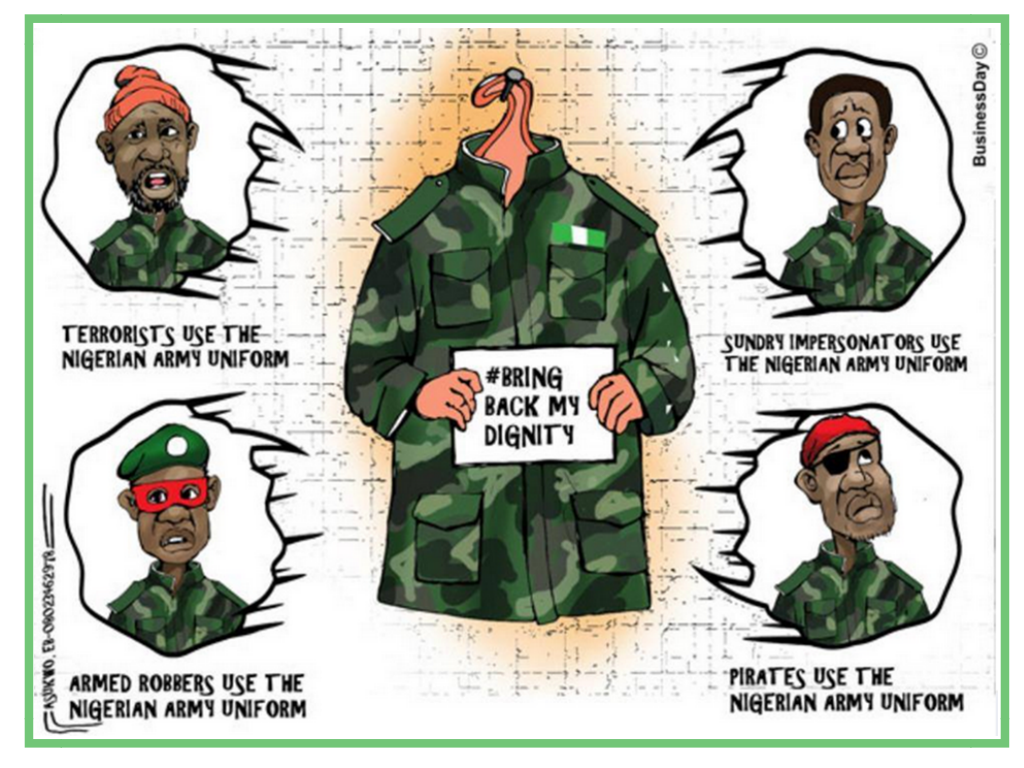


Image credit: curtain vector: zcool.com.cn

font: Christopher Hand by El Stinger: http://www.dafont.com/christopherhand.font

font: Acid Label by Billy Argel: http://www.dafont.com/acid-label.font


design: ©Timi Yeseibo 2014

Forgive me Motunrayo, I Want to Sin

night

Sola remained quiet even though it was her turn to speak. As each second ticked away, I adjusted my expectations from support to understanding.

 
“It’s not done. Bimpe, it’s simply not done. Blood is thicker than water . . .”

 
“But we are not related by blood—”

 
“Who said anything about his blood? I’m talking about Motunrayo, your younger sister!”

 
She hissed the way our mothers used to. The way we said we would never do.

 
“Have you?” Her voice was soft. Her eyes were hard.

 
“No o! What kind of person do you think I am?”

 
“I don’t know. Love makes people do stupid things.” She spat the word love as though it was bitter kola.

 
“Well, I haven’t!”

 
“Keep your legs closed and run as fast as you can.”

 
I tried to make her see that love could be sweet like chilled ripe mango slices. For two hours her eyes remained hard, the way my father’s and mother’s had been two days ago.

 
Finally, Sola shook her head and said, “Bimpe, love is not enough. Are you forgetting where we come from?”


I returned to my flat at 10 p.m., took two tablets of Paracetamol, and whispered for sleep to come. My phone rang.

 
“So, what happened?”

 
“Segun, it didn’t go very well.” I fluffed my pillows, sat up, and took a deep breath. “She said I was there to look after my sister not look after her husband. That it might even look like we conspired to kill her—”

 
“God forbid! I’m sorry . . .”

 
“I’m tired.”

 
“We can’t let other people dictate our lives. What we have is real.”

 
“Is it?”

 
“You don’t mean that—”

 
“I don’t know again. I still think it’s too soon. She just died six months ago!”

 
“How long do we have to wait? One year, two years, ten years? What if they never come round? I survived cancer. I narrowly missed that plane crash. I survived the accident. I feel like I’ve cheated death ten times. Bimpe, life is short.”

 
“Hmmm . . .”

 
“Say something . . . please.”

 
“Some days I feel good. Some days I don’t. If Motunrayo is looking down on us, would she approve?”

 
“We’ve been through this a million times! She wanted me to remarry—”

 
“But did she want you to marry me?”

 
“Life is for the living. She wanted me to be happy. I’m happy. Aren’t you?”

 
“But everybody can’t be wrong!”

 
“Who is everybody? We don’t have to stay here. I told you I have an offer . . . we can move to—”

 
“Didn’t you hear my mother? She said it doesn’t matter where we go, bad luck will follow us and blow us like wind; we will never have roots!”

 
“Please stop crying.”

 
“I can’t. My father threatened to disown me! You don’t know what it’s like. Your parents are dead and your uncles worship the ground you walk on.”

 
“I’m sorry.”

 
“Let’s wait. I have so much to lose . . .”

 
“That’s not true.”

 
“Really? Listen to how it sounds, ‘He married his late wife’s sister’. Okay, what of, ‘She married her late sister’s husband’?”

 
Segun sighed, “Okay. How long?”


We waited another six months during which time, my father spoke to me twice, scowling as he did. Segun took the job abroad and relocated. I convinced him that we should cut off all communication to test the strength of our love. He did not like my gamble, but I needed to know if grief had masqueraded as love.

 
I waited for my feelings to go away. They left and returned with gale force. His absence made me weaker, made my love stronger, and my resolve tougher, so that when we finally reunited, l threw myself at him and he kissed me in the hotel lobby, not caring if any of the people shuffling through life might recognise us. I felt their eyes when I kissed him back. We broke away as we became conscious of their whistles.

 
He took my palm, “Feel my heart, it’s racing for you.”

 
I took his hand, “Feel mine too.”

 
We did not consult anyone after that. For the next three months, we made plans for me to join him like children whispering, “sssh, sssh,” in the dark. The day before I was to travel, I called my mother because she had said, “I don’t approve. If you marry Segun, your father will live as if he has no child left. As for me, I have lost one child. I cannot lose the other. I will always be your mother.”

 
I thought she would weep, but her voice trembled as she said, “Se je je oko mi.”

 
That evening, I ordered room service and pushed the omelette around the plate, then cut it to pieces. Nervous, I stood by the eleventh-floor window and watched ants clear the pool area for the live band. The first strains of the piano reminded me that my feet were cramping. I sat on the bed, leaned back on the headrest, pulled my knees to my chin, and wondered if black was an appropriate colour for darkness.

 
The twenty-four-hour wait seemed longer than the last two months of Motunrayo’s life. One day, when I visited her, I placed my mouth close to her ear as she dragged out the words, “After I’m gone, make sure he marries again. But not someone prettier than me.” I am prettier than my sister is and she grew up in the shadow of my beauty. Did she see Segun’s love for me and mine for him spark, although we did not, during the long days we spent waiting for hope and battling sadness?

 
One night I walked in on him keeping vigil by her side. I noticed how handsome he was and thought how lucky she was to have him. Because I have been unlucky in love, I wondered how it would feel to be loved by a man like him. Was that when I jumped off the diving board into the heart-shaped pool? I fell for Segun while Motunrayo was dying not after her death.

 
Crying, I called my mother again.

 
“Mummy, it’s me. Please soften the ground for me. Tell Daddy I have come to my senses. Tell him I am coming home.”

 
She said, “Ose oko mi!”


©Timi Yeseibo 2014


Se je je oko mi – be careful my child
Ose oko mi – thank you my child


Unauthorized use and/or duplication of this material without express and written permission from this blog’s author and/or owner is strictly prohibited. Excerpts and links may be used, provided that full and clear credit is given to Timi Yeseibo and livelytwist.wordpress.com with appropriate and specific direction to the original content.
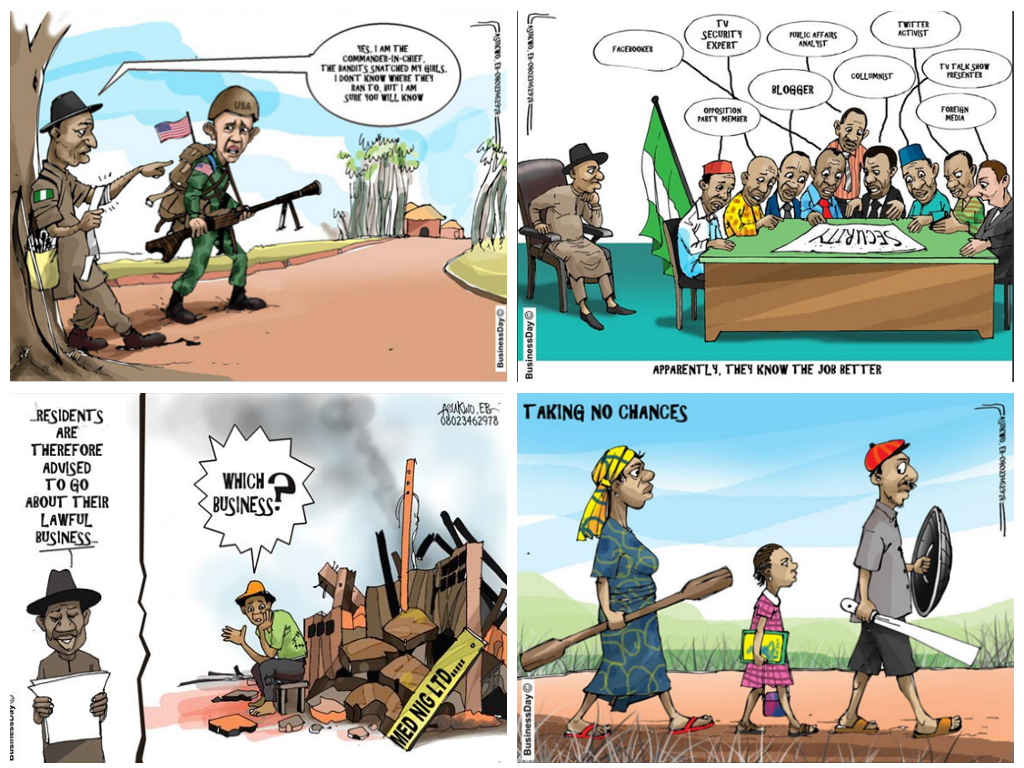


Image credit:
City by Jenifer Cabrera@CreationSwap: http://www.creationswap.com/media/12111

This is How We Do It

queue

Life is a series of waiting. From the doctor’s office to the travel agency, from the dentist to the foreign embassy, we queue, tapping our feet, until we are served. Smart businesses turn waiting into a pastime. Forget glossies and car magazines. Forget coffee, tea, sweeteners, and creamers. Nothing like free Wi-Fi to eat up fifteen minutes of eternal boredom.

Yet, at supermarkets or self-service restaurants, Wi-Fi, and even 3G or 4G seldom come to our rescue for transaction speed is paramount.  We depend on tacit rules of queuing to bear our collective suffering and for smooth passage. For example, the loud disapproval of waiting-weary law-abiding citizens dispenses instant justice to queue-jumpers while attendants uphold the  people’s verdict. Those in a hurry don’t have to be doomed to sighing, hissing, time watching, and eye rolling. They just need to approach the Queue Court of Appeal comprising all or some of the people they intend to bypass.

I returned to Nigeria with this mindset. So, when I went to a fast-food takeout, I ignored the people milling at the counter and joined what seemed like a funnel-shaped queue. It didn’t move. This was what happened: people walked in, went straight to the counter, placed their orders, were served, and walked away. Did they have a smirk as they strode out with their prize or was that my waiting-weary imagination?

Anyway, I queued on in faith, ignoring my daughter’s tug on my wrist. I glared at my son for daring to suggest that I muscle my way to the counter. I counted tiles on the ceiling when I noticed people looking at me as if I had dyed my hair lime green. But, the toughest battle by far was drowning out the soundtrack spinning in my head, “Mumu, mumu. Mumu, mumu. You are a big mumu.”

queue culture

I wore my long-suffering like a green-white-green badge until somehow, I found myself at the counter. Before I opened my mouth, a lady appeared and started placing her order. I expected the attendant to ignore Queue-jumper but she took her order instead.

“Didn’t you see me on the queue? It’s my turn.” I eyed the attendant and Queue-jumper.

“How was I to know that it’s your turn?” Queue-jumper replied, looking at me, and then at the attendant, “add moi-moi, three moi-moi . . .” She faced me again, “You’ve just been standing there slacking; I don’t know what you’ve been waiting for.”

Anger rose slowly from my heart to my mouth.

I went into a tirade about how long I had been queuing and why. I expounded on the demerits of organised disorganisation, dragging the name of the management into my argument and stating that they enabled people like her frustrate the system thereby killing any hope of excellence.

When I heard giggles behind me, I paused to view the effect of my words. Some people were snickering. My son was shuffling his feet and looking at the floor. My daughter was looking at me as if she didn’t know me. I forgave them instantly. What did they know about Nigeria besides the ogbono soup and poundo, which I regularly made while we lived abroad? And the objects of my wrath? One held a bag of fast food, the other, N500 bills, and an exchange was imminent.

Another attendant came to the counter, “Madam there’s no need to shout, if you want something, please just tell us.”

Anger left my mouth and lodged in my heart.

Days later, I saw a real queue in Shoprite at The Palms Mall, people waiting to buy bread. But a friend went to the corner and gave an attendant N200 to jump the queue. Holding his N200 loaf of bread, he winked at me and said, “This is how we do it.” As he sauntered to the till, he bumped into a trolley that crashed into an aisle, causing canned goods to tumble to the floor, while those on the queue shifted their weight, dodging rolling cans.

Is this how we do it?


©Timi Yeseibo 2014


Around the web: other perspectives

India: http://junaidkhalfay.wordpress.com/2014/01/29/indians-their-best/

Oh for the love of India: http://sunderv.wordpress.com/2014/03/07/the-ubiquitous-q-crashers/

Britain: http://prettyfeetpoptoe.com/2013/01/09/queuing-the-great-british-pastime/

Australia: http://infographiclist.com/2014/02/19/ever-lose-your-cool-in-a-queue-infographic-queue/

China: Hey! Can’t you see there’s a line here? Wait your turn! by Ryan Ulrich

http://www.globaltimes.cn/opinion/top-photo/2009-07/442510.html


Photo credits:

http://pixabay.com/en/bar-restaurant-feet-legs-people-238509/


Unauthorized use and/or duplication of this material without express and written permission from this blog’s author and/or owner is strictly prohibited. Excerpts and links may be used, provided that full and clear credit is given to Timi Yeseibo and livelytwist.wordpress.com with appropriate and specific direction to the original content.

Social Critics and the Human Face of Activism

Dennis Brutus poetry

This isn’t about Reuben Abati; it’s about you and me. He is just the ham in the sandwich, the one whose treachery, his becoming a mouthpiece for a government he once challenged, the spotlight’s beam has caught.

What makes a man leak from both sides of his mouth? I pondered this question and found it difficult to throw stones. Pebbles maybe, for I don’t want to excuse actions, but understand them.

So, I imagine that I am a writer with strong opinions who has nailed the art of persuading others with my words. My words are pregnant with love for my country, a sense of justice, and concern for the plight of the ordinary man. When published they give birth to a stream of followers whose voice I become.

This voice makes me a fly perching on the government’s egusi soup, small yet irritating. Knowing that spraying Shelltox is an overkill, the government places another bowl of soup on the table. Enter seduction: moving pleas from emissaries in babarigas and boubous, a call to arms for my country, not with an AK47, but with my words.

This seduction, more pleasurable than a woman’s fingers kneading coconut oil in my loins, causes my heart to race as visions of power, affluence, and a platform for greater influence fill my mind. Thoughts of Babangida’s offer to Tai Solarin surface. Does it matter? I know I will make a difference. I will no longer merely itemise our problems with lengthy editorials.

And so, I resume my new job in Aso Rock. The first thing that slaps me is the ineptitude of those I work with. The second is the indifference of those to whom I am accountable. All my lofty ideas, received with fist pumps, translated into memos that have been circulating in a hierarchical system that bemuses me, have reached the ceiling and died there.

In six months, only cosmetic changes like the framing and hanging of our work ethics in every office are visible. Money is changing hands, but mine are clean so far. I am preoccupied with change and our meeting minutes reflect this even if those that attend, now openly yawn.

Soon, I must sell a policy that smells like dead fish to the people whose voice I am or was; I am not sure for I am losing who I am or was. By this time, my children are in the best private school in Abuja, my wife has a thriving import business patronised by senator’s wives, and I have laid the foundation for my house in the village. My convictions have clashed with duty before, but this time, the stakes are higher.

I do what I must and then I read the outcry on social media. Haba! This longing for heroism, this cry for a saviour, did I put it in people’s heart? This search for credibility, is it because their lives are so untrue? At least, I answered the call. What about them? Useless people firing tweets in between replying emails in some god-forsaken cubicle!

I scratch my belly and the ten kilos I have gained causes it to wobble. I roll my tongue over canines that once drew blood, now blunt from lack of use. Look, I cannot sit on a pile of human praise anyway, such fickle things to base affirmation upon. Hands that tweeted me to the top show no mercy. I am a high-rise set to detonate. Before them, I crumble to the dust.

As elections draw near, I angle myself right. My loyalty may fetch a ministerial appointment. If not, I will offer media houses an exposé with names and lists. In the middle of the Twitter wars and Facebook debates, I will metamorphose into my old skin, a social crusader, a voice for all who forgive and forget.

The government needs human capital to build the Nigeria we dream of. When you are called, how will you serve?


I saw Reuben Abati once at a writing workshop where he was a keynote speaker. He must have delivered a good speech, I don’t recall. I remember that he was dark, average height, ordinary like you and me, yes, like you and me.


©Timi Yeseibo 2014


The poem by the South African activist, Dennis Brutus, addresses the conflict between love for one’s country and love for a woman. In it, I see also the conflict between heroism and self-preservation. African Soulja reviewed the poem here

Reuben Abati: Journalist and Special Adviser on Media and Publicity to President Goodluck Jonathan (2011 –  ).

Egusi soup: Popular soup made with melon seeds.

Shelltox: Brand of insecticide.

Babarigas and boubous: Traditional clothing. Used here to denote a custom where elders cajole one’s hesitant feet into a course of action.

Ibrahim Babangida: Military dictator (1985 – 1993).

Tai Solarin: Deceased. Social critic and secular humanitarian. Served as chairman of the Babangida Administration’s People’s Bank, but later resigned in protest of corruption within the bank.

Aso Rock: The residence and office of the Nigerian President.


Unauthorized use and/or duplication of this material without express and written permission from this blog’s author and/or owner is strictly prohibited. Excerpts and links may be used, provided that full and clear credit is given to Timi Yeseibo and livelytwist.wordpress.com with appropriate and specific direction to the original content.

Your Enemies Shall Never Succeed

Your enemies shall never succeed

“It’s a lie! Your enemies will never succeed!”

“So after the prayer meeting . . .”

“Yes?”

“I took the holy water to the office.”

Eh hen?”

“I didn’t take all. I poured some into La Casera bottle—”

“You washed it first—”

“No o! Is that bad?”

“Hmmm, it would have been better to sanctify it, but well, it is well.”

“So, I got to work very early, before people started coming . . .”

Eh hen?”

“I entered my oga’s office and I started sprinkling the holy water. Then his secretary came in—”

“Bloooood of Jesus! She saw you?”

“No. I quickly hid the bottle behind my back.”

“Good . . . good.”

“She asked me if I was looking for the leadership presentation printouts.”

“I said, ‘Yes.’ She told me to check the cabinet and left.”

“Thank God!”

“I continued sprinkling the holy water, on the desk, under the desk, on the chair, on the computer. I even sprinkled some on the pictures of his wife and children. When I finished, I started marching round the desk, then the secretary popped her head through the door—”

“Your enemies shall not succeed!”

“Amen!”

Eh hen, what did she want?”

“She asked me if I had found it. I said, ‘Not yet—’”

“And then?”

“She said she would help me.”

“The water?”

“She asked me what it was. I said, ‘Nothing. Just drinking water—’”

“Your enemies will never succeed!”

“She asked me why I’ve been pouring it around the office.”

“Jesus! Jeeesus! . . . What did you say?”

“I said I wasn’t pouring it. She said I was lying that she had been watching me on the CCTV”

“CCTV ke?”

“Yes!”

“So what did you do?”

“We started arguing.”

“Your enemies shall never ever succeed! Eh hen?”

“Then I got angry and stormed out—”

“The holy water?”

“I . . . I . . . I left it there . . .”

“Sh*t!”

“Anyway, when I stepped out of the office, I saw people gathered round her computer.”

“Who? The secretary?”

“Yes! Someone was saying, ‘Rewind, rewind . . . ’”

“What were they watching?”

Leave mata. I wanted to pass quietly. But she shouted, ‘Stop him!’ Then everybody looked up and started laughing.”

“Don’t worry; it is not the end of the world—”

“That’s what I thought. Until the security grabbed me—”

“What?”

“I tried to struggle—”

“Jesus!”

“The other one tackled me to the floor. Then my oga—”

“Your boss? Where did he come from?”

“I don’t know. He told me not to struggle. That I should respect myself and pack my things and leave.”

“Just like that?”

“Just like that. As I was packing, the security guards stood by me. They kept saying, ‘Oya hurry up!’”

“All hope is not lost. God works in mysterious ways. It is well.”

“As I was going to the lift, my oga was following me. He shouted, ‘Wait!’ So I turned.”

“Hmmm, what did he want again?”

“He said, ‘You are not the first and you will not be the last. My enemies shall never succeed!’ Then he pushed the holy water into my hands!”

“It’s a lie! Jesus!”

“What? What? . . . What is it?”

“Your enemies . . .  Osanobua! Your enemies, they have succeeded!”


©Timi Yeseibo 2014


Unauthorized use and/or duplication of this material without express and written permission from this blog’s author and/or owner is strictly prohibited. Excerpts and links may be used, provided that full and clear credit is given to Timi Yeseibo and livelytwist.wordpress.com with appropriate and specific direction to the original content.


Image credit: curtain vector: zcool.com.cn

font: Christopher Hand by El Stinger: http://www.dafont.com/christopherhand.font

font: Acid Label by Billy Argel: http://www.dafont.com/acid-label.font

design: ©Timi Yeseibo 2014

Cellphomania

mobile phone

I have three mobile phones, so what? Of course, I have all my papers. How could I live and work in The Hague otherwise?

These phones, ah, in Nigeria, they felt neither heavy nor out of place when I laid them on the table in a restaurant, side by side, as if to compare their sizes.

Things have changed since I left Nigeria, they tell me. But I can only tell you what I know. That when my conversation with a friend ended because of network wahala, he called back on another network, blaming the earlier bad connection on heavy rainfall. That when I lived in Nigeria, rain was one reason I had three phones.

So that if rain melted one provider’s “wireless” wires, I could turn to another who might not be that unlucky. So that if lightning set one provider’s telecom mast ablaze, I could turn to others who could get their fire extinguishers ready on time. So that if Sango, thundered against South Africa’s MTN, I could turn to Glo, owned by a son of the soil, who might have been spared.

Network problems are rare here. These three phones? It’s a Naija thing. I am yet to meet any Nigerian at home or abroad who has less than two phones.

My first phone is my “official” phone. Friends call me on this number, as well as my boss, the tax office, the gas company, the police, telemarketers, and King Willem-Alexander. This phone from network operators like Vodafone, KPN, and T-Mobile, suffers one major limitation, which my second phone overcomes.

Because I call family and friends in Nigeria and the African continent from my second phone, the SIM card must come from Lyca, Lebara, Vectone, or Delight, providers that offer discount call rates to Africa. Any smart phone that accommodates Viber, WhatsApp, and the almighty BBM, will do because every Nigerian chats on BBM. Moreover, in Nigeria, exchanging BlackBerry PINs follows introductions and handshakes. Your blue eyes are widening; don’t you know what hyperbole is?

My third phone is the cheapest brand in the market. It’s only purpose is to rescue me. Imagine, if you can, that one day, you are in the Open Market, buying oxtail, shaki, cow leg, and real beef, from of all people, that Dutchman who eats vlees  that you cannot eat, but has a stall where Africans troop.

This inability to acculturate, to do something as simple as buying and eating meat from Albert Heijn after twelve years in The Netherlands is your undoing for you bump into your distant cousin in this little corner of Africa.

He calls you by your Nigerian name, daring you to ignore him. You both register your surprise and long-time-no-sees. You dribble the chit-chat past where you live to you will call him. His protest drowns out the sound of the Moroccan fruit vendor calling, “Bananen, vijf voor maar een euro!” How can he expect you to call him when you are his senior—did you not come to Europe before him? His oyibo neva reach dat level, abegi! He will call you.

You give him your third phone number. The number your mother gives to your secondary school friends because she does not require your permission to do so. The phone that you switch on when you need to make obligatory calls to relatives who think you pick gold off European streets for a living.

My dear, the phones on the table are mine and mine alone. I am not a 419, na so life be. If you still don’t understand, I will explain in the morning. Switch off the light and snuggle close to me, I like to hold you when we sleep.

©Timi Yeseibo 2014

Wahala: (Nigerian Pidgin; perhaps of Hausa origin) Trouble or problem.

Sango: Yoruba god of thunder and lightning.

Vlees: (Dutch) Meat. Many African immigrants shun the “flat” meat in supermarkets, preferring the meat sold in Halal shops or the Open Market (oxtail, shaki, cow leg, etc.).

Albert Heijn: Dutch supermarket chain

His oyibo neva reach dat level, abegi: (Nigerian Pidgin) translates roughly to, living abroad has not made him forget his Nigerian roots or culture.

Open Market: Officially De Haagse Markt. It lies between Transvaal and Schilderswijk, districts populated mainly by Moroccan, Turkish, Antillean, Surinamese, and African immigrants. The market reflects the neighbourhood’s diversity.

Na so life be: (Nigerian Pidgin) translates roughly to, that’s just the way it is.

Photo credit: The Reboot / Foter.com / CC BY-NC

Original image URL: http://www.flickr.com/photos/70292973@N07/7197724426/

Title: Mobile Phone Hanging from a Tree

Unauthorized use and/or duplication of this material without express and written permission from this blog’s author and/or owner is strictly prohibited. Excerpts and links may be used, provided that full and clear credit is given to Timi Yeseibo and livelytwist.wordpress.com with appropriate and specific direction to the original content.

Another Day in Tolerance

another day in tolerance

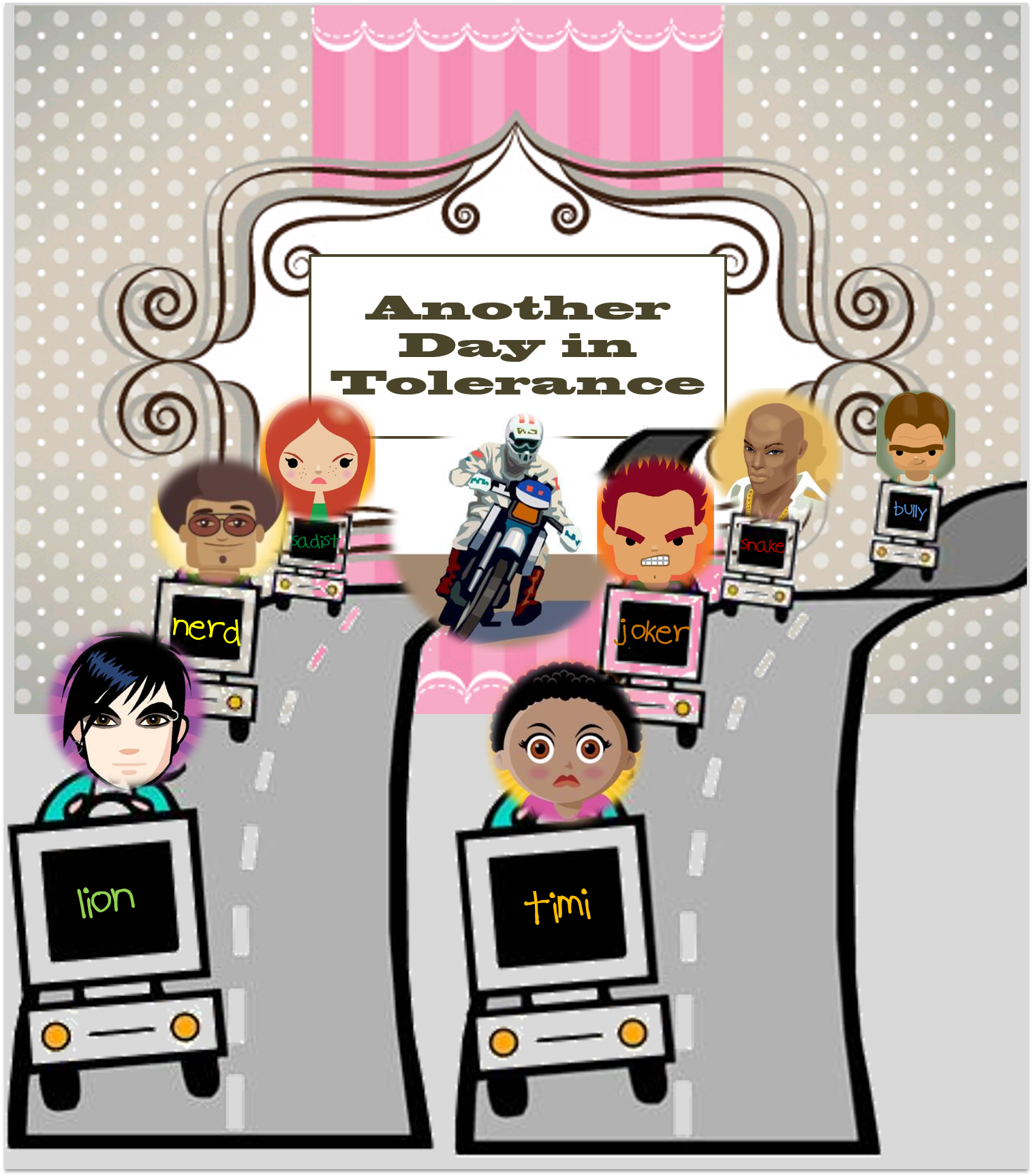
Now that winter is almost here, I have ditched the bus, tram, and train in favour of my car. Away from Potential Bestfriend, Regular Joe, and Young Generation, music accompanies my solitude. My heated interior obliterates memories of last year’s winter, of waiting on bus, tram, and train platforms, whipped by the wicked North Sea wind. In spite of this, I am still having another day in tolerance. Let me introduce you to the characters on my way to work.

The Nerds

People who drive 30km/h on a 30km/h road. To drive behind people like this is to simmer with the pressure of wanting to pee with no toilet in sight. They do not realise thirty is the new sixty. However, they know what it is to pay a 320 Euro traffic fine. You cannot meet their slow-motion stare as they crawl past, moments after you sped past them and the police flagged you down. After you calculate how to pay the fine and still lead a normal life, you laugh aloud at the idiot who just zoomed past you.

The Jokers

People who overtake you with zeal, and then slow down, forcing you to overtake them. As if on cue, they overtake you again and then slow down again. For them life is a game of chess, they have captured your pawns, knights, rookies, and queen too. You know how to beat them nonetheless. After a couple of moves, you decide the game is too juvenile to play. You slow down until they lose interest and speed off to court the next player.

The Sadists

People who drive slower than you do, so that you are right to overtake them. The minute you exert pressure on your accelerator, indicate, and switch to the left lane, something in them comes alive. They pick up speed to match your speed. Since you are already on the left lane, you increase your speed to overtake them. In turn, they increase their speed so you cannot overtake. Riding side by side, you sneak a peek. They are a study in casual concentration. You know people like this in real life, people who had a deficiency in childhood. Maybe it was potassium or vitamin K. Their motto: if I cannot get to heaven, then neither will you. You take the high road and follow lamely behind them, shaking your head as you whisper, “Life is too short; life is too short.”

The Non-Conformists

Aka the motorcyclists. They sneak up on you in traffic, stealth is their middle name; they love the strip of asphalt between two cars. You would too, if you have been moving at 10km/h for the last hour. They whiz through the narrow space and nearly take your side mirror with them. Your mirror bends to the limit of its elasticity and returns to its place. Your blood boils and refuses to cool until you remember that lottery-winning numbers are yet to be announced. You let your car roll and slap your ear as if brushing away a zizzing mosquito.

The Bullies

Aka the excursion bus drivers. They do not think the signpost that limits trucks to the slow lane applies to them. Maybe they are right. You passed your driving exam long ago. They obscure your vision, not only of the road and vehicles ahead, but also of the sun, the moon, and the stars. As you drive behind them, you wonder when you will see civilisation again. With nothing to do, you read the bus; you read about all the trips the company offers and commit the website to memory. As soon as the road widens, you change gears, enter the fast lane, and forget all you have read.

The Snakes

People who snake from one lane to another as if they have diarrhoea of the brain. Your head aches from watching their spiral, and it’s no wonder, they remind you of boyfriends that cannot commit. Oh, there they go again, searching for the next best thing. You let out a hiss that is longer than a snake’s, “Hisssss!”

The Lions

The Ferrari-like drivers who would rather be on a German autobahn, but a 70km/h road constrains them. They breathe down on your trusty Toyota, lights menacing, as you overtake a truck. The second you inch back to the right lane, they vroom vroom past you, leaving a trail of imaginary smoke in their wake and drag that causes your car to vibrate. When you catch up with them at the red light, the roar of their engine sounds like the bleat of a frustrated goat. The smug satisfaction on your face says it all. There is a god. No matter how rich and powerful some people are, we still shit the same brown shit. All hail traffic lights, the great equaliser.

Recognise any of my fellow travellers? What’s commuting like for you? I bet not as bad as Lucy Martin’s travails in Dubai.

©Timi Yeseibo 2013

Image credits: all people illustrations, animes, avatars, vectors by Microsoft

Background: lovely pink and gray card design by VisionMates in backgrounds/wallpaper http://www.vecteezy.com/backgrounds-wallpaper/47521-lovely-pink-and-gray-card-design

design: ©Timi Yeseibo 2013

Unauthorized use and/or duplication of this material without express and written permission from this blog’s author and/or owner is strictly prohibited. Excerpts and links may be used, provided that full and clear credit is given to Timi Yeseibo and livelytwist.wordpress.com with appropriate and specific direction to the original content.

Grief: When Words are not Enough

grief

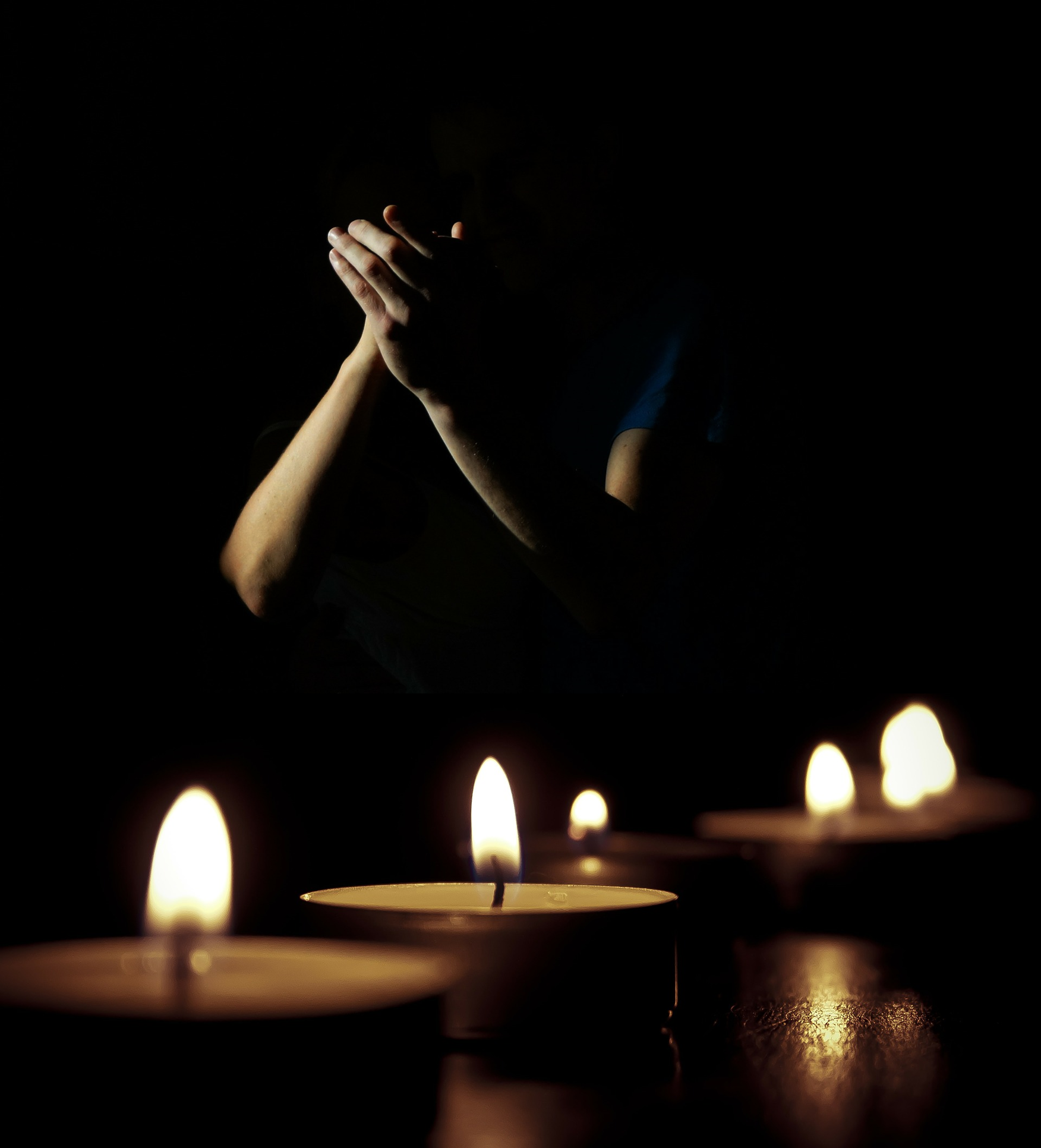
I am a strong woman and I let my tears fall as often as they like. However, when I pull up in front of his house, I repair my eye make-up and then smile twice to drive sadness away. Tears are not welcome here, I remind myself as I get out of the car.

I let myself in and grief meets me in the hallway. The post lies in a scattered pile on the doormat. Blue envelopes, white envelopes, shiny envelopes, and magazines and periodicals, he does not read. I sort them in three groups: the urgent I place on the console table, the trivial I put in the drawer underneath, where he keeps his car keys, and the rest, the magazines, periodicals, and shiny envelopes, I dump in the dustbin, in the kitchen.

Here, grief is loud coaxing me to chide. I clear dirty plates, a half-empty sardine tin, and stale bread in the semi-darkness.

In the living room, the curtains say no to the sun. The light from ESPN’s classic football on TV illuminates his form. Grief is quiet inviting me to converse. Grief is still but I am not one to fill the silence as if I am a child colouring with impatient hands that cannot stay within the lines. It has been two days since he heard the news.

When pain overwhelmed my reasoning, my sister sat beside me, squeezed my shoulders, and remained quiet. When disappointment visited me on a Monday morning, my cousin sat beside me, a box of tissues separating us. She hunched her shoulders in sync with mine, let me cry, and kept quiet. When I exhaled the last bit of hope in my heart, a friend sat beside me, numb we stared at CNN, and then he kept silent vigil as I channel surfed.

So, I sit on the settee, careful to maintain distance. I sit until my nose attunes to the smell of day-old perspiration and until I can breathe in the stuffy air circulating in the room. Grief is hypnotic calling me to sleep. I sit until I awake. His head lies heavy on my lap. My skirt is damp and the soft sounds are not from the TV. They are from a man beaten by life, his hopes shred by the finality of death.

“My father, my father, oh my father.”

Grief feels like roulette. Sometimes touch is enough. Sometimes presence is enough. I know he knows that if we pull open the curtains, sunlight will burst through and in the night, the moon will give us light. But right now, words are unnecessary. This is the first time I have observed a man cry.

I have only ever seen two men cry. The first time must have lasted less than five minutes. Ten years passed before I saw another man cry. Perhaps it is because this occurrence is rare that each time I glimpsed a man’s vulnerability, I loved him more.

If we show our weakness, we may lose the ground we have secured and the advantages it conferred, but if we don’t show that we are weak sometimes, we may lose much more. We may lose the opportunity for others to love us for our humanity.

I wonder, at what age does a boy “man up” and decide to stop crying?

© Timi Yeseibo 2013

Photo credit: Pixabay

Original image URL: http://pixabay.com/en/candles-tealights-soft-209157/

http://pixabay.com/en/clapping-hands-shadow-poor-light-189171/

Unauthorized use and/or duplication of this material without express and written permission from this blog’s author and/or owner is strictly prohibited. Excerpts and links may be used, provided that full and clear credit is given to Timi Yeseibo and livelytwist.wordpress.com with appropriate and specific direction to the original content.

I am not What I Wear and Other Lies we Tell Ourselves

cracked face

“I want to be taken seriously dammit!”

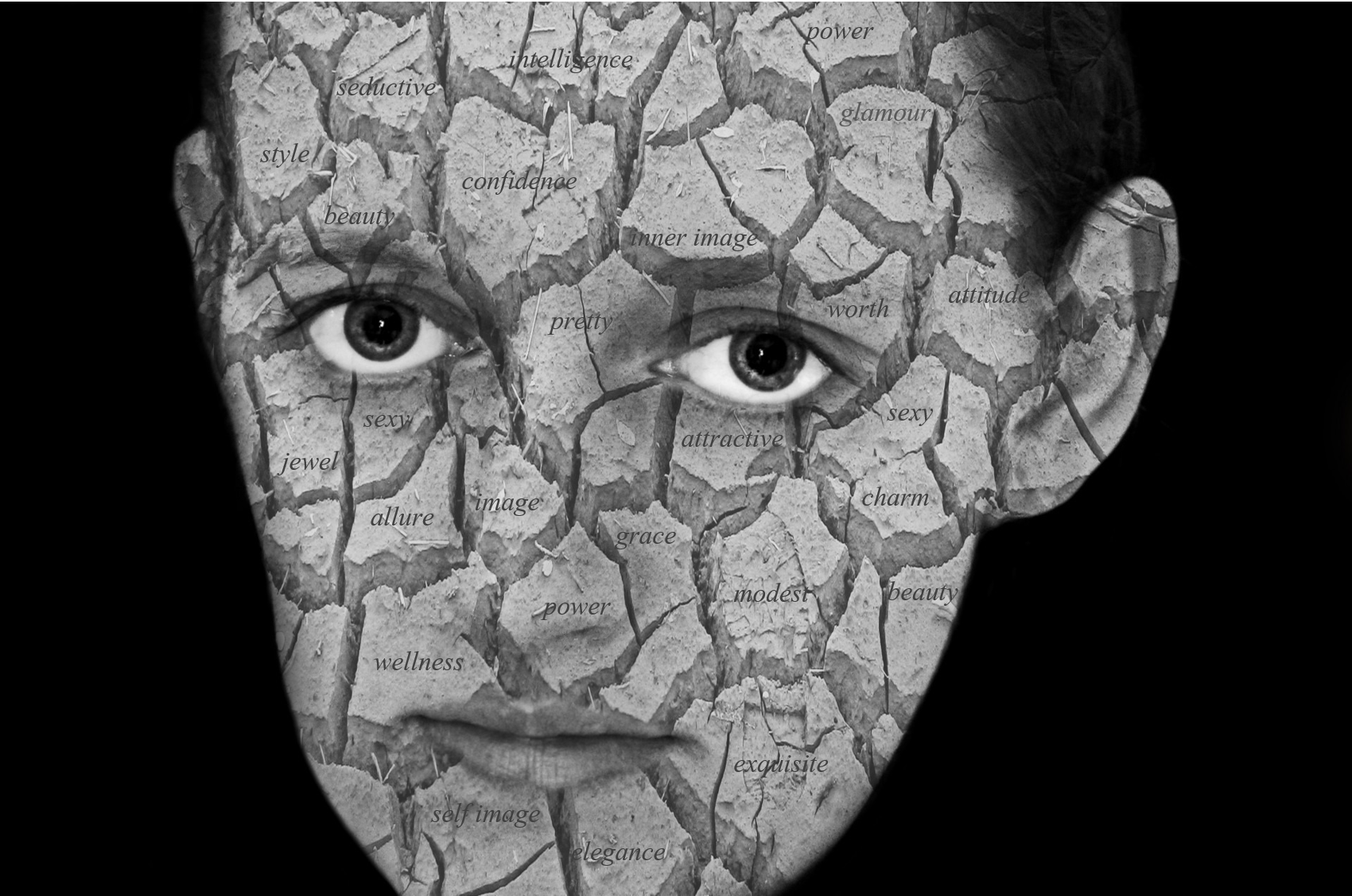
Her skin is fair, her face, neck, and breasts, the same skin tone. If her blouse were cut any wider, her nipples would escape. Once, she told me with pride that she didn’t need a bra. I want to use my hands to verify, but I check this irrational impulse and listen to her instead.

“I mean who stumbles over cleavage, right? That’s just like . . .  soooo eighties!” She flicks her bangs and sucks her lemon ice tea, her every movement a pirouette in seduction.

“Right,” I reply, aware that almost every eye in the restaurant is on us, on her, as they have been ever since she walked in. Tall and lithe, like cat woman, could she be unaware of her magnetism? Or does her power lie in contrived innocence?

I let her lead, the conversation that is, but I don’t follow. If I say what I feel, she would think I’m like so eighties, anti-feminist, old–er, and sexually repressed by my sociocultural and religious background.

I let her lead, and then I come home and write this blog post.

***

 Whether you believe in evolution or creationism, gone are the days when humans roamed free and breeze cooled what hung bare for all to see. Fig leaves or animal skin no longer covers our “delicate” parts. Along the way, we discovered clothes, which define standards of decency in public. If you walk naked on the streets, people might consider you mad, and little children might giggle.

Imagine . . .

Nine o’ clock, Monday morning, you walk into the building and approach the counter. A man sporting dreadlocks, a cut-off denim vest, and three gold chains with huge dollar-sign pendants, rises to greet you.

“Good morning, how may I help you today?”

You shake his outstretched hand and look around the room: off-white walls, ficus plants at the corner, black straight-back reception chairs, display screens, ATMs, and the revolving door behind you.

“Sorry, I thought . . . where . . . is this the bank?”

You visit your doctor for a routine exam. An assistant ushers you in. The doctor has her back to you. When she turns, her wavy black hair bounces. Her smile is pleasant as she motions for you to take a seat. Your eyes fasten on her cleavage; the V of her blouse would make the Kaghan valley in Pakistan weep in envy.

“Is something wrong?” she asks politely.

“No,” you say as you swallow and drag your eyes to her face.

“How are you doing today?”

“Fine. But, I . . . I’m here to see the doctor.”

At the office, you hit your keyboard with the gentle force of your ideas. When your colleague stops over and says hi, you reply without taking your eyes off the monitor. He walks a few paces closer, so you look at him.

“Was there something I could help—”

You cannot complete your question because you are nearly eye level with his white boxers. Your eyes travel up past the narrow line of hair around his navel, which fans out like a bush on his chest. You spare a glimpse for his biceps before you take in the black bow tie on his neck. When you meet his eyes, his voice sounds distant. You have not been listening.

“I hope will you be done with your report on time. I need to put everything together for the presentation.” He turns and walks away.

Your yes response carries no conviction because you are staring at his boxers, the bit of fabric trapped in the crack of his buttocks.

Why are clothes important? Why do you wear what you wear?

Girls, we’ve come a loooong way! We’ve leaped from the bedroom to the boardroom, made sandwiches in the kitchen and laws in parliaments. We’ve flown beyond prep school all the way to Outer Space and signed cheques for weighty sums in our name too. But what more did my great, great, great, great, great-grandmother fight for? To see me strut almost naked on the red carpet, while my beau stands by my side fully clothed in a tux? Where is equality? Why isn’t he as naked as I am?

While the V’s on our dresses reach our navel and our hemlines tease our bums, men objectify us, fully clothed, they gawk at us, only human, they ogle “with style”. We are progressing regressing to an upscale version of cave woman.  It won’t be long before we’ll be swaying down the streets our breasts running free. We’ll hi-five each other in our Victoria Secret fig-leaves tong, “Power to you girl; we’ve come a long way baby!”

And the men? They’ll be walking down the streets too, savouring women’s liberation, hailing women’s empowerment, fully clothed of course.

© Timi Yeseibo 2013

Photo credit: Pixabay.com

Original image URL: http://pixabay.com/en/cracked-cracks-face-people-woman-164310/

Photo tags: Cracked Cracks Face People Woman Female Portrait

Unauthorized use and/or duplication of this material without express and written permission from this blog’s author and/or owner is strictly prohibited. Excerpts and links may be used, provided that full and clear credit is given to Timi Yeseibo and livelytwist.wordpress.com with appropriate and specific direction to the original content.

An Encounter with LASTMA

LASTMA

Like Mumbai, Moscow, and L.A., Lagos is well-known for traffic jams. The thorny maze of automobiles, motorcycles aka okada, and pedestrians, inspired the Lagos state government to create an agency to ease traffic congestion. Lagosians hailed LASTMA as innovative until LASTMA began contributing to the bottleneck.

“The fear of okada is the beginning of wisdom, and to avoid LASTMA is understanding,” said a friend, when I started driving in Lagos soon after my return. I had survived reverse parking into tight corners on narrow European streets, but here in Lagos, the challenge was different.

LASTMA
Acronym for Lagos State Traffic Management Authority

An initiative to reduce unemployment and sanitise Lagos roads. Commuters lament the actions of its officers, who are the “reason” for the growing number of ATM machines.

Do not confuse them with the:
Army (green uniform)
Police (black uniform)
Traffic wardens (orange and black uniform)
Theirs is a proud cream and maroon

They are not bad people but a reflection an endemic system.

Motto (of a few bad eggs): To bring insanity to Lagos traffic and lay ambush for mugus.

So, I drove very carefully. Too carefully, annoying Lagos drivers who attempted to terrorise me with their ear-splitting horns, dare-devil manoeuvres, condescending stares, and foul words as they overtook my snail-paced car.

Me? I refused to give them the satisfaction of looking at their faces when they pulled up to my car, moments before overtaking. I kept a straight face and commanded my neck not to turn. I could at least hold one ace, I could relish the silent knowledge that they may have won the battle, but I had won the war.

Once, at a junction, LASTMA officers caused commotion by waving go to adjacent lanes of traffic simultaneously. I drove a few meters and stopped in confusion. Maybe that was the mistake—stopping to make sense of chaos; pausing to take stock rather than forging ahead through the pandemonium. Seconds later, two officers headed my way. I apologised and explained that they had unwittingly caused the mayhem.

They insisted that I let the windows down. I was privy to this trick and refused. When they persisted, I relented and wound down a crack. The officer at the passenger-side window stuck his hand through the tiny space with the agility of a monkey and next thing I knew, he was sitting beside me.

Madam, park for side, you dey cause go-slow.”

I complied and the “usual” conversation followed.

My kids began to cry. My son asked, “Sir is our mum going to jail? Is she in trouble?”

I wished he had not spoken. How much is a child’s distress worth to a LASTMA officer?

Oya madam fast, do quick. See as you don make the children dey cry.” Poking his face in the space between the front seats, he said to my daughter, “Small girl, don’t cry. It’s okay.” Turning to my son whose cries were louder, “Tell your sister sorry. You’re a man, don’t cry.”

My son wailed, “I’m not yet a man.”

“Okay big boy, sssh, it’s okay.”

“I’m not a big boy, I’m only eight!”

Realising that conversing with my son was pointless, he turned to me. “Oya now, madam shake body, so you fit carry dem go Mr Biggs. E be like say dem dey hungry.”

I thought about many things but “settling” LASTMA was not one of them. I folded my arms for a long silent sit-in. With an exasperated hiss, officer one got out to engage in heated dialogue with officer two. I saw my chance and took it.

RAKING

The ability to bluff your way through anyone or anything that threatens you on the streets of Lagos.

Any dialogue that begins with, “Do you know who I am?” or in pidgin, “You no sabi me?” is raking.

A loud voice and threatening gesticulations add panache to the craft.

However, in cases of real emergency, access to a high- ranking military officer is a plus.

The next time I encountered LASTMA officers, my driver was negotiating a left turn on a road with no prohibiting signs. Two officers suddenly appeared.

They insisted that he wound down. I gave the driver a simple choice: your salary or the window, and secured his cooperation. They informed us that left turns are illegal. I welcomed the helpful information and the driver attempted to change direction.

They mounted a human roadblock. “Madam just tell am to wind down,” they threatened.

I assumed my best big man’s wife pose, squared my shoulders, and sat up higher. I was glad that for this all-important trip to Shoprite, I decked to the nines Naija-style with designer sunglasses to complete the look! But the officers didn’t budge. So, I pretended to call my imaginary military officer husband after all, power pass power. They backed off.

What is the purpose of LASTMA, to correct or to collect? I hope things have changed since I wrote this post a few years ago.

lagos state traffic laws

© Timi Yeseibo 2013

You may also like:

When in Trouble . . . Just Yell: http://ofilispeaks.com/when-in-trouble-just-yell/

LASTMA in the Eyes of the People: http://flairng.com/new/lastma-in-the-eyes-of-the-people/

Lagos the liquid wonder: http://bizzibodi.wordpress.com/2013/11/02/30-days-of-lagos-lagos-the-liquid-wonder-by-ferdinand-c-adimefe/

Photo credit: LASTMA website

Image URL: http://www.lastma.gov.ng/traffic_law.pdf

http://www.lastma.gov.ng/

Unauthorized use and/or duplication of this material without express and written permission from this blog’s author and/or owner is strictly prohibited. Excerpts and links may be used, provided that full and clear credit is given to Timi Yeseibo and livelytwist.wordpress.com with appropriate and specific direction to the original content.

Third World: Where Culture Meets Culture

Urban development

I am a first-generation immigrant caught in a clash of cultures but I do not wallow in identity crisis. Although I know where I come from, the pieces of the puzzle that spell out where I am going are the hardest to find.

I am from Nigeria and now, I am from The Netherlands. In the Netherlands, people ask me, “Where are you from?” It is not because I speak Dutch with a foreign accent.

Waar komt u vandaan?”

Den Haag.”

Ik bedoel het land van uw herkomst…”

“I’m originally from Nigeria.”

There are layers of meaning in this exchange. For me, it is freeing to imagine that I’ve just been asked, “What’s the time?” and then to reply in the same tone and with the same emotions with which I would say, “Three o’ clock.” Chasing rainbows is for kids, adults know that when sunlight and water droplets kiss at an angle, a rainbow appears, but not for long.

Does racism exist? Does the sun shine in winter? I choose to see myself as a person, not a colour. In this way, perhaps people will also see that I am a person first; my colour is incidental. Niggling debates about the brownness of my skin, the flare of my nostrils, the strange hair plaits I call Ghana braids, and the location of my tail, would cease. Yes? Maybe not.

At the same time, Dutch people are tolerant, forgiving even of foreign traditions. They will accommodate you and help you out by quickly switching to the English language. They broadcast American TV series and movies in English and subtitle in Dutch! But until you speak the language and adopt their customs, you will be the stranger on the street admiring their beautiful homes, the view that they allow you see from their wide front windows with blinds drawn aside.

Say what you will schatje, this is as much my country as it is yours. Home is where the heart is, they say—my heart is in Nigeria and my heart is in The Netherlands. You’d better believe it, my heart is big enough.

untitled

The uppity houses in Archipelbuurt and Willemspark, the Halal shops, Western Union offices, and neon signs blinking, Simlock Verwijderen vanaf €5, in Schilderswijk, and the international organisations in Statenkwartier, reveal the multicultural character of The Hague. I cannot imagine living anywhere else; ik voel me helemaal thuis in Den Haag en ik zal hier wonen blijven.


I love-hate the sun worship that is the Scheveningen beach craze in summer and the Unox Nieuwjaarsduik Scheveningen 2013Nieuwjaarsduik in the middle of winter is a feat for the brave only. Cycling past the medieval Binnenhof, home of the Dutch parliament, a sense of national pride overtakes me. They say that God created the world, but the Dutch created The Netherlands. From North to South, we have mastered the sea and our dikes laugh at its waves. This to me is the “silent” pride Dutch people wear on their sleeves.

                                                                                  Binnenhof 

Wherever I am in the world, my ears pick out Dutch from a mix of Chinese, German, French, and Spanish, a comforting sound that makes me feel as if I am wearing a black turtleneck sweater over a pair of jeans and orange clogs, and I am holding a cup of tea, watching the sun light diamonds in the snow.

Riding in the tram in The Hague, my ears make out Yoruba or Igbo or Bini. It is also a comforting sound. I feel as though I am at a party in Nigeria, shaded from the sun’s heat by bright canopies. The food on display can feed the entire street and since our conversation must compete with the music, we shout in one another’s ears.

Many times people ask me to choose. I imagine they are holding up cards, and I am supposed to pick the joker. This then is the joker: it is not that one country is better than the other is, but rather one country is different from the other. I exist in my sub-culture assimilating the best of The Netherlands and Nigeria. It is a third world where many immigrants live.

When in Nigeria, my eight o’clock is my eight o’clock. I may have been born in African time, but I have grown in European time. Time is a fixed resource. My value of your productivity and mine plays out in the premium I place on your time. When in The Netherlands, I will not deny you the pleasure of a spontaneous visit to my home. Although your appointment isn’t pencilled in my agenda, I will not open the door a crack and stare at you as though you are wearing a Martian suit.

Here in The Netherlands, I will not snap the biscuit tin shut after you take one biscuit. But, I will also not smoke fish in my oven until my eyes water and the fumes wear the extractor out, forcing my neighbour to call the housing authority and fire service. When I wake up at 5 a.m., I will hum good morning Jesus, good morning Lord, instead of singing with Pentecostal gusto, so my neighbour does not bang on my door.

It is in the marrying of cultures that I arrive at my destination. They say home is where the heart is. My heart is in Nigeria; my heart is in The Netherlands. You’d better believe it, my heart is big enough.

So, how have you found living in a city where the language, customs, and the way you look, expose you for the familiar stranger that you are?

© Timi Yeseibo 2013

Nieuwjaarsduik (New Year’s Dive):  An annual tradition in The Hague taken by some 10,000 people into the icy cold waters of the North Sea by the Pier at Scheveningen Beach.

Fast Facts about The Netherlands: http://travel.nationalgeographic.com/travel/countries/netherlands-facts/


Photo Credits

Title: Urban development
Original image URL: http://www.flickr.com/photos/38659937@N06/6887749481/
Photo credit: Frans Persoon / Foter.com / CC BY-NC-ND

Untitled
Author: Bas Bogers
Original image URL: http://www.flickr.com/photos/bogers/4790162426/in/photostream/

Title: Unox Nieuwjaarsduik Scheveningen 2013
Author: Maurice / Haags UitburoOriginal image URL: http://www.flickr.com/photos/haagsuitburo/8334513758/

Description: Panorama of Binnenhof
Page URL: http://commons.wikimedia.org/wiki/File%3AThe_Hague_Binenhof.JPG
File URL: http://upload.wikimedia.org/wikipedia/commons/0/0f/The_Hague_Binenhof.JPGAttribution: By me (Own work) [GFDL (http://www.gnu.org/copyleft/fdl.html) or CC-BY-3.0 (http://creativecommons.org/licenses/by/3.0)%5D, via Wikimedia Commons

The ‘Forgotten’ Groundnut Pyramids Of Nigeria

Kitchen Butterfly

I am not a party girl; I’m a food and talk girl. Informal dinners with friends and conversations that go on and on, and on and on, way past dessert and midnight… hmmm, that’s what this post reminds me of, and I’m filled with nostalgia, a bitter-sweet longing.

Okay, so I’ve just romanticised epa (Yoruba for peanut), but that’s what Kitchen Butterfly has done also—weaving tales about how Nigeria was, in between telling us how to boil groundnut. Word connoisseurs, and lovers of history, photography, fine food (groundnut), would enjoy this as much I did.

“The past may hold treasures, still remembered but the future is bound in hope, in belief and in the knowledge that with life, all things are possible.” Continue…  http://www.kitchenbutterfly.com/2013/08/08/the-forgotten-groundnut-pyramids-of-nigeria/

Photo credit: © Kitchen Butterfly