In The Spirit of Love

In the spirit of love, I’m sharing one of my older posts, a crowd favourite, which elicits a smile or laugh from me whenever I reread. I hope you’ll enjoy it (again), as much as I do.

I am Not Looking For Love, I am Going to Work

It began yesterday at the government office, which was saturated with immigrants whose anxious stares alternated between the digital display boards and their tickets, a square piece of paper with a number printed on it. At the sound of the beep, everyone looked at their ticket, and then the display boards. Some sighed. Some continued talking. Others continued sleeping. One person rose to meet an official walled in by glass on the other side of the counter.

My wait was shortened by an acquaintance with whom I chatted until our conversation lulled to a comfortable stop.

“Excuse me, it seems you are from Nigeria.” A tall man sitting a few spaces away from my acquaintance smiled at her.

“No, I am not.”

“Ah, but I thought—”

“I am from Democratic Republic of Congo.”

With her thick Igbo accent, she delivered her last words with a finality that inspired no argument from the man. He fanned himself, and then pretended to read his letter from the belastingdienst.

Because I am slow to change the expression on my face, she saw it. The disbelief. The wonder. The perplexity.

“Don’t mind the idiot. If not for dis yeye tax people, where e for come see me? See as e dey talk as if e be my mate. E nor see im type?” she whispered for my benefit and his.

I nodded like her co-conspirator, as though I had been dissing guys for the last ten years. What else could I do?

Continue here …


Shifting Gears [6]

Marilyn Monroe

A Leggy Affair

As a teenager, I imbibed ideas about acceptable body shapes from the people around me. So, I believed that a girl’s legs were beautiful only if they were straight like bamboo stems from the knees to the ankles, with no protruding muscles aka yams interrupting the flow.

Well, I inherited my father’s footballer legs, so during my years at university and for years afterwards, I hid my legs underneath trousers and maxis to escape mockery. My insecurity over what I deemed a flaw was like a thing around my neck, choking self-approval out of me.

Like a child force-fed by her determined grandmother, I spent my twenties swallowing popular beauty ideals of the society where I lived. They became the yardstick for measuring myself. I felt inadequate whenever I spotted a pair of bamboo legs. I considered the owner a lucky winner of the anatomy lottery because to me, having straight legs made one outstanding, special even.

In retrospect, that was laughable because straight legs do not shield their owners from life’s troubles. It is not as though those with straight legs can flash their exclusive Bamboo Club gold membership card and Life would say, “Aww, perfect pins, move along then, no troubles for you today. Next!”

Bamboo legs conferred no special advantages that I could see.

Still, at my old gym, when someone complimented my well-defined calves, I had to stop myself from peering at my legs, with lips turned downwards and eyebrows arched, as if to ask, “Me?”

I don’t know how I finally adjusted my beliefs regarding what is acceptable or not acceptable as far as my body is concerned. I suppose that as I approached my thirties, I began to ponder the whys of life even more stubbornly. Moreover, I realized that my legs would never change their shape; in fact, they would become even more muscled due to my new-found love for exercise.

My epiphany hit me like a clap of thunder. I woke up one day and suddenly every leg-concealing piece of clothing seemed revolting. Out went the trousers and maxis, and in came the short girly dresses and skirts that I’d always looked at longingly but felt I shouldn’t wear.

Recently, the instructor at my new gym praised my toned leg muscles; he wished he could devote more time to Leg Day as he assumed I did. I stifled a cheeky chuckle and in my head I sang, baby I was born this way.

Does clarity come with age? Or is this delicious comfort I have found in my own skin, this assuredness, my way of sticking my middle finger at my overdependence on external validation? Perhaps, I now understand that my quest for courage to set my personal ideals begins with embracing the things I am powerless to change.

These days, when I walk into the gym I spend a few minutes at the mirror-panelled walls, looking at my legs and smiling. I’ve come to love my legs especially the yams, which lend character to them. Not unlike the multiple perspectives that the angled mirrors provide, I can see either flaws or two healthy limbs to walk and dance with. Gratefully, I choose the latter.

I have one life to live and only this body with which to live it. The warmth of the sun and fresh air brushing my legs is wonderful; the prospect of a Marilyn Monroe dress-flying-in-the-wind moment is even more wonderful.

© ’Nedu Ahanonu, 2015
’Nedu blogs @ Nedoux.com


Unauthorized use and/or duplication of this material without express and written permission from this blog’s author and/or owner is strictly prohibited. Excerpts and links may be used, provided that full and clear credit is given to Timi Yeseibo and livelytwist.wordpress.com with appropriate and specific direction to the original content.

Shifting Gears [1]

shifting gears


Human clay finds its moisture in relationships and will evaporate into dust without them  – Beth Moore


When I arrive at Tamali’s house, she holds my arm and turns me from side to side, and then she sighs.

“How do you do it?”

She knows how I do it. Her eyes sunken, her voice nasal, her walk without bounce; she coughs as she leads the way. The aroma of sautéed bell peppers and tomatoes hits me. On the gas hob sits a stainless steel pot. Underneath the glass lid, I spy something white; rice, pasta?

“Food?” she gestures towards the pot.

“No thanks, I’m good.”

She opens the fridge and brings out Amaris’ cake. I recognize it from the photo she sent me on WhatsApp. The Barbie doll, which sat atop is gone as is half of Barbie’s pink-layered flowing gown. She gets busy with her knife.

“Too much,” I protest.

She eyes me, “You don’t have to eat it all at once.”

Her neck is lean and last week was tough for her. So, I take the knife from her and halve the portion she set aside.

Back in the living room, she offers me the stubby bananas that Kwame brought from Uganda.

“Very sweet. Not like the ones from Costa Rica in Albert Heijn.”

“I’m full.” I bend and hug my stomach.

“You never eat! I can’t count how many of them I’ve had,” she spreads her arms and looks at her torso; “I’m always eating!”

She is not always eating. It is her frustration speaking.

“How did I get from there to here?” She points at a framed photo by the TV and then digs out more photos from the shelf next to the TV stand.

This is what you do for a friend with flu. You stop by her house after work with a packet of Day & Night Nurse and explain how to take the capsules. You eat cake when you’d rather not. You pull your chair closer to hers and hunch over hundreds of photos. You listen as she reminisces about her days at Makerere University and her time in London, the jauntiness of her late teens and early twenties—that period before we tell ourselves, I’ve got to get serious and settle down. You see a girl you did not know, who helps you understand the woman you now know. 

She appraises each picture by size, interrupting my flow.

“Oh, look at this one, I was slim here.”
“You think I look good there? No way, I resembled an elephant.”
“This one was taken earlier in the year. See me in the same dress later that year; the dress is bursting at the seams! What did I eat?”

And you mourn with her, the loss of youth. Because flu makes you delirious. It makes you want your mother who is 6000km away; although you left home at twenty and you are now in your early thirties. It chains your legs so you miss the gym, stay at home and raid the fridge, and feel fatter than you are.

A pathological nostalgia has seized her and you cure it with kindly indulgence, not once looking at the clock. 

I recently read an article about why female friendships are fraught with infighting. Sitting here with Tamali, I cannot relate. Have my friendships always been this supportive?

There was that time Ada stayed over and borrowed my jewelry while I was at work, leaving me a note to dispel panic in case I looked for it when I returned. I stayed mad for months and ignored her overtures and peace emissaries. My anger was toxic, contaminating anyone who would listen. One day she braved my rage and showed up at my doorstep.

“Yes?” I filled the door space, arms folded across my chest.

“I’m sorry. It broke. I couldn’t return it until I fixed it.”

I blocked her advance, spreading myself wider.

“For crying out loud Timi, it isn’t even 24-karat gold. It’s costume; that’s why nobody could fix it!”

“Beside the point! You shouldn’t have taken it without asking!”

She edged passed me, pushing me against the doorframe. She dropped the broken piece of jewelry on the dining table on her way to the kitchen.

“Do you have any food?” she asked one hand on the door of the fridge.

I sighed and smiled. You cannot poison food if you are going to eat and share it. That was twenty years ago. Ada and I are still smiling.

My girlfriends and I congregate around food. We eat; we do not eat. Thighs and hips feature in our extended conversations. Size is important and relative. Beneath this shallowness is affection, deep and strong, binding us as tomatoes cleave to meat in stew.

When I was younger, I made war. Now I’m older, I make peace. 


©Timi Yeseibo 2015

Unauthorized use and/or duplication of this material without express and written permission from this blog’s author and/or owner is strictly prohibited. Excerpts and links may be used, provided that full and clear credit is given to Timi Yeseibo and livelytwist.wordpress.com with appropriate and specific direction to the original content.


Hardwired For Sorry [conclusion]

One

The Power of One

I shook my head as I reviewed Ope’s first draft for the series. Her prose though beautiful did not resonate with me. This piece lacks heart I thought. It did not. The problem was me. I could not conceive that a girl would have insecurities about her height. That others brought them on was beside the point. How could she not see how lucky she is? Someone said that privilege is invisible to those who have it. I am the petite girl with graces, how could I know?

Aware of my bias, I reread Ope’s piece, processing her ideas and connecting them to my experiences.

Tall girls seem to be the norm where I live. I have watched little girls grow up to be gorgeous tall women and none has expressed any reservations about her height. But once when I asked one why she enjoys watching the TV series, Suits, she replied, “Because I look like Gina Torres, and she’s badass!” Was she looking for a role model to validate her six-foot frame? By questioning the premise of her heightend apologies, I see how Ope has become a lighthouse for tall girls and short boys too.

Stories are a way to share our humanity and reading stories is both a conscious and unconscious search for validation.

When Abi submitted her article, she mentioned that every sentence of her rant was factual and she had exceeded the set word count. In fact, every contributor to the series burst through the imposed word count to set their stories free and I, wielding the editor’s scissors, could find little to trim.

Abi’s article stemmed in part from people’s inability to see the pervasive misogyny in her society. Just as I could not connect with Ope’s story at first, they could find no basis for the Chimamanda Ngozi Adichie’s quotes, which Abi shared, tagging them mischievous.

Adichie says that gender is a difficult conversation to have and as Sheryl Sandberg notes, the subject itself presents a paradox, forcing us to acknowledge differences while trying to achieve the goal of being treated same. It seems Abi wanted to make gender visible to men and women.

Some dismissively brand articles like Abi’s feminist. Have you ever been in conversation where a word popped up that made you stop listening and start churning points in your mind to deconstruct what the other person is saying? Anything that reeks of feminism arouses this impulse in some. So, when Abi signed off as a feminist in her bio, I was tempted to remove it.

There are two jars of honey in my cupboard. One label says the honey is from wild flowers and the label on the second jar says the honey is from honeydew. Humans are too complex to categorize into neat labels like honey. This explains why feminism has many definitions and connotations as well as branches—socialist feminism, African feminism, free-the-nipple feminism, and so on.

Those who take this as a sign of confusion should remember all the other philosophies that are similarly ‘confused’: democrat, conservative democrat, republican, liberal republican, catholic, catholic charismatic, Christian, evangelical Christian—are you laughing yet? Wherever human agency exists, there will be divisions, sub-divisions, and further divisions of the sub-divisions. The challenge then is not to merely dismiss ideologies because of labels but to listen in spite of them.

When a woman shares her story, it should cause us to remember our own challenges. At the very least, it should broaden our understanding of our world and our place in it.

After I pitched the idea of the series to Ekpos, she replied, “My own issue is different; people are always saying sorry to me!” Other challenges like physical disability eclipse gender, but only partially. Ekpos relates an incident at the airport where a porter looked at her and exclaimed, “Kai, fine girl like you; wetin happen to ya leg?”

She notes that wit is often the bridge through awkward situations. We need to laugh at ourselves more and get the world to laugh and then see with us. Amy Schumer uses comedy to good effect in her I’m Sorry sketch. According to Schumer, her show has been likened to putting shaved carrots into brownies. Emancipation is a journey, smile you’re on camera!

Ekpos makes the distinction between things she could and could not control. Disability and gender were thrust upon her. The will to overcome these perceived limitations was hers to invoke. The external factors, which make women hardwired for sorry, will not change overnight. But women can take charge of themselves by rejecting the messages they have internalized.

Bel takes this approach in her article. Although she was invited to the table, as were the women in Schumer’s sketch, she tottered at the edge, self-doubt hampering her stride. Many women are echoing songs their parents and grandparents taught them, songs that romanticized a woman’s lowly place in society. They are unconsciously complicit in their disempowerment. Bel noticed that the same self-doubt that tortured her was also present in the minds of some very fine, intelligent women in her company.

By looking inwards with a view to understanding herself, she finally gave herself permission to stand. In her words, “Fortified with this knowledge, I set out to change my story . . . I have begun to tell myself, first, that I am bigger on the inside than I am on the outside.”

Amy Schumer’s sketch isn’t about semantics, in my view. Sorry is still a useful word. However, the characters in the sketch were really using sorry to: diminish their accomplishments so they could be likable, temper their requests for their entitlements with ‘humility’, register their opinion as though it isn’t worth hearing, take nurturing to the nth degree by assuming responsibility for things beyond their scope, and mask impostor’s syndrome. 

If you, man or woman, are concerned about the external and internal factors that predispose women to shrinking themselves, then you need to answer this question: what change or sacrifice do I make to ensure women are unapologetic about taking up space in the world? One thing. Then follow through. Ripples will occur. This is the power of one.

I can’t thank you enough for writing, reading, liking, sharing, and joining the conversation.

timi


©Timi Yeseibo 2015

Unauthorized use and/or duplication of this material without express and written permission from this blog’s author and/or owner is strictly prohibited. Excerpts and links may be used, provided that full and clear credit is given to Timi Yeseibo and livelytwist.wordpress.com with appropriate and specific direction to the original content.

Hardwired For Sorry [5]

apology

My Height-ened Apology

My uncles, aunts, the traders at Iwaya market, and the sales person at Wranglers boutique conspired to spit accusations at me. I burrowed the ground with my eyes and hid my lanky arms behind my back. They made me regard my elongating form with shame.

Ahan Ope, do you want to grow as tall as iroko?” People questioned me without expecting answers.

I wanted to die and on the days that I did not want to die, I wished God would shrink my height—who would marry me? They said I was tall for a girl and at the rate at which I was growing, it would be impossible to find a man taller than I was. Even when I pretended not to care, fury spread its wings on my face and at night, I buried my face in my pillow while crying away the pain.

And so, I learned to apologize. I apologized to the inconvenienced sales person who searched and searched for the right size of shoes for me. I apologized to the world, boys in particular, by slouching a little so that the measure of my stature did not intimidate. I apologized to petite girls, who would never have a problem when it came to marriage, by silencing my brewing envy and playing nice. I apologized to my older siblings by giving up my right to speak in their presence because I was told that I had stolen their right to be taller than me.

Like the women in Amy Schumer’s sketch, I say sorry when I do not need to. After I hit my head on the roof of a campus shuttle bus as I got off, my auto-response to the driver’s remark, “All these tall people eh,” was sorry. It was my defense for distracting the other passengers, by making them concerned about me. It was embarrassment for being five feet ten inches tall. It was martyrdom without the halo.

In the last scene of Schumer’s sketch, the male moderator inadvertently pours hot coffee on the third panelist’s legs. She falls down in pain, screaming, “Sorry!” Exaggerated for comic effect, her legs melt off and in agony, she moves with her splintered legs to the chorus of sorry from sympathizers. Her dramatic exit ends with these words, “I’m sorry, I’m dying, I’ve ruined everything. It’s all my fault.”

The moderator never says sorry. He says, “Oops!”


Until recently, I believed apologizing for my height was the polite thing to do. I have not unlearned this, but I have become more conscious of it and begun to question the premise of my apology.

Why should anyone have to apologize for the genes they received? Do I apologize for my father and mother too? Why should I be ‘conditioned’ for marriage as if it is the highest purpose I could aspire to? And is a woman who is taller than her husband an anomaly really? Really? Does my height mean I am likely to be more domineering than petite women with graces are? Can flat shoes and a small car truly alter my outcomes in life?

The message from my society is subtly clear: make yourself smaller so men can feel bigger, taller, and more powerful. My height is but a metaphor, which affronts obstinate traditional ideas about gender.

stand out where I come from. Perhaps I’m not supposed to fit in; I am to own and celebrate my uniqueness and be a lighthouse for tall girls and ‘short’ boys too.

This hardwiring for sorry cuts across cultures. My apology revolves around my height; what does yours spin around?


Ope Adedeji is a fourth year law student at the University of Lagos. She dreams about bridging the gender equality gap and working with the United Nations. Ope writes occasionally at artsandafrica.com and talesbycecile.wordpress.com.


©Timi Yeseibo 2015

Unauthorized use and/or duplication of this material without express and written permission from this blog’s author and/or owner is strictly prohibited. Excerpts and links may be used, provided that full and clear credit is given to Timi Yeseibo and livelytwist.wordpress.com with appropriate and specific direction to the original content.

Hardwired For Sorry [3]

Apology

An Apology For Womanhood

I posted quotes by author Chimamanda Ngozi Adichie, on my Facebook Timeline earlier today. All day, the quotes rolled through my mind like a refrain to a sad love song. And as I navigated thick traffic in Abuja, Nigeria’s equivalent of Washington, it hung like a wet blanket alongside my cranky baby’s cries. Hunger and exhaustion made me extra tense. I turned the radio on just in time to hear the anchor dispense advice to a caller who was seeking help for a floundering marriage and periodic punches from her husband.

“You know men have egos. You just have to stoop to conquer. Avoid behaviours that anger him. If he tells you to stop serving dinner late, you too, get home earlier!”

‘Softening,’ he concluded by recommending she watch her tone and find opportune moments to discuss issues with her husband.


We raise girls to cater to the fragile egos of men. 


Seconds later, my car rocked from the impact of a danfo bus running into the passenger-side door where my baby was seated. The driver had been trying to shunt the traffic queue. Rage propelled me out of my car. He sauntered out of his bus muttering, “Na woman sef.”

My fury grew as he unrepentantly argued with me and as he spat, “Hey! Mistake na mistake. I get your type for house! Don’t talk to me anyhow! Na so you dey talk to your husband for house?”

Bystanders advised me to calm down. “Shebi you know he is a man,” one of them counseled.


We teach girls to shrink themselves, to make themselves smaller. 


When we finally made it home, the water heater failed. I needed the electrician, Mr. Kehinde, to repair it. However, I couldn’t call him because he has issues taking instructions from women. So I rang my husband who was 800km away to call the electrician who was 4km away, and tell him to fix the heater.

Later, a friend called me to lament her experience at the police station where she had gone to bail a neighbour. The officer in charge had laughed in her face and told her that because she is a woman, she was not qualified to bail anyone. My friend, a medical doctor, then had to get her driver who has a secondary school-leaving certificate, to post bail. She was bitter and vented for a long time.


Each time they ignore me, I feel invisible. I feel upset. I want to tell them that I am just as human as the man, that I am just as worthy of acknowledgement. These are little things but sometimes it’s the little things that sting the most. 


Earlier in the evening, I listened to my aunt counsel my cousin whose husband is cheating on her and doling money he wouldn’t spend on his family, on his mistress.

“Just keep your home. That’s what I know. You will not be the first woman. Men stray, they return. Just ensure he continues to eat your food and don’t deny him sex. Don’t let silly girls who have not suffered with him snatch him from you.”


We teach females, that in relationships, ‘compromise’ is what women do. We raise girls to see each other as competitors, not for jobs, or for accomplishments — which I think can be a good thing — but for the attention of men. 


And then she turned to me, “I hear you are applying for PhD again. . . come, what are you looking for? You just want to compete with your husband ehn! The poor man does not have a Masters, now you are ready to lord PhD over him abi? Continue! That’s your cousin struggling right there. You don’t have problems; you want to create some for yourself with your own hands. Already, don’t you earn more than him? My dear . . . ”


We say to girls, “You can have ambition, but not too much. You should aim to be successful, but not too successful, otherwise you would threaten the man. 


Just before I turned in for the night, I visited Facebook. Four angry rants filled the comment section under my post. Their lowest common denominator? Women were marginalized in Nigerian society but that narrative has since changed. Citing a few trailblazers, they maintained that today’s women are just as empowered as men are. So quotes like Adichie’s only promote mischief.

I shook my head sadly. I didn’t respond. No. I shut down and kept my angst to myself. As I drifted off, I wondered why my society would showcase exceptions as the norm while women remain second-class citizens in the pecking order. Why, in spite of clear opportunities to change the status quo, do we continue to look the other way? A society that is blind to the lived experience of roughly half its population is a sorry excuse, an apology for woman empowerment.

We’ve got a long way to go baby. But maybe, just maybe, tomorrow will bring us a new song if we open our eyes.


Abiodun Baiyewu is a lawyer, human rights activist, and feminist with a strong interest in medical jurisprudence and reproductive health.

Watch Amy Schumer’s video which inspired the series.


Photo credit: Unsplash/ https://pixabay.com/en/girl-sad-crying-raining-rain-drops-690327/


©Timi Yeseibo 2015

Unauthorized use and/or duplication of this material without express and written permission from this blog’s author and/or owner is strictly prohibited. Excerpts and links may be used, provided that full and clear credit is given to Timi Yeseibo and livelytwist.wordpress.com with appropriate and specific direction to the original content.

Hardwired For Sorry [2]

Permission to Stand


Permission to Stand

I still remember my first board meeting. It was three weeks after my promotion took effect. After only one year in middle management, I had been promoted to executive board level in the publishing company where I worked.

For sure, I had done very well. My promotion was speedy, and, many people agreed, extremely well deserved. In addition, it was the first time in the history of the company that a foreigner (and a woman, at that), had been appointed to the board. My co-directors and their predecessors were all cut from the same cloth: Dutch men in their fifties, same lifestyle, same background, same jokes.

And so I was the proverbial breath of fresh air. Or so the CEO said as I took my seat at the table. I wasn’t quite sure what they were expecting from me. They looked kind enough, they asked my opinion, and they deferred to me on matters within my area of expertise.

Yet, I was largely quiet. For the first few months or so, I said very little. That could of course be due mainly to my introverted nature—scanning the world, observing life and its interactions, and formulating my views before expressing them.

I would never have dared utter a word unless I was sure of my premise, my arguments, and, vitally, my conclusion. I watched in admiration as my co-directors did the opposite. Especially Max, the commercial director. He would begin with a statement, firm, emphatic, sure. He would wind down various alleys of logic and counter logic, never once wavering in his sense of conviction, and then he would end his monologue, having arrived at a conclusion antithetical to the premise with which he had opened.

I would have been mortified had my thought processes been so exposed to the world, but by his manner (born of an assurance that I never before knew existed), I knew he had no such reservations.

However, my introversion was not the only reason for my reserve. In fact, it was a convenient label I put on myself, a comfort blanket which, protected me from the sharp gusts of truth: that, in a world seemingly governed by others, I was unsure of myself, earnestly seeking permission to stand.

I could not fathom why I felt that way. My technical experience and leadership skills had carried me to the place that I now occupied. Having accepted my appointment, I had every right to play my role. Everyone treated me as my new role demanded. Every voice spoke to me with much respect, save for the voice in my head.

I remember now with mirth a business trip I took to New York during those days. As I stood waiting for a taxi at JFK airport, I saw one of our most influential shareholders at the airport. He was carrying his bags and looking for a taxi. I had this crazy impulse to dash up to him and offer to carry his bags. Now I can only thank God for the steadfastness wherewith He glued my feet to the hot tarmac.

It took me a while before I realised my self-doubt was from within. That, somehow, it was bound up with being a woman. I don’t know when I came to that realization. Maybe it was when I discovered that some of the men around me were brimful with confidence but with not much ability. Maybe it was when I saw  junior male employees swaggering around with an arrogance that could be explained not by talent, and certainly not by achievement. Maybe it was when I noticed that the same self-doubt that tortured me was also present in the minds of some very fine, intelligent women in our company.

Fortified with this knowledge, I set out to change my story. No, not the perception of me that others might have had, but rather the story of me that I told myself. However, in order to do that, I had first to look at myself, come to terms with what I saw, and then begin purposefully to change that vision.

And so I did that. I have begun to tell myself, first, that I am bigger on the inside than I am on the outside. It is true that I am slightly built, soft spoken, and often given to quiet introspection. However, these are all remarkable qualities, and they add something special to whatever table I may grace. They are not weaknesses to be excused away. They are strengths, because they bring empathy and perspicacity to those with whom I have to do. I also know that I am bold, principled, and strong.

I was all the while seeking permission to stand. Now I have granted myself that precious right.


Bel Andrew-Amies makes her home in Amsterdam. When she’s not immersed in the world of international business law, she works on her short story collection.

Watch Amy Schumer’s video which inspired the series.


©Timi Yeseibo 2015

Unauthorized use and/or duplication of this material without express and written permission from this blog’s author and/or owner is strictly prohibited. Excerpts and links may be used, provided that full and clear credit is given to Timi Yeseibo and livelytwist.wordpress.com with appropriate and specific direction to the original content.

Hardwired For Sorry [1]

woman sorry

I throw sorry around a lot but many times, I do not mean it as an apology for an infraction. It is my all-purpose verbal salve to lather concern, nurture, and meaningful meaninglessness to friends and strangers alike. But what lurks beneath my sorry?

Diahann Reyes writes in her post, Amy Schumer and The Art of Taking Up Space:

One of the many facets that I appreciate about comedian Amy Schumer’s work is that she shines a light not only on the cultural conditioning that keeps women in restricted place, but also she exposes the misogyny that many of us have internalized from living in a patriarchal society. As some of her sketches intimate—women and girls have been known to do as good a job as anyone of objectifying, suppressing, or disempowering themselves.


In my view, Schumer’s video is exaggerated to jolt us out of complacency and take stock. To appreciate this series, please watch Schumer’s three-minute sketch: I’m Sorry.

I’m serious, watch the video first.


Unshrinking Myself

After sharing the video with a friend, we decided to observe how much we use the word sorry. She called me one evening. Thirteen seconds into our conversation, she said, “Gotcha! You’ve said ‘sorry’ three times already.”

I had begun our conversation by apologizing for not hearing her clearly, “Hello? Sorry, I can’t hear you properly.” Then I reeled off another apology for making her wait while I put on my earphones, “Sorry, let me just use my earphones.” My third apology was for speaking out of turn, “No, sorry, you go first; you were saying?”

We both had a good laugh, especially when she used sorry twice within the next ten seconds.

On the surface there didn’t seem to be anything wrong with our sorrys. Sorry aka pardon, excuse me, kpele, etc, depending on culture and context, is the grease that facilitates polite conversation. It is sympathy, empathy, and everything else in between. However, the video made me wonder if there isn’t an unhealthy self-effacement leaning towards unworthiness in a woman’s verbal and non-verbal sorry. To my mind, the women in the video were shrinking themselves. I am yet to meet a man I admire who does this.

We teach girls to shrink themselves, to make themselves smaller. We say to girls, you can have ambition, but not too much. You should aim to be successful, but not too successful. – Chimamanda Ngozi Adichie


My parents raised me to ignore gender in striving for my goals. There were no limits to where I could go; not even the sky could hold me back. However, they could not cocoon me from the realities of socialization—an aggressive, assertive, and assured woman is a no-no. How many bold moves have been paralyzed by these words, but you’re a woman?

Over the years, some of my mentors have given me different advice on how to “shrink” myself. In a man’s world, it’s expedient to be the neck that turns the head than to be another head, complete with brains, that complements the man’s head. My mentors are successful women in their own right. Who am I to argue? But, I struggle with this concept.

As I learn to assert myself, I’ve been called a strong woman. It was always by women. It was never meant as a compliment. I catch myself shrinking my abilities, achievements, voice, again and again. Habits are hard to unlearn. Still, I have not yet turned pretence into an art form.


©Timi Yeseibo 2015


Photo credit: cocoparisienne/ https://pixabay.com/en/woman-woman-portrait-head-mourning-850330/


Unauthorized use and/or duplication of this material without express and written permission from this blog’s author and/or owner is strictly prohibited. Excerpts and links may be used, provided that full and clear credit is given to Timi Yeseibo and livelytwist.wordpress.com with appropriate and specific direction to the original content.

Portraits of Motherhood [5]

motherhood


Kinky and Coily

Twice a term my daughter and I go through the drill—at the start of the term and just before the half-term break ends. She sits on a stool and we unravel unwilling braids. They tangle at every turn resulting in tugs and pulls. She scrunches her brows and lets out a yelp.

“Mummmyyyy! Not so hard! It really really hurts.”

I sigh and relax my hands taking some pressure off. We finally loosen the braids and then wash, condition, oil, and plait her hair in fat clumps, ready for the new braids or cornrows she will sport.

She touches her hair and asks, “My hair is long enough, why can’t I leave it to just flow down . . . all the way down to my back?”

“You know why.” I respond gently.

“Why?”

“Your hair is kinky and coily. If you leave it to air-dry without a plait, it will coil and shrink into an afro-ey puff that will tangle and be difficult to comb.”

As her brown eyes look into mine, I continue, “This is your hair, it is my hair too. It’s the beautiful and versatile hair that God gave us, and we will rock it and love it and share it with the world.”

About four years ago, I decided to wear my hair in its natural state instead of straightening it with relaxers because I wanted my afro to reflect who I am. I made the decision for my seven-year-old daughter also.

As she grows older, I want her to be proud of her hair and to experiment with different styles, textures, and colours and discover what works for her. So, I tell her about my days of perms, red hair, and many hair extensions. She laughs.

“What about you? Would you like a perm . . . so your hair can fall to your back and it doesn’t hurt so much to comb?”

“No.”

“Are you sure?”

She nods and I sigh in relief.

I like that she owns her hair and approves of my choice for her. When she is older, whatever she does with her hair is fine as far as she understands that externals do not define her.

Tamkara Adun@ naijaexpatinholland
Tamkara rocks her clogs expat style in the book, Dutched Up! with 27 other expats who share their perspectives on life in The Netherlands.


The Art of Pee

We were at the mall, and my daughter needed to pee. I took her to the public toilet, which was reasonably decent. I’d read that the risk of picking up germs from sitting on public toilet seats was low. I’d read that there are more bacteria on office keyboards than on public toilet seats. That dodgy information resides somewhere in my intellect, meanwhile, my heart moves me to act differently.

I lifted the toilet seat cover and tried to get her to squat. She pointed at the seat. I gave her a brief lecture on the dangers of actually sitting.

“Mummy, I can’t do it.”

“What do you mean you can’t?”

“I can’t.”

“Just bend . . .  like this . . .”

I squatted over the toilet to ensure a healthy distance between my thighs and the edge of the bowl, feeling and I suppose looking undignified, while my daughter watched and doubled over with laughter.

“Your turn!”

“Mmmmm—”

“What?”

“I don’t want to pee anymore.”

“You what!”

“I can hold it.”

I took a deep breath. When I opened the door, I was relieved to find that no one had been eavesdropping on our mother-daughter rite of passage.

Just as we were about to leave the mall, my daughter had the burning urge to pee again. Immediately, two damp circles stained the armpits of my blouse. To my chagrin, our training session ended with an empty bladder, a wet mother and a wet daughter.

At home, I tried to teach her the art of peeing in public toilets with marginal success. My instruction to pee before an outing was laced with undercurrents of meaning that her father and brother could not understand. For insurance, I carried paper toilet seat covers and antibacterial wipes. I learnt to defuse world war four by letting her innocent suggestion, “Why don’t you just clean the seat?” prevail. 

When I was a child, I played house and fed my children okro soup made by crushing hibiscus leaves and petals in an empty derica tin. I wanted to be a mom. Judging from appearances, my daughter also wants to be a mom. She bathes and dresses her dolls with patience that she does not reserve for herself. She dishes plastic eggs, bacon, and bread made in her Fisher Price deluxe kitchen, for them. Oh, the joys of motherhood await her!

Timi @livelytwist
© Timi Yeseibo 2015


Unauthorized use and/or duplication of this material without express and written permission from this blog’s author and/or owner is strictly prohibited. Excerpts and links may be used, provided that full and clear credit is given to Timi Yeseibo and livelytwist.wordpress.com with appropriate and specific direction to the original content.

The One-Night Stand Conversation

conversations


Emma introduced us, but fate made us exchange phone numbers. Although I liked you and felt drawn to you—tenderness accompanied my memories of you—I did not expect to hear from you soon. When my phone rang at 10:33 p.m. and I saw your name, warmth tickled my face into a smile. To my “hello,” you responded with sobs and to “what is it?” with, “I’m leaving him.”

I knew who him was.

Two weeks prior to your call, you and I chatted that evening, as we stood near the balcony sliding doors. Bunched-up voile curtains escaped their brass holders, lilting whenever the breeze beckoned. Behind us, opinions on politics and football clamoured for superiority. If I had to pick a winner, it would have been the music, a persistent fusion of hip-hop and jazz. Fear of losing our voices propelled us outside.

It was as if we knew time was short. We dispensed with pleasantries and raced to your heart. The story you told had many holes and so I averted my eyes so you would not need to avoid mine. Did you know that I had once been fragile too?

When him came to check on you, you replaced your shadow with sunshine. You introduced us, listing my credentials first, and I saw what his approval meant to you. Him was impressed, just as you had hoped, and then he whisked you away to the music we feared.

I knew who him was.

That day, your sobs unleashed mine. But, I put ice in my voice and said sensible things like, are you alone? What about the kids? Don’t make decisions while emotions are high. Should I come over? I had my hair in huge rollers under a net and two white spots on my face marked my struggle with acne.

You did not want me to come over. Instead, we sampled the height, depth, and breadth of your anxieties until 1 a.m., when exhausted from reasoning, you let me go. But not before agreeing to check in later in the day.

I did not sleep. I turned your problems over in my mind. I prayed. All day long, I waited. I debated whether to reach out. I sent a couple of texts. I called. You didn’t respond. Later never came, not that day or the next or the next month.


I am watching you and him in the supermarket. He leans so you can whisper in his ear. His eyes light up and you both laugh at your secret. I choose this moment to bump into you and him, and I wear my surprise well. The three of us make small talk but you overcompensate for lull with details. Your voice is on display, bouncing off the shelves and rolling down the aisle. When him leaves us girls to catch up, awkwardness settles over us and silences you.

“How are you?” I ask.

“Everything is fine, very fine, and you?”

I believe you because you radiate sunshine. I wait for your explanation so I can stop editing your manuscript in my head, no in my heart. I have been reading it since that night. Question marks and ellipsis muddle its chapters.

Nothing.

Him bursts in and whisks you to even greater sunshine and I am left with the music I fear, strains of bewildered happiness.

Perhaps I was to escort you around your shadow and no further. Did I assume a role that wasn’t mine? Was shame the unintended consequence of our sudden intimacy? Or did you need to find your way yourself? No matter, every book deserves an ending, and you cheated me of my slice of the sun.

I should not have left things unsaid.


©Timi Yeseibo 2015


Photo credit: longleanna/ http://pixabay.com/en/talking-phone-mobile-telephone-560318/


Unauthorized use and/or duplication of this material without express and written permission from this blog’s author and/or owner is strictly prohibited. Excerpts and links may be used, provided that full and clear credit is given to Timi Yeseibo and livelytwist.wordpress.com with appropriate and specific direction to the original content.

Beauty, A First-Class Ticket

beauty

I knew I was intelligent before I knew I was beautiful, for I won academic prizes throughout my primary school years from the time I was five up ‘til ten. This external validation, reinforced by the circle of people who shaped me, became my inner truth.

My mother was the first yardstick I used to measure beauty by. When people called me little Gina, alluding to our resemblance, I realized I was beautiful. But what did that mean?

At my girls-only boarding school, we giggled and bit our nails when boys from the nearby school attended our social events. Being beautiful meant that I was asked to dance and not forgotten on the bench. It meant my classmates said I looked like Yinka, a girl two years older, whom everyone called Black Beauty. Much later, it meant that I tweezed my eyebrows and applied mascara like the models in Vogue.

My mother told me hard work and a good education would secure success. She did not tell me beauty could be a first-class ticket. You see, once when I tried to register a business campaign, my efforts stalled under the weight of bureaucracy. Then a friend scolded me, “How can? A beautiful woman like you? Don’t you know what to do?” Appalled, I went back and talked my way through.

But her seed grew. I studied how people, men, responded to me; after all, they saw me before they heard me. I remember being singled out from a long line of tired and impatient passengers at an airport. As I crossed the gate having passed Security, the officer said, “You’re very pretty.”
I would be naïve to assume that any preferential treatment I receive is because of beauty alone. It would be naïve of you to assume that I don’t receive unwanted attention or worse still, endure suspicion or dismissal on account of my looks.

Recently, I watched a YouTube video about the changing face of beauty, with a friend. “I wish I were born in a different century,” she said touching her generous hips and rubbing her round belly. I just happen to live in an era where my features coincide with what some consider attractive. I’ve come to know that beauty is leverage and the temptation to abuse it, real.

To me, my looks are secondary. But here’s what I know. A beautiful woman on a man’s arm makes him feel taller. In a world of selfies, people soon forget how you look because they are consumed with how you make them look.

We don’t see things as they are, we see them as we are. ~ Anais Nin


©Timi Yeseibo 2015

Unauthorized use and/or duplication of this material without express and written permission from this blog’s author and/or owner is strictly prohibited. Excerpts and links may be used, provided that full and clear credit is given to Timi Yeseibo and livelytwist.wordpress.com with appropriate and specific direction to the original content.

For Coloured Girls Only? No, I think not . . .


Hair hair

I refused to get into the natural hair “debate” because, because, hmmm . . . , because, the fear of backlash for unnatural hair is the beginning of wisdom! Moreover, Chimamanda Ngozi Adichie’s Americanah, is still lying on my bookshelf unread. What can I add to the conversation biko?

My friend wears her hair natural. I wear weaves and extensions on top my relaxed bone-straight hair, but you figured that out already. When we meet,  she oohs over my hair-do and calls me, hot mama. I look at her kinky-do, and say, “You’re gonna kill someone today!” Then we share what we’re doing in our respective spheres to change the world, buying and selling in serious currency—ideas. We talk about the kids, our men, and all the things that went wrong in Grey’s Anatomy. In other words, we revel in our friendship.

I wish this were true with all my natural-hair friendships. With some of them, after “the sermon,” I want to say, “I am not less of an African woman for choosing Brazilian, Indian, Peruvian, or synthetic hair, and I have nothing to prove or disprove. Touch my hair and I’ll touch yours. Oya, let’s be friends who agree to disagree.” But I keep mum. If age has conferred any wisdom on me, it is this: choose your battles wisely; hair may fall or may grow, turn brown or turn grey, but relationships transcend it all.

Nkem Ivara captures some of my sentiments. I won’t reinvent the wheel, I will just hide behind her natural hair . . .

I read a post on one of the natural hair forums on Facebook yesterday. The lady posted some photos of her hair and claimed she had been natural for 36 months. Turns out she started transitioning in September 2012.

Now I realise Maths is not my strong suit but even I noticed the numbers didn’t add up. My first thought was to point out that she has actually been natural for just 24 not 36 months and I was going to say as much when I stopped myself. I stopped because I had visions of all the comments that would follow. Comments that would accuse of me of not being supportive of a fellow natural. Continue here . . .  

So, while I’m at it, I might as well share this: I am tired of this hair, hair, everywhere.


Take lemons, make life & jump for joy!

timi


Interpreting Silence, Mine and Maybe Yours

Malala

. . . and I began to see that the pen and the words that come from it can be much more powerful than machine guns, tanks or helicopters. We were learning how to struggle. And we were learning how powerful we are when we speak.1

I was at a meeting. The preacher declared, “If you haven’t found what is worth dying for, then you haven’t started living!” In my mind, I said, “But I am living and I enjoy my life although, I don’t know what I would die for.” The preacher reeled off convictions on which he would stake his life. I thought, that’s good for you, my children are still small, my marriage too young.

In my university, when students would gather to protest against government policies, I always left the campus and went to stay at my aunt’s, as I did not fancy being tear-gassed, arrested, or beaten or raped if the protest degenerated to a free-for-all.

Their protests annoyed my middle-class sensibilities. Shielded by my parents, I had never felt the sting of socio-economic or political policies. The more daring the protest, the more likely, that my university would be shut down, so that, instead of graduating at twenty, I would graduate at twenty plus x, x being anything from one to five years. This concerned me because I had mapped my life’s trajectory without the possibility of detours.

And so, Malala Yousafzai’s autobiography interested me, as all biographical material does, but more so because she is a teenager. She’s described as the educational campaigner from Swat Valley, Pakistan, who came to public attention by writing for BBC Urdu about life under the Taliban. News about her work had floated in and out of my attention in years past, but as I settled to read her book, I shook my head, what was she thinking?

The man was wearing a peaked cap and looked like a college student. He swung himself onto the tailboard at the back and leaned in right over us.

Who is Malala? He demanded?”

No one said anything, but several of the girls looked at me. I was the only girl with my face not covered.

That’s when he lifted up a black pistol. I later learned it was a Colt 45. Some of the girls screamed.2

Malala’s story, in my view, traces the journey of her convictions, how they were shaped, how they crystallized, and how she learnt to live and expect to die for them. Her father is central to her story. She interprets her world through his eyes. But I get the sense as I read that even if Malala were translated into another set of circumstances, mine as a youngster, for example, she would still shake the world. Named after the Pashtun heroine, Malalai of Maiwand, when she was born, she popped out kicking and screaming.

Malala gives us a history lesson on her beloved Pakistan and Talibanization. It is a story I recognize: Nigeria before and after British colonization; Nigeria in the age of Boko Haram. Politics never sleeps. Poverty and illiteracy make indoctrination and intimidation potent. But Kalashnikovs and RPGs make the rich and educated flee too.

Her photo on the book cover hides fear and courage, a tension that she draws her readers to share with her family in Taliban-controlled Swat Valley and beyond.

Are you scared now?” I asked my father.

At night our fear is strong, Jani,” he told me, “but in the morning, in the light, we find our courage again.”3

She writes that her father hated the fact that most people would not speak up. She knew he was right. He kept a poem by Martin Niemoller in his pocket.

First they came for the communists,                                                                              

and I did not speak out because I was not a communist.                                           

Then they came for the socialists,                                                                                    

and I did not speak out because I wasn’t a socialist.                                                 

Then they came for the trade unionists,                                                                        

and I did not speak out because I wasn’t a trade unionist.                                        

Then they came for the Jews,                                                                                               

and I did not speak out because I wasn’t a Jew.                                                        

Then they came for the Catholics,                                                                                    

and I did not speak out because I wasn’t a Catholic.                                                 

Then they came for me,                                                                                                     

and there was no one left to speak for me.

I live in a land where my concerns range from 30% income tax deductions to choosing between Gouda and Maasdammer cheese. Comfort is a familiar place and I do not apologize for it. Privilege comes with responsibility and many are not silent. But I must break my silence and scream with more than sympathy, with my words, my money, my time, and my votes, because Malala proves that one voice can be heard. At a cost, at a cost . . .


©Timi Yeseibo 2014


1. Yousafzai, Malala with Lamb, Christina, I Am Malala (London: Orion Books, 2014), 131.

2. Ibid., 6.

3. Ibid., 115.


Unauthorized use and/or duplication of this material without express and written permission from this blog’s author and/or owner is strictly prohibited. Excerpts and links may be used, provided that full and clear credit is given to Timi Yeseibo and livelytwist.wordpress.com with appropriate and specific direction to the original content.


Marinochka by Samuel Okopi

marinochka1

Lace

Faded pink

Rose-embossed writing paper

The scent of Old Spice

Handwritten love-letters before email & Google

Postcards and postage stamps

That’s what Samuel Okopi’s story reminds me of. And he’s clever too with personification, making me wonder if “Shostakovich” is a chair or a person. From Russia with love, what say you?


I am sad these days, Luke. Shostakovich doesn’t smile anymore. His hands are always cold. On the harsh nights when I snuggle into his embrace, warmth does not find me. Only a matching cold. Maybe it is because the night winds blowing from Nicolayevskaya into my little apartment here in Krasnoyarsk have become colder. The large familiar shadows cast by our samovar set have now shrunk to that of the wooden figure of St. Stolobensky, standing on the dining table. Maybe I feel sad because he was Zoya’s favourite saint. But the orange flames that float on the candles at night are as bright as they have always been. Maybe they want Shostakovich and me to be happy? Like forget the memory of the weird laughter of Zoya that scared us and amused us at the same time? I am sorry Luke for the silence. Really sorry. Continue here . . .


Image Credits:

Antique Jewel Box Victorian Pearls Lace Old Silver by JamesDeMers

http://pixabay.com/en/antique-jewel-box-victorian-pearls-72414/

Mutual ExChange

I laughed while reading this post, which without trying too hard, examines the nuances in the way men and women process ideas and think about relationships. I hope you will too.

naija rookie's avatarNigerian Newcomer

We are driving back from the movies. This is our third time together.
The talk is usually sparse, peppered with jokes, and ending with an ‘I had fun, we should do it again’. So we do it again.
Today the air feels different. The movie, a long drama ending with the sad unexpected death of the main character, has triggered something because we shared that experience.

About fifteen minutes into the drive, she cracks open. She says:
“You know what I am scared of? I am afraid of making the wrong decision especially when it comes to relationships. I see couples, some are happy and some are not. And I wonder, how do you know when to fight for something and when to give up on it?”

She takes a deep breath and continues:
“Even the simpler decision, whether to open up to someone or be friends with them, each…

View original post 397 more words

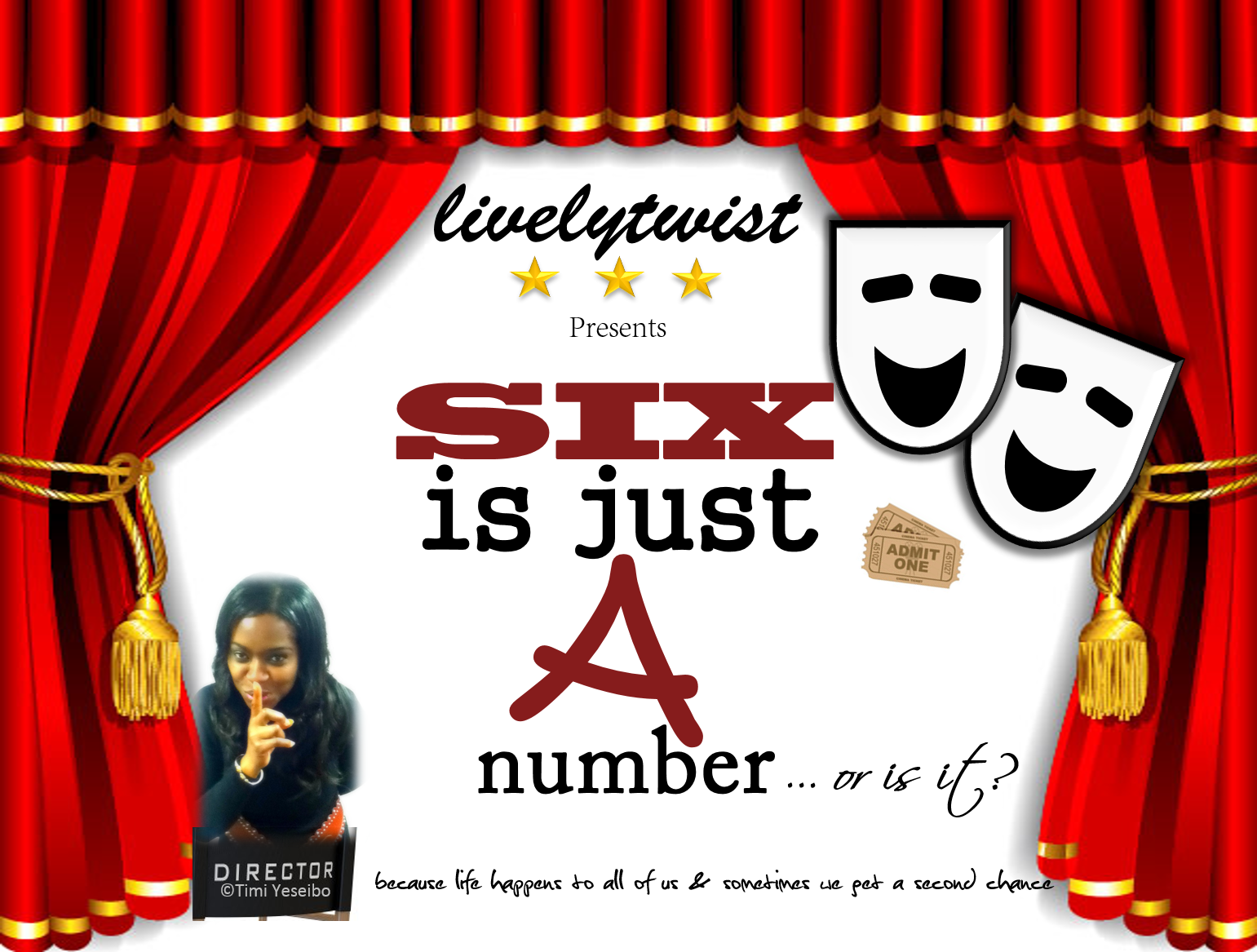
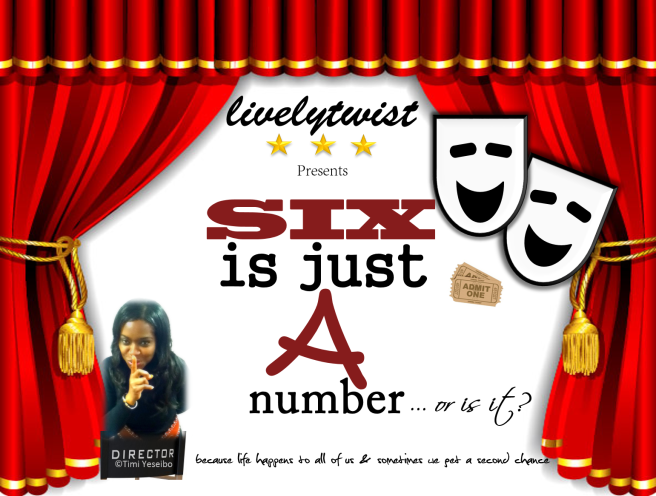
Six is Just a Number

six is just a number

“Six?”

“Sweetheart, what’s wrong?”

“Oh my God, six!”

“I . . . I—”

“So six men have entered your pants! What kind of girl are you?”

“What do you mean? I don’t sleep around . . . I was in a relationship with all of them—”

“See the mouth you use to say ‘I don’t sleep around?’ What do you call f**king six guys? Ehn?”

“Hmmm.”

“You are quiet now abi? Answer me?”

“Look, I told you I didn’t want us to divulge this kind of information about our past—”

“So, you wanted to pretend I was the second ehn?”

“This is ridiculous! You knew I wasn’t a virgin when you married me?”

“Six? Haba six?”

“Stop shaking your head and treating me like a slut. What about you?”

“I’m a man o! You hear me I’m a man!”

“What about your younger sister?”

“Don’t you dare bring my sister into this discussion! We’re talking about you!”

“Double standards . . .”

“What did you say?”

“Nothing. Where are you going?”

“I’m coming.”

***

Oya start writing.”

“What?”

“The names of the guys!”

“You can’t be serious! No way!”

“Ha! I’ve never been more serious. I need to understand what I got myself into.”

“You must be joking!”

“I’m not.”

“Where’s your list?”

“Here. I’ve written mine.”

“Hisssss! Wonders will never end. I’m not interested!”

“Okay, It’s on the table. Any time you’re interested, you can look. I’m waiting.”

“I’m going to bed jo. I can’t stand your childishness anymore.”

“Nobody will sleep in this house until you write the list!”

“Is that a threat?”

“I didn’t go to law school, you can call it what you want.”

“And if I don’t? Are you going to beat it out of me?”

“I have never laid hands on a woman, and I will not start today. But you will pack your bags and go to your parent’s house tonight.”

“Hissss!”

***

“What’s all that noise? What do you think you are doing?”

“Helping you pack.”

“What?”

“You may want to consider changing from your nightie. I will soon call a cab.”

“You are crazy! Put my things back!”

“No. I will call your dad and tell him to expect you.”

“What demon has possessed you? What’s wrong with you?”

“Write.”

“Sit down, ehn. Let’s talk about this.”

“I don’t have anything left to say.”

“Sweetheart, have I ever been unfaithful to you? Have I ever given you a reason to doubt me? Haaa . . . Say something . . .”

“I don’t have anything to say.”

“Sweetheart—”

“Don’t touch me!”

“Baby, what’s really wrong? I love you. You’re the only man for me. I love you.”

***

“The cab is downstairs.”

“Seriously, you called a cab? Did you call my dad?”

“Not yet, but I will.”

“Hmmm. Tell the cab to go.”

“No. You go.”

“Six is just a number . . .”

“I disagree.”

“Where’s the paper? Okay, give me the pen.”

***

“Before I give you this paper, let me just say something. Don’t do this to us; things will never be the same between us after this . . .”

“Kola Shonekan? Number three, which Kola Shonekan?”

“He’s a lawyer I went out with when I was in law school—”

“Where does he live?”

“I don’t know; he used to live in Lekki.”

“He has an MBA from Wharton?”

“How did you know?”

“Jesus! You banged my boss!”

“Kola is your boss? He works for Accenture—”

“He’s my boss’s boss boss. He’s the head of legal!”

“It was a long time ago. We were almost engaged—”

“Which Kassim is this?”

“Isn’t his surname there?”

“Rufai’s younger brother—”

“You know Rufai?”

“How could you? That’s cradle snatching! He’s a small boy!”

“I’m tired of this your interrogation. You wanted list, I gave you list! I’m going to bed!”

“Kassim! Kai, I’m finished!”

***

“Where do you think you’re going?”

“To the guest room, so I can have some peace.”

“Kassim . . . Kassim that we used to send to buy Small Stout for us . . .”

“Get out! Leave me in peace! Do you hear me? I said, ‘Leave me in peace!’”

“How could you? Okay, just answer me, how could you?”

“He was nineteen, I was twenty-three; we were in love. Since when has that become a crime?”

“I’m disappointed in you!”

“Are you done now? Can I get some sleep now?”

“Yes. I leave you to your conscience.”

***

“What now? What time is it?”

“Wake up, wake up!”

“It’s not yet morning?”

“It’s 4:30. I thought you said there were six?”

“You’ve started again?”

“There are only five names?”

“The sixth one doesn’t count.”

“It does to me.”

“Well since you already have my sexual map . . . His name was Richard Morgan.”

“A white guy?”

“Yes?”

“So, this is what you went to London to do in the name of school? You were banging white guys enh?”

“I’ve had enough of your insults! For your information, he was my classmate. I was studying at his place. He made a move. I knew if I didn’t give in he’d rape me, so—”

“But what were you doing at his place so late?”

“You don’t get it do you? I was at his place in the morning! Anyway, you don’t need to worry about him being your boss’s boss boss boss! He’s dead!”

“Dead?”

“Yes! Complications of HIV, last year.”

“AIDS? My God! Oh my God! I’m finished!”

©Timi Yeseibo 2014

Unauthorized use and/or duplication of this material without express and written permission from this blog’s author and/or owner is strictly prohibited. Excerpts and links may be used, provided that full and clear credit is given to Timi Yeseibo and livelytwist.wordpress.com with appropriate and specific direction to the original content.

Image credit: curtain vector: zcool.com.cn

font: Scriptina by Apostrophe: http://pedroreina.net/apostrophiclab/0158-Scriptina/scriptina.html

font: Christopher Hand by El Stinger: http://www.dafont.com/christopherhand.font

design: ©Timi Yeseibo 2014

Happy New Love

An indiscretion. A small indiscretion.  A secret voiced. She buried her face in her hands. Then mustered courage to dial again. Things had started to go downhill after that night with Nengi.

“Who are you chatting with? What’s so funny?”

She had shown her the chat. That’s what friends do.

chat

Nengi and Soba giggled like little girls playing house.

“You like him?”

“Oh, he’s just a friend. We’ve been friends like forever–”

“But you like him?”

“Never really thought about it. Yeah . . . I think he likes me too.”

They giggled like little girls playing house. They had moved on to other important things like purple lipstick, Ankara tops, and fast food.

And then Nengi had told Ebiere. And Ebiere had told Ibinabo. And Ibinabo had told Sotonye. And Sotonye had told Miebi. And Miebi had told George. Like a Chinese whisper, by the time the story reached Karibi, she did not recognise the monster they had created.

“So you’re seeing someone else?”

Fear squeezed her heart as Karibi towered over her, three days later. His apartment had two rooms and no place to hide.

“No, you’ve got it all wrong.”

He whipped her with his words. Like a koboko, they left bruises in their wake. When he paused, they reverberated from the walls and lashed her from head to toe again.

Explanations followed. Mollifications came next. She stroked his ego until he purred. Then she brushed it, until it shone brighter than a brass plaque.

“I want you to cut off all contact with him.”

“Wh . . . what?”

“Three people can’t sleep on the same bed. I’ve never been comfortable with your closeness with  . . .”

“Dayo.”

“Whatever.”

Her wedding was three months away. Her friendship with Dayo had spanned twenty of her twenty-six years. The enormity of the files she would erase did not escape her. Her first bully. Her first Voltron, defender of her universe and her honour. Her first bicycle ride. Her first crush. Her first kiss. Her first relationship expert. Her first cigarette. Her first driving lesson. Her first interview. Her first job. Deleted.

Her marriage showed promise in the beginning before the accusations and jealous fits. He responded that way to her questions about his late nights, alcohol, and phone calls he would not answer in her presence. Then along came her baby girl and peace at last, peace brokered by her forbearance.

She was still in her pyjamas when war broke out. Every day, his rage churned like magma waiting to erupt. Two and a half years later, one black eye later, she closed the door quietly on that chapter of her life.

But fate is a wheel that seeks to make amends. Time is a bridge that links the dots of our lives. Nengi brought the news two days ago.

“You’ll never believe who I ran into today . . . Dayo!”

She was braiding Asikiya’s hair.

“Mummy, it’s too tight.”

She applied some hair lotion to the spot, “Better?”

“Soba, Soba, are you listening to me?”

“Yes I am. Please pass the beads.”

“Here, take. He looked sooo good and he’s doing well.”

She talked about school fees, house rent, and office politics, but Nengi wouldn’t let up.

“Do you want his number? No? Okay, his card is on the table.”

“Throw it in the bin.”

“What?”

“Throw it in the bin.”

After two days of wondering if Dayo had asked about her, if he wore a wedding ring, if, if, if, she dug in the bin through banana peel, slimy cereal, hair extensions, and day-old amala, to solve the riddle of her sleepless nights.

Would he forgive her four-year silence? He’d once told her that she was the only one who could listen to his silence—silent road trips to nowhere that she had not endured but enjoyed. However, her silence had been cruel. She had turned off the light and ripped the socket from the wall.

0-8-0-3-4-5-5-5-0-4

“Hello?”

Her heat beat so fast she thought her ears would explode.

“Hello?”

“Soba . . . Soba, is that you?”

She began to weep.

***

Dedicated to you.

Because your heart was broken. Because we ate popcorn and cried as we watched Dear John, and cheered as we watched Diary of a Mad Black Woman. Because even though we said good riddance to bad rubbish, your heart betrayed you with longing. Because at night you groped for a touch that you forgot was no longer there and when you remembered, you circled your pillow instead.

To all those who loved but had to let go of love, Happy New Love.

***

While we’re all in top gear shooting for the moon and beyond this new year, I’m mindful that our relationships can trip us on the way. Healthy relationships whether platonic or romantic, are a solid base for take-off, don’t you agree?

©Timi Yeseibo 2014

Design: ©Timi Yeseibo 2014

Unauthorized use and/or duplication of this material without express and written permission from this blog’s author and/or owner is strictly prohibited. Excerpts and links may be used, provided that full and clear credit is given to Timi Yeseibo and livelytwist.wordpress.com with appropriate and specific direction to the original content.

I am not What I Wear and Other Lies we Tell Ourselves

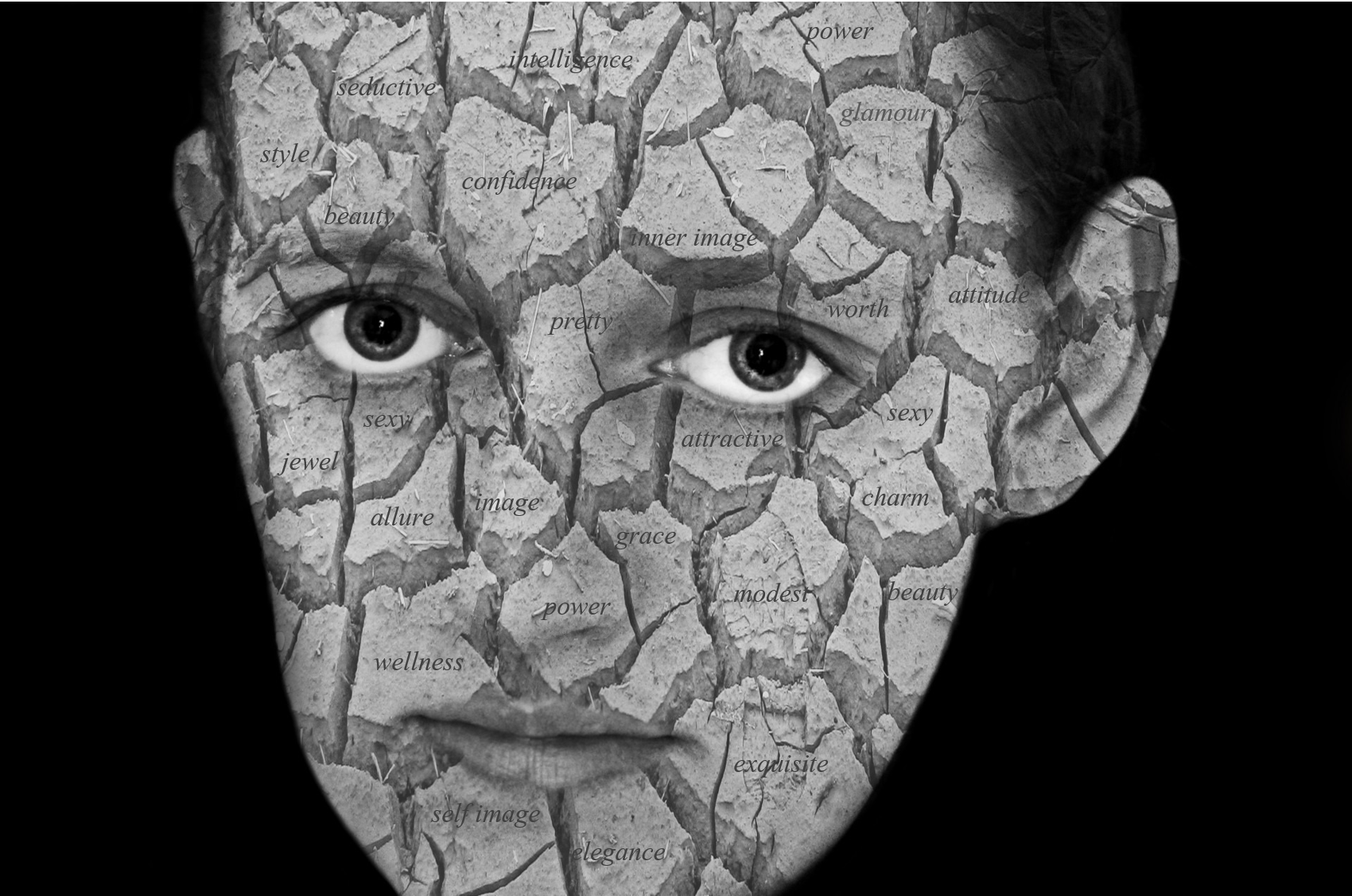
cracked face

“I want to be taken seriously dammit!”

Her skin is fair, her face, neck, and breasts, the same skin tone. If her blouse were cut any wider, her nipples would escape. Once, she told me with pride that she didn’t need a bra. I want to use my hands to verify, but I check this irrational impulse and listen to her instead.

“I mean who stumbles over cleavage, right? That’s just like . . .  soooo eighties!” She flicks her bangs and sucks her lemon ice tea, her every movement a pirouette in seduction.

“Right,” I reply, aware that almost every eye in the restaurant is on us, on her, as they have been ever since she walked in. Tall and lithe, like cat woman, could she be unaware of her magnetism? Or does her power lie in contrived innocence?

I let her lead, the conversation that is, but I don’t follow. If I say what I feel, she would think I’m like so eighties, anti-feminist, old–er, and sexually repressed by my sociocultural and religious background.

I let her lead, and then I come home and write this blog post.

***

 Whether you believe in evolution or creationism, gone are the days when humans roamed free and breeze cooled what hung bare for all to see. Fig leaves or animal skin no longer covers our “delicate” parts. Along the way, we discovered clothes, which define standards of decency in public. If you walk naked on the streets, people might consider you mad, and little children might giggle.

Imagine . . .

Nine o’ clock, Monday morning, you walk into the building and approach the counter. A man sporting dreadlocks, a cut-off denim vest, and three gold chains with huge dollar-sign pendants, rises to greet you.

“Good morning, how may I help you today?”

You shake his outstretched hand and look around the room: off-white walls, ficus plants at the corner, black straight-back reception chairs, display screens, ATMs, and the revolving door behind you.

“Sorry, I thought . . . where . . . is this the bank?”

You visit your doctor for a routine exam. An assistant ushers you in. The doctor has her back to you. When she turns, her wavy black hair bounces. Her smile is pleasant as she motions for you to take a seat. Your eyes fasten on her cleavage; the V of her blouse would make the Kaghan valley in Pakistan weep in envy.

“Is something wrong?” she asks politely.

“No,” you say as you swallow and drag your eyes to her face.

“How are you doing today?”

“Fine. But, I . . . I’m here to see the doctor.”

At the office, you hit your keyboard with the gentle force of your ideas. When your colleague stops over and says hi, you reply without taking your eyes off the monitor. He walks a few paces closer, so you look at him.

“Was there something I could help—”

You cannot complete your question because you are nearly eye level with his white boxers. Your eyes travel up past the narrow line of hair around his navel, which fans out like a bush on his chest. You spare a glimpse for his biceps before you take in the black bow tie on his neck. When you meet his eyes, his voice sounds distant. You have not been listening.

“I hope will you be done with your report on time. I need to put everything together for the presentation.” He turns and walks away.

Your yes response carries no conviction because you are staring at his boxers, the bit of fabric trapped in the crack of his buttocks.

Why are clothes important? Why do you wear what you wear?

Girls, we’ve come a loooong way! We’ve leaped from the bedroom to the boardroom, made sandwiches in the kitchen and laws in parliaments. We’ve flown beyond prep school all the way to Outer Space and signed cheques for weighty sums in our name too. But what more did my great, great, great, great, great-grandmother fight for? To see me strut almost naked on the red carpet, while my beau stands by my side fully clothed in a tux? Where is equality? Why isn’t he as naked as I am?

While the V’s on our dresses reach our navel and our hemlines tease our bums, men objectify us, fully clothed, they gawk at us, only human, they ogle “with style”. We are progressing regressing to an upscale version of cave woman.  It won’t be long before we’ll be swaying down the streets our breasts running free. We’ll hi-five each other in our Victoria Secret fig-leaves tong, “Power to you girl; we’ve come a long way baby!”

And the men? They’ll be walking down the streets too, savouring women’s liberation, hailing women’s empowerment, fully clothed of course.

© Timi Yeseibo 2013

Photo credit: Pixabay.com

Original image URL: http://pixabay.com/en/cracked-cracks-face-people-woman-164310/

Photo tags: Cracked Cracks Face People Woman Female Portrait

Unauthorized use and/or duplication of this material without express and written permission from this blog’s author and/or owner is strictly prohibited. Excerpts and links may be used, provided that full and clear credit is given to Timi Yeseibo and livelytwist.wordpress.com with appropriate and specific direction to the original content.