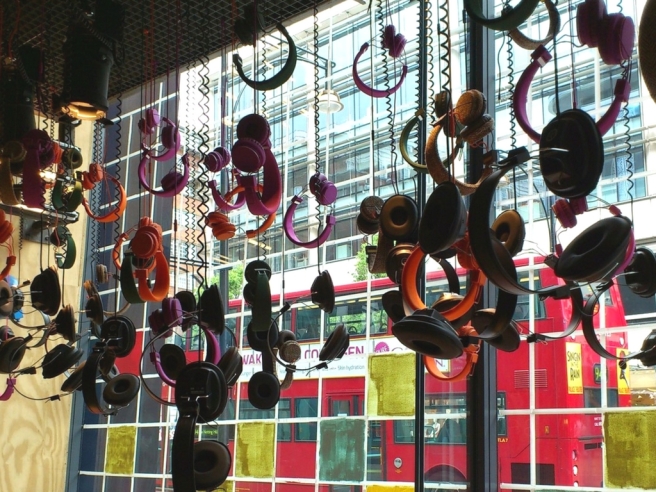
Music, Love, and the Occasional Heartbreak

music-headphones

1.
This is how I know I have fallen in love; I listen to Toxic over and over without grimacing, I croon …with the taste of your lips, I’m on a ride…, with feeling and his picture on my mind, then I flip my imaginary blonde locks the way Britney Spears does in the video. Sometimes, Rihanna reflects the true state of my jumbled emotions—those surges of oxytocin we call falling in love. I find myself hunting for, the only girl in the world, and singing along with the gusto of a drunken man. I know then that it is futile to deny that my feet are wet while the waves carry me from shore to pulsing sea.


2.
I was born to two Lionel Richie fans, although one was more passionate than the other was. My earliest memories are of my younger brother and me boogying on the sofa and table to Dancing On The Ceiling and of longing to be grown-up and independent as I listened to Easy. Now I wish I’d stayed a child for longer. Adulthood is not the easy ride it seemed to be in the days when I longed to do everything by myself, to be free to make decisions that affect my life, and to marry Lionel Richie or Daniel Wilson if I could not land Lionel. Daniel Wilson’s Raggamuffin made me think of swashbuckling adventures. I do not know why I thought that as a five-year old, I am just glad I did not develop a thing for bad boys.


3.
The first time I fell in love, I was eleven years old. It was at a Cowbell Maths Competition Gala and he was singing Careless Whisper. I could have followed him to Jupiter if he’d asked, however my father and his stern look would have frozen my legs and stopped me from following the summons of my achy-breaky heart. I have never forgotten him. Today when I listen to jazz, I wonder who he was and where the tides of life have tossed him. When I listen to either version of Careless Whisper (George Michael’s or Dave Koz’s), I can’t help wondering if his voice was as good as I remember.


4.
I broke up with my first boyfriend in a mostly deserted lecture hall at 4 a.m. after listening to James Blunt’s, Goodbye My Lover. I knew as I listened to the song for the first time that what we had was no longer viable. I do not for a minute regret ending that relationship and when I hear the song, I smile and think of him. I fell in love with my next boyfriend two years after we’d started dating. Bob Marley’s Is this love, blared from the speakers of the bus taking us to the park where I’d board a Lagos-bound bus. He sang along, his husky voice breaking and his eyes closed. He wasn’t singing to me but my foolish heart somersaulted as he sang and when my love meter clanged in warning, it was too late.


5.
Cher and Gloria Gaynor held me close and wiped my tears when he shattered my heart with spectacular precision. Believe and I will survive saved my sanity and even my life. When people say a song is just a mixture of words and rhythm, I want to punch them so bad. Music is spirit and pain and life and joy and all the things in between.


6.
Neither Josh Groban nor Aloe Blacc thought of me when they wrote Brave and Wake Me Up respectively. However, I wouldn’t have started a blog if I hadn’t listened to those songs as though they were water in the barren desert that was my soul. The lyrics inspired me to take this writing thing seriously and to trust the voices in my head and heart to lead me right across computer or phone screens and through life.


7.
I am the woman who goes to work with Phyno on both sides of my ears. His song, Oringo, transports me to a party for one, the rhythms from the east of the Niger River—my ancestral tom-toms—call the wild spirit I have restrained for too long. This is how I know I am free; I am on stage and the crowd is humming a cover of Bruce Springsteen’s Born To Be Wild. No, I am dancing to work and inviting interested stares although I have no blond locks to flick. My headphones trap the sound that come from Phyno’s heart. Maybe today, you will finally tap my shoulder and say, “Hello, it’s me.”

© Adaeze Ezenwa 2016

Adaeze Ezenwa lives in Lagos where she dodges traffic and fantasizes about becoming a billionaire before turning 35 and eating dodo daily without gaining weight. She rents a patch from WordPress at Emporium of Words, and her door is always open for conversation.


Photo credit: Spinheike/ https://pixabay.com/en/london-oxford-street-headphones-116018/

©Timi Yeseibo 2016

Unauthorized use and/or duplication of this material without express and written permission from this blog’s author and/or owner is strictly prohibited. Excerpts and links may be used, provided that full and clear credit is given to Timi Yeseibo and livelytwist.wordpress.com with appropriate and specific direction to the original content.

Seven Colours from My Life

colours

1.
Amber is the colour of HB pencils. One morning, in the year I was five, I returned from our neighbour’s house where we grind beans for akara and moi moi and sketched the grinding machine I saw there. My dad’s sister raved about the drawing and adjudged it an excellent reproduction. She rewarded me with two HB pencils and one eraser. These were not the last accolades I received for my art.


2.
Baby blue is the colour of my mom’s cooler. On a Visiting Day in junior secondary school, I took some of the jollof rice my mom brought for me to the hostel. My five friends flocked around and in-between jollification and smacking of lips, intoxicating praise for the jollof streamed into my ears. Three of these friends lived in Lagos. Zaria was too far-off from Lagos so their parents never honoured Visiting Day. The next term, my mom journeyed from Kaduna by bus with her big cooler of jollof rice for me and my crew. The image of my mom walking with the cooler on her head, and a Bagco Super sack of provisions clutched in her hand, stays with me.


3.
Brown is the small scar on my mom’s palm. Books, television, and the sound of music made me a wandering kid who always yearned to recreate something wonderful. Many evenings bloomed and withered as I combed garbage dumps for milk cans and precise colours of slippers, from which I fashioned wheels, Ludo seeds, and hockey balls. I ended my quests, each time, looking scruffy, and spankings by my mom’s palms remained the consistent punctuation to homecomings. In my mid-twenties, my mom revealed the real reason behind her anger. It wasn’t her supreme aversion to uncleanliness. Each time I strolled home looking like a pig, I reminded her of her days as a little village girl.


4.
Copper is the skin tone of my girlfriend. We were whatsapping one day and then:
*Ping* Why do you like me?
You pinch me. Sometimes. And it hurts until I laugh.
 I typed the last of nine answers to her question.
She replied with thirty reasons why she likes me. I have emailed them to myself for safekeeping.


5.
Yellow is the colour of egusi. The day we overcame our reservations and ate at Mama Favour’s spot, we sat in the open air, on an unstable bench, battling impolite flies and smoke from smoldering firewood. Her pounded yam and egusi was delicious. Incredibly cheap too. So cheap that we did the math three times to make sure we weren’t short-changing her. Two years on and Mama Favour has two roofed bukkas now. My best friend and I, and the other friends we have shared the gospel with, are still her customers.


6.
Porcelain white was the colour of Aunty Ramatu’s teeth. To the delight of my parents and we kids, her visits to our house were seldom without a jerrycan of kunu and sticks of sugarcane stuffed in a Bagco Super sack. In September, I visited Aunty Ramatu at the hospital. Her only surviving child laughed at a joke I cracked, revealing white teeth. I marveled, turned to her mother and discovered, as she too laughed, weakly, that her teeth were also white. Aunty Ramatu was discharged from the hospital two days later. In October, after contending with a terminal illness for more than fifteen years, she ascended from our realm. Your kindness and laughter will always be remembered, dear aunt. Rest in perfect peace.


7.
Red is TED. “Did you read Chimamanda’s 9K words essay?” read Mimi’s IM on WhatsApp. I hadn’t. She whatsapped the link. I read and found it articulate, inspiring, and instructional even if I didn’t agree with a number of Chimamanda’s admonitions. The waves of my doubts crashing against the shore of my convictions steered me towards Google. There, I discovered Chimamanda’s TED talk We Should All be Feminists. These days, I wonder if the women in my life will not live richer, fuller lives if we all became feminists. Maybe I am slowly becoming a feminist. Maybe not. Only when I marry, beget and rear a daughter will I really be certain.

© Samuel Okopi 2016

Samuel Okopi loves to sing, design, and fantasize about the future. He believes there is no end to learning and so, for him, every tommorrow is pregnant with new opportunities to inch closer to perfection.


Photo credit: nbostanova/ https://pixabay.com/en/pencils-coulored-red-blue-yellow-1654051/

© Timi Yeseibo, 2016

Unauthorized use and/or duplication of this material without express and written permission from this blog’s author and/or owner is strictly prohibited. Excerpts and links may be used, provided that full and clear credit is given to Timi Yeseibo and livelytwist.wordpress.com with appropriate and specific direction to the original content.

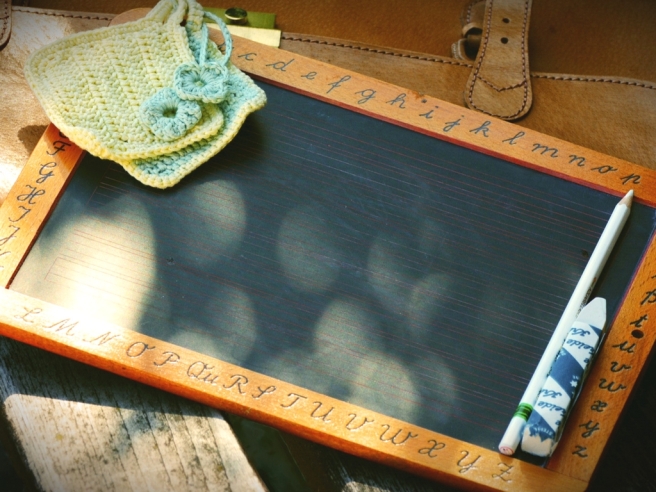
Named For Love

name

1.
Dad idolised his grandfather, Olutade. He was going to name me after him but his mother thought against it. Dad then opted for the longest rendition of the name: Oluwatomilade. He also named me after himself: Adebayo. Grandmother did not object. And thus, I was called Junior till I turned seven and began to—in retrospect—cringe-worthily inform the adults in my life that I was a senior.


2.
Oluwatomilade translates to, God is my crown, or God is enough for me as a crown. As far as spiritual connotations go, it is a compelling name. To wear God or his identity on one’s head should be a marvellous thing and I suppose it is. But I am more enthralled that Dad named me Oluwatomilade because he loved his grandfather, that perhaps he saw him in me.


3.
The answer to the question, what does your name mean to you, is it means more to my father than it does to me. That my name means more to him is what my name means to me. That I was named in and for the sake of love.


4.
I inherited my great-grandfather and father’s names, mum’s temperament, and grandfather’s head. In my younger years, I was also called Ori as a not-so-subtle ode to the size of my head. My uncle, Sammy, used to sing a song, Ori nla, nla nla, Ori. Big head, big big, big head. At home, at school, at church, three names accompanied me—Tomi, Junior, Ori.


5.
My friend, Arike, is obsessed with names. We have spent many minutes of many conversations pondering about the beauty of names, their language forms, meanings, how they roll off the tongue, and so on. She has a substantial list of names locked in memory, to be withdrawn when she brings forth children to this mad world. I think about names too. I like long names. Studying in a foreign land, long names like mine tend to punish the tongues of lecturers. I usually interject with, “Tomi!” to put them out of their misery. They always apologise. I am never offended. In fact, I secretly look forward to it.


6.
My brothers call me Tomi but sometimes, Lade. The story of Lade is this. In my senior year at boarding school, one of my roommates farted (I swear it wasn’t me), and as usual, accusations diffused around the room with the rancid sulphur. Ever the introvert, I remained silent, causing a friend to say, “It was Lade.” Lade has stuck since. I like Lade. It reminds me of boarding school, of the times I loathed school and how I grew to love it in the end.


7.
When she was still here, mum called me Tomi. But when she wanted to hail me, like Yoruba mothers tend to do, she called me by one of my other names: Bolu, from Moboluwaji. It means I wake up with God. To wake up with God means that God is there in my sleep, shielding me from the terror of night. It means that God is always there when I open my eyes—bad breath, crusty eyes, and all. This is magnificent but Bolu carries the weight of mum’s love. And it is heavy. And yet, ever so light.

© Tomi Olugbemi 2016

Tomi Olugbemi is a poet and student of International Politics. He spends his free time fretting about words and recovering from pessimism. He blogs at tomiolugbemi.com.


Photo credit: condesign/ https://pixabay.com/en/board-slate-blackboard-chalk-1614646/

©Timi Yeseibo 2016

Unauthorized use and/or duplication of this material without express and written permission from this blog’s author and/or owner is strictly prohibited. Excerpts and links may be used, provided that full and clear credit is given to Timi Yeseibo and livelytwist.wordpress.com with appropriate and specific direction to the original content.


Panic Cord

panic-cord

1.
We stood in line for ballroom dancing and from my calculations; I would be waltzing with my crush. Just as the procession started, a girl jumped the line and squeezed herself in front of me. I ended up dancing with the largest boy in class who stepped on my foot on every third beat. I hated him then; but later asked myself if my feet didn’t get such a beating because I was staring longingly across the room at what my seven-year-old self thought was magic.


2.
I was one of those kids who got picked up really late from school almost always. So was the boy who asked my friend to be his girlfriend because I said no to him. When my ride showed up, I started to walk to the car when he ran out of the class and yelled, “Pemi, I love you!” It was dramatic, it was special. I paused but didn’t look back; I entered the car. My friend had said yes.


3.
Another boy walked up to my seat during a free period. He leaned forward and pressed both my hands to the table then said: “I like you.” He stared into my eyes without blinking. I closed my eyes and shook my head and my heart went faster. How did he know to hold me down? After a struggle, I ran out to the corridor, away from his words and into a possible punishment for being out without a pass.


4.
It was my first year in university and we were walking back from Studio. Our shadows converged under the streetlights and as his words strayed from funny to pensive, he deepened his voice and confessed to feelings. The distance between us and my hostel suddenly felt like a trap made of length. My insides played a game of Twister. He wanted to know what I thought, what I felt. A hot choking terror closed my throat and I searched for a panic cord to pull. I clutched my bag to my chest and didn’t stop running till I was in my hostel where men were denied entry.


5.
We sat in his car in front of my house. He had been waiting for me at the estate gate to give me a lift home, again. I was trying to understand how it wasn’t stalking. “Marry me, Pemi.” Just like that. I sat still, confused, wondering about the distance between strangers and life partners and how many steps should cover it. I muttered something, yanked the door open, and blocked his phone number. I started passing the long way home.


6.
I pulled away from the kiss and smiled at the smile on his face. His hands were light on my waist, feathery. I watched the emotions on his face morph from surprise to contentment. He leaned in again. “No, you have to go,” I said. I walked him to the front door, allowing a few feet between us so my hands wouldn’t betray me and reach out for him.
Cold air rushed in when he opened the door. “Have I done something wrong?”
I shook my head, no. He tried to approach me again, but slowly—as if I could fly away at any sudden movement.
“You have to go,” I repeated. Because if he stayed, he would stay and I didn’t know what happened after that.


7.
His head lay heavy on my stomach that quiet Saturday morning. My hands played with his hair. “Stop freaking out. You’re being irrational,” someone had told me. “Love is not a trap; a relationship is not a cage.” But what does it mean when someone builds a castle in the sky and urges you to enter it? How do you relay the asphyxiating fear of entering in with concrete shoes? My hands froze in his hair and his head became heavier and heavier and heavier on my belly, pressing me into the bed.

© ‘Pemi Aguda 2016

‘Pemi Aguda writes short stories and flash fiction that have been published here and there. Her short story Caterer, Caterer won the Writivism Short Story Prize 2015. She co-curates the website, Nik-Nak.co


©Timi Yeseibo 2016

Unauthorized use and/or duplication of this material without express and written permission from this blog’s author and/or owner is strictly prohibited. Excerpts and links may be used, provided that full and clear credit is given to Timi Yeseibo and livelytwist.wordpress.com with appropriate and specific direction to the original content.

 

Any Seven Stories From My Life [2]

masculinity

An Oblique Commentary on Masculinity

1.
The first fight I won wasn’t even a fight. A boy my age but many times my size made fun of my oversized head. I was hurt, so I swung my fist, connected with his jaw, and two teeth flew out. That December night was dry and we were at a Christian camp for kids, sitting under a tree on a carpet of brittle leaves. If his teeth hadn’t flown out after that punch, it would have been my whole set of milk teeth diving into the leaves.


2.
The first time I watched Mowgli in Jungle Book, I felt so bad for him I ran to my room to stem the tears that threatened to fall. How I went from that boy to one who would search for tears in moments of pain baffled me for years, because although I gained an understanding of the value of crying I just couldn’t do it. I’d convinced myself for years that it was a weak thing to do. It was a thing of pride in secondary school to withstand beating from the teachers without a hint of tears.


3.
In the first of the years I spent at home between finishing secondary school and going to the university, I obsessed over becoming physically fit. I did push ups, headstands, and even found a heavy iron bar in the old garage behind the house that I used to work my biceps. That was the same period when my siblings and I would, after a day playing soccer, lie on the floor of our room, and listen to Don Moen or Jim Reeves sing out of mother’s old cassette player. Of course the fitness fad didn’t last. I soon returned to my routine of playing soccer in the afternoons, watching movies in the evenings, and reading books and listening to music at night.


4.
I can’t ride a bike, swim, or lick my elbow.
I used to play table tennis, soccer, and lift buckets of water every morning up the hill in Nkwelle.
I now walk through Mushin on my way home, climb the stairs, and dream about driving everywhere but Lagos.


5.
While serving in Anambra, I had migraine episodes that would often last for a week or more. One evening, in the middle of one of such attacks, some students—boys—were shouting in front of the lodge. A corps member asked them to leave, but they refused. Their noise intensified, each sound amplified to pain in the sound chamber: my throbbing head. I went outside and shouted at them, but they just scattered and regrouped like marching ants in contact with a small pool of water. I saw a cutlass beside the door and flung it at one of them. They did not return.


6.
Going to the Gym is described in a New Yorker piece about Max Grief’s Against Everything, as buying into a “soul-destroying managerialism that has disguised itself as a means of enhancing “life.”” This, not laziness or apathy towards my body, will now become my reason for refusing to enter a gym. But my back hurts too much.


7.
After a month of trying to get a medical report that should have taken three days, the man in charge of reports at the university clinic finally brought out the two-paragraph letter I needed. When I pointed out a mistake in the letter, he shrugged and asked that I return the following week to pick it up.

“Are you sure I’ll get this then?” I asked.
“You know what,” he replied, “I can’t say. You just have to keep coming back.”
I wanted to knock him out. I needed the report to prevent losing a year of school. “What do you mean by that? Isn’t this your fault?”
He was elderly. His face looked like I really did strike him by questioning him.
“Don’t shout at me young man.”

Then I started to shout. The nurses tried to calm me down, and one of the doctors joined them too. They asked me to explain what was happening. I sat down and started to shake, for I knew to explain would be to start crying. I’d lost a lot in the preceding months, and the man was part of a series of human and non-human circumstances I couldn’t control. I eventually narrated the story, and got a corrected letter in fifteen minutes. And although tears did not come out of my eyes, I’m sure I cried that afternoon.

© IfeOluwa Nihinlola 2016

IfeOluwa Nihinlola writes essays and short stories and has been featured in online magazines such as Afreada, Omenana, Klorofyl, and Litro. He works as an editor and is an inaugural fellow of aKoma’s Amplify fellowship. He is a fan of Zadie Smith, is looking for a replacement for Pringles as muse, and blogs at ifenihinlola


Photo Credit: https://pixabay.com/en/shoe-sit-costume-tailored-suit-512133/


©Timi Yeseibo 2016

Unauthorized use and/or duplication of this material without express and written permission from this blog’s author and/or owner is strictly prohibited. Excerpts and links may be used, provided that full and clear credit is given to Timi Yeseibo and livelytwist.wordpress.com with appropriate and specific direction to the original content.

Any Seven Stories From My Life [1]

dog-1123026_1920

Puppy Love

1.
“It was sweet of you to contact me while you were gone. Sending me jokes everyday on Whatsapp . . .” Because he smiled and did not say anything, I asked, “Did you not want me to forget you?” He shied away from his opportunity to laugh, to make our transition to serious matters easy. So, I said, “Now you’re back, you must stop sending me jokes.”
Anxiety replaced his smile. “Why?” he asked.


2.
Newly hired for the three-month project, he was a junior team member, also in age and in experience. It was irritating at first, his eagerness to please, distributing steaming coffee mugs then gathering them, please and thank you, leaking like diarrhoea from his mouth. Then it was cute. Then it was normal. He earned the name, Puppy, from my colleagues; they mouthed it and whispered it. They laughed when he wagged his tail and left the room.


3.
Nancy floats from office to office. I do not remember where she belongs. Nancy reads gossip blogs. She gets things done that nobody else can, which is why we listen to her without interrupting, each pair of eyes straddling two monitors rising from the wooden table in front of them. She said that when you work long hours and in the same space, even ugly men start to look attractive.


4.
One fourteen-hour day, as the sun dipped its chin in the horizon, I noticed Puppy was clean-shaven. I did not know I had spoken aloud until he said thank you. He read my face and parroted my thoughts, his eyes twinkling, “Clean shave looks good on you.” The next day, he challenged my ideas at the team meeting and presented his. After I acknowledged that his idea was better than mine, team members began breathing again and the central air conditioner came on, humming a tune as cold air escaped its vents. I could not decide if About Last Night, was the name of a movie, a book, or a hashtag on Twitter.


5.
When Puppy had mentioned drinks, I thought the question-suggestion was the usual Thursday one, which a member of the team brings up and to which nearly all say yes, and then carpool to the venue. Reports and emails had taken their toll and my car sat forlornly in the basement car park when I emerged from the elevator, the click of my heels ringing in my ears. My headlights sliced through the darkness to the restaurant.
“Where are the others?” I asked as he greeted me at the bar and led me to the far end of the room. Candles flickered in small green vases on wrought iron stands, bathing our table, burrowed in the wall, in soft light.
“What others?” he held out my chair.
I sat, unfolded my napkin, and placed it on my laps. Then I stood and said, “Good night,” walking past the waiter who was bringing our drinks.


6.
“Are you naïve?” I scolded him at the copy machine near the fire escape, after peering left and right, and seeing no one coming. I knew he would follow when I stood from my desk. “Sending me personal messages on the company’s server!”
“Oh,” he said.
Two members of the team protested when I signed Puppy up for the trip, “He’s too green.” I shook my head, “He’s picked up a lot since he got here.”
The Whatsapp jokes started when he landed in Kuala Lumpur.


7.
So now after another long pause—I did not answer his question—he said, “Well I just wanted to make sure we’re good. Nancy and I are together.” He tucked in the last sentence softly I almost missed it.
I wore my best game face, “That’s nice. I hope you’re both happy.”
“We are. No hard feelings, we’re still friends right?”
“What are you apologizing for?” I asked.
“I don’t know. I want to stay on after the project.”
“If you stay . . . you will always be Puppy.”


©Timi Yeseibo 2016


Watch out for the new series: Any Seven Stories From My Life.


Photo Credit: https://pixabay.com/en/dog-maltese-white-young-dog-puppy-1123026/

Unauthorized use and/or duplication of this material without express and written permission from this blog’s author and/or owner is strictly prohibited. Excerpts and links may be used, provided that full and clear credit is given to Timi Yeseibo and livelytwist.wordpress.com with appropriate and specific direction to the original content.

Two Hundred and Counting

200


I received a WordPress notification about my 200th blog post about six weeks ago. What does this mean to me?

1.
Because Nigerian musicians frequently fuse their local dialects and English to produce hits that resonate beyond their shores, I thought the word colabo, and I spelt it like that, in the song collabo by PSquare featuring Don Jazzy is a Pidgin derivative. However, collabo is a word in the dictionary, which means something produced by two or more people working together, especially a piece of music.  I did not get to two hundred on my own. Many collaborations with different writers brought me here.

2.
Every year I check boxes and add scores on tests designed to show me an aspect of myself. I am always trying to answer the questions, who is Timi and what does she want? Perhaps I am more curator of stories and editor than I am writer. The collaborations I inspire and drive bring me double joy. Flipping through one of my old journals, I smiled as I read my handwriting, cursive, strong, sure. I had written: I want to tell other peoples’ stories. Self: A person’s essential being that distinguishes them from others, especially considered as the object of introspection or reflexive action.

3.
For years, my answer to the question, “So what do you do?” was fluid because I was like a natural hair enthusiast growing out a perm, one leg here and one leg there. To define my ‘do’ by my day job seemed limiting. Then I stumbled on Adam Leipzig’s Tedx Talk and discovered a way to answer the question with ease. Recently, I answered the question like this: I write a blog, dismissing Leipzig’s recommendation. The man to whom I was speaking probed further, “What do you write about and are you any good?” I answered his second question before the top of his lips settled on his bottom lip, “I am very good.” Gone was his disinterest. Confidence: A feeling of self-assurance arising from an appreciation of one’s own abilities or qualities.

4.
Sometimes people leave me comments and messages that they wish they could write like me. I take it as a huge compliment and nothing more. I have stopped wishing I could play the piano like the musician who is a wiz at the keyboard. I have no desire to put in the work and disciplined focus required to reach that level of proficiency. I do not have another 10,000 hours. In making the point that excellence requires a critical minimum level of practice, Malcom Gladwell says ten thousand hours is the magic number that researchers have agreed on for true expertise. Two hundred blog posts is not yet 10,000 hours. Practice: Repeated exercise in or performance of an activity or skill so as to acquire or maintain proficiency in it.

5.
The line between just asking and a free consultation is smeared with politeness. Doctors and other professionals know this. I know this now; 200 blog posts means I have a feel for what makes a piece of writing work. A party is not the place to read me a sentence then ask if it is grammatically correct or whip out your phone to show me something you wrote. That is what emails are for. I do not carry a red pen in my clutch bag; I carry red lipstick and blue mascara. People ask me to be brutally honest in my feedback, but the only place to be brutal—savagely violent or unpleasant and harsh, is the gladiator’s ring. The only adjective that should go with honesty when it comes to feedback on a piece of writing is kind. I have made and kept more friends this way.

6.
Space is not a continuous area or expanse, which is free, available, or unoccupied. It is a place stamped with evidence of my presence, neatly littered with comforting memorabilia—a weathered collection of poems, old photos of my children, journals, books about writing, ideas on yellow post-its, and greeting cards that affirm who I can be. Space is freedom to live, think, and develop my writing in a way that suits me. It is saying no to play and living like a hermit Friday night and all day Saturday. Space is showing up for lunch or dinner with my laptop, typing away while conversation wafts around my head. Two hundred blog posts later, space is the greatest gift my family and friends have given me. Extroverted Introvert: Also called social introvert. Sociable and friendly but needs to recharge in solitude often.

7.
When I decided to start a blog, I had three options: WordPress, Blogger, or Tumblr. I am yet to regret my choice. Often I struggle to leave a comment on other platforms but I have scarcely heard that anyone struggled to leave a comment on my blog. It is true that I do not want be bothered with technical things like code, wanting only to upload and publish, but more than that I have found a community of generous people who are curious about the world beyond them. Two hundred blog posts ago, I published my first post to a warm welcome from several bloggers who I did not court. Welcome on WordPress is like a revolving door. A good number of bloggers with whom I engaged in those early days have exited the blog stage and in their place, other bloggers have taken my hand. Welcome: Greet (someone arriving) in a polite or friendly way; React with pleasure or approval to (an event or development).


To all my readers: I owe you a debt of gratitude. You have pushed me to become better than I was.


©Timi Yeseibo 2016


  1. All dictionary definitions from English Oxford Living Dictionaries
  2. Gladwell, Malcom, Outliers, The Story of Success, (London: Penguin Books, 2009), 43 -44


Unauthorized use and/or duplication of this material without express and written permission from this blog’s author and/or owner is strictly prohibited. Excerpts and links may be used, provided that full and clear credit is given to Timi Yeseibo and livelytwist.wordpress.com with appropriate and specific direction to the original content.

To Close A Series [2]

love-is

A friend called me after reading one of the episodes of the Fly series to say that the dialogue reminded him of the way we were, making me want to sing only this line from Adele’s Hello, hello from the other side! Instead tongue-in-cheek, I quoted William Faulkner in no particular order.

A writer needs three things, experience, observation, and imagination, any two of which, at times any one of which, can supply the lack of the others.

Are you writing about yourself, is the question I was often asked while the series continued. I have mostly reconciled myself to the downside of writing a personal blog, which is that readers assume consciously or subconsciously that the stories on your blog are about you. No longer so uptight about being vulnerable, I took this question and its variants cloaked in concern, to mean that the dialogues were relatable and believable. Their questions were in fact a roundabout compliment.

I have never previously dragged out a story on my blog as I did this series. What began as a one-off fun post, a bull’s eye response to a dear friend’s endless matchmaking, grew to ten articles spread over two-and-half months because you asked for more.

I told Ife Nihinlola, my partner in the Fly series and a talented writer whose essays I enjoy reading, that the best stories are woven around love and relationships; throw in a moral dilemma to achieve transcendence. After the badass protagonist has destroyed the villains and saved the planet, we will him to kiss the beautiful woman he fought for as they walk into the sunset. Nothing touches our core like what we are wired for, love.

As the series continued, we had to be deliberate about the twists we would introduce and the manner in which they would be resolved. Ife and I resorted to using readers’ feedback as a guide because we realized we had sparked something in our readers, we had connected. I was humbled and tickled when I read something to this effect: Timi, please don’t spoil it now that they are happy.

We tossed ideas about what felt natural and what felt as though we were trying too hard and all the while, the plot was challenging my own ideas about love and relationships too. The decision to conclude the series was bittersweet.

“What if in the next episode, I make the happy couple, twenty-nine-year-old Junior and thirty-five-year-old Old Woman, bump into one of Junior’s flirtatious younger female friends at the mall?”

I agreed with Ife when he said that he wasn’t so sure. I had thoroughly enjoyed my stint as a Shonda Rhimes scriptwriter wannabe.

In the end, this is what I aimed to do all along; make you rethink your ideas about love, sex, romance, relationships, and friendships while entertaining you. You tell us if we succeeded.

On Facebook, I noticed that a friend shared one of my posts on her Timeline. Underneath the article was a comment from one of her friends asking her to share my post on their WhatsApp group for further discussion. My brain thought about copyright issues, my heart saw so clearly, why I write.

On this blog, I don’t write for myself although I write for people like me. Big difference. Small difference. If you stopped reading, I would stop writing—what would be the point? I cannot thank you enough for believing in Livelytwist.


©Timi Yeseibo 2016


Unauthorized use and/or duplication of this material without express and written permission from this blog’s author and/or owner is strictly prohibited. Excerpts and links may be used, provided that full and clear credit is given to Timi Yeseibo and livelytwist.wordpress.com with appropriate and specific direction to the original content.


To Close A Series [1]

shakespeare-quote

As someone who steers clear of romantic love, I seldom write love stories to avoid sounding like a fraud. Writing this series has therefore been a learning experience, both in the art of collaborations and writing love stories. The process was easy because Timi called the shots, setting the premise and plot points, while I simply reacted to the elements of the story she threw up from the conversations. This also freed me to focus more on the personality of the characters than the plot points, because if left to my whims, all love stories would end as tragedies.

In writing the series, I tried to pose questions to myself and find answers in the conversations of the characters. What hope does a guy who isn’t assertive have in a relationship? How do men talk about the things they are accused of avoiding in conversation? Readers’ responses to the characters’ conversations were illuminating, showing how we gauge romantic relationships we observe close-up. No question was as instructive for me as this: at what point, and because of what traits, do we declare someone unworthy of another’s love?

Love, like a drug high, pushes people to act in ways that appear insane to outside observers, but carry a fierce internal logic to the people in love—the ones shooting up. So, when we proclaim that an observed trait in someone renders them unlovable, it sometimes turns out that that very trait is the reason their lover has chosen them. The more we criticize their lover, the less sense we make, and the more they are disposed to ignoring us.

In spite of the insulation by romance that the above suggests, couples rarely escape the influence of the times they live in, including their cultures and upbringing. We are products of our interaction with other humans, whether we acknowledge their influence or not.

Without discounting personal responsibility, you and I are more culpable in the actions of people we berate than we think. In the series, a twenty-nine-year-old man contemplates dating a thirty-five-year-old woman and confides in his friend, his worries about her fertility. What would have happened if his friend responded by telling the story of his aunt who married at forty and now agonizes over not having a child or having a baby with down syndrome, which made her husband marry a second wife?

In the past year, I’ve fielded more questions from friends and family about my romantic life than the two decades before it. Why are you not in a relationship? Is something wrong? Ife, are you keeping her way from us? I often tell people I don’t have time to think about these questions, but whom am I kidding? I cannibalized some of my experiences from answering questions like these in drafting the dialogues.

We should stop blaming fairy tales and Hollywood for love fantasies being absent of reason, or people doing stupid things in the name of love. That is how all lovers look to people like me who are too scared to be enchanted by it. It is not reasonable for the Beauty to love the Beast, but she does, and we root for them. Jack should have stayed away from Rose, but he didn’t and the Titanic sank.

A character from the movie Hellboy said, “You like people for their qualities, but love them for their defects.” And while I think this is the loophole that serial killers exploit to find lovers, it’s also the premise of our greatest love stories: Tristan and Isolde, Romeo and Juliet, Ifemelu and Obinze, and so on.

Stories, when done right, should make us more empathetic, more open to possibilities in the human experience that are outside our imagination. So, perhaps we should reassess the conditions we set for finding people desirable and worthy of love. Not just when the potential lovers are ours, but when they are of people close to us, too. This isn’t a call to remove all relationship standards, but only that these standards—be they age, class, or temperament—be filtered through lenses coloured with kindness. After all, a wise man once said, the law was made for man, and not man for the law.

I still believe fairy-tale endings are an exception in this fly-catching business, but I’m all for lives suffused with kindness that give way to love.


©Ife Nihinlola 2016 @ IfeOluwa’s Rambles


©Timi Yeseibo 2016


Unauthorized use and/or duplication of this material without express and written permission from this blog’s author and/or owner is strictly prohibited. Excerpts and links may be used, provided that full and clear credit is given to Timi Yeseibo and livelytwist.wordpress.com with appropriate and specific direction to the original content.
 

Riposte: To Call A Fly

riposte-to-call-a-fly

Should a person’s past sexual history matter in their current relationship?Last week and the week before, it would seem that shame made our main character defensive. This week, Ife Nihinlola delves into the mind of her boyfriend.


Riposte: To Call A Fly


“Dude, somehow, we’ve not had lunch together this week. Is this office making us slave that much or you’ve been avoiding me?”

“Avoiding you? When you’re not my landlady who wants to hook me up with her niece?”

“Look at you. Hot cake! Mr. Loverman! Anyway sha, how is the madam?”

“What madam?”

“You want to start playing word games again? You know who I’m talking about. How is she?”

“She dey.”

Wetin? Trouble in paradise?”

“You must think life is a Mexican telenovela, with these your corny lines.”

“Just answer my question. Or are you guys fighting already?”

“Not really. We are probably just not compatible after all.”

“That is what men say when they find out the woman they like already has a daughter approaching puberty. Suddenly, compatibility becomes an issue like Windows 97.”

“You must think this is a joke.”

“No, really. Tell me—”

“Tell you what?”

“Or is it her body count?”

“Why do you have to mention that now?”

“So it is body count. You children of nowadays.”

“I didn’t mention body count.”

“But you’re not saying I’m wrong.”

“You can’t understand.”

“Can’t understand what? See, what a woman did before she met you, all the lives she lived, all the people she’s been with, only matters as much as you allow it.”

“Okay. It’s not about body count. Are you happy now? It’s about other things in our lives… you know… ermm… experience and all that jazz.”

“All that jazz? Now who has the corny lines? See, the past doesn’t matter. It’s all gone, and nothing can be done about it. That’s why we call it the past.”

“Wow! All you need is a shiny suit, oxford shoes, a haircut shaped by a calligrapher, and you’ll be a perfect motivational speaker!”

“You think this is funny abi? It’s your love life you’re joking with. Not mine. And see, it’s about to evaporate in your very before. You’ll grow old and little girls will end up using pictures of your unmarried big head with grey hair for bae goals on Instagram.”

“I already told you. You can’t understand.”

“Can’t understand what now?”

“Okay. Let’s put it this way. How… how much upper hand did you allow your wife have when you guys were courting?”

“Upper hand? What is this? Table tennis? Hehehehe! See, someone is always going to have to be the mumu in a relationship. Too bad you’re the one in this case.”

“That’s not what I asked you?”

“So? What is my own? Better come to terms with how you feel about this lady and be a man.”

“Be a man, seriously?”

“Nah. Not in the way you’re about to think. I’m saying you should stop worrying about things you can’t change, and take charge of your emotions. Show this woman you love her if you do, not all this past nonsense you’re talking about.”

“I don’t know. I already said you wouldn’t understand.”

“Can’t understand what exactly? This woman doesn’t deserve this indecisive nonsense you’re doing. Either commit or commot, but please, don’t waste her time.”

“I hear you. I’ll call her.”

“I’m not asking you to call her. But if you want to, better make up your mind. See lunch is almost over. Are you eating or not?”

______________

Hey
23.20

Hey
23.50

Asleep yet?
23.55

What do you think?
23.56

I don’t know. That’s why I’m asking.
23.57

I have some work to do before sleeping.
00.00

I actually thought you’d dumped the old lady and gone after a good virgin.
00.05

Smh. You know we have to talk, right?
00.05

Really? You think so?
00.06

Yeah.
00.08

So is this going to be like a confession where you’re the priest and I’m the sinner?
00.14

Smh. Who said anything about sins?
00.15

Okay. I don’t know o. Can we do it now?
00.18

Not really. We’ll have to fix a date or something.
I’m already feeling sleepy
00.19

Okay.
00.21

Can I call you tomorrow?
00.21

Sure
00.22

I’ll also be the one to choose the place,
somewhere I don’t have to lose my
teeth trying to read the menu.
00.23

Whatever makes you happy… Junior 🙂
00.24

Really?!!!
00.25

*lips sealed*
00.26

Hope you’re good sha?
00.27

Yes I am. Thank you for asking.
00.27

You’re welcome. I’ll call tomorrow
afternoon, old lady.
00.28

Don’t call me that! 😦
00.28


Call you what? 😉
00.29

You there?
00.35

Good night.
00.40

Good night. Till tomorrow.
00.45


Mumu in vernacular means, a fool.
Commot: to move away
Wetin: what


©Ife Nihinlola 2016 @ IfeOluwa’s Rambles


©Timi Yeseibo 2016


Unauthorized use and/or duplication of this material without express and written permission from this blog’s author and/or owner is strictly prohibited. Excerpts and links may be used, provided that full and clear credit is given to Timi Yeseibo and livelytwist.wordpress.com with appropriate and specific direction to the original content.

To Call A Fly

call-a-fly


“Has he called yet?”

“No o!”

“Hmmm. Girl, what have you been up to?”

“Toni Braxton, another sad love song . . .  Lauren Hill, ex-factor . . . John Legend, ordinary people . . .”

“Ah, the break-up playlist. Drama queen, did you forget Adele? But seriously, is that what you should be listening to?”

“I never imagined I would miss him so much . . . all those middle-of-the-night WhatsApp chats . . .”

“So, call him—”

“No way! He should call first.”

“Selective 21st-century woman. You can call him to ask him out, but you cannot call—”

“Whatever!”

“But I don’t understand, what really happened?”

“I don’t know again. I mean one minute we were having a romantic dinner . . . okay, we fought at dinner, but we made up . . .”

“Uh huh?”

“Then next thing on the way home he’s attacking me. So naturally, I got defensive—”

“About your sex life? But why?”

“I’m thirry-five, I’ve had . . . relationships, you know? Come to find out he’s still a virgin—”

“So?”

“So, obviously he’s been saving himself for another virgin or he’s gay.”

“He’s principled. Says something about his values and level of self-control—”

“And about mine? What are you saying?”

“You’re so sensitive, I’m not saying anything. Come to think of it, my husband and I were both virgins—”

“For real? I didn’t know that . . . You?”

“Yes o.”

“All those—”

Nothing nothing. A few kisses, none below the neck.”

“You tried sha.”

“I have five big sisters. I heard the good the bad and the ugly and decided sex was worth waiting for.”

“Hmmm . . .”

“Yes o. And Hollywood and romance novels, deceiving people since time immemorial! I mean, they don’t show that you need to clean up after or that—”

“Hahaha! But I want someone experienced—”

“Why? My husband and I fumbled all the way to the finish line. Now we know the best ways to get there.”

“Doesn’t sound very romantic; hit and miss—”

“We weren’t that naïve—”

“Look look, there’s a difference between everybody bring what you have to the table and share knowledge, and A is for apple, B is for boy!”

“Hahaha! You’re so full of sh*t!”

“No, think about it. I’m experienced. When I start ‘guiding’ him, won’t he wonder how I know that much?”

“Or if he’s doing as well as the others before him. Hahaha!”

“Stop laughing, I’m serious!”

“See ehn, if you really like him, you guys have to talk about it.”

“So that he’ll shine torchlight on my sexual history? I don’t know joor. I’m just wrapping my mind around the age thing. The money thing still hanging, and then sex—”

“Total honesty, but not full disclosure yet . . .”

“Meaning?”

“That’s why people who want to get married go for counselling—”

Abeg, I don’t have time.”

“You better make time. From what I’ve heard neither of you have the skills to cross minefields without blowing your limbs.”

“I don’t know. We haven’t reached that stage.”

“Okay when you get there, remember, love isn’t shawarma.”

“I beg your pardon?”

“Love is hard work.”

“I wish he’d just call or WhatsApp already and apologize.”

“For?”

“For whatever! He said he would call me.”

“But you basically told him to go to hell—”

“I was pissed.”

“This is a good time to learn how to fight, you know?”

“Hmmm . . .”

“People argue, they say stuff, people hurt, pride gets in the way. Things get overblown. They part ways and later don’t remember what the fuss was about.”

“♫ ♬ Maybe we should take it slow . . . Take it slow oh oh ohh ♫ ♬”

“You want slow-coach back? Hahaha—”

“♫ ♬ We’re just ordinary people ♫ ♬ . . . do you want to karaoke?”

“To sing break-up playlist, no I don’t think so . . .”

“Please, please?”

“Girl, just call him and apologize. Be the bigger person and take it from there.”


©Timi Yeseibo 2016


Unauthorized use and/or duplication of this material without express and written permission from this blog’s author and/or owner is strictly prohibited. Excerpts and links may be used, provided that full and clear credit is given to Timi Yeseibo and livelytwist.wordpress.com with appropriate and specific direction to the original content.
Riposte: To Date A Fly

riposte to date a fly

They went on a date. Ife Nihinlola tells us what happens while the guy is taking her home …

Riposte: To Date A Fly

“So, madam how did you find that restaurant? Is that the place where big babes like you go on the reg, or you’ve just always gone there for birthdays? Like, your twenty-first with the ladies eating plantain and coconut fritters, hashtag living?”

“Very funny Mister. Just face the road and drive. You almost hit that keke.”

“No I didn’t . . . I know what I’m doing.”

“If you say so—”

“I really want to know. Their food was good, so I want to know if you found the place after sampling other exotic restaurants or, you know . . . just tell me.”

“One of my boyfriends actually took me there for our first date . . . hmmm and now that I think about it, he probably knew the best spots for everything in this city. From night clubs to restaurants to the asun guy that can give you a peppery mouthgasm.”

“Cool. So, what happened? What happened with this guy?”

“Now you’re asking too many questions, and we’re not going to talk about my exes today.”

“But I want to know. I really do. I want to know how a beautiful woman like you made it to your thirties without a man putting a ring on your finger.”

“You do realize that’s not a nice question to ask me, right?”

“Why? What’s wrong with it?”

“It’s not exactly fair to ask me that particular question in that manner.”

“How is it not fair?”

“How is it not fair? Well, let me see. What if I asked you about all the exciting twenty-something-year-olds you’ve been seeing and why one of them isn’t sitting next to you in this car, right now? Why run after a thirty-six-year-old woman when you have the money and charm to get any young sexy babe fresh out of uni? Are you open to discussing that with me? Is it that you have a dark side? Is it the sex? Are you that bad in bed?”

“What?”

“Exactly my thought!”

“No, no. Not that. How did this become about sex? What sex?”

“Aha! Don’t even start the church-boy act. We both know none of us is exactly celibate so we might as well add that to the conversation we’re having, right along with age and money and—”

“But I am—”

“You’re what?”

“Celibate.”

“Like temporarily? Hmmm. That’s cute. How many months now?”

“No. Not months. I’ve actually never, you know . . .”

“Oh. Oh! Oh my god! You mean you’re a virgin?”

“Well . . . Y . . . ye . . . ahem, yes—”

“Wait. For real, if we’re actually going to start going out, you mean sex is off the table?”

“Don’t even laugh. How about we don’t make this about that? How about—”

“Hahahaha! What else can we make this about? This is unbelievable! Junior, are you joking right? You’re celibate at twenty-nine and you had the guts to talk about my eggs? Do you even have any idea what that does to your prostrate glands? Are you actually sure those things can swim?”

“W . . . what are you even saying?”

“Am I going to have to give you sex education . . . along with everything else?”

“I . . . I  . . . I don’t even know what you’re going on about.”

“Wow! This is a little too much for me. You know what? Let’s just forget about this whole ride.”

“F . . . forget what?”

“See, it’s a good thing we’re finally at my place. Thank you for the ride and the evening.”

“Thank you too . . . f . . . for the food. We’ll see on Sunday?”

“Sunday? Really? Is that how it is?”

“Well, yeah. Sunday. Or I’ll call you . . .”

“Hmmm. Do whatever you want Junior. It’s been great getting to know you. Bye.”


————————————————————————————

Keke (keke napep) – a covered tricycle used as taxis in some major cities.
Asun – spicy smoked goat meat


©Ife Nihinlola 2016 @ IfeOluwa’s Rambles


©Timi Yeseibo 2016


Unauthorized use and/or duplication of this material without express and written permission from this blog’s author and/or owner is strictly prohibited. Excerpts and links may be used, provided that full and clear credit is given to Timi Yeseibo and livelytwist.wordpress.com with appropriate and specific direction to the original content.

 

To Date A Fly

to date a fly

Follow the story, read: To Not Catch A Fly


To Date A Fly

“Is there something wrong?”

“No, eh nothing.”

“You’ve been frowning . . .”

“I’m just looking at the menu that’s all.”

“Oh? I think you’ll like the plantain and coconut fritters served with peppered ginger sauce and sautéed prawns with herbs and seasonal vegetables. You could do a side order of—”

“Well I don’t see why they have to decorate fried plantain and stew and call it by a fancy name. Dodo is just fine.”

“It’s fine dining cuisine. It’s not just about frying plantain, it’s about the textures and flavours—”

“Are those codes for the food? Those numbers on the side of the menu?”

“Ha ha ha! You’re joking right? Duh, that’s the Naira code, the price.”

“Whew! Wow that’s one expensive plantain. Did they import it from the Amazon rain forest?”

“What’s the problem? This is my treat. They should have given you the menu without—”

“I’m taking you out. There’s no way I’ll let you pay—”

“Point of correction. I am the one who asked you out—”

“Okay, it doesn’t really matter who invited who. We’re here now and I’ll be handling the bill—”

“Then stop moaning please . . .”

“Sorry about that.”

“Shall we order? Are you ready to order drinks now?”

“Y . . . yes.”

“The wine selection is excellent. This special occasion calls for a—”

“Th . . .Tho . . . Those begin from N13,500 for a bottle?”

“Actually that’s like. . . what’s today’s exchange rate . . . $13 for a glass, if we just go for two glasses, which is why . . . anyway, what do you fancy?”

“I think I’ll have water. Whew! Em . . . this water, is it from a mountain in Israel?”

“You’re joking right? You’ve started again . . .”

“It’s it’s—”

“What is the matter now?”

“Look let me just be honest. I don’t spent this kind of money on meals. It can feed many starving kids in Ethiopia!”

“Your car . . . You have a car, right?”

“Of course!”

“Why haven’t you sold it and used the money to buy bicycles for the suffering in India?”

“B . . . But—”

“And for your information, don’t buy into that poverty porn narrative. What Africa needs is solid capital inflow to the real sectors—”

“Okay. Okay already! I’m just not used to places like this . . .”

“Well I don’t come here everyday either. Since it’s the first time we’re going somewhere other than a seminar, I just thought . . .”

“I’m not blaming you or anything. But I don’t want to disappoint you because what if I can’t keep up . . .?”

“Can I ask a personal question? Don’t you work in oil and gas? How much do you earn?”

“Em, that’s a bit invasive don’t you think? On a first date?”

“After eight seminars, no I don’t think so. In fact let’s even address the elephant in the room.”

“Sigh! The age thing is tricky—”

“That’s like the second elephant—”

“Oh?”

“What are we doing? I mean where’s this thing headed?”

“Well we are getting to know each other better—”

“Is that it? Is that all?”

“I . . .I . . .I  have an undeniable need to stare at your DP on WhatsApp ever so often and I lie awake wondering if midnight is too late to chat with you. I want to call you first thing in the morning because I wonder how you are but also because I like the way you sound and the memory of what you sounded like the day before is no longer enough. I want to lace my fingers with yours and watch you add color to my world as you laugh at something silly I said . . . When I’m with you, I feel ten feet tall—”

“Oh . . .”

“Say something. Have you fallen for me like I’ve fallen for you?”

“I’m six years older! By the time I started developing breasts you were learning that one plus one equals two!”

“And I grew up to be excellent at maths—”

“Be serious!”

“I’m serious. I’ve thought of nothing else . . . I even watched a programme on Al Jazeera about the viability of eggs in older women—”

“Excuse me? What did u say? Thirty-six is not menopause!”

“I didn’t mean it like that—”

“We don’t even know if your sperm can swim!”

“Ah-ah is this how it’s going to be?”

“How can you say something like that?”

“Do you want me to be lying to you?”

“At least you could have been diplomatic . . .”

“I’m sorry that my honesty is unbecoming. I promise to lie through my teeth to satisfy your vanity, so help me God!”

“Ha ha ha!”

“I worry that I need to make more money to satisfy your taste for this exotic plantain—”

“Ha ha ha! That’s it! I’m paying for dinner!”

“Give me your hand—”

“Why?”

“Woman stop fighting me at every turn! Give . . .  yeah, that’s better. Listen, six can be the number that conquers us or it can be our special number. I don’t have all the answers, but neither do you. I’m willing to work with you to check all the boxes. And when we come to a difficult one we’ll work on it together. Deal?”

“Hmmm. Okay.”

***

“The food wasn’t bad was it?”

“Plantain from the Amazon rain forest, prawns from Gambia, virgin cocktails from Mars . . . no, no, it could not be bad at all. It had to be good!”

“Ha ha ha! Please pass the dessert menu.”

“You … You’re having dessert?”

“Geez! Junior you look like you’re going to faint.”

“I am!”

“Ha ha ha! There are going to be many boxes to check under finances—”

“I can see that already . . .”

“Okay let’s skip dessert. I know this great ice cream place—”

“Ice cream from Jupiter?”

“Ha ha ha! From Earth, so pretty affordable—”

“What are you doing? Pass the bill—”

“No, it’s okay, I’m the one that brought you to Venus—”

“Stop! What are you doing? Stop! Waiter! Don’t do this—”

“Done. Paid with my card. That’s settled then. Ready?”

“You shouldn’t have—”

“Let’s not make a big deal out of this please?”

“Babes, two of us can’t wear the pants in this relationship—”

“Meaning?”

“Let me be the man.”

________________________________________

Dodo: Deep-fried ripe plantain


©Timi Yeseibo 2016


Unauthorized use and/or duplication of this material without express and written permission from this blog’s author and/or owner is strictly prohibited. Excerpts and links may be used, provided that full and clear credit is given to Timi Yeseibo and livelytwist.wordpress.com with appropriate and specific direction to the original content.



Forty is the New Forty

sign-speed limit

When you’re twenty, you listen to popular music. When you’re thirty, you discover different kinds of music. When you’re forty, you listen to the music you grew up with. – Galanty Miller

When a friend turned forty, she posted photos of herself of Facebook. She looked great, for her age— a euphemism for women with flabby Brazilian butts and men sporting four-and-a-half packs, which in our youth-obsessed culture, is a compliment women and men alike covet. The photo, which garnered many likes and complimentary comments was captioned, forty is the new twenty. Is it?

My twenties were a time of finishing school, getting my first job and navigating the workspace, getting married and raising a family, and defining and redefining who I was according to the roles I played. In retrospect, I was finding myself, although I did not then know it; did not know there were still plenty heartbreaks and joys to experience. In my twenties, mortality was far, invincibility near. This is as it should be, I think. Life is a series of experimentation, and my twenties was peak season.

Done right, the experimentation of the twenties lead to consolidation around the forties where finally one accepts that just because it is fashionable does not mean that it is right for me. Twenty is a marketer’s dream, the landscape fluid and accommodating undergirded by credit cards. Forty is like marrying a man who squeezes toothpaste from the middle of the tube. If his hands slip to the end, more often than not, they find their way back to the middle. He has come to know, there are no prizes for pressing the tube, only clean teeth.

I understand that when we say forty is the new twenty we mean that the person in question does not look forty. But what does forty look like? Old? What is old? Grey hair, wrinkled skin, poor sight, and an abbreviated gait? The fountain of youth begins in our minds not our bodies. Forty is confidence, and confidence is attractive. Forty is finding the balance you sought for in your thirties. For me, forty is peace brought on by my faith.

My twenties were great; I will not pass that road, littered with people pleasing and tangled apron strings, again. I do not want to. Older is not automatically wiser, but in my forties I see the link between the choices I made in my twenties and the fall out in the years since. Making the connection enables me make informed choices for the years ahead.

Experience is not the best teacher. It can be a good teacher, but an expensive one. If forty were to be the new twenty, then it should be twenty with experience and then the real twenty somethings can learn from the future, from those who have gone ahead of them.

The only thing I want from my twenties? My super fast metabolism, and that only on days I feel vain. The view from my forties is great. I hear it gets better in the fifties, until then, I am wearing my forties like a badge.


©Timi Yeseibo 2016

Unauthorized use and/or duplication of this material without express and written permission from this blog’s author and/or owner is strictly prohibited. Excerpts and links may be used, provided that full and clear credit is given to Timi Yeseibo and livelytwist.wordpress.com with appropriate and specific direction to the original content.

A Space Too Little Explored [5] The End

coffee end

Every man is trying to either live up to his father’s expectations or make up for his father’s mistakes.

The End

Wetin make you cry?” I asked the six foot two gruff security man.

A mattress leaned on its side against one wall and a spare blue uniform hung from a nail on the opposite wall. A small desk and chair on which he sat and lay his head completed the furnishing in the gatehouse.

After prompting him for a while, he replied, “My papa  . . . e die before I fit show am wetin I be.”

When im die?” I asked.

E don tay.”

A tender moment that never repeated itself. It was the second time I had seen a man cry. The second time was like the first. Both men were crying over loss of something that they had never shared with their fathers because death came too soon.

I have wanted to explore the relationship between sons and fathers for a long time. Finding men who were willing to tell their stories was difficult then as it is now although this time, I offered anonymity.

Two years ago when I approached a friend to contribute to a series on fatherhood, he said, “Do you know I live down the street from my parents and I hardly drop by? When I do, it’s because of my mother. My father, too much stuff going on there.” 

When I pressed, he said, “I’m just not ready to go there.” 

He is in his thirties now.

A writer I admire said, “We just discovered we have another brother who is twenty-eight! Don’t ask me about my father right now,” before going AWOL on me.

A recent conversation I had contained elements of estrangement I have come to know.

“I didn’t talk to my father for nine years. Well I wanted to, but he wouldn’t speak to me because I disappointed him.”

“How?”

“All my siblings followed the path he carved out for them based on what he perceived as their strengths. He read me wrong. I tried. I really tried not to waste the money he’d spent on tuition, but flunked the first year of school and then quit to do my thing.”

“Let me tell your story,” I urged. It will help someone.

“Dad and I just started talking again, it’s still too fresh.”

I understood and respected that.

When fathers don’t speak their sons’ love language, internal bleeding occurs on both sides. I am suspect of sons who proclaim that they don’t need their father’s affirmation. Sons, who admit that they need and would love to have their father’s affirmation, but have come to terms with not having it and the man they call father, feel real to me.

However, not all stories are punctuated with grief or trauma. There are many stories of afternoons playing ball at the park, evening conversations about what it means to be a man, and long-distance phone calls seeking advice on pressing matters.

Is every man trying to either live up to his father’s expectations or make up for his father’s mistakes? I think so. The dots were obvious to me as I read or listened to stories, even when the narrators were oblivious of the sub-plot of their lives.

Maybe one day I will author a coffee-table book with elegant photos of sons and fathers on one page and the story of their relationship on the other. I hope to paint an accurate picture, editorialized through the soft lens of a son who has received grace for his own mistakes and so better understands the shortcomings of his father.

To me, it remains a space too little explored.


Forget Batman: when I really thought about what I wanted to be when I grew up, I wanted to be my dad. -Paul Asay

P.s. Special thanks to Ayo, Tola, and A.C. for sharing their stories. I thank everyone who also shared their story by commenting on the series.


©Timi Yeseibo 2016


Unauthorized use and/or duplication of this material without express and written permission from this blog’s author and/or owner is strictly prohibited. Excerpts and links may be used, provided that full and clear credit is given to Timi Yeseibo and livelytwist.wordpress.com with appropriate and specific direction to the original content.
A Space Too Little Explored [4] Broken

broken

Every man is trying to either live up to his father’s expectations or make up for his father’s mistakes.

Broken

When I look back on my childhood, one word sums the hours spent playing football, riding my bicycle up and down our street, studying for exams, wincing as iodine was dabbed on a grazed knee, wrestling with friends, and fighting with my two brothers and only sister; carefree. My childhood was carefree because my parents, my father in particular, were careful to make it so.

Although he travelled a lot, my father always spent time with us whenever he was home. He was fun, rolling on the carpet with us, not a disciplinarian like my mother. I am the last-born. Deemed my father’s favourite by my siblings, I was the emissary who always obtained from him the favours they made me present to him as my idea. I wanted to be just like him when I grew up.

When I was sixteen, I returned from school to find my mother sitting atop a trunk box, as we called those silver rectangular chests with black trimmings, not attempting to hide her tears as she welcomed me home. A couple of my aunts cooed encouragement to her like mourners. My heart raced. Had someone died?

At my prodding, in a moment of weakness I suppose, my mother spilled the details of my father’s affairs. Nearly every family in our neighbourhood lived with the evidence of polygamy or infidelity: half-brothers, half-sisters, second and third wives, and aunties, who were really girlfriends. Although these educated and wealthy families had a veneer of sophistication and cohesiveness, their children, my friends, let me know that the glue that held their blended families together gave often.

I took pride in my family of six, one father and one mother and four children. The glue that held us together did not give way, until that day, that day when my dad stopped being my hero.

My childhood was no longer carefree.

My mother’s belongings were in the trunk box. She had been waiting to say goodbye to my older brother and me, the only children who still lived at home, before she left.

“Who will look after you?” She asked when I insisted that I, her last son, could take care of myself so she should pursue her happiness.

In the end, my mother decided to stay. Life at home was routine again with one change, I stopped talking to my father. I could barely look at him talk less of greeting him. The ball of anger in my heart grew larger and larger. To keep from hitting him, I avoided him altogether.

I felt betrayed by my mother. As she served my father’s food and they laughed at the dining table, I could not understand how she forgave him. But I could not hold a grudge against her for she reached out to me and asked me to forgive her for involving me in something that was not my business. Still I could not do the one thing she wanted from me: forgive my father and reconcile with him.

My father stopped paying my tuition or giving me pocket money because he said that he would not support any child who disrespected him. I still lived at home, and my mum and older siblings picked up where he left off so I was never in need. I grew to resent my father even more.

At nineteen, I met a youth counselor who took an interest in me and we grew close as we talked about various subjects including my father. He nudged me to forgive my father. I said that I could not forgive my dad, the hypocrite. To the charge of hypocrisy, he gently insisted that I was no better, pointing to the evidence in my hostel room of days and nights spent with different girls. I was in the university, changing girlfriends the way I changed my clothes.

“But,” I protested my innocence, “I’m not married to any of them!”

Yet, his words haunted me. Was I no better than my dad? Had I become what I despised?

It took three years of encouragement from the counselor, three years in which I left university and moved out of my parent’s home, for me to forgive my dad and accept that I would have to be the one to reach for reconciliation.

“Yes,” my dad answered, the first time I called him, “who is this?”

Had he forgotten my voice or was he pretending? I told him I just called to say hello and then he said okay. I listened to his breathing, heavy as though he was waiting for something more. Or was it my own breathing? My heart, beating rapidly, obscured my hearing. I hung up, exhaling euphoria like a deflating balloon.

But, the next phone call was easier as was the next one after that. Eventually we settled into a routine without awkwardness, conversing about the present and the future. We do not talk about the past, that five-year window when we became strangers. When you bury something and pack dirt on it, then stamp it with your feet, sometimes plants grow above and you cannot tell where you buried it.

The only reference we have made, if I may call it that, to the past, was when my wife and I needed a babysitter to fill in for our nanny’s three-month absence. My dad, who was visiting at the time, mentioned that his friend’s daughter, just out of secondary school and waiting to gain admission into the university, could help. We welcomed the offer.

My dad said, “Please she’s my friend’s daughter. I don’t want any stories . . .,” his voice trailed off but his eyes did not waver from mine.

I was tempted to share some wisecrack about his philandering days. Instead, I said, “Dad, you don’t have to worry.”

There were no stories three months later.

Discovering that underneath my father’s superman cape lived an ordinary human broke me. Forgiveness mended me.


Broken pieces actin’ like we ain’t cracked
But we all messed up and can’t no one escape that
… Broken hearts inside of a broken soul
… And we all need grace in the face of each other

– Broken, LeCrae feat. Kari Jobe


Broken, is an amalgamation of conversations I had with people who were willing to tell me their stories but reluctant to write for this series.
©Timi Yeseibo 2016


Unauthorized use and/or duplication of this material without express and written permission from this blog’s author and/or owner is strictly prohibited. Excerpts and links may be used, provided that full and clear credit is given to Timi Yeseibo and livelytwist.wordpress.com with appropriate and specific direction to the original content.

A Space Too Little Explored [3] P.S. I Love You

p.s. i love you

Every man is trying to either live up to his father’s expectations or make up for his father’s mistakes.

P.S. I Love You

I do not visit my dad often enough. I blame it on the terrible state of the road from Lagos to Ibadan. My dad and mum are sympathetic. “I know, it’s okay,” my dad usually says whenever I call on a public holiday to explain why I did not visit. Sometimes, I can tell from his tone that he is disappointed. When the reconstruction work on the Lagos-Ibadan express road is completed, I will no longer have an excuse. I hope I will not need one.

Last weekend, I made the 140km trip to Ibadan because my dad turned seventy. We had thanksgiving mass at church and a get-together at home afterwards for close friends and family. My dad had insisted he didn’t want a party. He has never been one for extravagance, and he deliberately avoids the spotlight. I watched with disbelieving eyes, his resplendent agbada[1] swaying in the gentle breeze as his deft footwork kept pace with the music. His smiles swallowed the years written on his face. I thought he would stop when my mum tired and left. He didn’t. I realised, at that moment, that we should have ignored him and thrown a big bash anyway.

Like his birthday party, my relationship with my dad has been full of contradictions. Growing up, I didn’t understand why he was so conservative, eschewing little luxuries and why his work was all that seemed to matter to him. We grew apart in my teenage years. I withdrew into my world and shut my dad out of it. He didn’t understand why I was insistent on doing everything my way, why I never shared my dreams with him.

I don’t have any fond childhood memories in which my dad features. He didn’t teach me how to ride a bike. We didn’t spend evenings playing video games together. If he gave me piggyback rides, I must have been too young to remember. My two-year old son often protests when I smother him with hugs and kisses. My wife says I overdo it. I have no intention of tempering it. Am I only clowning about or is the effusive physical affection I display for my son the antidote to the intimacy I have never had with my dad? It is easier to tell my son I love him than to say those same three words to my dad.

Even today, I am unable to reconcile how my dad and I can be so different. But my wife often reminds me that I overstate our differences and that there are more ways in which I am similar to him than I am willing to acknowledge. My dad is a medical doctor. I admire his work ethic and dedication to his patients. His love for God and compassion for others impress me. In these areas, I aspire to do better; I would be proud to equal his accomplishments.

Long after the last guests had left, I sat in the living room with my dad, our conversation laced with restraint. I realised, during the intermittent quiet spells, that I do not need him to be like me or to be the kind of dad I imagine perfect fathers are like, to appreciate that he has been a good dad. There and then, I cherished the opportunity to visit my dad.

The greatest distance between two people is misunderstanding. My dad and I are talking more than we have ever done. We cannot make up for the lost years, but we are finding our peace in the present.

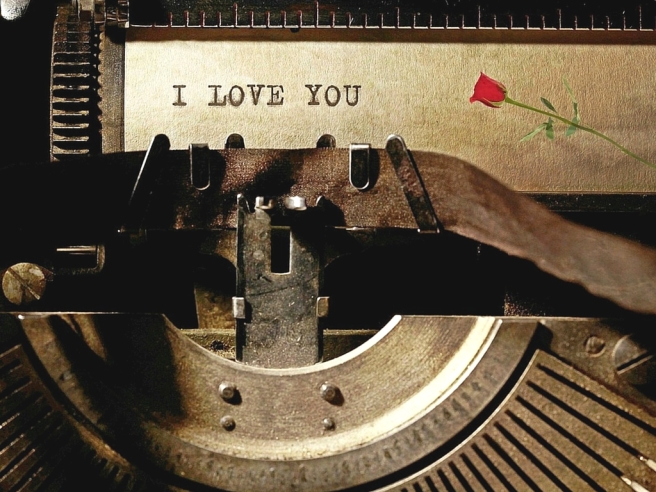
Dad, I am proud to be your son, in other words, I love you.


Olutola Bella is a lawyer. He blogs @ bellanchi.wordpress.com

_____________________

[1] Agbada: A long, wide-sleeved flowing gown, often embroidered, worn by men in parts of West Africa, especially Nigeria. [Credit: Oxford dictionary]


©Timi Yeseibo 2016

Unauthorized use and/or duplication of this material without express and written permission from this blog’s author and/or owner is strictly prohibited. Excerpts and links may be used, provided that full and clear credit is given to Timi Yeseibo and livelytwist.wordpress.com with appropriate and specific direction to the original content.

A Space Too Little Explored [2] No Scorecards

no scorecard

Every man is trying to either live up to his father’s expectations or make up for his father’s mistakes.

No Scorecards

My father married my mother after the death of his first wife. That marriage produced a son I would know as my senior brother later in life. My father and mother moved to Lagos from his village in Yenegoa around the late 1930’s. They lost their first son, who would have been my elder brother.

My father joined the army and participated in the second world war of 1939 to 1945. I was born around the beginning of the war. After he came back from the war in 1945, I came to know him as my father. My two junior sisters were born in quick succession. Arrangements were made for me to attend primary school. My left arm was raised over my head to see if it could touch my right ear to determine my readiness for school.

Sometime later, we moved to my father’s village. There, my father built a house for my mother and her children. He did not live with us. He married another woman and from that point on, he neglected my mother. She moved to her village with my sisters because she could not accept the situation. Since I was in school and my father was paying my fees, I could not leave with my mother. I stayed with my grandmother, who cared for me. During the holidays, I went to the farm with her and I went hunting with an uncle.

After a few years, my father said he could no longer pay my school fees, so I left his village where I lived with my grandmother and went to live with my mother. During this period, my uncle who worked at UAC in Burutu requested someone to assist him at his home. I was chosen as the only suitable candidate. However, once I arrived Burutu, he left me with his mistress who was a trader. I again attended school and went to her shop in the market after school. My uncle spent weekends with her, which were the only times I saw him.

He moved from Burutu to Sapele and then to Warri because of his job, and his mistress and I moved with him. When I gained admission to Government College Ughelli, my uncle said he could not afford my tuition. His mistress, who had now become his wife, persuaded him to continue paying. He did. However, when I reached class 3, he stopped. I looked for sponsors to no avail. I wrote the resident, as governors where then called, in Warri intimating him of my plight. Although I did not receive a reply from him, the school asked me to return. That was how I completed my schooling in 1958 without paying any further fees.

Is every man trying to either live up to his father’s expectations or make up for his father’s mistakes?

So much time has elapsed that it is not now easy to put in proper perspective what my reactions were at the time and how they may have affected decisions I have had to make subsequently. I did not see my father after I left home. My uncle with whom I spent most of my adolescent years was a disciplinarian who was not easy to please. He was relieved when I finished school and did not hesitate to mention that my training up to that point was the legacy he was bequeathing to me.

In those days, not educating a girl child was normal. So a father’s decision not to send his son to school was regarded as his business and not subject to any misgivings. Polygamy features in Nigerian society, even today.

Against this backdrop, I want to accept that those who raised me, particularly my uncle, did their best. Because we lived in close-knit communities, role models were not difficult to find. In the twilight of my life, I am not keeping any scorecard. From a young age, I meant to take my destiny in my hands. The challenges I faced served as vehicles en route my destination.

At the time my wife and I had children, it was the vogue for parents to train their children to whatever level they could attain. We were reasonably well-off and ensured our daughters received a good education. Although I do not see numbered dotted lines linking the trajectory of my life as in a colouring book, perhaps, subconsciously, for I do not remember thinking this way, I was trying to do better than my father had done. Posterity will tell.


Aeneas carried his aged father on his back from the ruins of Troy, and so do we all whether we like it or not, perhaps even if we have never known them. – Angela Carter.


A.C. Yeseibo is a retired banker. He makes his home in Port Harcourt with his wife and enjoys spending time with his children and grandchildren.

P.s. I am honoured to share my blog stage with my dad. Years ago, he wrote me a letter that has frayed at the ends and torn at the fold. Reading and rereading the letter through the years, his writing style became my own.


©Timi Yeseibo 2016

Unauthorized use and/or duplication of this material without express and written permission from this blog’s author and/or owner is strictly prohibited. Excerpts and links may be used, provided that full and clear credit is given to Timi Yeseibo and livelytwist.wordpress.com with appropriate and specific direction to the original content.